Chef Juliette
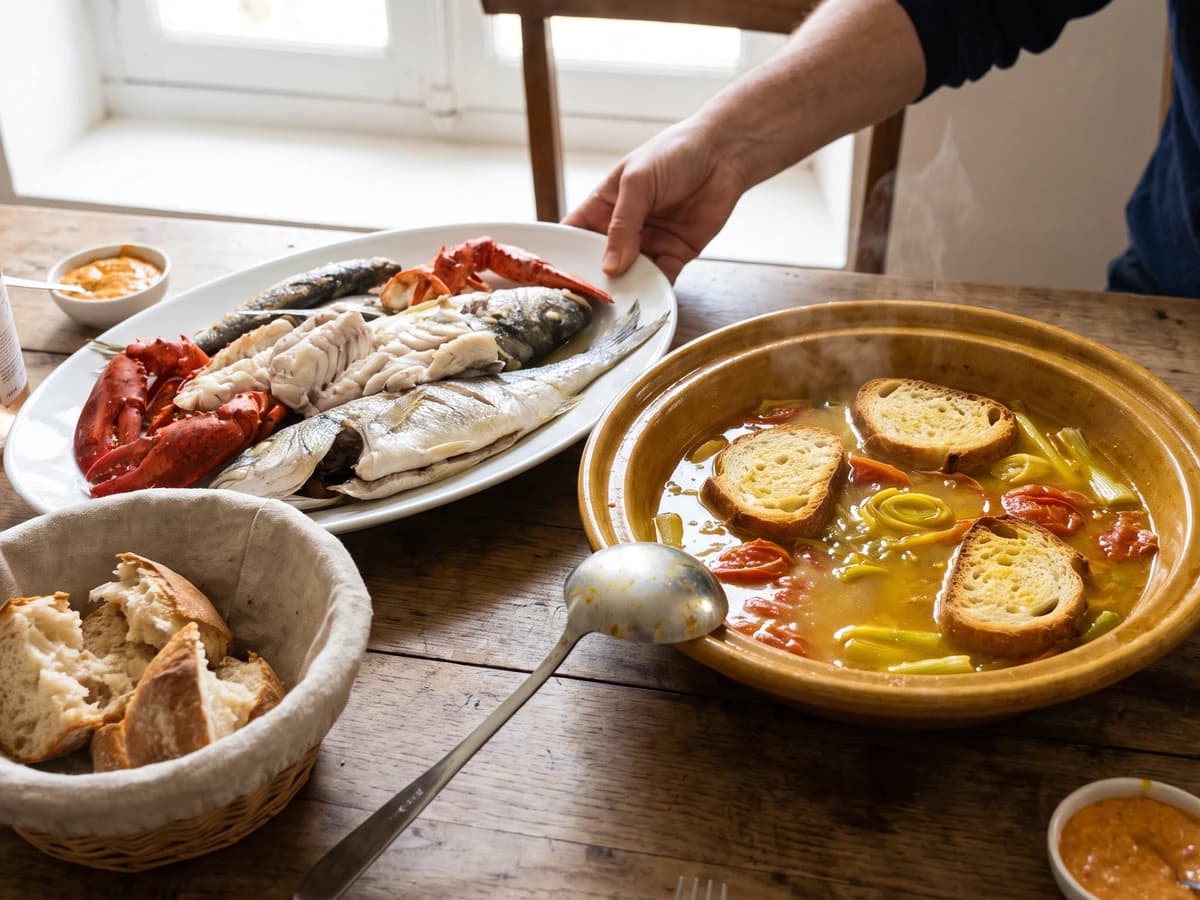
Bouillabaisse à la Marseillaise
Marseille's great fish stew, saffron-gold and garlic-scented, proves that a hard boil can be the careful choice: it binds olive oil into broth before the whole pot meets bread.
A cooking platform built around craft, culture, and the stories behind what we eat.
Created by Chef Juliette
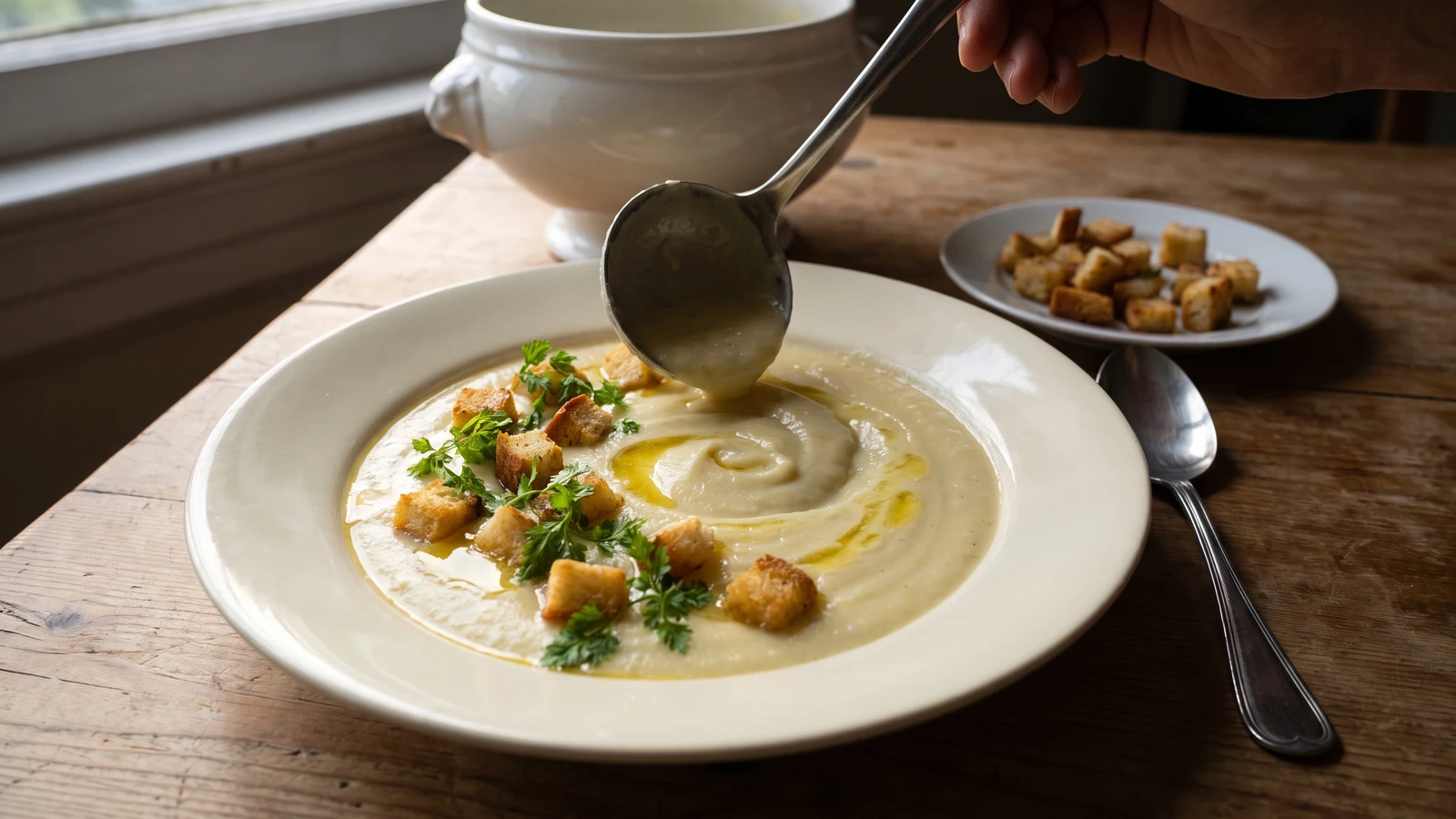
Based on No. 658, Purée de Pommes de Terre, otherwise Parmentier, from Le Guide Culinaire (1907) by Auguste Escoffier
A silken leek-and-potato purée that teaches the discipline of starch: sweat the leeks without colour, simmer potatoes only until tender, pass while hot, then finish with cream, butter, crisp croûtons, and chervil.
Purée de Pommes de Terre, dite Parmentier (silken leek-and-potato soup), teaches one true thing: potatoes turn elegant only when you stop working them. Cook them promptly, crush them the moment they're tender, and pass them while hot. A blender promises ease and delivers paste.
The original formula assumed white consommé ready on the range, a broad tammy for passing the purée, and another pair of hands while the saucier watched the heat. For one cook, one stove, one evening, prepared light chicken consommé and a sturdy fine-mesh sieve do the work. The tammy, holding pans, and extra hands are brigade scaffolding; the colourless leek sweat, the clean consommé, the prompt cooking, and the last addition of butter are the dish and must stay.
The finished Parmentier should be ivory and fluid, substantial enough to coat the spoon but never heavy, with butter-fried croûtons crackling against the soft purée and chervil giving its quiet anise fragrance. The moment that matters is the pass: crush and sieve the potatoes while hot, using as few strokes as possible.
Purée Parmentier belongs to the Parisian bourgeois and classical table rather than to one French province, and its title honors Antoine-Augustin Parmentier, the pharmacist and agronomist whose advocacy helped make the potato welcome in France. In classical potage language, purée de pommes de terre means a passed leek-and-potato soup, not a side dish of mashed potatoes. Chilled and finished with cream, its close relation became known as vichyssoise, whose French lineage and life beyond France remain cheerfully debated.
Quantity
2 medium, about 2 cups (500 ml / 255 g) after trimming
white parts only, finely minced
Quantity
3 medium, about 4½ cups (1.1 liters / 680 g)
peeled and quartered
Quantity
2½ cups (600 ml / 600 g)
Quantity
2½ cups (600 ml / 610 g)
Quantity
6 tablespoons (⅜ cup / 90 ml / 85 g)
divided into three equal portions
Quantity
2 tablespoons (30 ml / 12 g)
cut into small dice
Quantity
1 tablespoon (15 ml / 2 g)
small leafy shreds
Quantity
only as needed
| Ingredient | Quantity |
|---|---|
| medium leekswhite parts only, finely minced | 2 medium, about 2 cups (500 ml / 255 g) after trimming |
| floury potatoespeeled and quartered | 3 medium, about 4½ cups (1.1 liters / 680 g) |
| light white chicken consommé or clear unroasted chicken stock | 2½ cups (600 ml / 600 g) |
| light cream, about 20 percent milk fat | 2½ cups (600 ml / 610 g) |
| unsalted butterdivided into three equal portions | 6 tablespoons (⅜ cup / 90 ml / 85 g) |
| day-old white breadcut into small dice | 2 tablespoons (30 ml / 12 g) |
| fresh chervil pluchessmall leafy shreds | 1 tablespoon (15 ml / 2 g) |
| fine salt | only as needed |
Melt 2 tablespoons of the butter in a heavy 4-quart saucepan over medium-low heat. Add the minced leek whites and a small pinch of salt only if the consommé is unsalted. Cook for 8 to 10 minutes, stirring often, until the leeks soften and smell sweet but remain pale. This is suer sans coloration, sweating without colour, and it protects the soup's clean ivory finish. If a few edges begin to brown, add a tablespoon of consommé at once, lower the heat, and scrape the pan clean; the purée will be slightly more golden, but it isn't lost.
Add the quartered potatoes and the white chicken consommé. Bring the liquid promptly to a simmer, then partially cover and cook at a lively but controlled tremble for 15 to 20 minutes. Test early: the moment a thin knife slides through a potato without resistance, take the pan from the heat. Cooking quickly here means reaching tenderness without leaving the potatoes to collapse and release unnecessary starch; it does not mean boiling them violently.
While the potatoes cook, melt 2 tablespoons of butter in a small skillet over medium heat. Add the bread dice and toss until every side is crisp and evenly butter-gold, 4 to 6 minutes. Transfer them to a plate immediately so the residual butter doesn't darken them. These small croûtons are the source formula's garnish, not a raft of bread, so keep them tiny and crisp.
Set a sturdy fine-mesh sieve over a large heatproof bowl. Lift the potato and leek solids into it with a slotted spoon, crush them while hot, and press them through with a flexible scraper using firm, economical strokes. Pour the cooking liquid through the sieve, pressing the last leek fibres, then rinse the cooking pan and return the purée to it. The tammy of the brigade was simply a broad drum sieve; this is its honest home equivalent. Never use a blender or food processor, whose fast blades rupture the potato starch and turn silk into glue.
Bring the light cream just to the boil in a small saucepan. Stir about three-quarters of it into the purée with a wooden spoon, then add the rest gradually until the soup falls from the spoon in a broad, fluid ribbon. Return the combined soup to medium heat and bring it only to its first full bubble, exactly as the source directs. Remove it promptly. If it seems thin, simmer briefly before adding the last butter; if it is too thick, fold in another spoonful of hot cream or consommé.
Take the pan completely off the heat. Monter au beurre, finish by emulsifying with butter, adding the remaining 2 tablespoons in small cold pieces and stirring until the surface is glossy and no butter floats at the rim. Taste before adding salt, since consommé may already carry enough. If the butter leaves an oily ring, whisk in a teaspoon of cold water off the heat until the purée comes together again. Do not boil it after this finish.
Ladle the Parmentier into warmed soup bowls. Divide the butter-fried bread dice over the surface and finish with the chervil pluches, adding them only now so their delicate fragrance remains fresh. Serve at once. À table!
1 serving (about 250g)
Culinary guides, cultural storytelling, and the editorial depth that makes cooking meaningful.
Discover Culinary ExplorerChef Juliette
Marseille's great fish stew, saffron-gold and garlic-scented, proves that a hard boil can be the careful choice: it binds olive oil into broth before the whole pot meets bread.
Chef Juliette
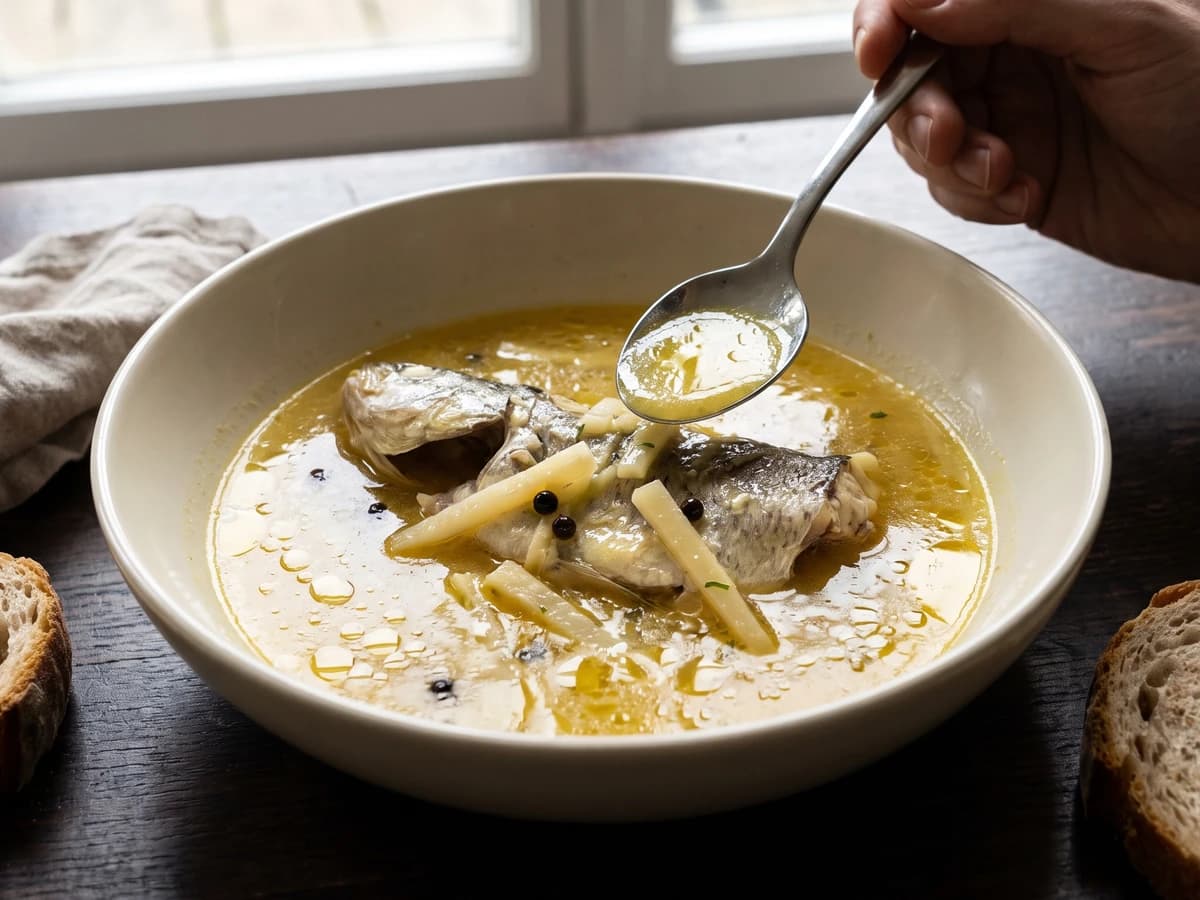
Waterzoi asks fresh, bone-in river fish to thicken its own buttery broth, with parsley root and pepper for company. No flour, no stockpot, just a brisk simmer watched closely.
Chef Juliette
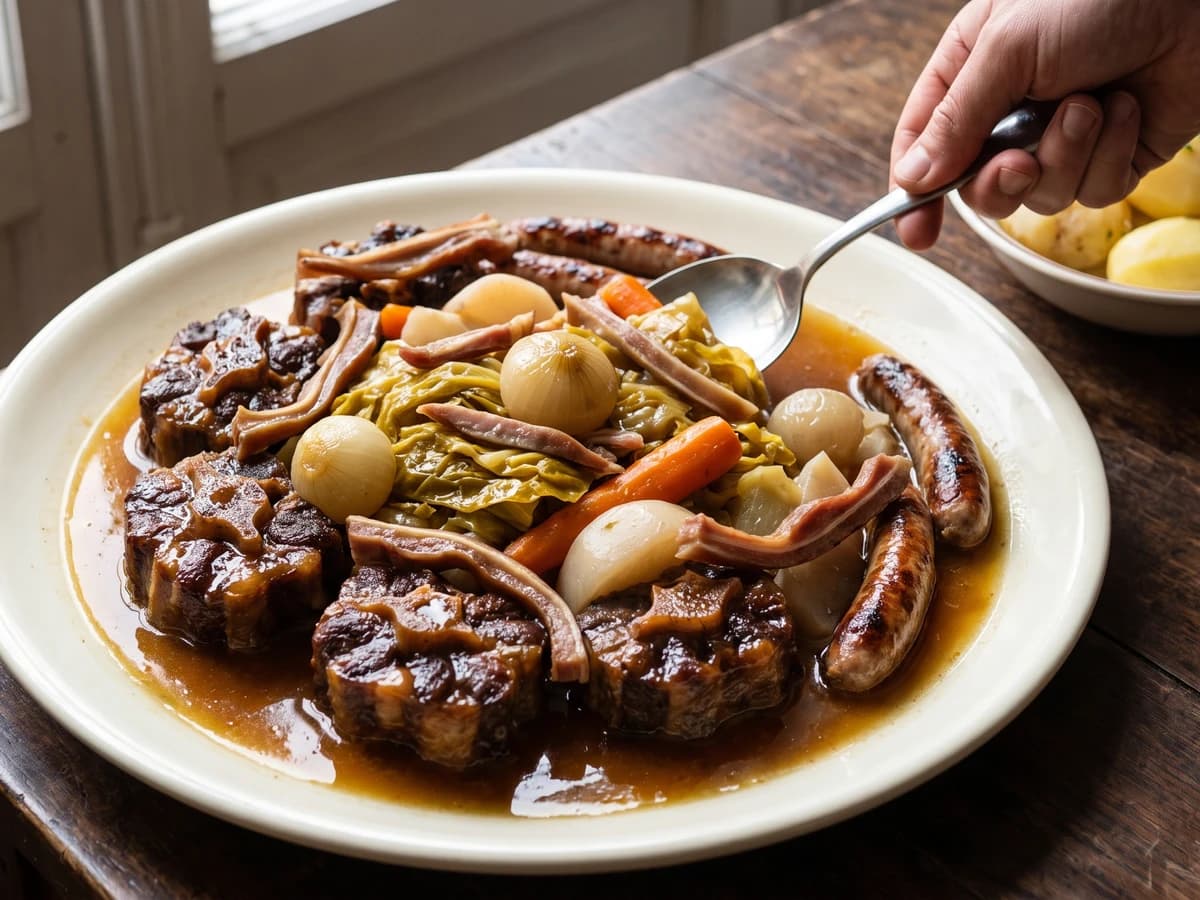
Queue de Bœuf en Hochepot gathers oxtail, pig's trotter and ear, cabbage, roots, and grilled chipolatas around a clear, gelatin-rich broth whose quiet simmer keeps every piece tender and distinct.
Chef Juliette
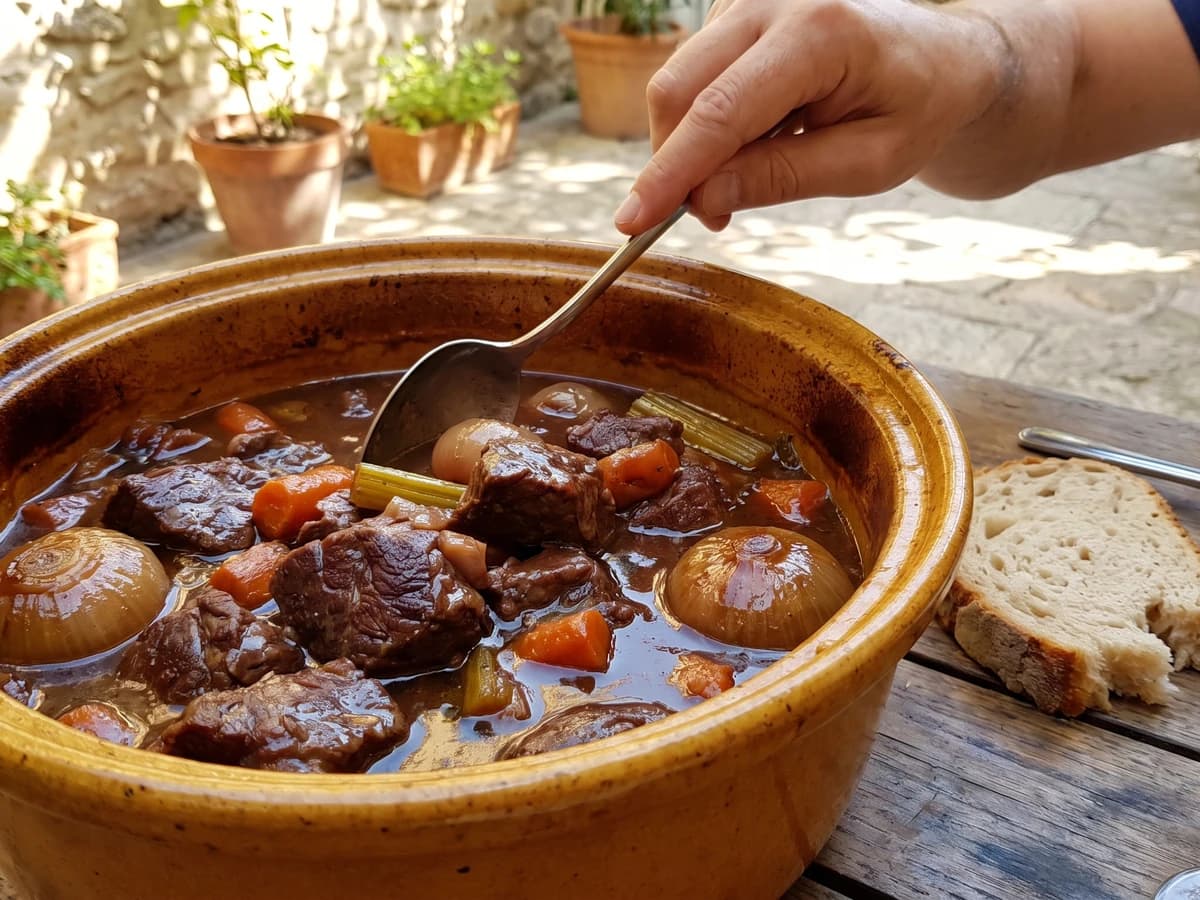
Beef shoulder larded with bacon, sharpened by red wine and vinegar, then sealed with garlic, vegetables, and dry lemon peel until the low oven turns it yielding and the gravy darkly glossy.