Chef Juliette
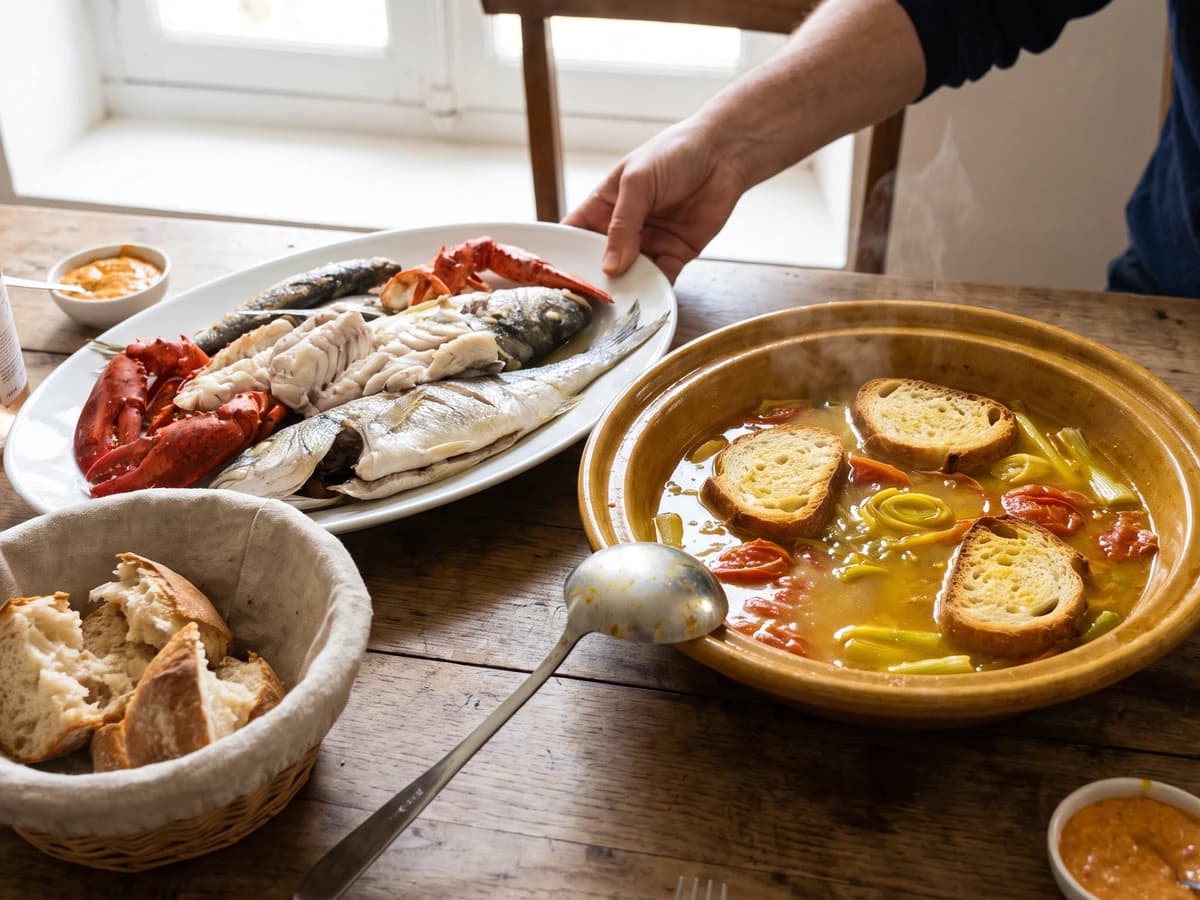
Bouillabaisse à la Marseillaise
Marseille's great fish stew, saffron-gold and garlic-scented, proves that a hard boil can be the careful choice: it binds olive oil into broth before the whole pot meets bread.
A cooking platform built around craft, culture, and the stories behind what we eat.

Created by Chef Juliette
Based on No. 657, Potage Saint-Marceau, from Le Guide Culinaire (1907) by Auguste Escoffier
A fine pea purée proves the classical lesson: change the garnish and a whole new soup appears, here with tender leek julienne, chervil pluches, and enough butter to make every spoonful gleam.
Potage Saint-Marceau (buttery pea purée with leek julienne and chervil) teaches one of the canon's most useful lessons: a sound purée can become a distinct soup through a measured change of garnish. The one true thing to know before you touch the pan is this: cook the peas only until tender and bright. Their fresh sweetness is the foundation, and no amount of butter can return what a long boil has taken.
The source entry is a service note, not a full brigade formula. It assumed an ordinary pea purée already waiting, a saucier to pass it, stock never off the fire, and enough hands that two tablespoons per quart was all the instruction needed. At home, two pounds of peas cook in water in one pot, a blender replaces pounding, and one fine-sieve pass replaces repeated work at the tamis. A salamander has no part in this potage, so we invent no use for one. Those are changes to the scaffolding. The pea purée, real butter, and exact garnish ratio stay.
When it is right, the potage is pea-green and satin-smooth, with a clean butter sheen and little threads of tender leek caught beside the chervil pluches. Set the consistency before you monter au beurre, whisk in cold butter, then keep the soup below a boil. That final butter emulsion is the step that decides the dish.
Potage Saint-Marceau belongs to the classical French family of purées composées, in which a master vegetable purée gained a distinct identity through a measured garnish. Its name invokes Saint-Marceau, the market-gardening quarter of Orléans south of the Loire, but the potage is a codified service preparation rather than a documented Orléanais household soup. Its distinction is narrower than many retellings suggest: no cream, bacon, or mint, only buttered pea purée with two tablespoons of leek julienne and chervil pluches per quart.
Quantity
6¼ cups (1.5 L / 910 g)
Quantity
5½ cups (1.3 L / 1.3 kg)
Quantity
Up to 1 cup (240 ml / 240 g)
only if needed to adjust the purée
Quantity
6 tablespoons (90 ml / 85 g)
divided; chill and dice 5 tablespoons
Quantity
1; use 3 tablespoons (45 ml / 25 g) after cutting
cut into fine 1-inch julienne
Quantity
1 tablespoon (15 ml / 2 g)
Quantity
2 teaspoons (10 ml / 12 g), plus more to taste
| Ingredient | Quantity |
|---|---|
| frozen green peas, or freshly shelled peas | 6¼ cups (1.5 L / 910 g) |
| cold water | 5½ cups (1.3 L / 1.3 kg) |
| hot water (optional)only if needed to adjust the purée | Up to 1 cup (240 ml / 240 g) |
| unsalted butterdivided; chill and dice 5 tablespoons | 6 tablespoons (90 ml / 85 g) |
| small leek, white part onlycut into fine 1-inch julienne | 1; use 3 tablespoons (45 ml / 25 g) after cutting |
| fresh chervil pluches | 1 tablespoon (15 ml / 2 g) |
| fine sea salt | 2 teaspoons (10 ml / 12 g), plus more to taste |
Split the leek white lengthwise and wash carefully between the layers. Cut it into 1-inch sections, flatten them, and slice them into the finest julienne, match-shaped strips. Measure exactly 3 tablespoons after cutting. Pick 1 tablespoon of chervil pluches, the small tender leaves and fine shreds, and keep them cool beneath a barely damp towel.
Melt 1 tablespoon of the butter in a small covered saucepan with 2 tablespoons taken from the measured cold water and a pinch of the salt. Add the leek and étuver, cook gently under the lid without browning, for 4 to 5 minutes, until supple but still distinct. If the pan dries before the leek is tender, add another teaspoon of water. Spread the leek on a plate so it stops cooking; the chervil remains raw until the finish.
Pour the remaining cold water into a 4-quart saucepan, add all but a final pinch of salt, and bring it to a full boil. Add the peas, cover only until the boil returns, then uncover and cook until a pea crushes easily between two fingers while remaining vividly green, 3 to 4 minutes for frozen peas or 5 to 7 minutes for fresh ones. Drain immediately over a heatproof bowl and reserve every drop of the cooking water; leaving tender peas sitting in the hot water only dulls their flavor and color.
Working in batches no more than half full, blend the peas with 4 cups of their reserved cooking water until completely smooth, 60 to 90 seconds. Vent the blender lid and cover the opening loosely with a folded towel so pressure cannot build. Add more reserved liquid in small amounts when needed to keep the purée moving. Pass it through a fine-mesh sieve, pressing firmly and scraping the silky purée from the underside. Return it to the large saucepan and bring it to a bare simmer. If it pours thinly like broth, reduce it gently before adding butter; if it mounds on the spoon, loosen it with reserved cooking water or the optional hot water. Adjust the finished volume to about 8 cups.
Once the purée coats a spoon in a thin, even film, remove it from the heat. Monter au beurre by whisking in the remaining 5 tablespoons of cold butter in three additions, letting each disappear before adding the next. Stir in all 3 tablespoons of cooked leek julienne and the tablespoon of chervil pluches. If oily specks rise to the surface, the soup became too hot. Take it off the heat and blend in 1 tablespoon of hot water, adding a second only if necessary. Ça se rattrape. Once the butter is in, never let the potage boil.
Taste and correct the salt. Warm the serving bowls with hot water, dry them, and stir the potage once so the leek and chervil are evenly distributed before ladling. Serve immediately while the butter emulsion is glossy and the chervil still tastes fresh. À table!
1 serving (about 320g)
Culinary guides, cultural storytelling, and the editorial depth that makes cooking meaningful.
Discover Culinary ExplorerChef Juliette
Marseille's great fish stew, saffron-gold and garlic-scented, proves that a hard boil can be the careful choice: it binds olive oil into broth before the whole pot meets bread.
Chef Juliette
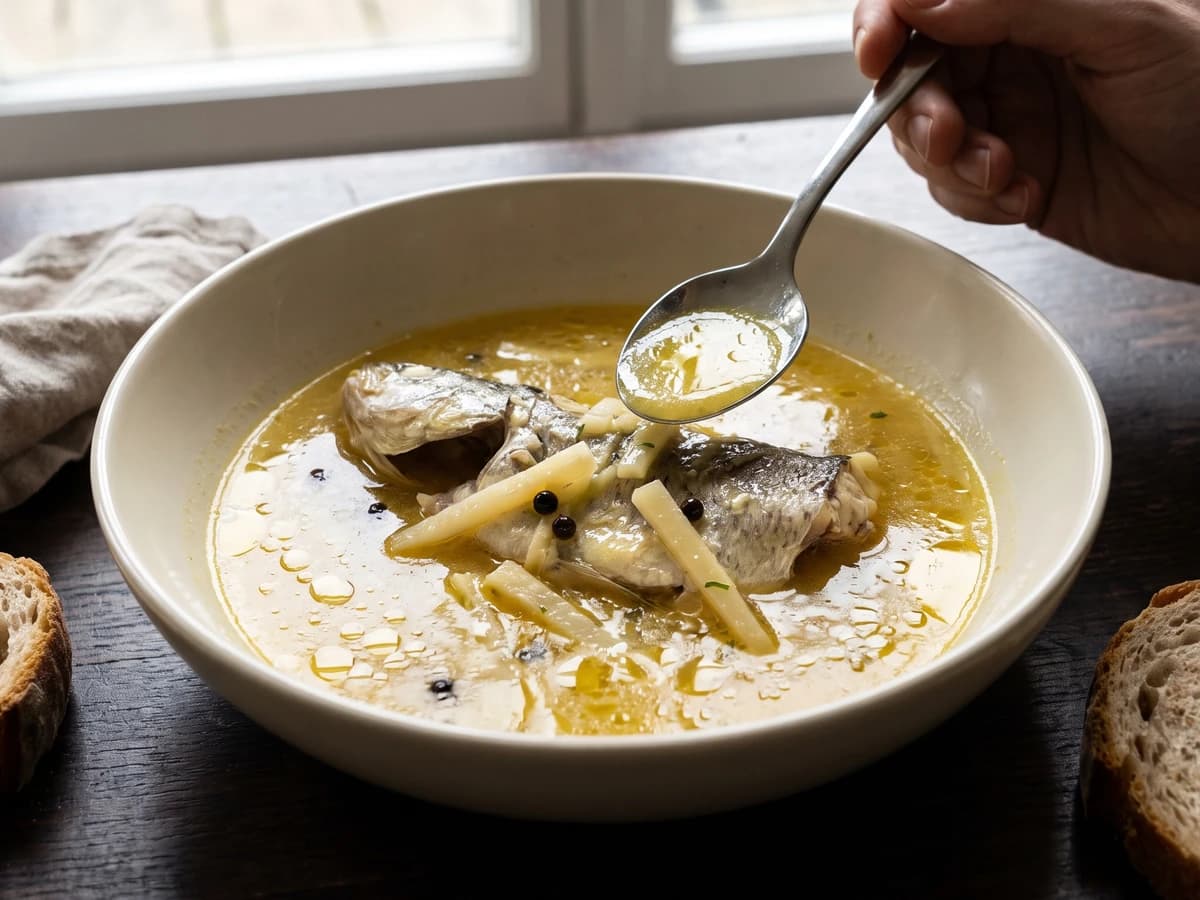
Waterzoi asks fresh, bone-in river fish to thicken its own buttery broth, with parsley root and pepper for company. No flour, no stockpot, just a brisk simmer watched closely.
Chef Juliette
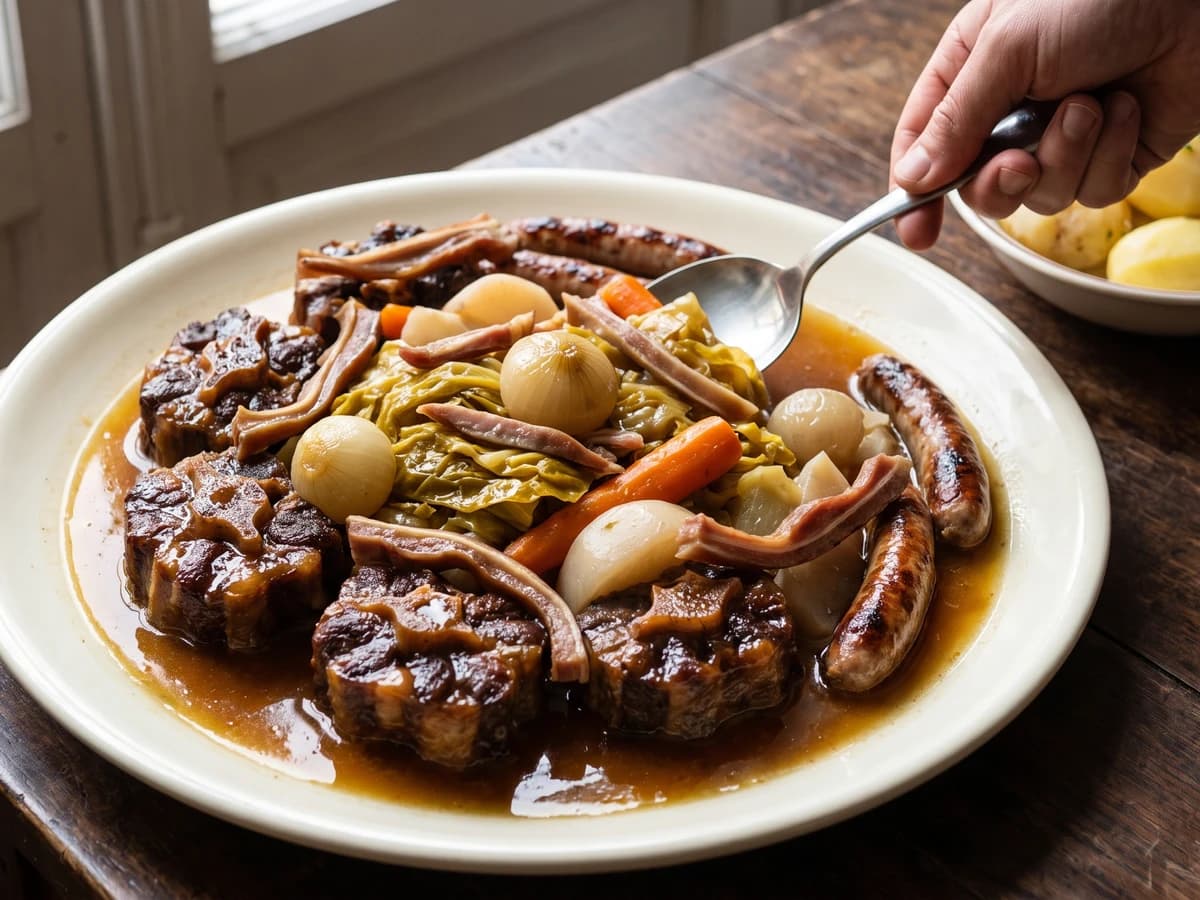
Queue de Bœuf en Hochepot gathers oxtail, pig's trotter and ear, cabbage, roots, and grilled chipolatas around a clear, gelatin-rich broth whose quiet simmer keeps every piece tender and distinct.
Chef Juliette
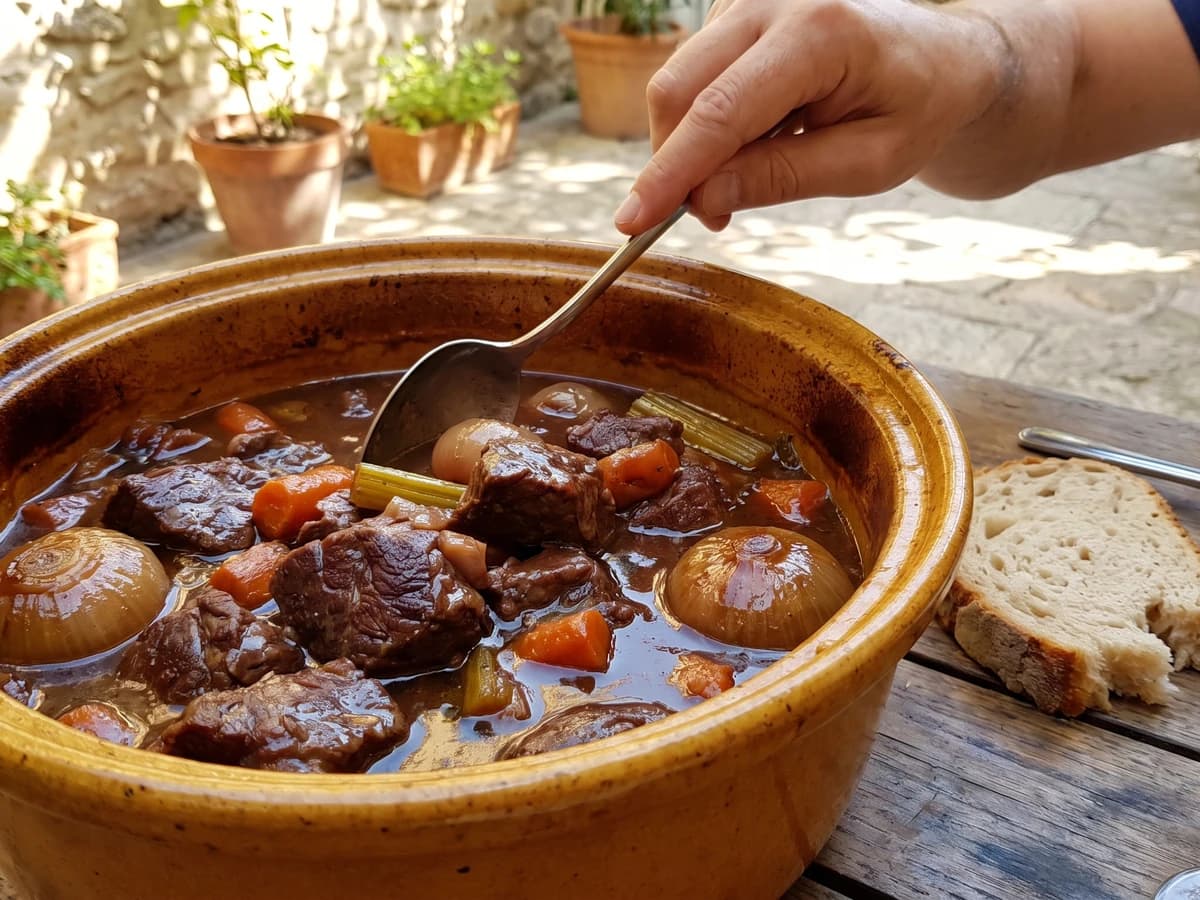
Beef shoulder larded with bacon, sharpened by red wine and vinegar, then sealed with garlic, vegetables, and dry lemon peel until the low oven turns it yielding and the gravy darkly glossy.