Chef Juliette
Bouillabaisse à la Marseillaise
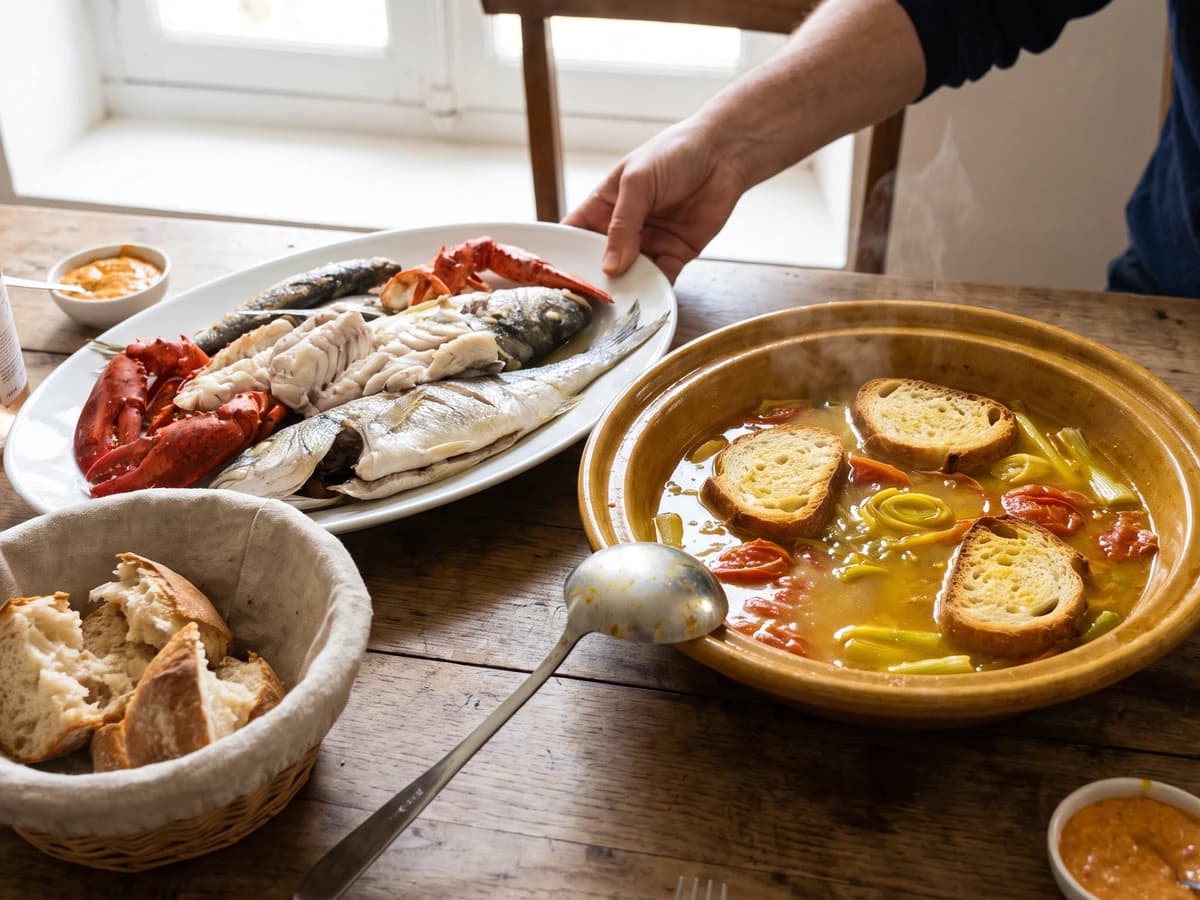
Marseille's great fish stew, saffron-gold and garlic-scented, proves that a hard boil can be the careful choice: it binds olive oil into broth before the whole pot meets bread.
A cooking platform built around craft, culture, and the stories behind what we eat.
Created by Chef Juliette
Based on No. 655, Potage Marigny, from Le Guide Culinaire (1907) by Auguste Escoffier
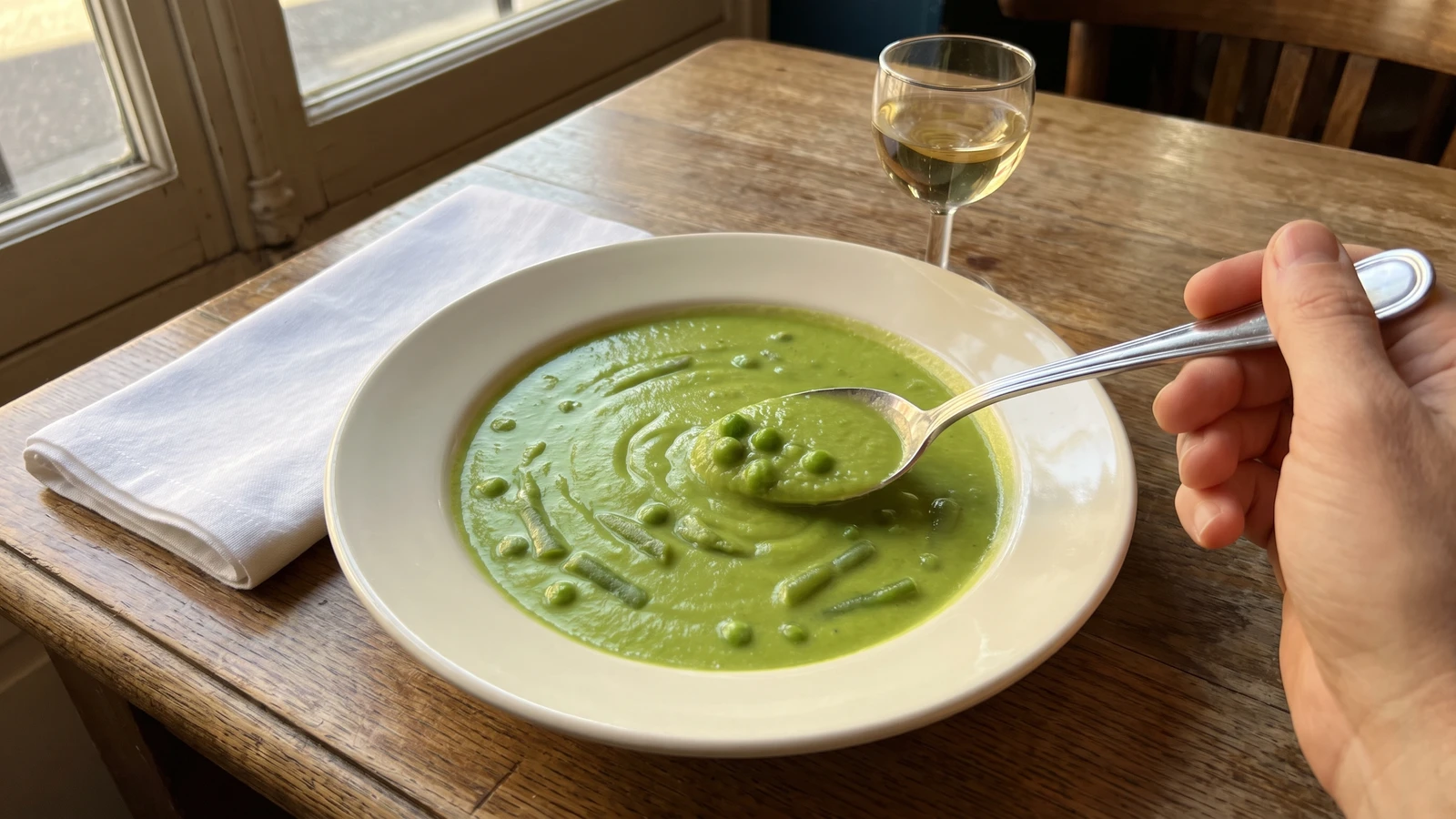
Silken Potage Fontange becomes Potage Marigny through two exact spoonfuls: tender peas and crisp green-bean lozenges, added at the last moment so every spoon finds both velvet and bite.
Potage Marigny (Fontange pea soup with peas and green-bean lozenges) teaches a fine classical distinction: the foundation may be silken, but the garnish gives the spoon its character. The soup is already Fontange. One measured tablespoon each of whole peas and fine green beans, cut into lozenges, makes it Marigny. Keep those vegetables green and gently firm, or the distinction disappears into the purée.
The source entry assumes Potage Fontange is already complete, a saucier is holding it gently, and a separate garnish pan stands ready beside a stockpot that rarely leaves the fire. Your honest equivalent is one small saucepan used twice, first for blanching and then for warming. No salamander belongs here. Separate holding pans are brigade scaffolding and can go; the finished Fontange foundation and last-minute garnish are the dish and must stay. I have scaled the service to about two quarts while preserving the source garnish exactly: one tablespoon of peas and one tablespoon of beans.
This is not the moment to invent cream, herbs, or another thickener. Let Potage Fontange arrive as its own finished preparation, then protect its texture with gentle heat. The step that matters most is the final warming: add the garnish only when the soup is ready to serve, and never let the pot boil afterward.
Potage Marigny belongs to the named derivative soups of the Parisian classical repertoire, where a finished potage could change identity through a precise garnish. Its foundation remains Potage Fontange; Marigny adds no new stock, thickener, or cream finish, only whole peas and fine green beans cut into lozenges. The distinction records the classical kitchen's grammar: the base is a complete preparation, while the garnish names the service.
Quantity
About 8 cups (1.9 L / 1.9 kg)
Quantity
4 cups (950 ml / 950 g)
for blanching
Quantity
2 teaspoons (10 ml / 12 g)
for blanching
Quantity
1 tablespoon (15 ml / 10 g)
fresh or frozen
Quantity
1 tablespoon (15 ml / 8 g)
trimmed and cut into ¼-inch (6 mm) lozenges
| Ingredient | Quantity |
|---|---|
| prepared Potage Fontange | About 8 cups (1.9 L / 1.9 kg) |
| waterfor blanching | 4 cups (950 ml / 950 g) |
| fine sea saltfor blanching | 2 teaspoons (10 ml / 12 g) |
| small shelled green peasfresh or frozen | 1 tablespoon (15 ml / 10 g) |
| fine green beanstrimmed and cut into ¼-inch (6 mm) lozenges | 1 tablespoon (15 ml / 8 g) |
Prepare the Potage Fontange fully according to its own entry, then measure about 8 cups (1.9 L / 1.9 kg). Treat it as a finished component, exactly as the source directs. Taste it cold enough to judge the seasoning clearly, cover it, and set it aside while you prepare the garnish.
Slice the trimmed green beans on a long diagonal into neat ¼-inch (6 mm) lozenges, small diamond shapes that will sit comfortably on a soup spoon. Measure one level tablespoon after cutting, then measure one level tablespoon of peas separately. The quantities are deliberately modest: the garnish should interrupt the smooth soup, not crowd it.
Bring the water and salt to a lively boil in a small saucepan. Add the bean lozenges and cook for 1½ to 2 minutes, until vividly green and tender with a slight bite. Lift them into cold water, then blanch fresh peas for 30 to 45 seconds, or frozen peas for about 20 seconds, and cool them the same way. Drain both very well. If the vegetables have gone only slightly too tender, chill them at once and reserve them for the bowls rather than warming them again. If they have collapsed, blanch a fresh tablespoon. Ça se rattrape, and with a garnish this small the honest rescue costs almost nothing.
Empty and dry the saucepan, add the prepared Potage Fontange, and warm it over medium-low heat, stirring along the bottom and around the corners. It should become glossy and fluid without bubbling. If it has tightened while standing, whisk in hot water one tablespoon at a time until it falls from the ladle in a smooth ribbon. If overheating makes it look grainy, remove it from the heat and blend briefly or pass it through a fine sieve. Do not keep boiling in the hope that it will smooth itself; it won't.
When the soup is fully hot and correctly seasoned, fold in the drained peas and green-bean lozenges. Warm them for no more than 30 seconds, just long enough to take off the chill, then ladle the Potage Marigny into warmed soup plates. Each serving should show several whole peas and clean green lozenges against the silken base. Serve immediately. À table!
1 serving (about 240g)
Culinary guides, cultural storytelling, and the editorial depth that makes cooking meaningful.
Discover Culinary ExplorerChef Juliette
Marseille's great fish stew, saffron-gold and garlic-scented, proves that a hard boil can be the careful choice: it binds olive oil into broth before the whole pot meets bread.
Chef Juliette
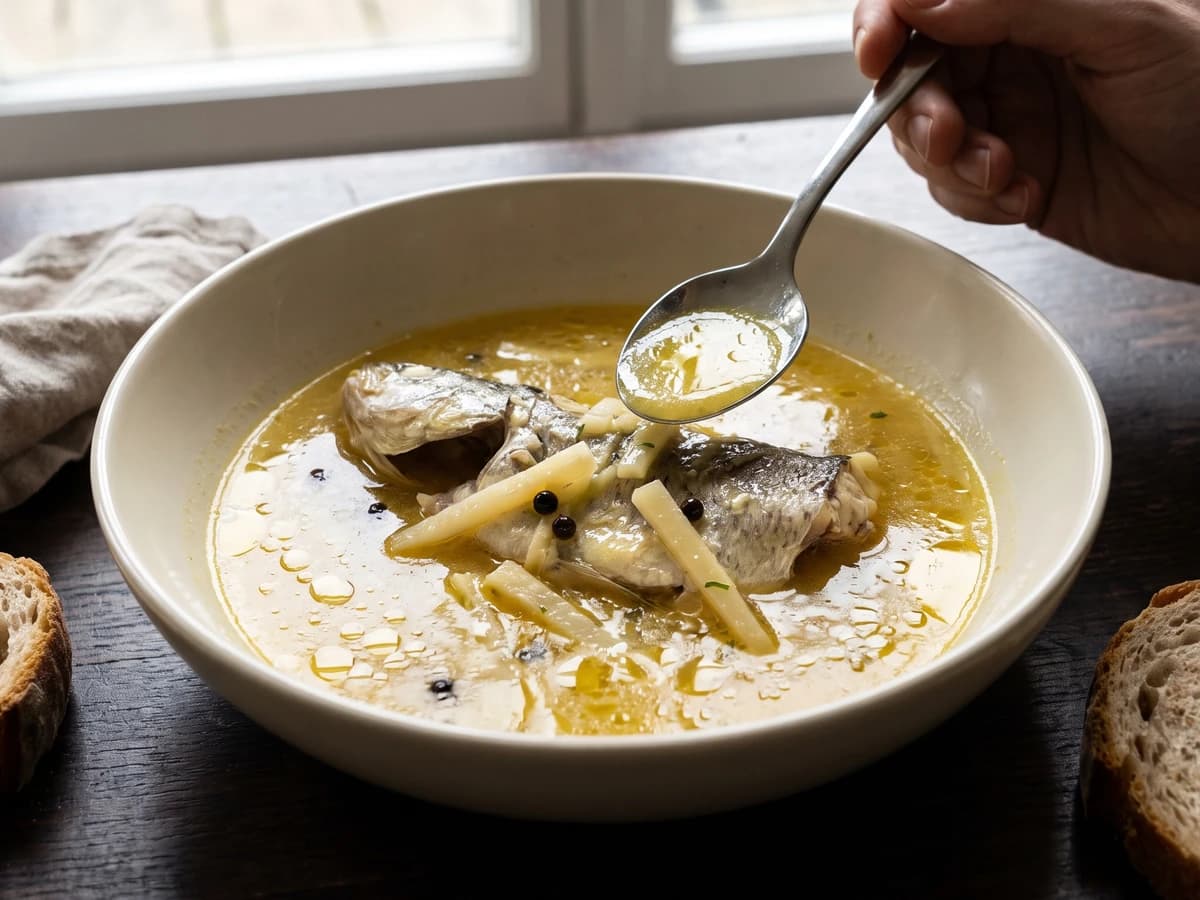
Waterzoi asks fresh, bone-in river fish to thicken its own buttery broth, with parsley root and pepper for company. No flour, no stockpot, just a brisk simmer watched closely.
Chef Juliette
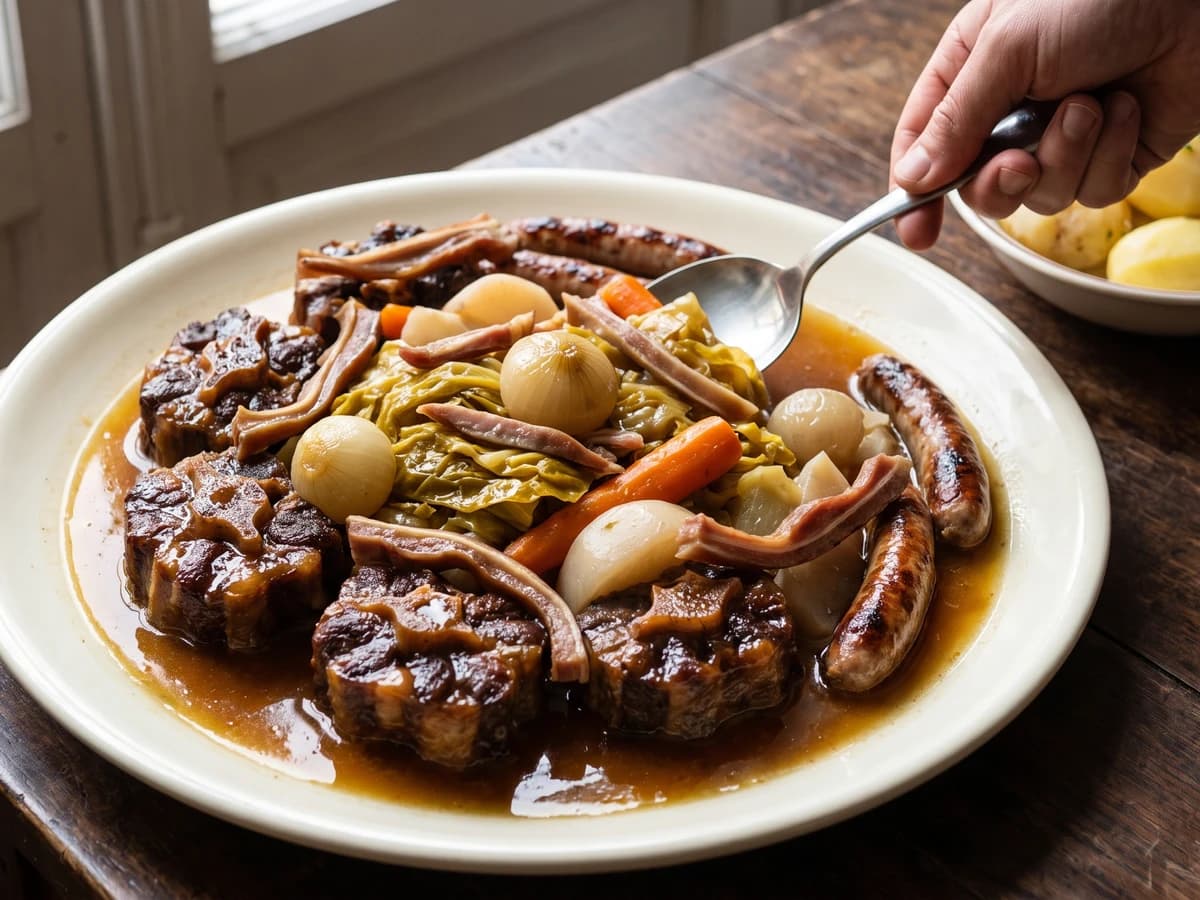
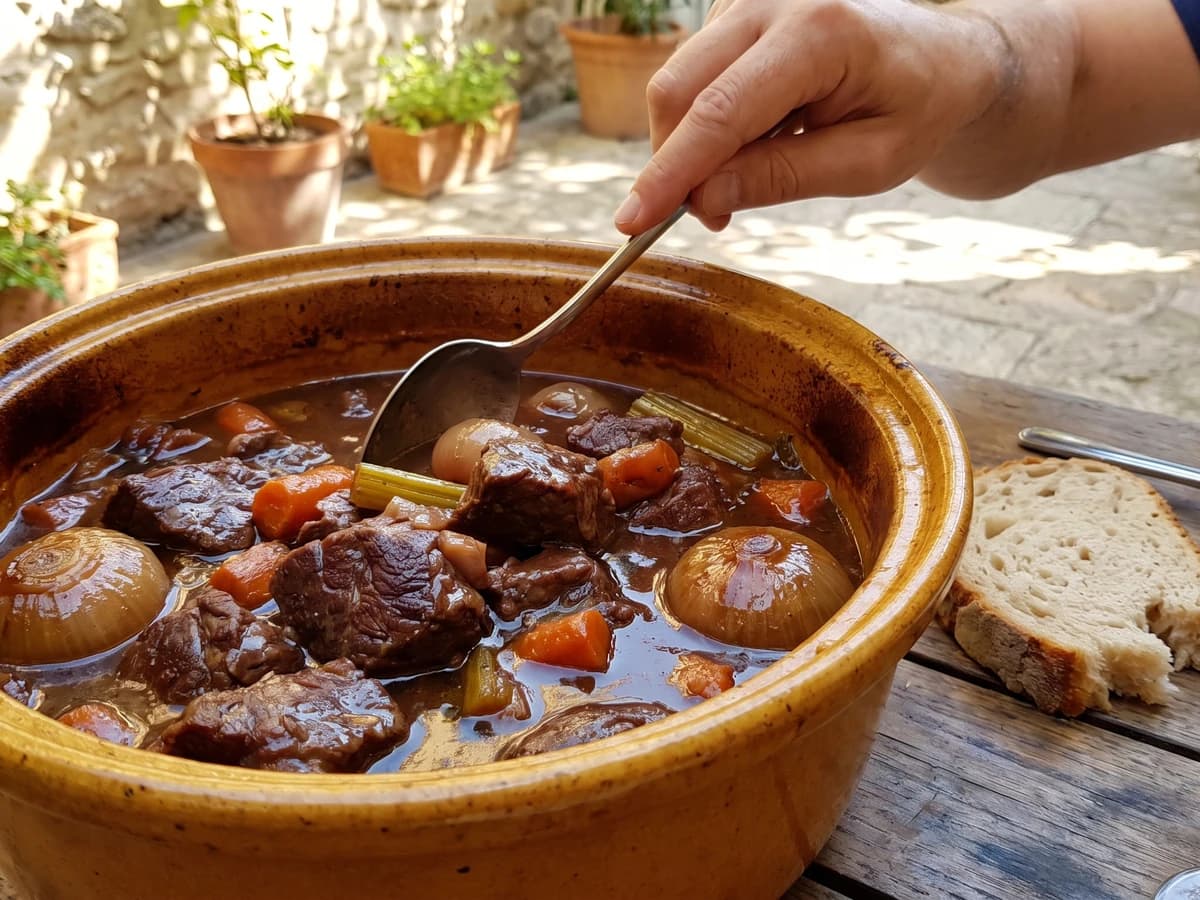
Queue de Bœuf en Hochepot gathers oxtail, pig's trotter and ear, cabbage, roots, and grilled chipolatas around a clear, gelatin-rich broth whose quiet simmer keeps every piece tender and distinct.
Chef Juliette
Beef shoulder larded with bacon, sharpened by red wine and vinegar, then sealed with garlic, vegetables, and dry lemon peel until the low oven turns it yielding and the gravy darkly glossy.