Chef Juliette
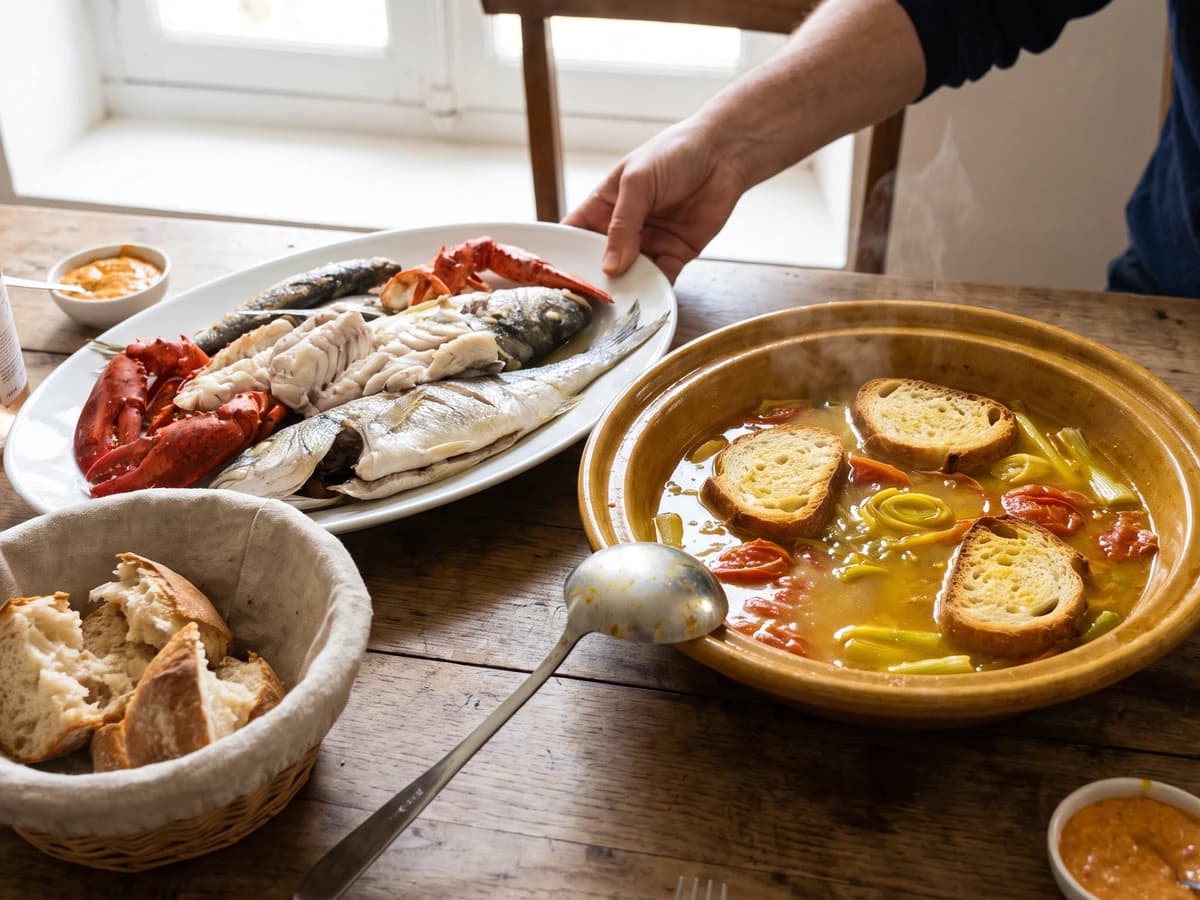
Bouillabaisse à la Marseillaise
Marseille's great fish stew, saffron-gold and garlic-scented, proves that a hard boil can be the careful choice: it binds olive oil into broth before the whole pot meets bread.
A cooking platform built around craft, culture, and the stories behind what we eat.

Created by Chef Juliette
Based on No. 653, Potage Lamballe, from Le Guide Culinaire (1907) by Auguste Escoffier
Potage Lamballe pairs silky pea purée with translucent tapioca poached in consommé, equal parts joined at the last moment for gentle body and a clear, distinct taste of peas.
Potage Lamballe (pea purée with tapioca in consommé) teaches one precise lesson: cook the tapioca completely before it touches the peas. Each pearl must turn translucent in the consommé, with no chalky center left to finish later, because boiling the married soup would dull the purée you worked to preserve.
The original formula assumed a saucier on staff, a finished purée of peas waiting in one pot, and consommé never off the fire for an ordinary potage au tapioca in another. The home equivalent is honest and smaller: two saucepans, two finished halves, and a warmed tureen for about two quarts. The separate stations were brigade scaffolding and can go. The equal proportion and last-minute marriage are the dish, and they stay.
When it is right, the soup is silky but not heavy, its translucent pearls suspended through the green purée rather than gathered at the bottom. Keep a little hot consommé beside you, since tapioca continues drinking as it waits. If the soup tightens, loosen it gently. Ça se rattrape.
Despite its Breton place-name, Potage Lamballe belongs to the Paris-centered classical repertoire rather than Brittany's regional soup pot. Classical kitchens organized potages as families of finished preparations, and Lamballe is an assembly formula: equal measures of pea purée and potage au tapioca, joined only in the tureen. Tapioca is not merely a garnish here; it supplies the body that flour or a roux would otherwise provide, leaving the peas distinct.
Quantity
4 cups (960 ml / about 1 kg)
warmed
Quantity
4¼ cups (1.02 L / about 1.02 kg)
divided, with ½ cup held hot for adjustment
Quantity
⅓ cup (80 ml / 60 g)
| Ingredient | Quantity |
|---|---|
| finished purée of peaswarmed | 4 cups (960 ml / about 1 kg) |
| clear consommédivided, with ½ cup held hot for adjustment | 4¼ cups (1.02 L / about 1.02 kg) |
| small pearl tapioca, not instant | ⅓ cup (80 ml / 60 g) |
Bring 3¾ cups (900 ml) of the consommé to a lively simmer in a saucepan. Rain in the tapioca in a thin, steady stream while whisking, then lower the heat until the liquid barely trembles. Poach uncovered for 20 to 25 minutes, stirring frequently, until every pearl is translucent and no chalk-white center remains.
Pour the finished tapioca potage into a heatproof measuring jug. It must measure 4 cups (960 ml), exactly matching the purée of peas. If it falls short, top it up with hot consommé; if it rises above the mark, return it to the pan and simmer gently until the measure is right. Equal volume is not bookkeeping here. It is the structure of Potage Lamballe.
Warm the finished purée of peas in the second saucepan over medium-low heat, stirring along the bottom until it flows smoothly and looks glossy. Do not boil it. If it begins catching, transfer the clean upper portion immediately to another pan without scraping the scorched layer into it; a burnt speck will announce itself through the whole tureen.
Fill the soup tureen with very hot water, let it stand for a minute, then empty and dry it. Pour in the 4 cups of hot pea purée and the 4 cups of tapioca potage, folding them together gently with the ladle until the pearls are distributed evenly. Do not return the combined soup to the stove. If it tightens before reaching the table, stir in hot consommé around the edge, one spoonful at a time.
Ladle Potage Lamballe into warmed bowls while the tapioca remains suspended and the soup still falls from the ladle in a soft ribbon. Add no reflex garnish and no swirl of cream; the finished pea purée and consommé have already supplied the seasoning and finish. This potage asks for proportion, clarity, and nothing fussy. À table!
1 serving (about 250g)
Culinary guides, cultural storytelling, and the editorial depth that makes cooking meaningful.
Discover Culinary ExplorerChef Juliette
Marseille's great fish stew, saffron-gold and garlic-scented, proves that a hard boil can be the careful choice: it binds olive oil into broth before the whole pot meets bread.
Chef Juliette
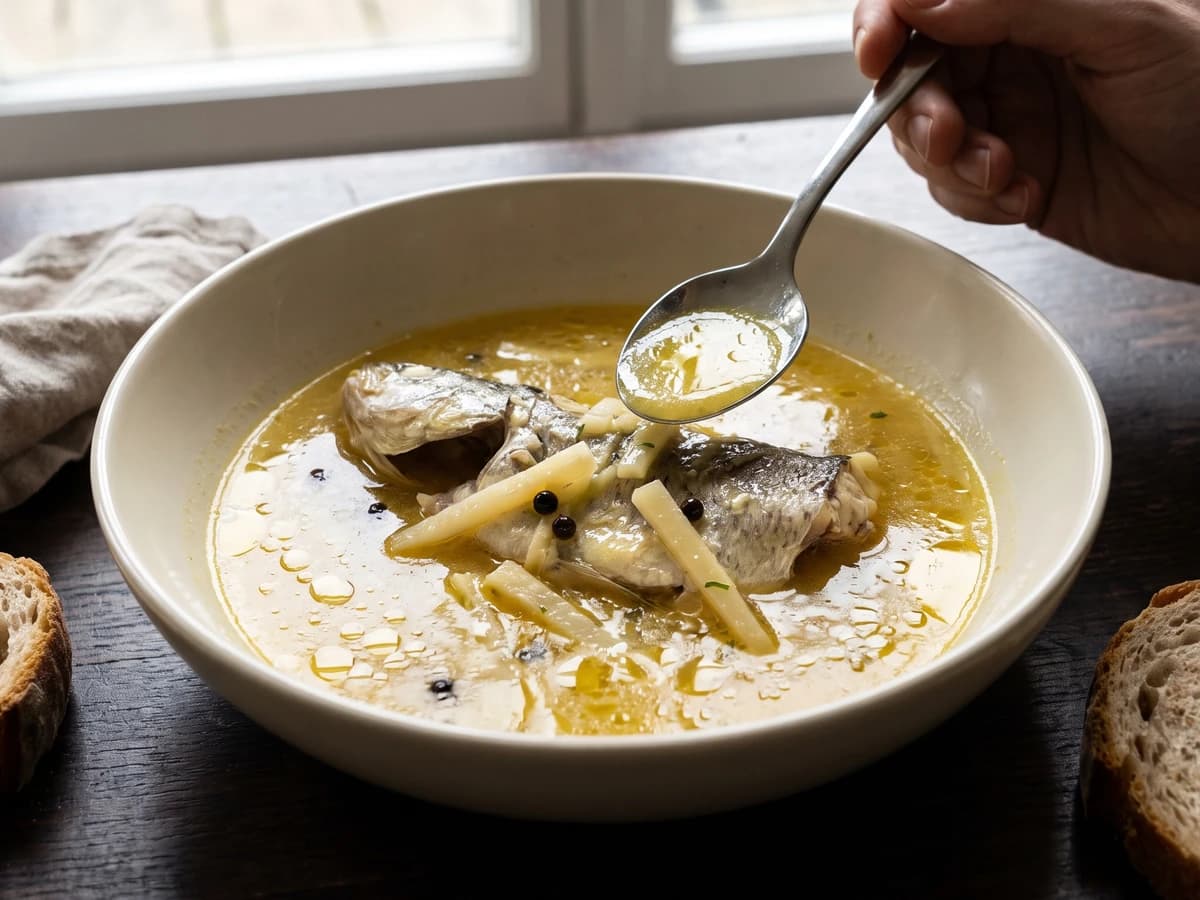
Waterzoi asks fresh, bone-in river fish to thicken its own buttery broth, with parsley root and pepper for company. No flour, no stockpot, just a brisk simmer watched closely.
Chef Juliette
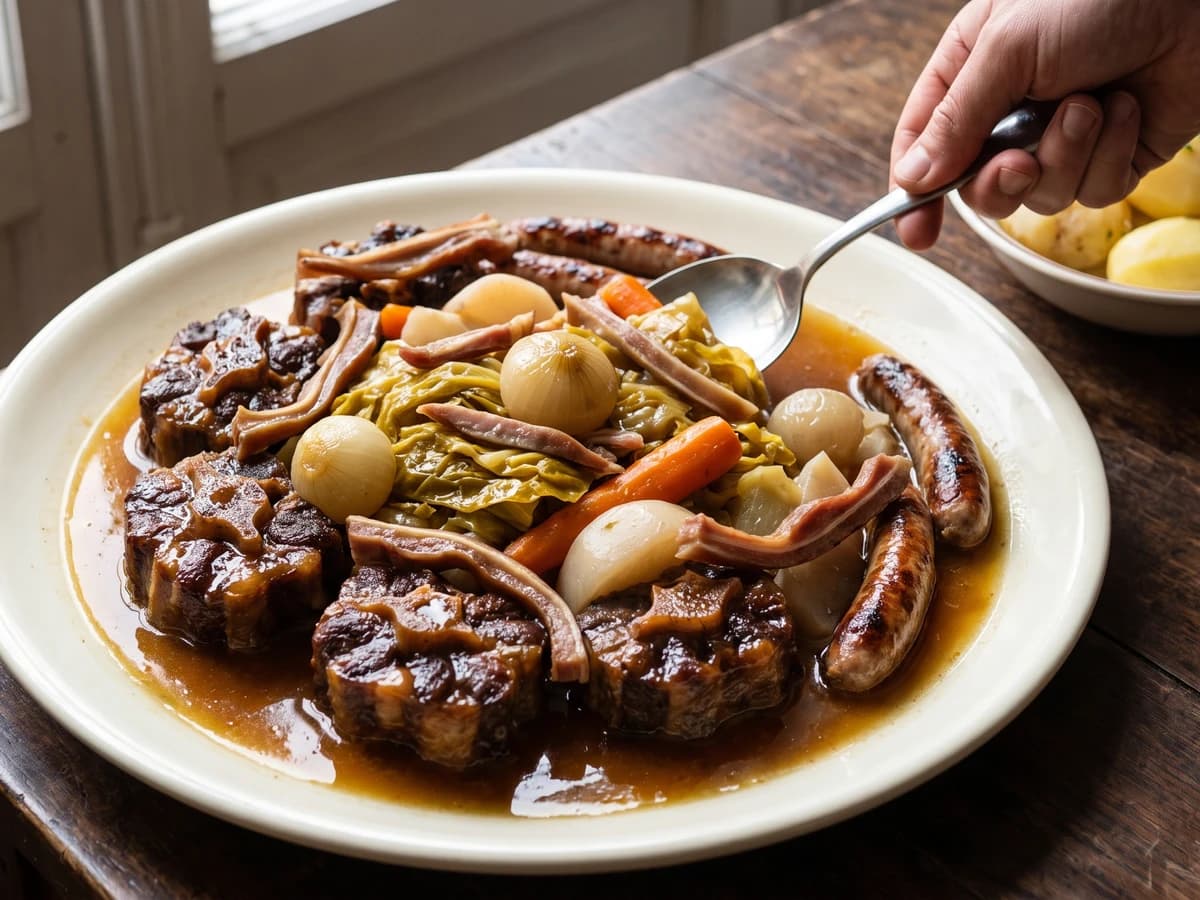
Queue de Bœuf en Hochepot gathers oxtail, pig's trotter and ear, cabbage, roots, and grilled chipolatas around a clear, gelatin-rich broth whose quiet simmer keeps every piece tender and distinct.
Chef Juliette
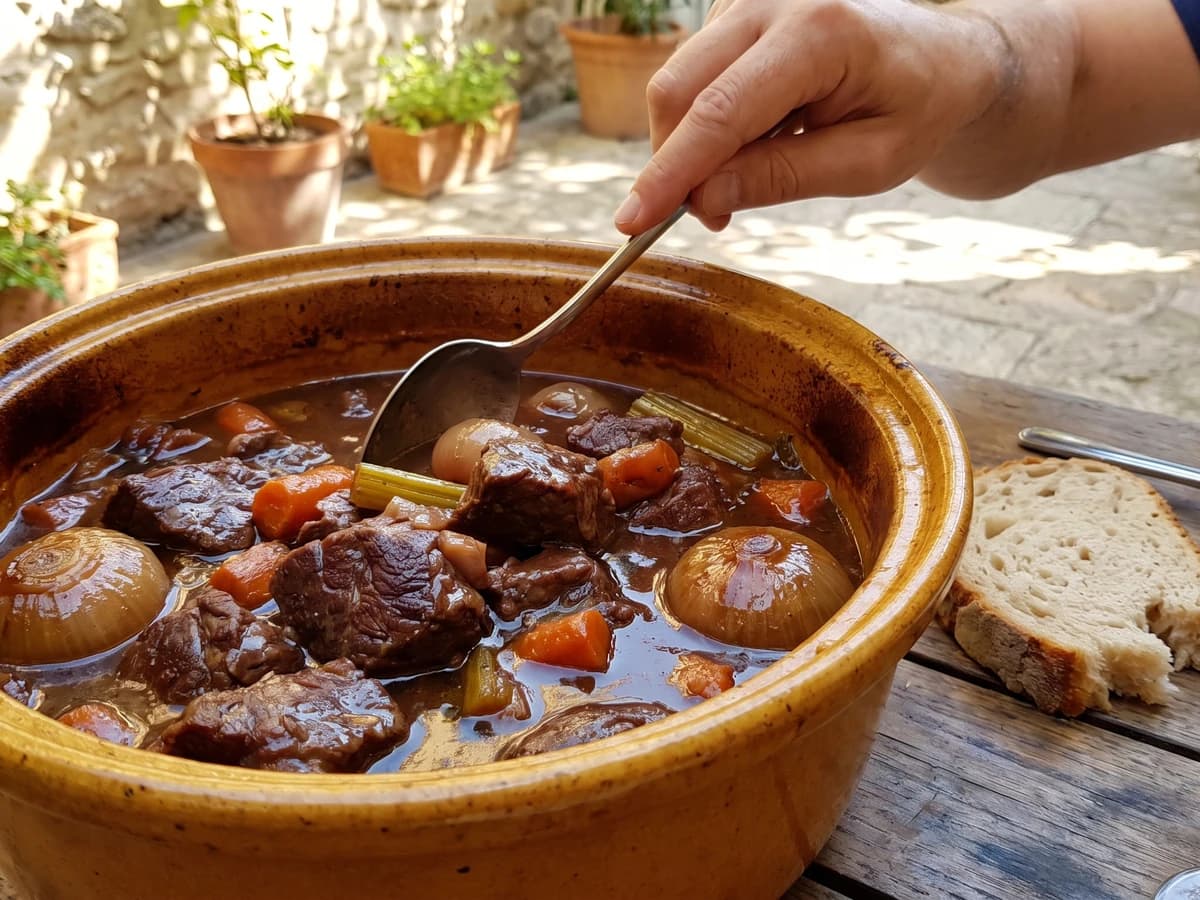
Beef shoulder larded with bacon, sharpened by red wine and vinegar, then sealed with garlic, vegetables, and dry lemon peel until the low oven turns it yielding and the gravy darkly glossy.