Chef Juliette
Ordinary or White Consommé
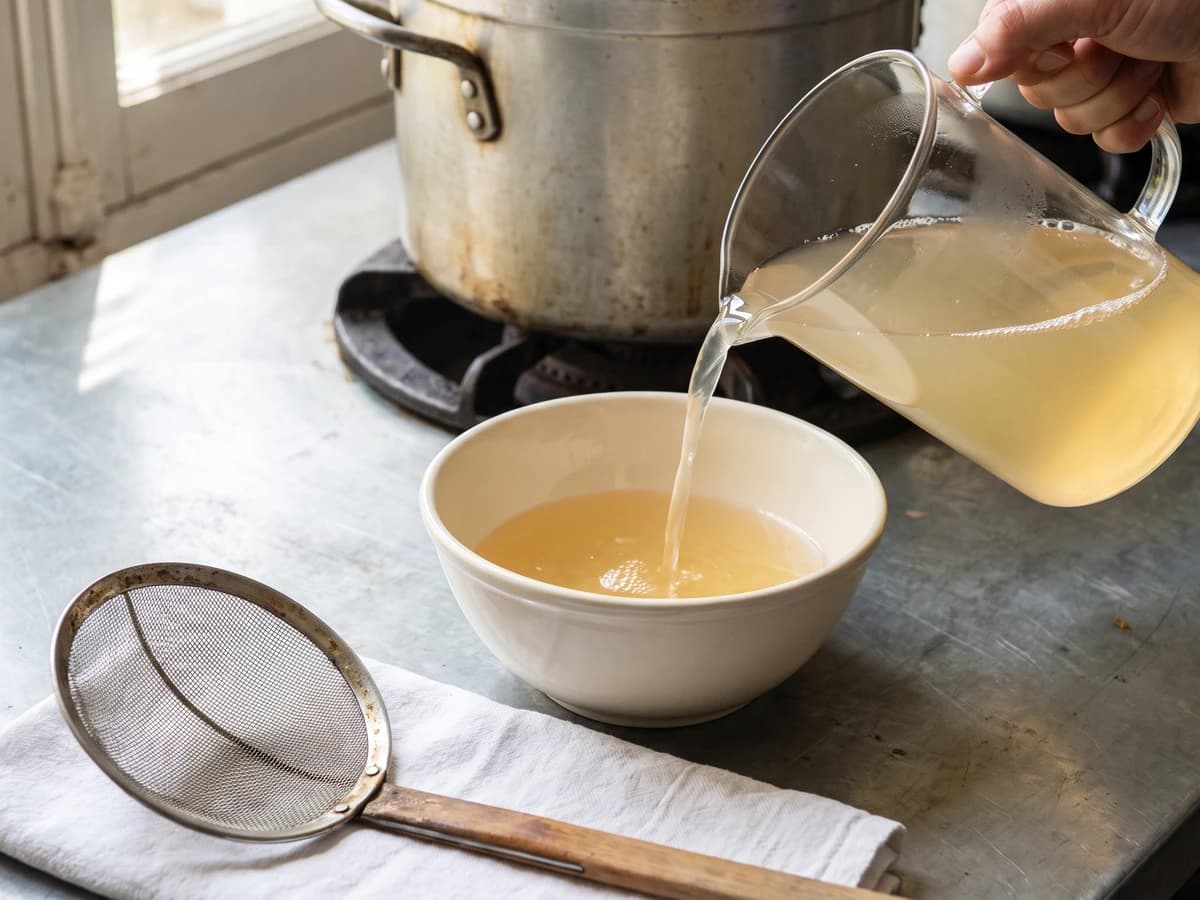
Beef shin, lean beef, and fowl begin in cold water and rise slowly toward a tremble. Skim before the boil, and you learn the quiet discipline that gives every clear French broth its backbone.
A cooking platform built around craft, culture, and the stories behind what we eat.
Created by Chef Juliette
Based on No. 65, Bercy Sauce, from Le Guide Culinaire (1907) by Auguste Escoffier
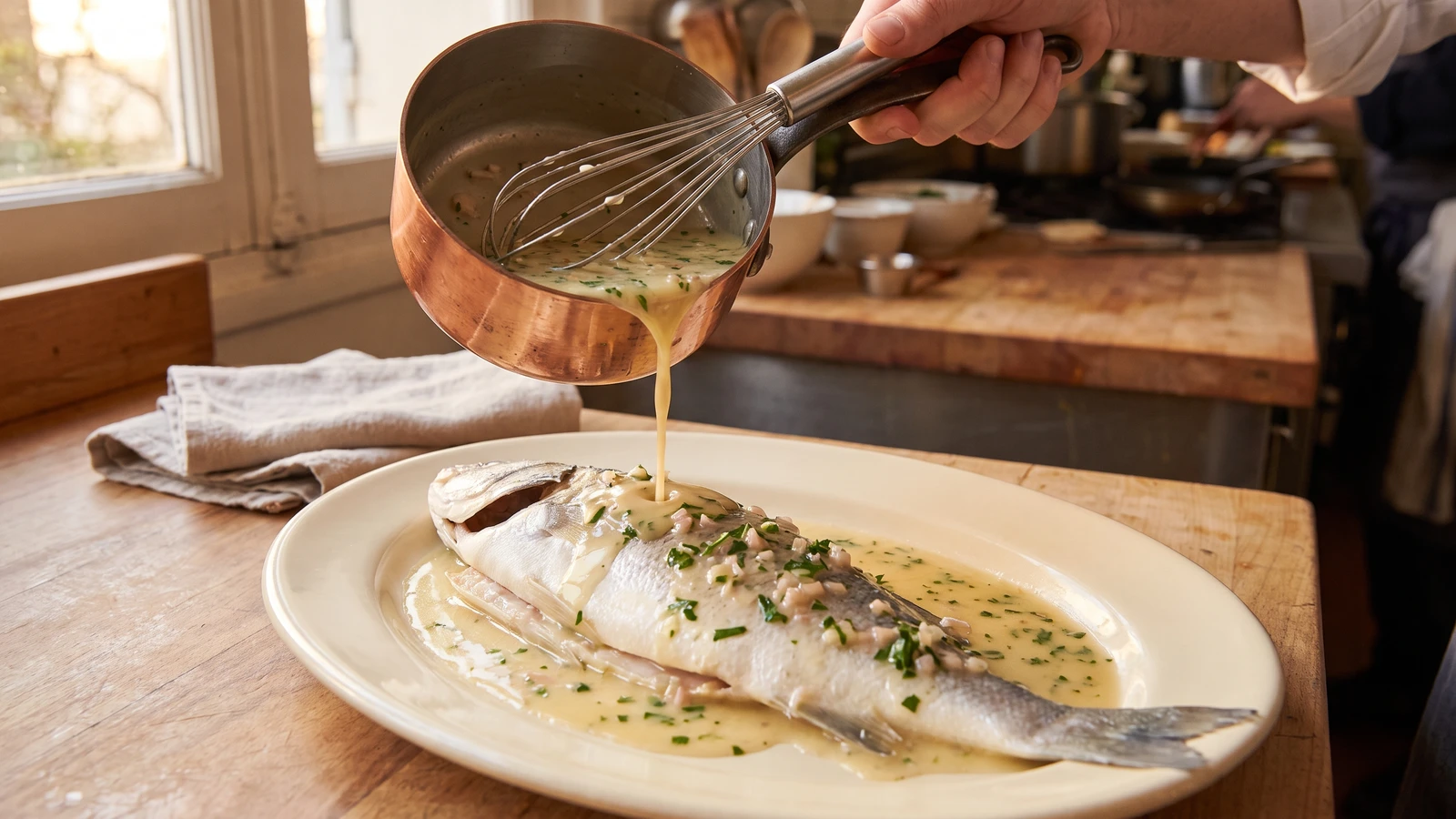
A Parisian lesson in reduction and emulsion: shallots, white wine, fish fumet, and velouté drawn to concentration, then mounted with cold butter for a glossy sauce made for poached fish.
Sauce Bercy (a shallot and white-wine sauce for poached fish) teaches reduction before enrichment. The one true thing is simple: the wine and fish fumet must reach their proper concentration before the velouté or butter enters the pan. Butter gives gloss and roundness, but it cannot repair a watery foundation.
The original entry assumed a saucier on staff, fish stock never off the fire, and poaching liquor ready from the same kind of fish. It needed no salamander. For one cook, one stove, one evening, a small heavy saucepan, prepared fish fumet, prepared velouté, and a measuring jug are the honest equivalents. The brigade holding pot and excess quantity are scaffolding, so this version halves the entry to about one cup for four portions. Its ratios, sequence, reduction, and off-heat monter au beurre (mounting with butter) remain untouched because they are the dish.
When it is right, Bercy gleams pale ivory, the shallots are tender, the parsley stays green, and the sauce falls from a spoon in a generous ribbon. Reduce the wine and fumet to a true third before the velouté enters. That is the step that matters most.
Sauce Bercy belongs to Paris and takes its name from Bercy, the eastern wine-trading quarter whose warehouses, merchants, and taverns made wine part of the district's identity. Within the classical sauce families, the name settled on two distinct preparations sharing shallots and white wine: this pale sauce for poached fish and a darker sauce served with grilled meat. They are not interchangeable, since fish fumet and velouté give the fish version its entire foundation.
Quantity
3 tablespoons (45 ml / 28 g)
finely chopped
Quantity
1/2 cup (120 ml / 119 g)
Quantity
1/2 cup (120 ml / 120 g)
Quantity
1/3 cup (80 ml / 85 g)
Quantity
1/4 cup (60 ml / 57 g)
cut into 8 small cubes
Quantity
4 drops (0.2 ml / 0.2 g)
Quantity
2 teaspoons (10 ml / 10 g)
Quantity
1/4 cup (60 ml / 14 g)
finely chopped
| Ingredient | Quantity |
|---|---|
| shallotsfinely chopped | 3 tablespoons (45 ml / 28 g) |
| dry white wine | 1/2 cup (120 ml / 119 g) |
| fish fumet, or strained poaching liquor from the same kind of fish | 1/2 cup (120 ml / 120 g) |
| prepared fish velouté | 1/3 cup (80 ml / 85 g) |
| cold unsalted buttercut into 8 small cubes | 1/4 cup (60 ml / 57 g) |
| fish glaze | 4 drops (0.2 ml / 0.2 g) |
| fresh lemon juice | 2 teaspoons (10 ml / 10 g) |
| flat-leaf parsleyfinely chopped | 1/4 cup (60 ml / 14 g) |
Put the shallots in a small heavy saucepan over medium-low heat and stir for 20 to 30 seconds, just until their raw aroma begins to soften. Do not let them color. Immediately moisten with the white wine and fish fumet, or with strained poaching liquor from the same kind of fish when you have it. Bring the liquid to a controlled simmer.
Simmer uncovered until about 1/3 cup (80 ml) of liquid remains, roughly one-third of what entered the pan. The bubbles will grow slower and slightly heavier, and the shallot fragrance will lose its raw edge. This reduction is the sauce's backbone, so measure it in a heatproof jug if your eye is uncertain. If it goes too far and the pan is nearly dry, add fumet or water one teaspoon at a time until you return to the proper volume. Ça se rattrape.
Whisk the prepared fish velouté into the reduction and bring the sauce briefly to a boil. Lower the heat and simmer for 4 to 6 minutes, whisking often, until it is nappé (thick enough to coat the back of a spoon) and the shallots are tender. If it turns pasty, loosen it with a teaspoon of warm water; if it runs off the spoon like broth, simmer another minute.
Take the saucepan completely off the heat and wait 20 seconds. Whisk in the cold butter one cube at a time, adding the next only when the last has disappeared. The sauce should grow glossy and supple without becoming oily. Never let it boil after the butter enters. If beads of fat appear, stop adding butter, place 1 teaspoon of cold water in a clean bowl, and whisk in the broken sauce a spoonful at a time until it comes together; then finish with the remaining butter. Ça se rattrape.
Whisk in the fish glaze and lemon juice, then fold in the chopped parsley. Taste before considering any salt, since fumet, velouté, and fish glaze may already provide enough. Spoon the Bercy immediately over or around medium-sized poached fish. Keep it beside the stove if it must wait a few minutes, never over direct heat, and whisk once before serving. À table!
1 serving (about 60g)
Culinary guides, cultural storytelling, and the editorial depth that makes cooking meaningful.
Discover Culinary ExplorerChef Juliette
Beef shin, lean beef, and fowl begin in cold water and rise slowly toward a tremble. Skim before the boil, and you learn the quiet discipline that gives every clear French broth its backbone.
Chef Juliette
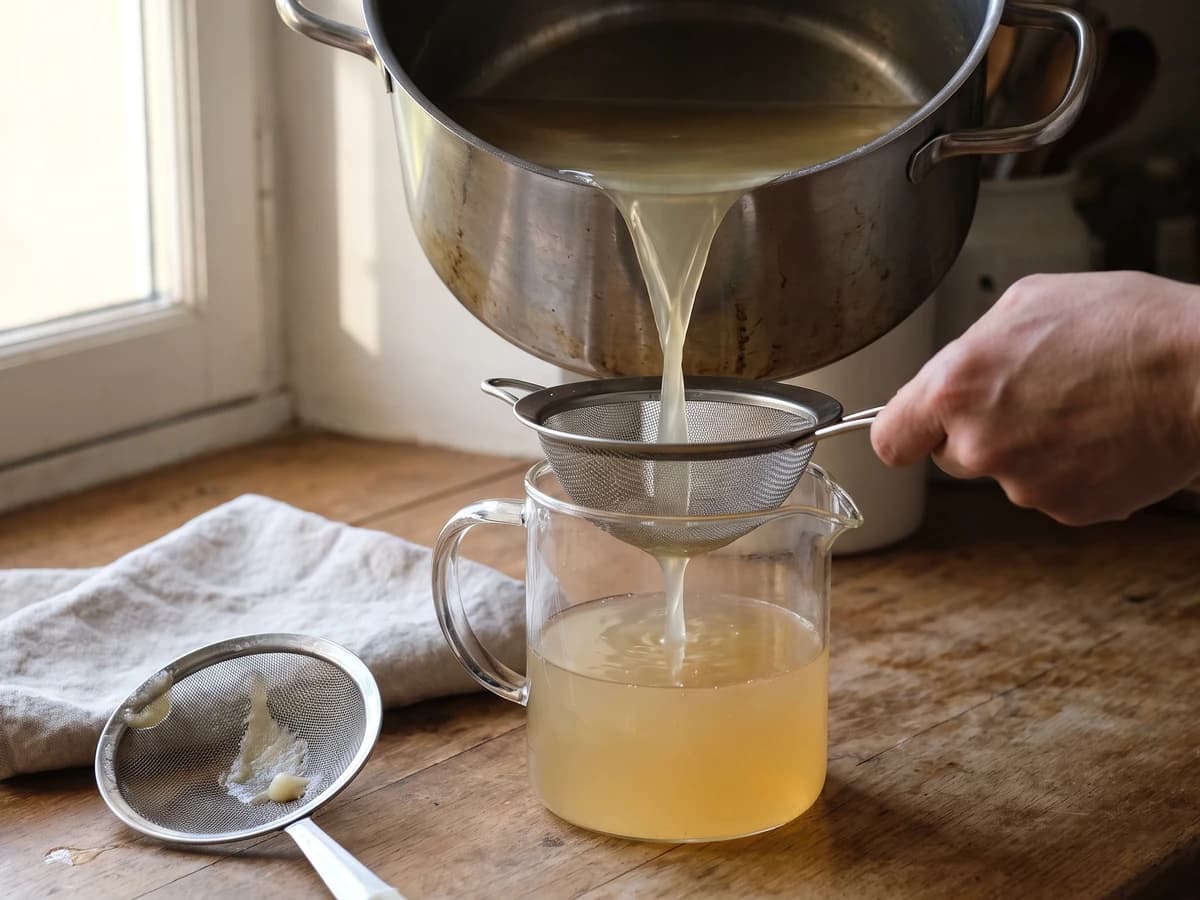
Break the veal bones small, then give them eight hours at a bare tremble. This pale, gelatinous fond becomes the quiet foundation beneath velouté, blanquette, and every sauce that must stay light.
Chef Juliette
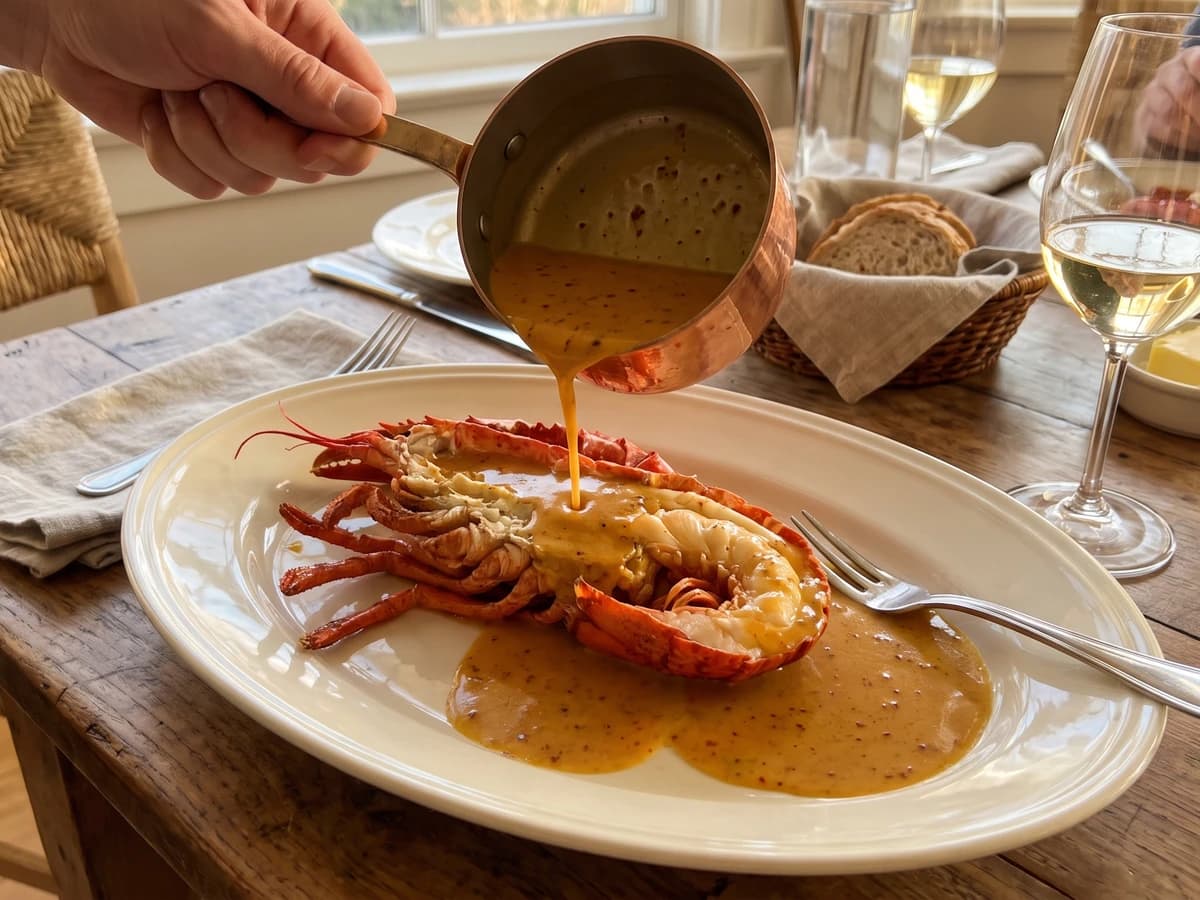
Sauce Orientale concentrates lobster-rich American Sauce with curry, then folds in cream away from the fire: a glossy, gently spiced derivative made for lobster, crayfish, and firm fish.
Chef Juliette
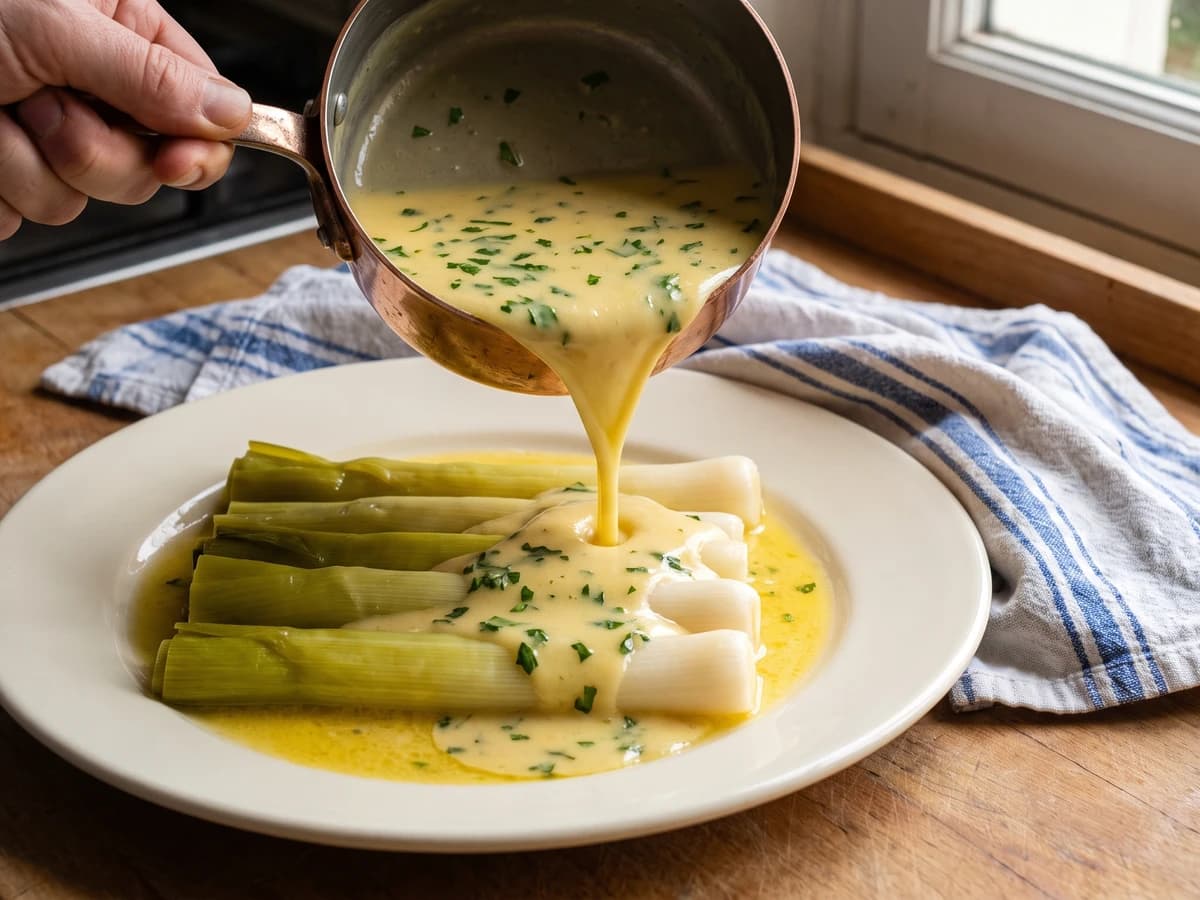
An old lesson in sauce families: Sauce Allemande takes mushroom liquor, then butter, lemon, and parsley, becoming a glossy Poulette for sheep's trotters, leeks, cauliflower, and anything needing gentle richness with a bright edge.