Chef Juliette
Bouillabaisse à la Marseillaise
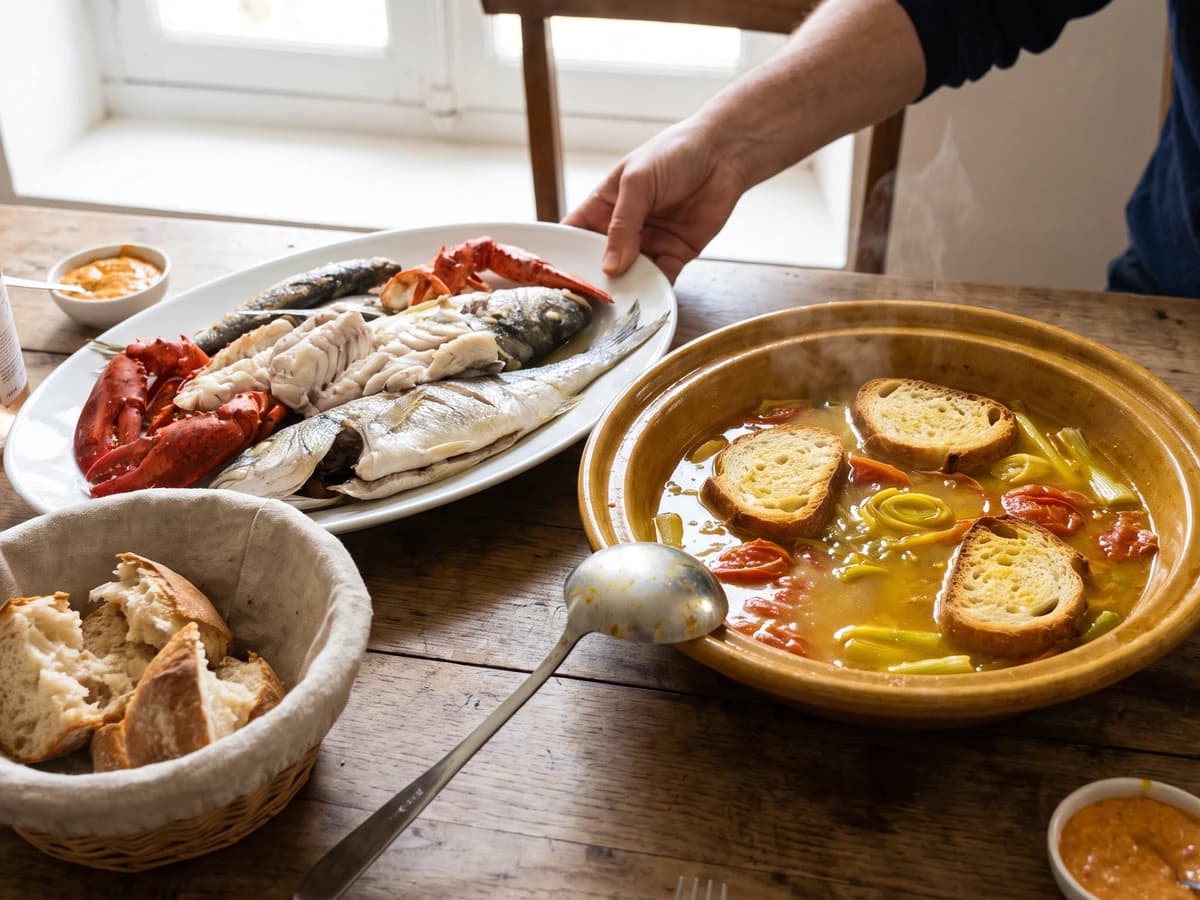
Marseille's great fish stew, saffron-gold and garlic-scented, proves that a hard boil can be the careful choice: it binds olive oil into broth before the whole pot meets bread.
A cooking platform built around craft, culture, and the stories behind what we eat.
Created by Chef Juliette
Based on No. 638, Purée de Haricots Verts, otherwise Cormeilles, from Le Guide Culinaire (1907) by Auguste Escoffier
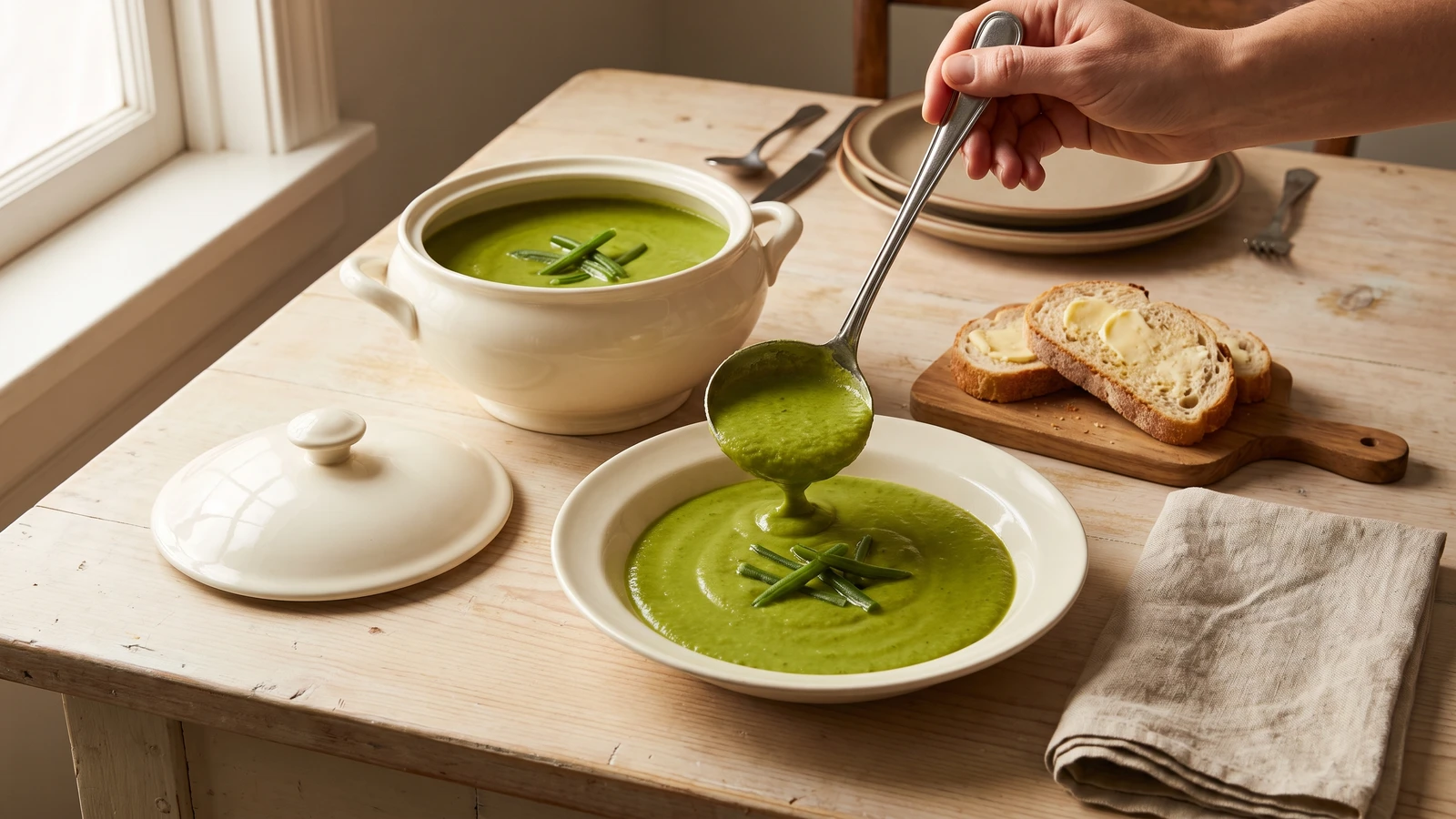
A vivid green purée built by fast blanching, a quiet butter stew, and potato's gentle liaison, passed fine and finished with milk for six generous bowls of weeknight comfort.
Purée de Haricots Verts, dite Cormeilles (green bean purée), teaches the discipline of colour. Its green is won or lost before the soup ever becomes a purée: parboil quickly in abundant salted water, chill immediately, drain fiercely, then keep every later heat gentle. Potato is the liaison, the binder, not the flavour; the beans must remain the first and last word.
The original assumed a saucier on staff, white consommé from a stockpot never off the fire, boiling milk waiting nearby, and a tamis, a fine drum sieve, with someone to work the soup through it. At home, one pot of mild white consommé or carefully strained light chicken stock, a blender, and a fine-mesh sieve do the honest work. The formula's compact proportions already make a home batch of about two quarts, so the ratios stay intact; constant skimming is brigade scaffolding and goes, while the blanch, the butter stew, the potato binding, and the final passing stay because they are the dish. One cook, one stove, one evening.
Cormeilles should pour in a satin ribbon, bright green and softly rounded by milk, with butter shining at the surface and fresh bean lozenges under the spoon. The blanch is the step that matters most. Once the beans turn olive, no sieve can put the colour back, so have the ice bath ready before the water boils.
Purée de Haricots Verts, dite Cormeilles, sits in the Paris-centred classical repertory of named potages purée, at home on grand and bourgeois tables rather than in a firmly documented regional farmhouse tradition. Although Cormeilles is a French place-name, the title here identifies a codified preparation and should not be presented as a proven local speciality of Normandy or the Paris outskirts. Its identity rests on an unusually restrained formula: green beans, white consommé, potato, milk, butter, and matching bean lozenges at service.
Quantity
About 6 cups (1½ lb / 680 g)
trimmed
Quantity
2 tablespoons (30 ml / 36 g), plus more only if needed
for the blanching water
Quantity
2 tablespoons (30 ml / 28 g)
for stewing
Quantity
2 medium, about 2 cups (12 oz / 340 g)
peeled and finely minced
Quantity
2⅓ cups (560 ml / 560 g)
Quantity
Up to 1 cup (240 ml / 245 g)
Quantity
2 tablespoons (30 ml / 28 g)
cut into small cubes for finishing
| Ingredient | Quantity |
|---|---|
| slender green beanstrimmed | About 6 cups (1½ lb / 680 g) |
| fine sea saltfor the blanching water | 2 tablespoons (30 ml / 36 g), plus more only if needed |
| unsalted butterfor stewing | 2 tablespoons (30 ml / 28 g) |
| floury potatoespeeled and finely minced | 2 medium, about 2 cups (12 oz / 340 g) |
| white chicken consommé or well-strained light chicken stock | 2⅓ cups (560 ml / 560 g) |
| whole milk | Up to 1 cup (240 ml / 245 g) |
| cold unsalted buttercut into small cubes for finishing | 2 tablespoons (30 ml / 28 g) |
Prepare a large bowl of ice water before you begin. Bring a broad pot of water to a vigorous boil, add the salt, then drop in the green beans and parboil uncovered for 3 to 4 minutes. The water must return to the boil quickly; crowded, lukewarm water dulls the beans before they are tender. As soon as the beans bend without becoming soft, transfer them to the ice water. Drain thoroughly and pat dry. Set aside 10 to 12 of the neatest beans for the garnish, then cut them diagonally into narrow lozenges.
Melt the stewing butter in a wide, heavy saucepan over medium-low heat. Add the well-drained beans and cook gently for 10 to 12 minutes, turning them often so each piece is coated in butter. They should soften without frying or taking colour. If the butter begins to brown, lower the heat and add a spoonful of the measured consommé; the pan is too hot, but the beans can still be saved.
Add the finely minced potatoes and the white chicken consommé or light chicken stock. Bring the liquid just to a simmer, partially cover, and cook gently for 15 to 20 minutes, until the potato collapses readily beneath a spoon and the beans are completely tender. Keep the surface at a quiet tremble. A hard boil works air into the soup, drives off liquid unevenly, and spends the green colour for nothing.
Remove the pan from the heat and blend promptly until smooth. If using a countertop blender, work in batches with the jar no more than half full and the lid vented beneath a folded towel. Pass the purée through a fine-mesh sieve into a clean saucepan, pressing with a ladle or flexible spatula but leaving the dry strings and skins behind. The old tamis was finer and broader, but this gives the same silky result without requiring a second pair of hands.
Heat the milk in a small saucepan until it reaches its first boil. Return the purée to gentle heat and stir in half the milk, then add only enough of the remainder to make a soup that coats the spoon lightly yet pours in a continuous ribbon. Despumate, skimming away the pale foam and any skin that gathers at the surface. If the soup is too thick, add more hot milk by the spoonful; if it is thin, hold it at the barest simmer for a few minutes, stirring constantly. Ça se rattrape. Correct the consistency before adding the final butter, since reducing afterward can leave the finish greasy.
Take the saucepan completely off the heat. Monter au beurre, whisk in the cold finishing butter a few cubes at a time, until the purée gleams and the butter disappears into it. Taste before adding salt, since consommé may already carry enough. If butter floats at the surface instead of emulsifying, whisk in a tablespoon of hot milk or blend for a few seconds. Warm the reserved bean lozenges in a spoonful of soup, divide them among the bowls, and ladle the Cormeilles over them. À table!
1 serving (about 240g)
Culinary guides, cultural storytelling, and the editorial depth that makes cooking meaningful.
Discover Culinary ExplorerChef Juliette
Marseille's great fish stew, saffron-gold and garlic-scented, proves that a hard boil can be the careful choice: it binds olive oil into broth before the whole pot meets bread.
Chef Juliette
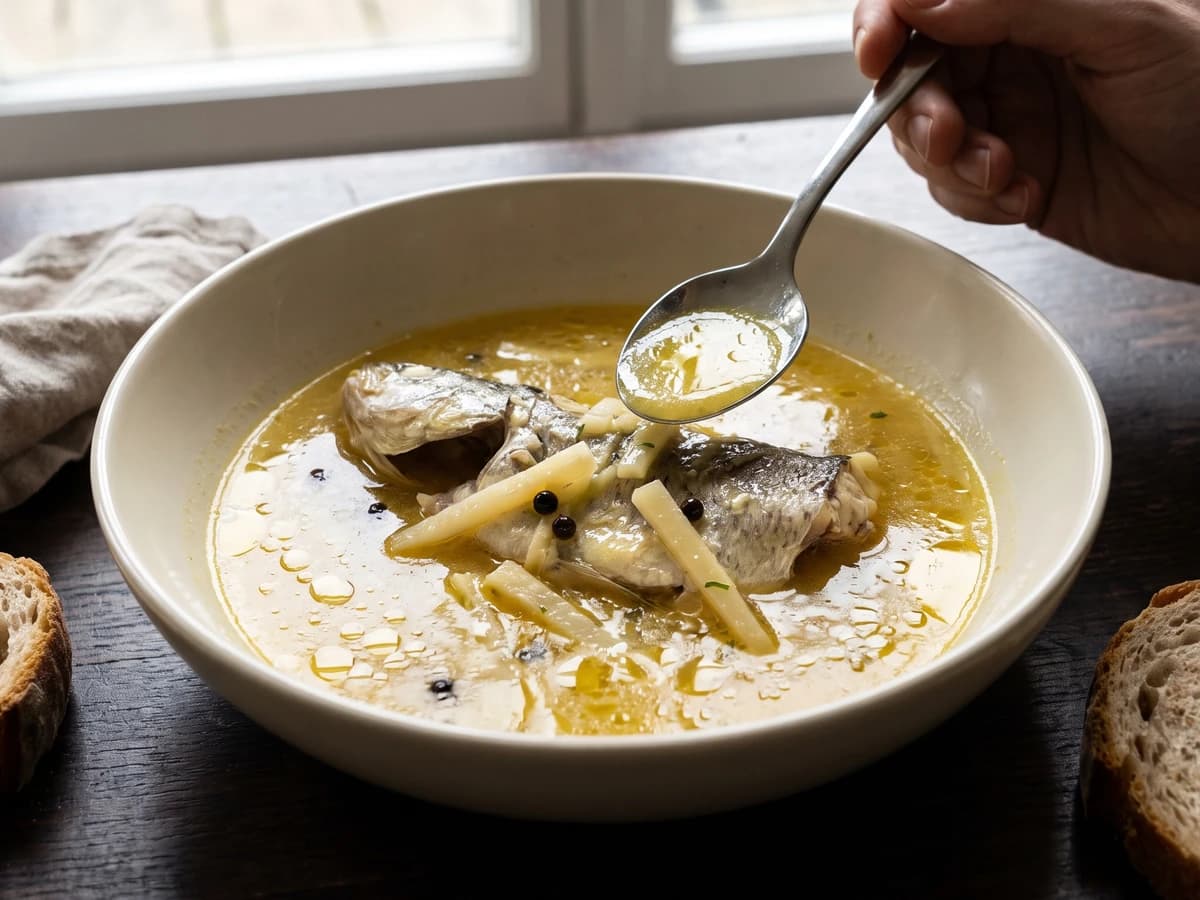
Waterzoi asks fresh, bone-in river fish to thicken its own buttery broth, with parsley root and pepper for company. No flour, no stockpot, just a brisk simmer watched closely.
Chef Juliette
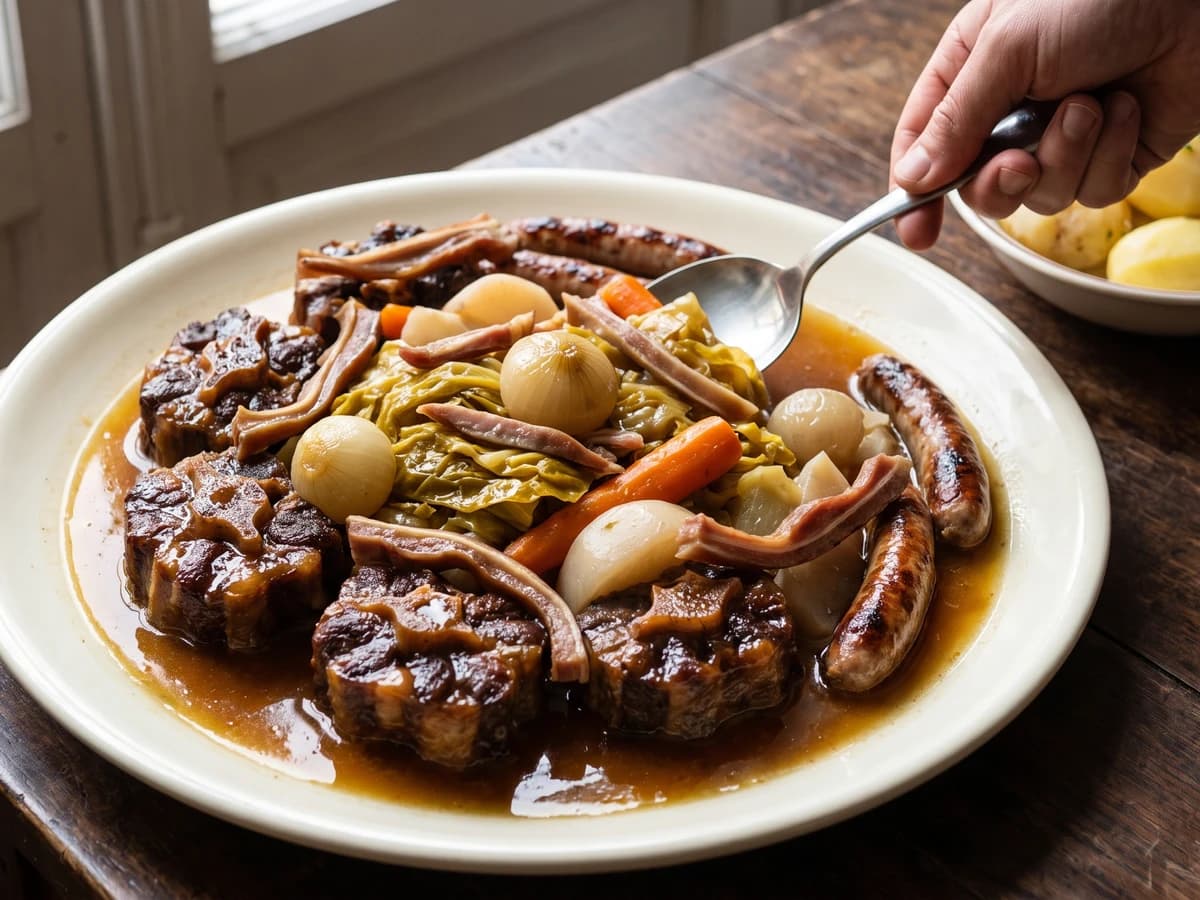
Queue de Bœuf en Hochepot gathers oxtail, pig's trotter and ear, cabbage, roots, and grilled chipolatas around a clear, gelatin-rich broth whose quiet simmer keeps every piece tender and distinct.
Chef Juliette
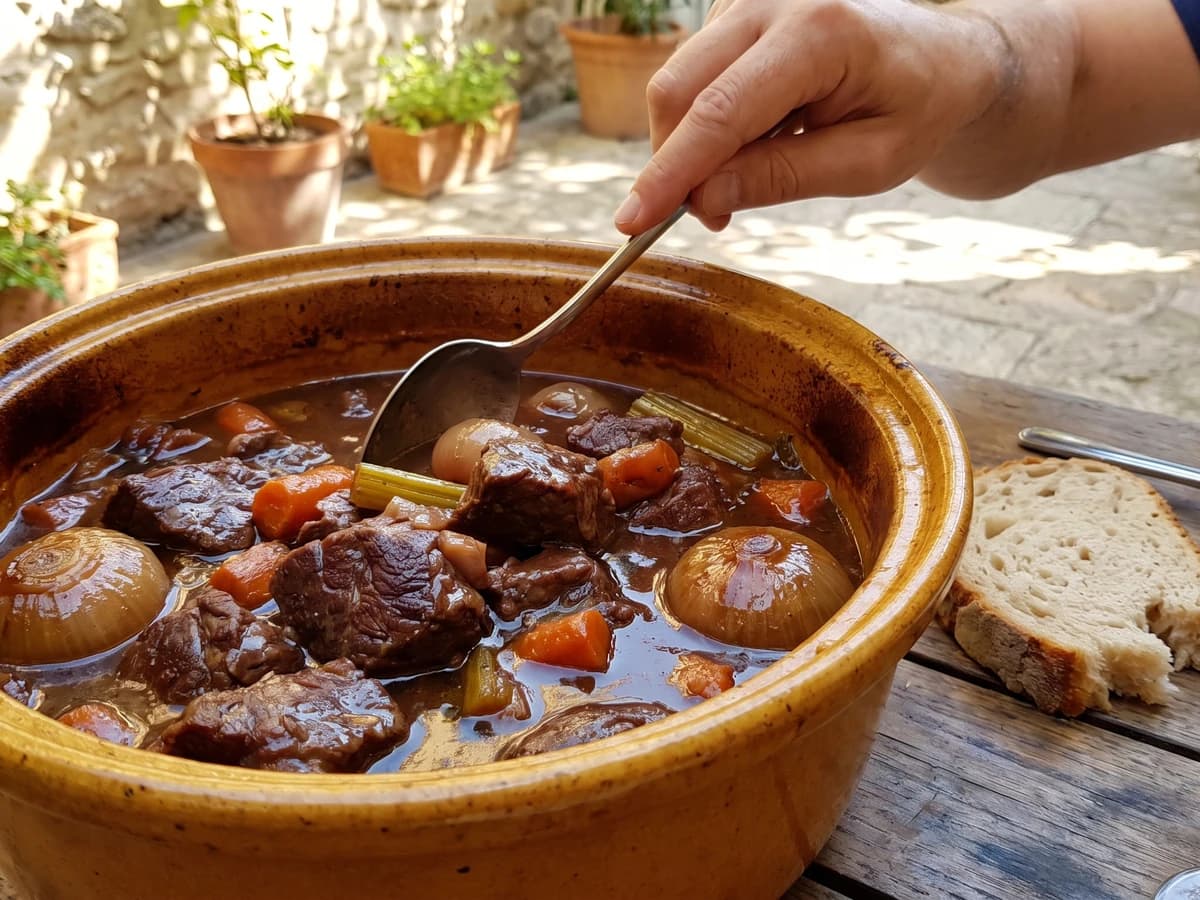
Beef shoulder larded with bacon, sharpened by red wine and vinegar, then sealed with garlic, vegetables, and dry lemon peel until the low oven turns it yielding and the gravy darkly glossy.