Chef Juliette
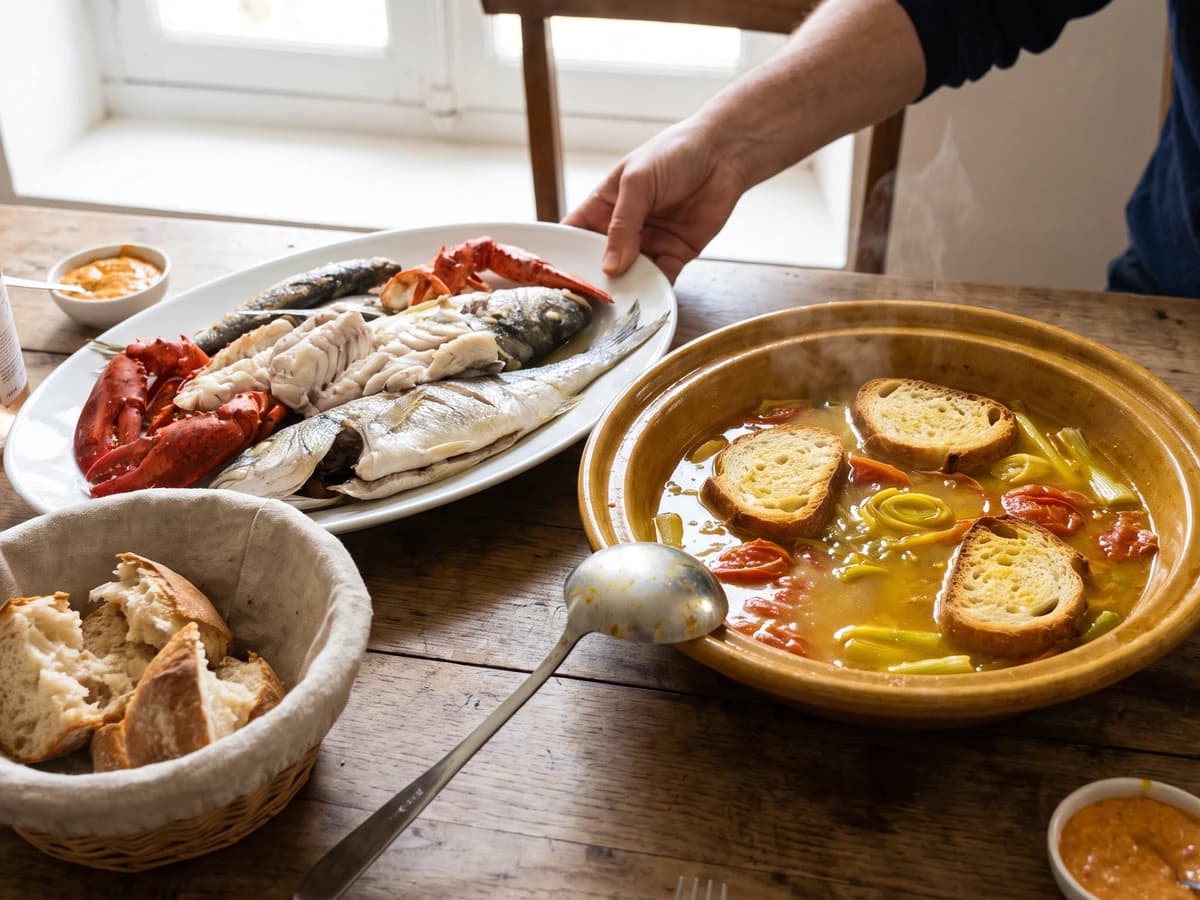
Bouillabaisse à la Marseillaise
Marseille's great fish stew, saffron-gold and garlic-scented, proves that a hard boil can be the careful choice: it binds olive oil into broth before the whole pot meets bread.
A cooking platform built around craft, culture, and the stories behind what we eat.

Created by Chef Juliette
Based on No. 635, Purée de Crosnes, otherwise Japonaise, from Le Guide Culinaire (1907) by Auguste Escoffier
Tiny spiral crosnes, stewed gently in butter and bound with potato, become an ivory purée finished with milk or consommé and translucent perles du Japon. Clean every groove, and the dish is nearly won.
Purée de Crosnes, dite Japonaise (silken crosne soup with tiny tapioca pearls) teaches a severe little lesson: delicacy begins with cleanliness. Crosnes hide earth in every ring of their ivory spirals, and no amount of butter can charm grit out of a finished spoonful. Wash them until the last basin stays clear, then the rest is gentle work.
The source method assumes a tammy, a saucier free to press the vegetables through it, and boiled milk or white consommé waiting beside the stove. At home, this becomes about two quarts: the book's proportions are preserved at one and a half pounds of crosnes, three medium potatoes, three cups of first cooking liquid, and three tablespoons of perles du Japon. A food mill or brief blending followed by a fine sieve replaces the tammy, while the unspecified finishing butter is fixed at three tablespoons so the home cook isn't asked to guess. The dedicated saucier is scaffolding. The butter stewing, gentle simmer, sieving, and final mounting are the dish.
The purée should be pale ivory, softly earthy and nutty, with enough body to hold the translucent pearls without becoming mashed potato in a bowl. Keep the heat low when milk is used, and keep the machine work brief, because scorched milk and overworked potato are the two turns toward heaviness. Before any pan goes on the flame, clean every groove of every crosne. That is the step that decides the soup.
Crosnes take their French name from Crosne in Essonne, southeast of Paris, where the East Asian tuber entered market gardening before traveling into Parisian potages and garnishes. The title Japonaise reflects the route and market language through which French cooks met the vegetable, not a Japanese soup tradition; the tuber is native to China and reached French tables through Japan. Perles du Japon is the classical French pantry name for small tapioca pearls, so the garnish creates a neat second echo of the soup's name while adding texture to an otherwise silken purée.
Quantity
About 5 cups (1½ lb / 680 g)
firm and pale
Quantity
2 tablespoons (30 ml / 30 g)
for cleaning
Quantity
6 tablespoons (90 ml / 85 g)
divided, with 3 tablespoons kept cold for finishing
Quantity
5 cups (1.18 L / about 1.2 kg)
brought just to a boil and kept hot, divided
Quantity
3, about 3 cups (1 lb / 450 g)
peeled and minced
Quantity
3 tablespoons (45 ml / 36 g)
Quantity
Up to 1½ teaspoons (7 ml / 9 g)
divided, as needed
| Ingredient | Quantity |
|---|---|
| crosnes (Stachys affinis)firm and pale | About 5 cups (1½ lb / 680 g) |
| coarse saltfor cleaning | 2 tablespoons (30 ml / 30 g) |
| unsalted butterdivided, with 3 tablespoons kept cold for finishing | 6 tablespoons (90 ml / 85 g) |
| whole milk or white consommébrought just to a boil and kept hot, divided | 5 cups (1.18 L / about 1.2 kg) |
| medium potatoespeeled and minced | 3, about 3 cups (1 lb / 450 g) |
| perles du Japon (small pearl tapioca) | 3 tablespoons (45 ml / 36 g) |
| fine sea saltdivided, as needed | Up to 1½ teaspoons (7 ml / 9 g) |
Rinse the crosnes in a large bowl of cold water, lifting them out rather than pouring the dirty water over them again. Spread them on a clean tea towel, scatter over the coarse salt, fold the towel around them, and rub briskly for 1 to 2 minutes; the salt scours their thin skins and reaches into the rings. Rinse in several changes of water, brushing any stubborn grooves individually. Stop only when the final water remains completely clear. Grit is the one fault no later technique can rescue.
Bring a generous saucepan of water to a full boil. If using milk for the soup, season the water with ½ teaspoon of the fine salt; if using an already seasoned consommé, hold the salt until the end. Add the crosnes and parboil for 5 minutes from the moment the water returns to a boil. Drain thoroughly. They should have lost their raw edge but still resist the point of a knife.
Melt 3 tablespoons of the butter in a heavy 4-quart saucepan over medium-low heat. Add the drained crosnes, turn them until every spiral gleams, then cover and stew gently for 8 to 10 minutes, shaking the pan occasionally. Keep them pale. This is stewing, not sautéing, and browned butter would overwhelm the crosnes' quiet, nutty flavor.
Pour in 3 cups of the hot milk or white consommé, then add the minced potatoes. If using milk, add another ½ teaspoon of fine salt; with consommé, taste before adding any. Bring the soup only to a bare simmer, cover slightly ajar, and cook for 25 to 30 minutes, stirring along the pan floor every few minutes, until a crosne crushes readily and the potato has completely softened. Milk must never boil hard. If it catches, do not scrape the scorched bottom. Pour the unburned soup into a clean saucepan and continue gently. Ça se rattrape.
While the vegetables cook, bring 1½ cups of the remaining milk or consommé to the barest simmer in a small saucepan. Rain in the perles du Japon while stirring, then poach gently for 15 to 20 minutes, or until nearly translucent with only a tiny white point at each center. Stir often so they remain separate. If they begin to clump, loosen them at once with a spoonful of the remaining hot liquid and stir gently. Drain through a fine sieve and keep them moistened with a tablespoon of their cooking liquid.
Pass the soup through the fine disk of a food mill. If using an immersion blender, blend only until the vegetables lose their shape, then stop; prolonged blending makes the potato elastic and pasty. Press the purée through a fine-mesh sieve with the back of a ladle, leaving the fibrous fragments behind. This is the home equivalent of the tammy, and it must stay. A crosne purée that has not been sieved may taste right, but it will never have the intended silk.
Return the sieved purée to a clean saucepan and dépouiller it, meaning hold it at a whispering simmer for about 5 minutes while skimming away any foam that gathers on top. Stir frequently. Loosen it a tablespoon at a time with the remaining hot milk or consommé until it falls from the ladle in a broad ribbon, retaining 2 tablespoons of liquid for the finish. If it becomes too thin, simmer it uncovered until the potato restores its body. Taste and add only as much remaining salt as it needs.
Take the saucepan off the heat. Monter au beurre, finish by whisking in the remaining 3 tablespoons of cold butter a small piece at a time, until the purée has a quiet gloss and rounded flavor. Do not boil it afterward. If butter beads appear on the surface, whisk in 1 tablespoon of the reserved hot liquid away from the heat until the emulsion returns. Divide the perles du Japon among warmed soup plates and ladle the purée around them, leaving a few pearls visible at each center. Serve at once. À table!
1 serving (about 250g)
Culinary guides, cultural storytelling, and the editorial depth that makes cooking meaningful.
Discover Culinary ExplorerChef Juliette
Marseille's great fish stew, saffron-gold and garlic-scented, proves that a hard boil can be the careful choice: it binds olive oil into broth before the whole pot meets bread.
Chef Juliette
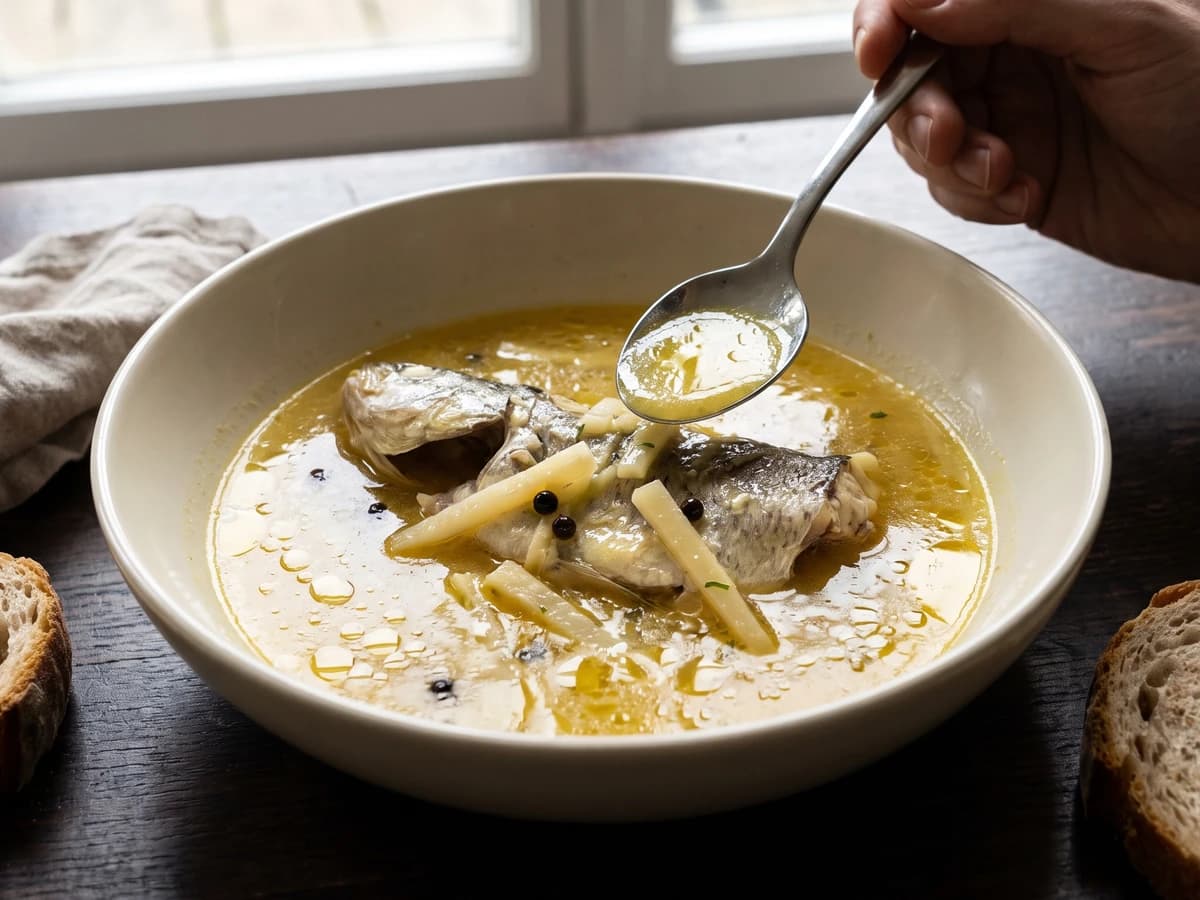
Waterzoi asks fresh, bone-in river fish to thicken its own buttery broth, with parsley root and pepper for company. No flour, no stockpot, just a brisk simmer watched closely.
Chef Juliette
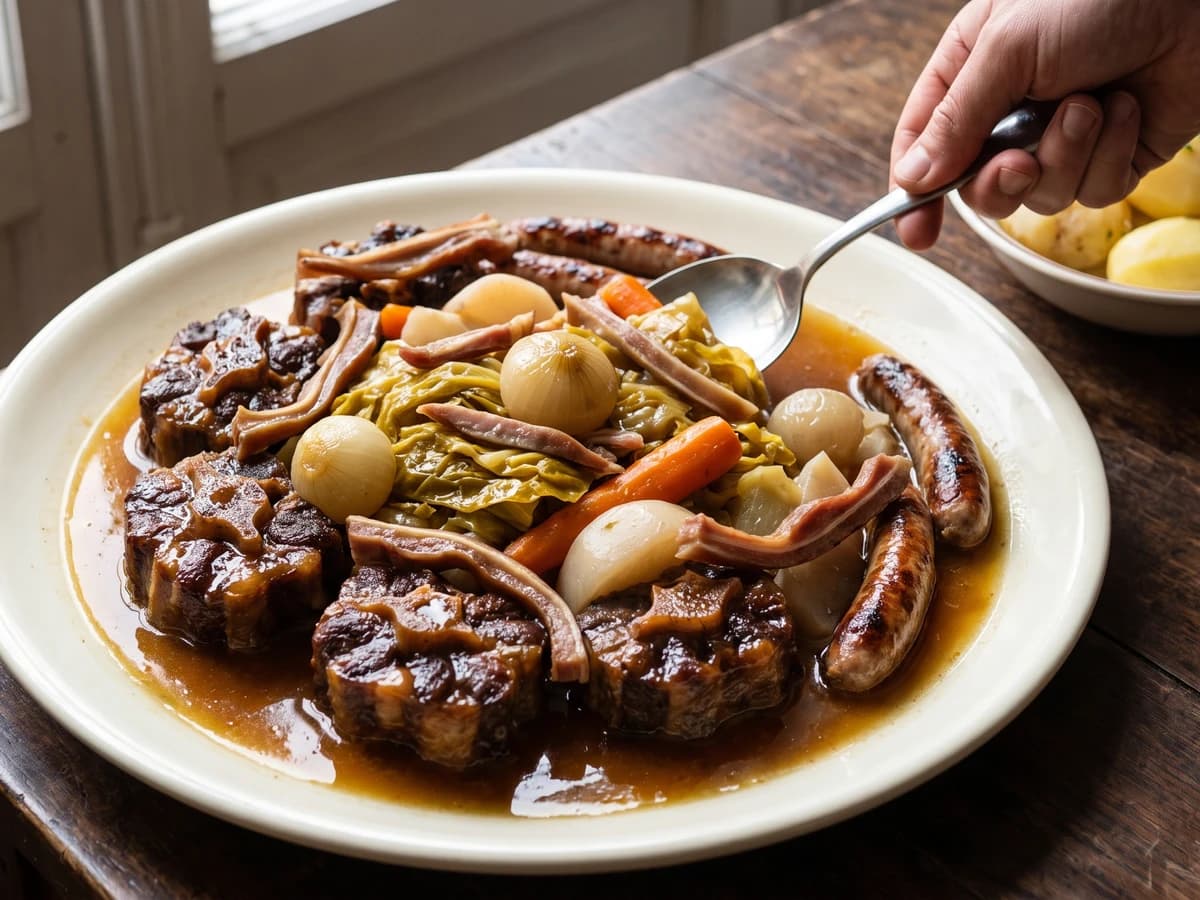
Queue de Bœuf en Hochepot gathers oxtail, pig's trotter and ear, cabbage, roots, and grilled chipolatas around a clear, gelatin-rich broth whose quiet simmer keeps every piece tender and distinct.
Chef Juliette
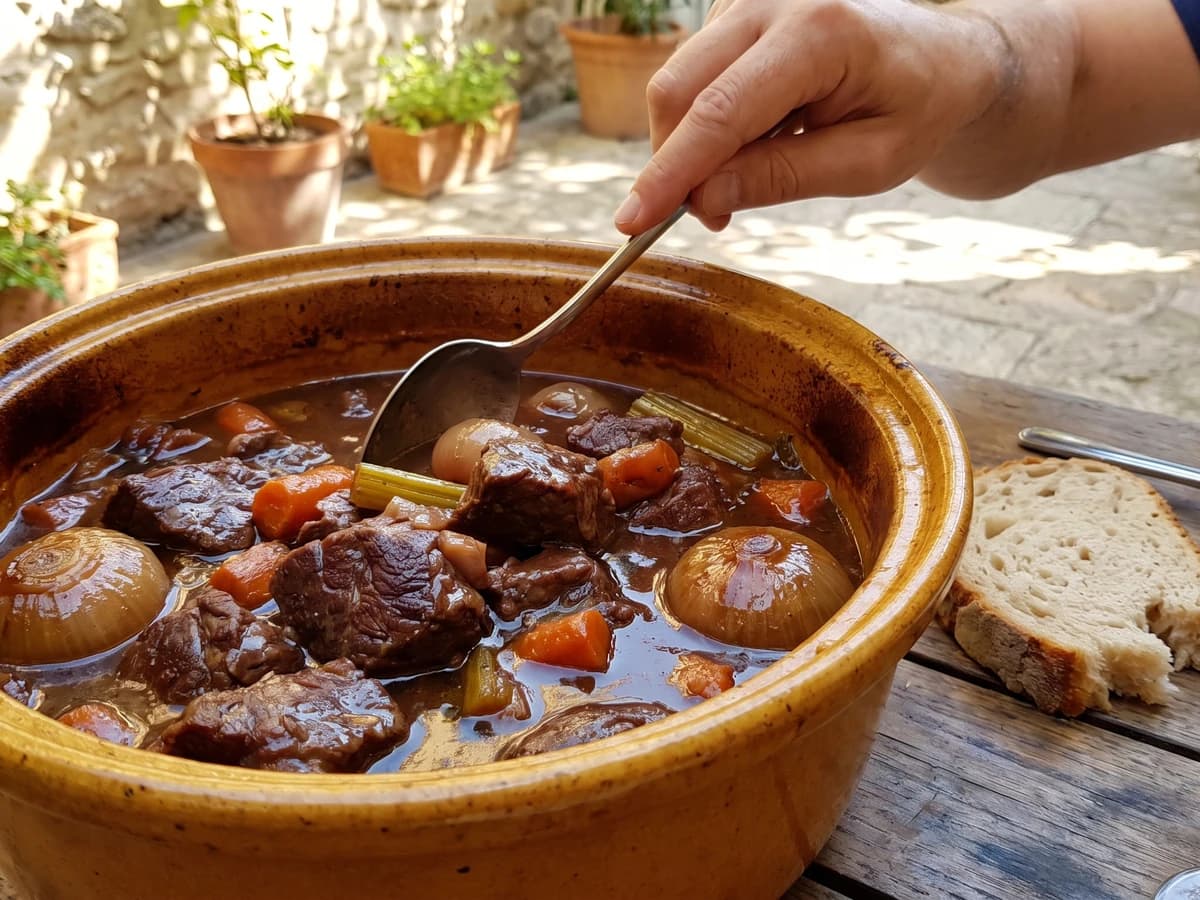
Beef shoulder larded with bacon, sharpened by red wine and vinegar, then sealed with garlic, vegetables, and dry lemon peel until the low oven turns it yielding and the gravy darkly glossy.