Chef Juliette
Bouillabaisse à la Marseillaise
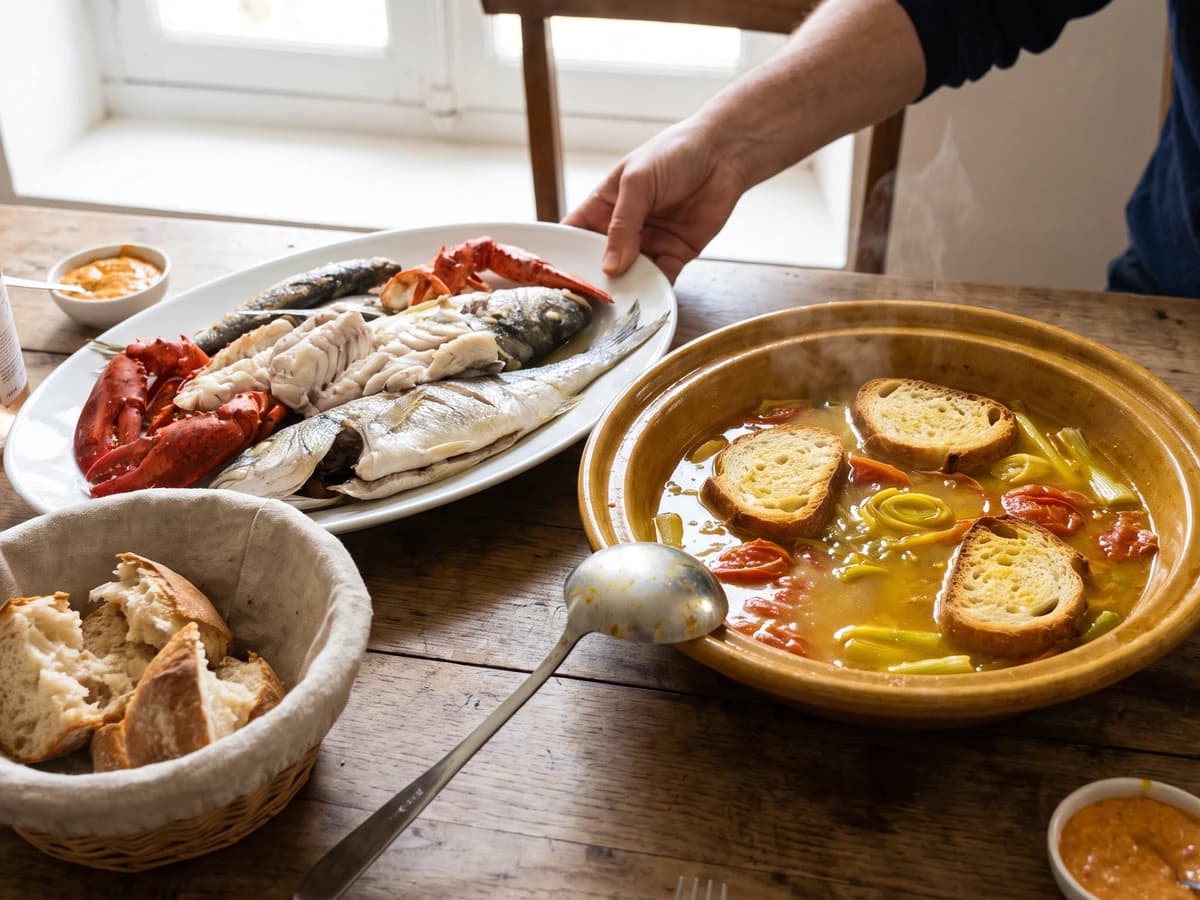
Marseille's great fish stew, saffron-gold and garlic-scented, proves that a hard boil can be the careful choice: it binds olive oil into broth before the whole pot meets bread.
A cooking platform built around craft, culture, and the stories behind what we eat.
Created by Chef Juliette
Based on No. 634, Purée de Choux-fleurs, otherwise Dubarry, from Le Guide Culinaire (1907) by Auguste Escoffier
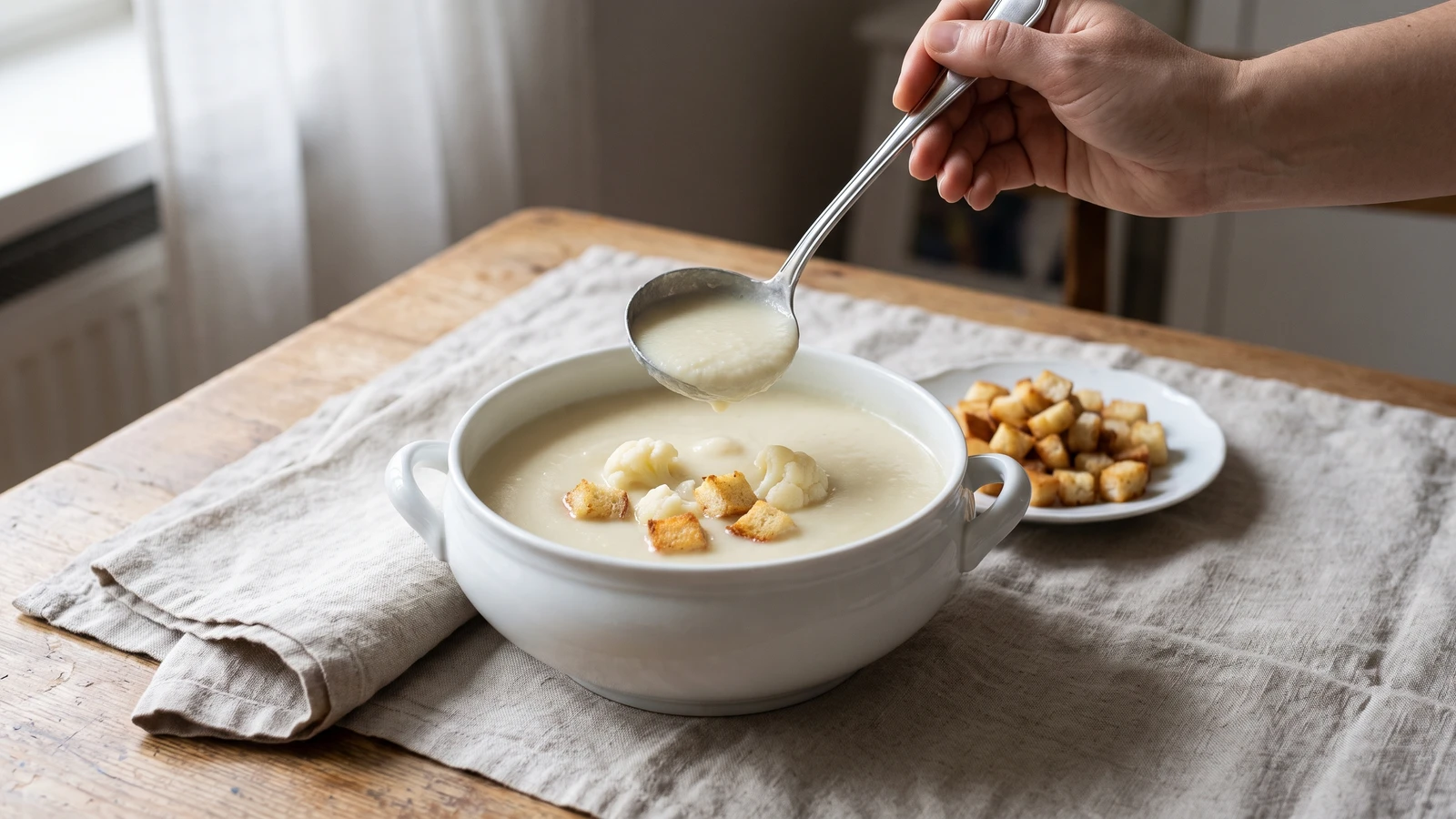
Purée de Choux-fleurs Dubarry turns cauliflower, milk, potato, and butter into an ivory soup of remarkable poise, with white florets and crisp butter-fried croûtons declaring exactly what is in the bowl.
Purée de Choux-fleurs Dubarry (cauliflower purée soup) teaches the discipline of keeping pale ingredients pale. The cauliflower must taste unmistakably of itself, softened without browning, while potato gives the milk enough body to carry it. Scorched milk or browned cauliflower muddies the whole bowl, so gentle heat is the one true thing to understand before you touch the pan.
The original formula assumed a saucier with boiled milk ready, a tammy stretched beside the stove, and another pair of hands to fry the bread while the soup was skimmed. It calls for neither stock nor salamander. At home, one saucepan, a sturdy fine-mesh sieve, and a skillet do the work. I have kept its pound of cauliflower, two medium potatoes, and first pint of milk, then fixed the unspecified finishing milk and butter so you can make about two quarts without guessing. Service holding is brigade scaffolding and goes. Parboiling, the gentle milk simmer, potato binding, sieving, skimming, and butter finish stay, because they are the dish.
Finished correctly, Dubarry is ivory and softly glossy, substantial enough to coat a spoon but never heavy. The white florets tell you what it is, and the croûtons bring butter and crisp edges to each spoonful. Watch the milk simmer closely and never scrape a pan that has caught. One cook, one stove, one evening.
Purée Dubarry belongs to the classical grand-kitchen vocabulary of Paris, where the name associated with Madame du Barry came to signify cauliflower across soups, garnishes, and composed dishes. The preparation traveled into bourgeois dining rooms because its means are so domestic: cauliflower, milk, potato, and butter handled with unusual care. Dubarry does not necessarily mean a cream soup; this purée is bound with potato, while velouté and cream versions remain related preparations rather than requirements.
Quantity
5 cups (454 g / 1 lb)
divided into small bunches
Quantity
2 medium (about 2 cups / 340 g)
peeled and cut into 6 mm dice
Quantity
5 cups (1.2 L / about 1.24 kg)
divided
Quantity
4 tablespoons (60 ml / 57 g)
cubed, for finishing
Quantity
1½ cups (360 ml / 90 g)
crusts removed and cut into 1 cm dice
Quantity
3 tablespoons (45 ml / 43 g)
for frying the bread
Quantity
as needed
| Ingredient | Quantity |
|---|---|
| cauliflower floretsdivided into small bunches | 5 cups (454 g / 1 lb) |
| floury potatoespeeled and cut into 6 mm dice | 2 medium (about 2 cups / 340 g) |
| whole milkdivided | 5 cups (1.2 L / about 1.24 kg) |
| cold unsalted buttercubed, for finishing | 4 tablespoons (60 ml / 57 g) |
| day-old white breadcrusts removed and cut into 1 cm dice | 1½ cups (360 ml / 90 g) |
| unsalted butterfor frying the bread | 3 tablespoons (45 ml / 43 g) |
| fine sea salt | as needed |
Bring a large saucepan of lightly salted water to a full boil. Add the cauliflower bunches and parboil for 4 to 5 minutes, until their raw smell has softened and the smallest stems yield to the point of a knife without collapsing. Keep the water boiling freely so the cauliflower remains white. Drain thoroughly, then reserve 12 of the smallest, neatest florets for the garnish. Let everything stand in the colander for 5 minutes; water clinging to the vegetable would dilute the milk.
Put all the milk in a clean saucepan and warm it over medium heat, stirring across the bottom frequently. Bring it only to the first rise, when small bubbles gather around the edge and the surface begins to lift, then lower the heat immediately. Measure 2 cups (480 ml) of the boiled milk into a wide, heavy saucepan and keep the remainder covered and warm. This replaces the brigade's pot of boiled milk waiting beside the stove.
Add the drained cauliflower, except the garnish florets, and the diced potatoes to the 2 cups of hot milk. Cover partially and hold the mixture at the barest tremble for 22 to 28 minutes, stirring gently every few minutes, until both vegetables crush without resistance against the side of the pan. The milk need not cover them completely, but it must never boil hard. If it catches, don't scrape the bottom. Ça se rattrape: pour the unburned contents into a clean saucepan, leaving the scorched layer behind, then continue over lower heat.
While the vegetables simmer, melt the frying butter in a broad skillet over medium heat. When the foam subsides, add the bread dice in one layer and turn them patiently for 6 to 8 minutes, until every face is butter-gold and the centres are crisp. If the edges darken before the bread dries, lower the heat and keep turning. Lift the croûtons onto a plate and leave them uncovered so they stay crisp.
Set a sturdy fine-mesh sieve over a clean saucepan. Working in batches, spoon in the cauliflower, potato, and cooking milk, then press everything through with a flexible spatula or the back of a ladle. Scrape the smooth purée from the underside of the sieve and discard only the dry fibres left behind. This is the home equivalent of the tammy, and it preserves the potato's silken body. A prolonged beating in a blender can turn the potato gluey, so the sieve is one piece of the old method worth keeping.
Place the sieved purée over low heat and whisk in the reserved hot milk one cup at a time. Stop when the soup flows readily from the ladle while leaving a light, even coat on its bowl, using up to the full 5 cups of milk to bring the yield close to 2 quarts. If it is too thick, add another splash of hot milk. If it is too thin, simmer it uncovered for a few minutes, stirring across the bottom. Don't add flour; the potatoes are the appointed thickening.
Bring the soup back to the gentlest simmer for 2 to 3 minutes. Dépouiller, skim the pale froth from the surface, until the soup looks clean and satiny, then remove the pan from the heat. Whisk in the cold finishing butter a few cubes at a time until it disappears into a soft gloss, and season carefully with salt. If yellow beads of butter float on top, the soup was too hot. Lift it well away from the heat and whisk in a tablespoon of cold milk until the emulsion returns. Ça se rattrape.
Warm the reserved cauliflower florets in a ladleful of soup for 1 minute. Pour the Dubarry into warmed bowls or a soupière, arrange the white florets where they remain visible, and add the butter-fried croûtons only as the soup reaches the table. Keep extra croûtons alongside for the second helping. À table!
1 serving (about 250g)
Culinary guides, cultural storytelling, and the editorial depth that makes cooking meaningful.
Discover Culinary ExplorerChef Juliette
Marseille's great fish stew, saffron-gold and garlic-scented, proves that a hard boil can be the careful choice: it binds olive oil into broth before the whole pot meets bread.
Chef Juliette
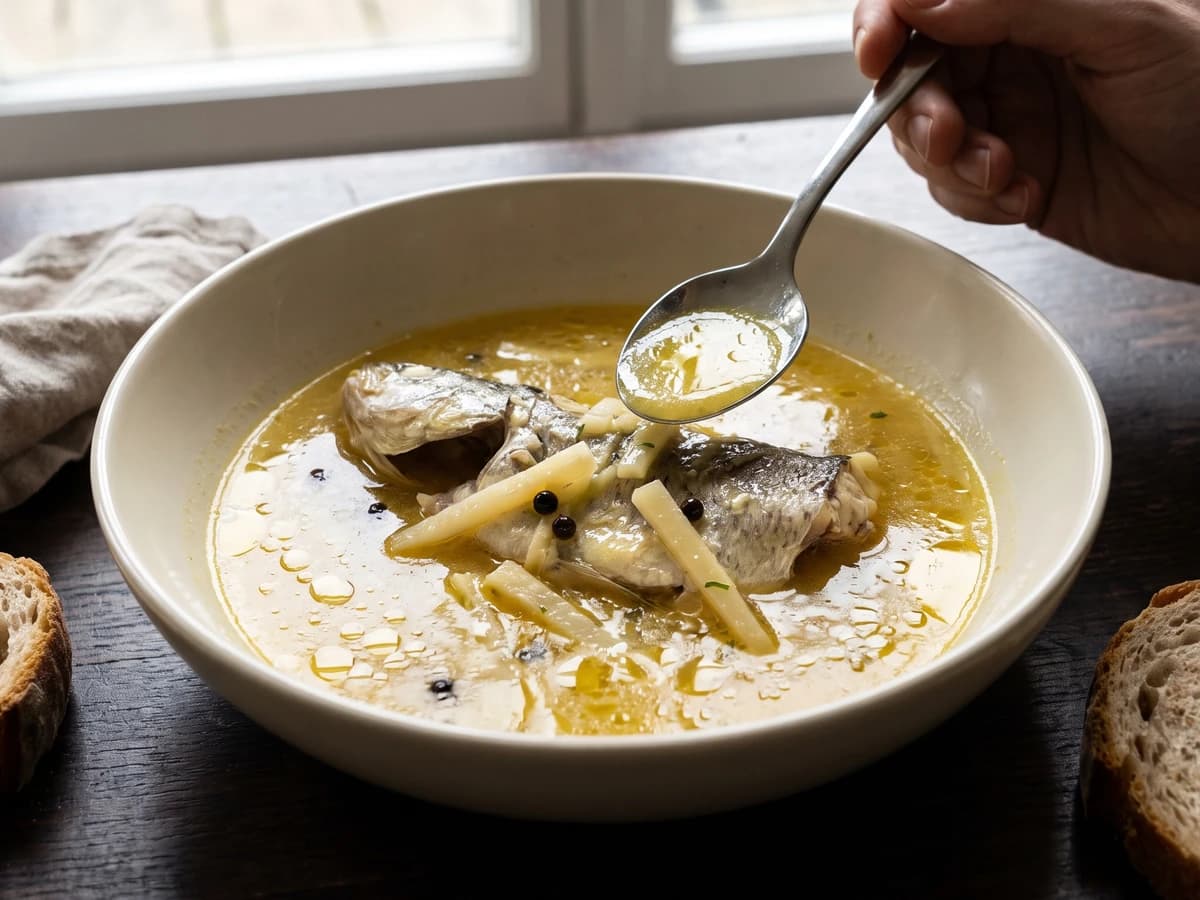
Waterzoi asks fresh, bone-in river fish to thicken its own buttery broth, with parsley root and pepper for company. No flour, no stockpot, just a brisk simmer watched closely.
Chef Juliette
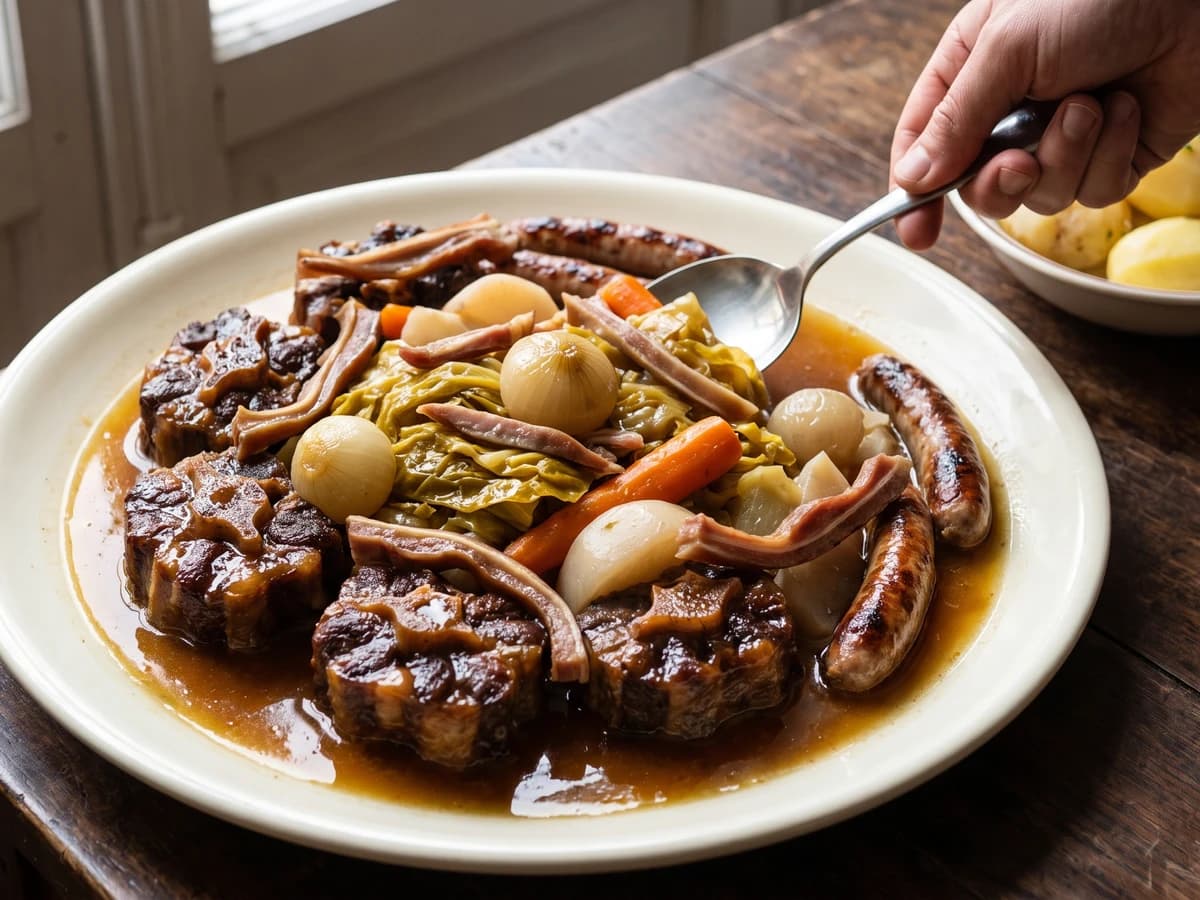
Queue de Bœuf en Hochepot gathers oxtail, pig's trotter and ear, cabbage, roots, and grilled chipolatas around a clear, gelatin-rich broth whose quiet simmer keeps every piece tender and distinct.
Chef Juliette
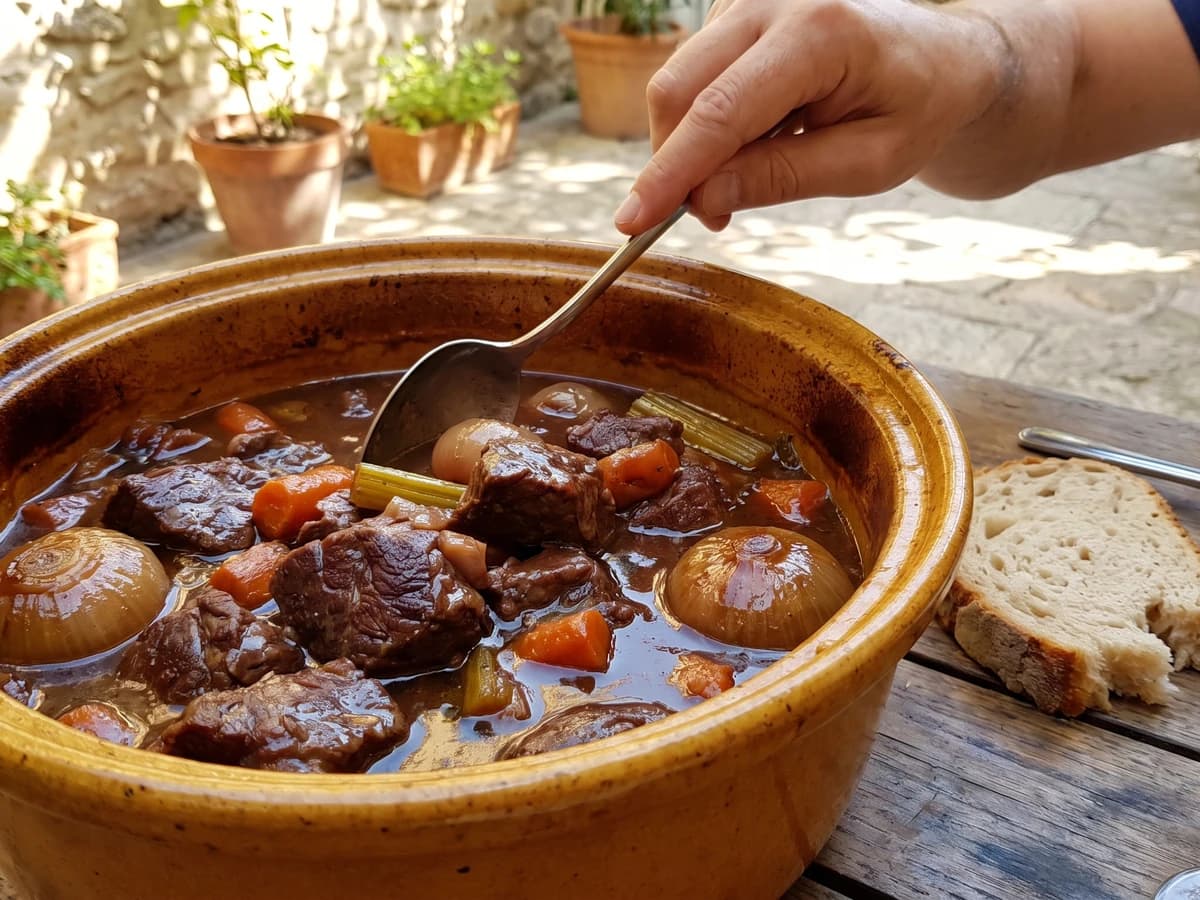
Beef shoulder larded with bacon, sharpened by red wine and vinegar, then sealed with garlic, vegetables, and dry lemon peel until the low oven turns it yielding and the gravy darkly glossy.