Chef Juliette
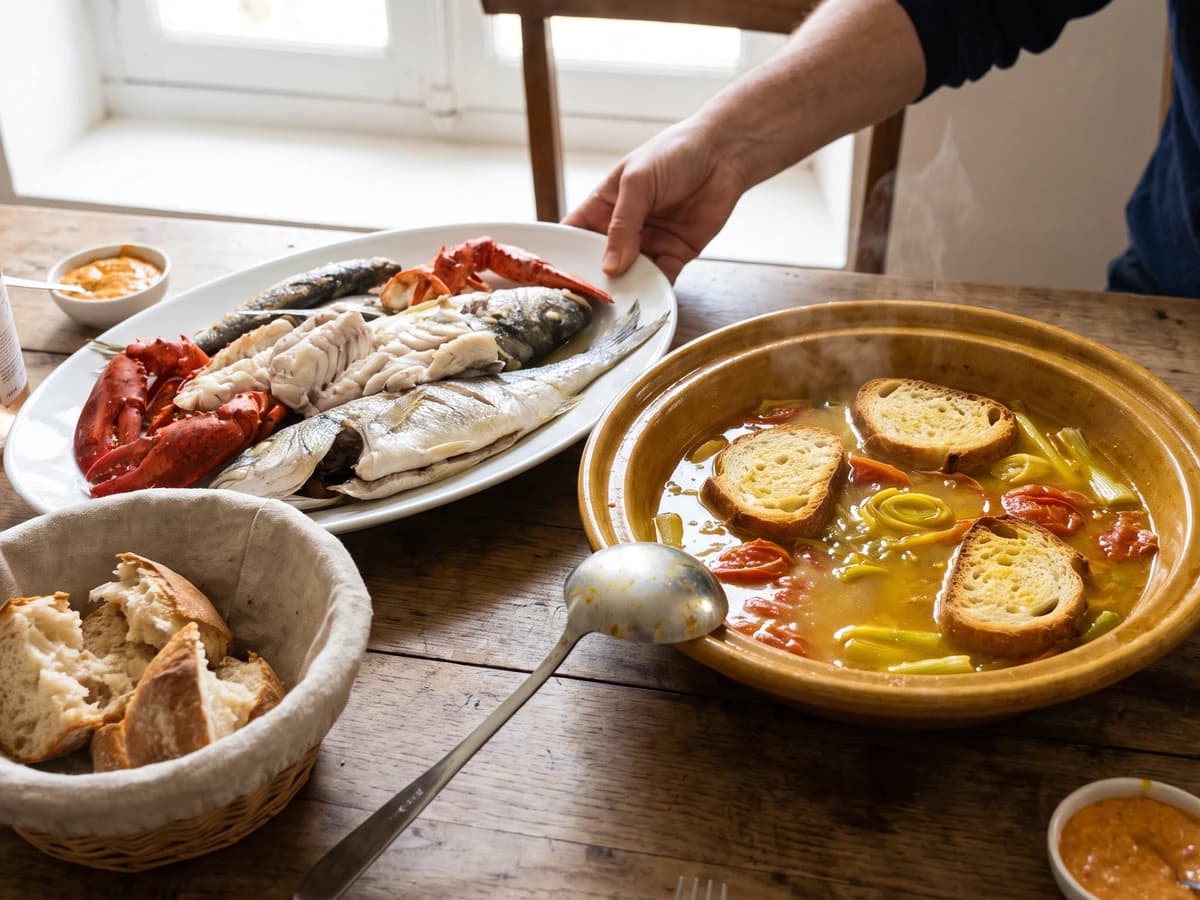
Bouillabaisse à la Marseillaise
Marseille's great fish stew, saffron-gold and garlic-scented, proves that a hard boil can be the careful choice: it binds olive oil into broth before the whole pot meets bread.
A cooking platform built around craft, culture, and the stories behind what we eat.

Created by Chef Juliette
Based on No. 627, Consommés aux Vins, from Le Guide Culinaire (1907) by Auguste Escoffier
Consommés aux vins teach restraint: one excellent cold chicken consommé, one chosen wine, and the exact classical ratio that lets the bottle perfume the broth without overwhelming its clarity.
Consommés aux vins (cold wine-scented chicken consommés) teach restraint. The one true thing to know is that the wine must perfume the consommé without taking possession of it. Exact proportion matters more than flourish, and there is nowhere for a weak broth or rough bottle to hide.
The classical entry assumes a saucier on staff, a stock never off the fire, and excellent chicken consommé already clarified and waiting in the cold larder. A salamander has no work to do here. At home, the brigade labor of making and clarifying the consommé is scaffolding that can remain with that finished component; the exact measure, cold service, and uncooked wine are the dish and must stay. An unmarked port-wine glass becomes 2 fluid ounces (60 ml), matched against the entry's 20-fluid-ounce imperial pint to preserve the 1:10 ratio. This batch brings that proportion to about two quarts for one cook, one stove, one evening.
Choose one wine, never a mixture, and chill it separately from the consommé. The step that matters most is beginning with a consommé already clear, fully defatted, and cold but fluid, because wine can perfume clarity but cannot create it.
Consommés aux vins belong to the Parisian grand-kitchen repertoire of cold clear soups, where a finished poultry consommé was perfumed at service and named for the bottle poured into it. The family runs through Cyprus, Madeira, Malvoisie, Marsala, golden and red port, Samos, and Zucco, while the foundation and proportion remain unchanged. These are not wine soups built by reduction; the wine is added cold, and the enduring measure of the cook is the consommé's clarity.
Quantity
7 1/2 cups (1.8 L / about 1.8 kg)
fully clarified, completely defatted, cold, and fluid
Quantity
3/4 cup (180 ml / about 185 g)
chilled; choose vin de Chypre, vin de Madère, Malvoisie, Marsala, Porto doré, Porto rose, Samos, or Zucco
| Ingredient | Quantity |
|---|---|
| excellent chicken consomméfully clarified, completely defatted, cold, and fluid | 7 1/2 cups (1.8 L / about 1.8 kg) |
| one chosen winechilled; choose vin de Chypre, vin de Madère, Malvoisie, Marsala, Porto doré, Porto rose, Samos, or Zucco | 3/4 cup (180 ml / about 185 g) |
Refrigerate the finished chicken consommé and selected wine separately until both are thoroughly cold, at least 1 hour. The consommé must be perfectly clear, entirely free of surface fat, and still pourable. If a gelatin-rich consommé has set, stand its container in barely warm water only until it loosens, stir gently, then return it to the cold until fluid. If fat beads remain, chill them solid, lift them away, and strain the consommé once through a rinsed linen cloth.
Measure 7 1/2 cups (1.8 L) consommé and 3/4 cup (180 ml) wine. This preserves the source's proportion of one port-wine glass to one imperial pint, rendered as exactly 1 part wine to 10 parts consommé by volume. Do not round by eye, reduce the wine, sweeten it, or add acid. Its uncooked fragrance is part of the formula.
Pour the chilled wine slowly down the inside of a cold, nonreactive pitcher containing the consommé. Stir with a long spoon only three or four times, enough to distribute the wine without beating air into the liquid. It should remain transparent, though its color will follow the chosen bottle. If a haze appears, do not whisk. Ça se rattrape: let the mixture settle for 10 minutes, then pass it once through a damp, unbleached coffee filter or tightly woven linen without pressing.
Cover the pitcher and refrigerate the consommé for 30 minutes so the wine settles into the broth. Taste a spoonful from a chilled cup. Chicken should arrive first, followed by the chosen wine and a clean, lingering finish. Add no salt, sugar, lemon, herbs, or further wine; the source contains only these two components. If the aroma seems muted, let the tasting portion stand for 3 minutes before judging, since extreme cold closes the wine.
Chill small bouillon cups for 20 minutes, then pour 6 to 7 fluid ounces (180 to 210 ml) into each. Serve immediately, with the surface clear and undisturbed. There is no garnish in the source, and none is wanted: parsley, lemon, or diced vegetables would turn this precise consommé into another soup. À table!
1 serving (about 180g)
Culinary guides, cultural storytelling, and the editorial depth that makes cooking meaningful.
Discover Culinary ExplorerChef Juliette
Marseille's great fish stew, saffron-gold and garlic-scented, proves that a hard boil can be the careful choice: it binds olive oil into broth before the whole pot meets bread.
Chef Juliette
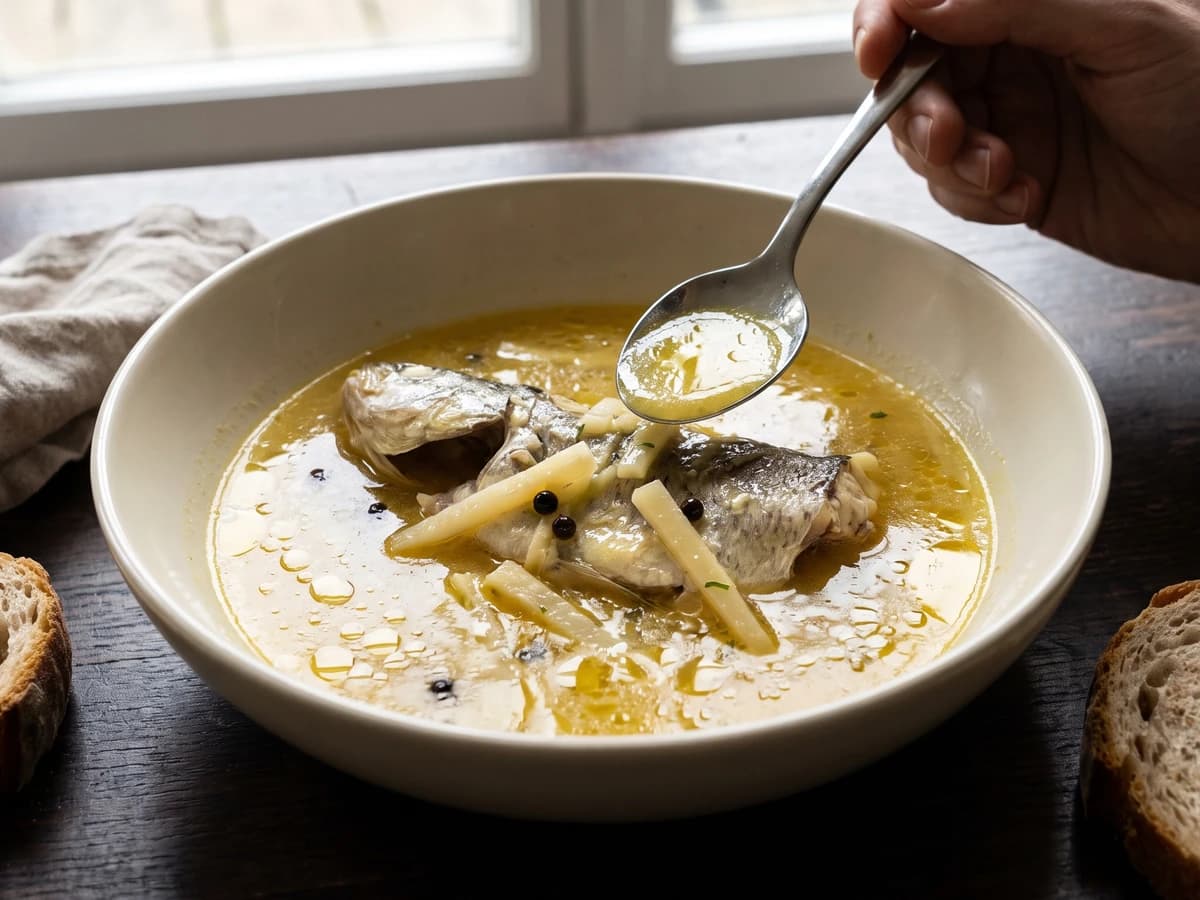
Waterzoi asks fresh, bone-in river fish to thicken its own buttery broth, with parsley root and pepper for company. No flour, no stockpot, just a brisk simmer watched closely.
Chef Juliette
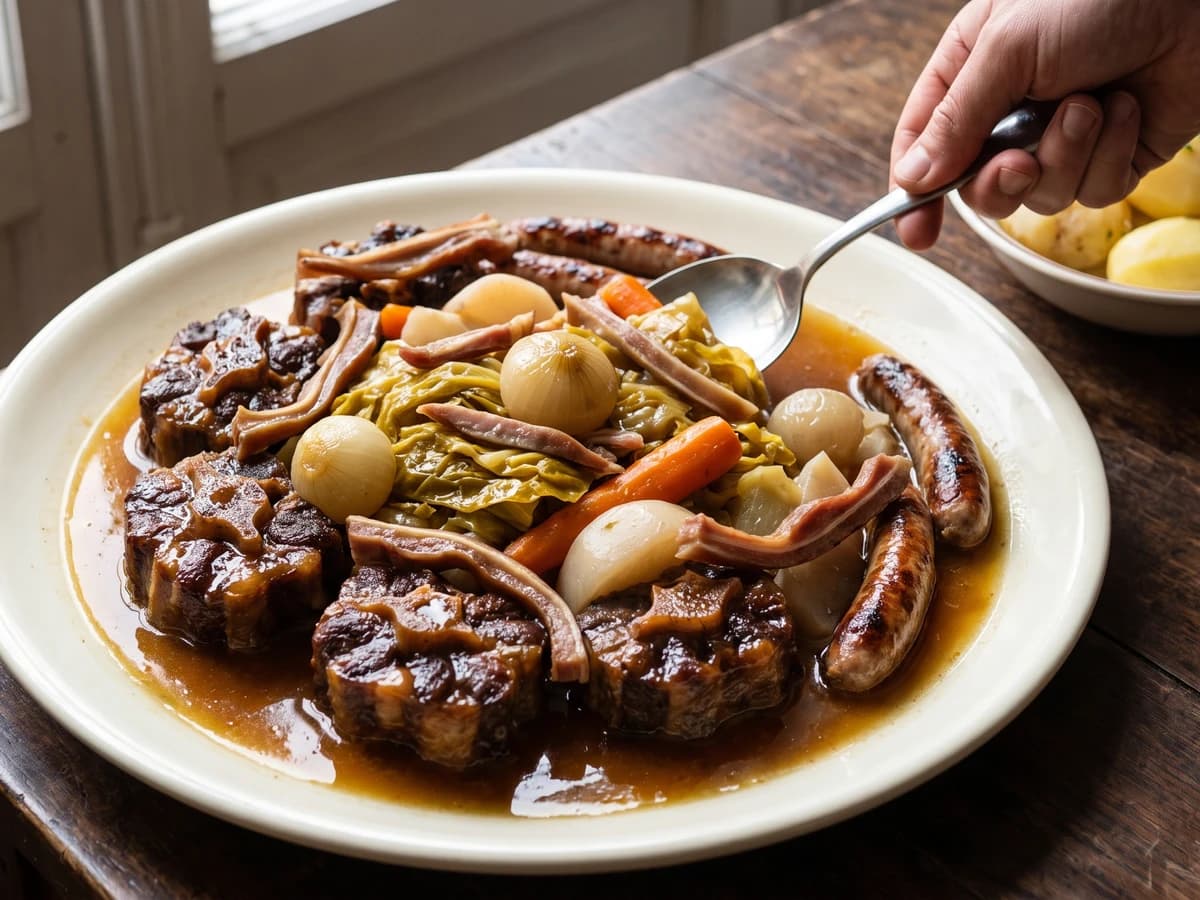
Queue de Bœuf en Hochepot gathers oxtail, pig's trotter and ear, cabbage, roots, and grilled chipolatas around a clear, gelatin-rich broth whose quiet simmer keeps every piece tender and distinct.
Chef Juliette
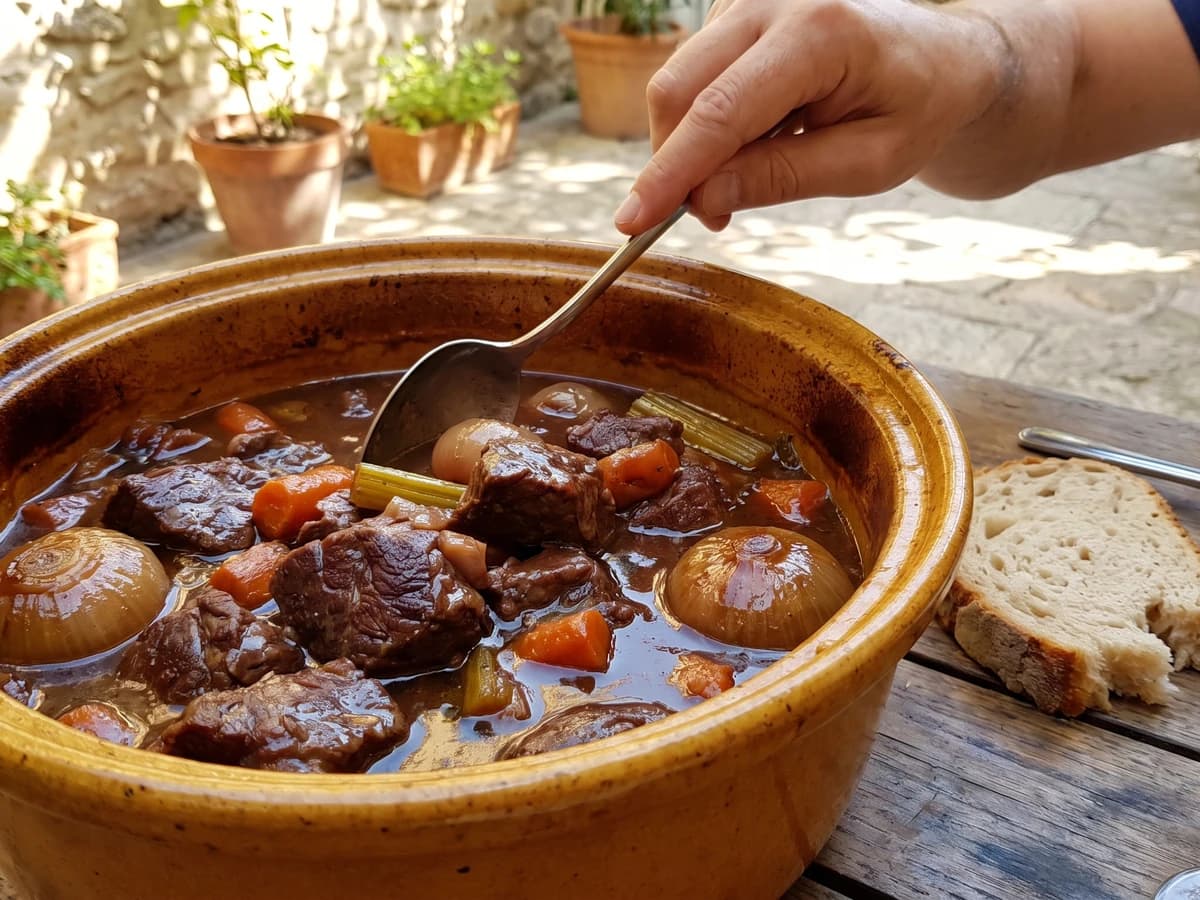
Beef shoulder larded with bacon, sharpened by red wine and vinegar, then sealed with garlic, vegetables, and dry lemon peel until the low oven turns it yielding and the gravy darkly glossy.