Chef Juliette
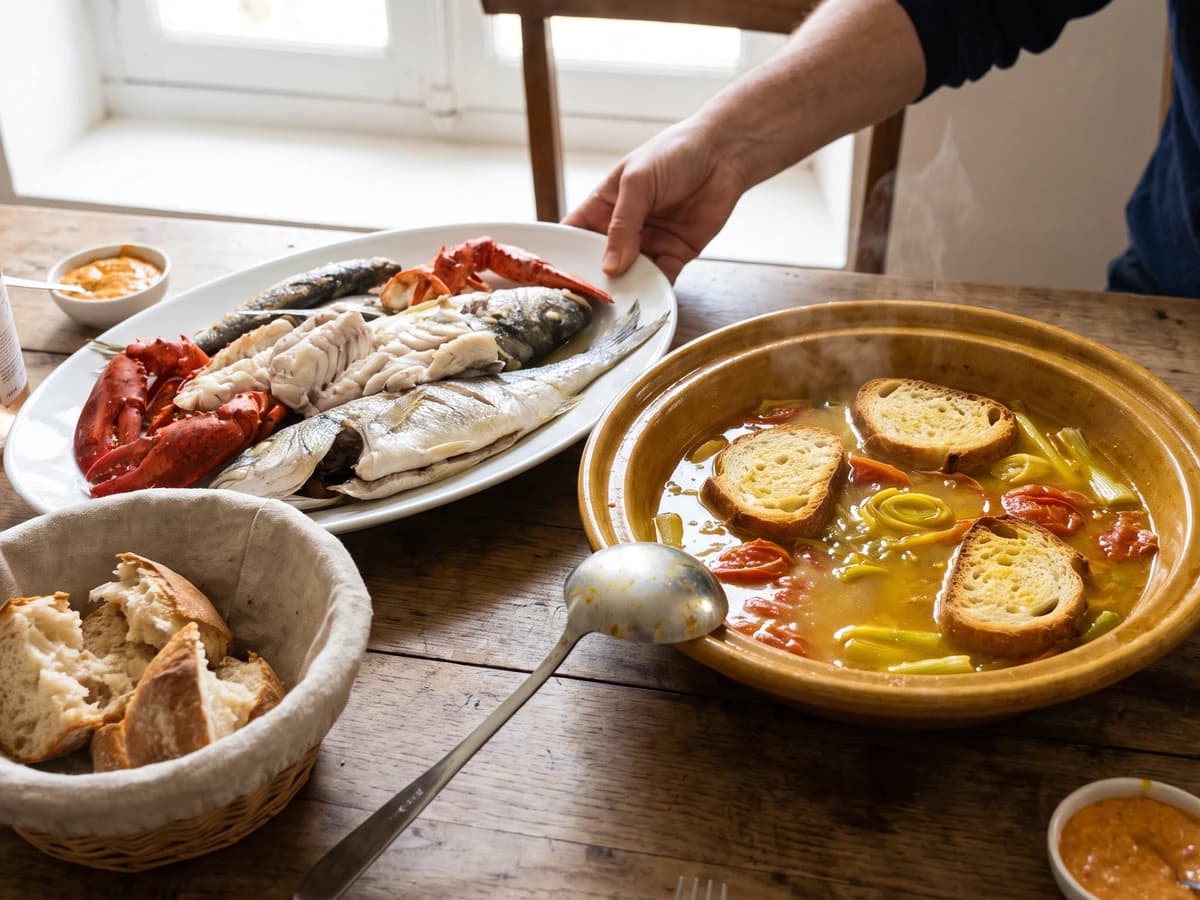
Bouillabaisse à la Marseillaise
Marseille's great fish stew, saffron-gold and garlic-scented, proves that a hard boil can be the careful choice: it binds olive oil into broth before the whole pot meets bread.
A cooking platform built around craft, culture, and the stories behind what we eat.
Created by Chef Juliette
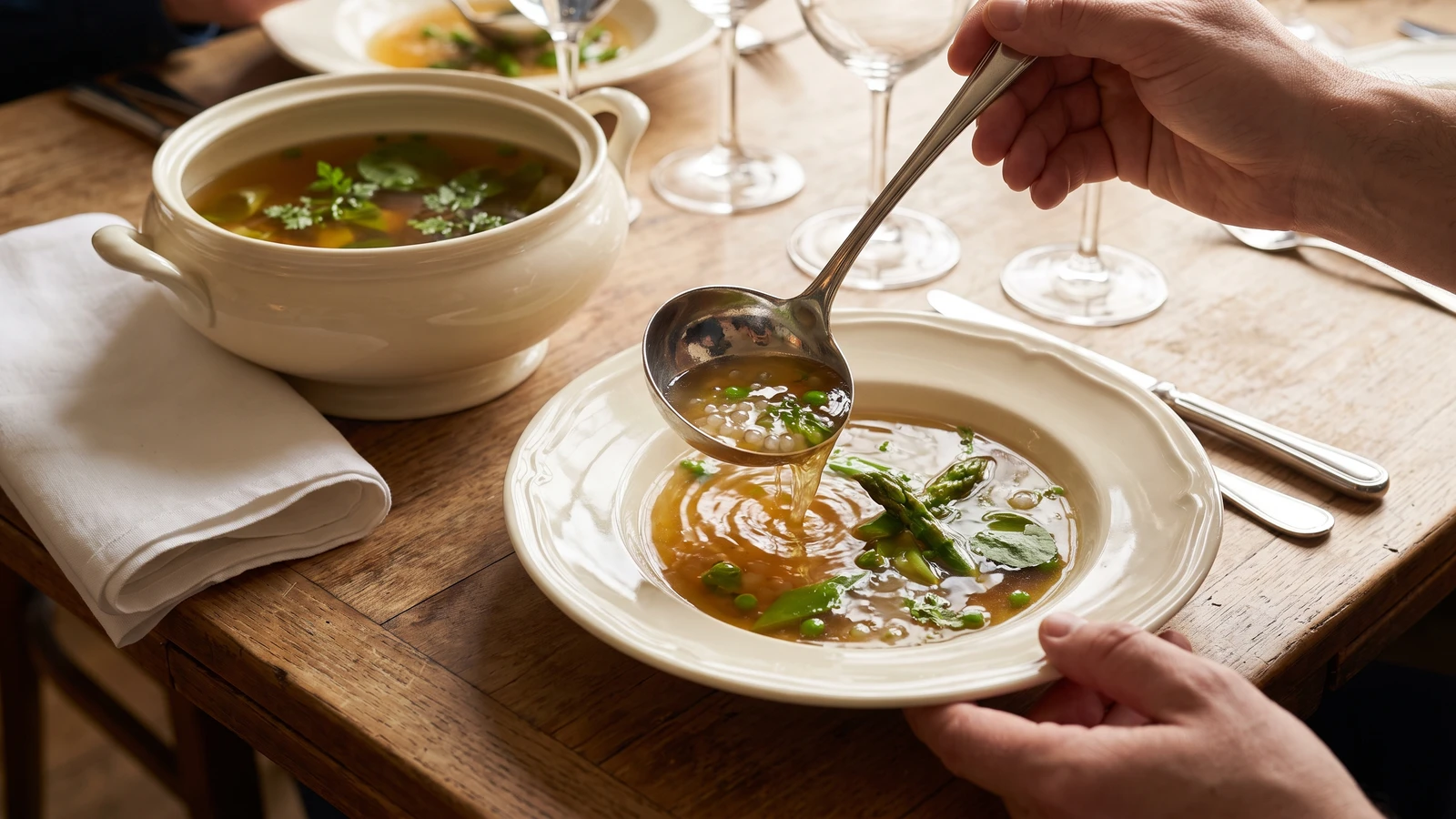
Based on No. 616, Consommé Vert Pré, from Le Guide Culinaire (1907) by Auguste Escoffier
Consommé Vert Pré keeps its promise through separation: translucent tapioca in brilliant clear broth, spring vegetables cooked one by one, and tender sorrel and lettuce roundels meeting only in the warmed tureen.
Consommé Vert Pré (green-meadow consommé) teaches separation. The broth must stay clear and the greens must stay green, so they meet only in the tureen. The one true thing to know before touching a pan is this: never simmer the vegetable garnish in the consommé. That muddies the broth, dulls the greens, and erases the very contrast the dish was composed to show.
The original assumed a saucier, a pot of finished consommé never off the fire, and several hands preparing tiny garnishes for successive services. Its one-quart formula was repeated as needed. At home, it becomes one two-quart batch, made with the same saucepan used to blanch each vegetable in turn. I have doubled every stated measure and kept the ratios intact. The separate brigade station is scaffolding and can go; cooking the greens apart, poaching the lettuce, and pouring the boiling broth only at service are the dish and must stay.
Seed tapioca gives the consommé a delicate body and a scatter of translucent pearls, never the weight of a thick soup. Against that amber clarity sit asparagus heads, peas, lozenges of French bean, and matching roundels of sorrel and lettuce. Sprinkle the tapioca into fully boiling consommé in a thin, steady rain. That is the step to mind tonight.
Consommé Vert Pré belongs not to a French province but to the formal Parisian dining-room repertory, where named garnishes allowed one impeccably clear consommé to take many distinct forms. Its name describes the composed field of asparagus, peas, French beans, sorrel, lettuce, and chervil, while tapioca supplies a delicate suspended body. This is not a vegetable soup simmered together: each green was prepared separately, arranged in the tureen, and met by the boiling consommé only at service.
Quantity
2 quarts (8 cups / 1.9 L / about 1.9 kg)
Quantity
¼ cup (4 tbsp / 60 ml / 40 g)
Quantity
2 tbsp (30 ml / 20 g)
trimmed into 2 cm pieces
Quantity
2 tbsp (30 ml / 20 g)
fresh or frozen
Quantity
2 tbsp (30 ml / 18 g)
cut diagonally into small lozenges
Quantity
2 tbsp loosely packed (30 ml / 4 g)
cut into roundels
Quantity
3 large leaves (about 24 g), yielding 2 tbsp (30 ml / about 18 g) poached roundels
kept whole for poaching
Quantity
2 large pinches (2 tsp / 10 ml / 2 g)
pulled into fine shreds
Quantity
2 tsp (10 ml / 12 g)
for the blanching water
| Ingredient | Quantity |
|---|---|
| finished clear consommé | 2 quarts (8 cups / 1.9 L / about 1.9 kg) |
| very small pearl tapioca, also called seed tapioca | ¼ cup (4 tbsp / 60 ml / 40 g) |
| asparagus headstrimmed into 2 cm pieces | 2 tbsp (30 ml / 20 g) |
| shelled green peasfresh or frozen | 2 tbsp (30 ml / 20 g) |
| French beans (haricots verts)cut diagonally into small lozenges | 2 tbsp (30 ml / 18 g) |
| sorrel leavescut into roundels | 2 tbsp loosely packed (30 ml / 4 g) |
| tender lettuce leaveskept whole for poaching | 3 large leaves (about 24 g), yielding 2 tbsp (30 ml / about 18 g) poached roundels |
| chervil pluchespulled into fine shreds | 2 large pinches (2 tsp / 10 ml / 2 g) |
| fine sea saltfor the blanching water | 2 tsp (10 ml / 12 g) |
Set a bowl of iced water beside the stove. Bring a 3-quart saucepan of water to a brisk boil and add the salt. While it heats, trim the asparagus heads and cut the French beans diagonally into neat lozenges. Keep the peas separate, and leave the lettuce and sorrel whole for now. Each garnish cooks on its own clock; mixing them in one batch gives you hard beans beside tired peas.
Blanch the French beans until bright and barely tender, about 1½ minutes, then lift them directly into the iced water. Let the water return to a boil and repeat with the asparagus for 45 to 60 seconds, then the peas for 30 to 45 seconds. Frozen peas need only about 20 seconds. Drain each vegetable separately and dry it well, then measure 2 tablespoons of each. If a batch goes olive and soft, don't put it in the tureen. Ça se rattrape: save it for a purée and blanch a fresh spoonful. The quantity is small, and the colour is part of the dish.
Slip the whole lettuce leaves into the same simmering water for 15 to 20 seconds, just until supple and brilliantly green. Chill them at once, drain, and press them completely dry between clean towels. Lay the leaves flat and stamp out small roundels with the narrow end of a plain metal piping tip. Stamp matching roundels from the raw sorrel and measure 2 tablespoons of each. Poaching the lettuce is not dispensable brigade ceremony; it softens the leaf without letting it collapse in the consommé.
Empty and rinse the saucepan, then add the finished consommé and bring it to a full boil. Stir gently while sprinkling in the seed tapioca in a thin, steady rain. Lower the heat at once and cook at the gentlest simmer for 15 minutes, stirring along the bottom occasionally so no pearls catch. The tapioca is ready when nearly transparent and tender, and the consommé has gained only a light, flowing body. If the pearls gather into a lump, take the pan off the heat and tease them apart with a fork. For a stubborn cluster, lift it into a fine sieve, rinse briefly with hot water, separate the pearls, and return them to the broth. Never whisk hard, which clouds the consommé.
Fill the soup tureen with very hot water, leave it for a minute, then empty and dry it thoroughly. Arrange the asparagus heads, peas, French-bean lozenges, sorrel roundels, and poached lettuce roundels across the bottom. Keep them loose rather than piled, so every ladle receives a little of the whole garnish. A cold or wet tureen steals heat and dilutes the broth, two small indignities easily avoided.
Bring the tapioca consommé back just to the boil and taste it; correct the salt only if the finished broth requires it. Pour it immediately over the garnish in the warmed tureen, then add the chervil pluches. Carry the tureen straight to the table and ladle gently so the transparent pearls and green garnish remain evenly distributed. À table!
1 serving (about 250g)
Culinary guides, cultural storytelling, and the editorial depth that makes cooking meaningful.
Discover Culinary ExplorerChef Juliette
Marseille's great fish stew, saffron-gold and garlic-scented, proves that a hard boil can be the careful choice: it binds olive oil into broth before the whole pot meets bread.
Chef Juliette
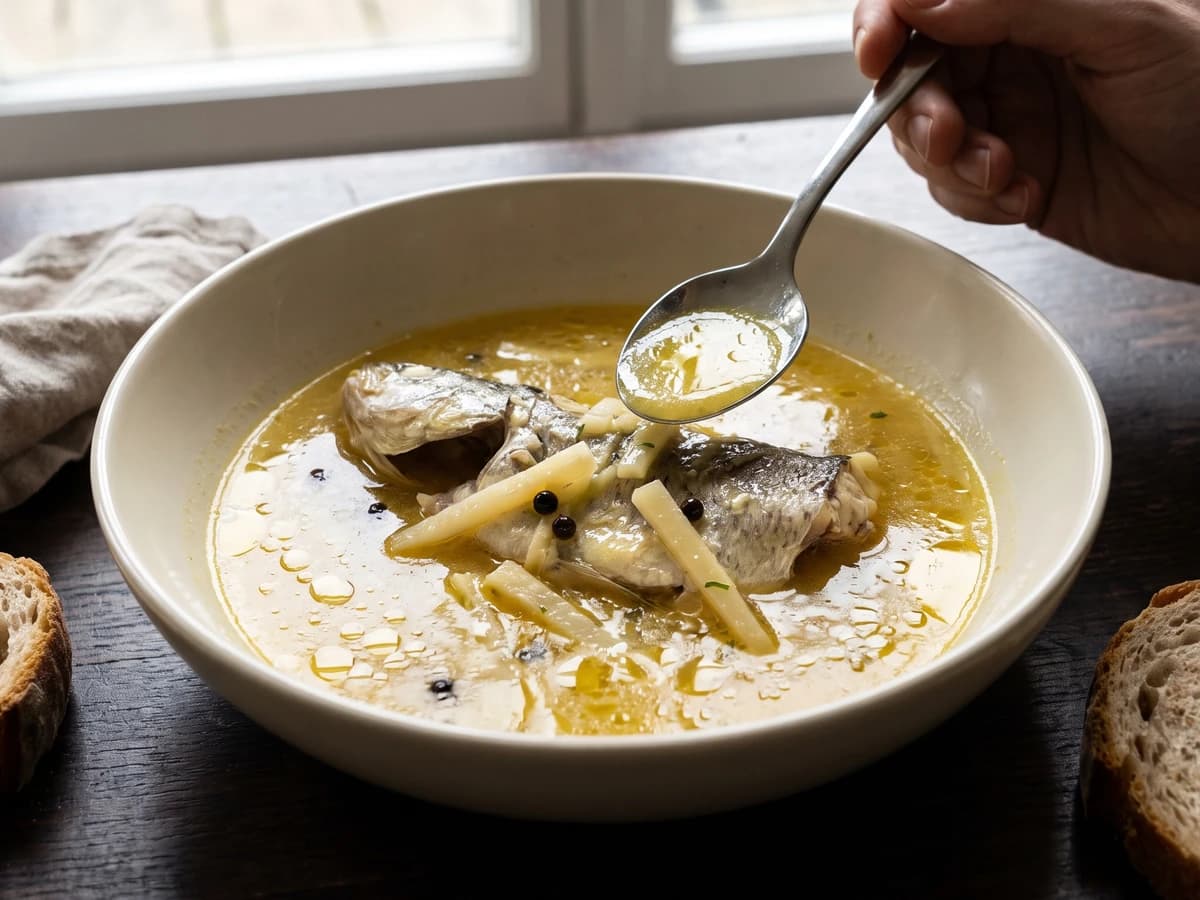
Waterzoi asks fresh, bone-in river fish to thicken its own buttery broth, with parsley root and pepper for company. No flour, no stockpot, just a brisk simmer watched closely.
Chef Juliette
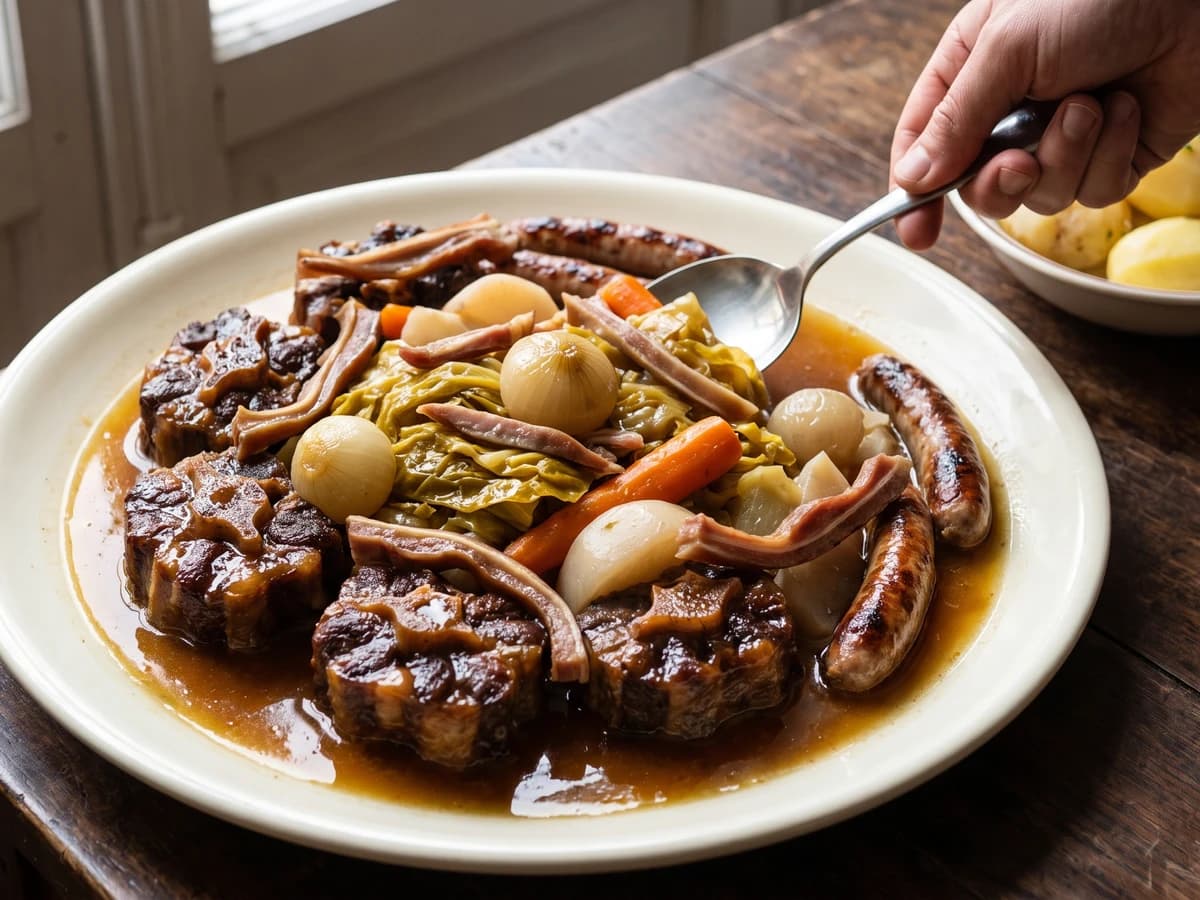
Queue de Bœuf en Hochepot gathers oxtail, pig's trotter and ear, cabbage, roots, and grilled chipolatas around a clear, gelatin-rich broth whose quiet simmer keeps every piece tender and distinct.
Chef Juliette
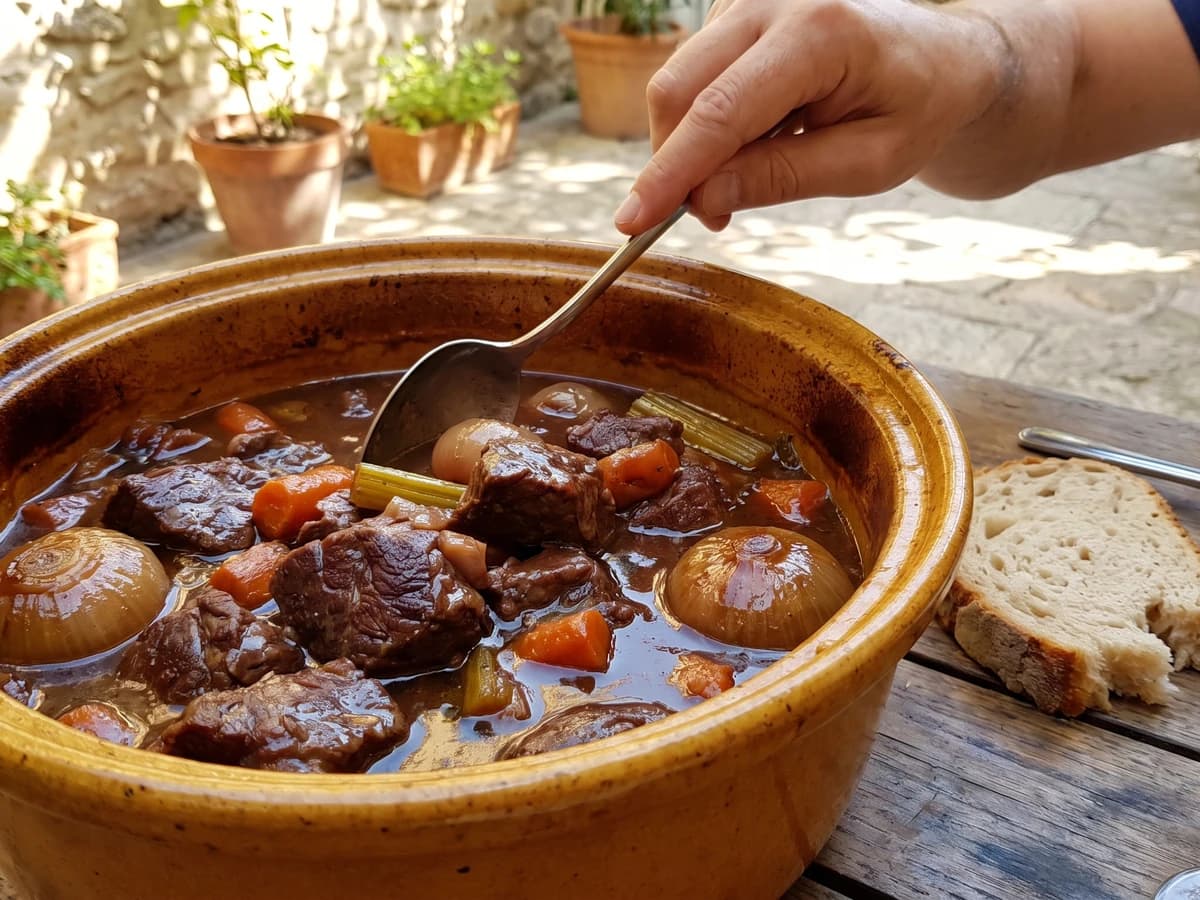
Beef shoulder larded with bacon, sharpened by red wine and vinegar, then sealed with garlic, vegetables, and dry lemon peel until the low oven turns it yielding and the gravy darkly glossy.