Chef Juliette
Bouillabaisse à la Marseillaise
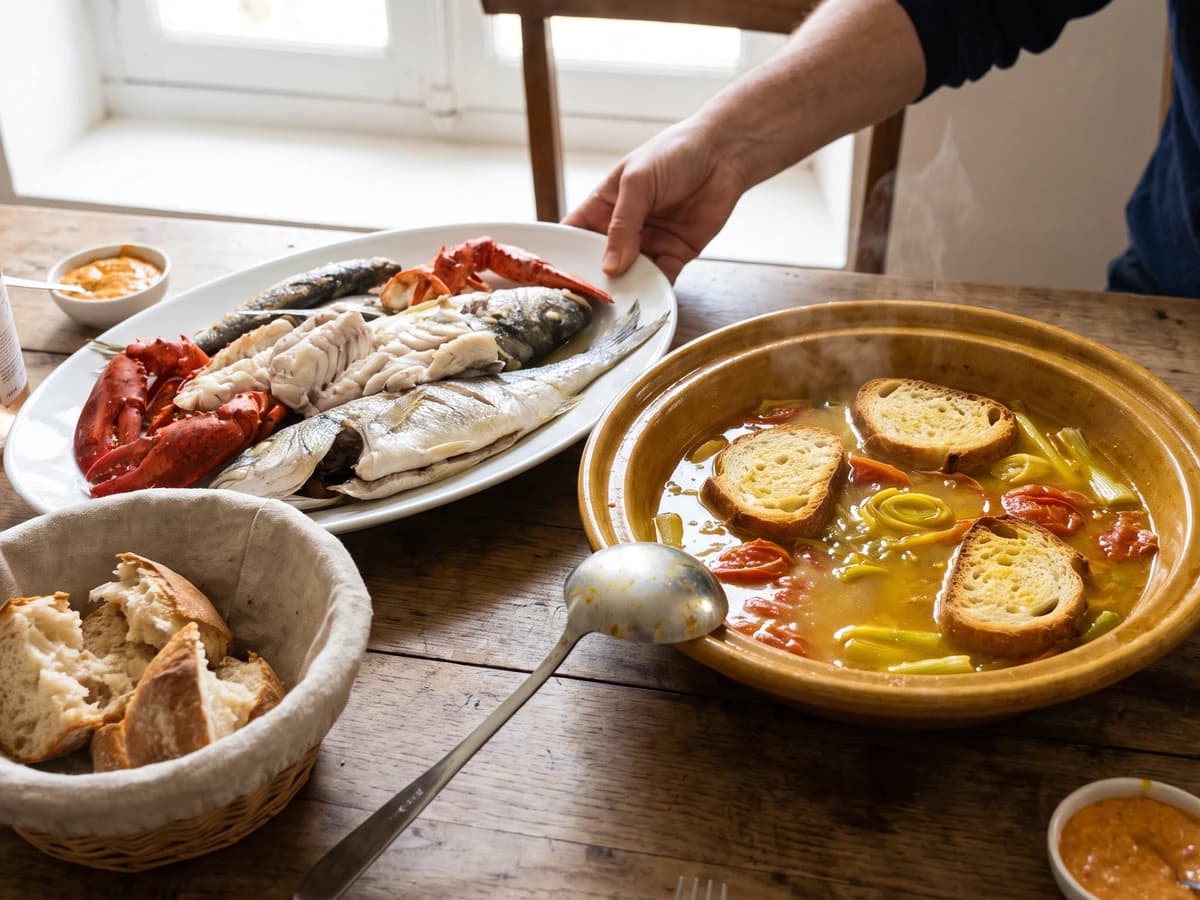
Marseille's great fish stew, saffron-gold and garlic-scented, proves that a hard boil can be the careful choice: it binds olive oil into broth before the whole pot meets bread.
A cooking platform built around craft, culture, and the stories behind what we eat.

Created by Chef Juliette
Based on No. 612, Consommé Sévigné, from Le Guide Culinaire (1907) by Auguste Escoffier
Consommé Sévigné turns discipline into delicacy: crystal-clear chicken broth, tiny chicken quenelles, yielding braised lettuce, peas, and chervil, assembled in the tureen for a spring-bright first course.
Consommé Sévigné (clear chicken broth with chicken quenelles, braised lettuce, peas, and chervil) teaches that clarity is won before the broth ever reaches the strainer. Keep the clarification below a boil and its raft gathers every cloudy particle; let it churn and the broth takes the debris back. That is the one true thing to know before touching the pan.
The original entry assumed a saucier, a stockpot never off the fire, cold chicken forcemeat waiting in its bowl, and braised lettuces ready for service. At home, a gelatin-rich fond de volaille (chicken stock) is clarified once, a small processor replaces the mortar, and two measuring teaspoons do the work of the coffee-spoon. Separate cooks and holding pots were brigade scaffolding, so they can go. The clarification, the cold forcemeat, the gentle poach, and the exact garniture are the dish itself, so they stay. One cook, one stove, one evening.
For a dinner-party tureen, this version makes about two quarts by doubling the source proportions intact: twenty quenelles, eight small lettuce hearts, two tablespoons of peas, and two generous pinches of chervil pluches. The finished consommé is amber-gold and transparent, with ivory quenelles and spring-green garnishes visible through the broth. Guard the raft from a hard boil; everything after that is calm assembly.
Consommé Sévigné belongs to the Parisian grand-kitchen tradition of named consommés, in which an exact garniture gave identity to a perfectly clear foundation. Its title invokes the Marquise de Sévigné, the celebrated letter writer associated with French court and salon life, while chicken quenelles, braised lettuce, peas, and chervil became the fixed meaning of Sévigné at table. It is not a regional farmhouse soup, but a formal service formula that passed naturally into careful bourgeois home cooking.
Quantity
11 cups (2.6 L / 2.6 kg)
10 cups for clarification and 1 cup for braising
Quantity
2 cups (450 g)
thoroughly chilled
Quantity
4 (1/2 cup / 120 ml / 120 g)
2 teaspoons reserved for the quenelles
Quantity
1 cup (240 ml / 150 g)
finely chopped
Quantity
1/2 cup (120 ml / 75 g)
finely chopped
Quantity
1/2 cup (120 ml / 60 g)
finely chopped
Quantity
1/2 cup (120 ml / 90 g)
diced and very cold
Quantity
1/4 cup (60 ml / 60 g)
ice-cold and divided
Quantity
2 teaspoons (10 ml / 12 g), plus more as needed
divided
Quantity
1/4 teaspoon (1.25 ml / 0.5 g)
divided
Quantity
8 (about 8 cups / 1.9 L / 450 g)
outer leaves removed
Quantity
3 tablespoons (45 ml / 42 g)
Quantity
2 tablespoons (30 ml / 30 g)
fresh or frozen
Quantity
2 generous pinches (about 2 teaspoons / 10 ml / 1 g)
picked into small shreds
| Ingredient | Quantity |
|---|---|
| cold, unsalted, gelatin-rich chicken stock10 cups for clarification and 1 cup for braising | 11 cups (2.6 L / 2.6 kg) |
| lean ground chickenthoroughly chilled | 2 cups (450 g) |
| large egg whites2 teaspoons reserved for the quenelles | 4 (1/2 cup / 120 ml / 120 g) |
| yellow onionfinely chopped | 1 cup (240 ml / 150 g) |
| carrotfinely chopped | 1/2 cup (120 ml / 75 g) |
| celeryfinely chopped | 1/2 cup (120 ml / 60 g) |
| skinless chicken breastdiced and very cold | 1/2 cup (120 ml / 90 g) |
| heavy creamice-cold and divided | 1/4 cup (60 ml / 60 g) |
| fine sea saltdivided | 2 teaspoons (10 ml / 12 g), plus more as needed |
| ground white pepperdivided | 1/4 teaspoon (1.25 ml / 0.5 g) |
| very small butter lettuce heartsouter leaves removed | 8 (about 8 cups / 1.9 L / 450 g) |
| unsalted butter | 3 tablespoons (45 ml / 42 g) |
| small green peasfresh or frozen | 2 tablespoons (30 ml / 30 g) |
| chervil pluchespicked into small shreds | 2 generous pinches (about 2 teaspoons / 10 ml / 1 g) |
Reserve 2 teaspoons of the egg white for the quenelles. Combine the remaining egg whites, ground chicken, onion, carrot, celery, and 10 cups of the cold stock in a 6 to 8-quart heavy pot. Stir thoroughly while everything is cold, then set the pot over medium-low heat. Scrape the bottom continuously with a flat wooden spoon as the mixture warms, about 15 to 20 minutes, until the proteins gather into a thick raft at the surface. Stop stirring immediately. Open a small chimney through the centre of the raft and hold the liquid at 185 to 194°F (85 to 90°C) for 45 minutes, ladling a little broth through the chimney occasionally. It must tremble, never roll. If it boils and breaks the raft, lift the pot from the heat and leave it untouched for 10 minutes. Do not whisk the debris back into the broth; let it settle and strain gently through doubled damp cheesecloth. Ça se rattrape.
Line a fine sieve with two layers of cheesecloth rinsed in cold water and wrung out. Set it over a clean pot, then ladle the consommé through gradually, leaving the final muddy cup beneath the raft behind. Let gravity work and never press the solids, because pressing returns their cloudiness to the broth. Skim away any surface fat with the edge of a paper towel. You should have about 8 cups; if there is slightly more, simmer it gently in the clean pot until the measure is right. Season cautiously with salt and white pepper, then keep the consommé very warm below a simmer.
Lower the lettuce hearts into a wide pot of well-salted boiling water for 1 minute, then transfer them to cold water. Drain and press each heart gently between your palms to remove excess water without crushing its shape. Melt the butter in a wide lidded skillet, arrange the lettuces snugly in one layer, and add the reserved cup of chicken stock with 1/2 teaspoon salt and a small pinch of white pepper. Cover the surface with a round of parchment, put on the lid, and braise at a bare simmer for 20 to 25 minutes, until the thickest ribs yield easily but the hearts remain intact. If a heart loosens, fold its leaves back around the core and finish it seam-side down. Keep the lettuces warm in a spoonful of their braising liquor.
Chill the processor bowl and blade before beginning. Process the diced chicken breast with the reserved 2 teaspoons of egg white, 1/4 teaspoon salt, and a small pinch of white pepper until smooth and sticky. Press the paste through a fine sieve into a cold bowl; this brief sieve work gives the quenelles their delicate texture, so it is part of the dish, not discarded brigade ceremony. Beat in 3 tablespoons of the cold cream, one spoonful at a time, keeping the bowl over ice. Poach a teaspoonful in barely simmering water and taste it. If it is firm or rubbery, beat in the final tablespoon of cream. If it spreads or frays, add no more cream and chill the farce mousseline for 15 minutes before testing again.
Heat a wide pan of lightly salted water to 180 to 185°F (82 to 85°C). Dip two measuring teaspoons in the water, scoop up the farce mousseline with one, and pass it between the spoons to form a small oval. This is the home equivalent of the source's coffee-spoon moulding. Shape exactly 20 quenelles and poach them in batches for 4 to 5 minutes, turning once, until they feel lightly springy and reach 165°F (74°C) at the centre. The water must not boil. If the first quenelle frays, lower the heat and chill the mixture again; the first one is your test, not your verdict. Lift the quenelles onto a clean towel and cover loosely.
Blanch fresh peas for 1 to 2 minutes, or frozen peas for 30 seconds, in the quenelle poaching water, then drain them. Lift the braised lettuce hearts from their liquor and cut them crosswise into small, tidy sections, trimming away any loose or ragged leaves. Handle them gently so the sections remain recognizable rather than dissolving into the broth.
Warm a 3-quart soup tureen with hot water, then dry it. Arrange the 20 quenelles, the trimmed sections of braised lettuce, and the 2 tablespoons of peas in the tureen. Bring the clarified consommé to one clean boil, skim its surface if necessary, and pour it immediately over the garniture in the sequence given by the source. Scatter the chervil pluches over the broth and serve at once, while its surface still carries a fine shimmer. À table!
1 serving (about 250g)
Culinary guides, cultural storytelling, and the editorial depth that makes cooking meaningful.
Discover Culinary ExplorerChef Juliette
Marseille's great fish stew, saffron-gold and garlic-scented, proves that a hard boil can be the careful choice: it binds olive oil into broth before the whole pot meets bread.
Chef Juliette
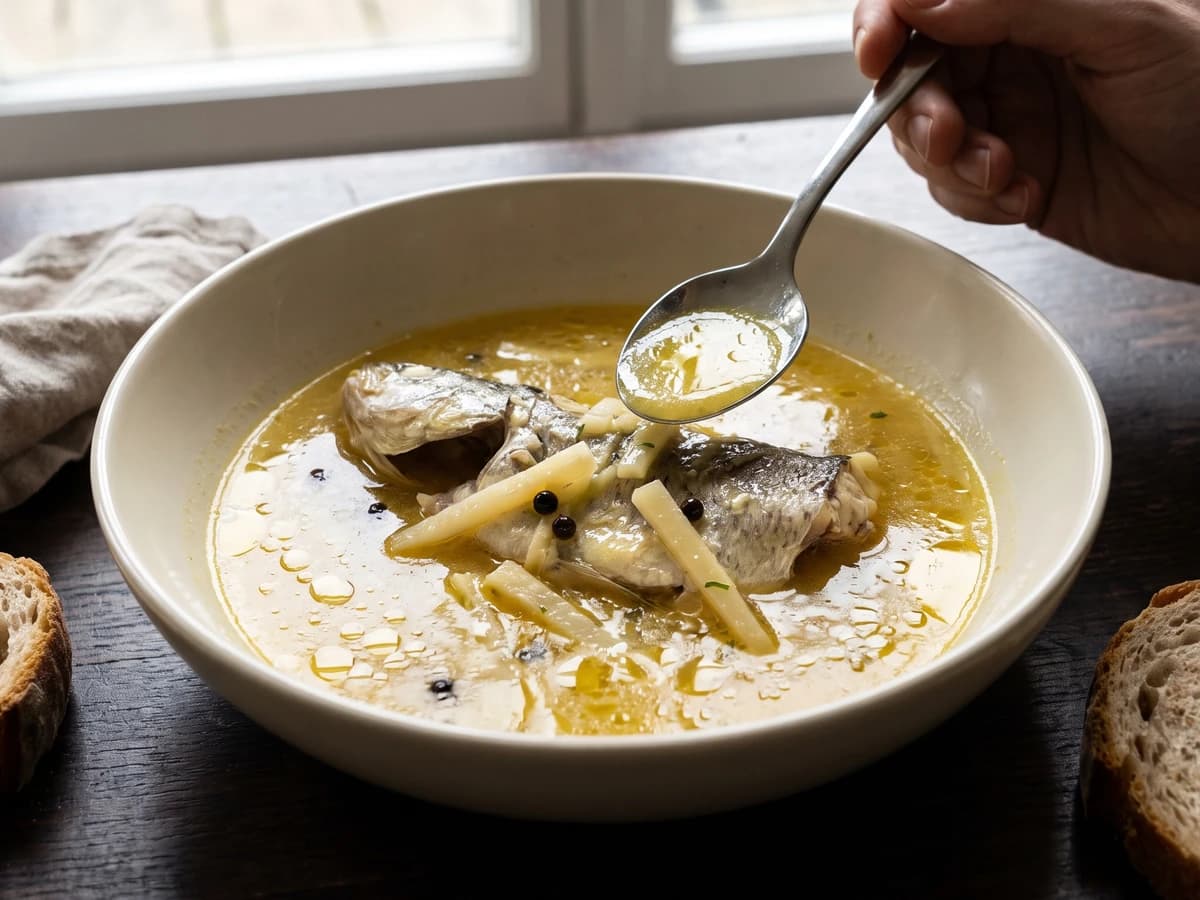
Waterzoi asks fresh, bone-in river fish to thicken its own buttery broth, with parsley root and pepper for company. No flour, no stockpot, just a brisk simmer watched closely.
Chef Juliette
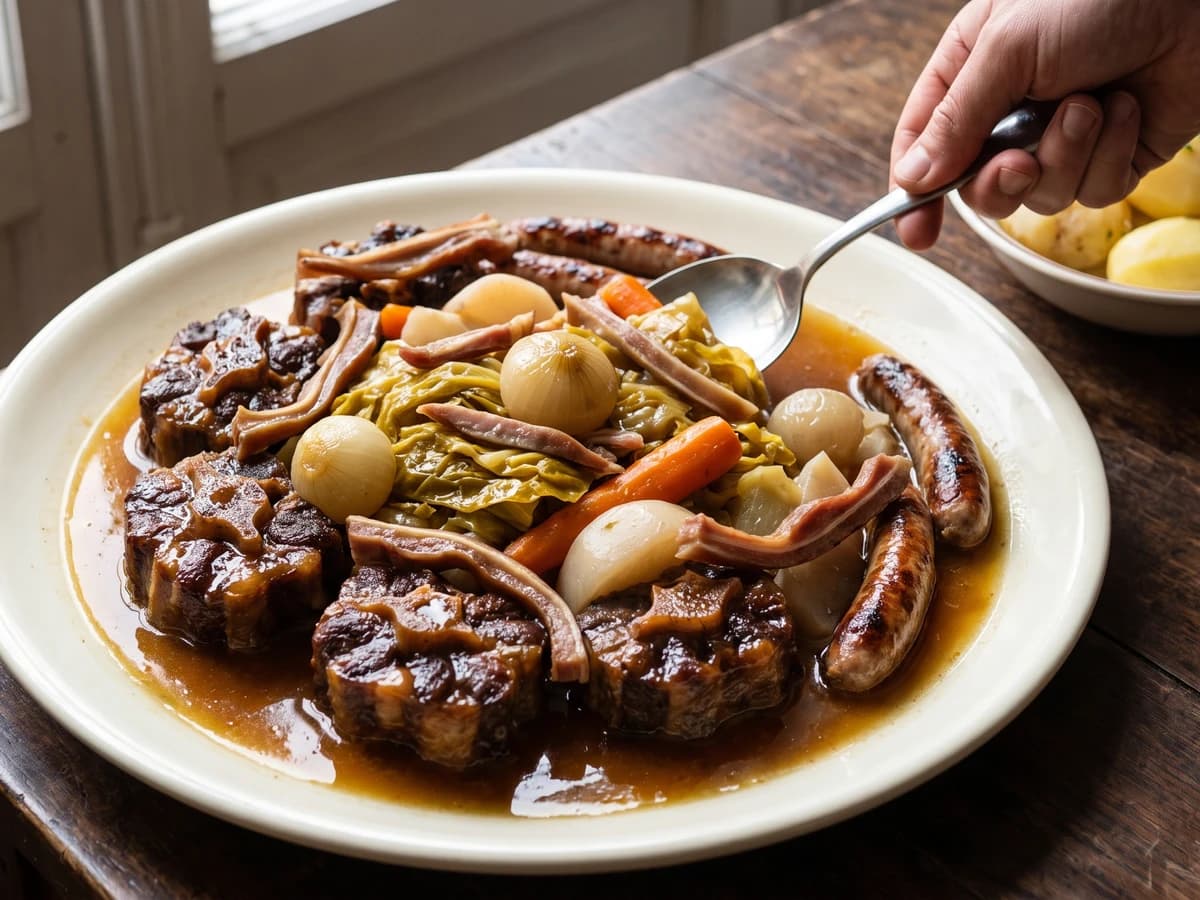
Queue de Bœuf en Hochepot gathers oxtail, pig's trotter and ear, cabbage, roots, and grilled chipolatas around a clear, gelatin-rich broth whose quiet simmer keeps every piece tender and distinct.
Chef Juliette
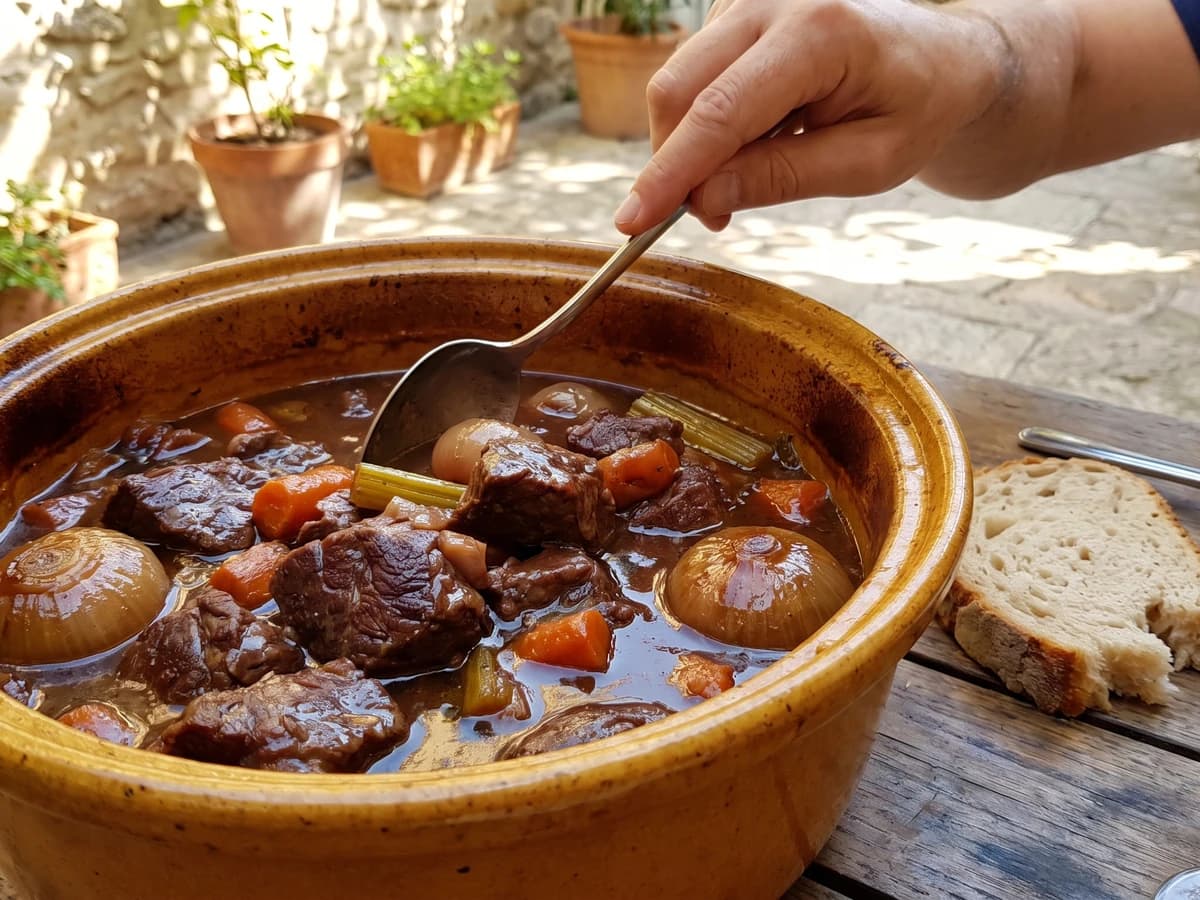
Beef shoulder larded with bacon, sharpened by red wine and vinegar, then sealed with garlic, vegetables, and dry lemon peel until the low oven turns it yielding and the gravy darkly glossy.