Chef Juliette
Bouillabaisse à la Marseillaise
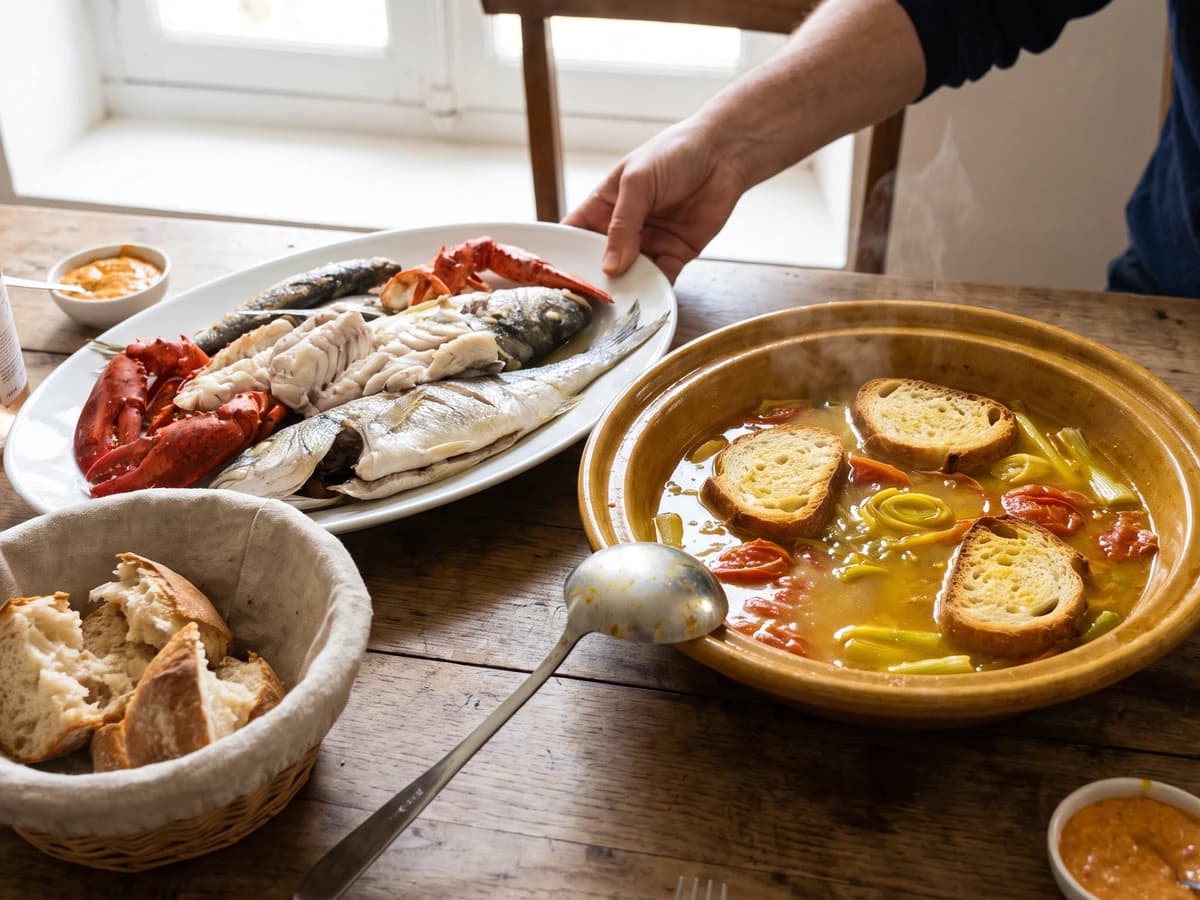
Marseille's great fish stew, saffron-gold and garlic-scented, proves that a hard boil can be the careful choice: it binds olive oil into broth before the whole pot meets bread.
A cooking platform built around craft, culture, and the stories behind what we eat.
Created by Chef Juliette
Based on No. 610, Consommé Saint Hubert, from Le Guide Culinaire (1907) by Auguste Escoffier
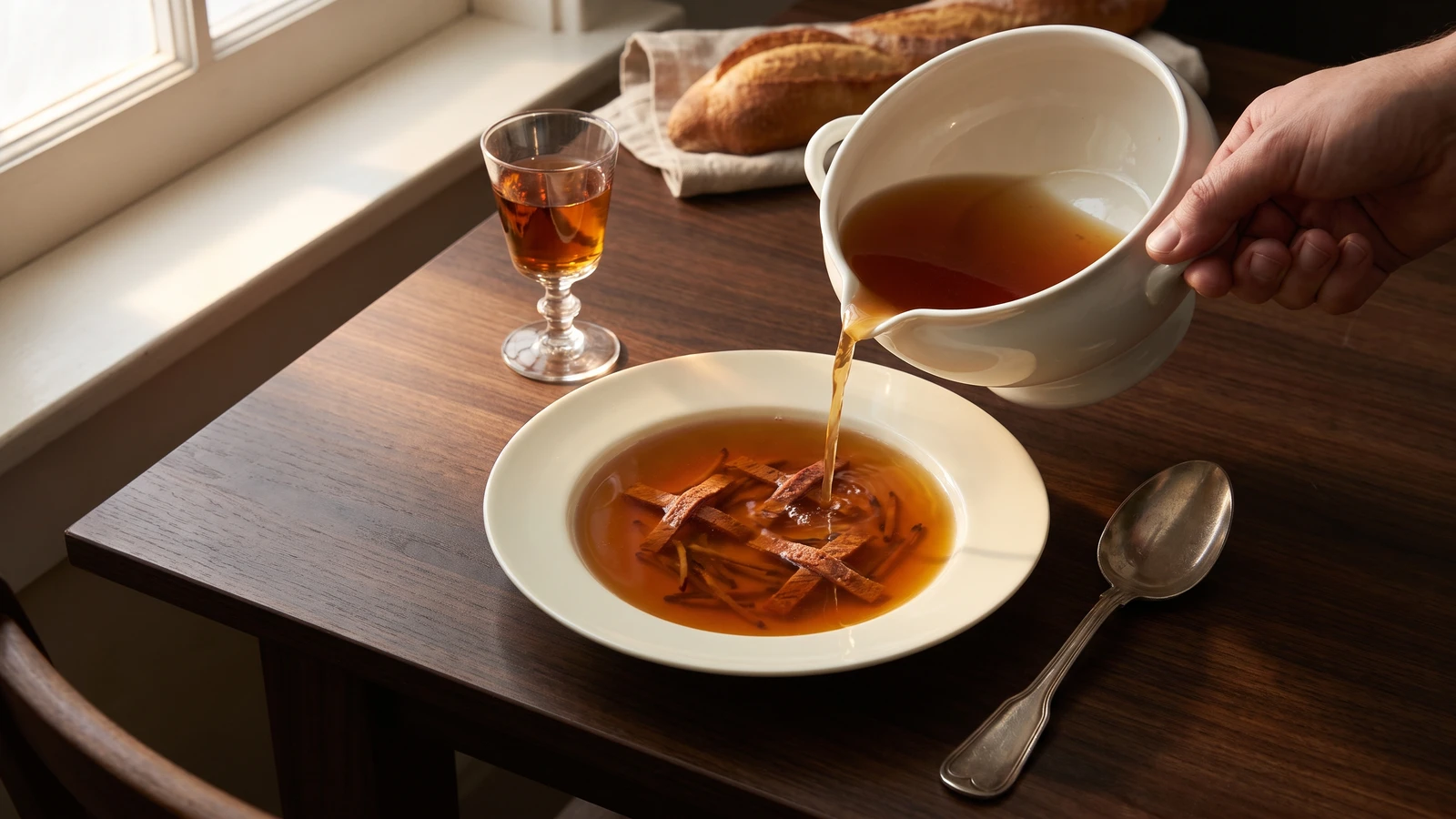
Clear venison consommé, Marsala added at the last breath, cross-cut royale of venison, lentil, and game Espagnole, with hare julienne beneath: a hunter's first course that makes precision feel generous.
Consommé Saint-Hubert (the hunter's clear game broth) teaches the discipline of a finished consommé: clarity is not made at service, it is protected. The broth carries venison fumet, the concentrated essence of the game, and must remain transparent enough to reveal the hare and each cross of royale, the poached, set garnish, beneath its chestnut-amber surface. The one true thing before you touch a pan is this: heat it decisively, but never bully it.
The original entry assumed a saucier on staff, a stockpot never off the fire, six tiny dariole-moulds for this doubled quantity, and a specialty Charlotte-mould poaching setup; it needed no salamander. A home kitchen needs none of that brigade scaffolding. Reach for finished game consommé, venison purée, lentil purée, and reduced game Espagnole made ahead or thawed, poach the equal-third royale in three straight ramekins, and cut the crosses with a small cutter or a paper template. The book's quart has been doubled for eight first-course bowls, while its one-part-Marsala-to-eight-parts-consommé finish and every garnish proportion remain intact. One cook, one stove, one evening.
The moulds are scaffolding; the clear venison foundation, equal thirds of royale, hare cut julienne-fashion, and last-minute Marsala are the dish. Keep the royale's water bath below a boil, chill it until truly firm, then bring the consommé only to a clean simmer and add the wine at the final moment. That last pour decides everything.
Consommé Saint-Hubert belongs to the formal French game table, and its title invokes Saint Hubert, the hunter-saint associated with the Ardennes and the hunting culture around Liège. In the classical repertory, named consommés worked like concise menu codes: Saint-Hubert promised game, here expressed through venison fumet, hare, lentil, Marsala, and cross-cut royale rather than a regional vegetable garnish. The cross is not idle decoration; it joins the saint's emblem to a hunter's broth built from the kitchen's finest game preparations.
Quantity
8 cups (1.9 L / 1.9 kg)
fully clarified and chilled
Quantity
1 cup (240 ml / 240 g)
at room temperature
Quantity
½ cup (120 ml / 120 g)
cold
Quantity
½ cup (120 ml / 120 g)
cold
Quantity
½ cup (120 ml / 120 g)
cold
Quantity
1 teaspoon (5 ml / 5 g)
softened, for the ramekins
Quantity
¼ cup (60 ml / 50 g)
chilled and cut julienne-fashion
| Ingredient | Quantity |
|---|---|
| finished game consommé prepared with venison fumetfully clarified and chilled | 8 cups (1.9 L / 1.9 kg) |
| dry Marsalaat room temperature | 1 cup (240 ml / 240 g) |
| finished venison puréecold | ½ cup (120 ml / 120 g) |
| finished smooth lentil puréecold | ½ cup (120 ml / 120 g) |
| reduced game Espagnolecold | ½ cup (120 ml / 120 g) |
| unsalted buttersoftened, for the ramekins | 1 teaspoon (5 ml / 5 g) |
| fully cooked hare filletchilled and cut julienne-fashion | ¼ cup (60 ml / 50 g) |
Set the cold game consommé prepared with venison fumet in a clean 3-quart saucepan. If fine sediment has settled at the bottom, ladle the clear broth away from it and pass the broth once through damp muslin or a damp lint-free cloth; don't whisk, squeeze, or scrape. Clarification has already been done in the finished component, and your task now is to preserve it. Keep the Marsala covered at room temperature and the three royale components cold.
Brush three straight-sided 6-ounce ramekins with the thinnest possible film of softened butter. Stir the cold venison purée, lentil purée, and reduced game Espagnole together until perfectly uniform, using a spatula rather than a whisk so you don't beat in bubbles. The thirds must remain equal; that balance of game, earthiness, and sauce is the royale. Divide ½ cup of the mixture into each ramekin, tap each once against a folded towel to settle hidden pockets, and cover loosely with foil.
Set the ramekins on a folded cloth in a deep roasting tin and add hot water to reach halfway up their sides. Poach in a 300°F (150°C) oven for 25 to 35 minutes, until the surface is set and the centre no longer ripples when a ramekin is nudged. The water should barely quiver. If it begins bubbling hard, lower the heat and replace a cup of hot water with cool water; if the centres remain loose, give them another five minutes. Pinholes around an overheated edge can be trimmed away later, so don't discard the royale. Ça se rattrape.
Cool the ramekins in their water for fifteen minutes, then lift them out and chill for at least one hour. Run a thin knife around each edge, dip the base briefly in hot water, and unmould. Slice the cylinders crosswise into pieces about ⅜ inch (8 mm) thick, then stamp out crosses with a 1¼-inch (3 cm) cutter. Without a cutter, lay a clean paper cross on each slice and follow it carefully with the tip of a paring knife. If a slice tears, chill it for another twenty minutes; a broken cross can be fitted together in the tureen, where the clear broth will hide the seam.
Cut the fully cooked, thoroughly chilled hare fillet julienne-fashion into fine match-shaped rods about 1¼ inches (3 cm) long, then measure ¼ cup. Warm a 3-quart soup tureen and the serving bowls with hot water, then dry them completely. Arrange the royale crosses in the warm tureen with the hare julienne. Handle the crosses with a small spoon, not tongs, which mark their clean edges.
Heat the game consommé uncovered over medium heat until it reaches a clean, lively simmer, skimming away any stray bubbles without stirring the broth. If sediment rises and clouds it, remove the pan from the heat, let it settle for two minutes, and pass the liquid once through fresh damp muslin into a clean pan. Ça se rattrape, provided you don't press the cloth. At the moment of serving, add the Marsala and return the consommé just to its first full rise, about thirty seconds. Don't prolong the boil; the wine belongs in the aroma as well as the broth.
Pour the hot consommé slowly down the inner wall of the tureen so the crosses remain intact and the hare julienne disperses without tangling. Cover the tureen and carry it straight to the table. Ladle each bowl with several strands of hare and at least two crosses of royale, keeping the broth clear enough that every garnish remains visible. À table!
1 serving (about 240g)
Culinary guides, cultural storytelling, and the editorial depth that makes cooking meaningful.
Discover Culinary ExplorerChef Juliette
Marseille's great fish stew, saffron-gold and garlic-scented, proves that a hard boil can be the careful choice: it binds olive oil into broth before the whole pot meets bread.
Chef Juliette
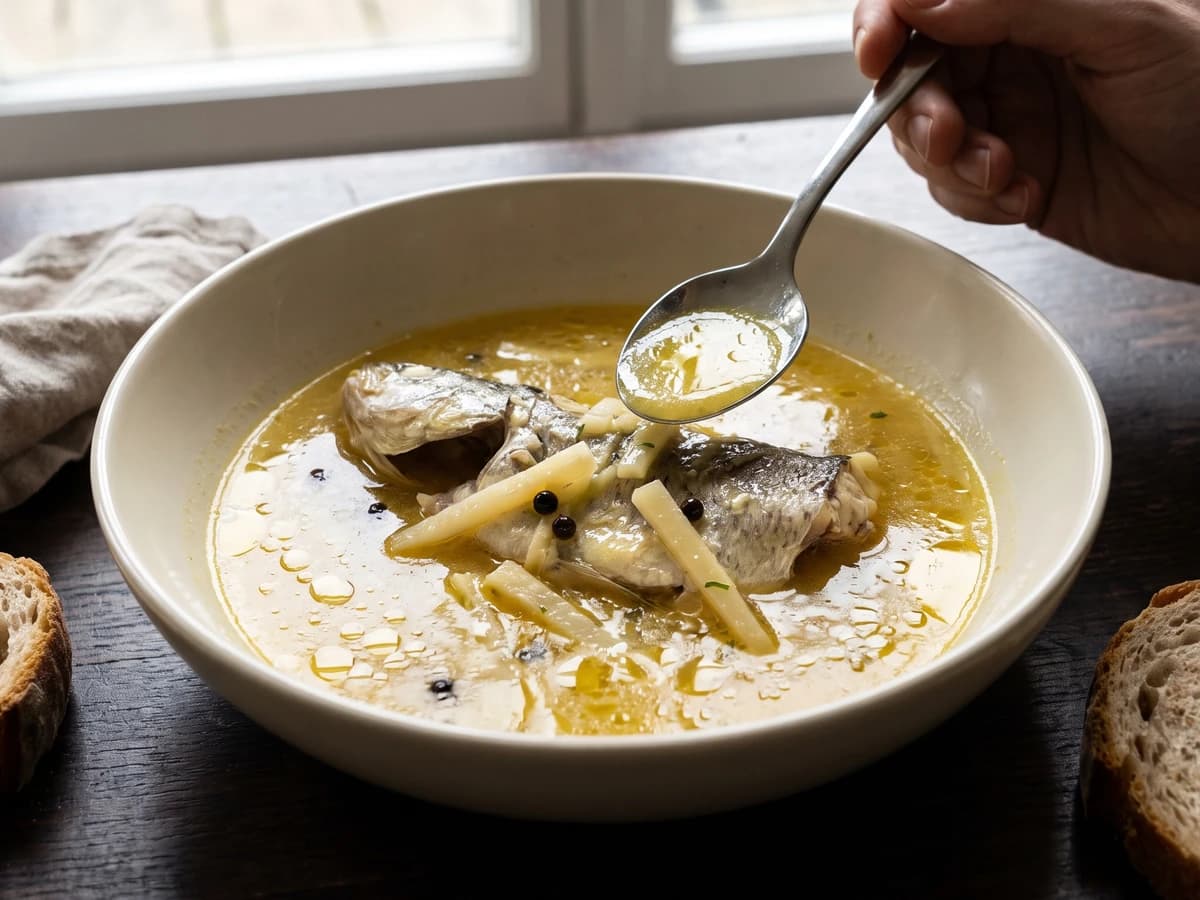
Waterzoi asks fresh, bone-in river fish to thicken its own buttery broth, with parsley root and pepper for company. No flour, no stockpot, just a brisk simmer watched closely.
Chef Juliette
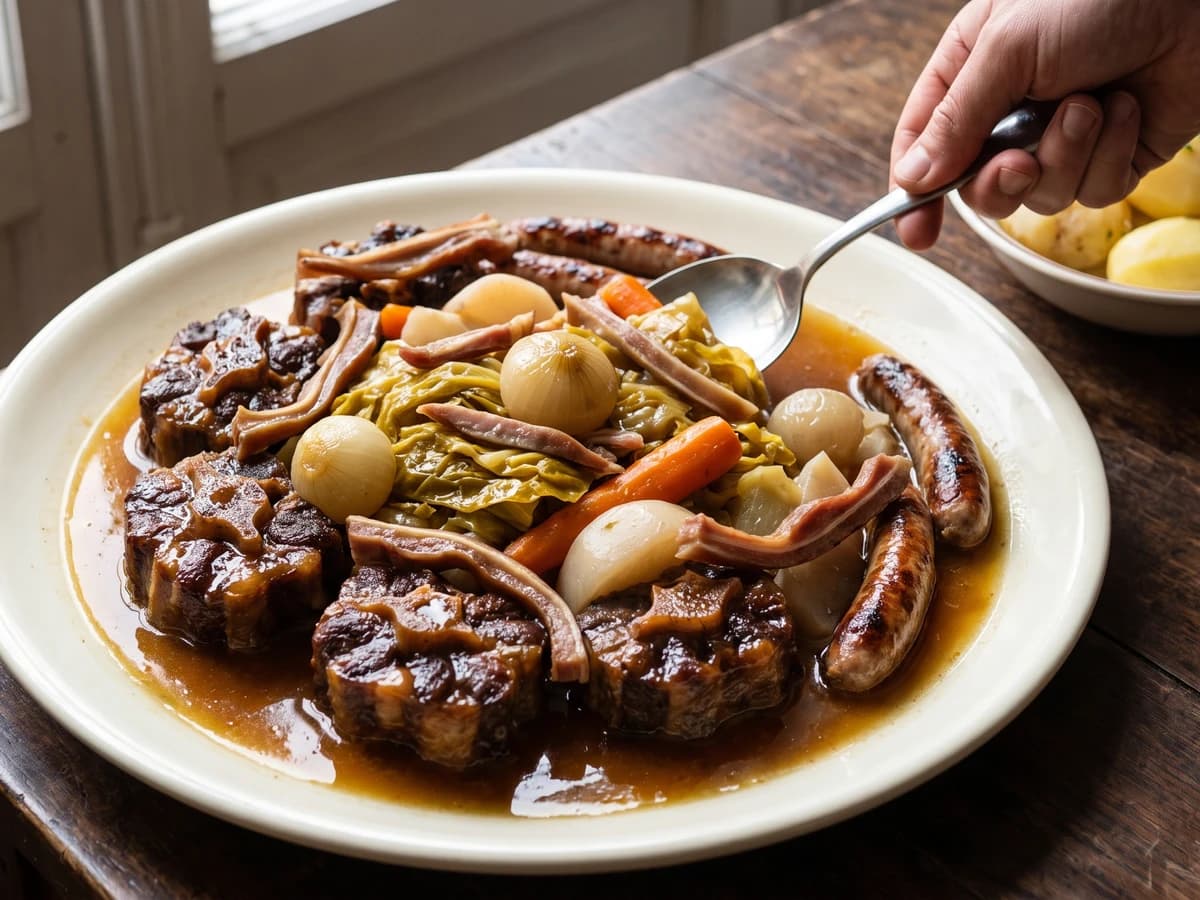
Queue de Bœuf en Hochepot gathers oxtail, pig's trotter and ear, cabbage, roots, and grilled chipolatas around a clear, gelatin-rich broth whose quiet simmer keeps every piece tender and distinct.
Chef Juliette
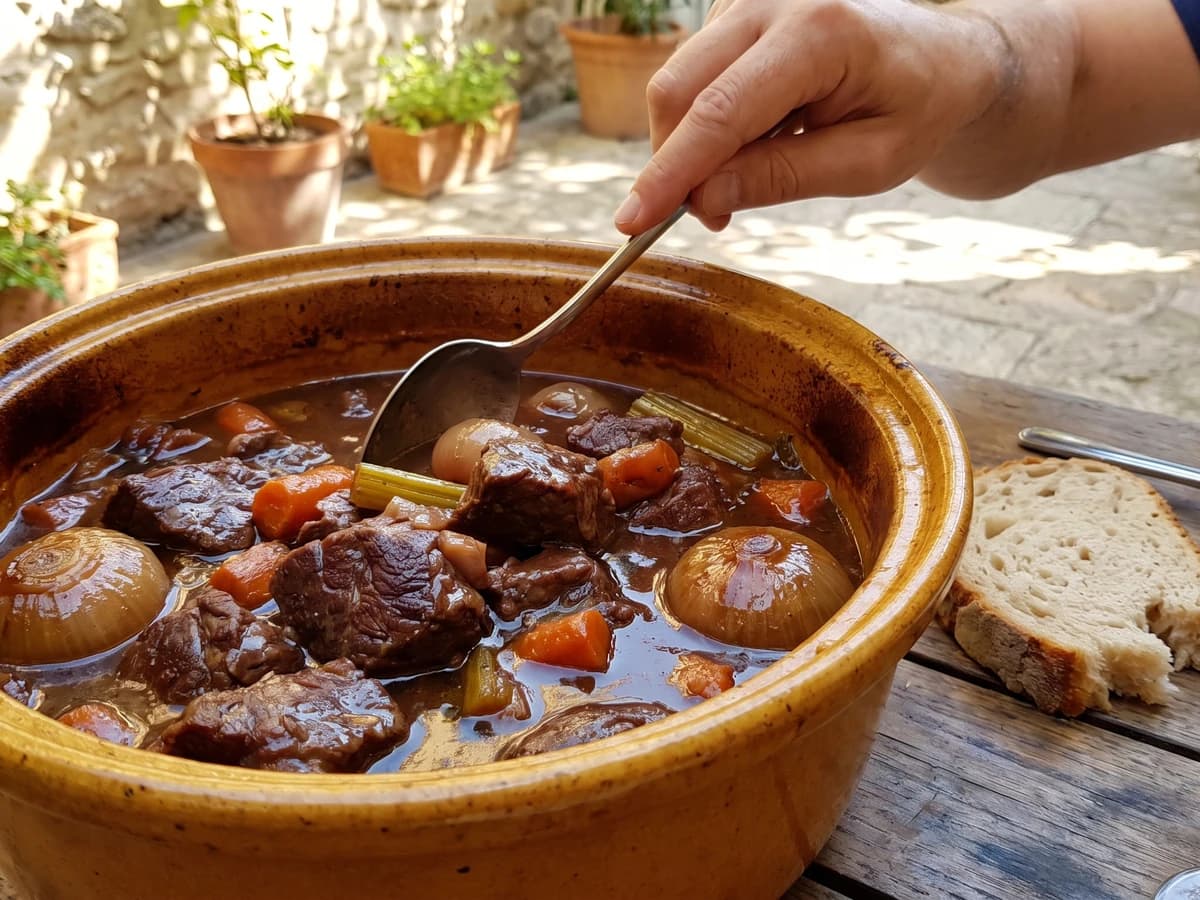
Beef shoulder larded with bacon, sharpened by red wine and vinegar, then sealed with garlic, vegetables, and dry lemon peel until the low oven turns it yielding and the gravy darkly glossy.