Chef Juliette
Ordinary or White Consommé
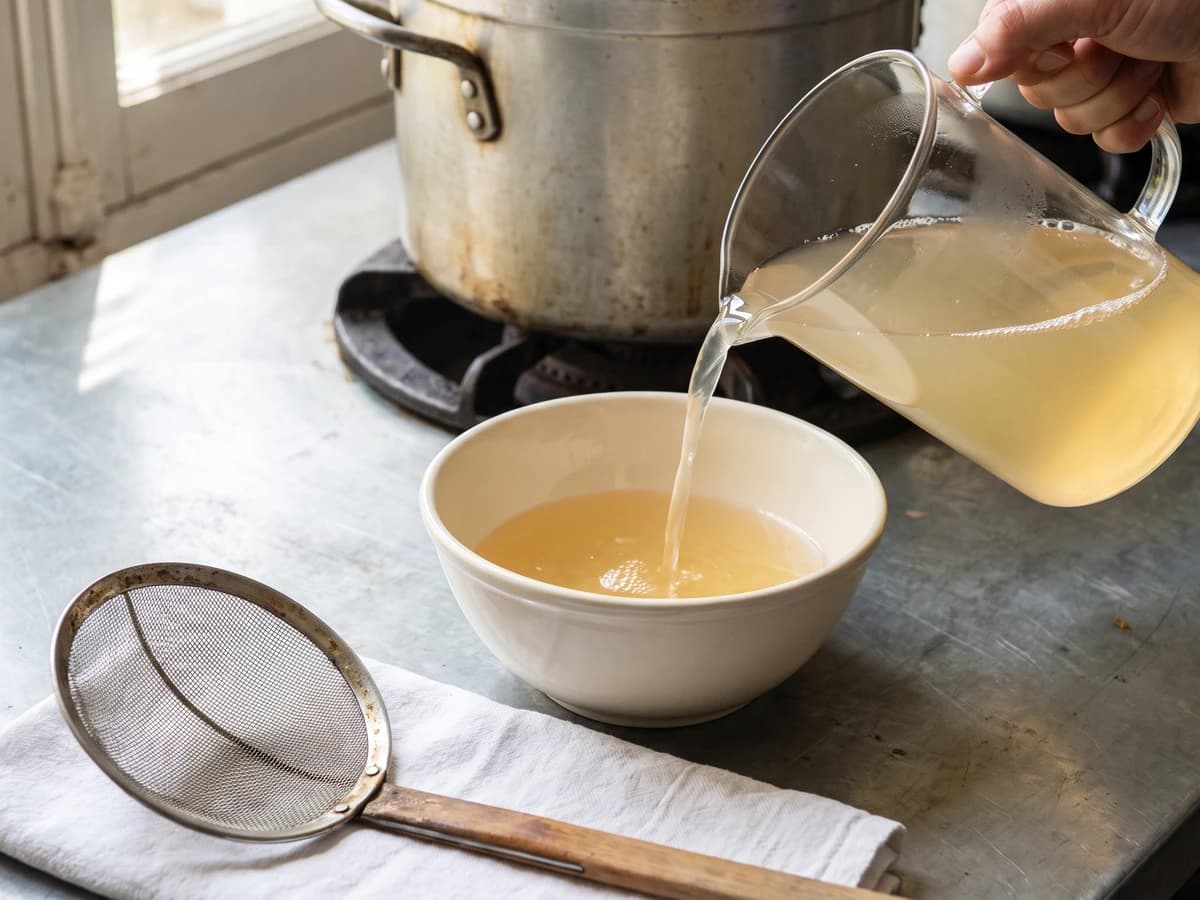
Beef shin, lean beef, and fowl begin in cold water and rise slowly toward a tremble. Skim before the boil, and you learn the quiet discipline that gives every clear French broth its backbone.
A cooking platform built around craft, culture, and the stories behind what we eat.
Created by Chef Juliette
Based on No. 61, Lenten Aurore Sauce, from Le Guide Culinaire (1907) by Auguste Escoffier
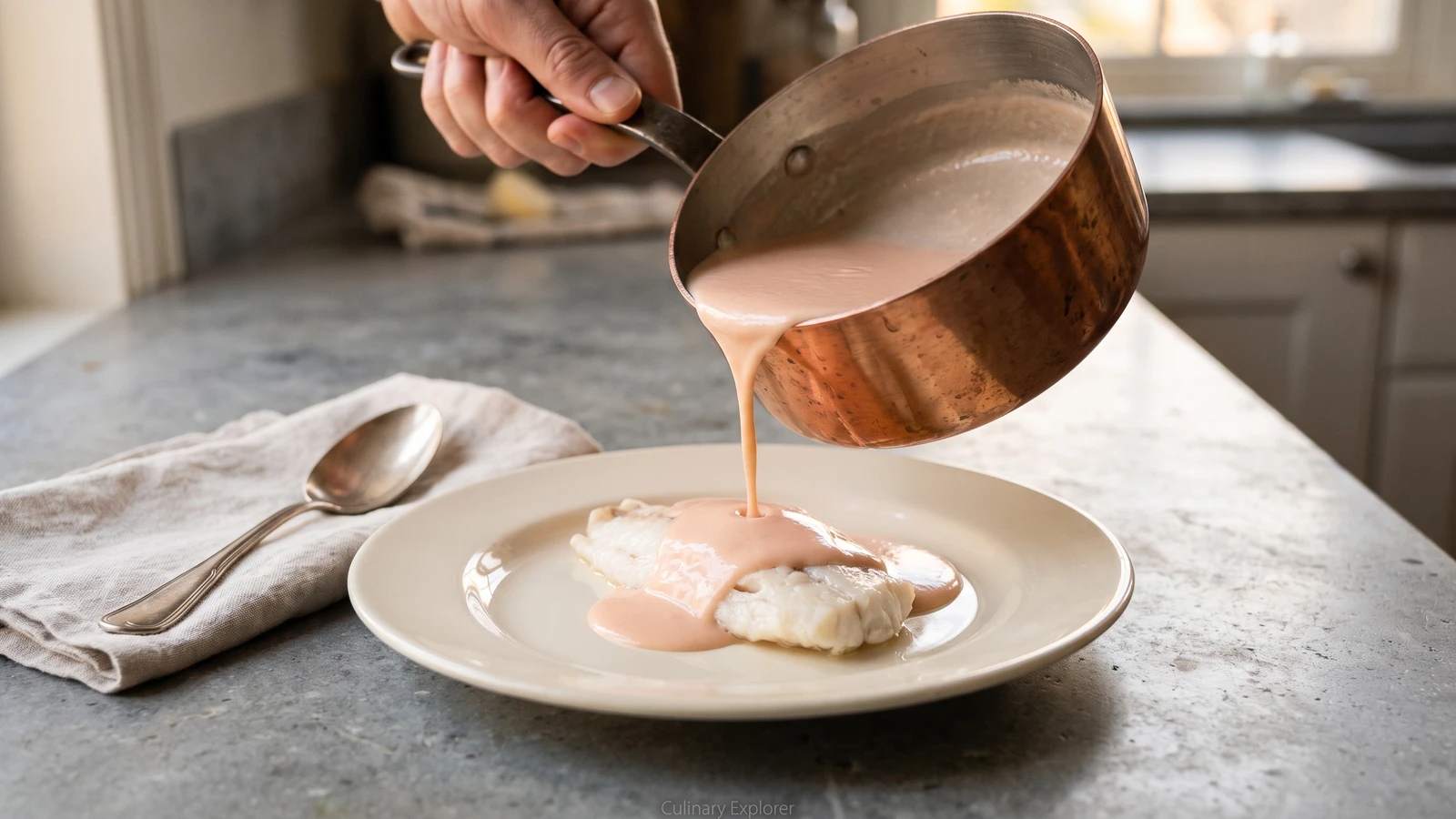
Fish velouté and tomato purée meet in equal measure, then cold butter gives the blush its final gloss: a maigre derivative that teaches proportion, restraint, and the discipline of finishing off the fire.
Sauce Aurore maigre (Lenten Aurore sauce) teaches the cleanest lesson in the derivative-sauce canon: equal foundations must remain equal, and the finishing butter belongs off the fire. Fish velouté gives body, tomato purée gives the dawn-pink color that names the sauce, and neither should dominate. C'est la même grammaire: foundation, proportion, finish.
The original assumed a saucier on station, Fish Velouté and tomato purée already finished in quantity, and a tamis waiting beside the stove. At home, a heavy saucepan, a whisk, and a fine-mesh sieve do the same honest work. The service pan becomes a manageable two-quart batch while the book's one-to-one ratio remains intact. The extra choreography is brigade scaffolding, but the equal measure and the final monter au beurre (whisking in butter off the heat) are the dish. One cook, one stove, one evening.
The sauce should fall from the spoon in a smooth ivory-rose ribbon, glossy without looking oily. The moment that matters is the butter finish: take the pan fully off the heat and add the cold cubes gradually. If it separates, stop. Ça se rattrape, and the method gives you the repair before the next cube goes in.
The real home of Sauce Aurore maigre is the French maigre table, the fish-day repertoire maintained in bourgeois households and grand kitchens without surrendering the structure of classical sauce-making. Aurore takes its name from the dawn color created when tomato purée meets pale velouté; the maigre version replaces the meat-based foundation with Fish Velouté while preserving the same proportions and finish. Maigre means prepared without meat stock, not meager or low in fat, so the generous butter finish remains essential.
Quantity
4 cups (960 ml / about 1 kg)
Quantity
4 cups (960 ml / about 1 kg)
Quantity
1/2 cup (120 ml / 115 g)
cut into small cubes
| Ingredient | Quantity |
|---|---|
| Fish Velouté | 4 cups (960 ml / about 1 kg) |
| smooth plain tomato purée | 4 cups (960 ml / about 1 kg) |
| cold unsalted buttercut into small cubes | 1/2 cup (120 ml / 115 g) |
Measure exactly four cups each of Fish Velouté and tomato purée. Both must already be finished preparations with a comparable sauce consistency, smooth and just thick enough to coat a spoon lightly. If the tomato purée runs like juice, reduce it separately before measuring. Equal measure is the structure of Aurore maigre, not a suggestion.
Put the tomato purée in a 4-quart heavy saucepan and whisk in the Fish Velouté in three additions, scraping well into the corners after each. Bring the mixture slowly to a bare simmer over medium-low heat, then cook for 8 to 10 minutes, stirring often, until the color is even and the sauce nappes the back of a spoon in a smooth film. Don't boil it hard. Fierce heat scorches the tomato against the pan before the two foundations have time to become one.
Set a fine-mesh sieve over a clean heatproof bowl and pass the sauce through, pressing gently with a ladle or flexible spatula. This replaces the brigade's tamis without changing the intent: the finished Aurore maigre must be completely smooth. Reserve two tablespoons of the strained sauce in a small clean bowl as insurance for the butter finish.
Return the strained sauce to the clean pan, warm it only until the first small bubbles appear, then take it fully off the heat and wait until the bubbling stops. Whisk in the cold butter two or three cubes at a time, letting each addition disappear before adding more. If an oily ring appears, stop. Ça se rattrape: let the reserved sauce cool until barely warm, whisk the broken sauce into it one tablespoon at a time until smooth, then incorporate the remainder in a thin stream. If the emulsion stays smooth, whisk in the reserved sauce before the final butter cubes. Once mounted, the sauce must never boil again.
Serve the Aurore maigre at once, or hold it for no more than 20 minutes in a heatproof bowl set over barely warm water, stirring occasionally. The sauce should pour in a broad, glossy ribbon and cling to poached fish without sitting like paste. Spoon it generously over sole, turbot, hake, fish quenelles, or softly poached eggs. À table!
1 serving (about 105g)
Culinary guides, cultural storytelling, and the editorial depth that makes cooking meaningful.
Discover Culinary ExplorerChef Juliette
Beef shin, lean beef, and fowl begin in cold water and rise slowly toward a tremble. Skim before the boil, and you learn the quiet discipline that gives every clear French broth its backbone.
Chef Juliette
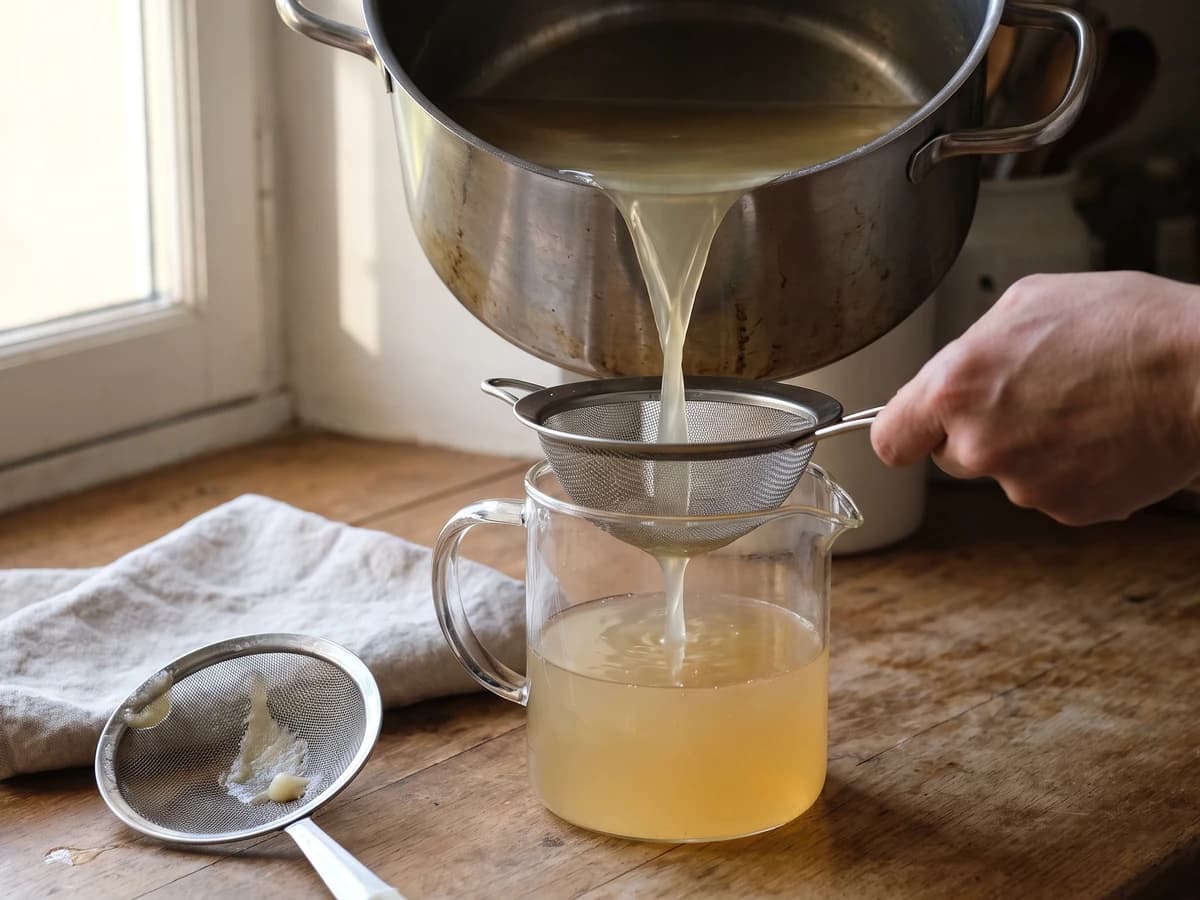
Break the veal bones small, then give them eight hours at a bare tremble. This pale, gelatinous fond becomes the quiet foundation beneath velouté, blanquette, and every sauce that must stay light.
Chef Juliette
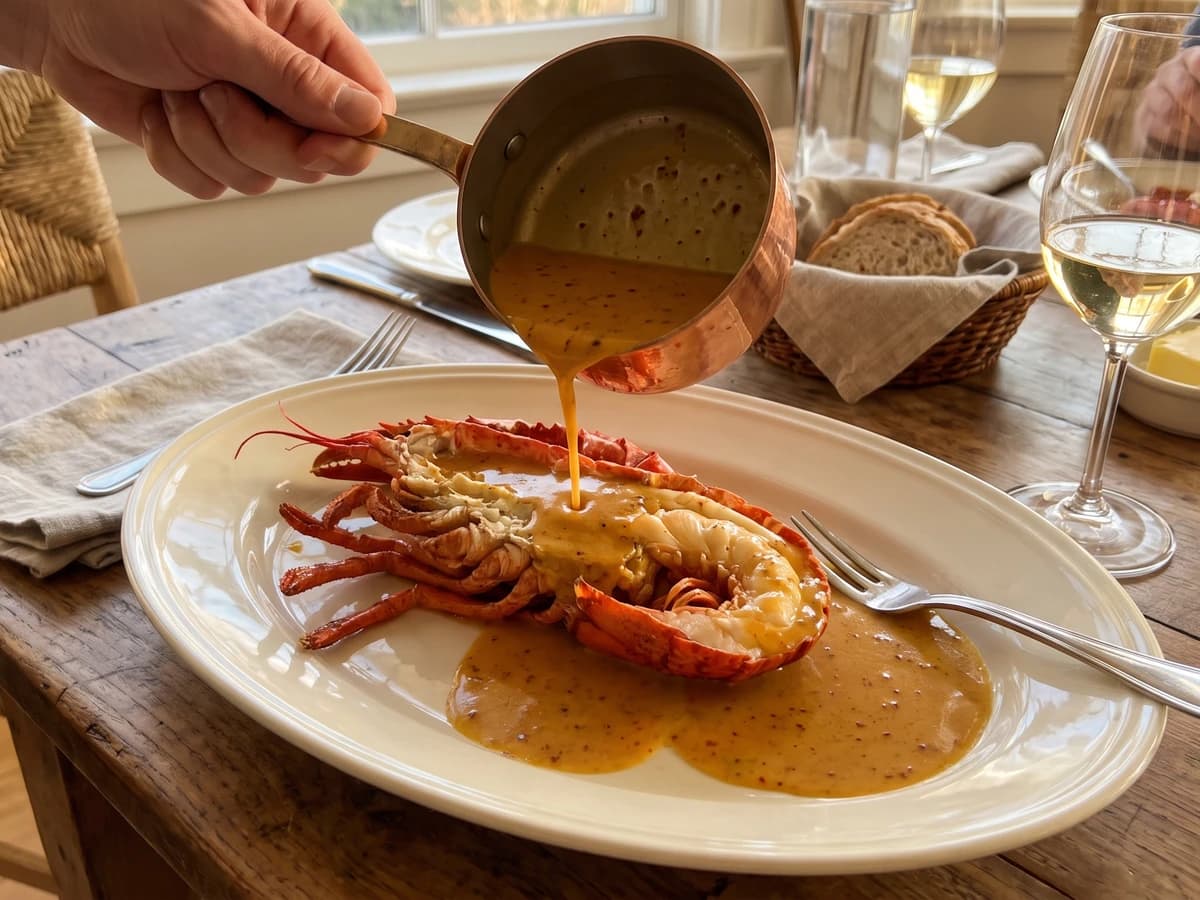
Sauce Orientale concentrates lobster-rich American Sauce with curry, then folds in cream away from the fire: a glossy, gently spiced derivative made for lobster, crayfish, and firm fish.
Chef Juliette
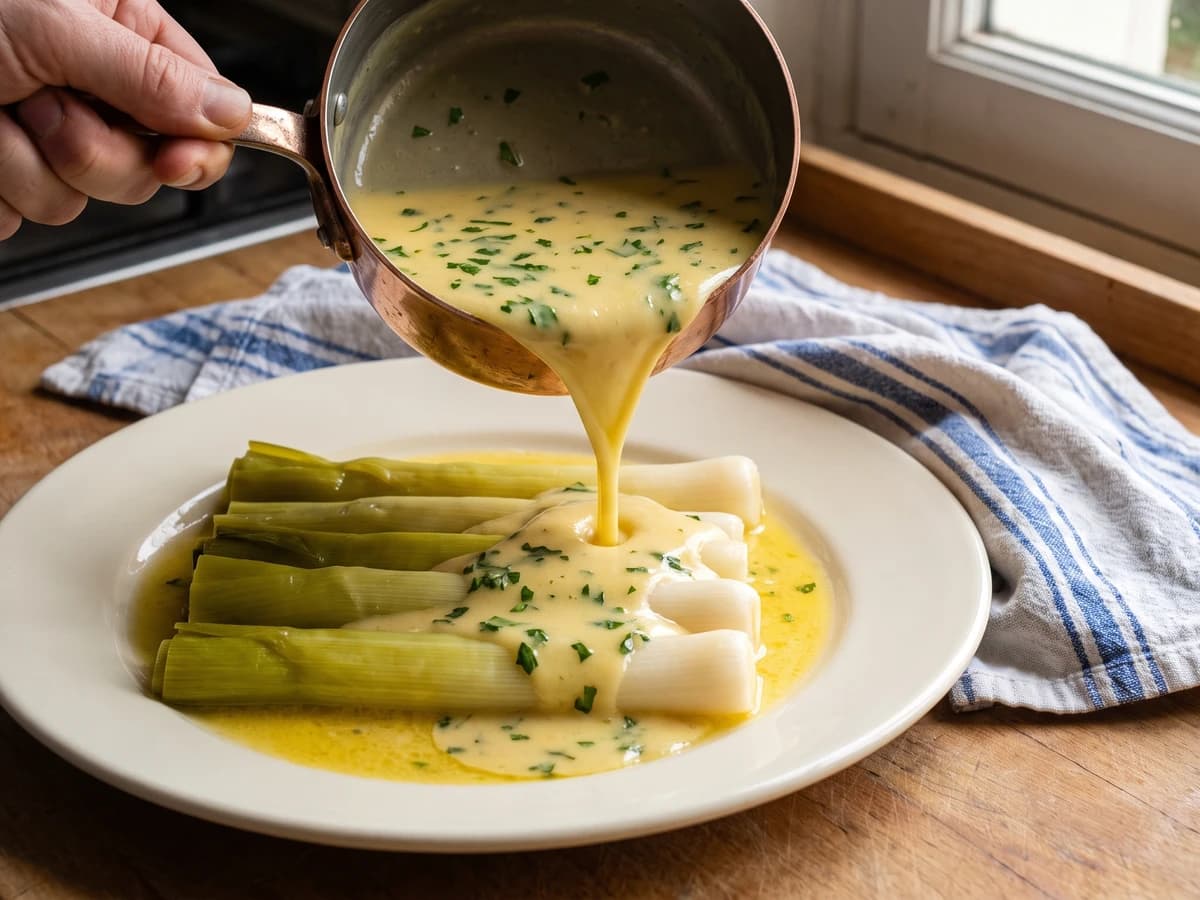
An old lesson in sauce families: Sauce Allemande takes mushroom liquor, then butter, lemon, and parsley, becoming a glossy Poulette for sheep's trotters, leeks, cauliflower, and anything needing gentle richness with a bright edge.