Chef Juliette
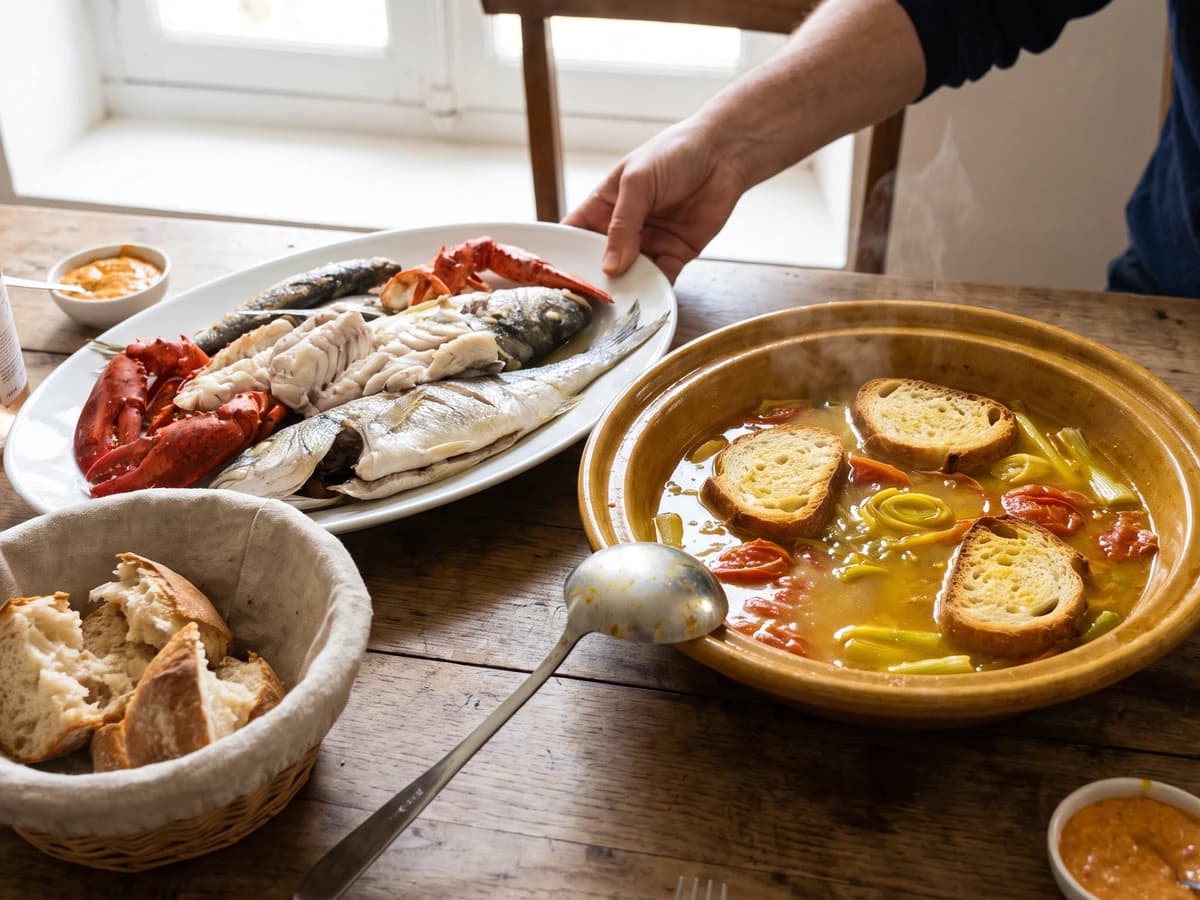
Bouillabaisse à la Marseillaise
Marseille's great fish stew, saffron-gold and garlic-scented, proves that a hard boil can be the careful choice: it binds olive oil into broth before the whole pot meets bread.
A cooking platform built around craft, culture, and the stories behind what we eat.

Created by Chef Juliette
Based on No. 609, Consommé Rothschild, from Le Guide Culinaire (1907) by Auguste Escoffier
Consommé Rothschild makes clarity luxurious: pheasant-fumet broth scented at the last moment with reduced Sauterne, then poured over tender pheasant-and-chestnut royale roundels and a fine julienne of roast pheasant.
Consommé Rothschild (clear game broth with pheasant, chestnut, and Sauterne) teaches the discipline of separation. The consommé stays brilliant because the wine is reduced apart, the royale is poached apart, and every garnish waits in the tureen until the final pour. That is the one true thing to know before touching a pan: clarity is protected, not repaired at the table.
The original entry assumed a saucier on staff, game consommé made with pheasant fumet waiting in a stockpot, pheasant salmis sauce already strained, and dariole moulds close to hand. At home, those finished foundations are made ahead, the one-quart service formula is doubled to a 2-quart dinner-party batch without changing its 8:1 consommé-to-reduced-wine proportion, and the original two dariole moulds become four small fluted moulds. Ramekins and a fluted cutter are an honest equivalent. The standing stockpot is brigade scaffolding and can go; the equal-thirds royale, reduced Sauterne, and last-minute boiling pour are the dish and must stay. One cook, one stove, one evening.
Done properly, the broth is clear amber-gold, the Sauterne gives perfume rather than sweetness, and the soft grooved roundels hold their shape around a fine julienne of roast pheasant. The step that matters most is the royale poach: keep the water below a boil so the purée sets tenderly instead of tightening and cracking.
The Rothschild name places this consommé among the named garnishes of the Parisian grand table, where a perfectly clear broth demonstrated the kitchen's command before the garnish ever appeared. Pheasant and chestnut belong to the game-season larder, while Sauterne, drawn from the sweet wines of Sauternes in Bordeaux, becomes aromatic rather than sugary through reduction. This is not a regional farmhouse soup but a classical service formula that traveled from private dining rooms into the working canon.
Quantity
2 quarts (1.9 L / 1.9 kg)
Quantity
1½ cups (355 ml / 360 g), to reduce to 1 cup (240 ml / 245 g)
Quantity
½ cup (120 ml / 115 g)
made from very cold raw pheasant breast
Quantity
½ cup (120 ml / 130 g)
Quantity
½ cup (120 ml / 125 g)
cold and thick
Quantity
1 teaspoon (5 ml / 5 g)
softened, for the moulds
Quantity
2 tablespoons (30 ml / 20 g)
cut julienne-fashion into fine match-shaped rods
| Ingredient | Quantity |
|---|---|
| game consommé prepared with pheasant fumet | 2 quarts (1.9 L / 1.9 kg) |
| Sauterne | 1½ cups (355 ml / 360 g), to reduce to 1 cup (240 ml / 245 g) |
| purée of pheasantmade from very cold raw pheasant breast | ½ cup (120 ml / 115 g) |
| unsweetened chestnut purée | ½ cup (120 ml / 130 g) |
| finished pheasant salmis saucecold and thick | ½ cup (120 ml / 125 g) |
| unsalted buttersoftened, for the moulds | 1 teaspoon (5 ml / 5 g) |
| roast pheasant filletcut julienne-fashion into fine match-shaped rods | 2 tablespoons (30 ml / 20 g) |
Pour the Sauterne into a small straight-sided saucepan and hold it at a quiet simmer until exactly 1 cup (240 ml) remains, about 15 minutes. It should smell concentrated and floral but remain fluid, never sticky like syrup. Strain it and reserve. If it slips below the mark, add enough fresh Sauterne to restore the cup and give it one brief simmer. Ça se rattrape.
Butter four 3-ounce (90 ml) fluted dariole moulds, the small baba-shaped moulds of the classical kitchen. Keep every royale ingredient cold. Combine equal volumes of purée of pheasant, chestnut purée, and pheasant salmis sauce, stirring only until the mixture is uniform. Press it through a fine-mesh sieve, then divide it among the moulds and tap each gently against a folded towel to release hidden air pockets. The three flavoring components remain equal thirds, exactly as the source requires.
Stand the moulds in a deep lidded sauté pan and add hot water to reach two-thirds of the way up their sides. Cover and keep the water at the faintest tremble for 20 to 25 minutes, never a boil, until the royale feels just firm and its centre reaches 165°F (74°C). Lift out the moulds and let them settle for 10 minutes. If the water boils and the tops puff or crack, pull the pan from the heat immediately. Chill the royale in its moulds, then trim away the rough cap and cut roundels from the smooth interior; the garnish is still yours.
Unmould the royale and cut it crosswise into rounds about ¼ inch (6 mm) thick. Fluted dariole moulds give the source's grooved roundels automatically; if you used plain ramekins, stamp the slices with a 1¼-inch (3 cm) fluted cutter. Cut the roast pheasant fillet julienne-fashion, meaning fine match-shaped rods, and arrange the roundels and precisely 2 tablespoons of julienne in a warmed soup tureen. Handle the royale lightly and do not stir it once arranged.
Bring the game consommé prepared with pheasant fumet to a clean boil. Stir in the measured reduced Sauterne only when the tureen is ready, return the broth to the boil once, and take it straight from the heat so the wine keeps its perfume. If a few fat eyes rise, do not churn them into the broth by boiling harder; draw a clean strip of paper towel lightly across the surface and lift it away.
Pour the boiling consommé gently over the royale roundels and pheasant julienne in the tureen. Bring it directly to the table and ladle without stirring, giving each bowl several roundels and a little julienne. The broth should remain brilliant enough to show every cut beneath its amber surface. À table!
1 serving (about 240g)
Culinary guides, cultural storytelling, and the editorial depth that makes cooking meaningful.
Discover Culinary ExplorerChef Juliette
Marseille's great fish stew, saffron-gold and garlic-scented, proves that a hard boil can be the careful choice: it binds olive oil into broth before the whole pot meets bread.
Chef Juliette
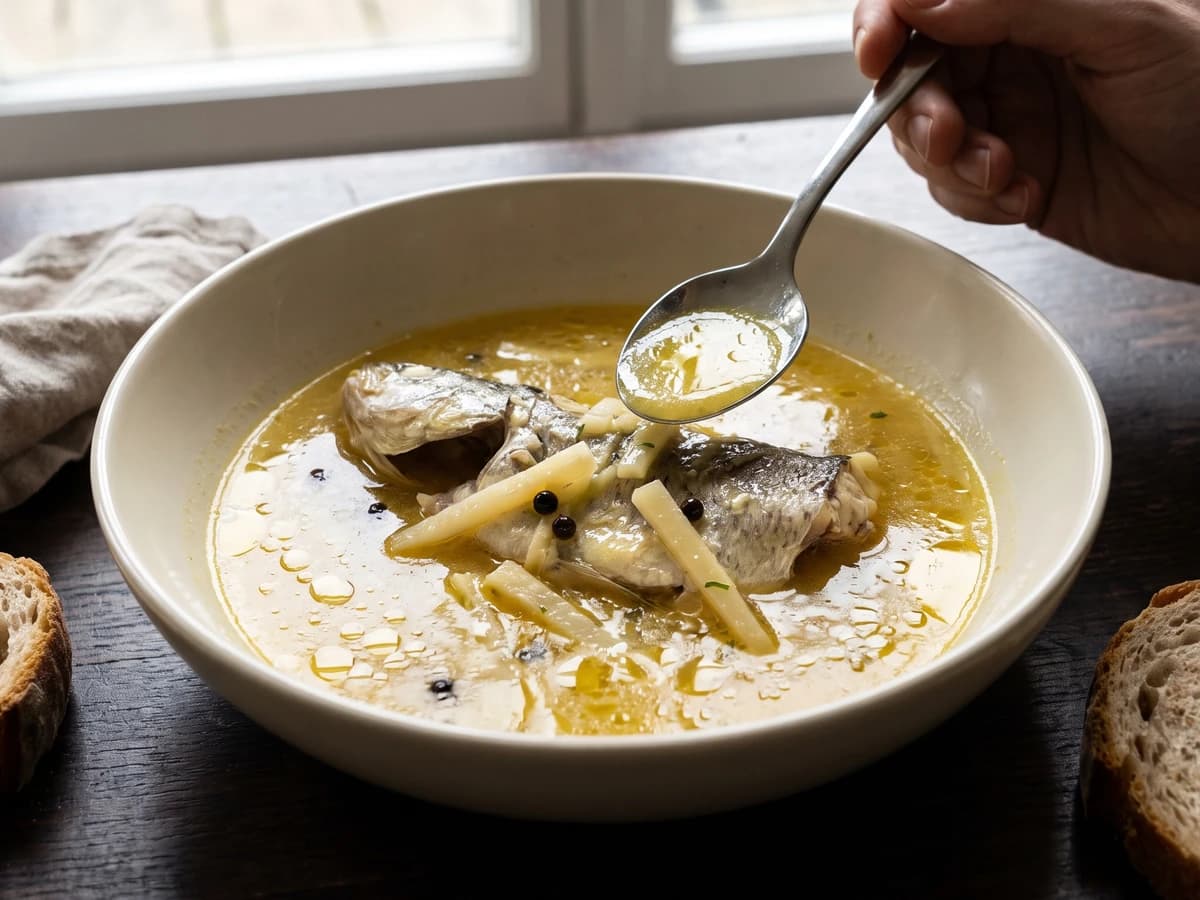
Waterzoi asks fresh, bone-in river fish to thicken its own buttery broth, with parsley root and pepper for company. No flour, no stockpot, just a brisk simmer watched closely.
Chef Juliette
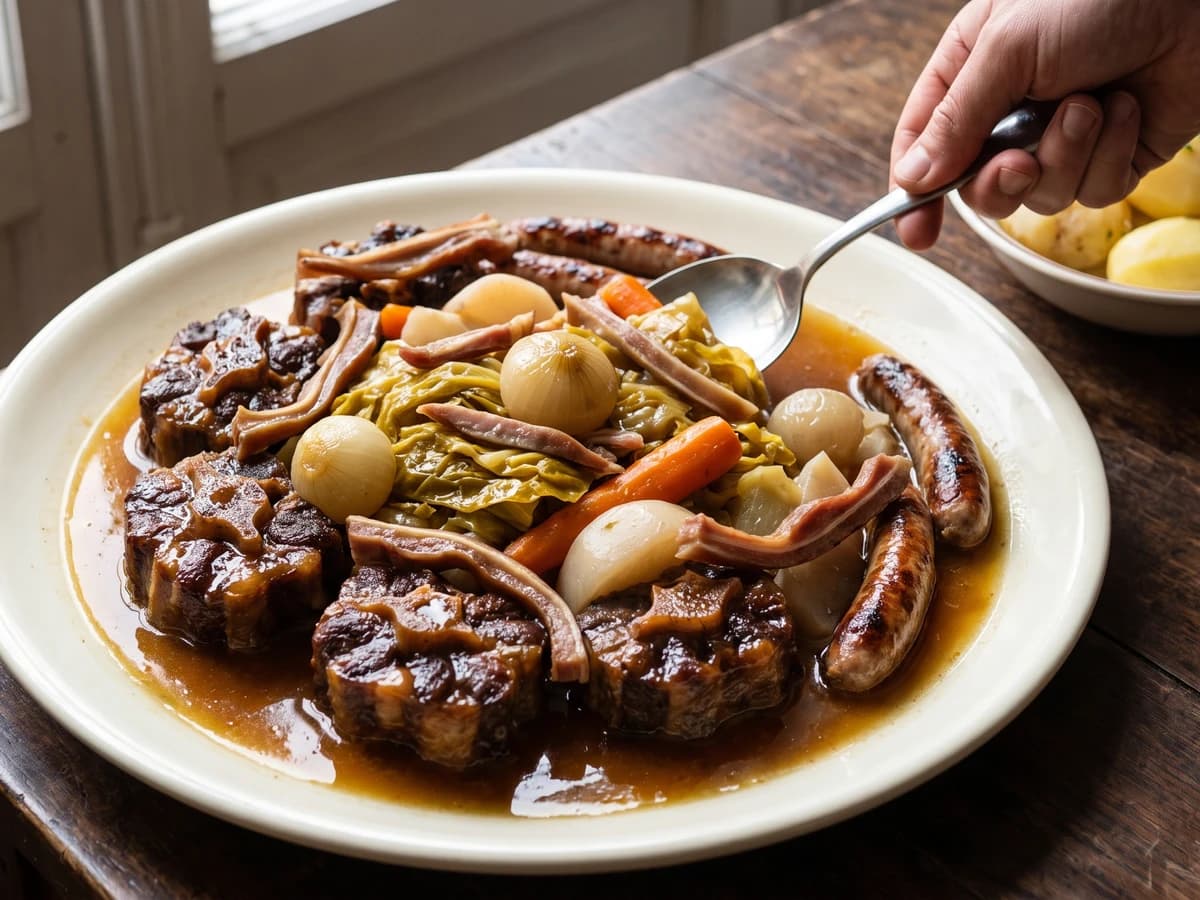
Queue de Bœuf en Hochepot gathers oxtail, pig's trotter and ear, cabbage, roots, and grilled chipolatas around a clear, gelatin-rich broth whose quiet simmer keeps every piece tender and distinct.
Chef Juliette
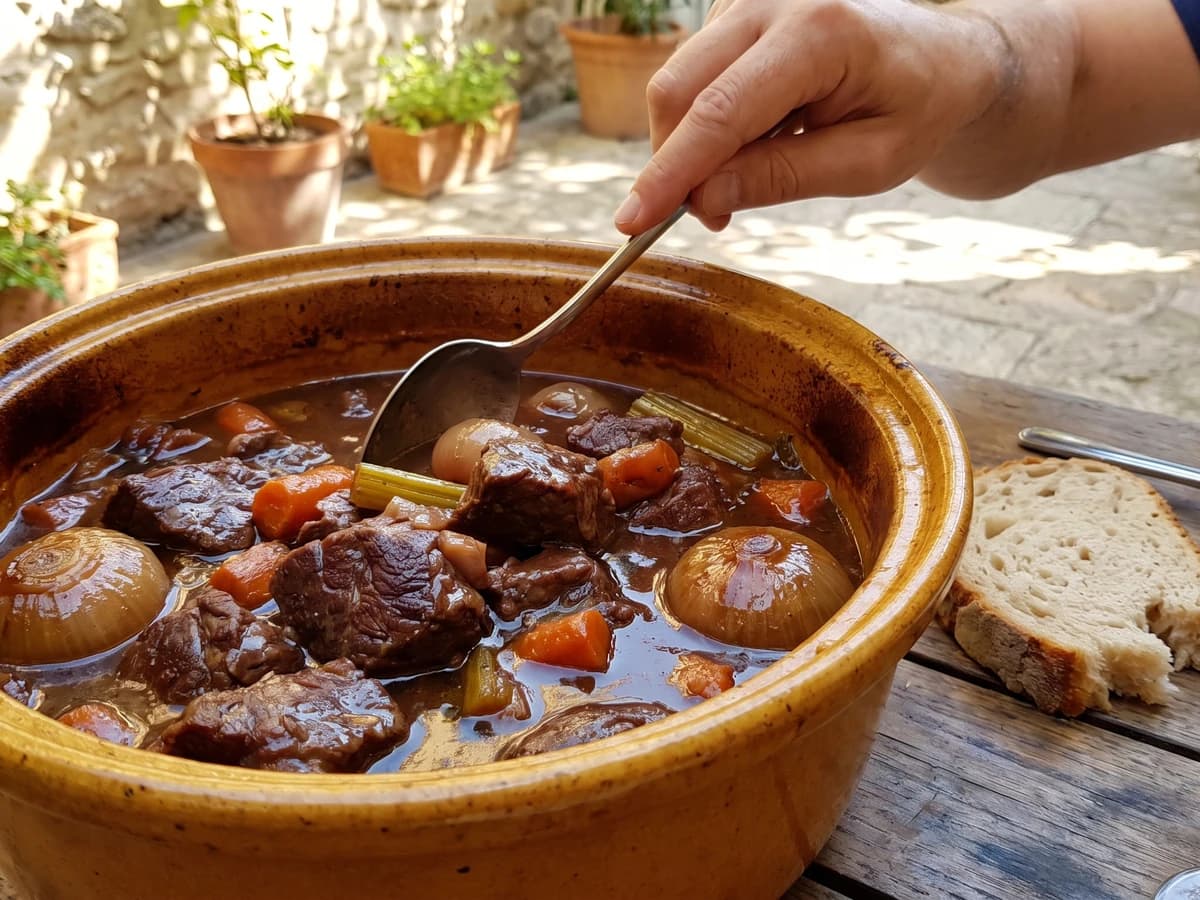
Beef shoulder larded with bacon, sharpened by red wine and vinegar, then sealed with garlic, vegetables, and dry lemon peel until the low oven turns it yielding and the gravy darkly glossy.