Chef Juliette
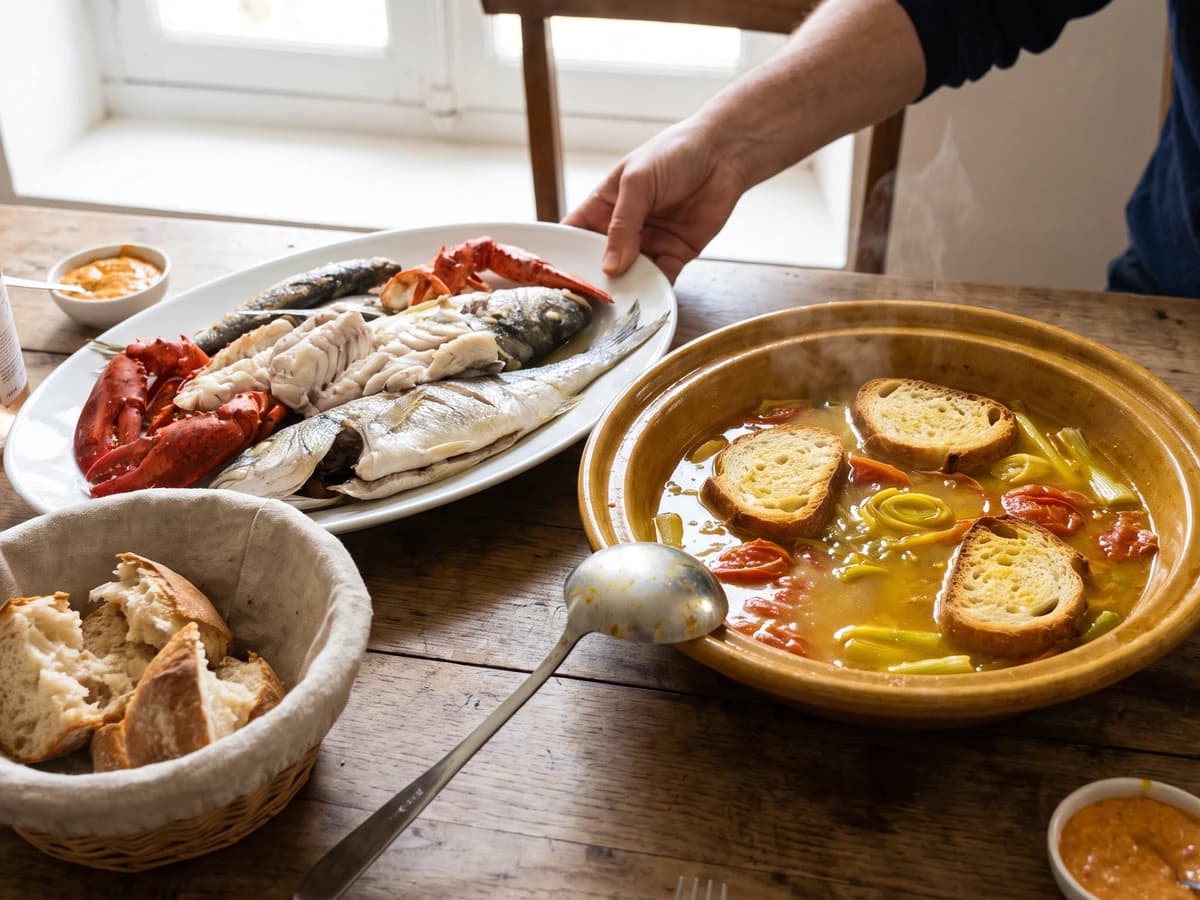
Bouillabaisse à la Marseillaise
Marseille's great fish stew, saffron-gold and garlic-scented, proves that a hard boil can be the careful choice: it binds olive oil into broth before the whole pot meets bread.
A cooking platform built around craft, culture, and the stories behind what we eat.

Created by Chef Juliette
Based on No. 605, Consommé Rejane, from Le Guide Culinaire (1907) by Auguste Escoffier
A limpid white consommé carrying matchsticks of chicken, leek, and potato, cooked at the gentlest tremble so every garnish turns tender while the broth keeps its crystalline composure.
Consommé Rejane (clarified pale poultry broth with fine matchsticks of chicken, leek, and potato) teaches restraint. Once the garnish enters, clarity is protected by stillness: a bare tremble, one careful skim, and almost no stirring. The broth should arrive limpid and pale gold, carrying tender strips that remain distinct rather than collapsing into a muddle.
The original formula assumed excellent white consommé standing ready from a stockpot never off the fire, a saucier guarding its clarity, and brigade hands trained to cut every strip alike. Your honest home equivalent is finished consommé made ahead, one sharp knife, and a heavy saucepan. No salamander is needed because nothing is browned. This version doubles the one-quart formula evenly for a dinner-party tureen while preserving every ratio. Preparing and clarifying the consommé beforehand is brigade scaffolding; the exact julienne and quiet poach are the dish.
Cut julienne-fashion, meaning fine, even matchsticks, so the chicken, leek, and potato cook at the same pace. Then let the ladle wait. The moment that decides Consommé Rejane comes after the garnish enters: keep the broth at a tremble and disturb it as little as possible. One cook, one stove, one evening.
Consommé Rejane belongs to the Parisian grand-kitchen repertoire of named consommés, where a flawlessly clarified base carried a precise garnish and often honored a celebrated figure of the stage. Réjane was the stage name of Parisian actress Gabrielle Réju, yet the soup bearing her name is strikingly spare: chicken, leek, and potato rather than truffles or ornament. As the preparation passed from grand dining rooms into bourgeois kitchens, its distinguishing method remained intact, with the garnish cooked directly in the consommé and stillness preserving its clarity.
Quantity
8 cups (1.9 liters / about 1.9 kg)
finished, chilled, and well strained
Quantity
2 small halves (about 2½ cups / 340 g)
trimmed and cut julienne-fashion into fine matchsticks
Quantity
4 (about 2½ cups / 300 g trimmed)
white and palest green parts only, cleaned and cut julienne-fashion to match the chicken
Quantity
1½ cups (6 oz / 170 g)
peeled and cut julienne-fashion
Quantity
as needed
| Ingredient | Quantity |
|---|---|
| excellent white consomméfinished, chilled, and well strained | 8 cups (1.9 liters / about 1.9 kg) |
| boneless, skinless chicken breast halvestrimmed and cut julienne-fashion into fine matchsticks | 2 small halves (about 2½ cups / 340 g) |
| slim leekswhite and palest green parts only, cleaned and cut julienne-fashion to match the chicken | 4 (about 2½ cups / 300 g trimmed) |
| waxy yellow potatoespeeled and cut julienne-fashion | 1½ cups (6 oz / 170 g) |
| fine sea salt (optional) | as needed |
Clean the leeks thoroughly, especially between their tight inner layers, then cut the white and palest green portions into matchsticks about 2 mm thick and 5 cm long. Cut the potatoes to the same dimensions, rinse them under cold water until the water runs clear, and drain them well; loose surface starch is a quiet enemy of a limpid consommé. Chill the chicken for 15 minutes if it feels soft, then slice it across the grain and cut it julienne-fashion to match the vegetables. Evenness matters more than mathematical perfection because pieces of one size finish cooking together.
Pour the finished white consommé into a clean 4-quart heavy saucepan and bring it just to a boil over medium heat. Inspect the broth as it warms. If sediment rises from the bottom, stop before adding any garnish and pass the consommé through a fine sieve lined with clean damp muslin or an unbleached coffee filter into a clean pan. Taste and correct cautiously with fine salt if needed; the consommé must already possess its full character because this brief cooking cannot build a weak foundation.
When the consommé reaches the boil, scatter in the chicken and leek julienne without dumping them into one clump. Let the liquid return only to a bare tremble, then cook gently for 10 minutes. Pass a fork once through the surface if several chicken strips cling together, but do not stir the pot. Skim away any pale protein foam with a fine skimmer held nearly flat, taking as little broth as possible. A hard boil breaks particles into the liquid and clouds it, so lower the heat the instant the surface becomes busy.
Lower the rinsed potato julienne into different parts of the saucepan in small handfuls, again without stirring. Hold the consommé at the gentlest tremble for 6 to 8 minutes, until the potatoes are tender but still keep their straight edges and the thickest chicken strip is opaque throughout with no pink remaining. If a light haze appears, do not chase it around with a spoon. Ça se rattrape: lift the cooked garnish into a warm bowl with the skimmer, pass the broth gently through damp muslin or an unbleached coffee filter into a clean pan, return the garnish, and warm it without boiling.
Warm the soup bowls with hot water, then dry them. Taste the consommé once more without stirring through the garnish. Divide the chicken, leek, and potato evenly among the bowls with the skimmer, then ladle the clear broth over them from the quietest part of the saucepan. Serve immediately, while the julienne is tender and distinct and the consommé still carries its clean reflective sheen. À table!
1 serving (about 320g)
Culinary guides, cultural storytelling, and the editorial depth that makes cooking meaningful.
Discover Culinary ExplorerChef Juliette
Marseille's great fish stew, saffron-gold and garlic-scented, proves that a hard boil can be the careful choice: it binds olive oil into broth before the whole pot meets bread.
Chef Juliette
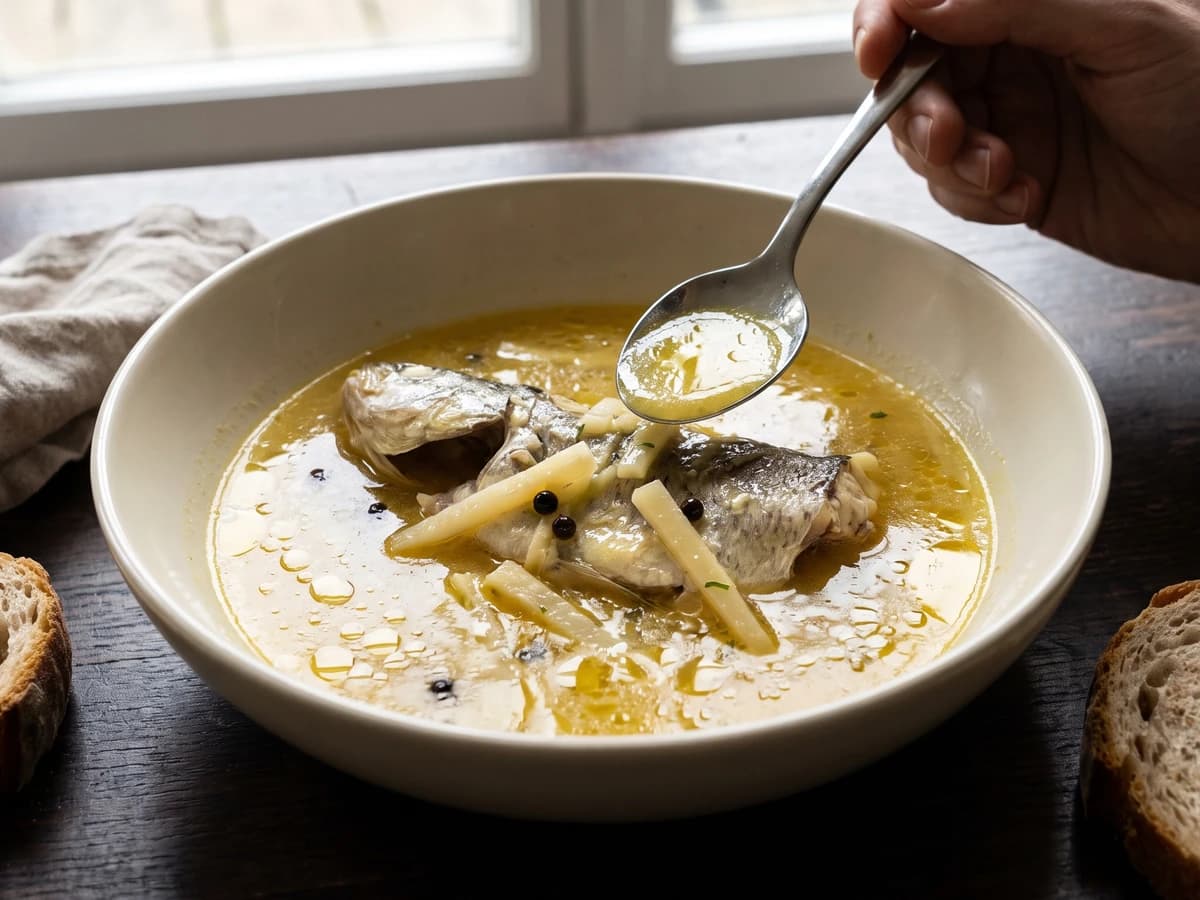
Waterzoi asks fresh, bone-in river fish to thicken its own buttery broth, with parsley root and pepper for company. No flour, no stockpot, just a brisk simmer watched closely.
Chef Juliette
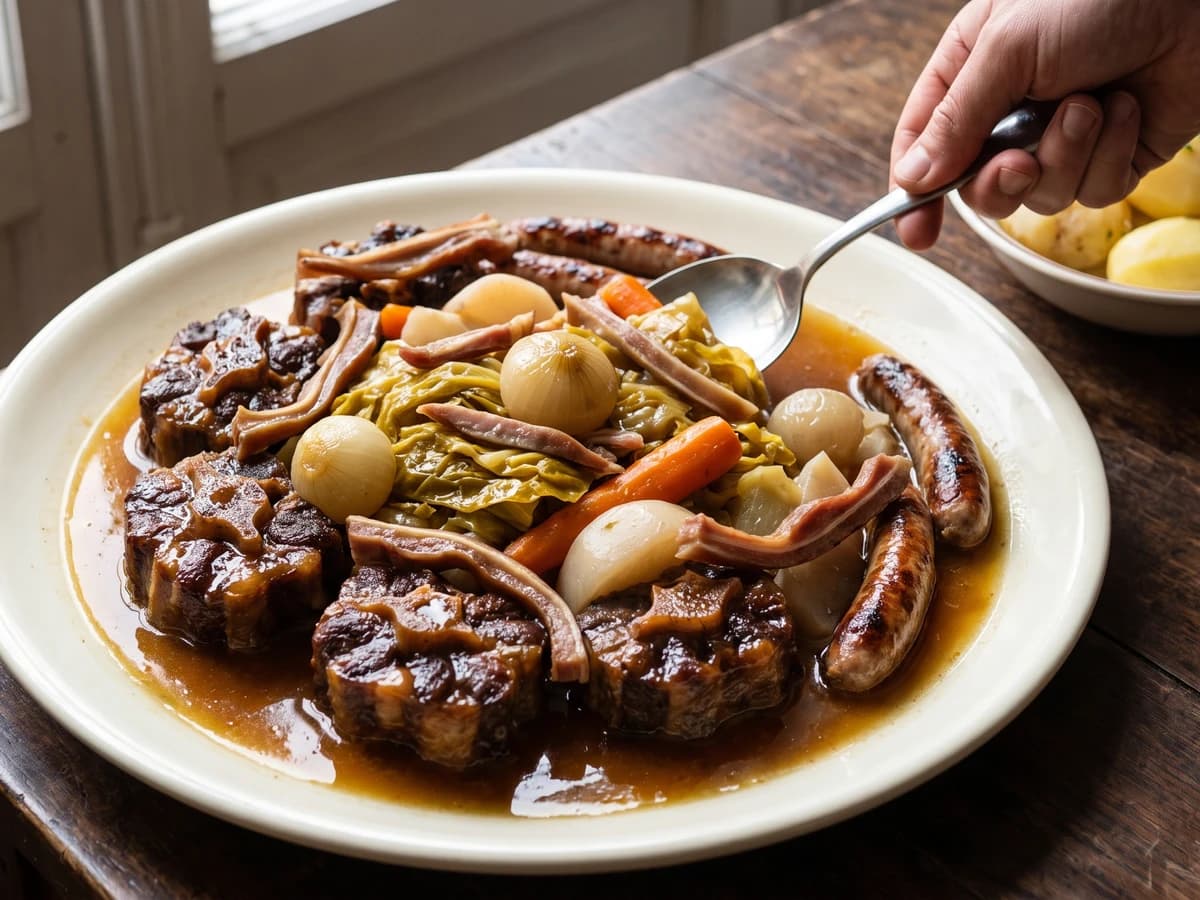
Queue de Bœuf en Hochepot gathers oxtail, pig's trotter and ear, cabbage, roots, and grilled chipolatas around a clear, gelatin-rich broth whose quiet simmer keeps every piece tender and distinct.
Chef Juliette
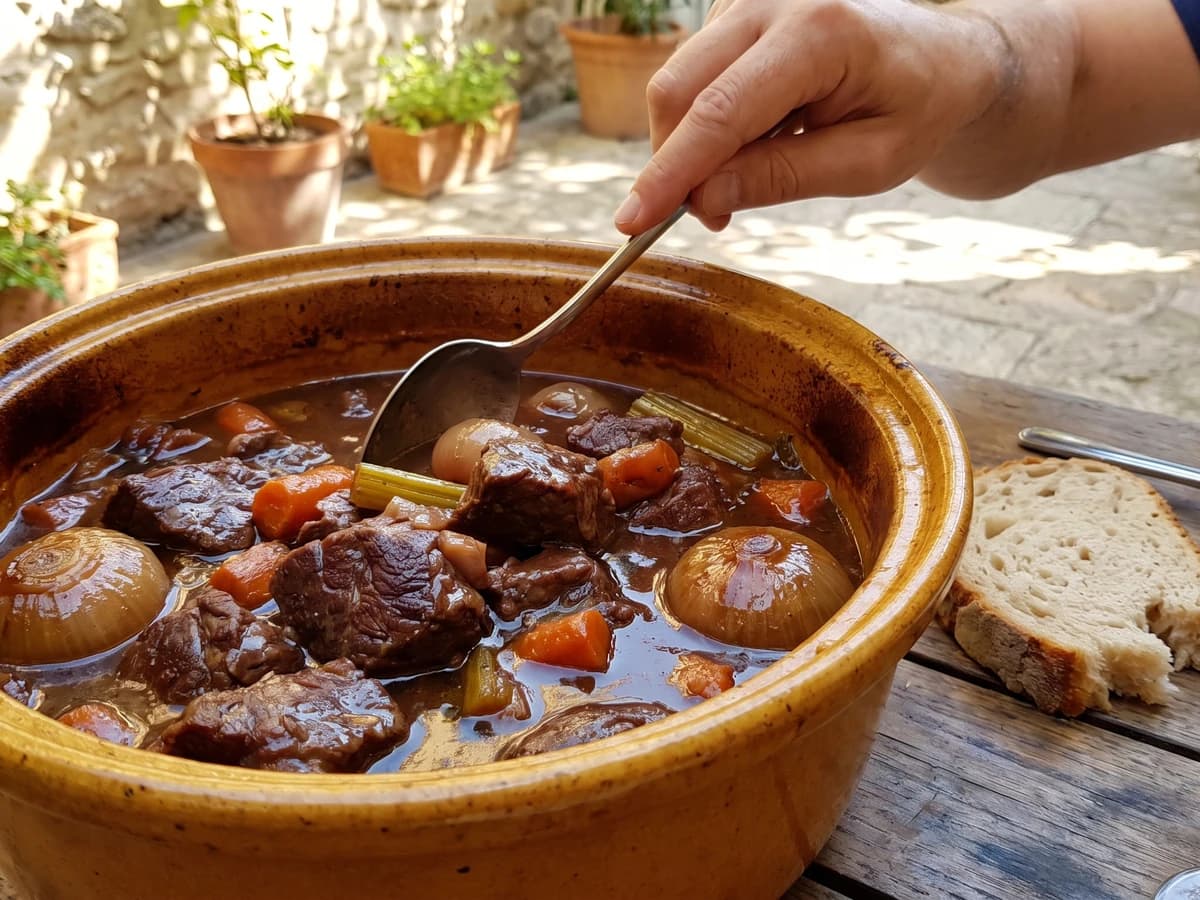
Beef shoulder larded with bacon, sharpened by red wine and vinegar, then sealed with garlic, vegetables, and dry lemon peel until the low oven turns it yielding and the gravy darkly glossy.