Chef Juliette
Bouillabaisse à la Marseillaise
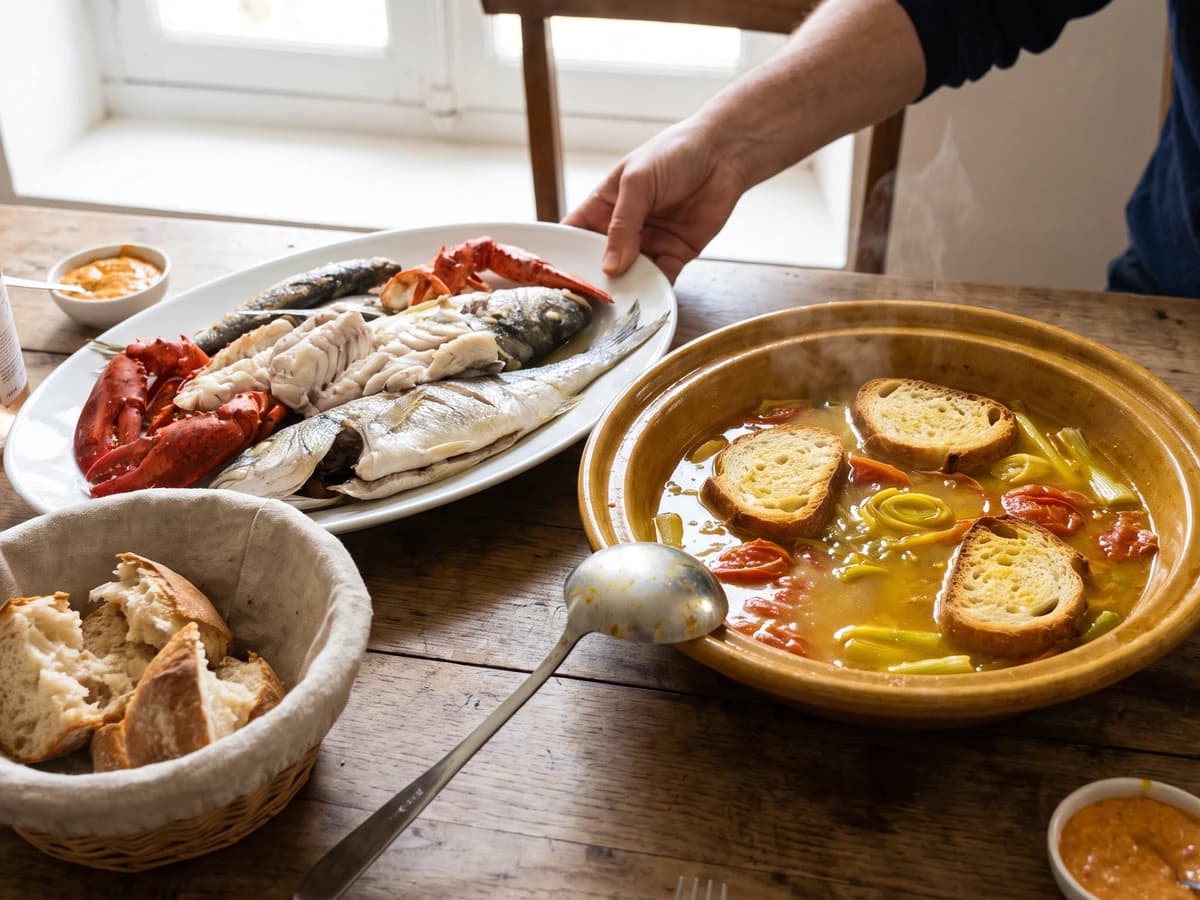
Marseille's great fish stew, saffron-gold and garlic-scented, proves that a hard boil can be the careful choice: it binds olive oil into broth before the whole pot meets bread.
A cooking platform built around craft, culture, and the stories behind what we eat.

Created by Chef Juliette
Based on No. 600, Poule au Pot, or Poule au Pot Henri IV, from Le Guide Culinaire (1907) by Auguste Escoffier
A plump hen replaces the giblets of petite marmite, poached with beef, marrow, and winter vegetables until the broth is clear and generous, then served as soup and joint from one honest pot.
Poule au Pot Henri IV (Henri IV’s hen in the pot) teaches the discipline of a clear broth: begin with cold water, draw the goodness out slowly, and never let the pot rage. The hen replaces the giblets of petite marmite, but beef and marrow remain beneath it, giving the broth a depth that chicken alone cannot manage. Water is correct here. The contents of the pot make their own stock.
The old entry assumed a special earthenware stockpot, already conditioned by twelve hours of boiling water, and enough hands to watch the skimming while vegetables and meat were handled separately. The home equivalent is an 8-quart enameled cocotte or heavy stainless-steel pot, a small saucepan for blanching the cabbage, and one attentive cook. The brigade quantity becomes one plump roasting hen with a modest piece of beef, enough for four generous servings and about two quarts of broth. That is scaling, not compromise. One cook, one stove, one evening.
The separate fuss of formal service is scaffolding and can go. The cold-water start, prompt skimming, and bare tremble are the dish itself and must stay. Bring the pot up slowly and remove the grey foam before the first true boil breaks; that is the one step that decides whether your broth reaches the table clear, golden, and generous.
Poule au pot is rooted in Béarn, around Pau, through its enduring association with Henri IV and the popular royal promise that every household should have a chicken in its Sunday pot. Whether the king spoke the familiar words exactly as remembered remains debated, but the dish became a lasting emblem of nourishment shared beyond the court. In the classical repertoire it joined the pot-au-feu and petite marmite family; this preparation follows the petite marmite model, replacing its poultry giblets with a whole tender hen rather than using one of the stuffed regional variants.
Quantity
1 bird, 4 to 4½ pounds (1.8 to 2 kg)
giblet packet removed
Quantity
1¼ pounds (570 g)
kept in one large piece
Quantity
2 bones, about 12 ounces (340 g) total
Quantity
3¼ quarts (3.1 L / 3.1 kg)
Quantity
1 tablespoon (15 ml / 18 g), plus more as needed
Quantity
1 onion, about 8 ounces (225 g)
peeled
Quantity
3
Quantity
1 teaspoon (5 ml / 3 g)
Quantity
1
4 parsley stems, 2 thyme sprigs, and 1 bay leaf tied together
Quantity
4 carrots, about 1 pound (450 g)
peeled and halved crosswise
Quantity
2 turnips, about 12 ounces (340 g)
peeled and quartered
Quantity
2 leeks, about 1 pound (450 g)
white and pale green parts halved and thoroughly washed
Quantity
4 stalks, about 8 ounces (225 g)
Quantity
½ small cabbage, about 1 pound (450 g)
cored and cut into 4 wedges
Quantity
8 slices, about 4 ounces (115 g)
cut ½ inch (1.25 cm) thick
| Ingredient | Quantity |
|---|---|
| plump roasting hengiblet packet removed | 1 bird, 4 to 4½ pounds (1.8 to 2 kg) |
| beef shin or chuckkept in one large piece | 1¼ pounds (570 g) |
| short beef marrow bones | 2 bones, about 12 ounces (340 g) total |
| cold water | 3¼ quarts (3.1 L / 3.1 kg) |
| fine sea salt | 1 tablespoon (15 ml / 18 g), plus more as needed |
| large yellow onionpeeled | 1 onion, about 8 ounces (225 g) |
| whole cloves | 3 |
| black peppercorns | 1 teaspoon (5 ml / 3 g) |
| bouquet garni4 parsley stems, 2 thyme sprigs, and 1 bay leaf tied together | 1 |
| medium carrotspeeled and halved crosswise | 4 carrots, about 1 pound (450 g) |
| medium turnipspeeled and quartered | 2 turnips, about 12 ounces (340 g) |
| large leekswhite and pale green parts halved and thoroughly washed | 2 leeks, about 1 pound (450 g) |
| inner celery stalks with leaves | 4 stalks, about 8 ounces (225 g) |
| Savoy cabbagecored and cut into 4 wedges | ½ small cabbage, about 1 pound (450 g) |
| baguettecut ½ inch (1.25 cm) thick | 8 slices, about 4 ounces (115 g) |
Bring a saucepan of water to a boil and blanch the cabbage wedges for 5 minutes. Drain and rinse them briefly under cool water, then set them aside. This small separate step stays because raw cabbage can make the broth sulfurous and dull. Push the cloves into the onion, tie the leeks and celery into a loose bundle, and have the bouquet garni ready.
Wrap the marrow bones loosely in clean muslin so the marrow remains available for the toast. Put them in the cocotte with the beef, 2 teaspoons of the salt, and all but 1 cup (240 ml) of the cold water. Bring the pot toward a simmer slowly over medium-low heat, uncovered, allowing 30 to 40 minutes. As grey foam gathers, skim it patiently without stirring the liquid. Once the surface is clean, hold the broth at a bare tremble for 45 minutes. A rolling boil drives the impurities back through the broth, so lower the heat before that happens.
Lower the hen into the pot breast-side down. Add the clove-studded onion, peppercorns, bouquet garni, and the leek and celery bundle. Add enough of the reserved water to keep the hen nearly covered, then return the liquid very slowly to a bare simmer. Skim again as the hen releases fresh foam. Cook for 45 minutes with the lid slightly ajar, keeping the surface at an occasional lazy bubble rather than a boil.
Turn the hen breast-side up and add the carrots, turnips, and blanched cabbage. Simmer gently for another 45 to 60 minutes, until the carrots and turnips are tender without collapsing, the beef yields to a fork, and the thickest part of the hen’s thigh reaches about 175°F (80°C) with a loose, easy-moving joint. If the vegetables finish first, lift them out and cover them. If the hen finishes before the beef, lift it into a deep dish, ladle broth over it, and let the beef continue. There is no prize for overcooking one ingredient while waiting for another.
Lift the hen, beef, marrow bones, and vegetables onto a warm platter and cover them. Discard the onion, peppercorns, bouquet garni, leek bundle, and celery. Let the broth settle for 10 minutes, then ladle it carefully through a fine sieve lined with a damp clean kitchen towel. Skim away excess fat but leave a few golden eyes on the surface, because they carry flavor. If the broth boiled and turned cloudy, do not pour it out. Ça se rattrape: let it settle fully and strain without pressing; it may not become crystal clear, but it will be clean and handsome. If the flavor is weak, reduce the strained broth for 10 minutes. If it is too salty, loosen it with a little boiling water. Taste and add the remaining salt only as needed.
Toast the baguette slices until crisp and golden. Unwrap the marrow bones, push out the soft marrow, spread it over the toast, and season with a small pinch of salt. Carve the hen into breast and leg portions and slice the beef across the grain. Serve the clear broth first in warmed bowls with the marrow toast alongside, then bring the hen, beef, carrots, turnips, leeks, celery, and cabbage to the table moistened with a ladleful of broth. For a less formal supper, arrange everything in deep bowls and ladle the broth over it. Cooking well is not cooking fancy. À table!
1 serving (about 1200g)
Culinary guides, cultural storytelling, and the editorial depth that makes cooking meaningful.
Discover Culinary ExplorerChef Juliette
Marseille's great fish stew, saffron-gold and garlic-scented, proves that a hard boil can be the careful choice: it binds olive oil into broth before the whole pot meets bread.
Chef Juliette
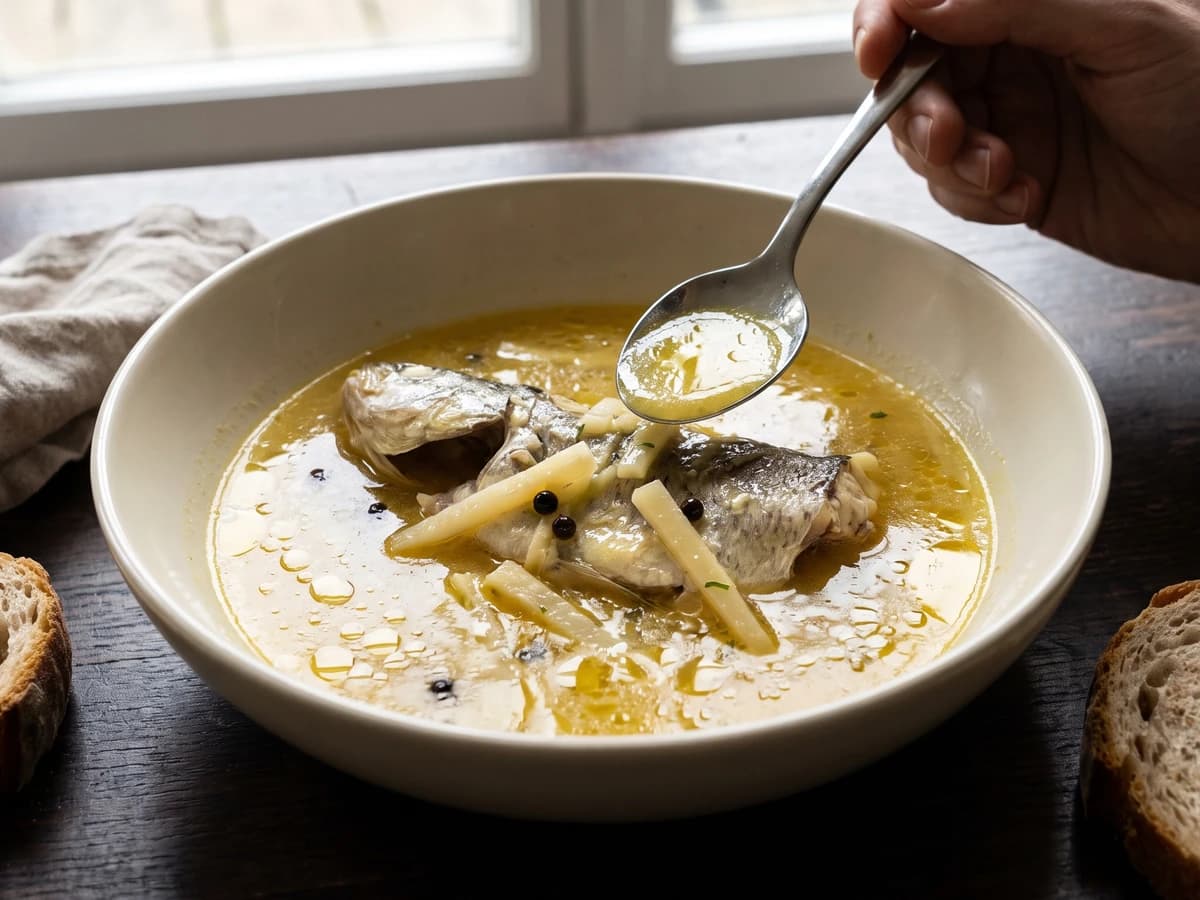
Waterzoi asks fresh, bone-in river fish to thicken its own buttery broth, with parsley root and pepper for company. No flour, no stockpot, just a brisk simmer watched closely.
Chef Juliette
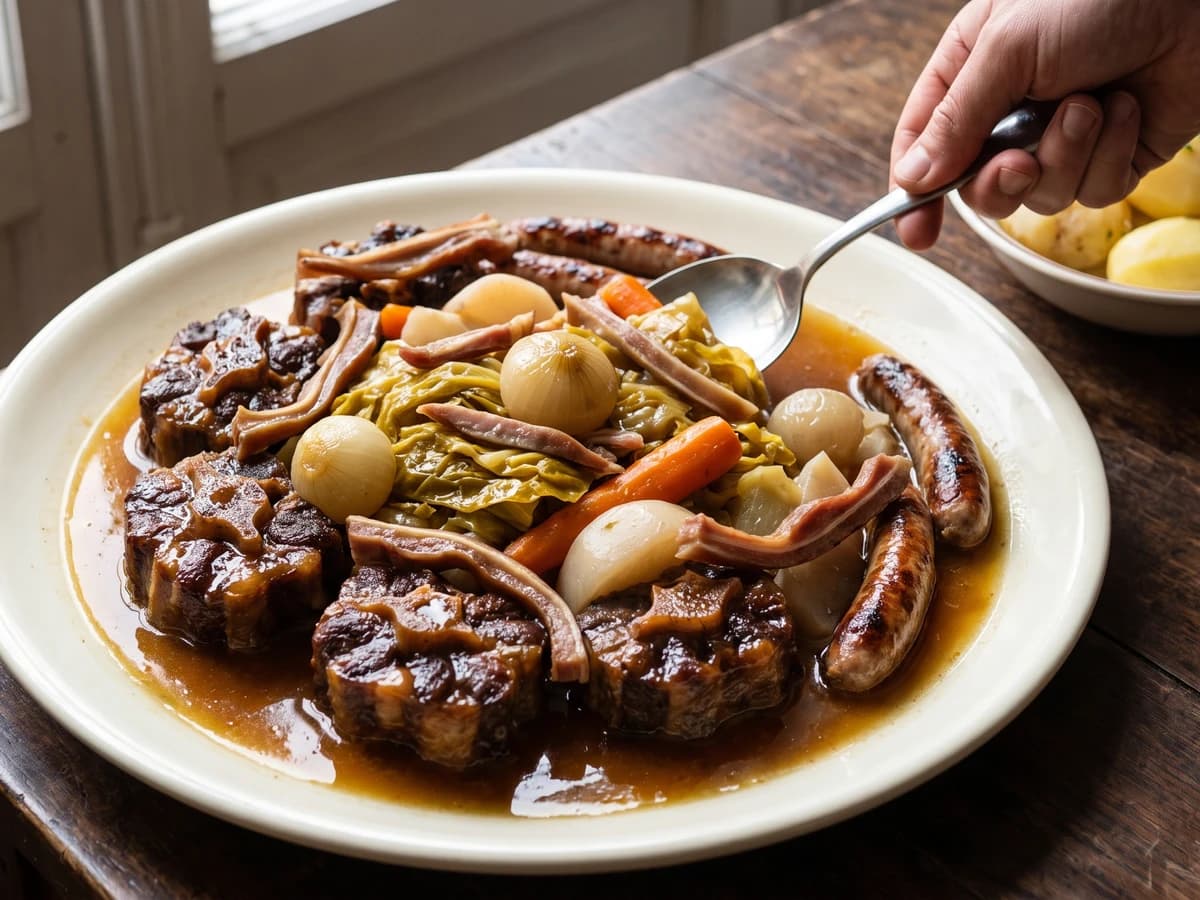
Queue de Bœuf en Hochepot gathers oxtail, pig's trotter and ear, cabbage, roots, and grilled chipolatas around a clear, gelatin-rich broth whose quiet simmer keeps every piece tender and distinct.
Chef Juliette
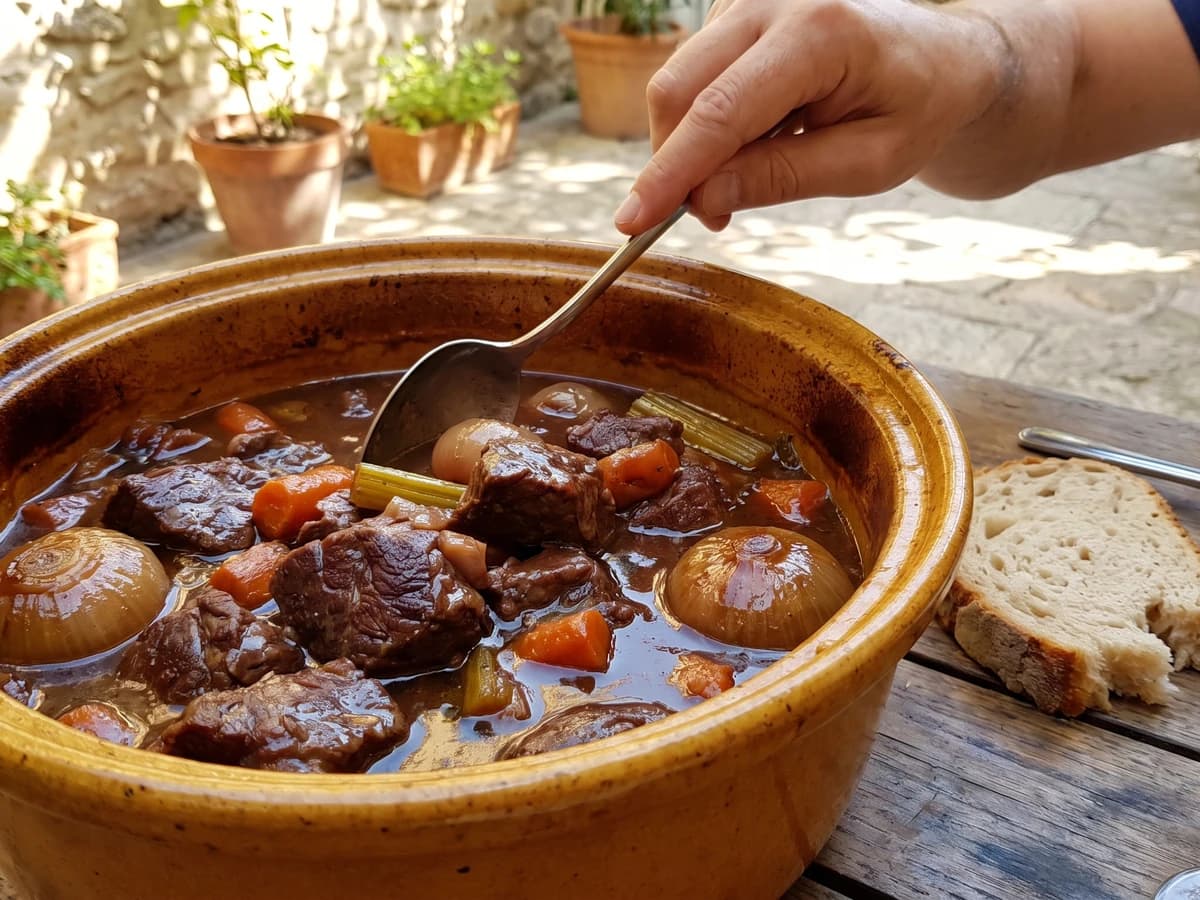
Beef shoulder larded with bacon, sharpened by red wine and vinegar, then sealed with garlic, vegetables, and dry lemon peel until the low oven turns it yielding and the gravy darkly glossy.