Chef Juliette
Bouillabaisse à la Marseillaise
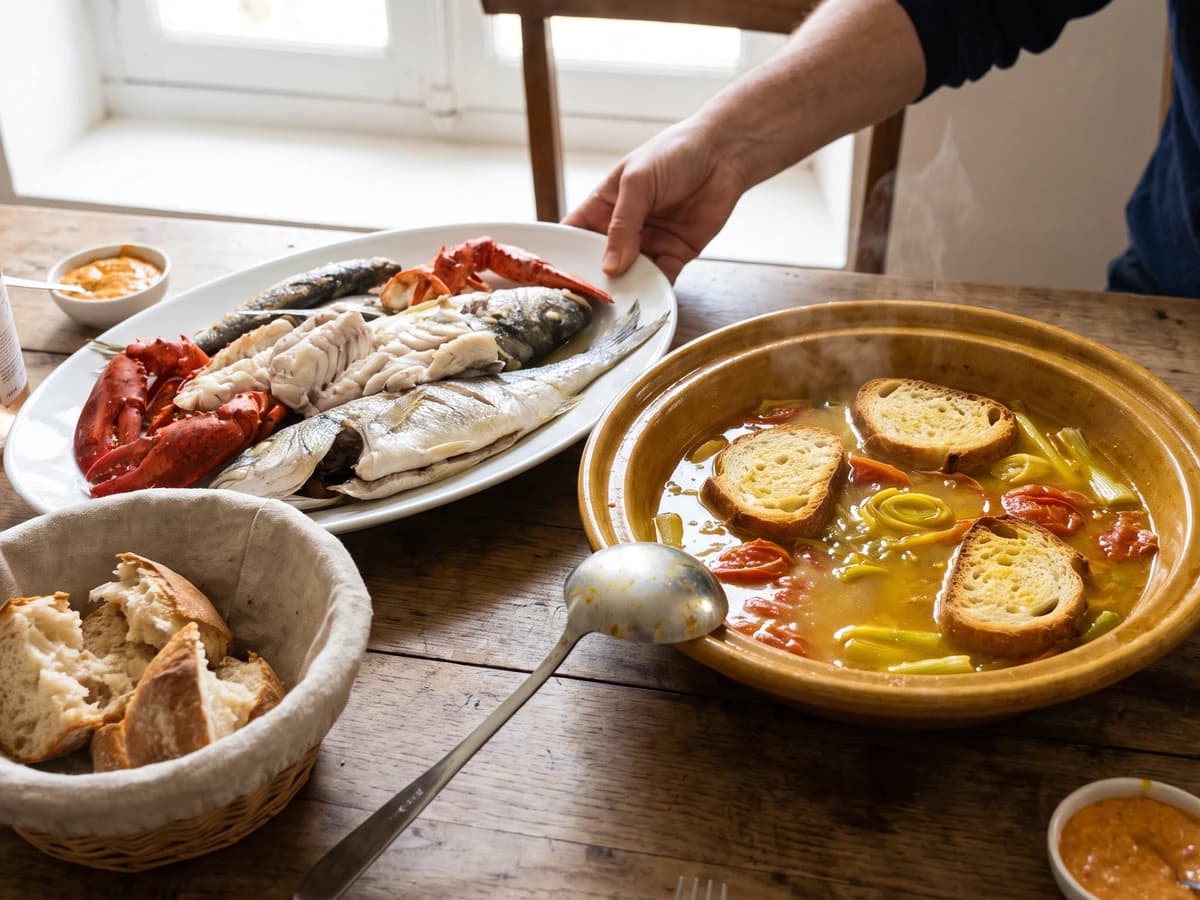
Marseille's great fish stew, saffron-gold and garlic-scented, proves that a hard boil can be the careful choice: it binds olive oil into broth before the whole pot meets bread.
A cooking platform built around craft, culture, and the stories behind what we eat.
Created by Chef Juliette
Based on No. 595, Consommé D’Orsay, from Le Guide Culinaire (1907) by Auguste Escoffier
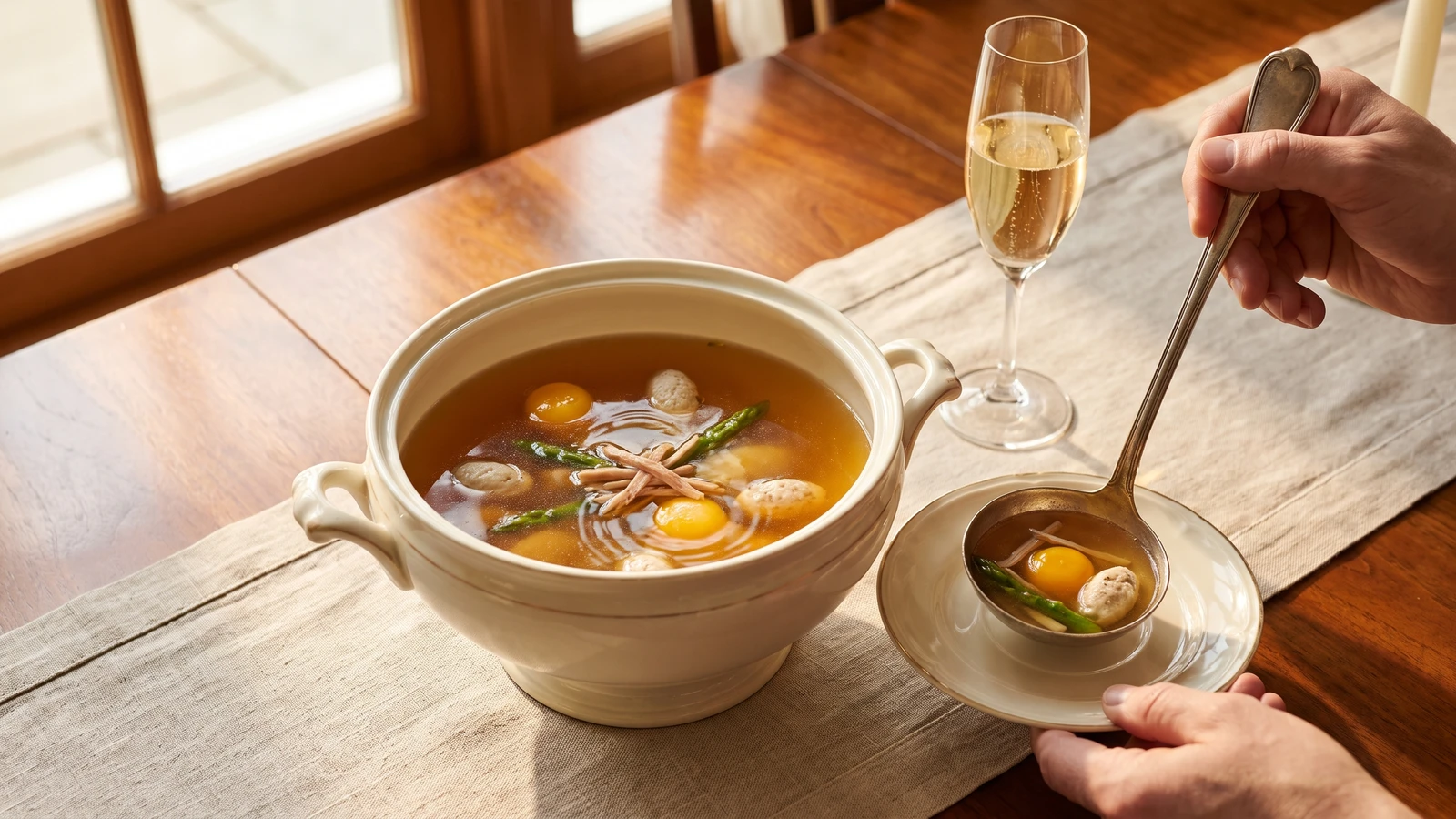
Consommé D’Orsay makes clarity carry abundance: brilliant chicken broth, delicate pigeon quenelles, soft yolks, fine pigeon julienne, and asparagus, assembled only when every guest is seated.
Consommé D’Orsay (clear chicken consommé with pigeon quenelles, pigeon julienne, asparagus, and soft poached yolks) teaches the discipline of separation. The broth stays brilliant because every garnish is cooked elsewhere, drained well, and united with the consommé only in the warmed tureen. That is the one true thing to know before touching a pan.
The original service assumed a saucier tending stock never off the fire, cold pigeon forcemeat already waiting, and enough hands to shape quenelles while ten yolks were poached. A salamander might have hung over that kitchen, but it has no work in this poured soup. At home, one compact clarification replaces the stockpot, a food processor replaces the mortar, demitasse spoons shape the quenelles, and careful sequencing replaces the extra hands. The brigade’s parallel labor was scaffolding and can go. Separate cooking and last-minute assembly are the dish, and they stay. One cook, one stove, one evening.
This version keeps the source proportions intact: one quart of clear consommé, fifteen small quenelles, ten yolks, the julienne of three pigeon fillets, and one tablespoonful of asparagus heads. Together, the broth and its abundant garnish make about two quarts of finished soup, enough for ten small dinner-party servings. Poach the yolks last and leave them very barely set, because the boiling consommé completes their outer veil as it is poured.
Consommé D’Orsay belongs to the named consommés of Parisian grand cuisine, where a clear base took its identity from a precise garniture, the set of elements arranged in the tureen. D’Orsay does not describe a regional chicken soup: the combination of pigeon quenelles, pigeon julienne, asparagus heads, and soft yolks is what gives the preparation its name. Such composed consommés traveled from formal dining rooms to cuisine bourgeoise through special-occasion menus, while their essential rule remained unchanged: the broth must be clear enough to reveal every garnish.
Quantity
6 cups (1.44 liters / 1.44 kg)
thoroughly defatted
Quantity
1 loosely packed cup (240 ml / 170 g)
Quantity
1/2 cup (120 ml / 75 g)
finely diced
Quantity
1/3 cup (80 ml / 40 g)
finely diced
Quantity
1/3 cup (80 ml / 35 g)
finely diced
Quantity
2 sprigs
Quantity
1
Quantity
6
Quantity
12
10 yolks required, 3 whites used, and 2 whole eggs held in reserve
Quantity
2 fillets (about 6 ounces / 170 g)
diced and thoroughly chilled
Quantity
1/2 cup (120 ml / 120 g)
divided
Quantity
3 fillets (about 9 ounces / 255 g)
Quantity
1 tablespoon (15 ml / 14 g)
Quantity
1 tablespoon (15 ml / 15 g)
Quantity
2 teaspoons (10 ml / 12 g), divided, plus more if needed
Quantity
1/8 teaspoon (0.6 ml / 0.3 g)
| Ingredient | Quantity |
|---|---|
| cold, well-gelled unsalted chicken stockthoroughly defatted | 6 cups (1.44 liters / 1.44 kg) |
| lean ground chicken | 1 loosely packed cup (240 ml / 170 g) |
| onionfinely diced | 1/2 cup (120 ml / 75 g) |
| carrotfinely diced | 1/3 cup (80 ml / 40 g) |
| white leekfinely diced | 1/3 cup (80 ml / 35 g) |
| fresh thyme | 2 sprigs |
| bay leaf | 1 |
| black peppercorns | 6 |
| large pasteurized shell eggs10 yolks required, 3 whites used, and 2 whole eggs held in reserve | 12 |
| boneless, skinless farmed pigeon or squab breast fillets for the forcemeatdiced and thoroughly chilled | 2 fillets (about 6 ounces / 170 g) |
| cold heavy creamdivided | 1/2 cup (120 ml / 120 g) |
| boneless, skinless farmed pigeon or squab breast fillets for the julienne | 3 fillets (about 9 ounces / 255 g) |
| unsalted butter | 1 tablespoon (15 ml / 14 g) |
| small asparagus heads | 1 tablespoon (15 ml / 15 g) |
| fine salt | 2 teaspoons (10 ml / 12 g), divided, plus more if needed |
| ground white pepper | 1/8 teaspoon (0.6 ml / 0.3 g) |
Separate three eggs, placing each yolk in its own lightly oiled cup, covered and chilled. Reserve the whites separately. In a 5 to 6-quart heavy pot, loosen two of those whites with a whisk, then mix in the ground chicken, onion, carrot, leek, thyme, bay leaf, and peppercorns. Pour in the very cold stock and stir thoroughly. Everything must begin cold so the proteins can gather impurities as they rise; dropping a raft into hot stock only scatters it.
Set the pot over medium-low heat and stir slowly along the bottom until the liquid approaches a simmer and the raft begins rising, about 15 to 20 minutes. Stop stirring once the raft forms. Cut a small chimney through its center with a spoon, lower the heat, and hold the consommé at the barest tremble for 45 minutes, occasionally ladling liquid through the chimney. A hard boil breaks the raft and clouds the broth.
Ladle the consommé carefully through the chimney and into a fine sieve lined with damp muslin or a clean lint-free towel. Let gravity do the work. Never press the raft, because pressure drives every trapped particle back into the broth. Measure 4 cups (960 ml / 960 g), reducing gently if there is more or adding only enough hot water to replace a small shortage. Season lightly, remembering that the final boiling concentrates salt. If the broth clouds, chill it, whisk one reserved egg white with 1 cup of the liquid, stir it back into the rest, and raise it slowly to another 20-minute raft. Ça se rattrape.
Chill the food-processor bowl and blade for 15 minutes. Process the diced pigeon with 1/2 teaspoon (2.5 ml / 3 g) salt and the white pepper until the meat becomes fine and tacky. Add one reserved egg white and process until absorbed. With the machine running, add the cream gradually, holding back 1 tablespoon (15 ml / 15 g), and stop as soon as the forcemeat is smooth and softly firm. Warm forcemeat turns grainy because its emulsion breaks. If that begins, stop, chill the bowl for 10 minutes, then pulse in the reserved cold cream. Cooking well is not cooking fancy, but temperature matters.
Bring a wide pan of lightly salted water to 180 to 185°F (82 to 85°C), where the surface barely moves. Poach a teaspoonful of forcemeat until its center reaches 165°F (74°C), then taste it. Add a little salt if needed. Using two wet demitasse spoons, shape fifteen small egg-like quenelles, smoothing the forcemeat back and forth between the spoons. The first may look untidy. The third will understand what you want.
Lower the fifteen quenelles into the barely moving water in batches, leaving them room to swell. Poach for 6 to 8 minutes, turning once, until they feel resilient and reach 165°F (74°C) at the center. Lift them with a slotted spoon and drain on a clean towel. If their surfaces roughen, the water is boiling too hard; lower the heat at once and the remaining quenelles will stay smooth.
Pat the remaining three pigeon fillets dry and season them with 1/2 teaspoon (2.5 ml / 3 g) salt. Melt the butter in a small heavy skillet over medium heat until its foam subsides, then cook the fillets gently, turning and basting with the butter, until their centers reach 160°F (71°C). Rest them for 5 minutes so they carry to 165°F (74°C). Cut them julienne-fashion, meaning into fine match-shaped rods, across the grain. Keep the rods distinct rather than shredding the meat.
Drop the asparagus heads into a small pan of well-salted boiling water for 30 to 45 seconds, just until their green brightens and the cut end becomes tender. Cool them promptly in cold water, then drain and blot them dry. The source asks for one tablespoonful, not a green thicket; asparagus is a precise accent here.
Fill a broad skillet with 1 1/2 inches of water and bring it to 170 to 175°F (77 to 80°C), with no active bubbling. Separate seven more eggs, keeping each yolk in its own small cup and reserving the whites for another use. Slide three yolks at a time into the water from a spoon, spoon a little water over their tops, and poach for 45 to 60 seconds. The outside should acquire only a fine tender veil while the center remains fluid. Transfer them to clean water held near 135°F (57°C) and keep them there no longer than 5 minutes. If one breaks, lift out the fragments before they cloud the water and use one of the two spare eggs. Ça se rattrape.
Fill the soup tureen with hot water and leave it for 5 minutes. Meanwhile, warm the quenelles and pigeon julienne gently in 1/2 cup (120 ml / 120 g) of the consommé, never letting them boil. Lift them out, pass their warming liquid through a fine sieve into the remaining consommé, and add the asparagus for only a few seconds. Bring the full measure of consommé to a clean boil and taste once more for salt. This separate warming protects the clarity; it is not brigade fuss but the grammar of the dish.
Empty and dry the warmed tureen. Arrange the fifteen quenelles, ten barely poached yolks, pigeon julienne, and asparagus heads inside, distributing the yolks so each serving receives one. Pour the boiling consommé down the side of the tureen rather than directly onto the fragile yolks. Carry it straight to the table and ladle gently. Waiting hardens the yolks and dulls the consommé, so everyone should already be seated. À table!
1 serving (about 190g)
Culinary guides, cultural storytelling, and the editorial depth that makes cooking meaningful.
Discover Culinary ExplorerChef Juliette
Marseille's great fish stew, saffron-gold and garlic-scented, proves that a hard boil can be the careful choice: it binds olive oil into broth before the whole pot meets bread.
Chef Juliette
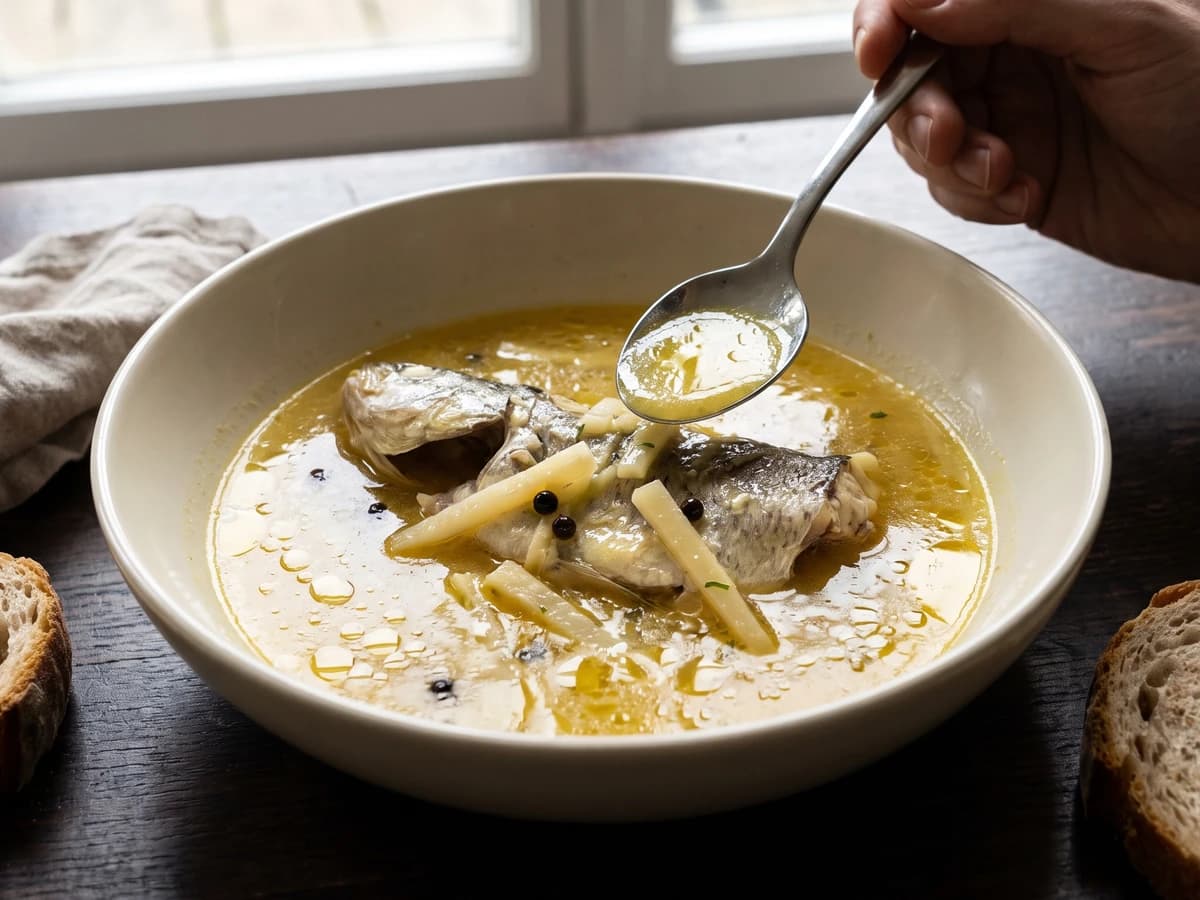
Waterzoi asks fresh, bone-in river fish to thicken its own buttery broth, with parsley root and pepper for company. No flour, no stockpot, just a brisk simmer watched closely.
Chef Juliette
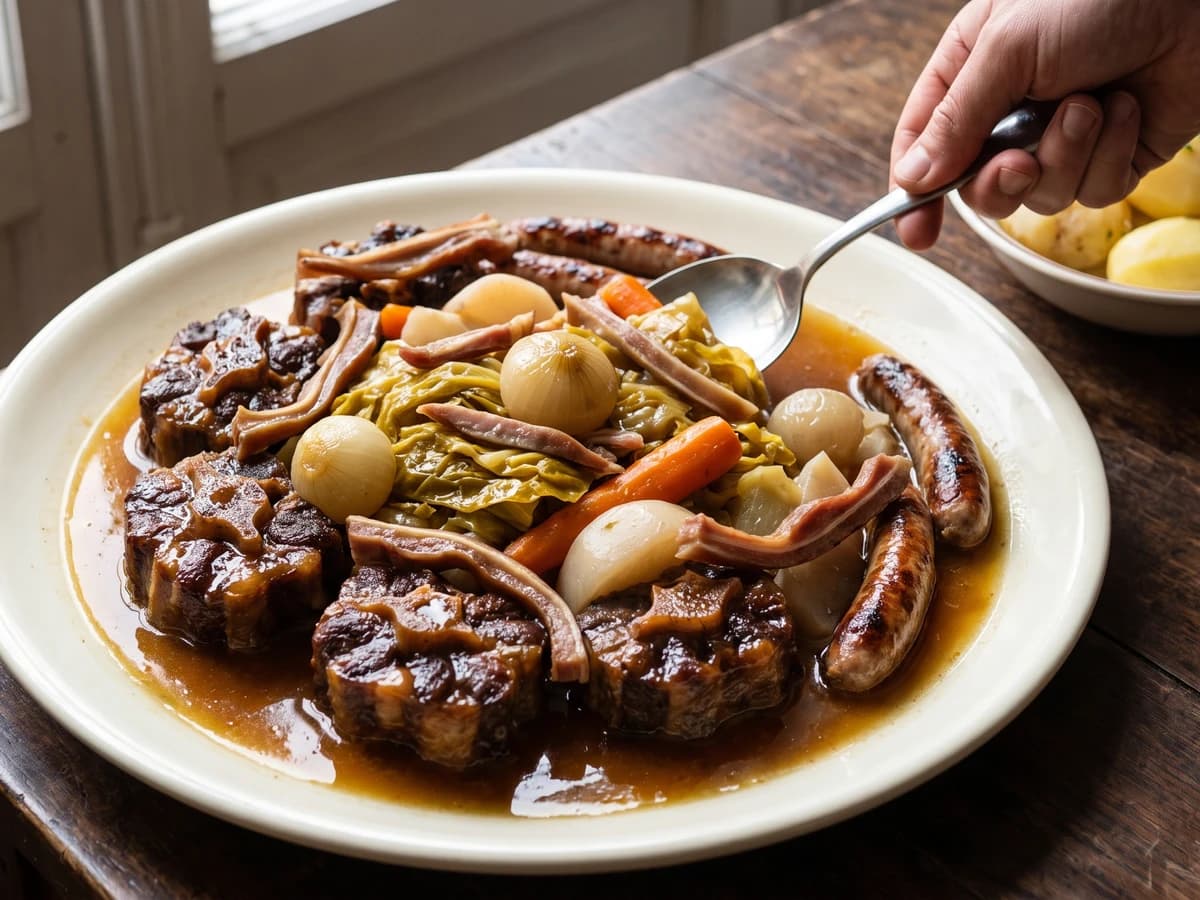
Queue de Bœuf en Hochepot gathers oxtail, pig's trotter and ear, cabbage, roots, and grilled chipolatas around a clear, gelatin-rich broth whose quiet simmer keeps every piece tender and distinct.
Chef Juliette
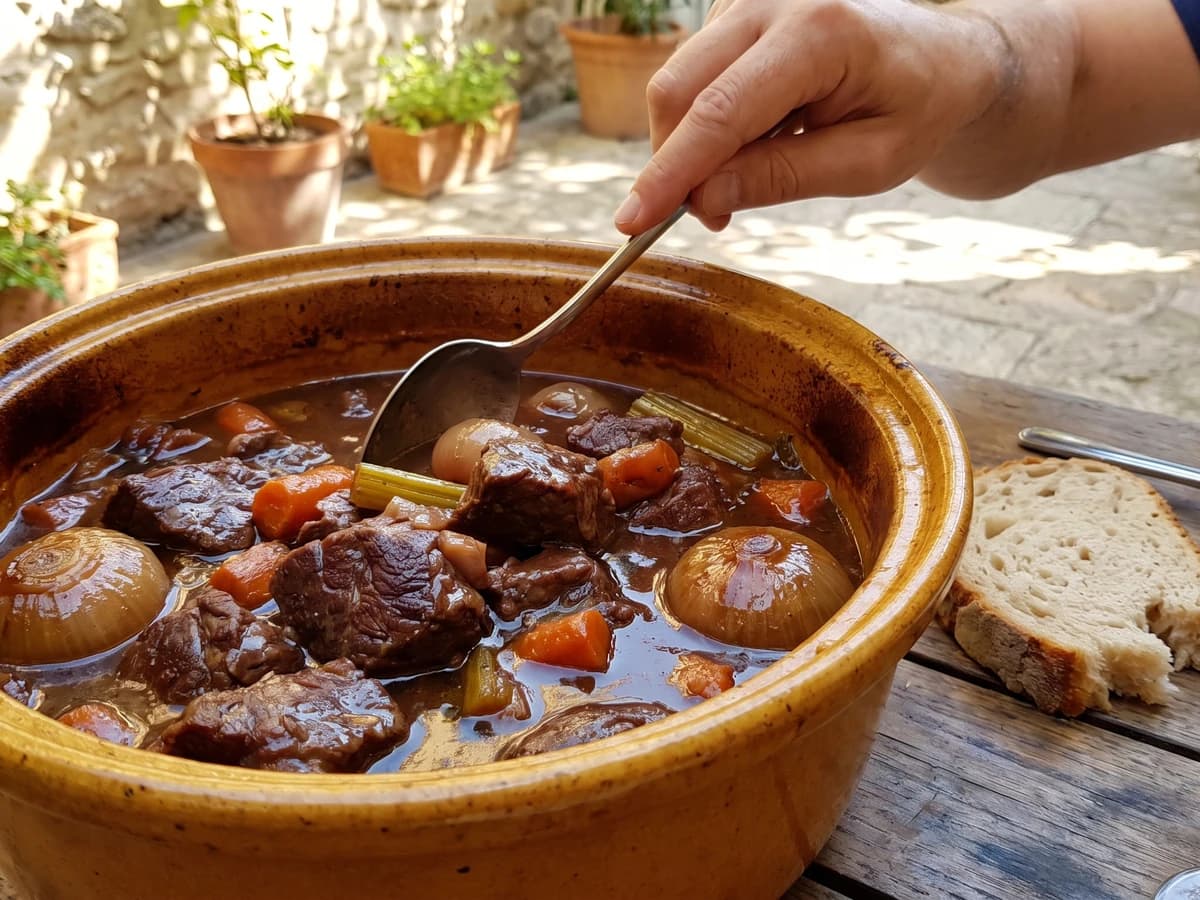
Beef shoulder larded with bacon, sharpened by red wine and vinegar, then sealed with garlic, vegetables, and dry lemon peel until the low oven turns it yielding and the gravy darkly glossy.