Chef Juliette
Bouillabaisse à la Marseillaise
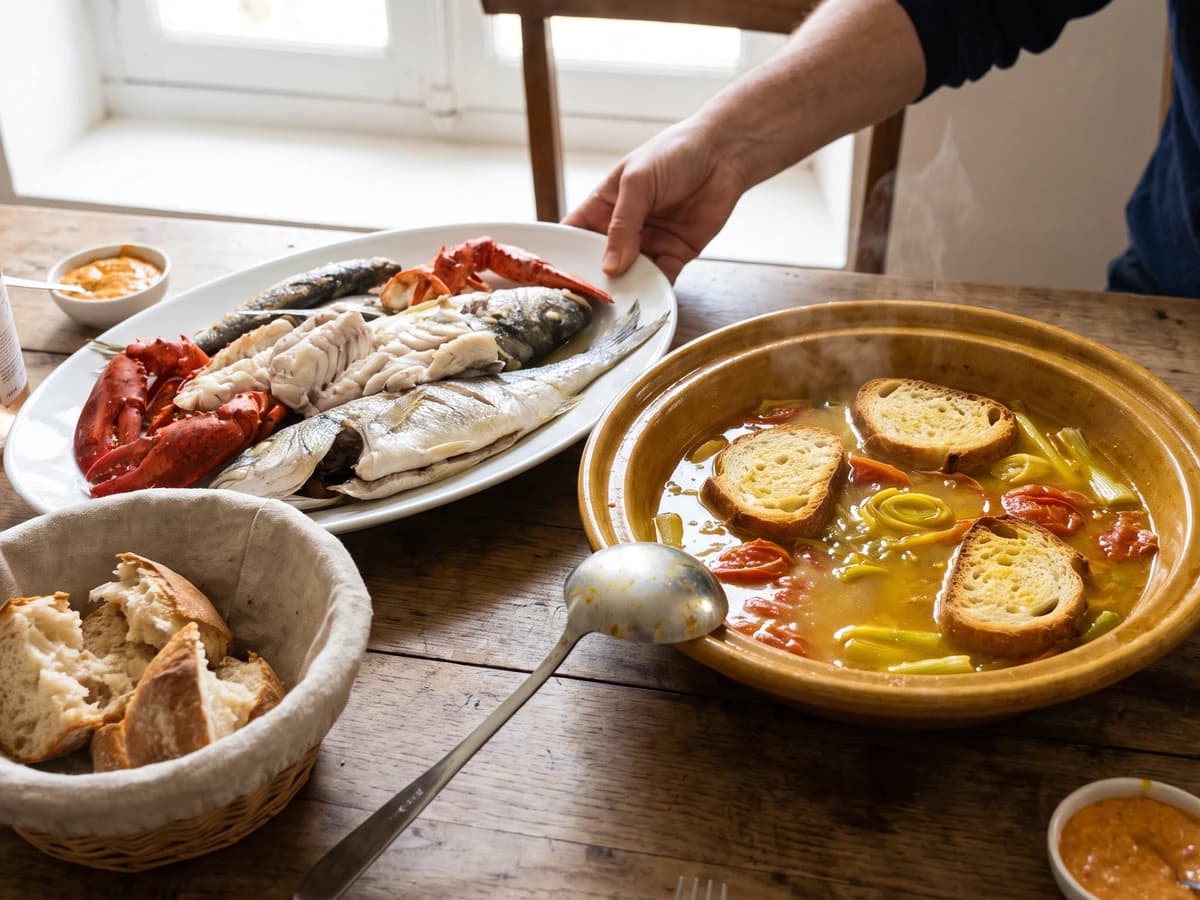
Marseille's great fish stew, saffron-gold and garlic-scented, proves that a hard boil can be the careful choice: it binds olive oil into broth before the whole pot meets bread.
A cooking platform built around craft, culture, and the stories behind what we eat.
Created by Chef Juliette
Based on No. 593, Consommé Olga, from Le Guide Culinaire (1907) by Auguste Escoffier
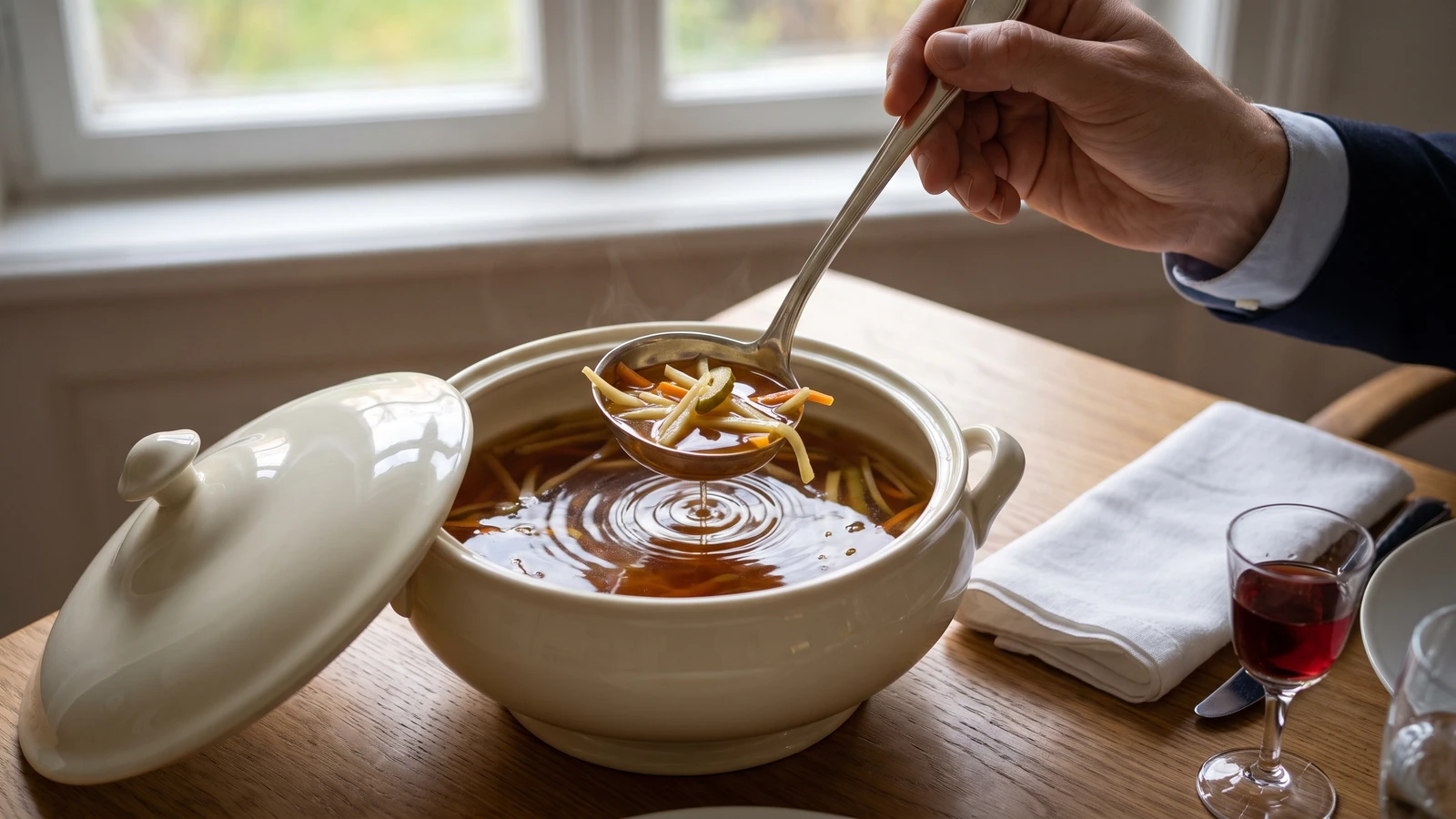
Consommé Olga turns clarity into contrast: limpid broth warmed with port, butter-glazed celeriac, leek, and carrot, then the clean saline bite of salted gherkin at the last moment.
Consommé Olga (clear broth with port and two fine matchstick garnishes) teaches the discipline of finishing. The one true thing to know before touching a pan is this: the port finishes the consommé, it never cooks in it. Added away from the fire, the wine keeps its perfume and gives the clear broth a garnet warmth. Boiled, it becomes flat and needlessly sweet.
The original formula assumed a saucier, a stockpot of excellent ordinary consommé never off the fire, and spare hands to cut the julienne for service. A salamander has no work here. At home, the honest equivalents are a finished consommé made ahead, one wide pan for glazing the vegetables, and a sharp knife. Unlike many brigade formulas, the source already begins with a one-quart base; this version doubles every proportion to provide about two quarts for eight first-course bowls, keeping the original ratio of eight parts consommé to one part port.
Separate holding pans and last-second brigade hands are scaffolding and can go. The fine julienne, its gentle butter stew, the reduction of consommé to a glaze, and the off-heat addition of port are the dish and must stay. Protect that final off-heat finish, and Consommé Olga arrives clear, fragrant, and alive.
Consommé Olga belongs to the formal Parisian dining-room table and the grand-kitchen repertory of named consommés, rather than to a particular regional household tradition. Such soups traveled readily into bourgeois dinner service because the clear base could be prepared ahead, while a distinctive garnish gave each consommé its identity at the last moment. The formula does not identify which Olga, if any, its title honors; what defines the dish is the precise combination of port, glazed root-vegetable julienne, leek, and salted gherkin.
Quantity
8 cups (1.9 L / 1,900 g)
finished, clarified, and divided
Quantity
1 cup (240 ml / 240 g)
at room temperature
Quantity
½ small, about 2 cups (475 ml / 300 g)
peeled and cut into fine julienne
Quantity
2 medium, about 2 cups (475 ml / 180 g)
washed and cut into fine julienne
Quantity
2 small, about ¾ cup (180 ml / 90 g)
cut into fine julienne
Quantity
2 tablespoons (30 ml / 28 g)
Quantity
6 tablespoons (90 ml / 85 g)
drained, dried, and cut into fine julienne
| Ingredient | Quantity |
|---|---|
| excellent ordinary consomméfinished, clarified, and divided | 8 cups (1.9 L / 1,900 g) |
| port wineat room temperature | 1 cup (240 ml / 240 g) |
| celeriacpeeled and cut into fine julienne | ½ small, about 2 cups (475 ml / 300 g) |
| leeks, white parts onlywashed and cut into fine julienne | 2 medium, about 2 cups (475 ml / 180 g) |
| carrots, outer red-orange flesh onlycut into fine julienne | 2 small, about ¾ cup (180 ml / 90 g) |
| unsalted butter | 2 tablespoons (30 ml / 28 g) |
| salted gherkinsdrained, dried, and cut into fine julienne | 6 tablespoons (90 ml / 85 g) |
Cut the celeriac, leek whites, and outer red-orange carrot flesh into julienne, matchsticks about 4 cm long and no thicker than 2 mm. Cut away the carrots' pale cores and save them for another pot. Keep the salted-gherkin julienne separate. The rods need not look machine-made, but they must be thin and even enough to become tender together while retaining their shape.
Reserve 1 cup (240 ml) of the consommé for the garnish. Put the remaining 7 cups (1.66 L) in a clean saucepan and bring it slowly to a bare simmer. Keep the surface calm and skim away any beads of fat. If agitation emulsifies the fat and dulls the clarity, pull the pan from the heat, let it settle for five minutes, then strain it once through a damp, closely woven cloth into a clean pan. Ça se rattrape. Never whisk a consommé.
Melt the butter in a wide sauté pan over low heat without letting it color. Add the celeriac, leek, and carrot julienne, turn them gently through the butter, cover, and étuver, stew gently in their own moisture, for 6 to 8 minutes. They should soften without browning. If the butter begins to color or the leek catches, lift the pan from the heat, add a spoonful of the reserved consommé, and lower the flame before continuing.
Add the reserved consommé to the vegetables in three additions, letting each reduce almost completely before adding the next. Cook uncovered at a gentle simmer until the vegetables are tender but distinct and the last consommé has reduced to a glossy coating rather than a puddle, about 12 to 18 minutes. If the liquid disappears before the celeriac is tender, add hot consommé from the saucepan one spoonful at a time. If the vegetables soften before the liquid reduces, lift them out, reduce the broth alone, then fold them back through the glaze.
Warm a 2½ to 3-quart soup tureen with hot water, then empty and dry it. Place the glazed vegetable julienne in the bottom and scatter over the salted-gherkin julienne. Taste a gherkin first; if it is fiercely salty, rinse the cut julienne briefly in cold water and dry it well before adding. The gherkin stays uncooked so its clean saline bite remains separate from the buttery vegetables.
Bring the consommé back just to a bare simmer, then take it completely away from the fire and wait for the surface to become still. Stir in the room-temperature port and pour the consommé immediately over the two juliennes. Do not return it to the heat. If it boils briefly after the port goes in, remove it at once and restore the lost top note with no more than 1 tablespoon of fresh port. Ladle into warm bowls while the vegetables remain defined. À table!
1 serving (about 240g)
Culinary guides, cultural storytelling, and the editorial depth that makes cooking meaningful.
Discover Culinary ExplorerChef Juliette
Marseille's great fish stew, saffron-gold and garlic-scented, proves that a hard boil can be the careful choice: it binds olive oil into broth before the whole pot meets bread.
Chef Juliette
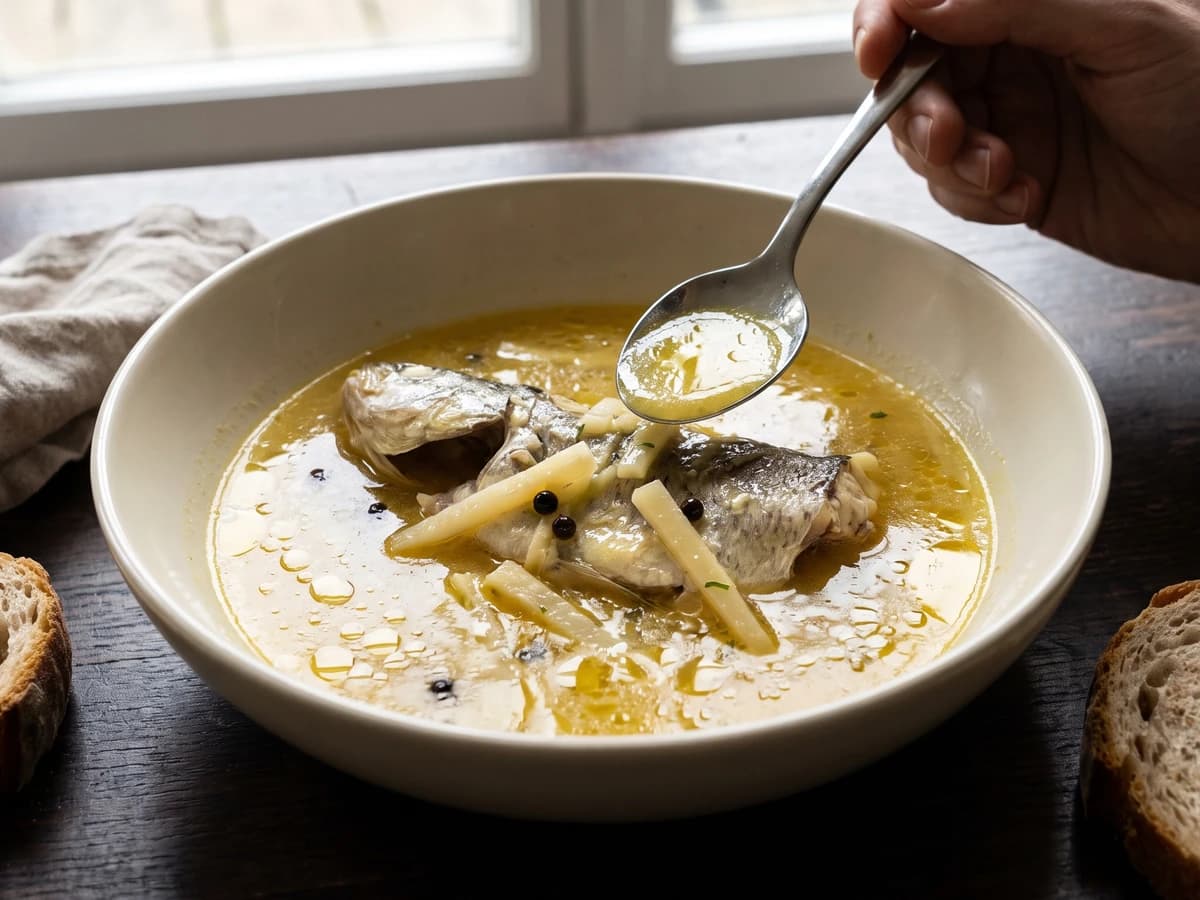
Waterzoi asks fresh, bone-in river fish to thicken its own buttery broth, with parsley root and pepper for company. No flour, no stockpot, just a brisk simmer watched closely.
Chef Juliette
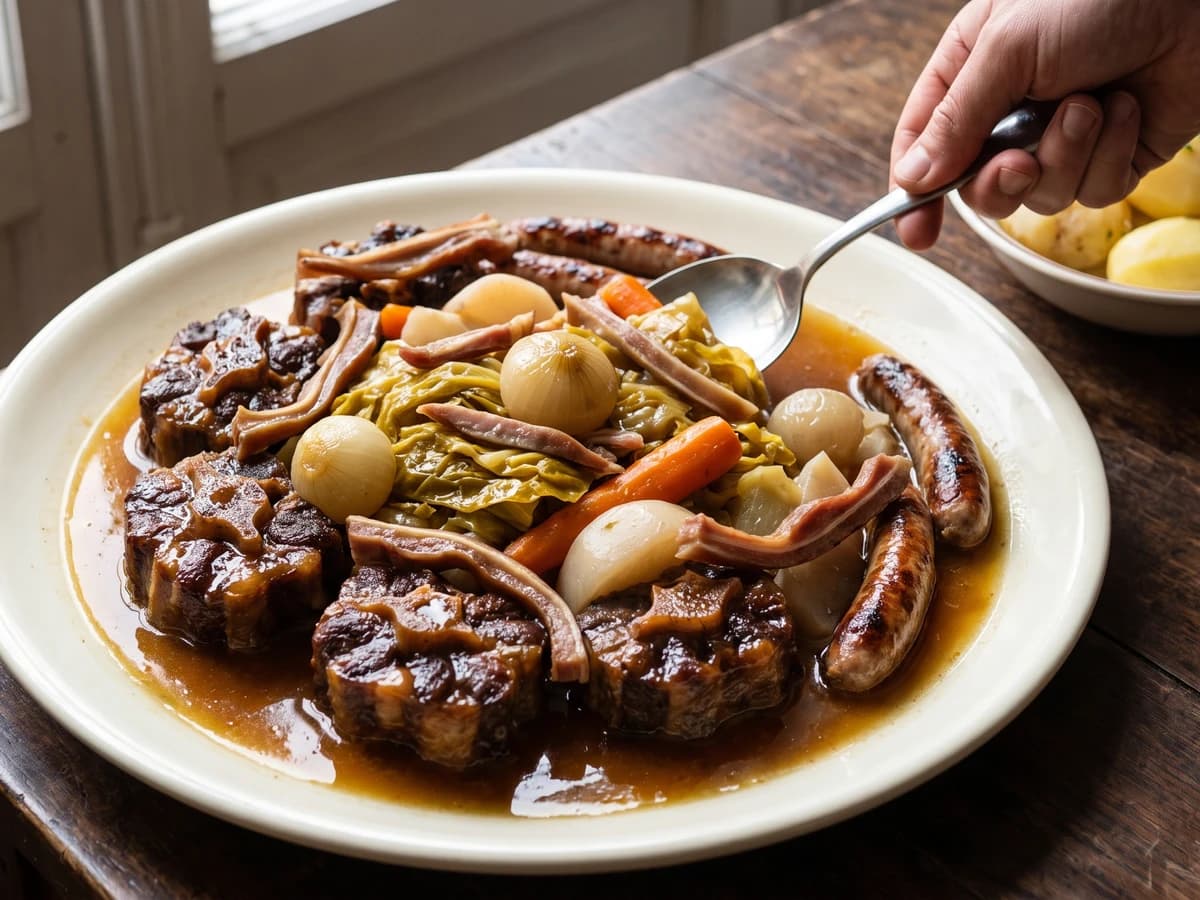
Queue de Bœuf en Hochepot gathers oxtail, pig's trotter and ear, cabbage, roots, and grilled chipolatas around a clear, gelatin-rich broth whose quiet simmer keeps every piece tender and distinct.
Chef Juliette
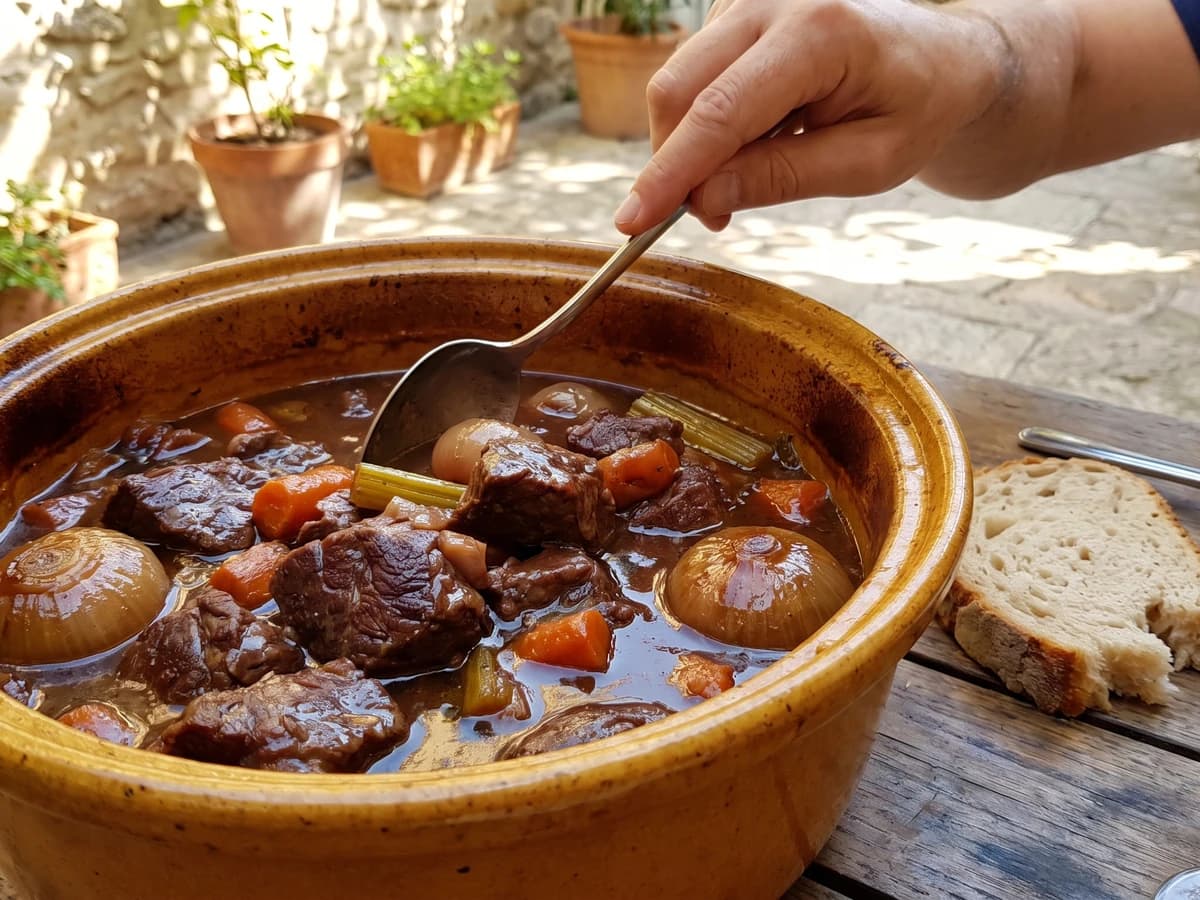
Beef shoulder larded with bacon, sharpened by red wine and vinegar, then sealed with garlic, vegetables, and dry lemon peel until the low oven turns it yielding and the gravy darkly glossy.