Chef Juliette
Bouillabaisse à la Marseillaise
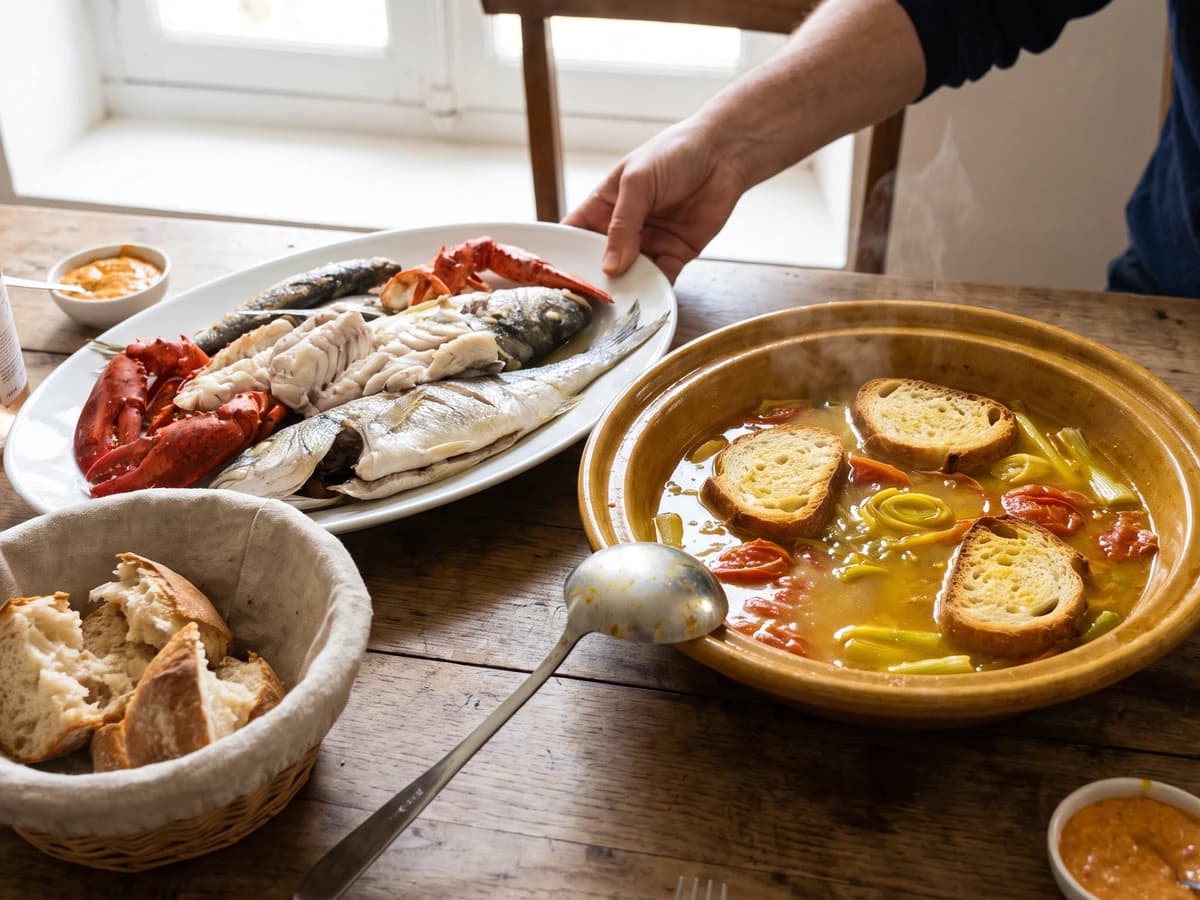
Marseille's great fish stew, saffron-gold and garlic-scented, proves that a hard boil can be the careful choice: it binds olive oil into broth before the whole pot meets bread.
A cooking platform built around craft, culture, and the stories behind what we eat.

Created by Chef Juliette
Based on No. 576, Consommé Jacqueline, from Le Guide Culinaire (1907) by Auguste Escoffier
Consommé Jacqueline teaches the discipline of clarity: jewel-bright chicken broth carrying tender carrot ovals, cream royale pastilles, peas, asparagus, and rice, every garnish distinct and every spoonful clean.
Consommé Jacqueline (clear chicken broth with spring garnishes) teaches one true thing: clarity is built by keeping each element distinct. The carrots cook gently in a reserved portion of consommé, but the rice, peas, and asparagus are cooked separately so neither starch nor vegetable sediment can trouble the broth. Cream royale brings softness without dissolving into it. Every spoonful should remain transparent enough to see the garnish beneath.
The original kitchen assumed a saucier, chicken consommé never far from the fire, an extra pair of hands cutting twenty-four identical carrot pellets per quart, and baba-moulds waiting on the shelf. At home, four small dariole moulds or straight-sided ovenproof cups replace the baba-moulds, and a small Parisienne scoop replaces the spoon-cutter. The book's one-quart formula is brought to the requested home soup yield of about two quarts, with its garnish doubled exactly: forty-eight carrot pellets, four cream royales, and two tablespoons each of peas, asparagus, and cooked rice. The brigade timing and special moulds are scaffolding, so they can go. Separate cooking, careful draining, and assembly at the last moment are the dish, so they stay.
When it is right, the consommé arrives amber-gold and perfectly clear, carrying orange ovals, ivory pastilles, green peas, asparagus tips, and small white grains of rice like bright pieces under glass. The decisive step comes at service: drain every garnish completely, warm the tureen, and pour the boiling consommé over the arrangement only when the table is ready.
Consommé Jacqueline belongs to the named consommés of the Parisian classical dining room rather than to a particular French province, each variation identified by an exact combination of garnishes laid into a faultlessly clear broth. Jacqueline is defined by oval carrot pellets, cream royale pastilles, peas, very green asparagus heads, and rice; its feminine name does not signal a regional origin. Baba-moulds, small deep cylinders slightly wider at the top, gave the royale its service shape, a task handled just as honestly by small dariole moulds or straight-sided cups.
Quantity
8 cups (1.9 L / 1.9 kg)
well seasoned
Quantity
3 (about 10 oz / 285 g)
peeled and cut into 48 oval pellets measuring about 3/4 cup (180 ml / 110 g)
Quantity
1 cup (240 ml / 240 g)
Quantity
2
Quantity
2
Quantity
1 teaspoon (5 ml / 5 g)
softened, for the moulds
Quantity
1/4 teaspoon (1.25 ml / 1.5 g)
Quantity
2 tablespoons (30 ml / 30 g)
fresh or frozen
Quantity
2 tablespoons (30 ml / 25 g)
Quantity
1 tablespoon (15 ml / 12 g)
cooked to yield 2 tablespoons (30 ml / 30 g)
| Ingredient | Quantity |
|---|---|
| finished clarified chicken consomméwell seasoned | 8 cups (1.9 L / 1.9 kg) |
| medium carrotspeeled and cut into 48 oval pellets measuring about 3/4 cup (180 ml / 110 g) | 3 (about 10 oz / 285 g) |
| heavy cream | 1 cup (240 ml / 240 g) |
| large eggs | 2 |
| large egg yolks | 2 |
| unsalted buttersoftened, for the moulds | 1 teaspoon (5 ml / 5 g) |
| fine salt | 1/4 teaspoon (1.25 ml / 1.5 g) |
| green peasfresh or frozen | 2 tablespoons (30 ml / 30 g) |
| small green asparagus tips | 2 tablespoons (30 ml / 25 g) |
| dry long-grain white ricecooked to yield 2 tablespoons (30 ml / 30 g) | 1 tablespoon (15 ml / 12 g) |
Measure 2 cups (475 ml) of the finished chicken consommé into a small saucepan for cooking the carrots. Keep the remaining 6 cups (1.4 L) covered and cold until service. The consommé must already be clarified and properly seasoned, because this recipe garnishes that foundation rather than rebuilding it.
Heat the oven to 300°F (150°C). Butter four 4 fl oz (120 ml) baba or dariole moulds very lightly. Stir the whole eggs, yolks, cream, and salt together without beating in air, then pass the mixture through a fine sieve and divide it among the moulds. Cover each loosely with foil, place them in a small roasting pan, and add hot water to reach halfway up their sides. Bake for 20 to 30 minutes, until the royale is set at the edges, trembles gently in the centre, and reaches 160°F (71°C). Lift the moulds from the bain-marie, cool, then chill for at least 30 minutes. If bubbles or small holes appear, the water was too hot; remove the moulds immediately and cool them. Ça se rattrape: trim away any porous outer edge after chilling and use the smooth centre for the pastilles.
Use a small Parisienne scoop or oval vegetable spoon-cutter to draw forty-eight neat pellets lengthwise from the carrots, each about 3/8 inch (1 cm) long. Bring the reserved 2 cups of consommé to the barest tremble, add the pellets, and poach for 8 to 12 minutes, until tender at the centre but still holding their shape. Lift them out with a small slotted spoon. Pass their cooking consommé through a damp fine cloth or paper filter and reserve it. If the liquid has become cloudy from an accidental boil, let it stand for five minutes before filtering it slowly. Ça se rattrape.
Bring a small saucepan of water to a lively boil. Blanch the asparagus tips for 60 to 90 seconds, until tender and brilliantly green, then transfer them directly to cold water. Blanch fresh peas for 45 to 60 seconds, or frozen peas for about 20 seconds, and cool them the same way. Drain both thoroughly and blot them dry. This separate blanching is not fuss for its own sake: it preserves their colour and keeps vegetable sediment out of the consommé.
Rinse the dry rice under cold water until the water runs clear, then cook it in a small pan of gently boiling water until tender but still distinct, about 10 to 12 minutes. Drain and rinse briefly with hot water to remove loose surface starch, then spread it on a clean towel to dry. Measure exactly 2 tablespoons (30 ml / 30 g) for the soup. Rice cooked in the main pot would turn a precise consommé cloudy, so this separation must stay.
Run a thin knife around each chilled royale and turn it out gently. Slice the cylinders crosswise into small pastilles about 1/4 inch (6 mm) thick. Work with the royale cold so the rounds hold clean edges. If one tears, press the damaged surface together lightly and recut it with a small round cutter; never crumble it into the soup.
Let the prepared garnishes stand out of the cold for 15 minutes while you warm an 8 to 10 cup soup tureen with hot water. Combine the reserved main consommé with the filtered carrot-cooking consommé and bring it just to a full boil. Drain the tureen, then arrange the forty-eight carrot pellets, all the royale pastilles, 2 tablespoons each of peas, asparagus tips, and cooked rice inside. Pour the boiling consommé over the garnish without stirring and carry it directly to the table. The broth should shimmer, the pastilles should remain whole, and every colour should show clearly through it. À table!
1 serving (about 310g)
Culinary guides, cultural storytelling, and the editorial depth that makes cooking meaningful.
Discover Culinary ExplorerChef Juliette
Marseille's great fish stew, saffron-gold and garlic-scented, proves that a hard boil can be the careful choice: it binds olive oil into broth before the whole pot meets bread.
Chef Juliette
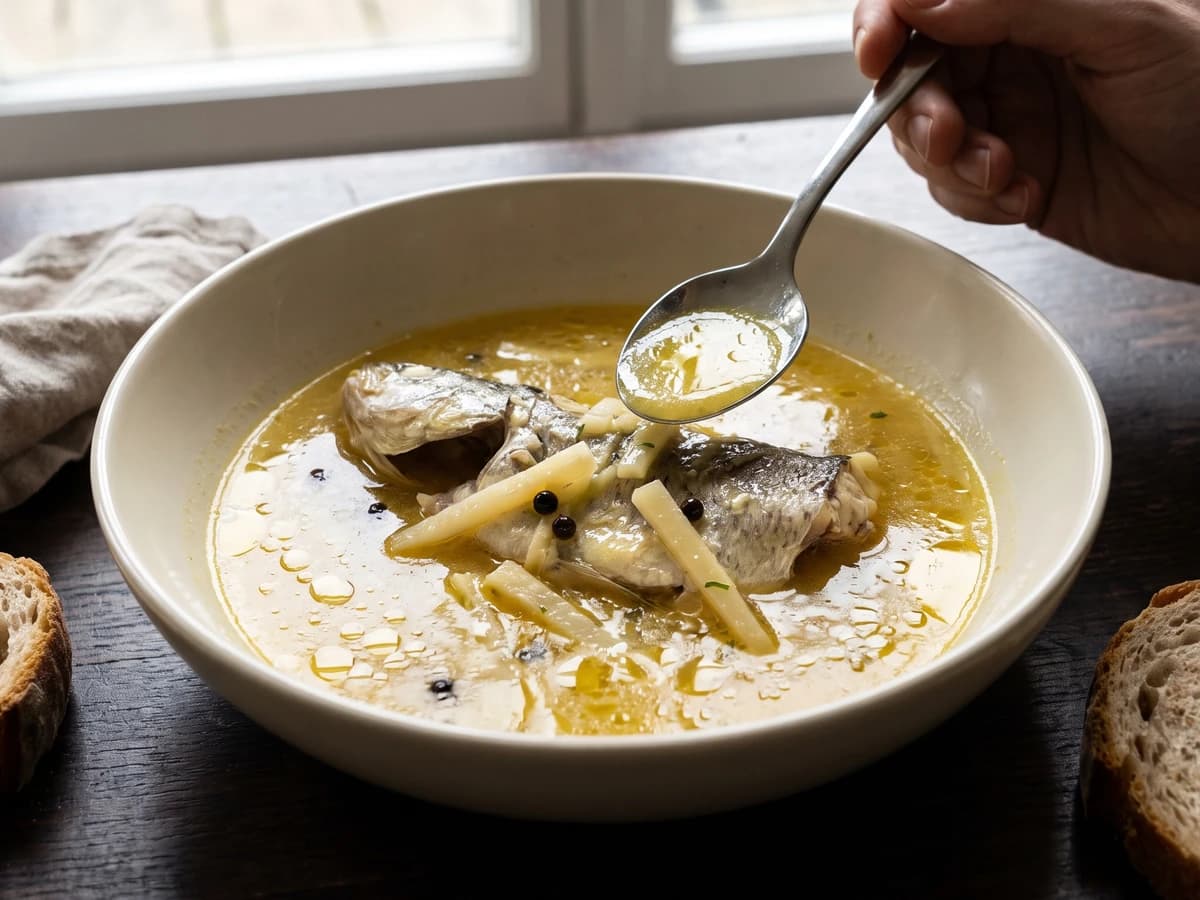
Waterzoi asks fresh, bone-in river fish to thicken its own buttery broth, with parsley root and pepper for company. No flour, no stockpot, just a brisk simmer watched closely.
Chef Juliette
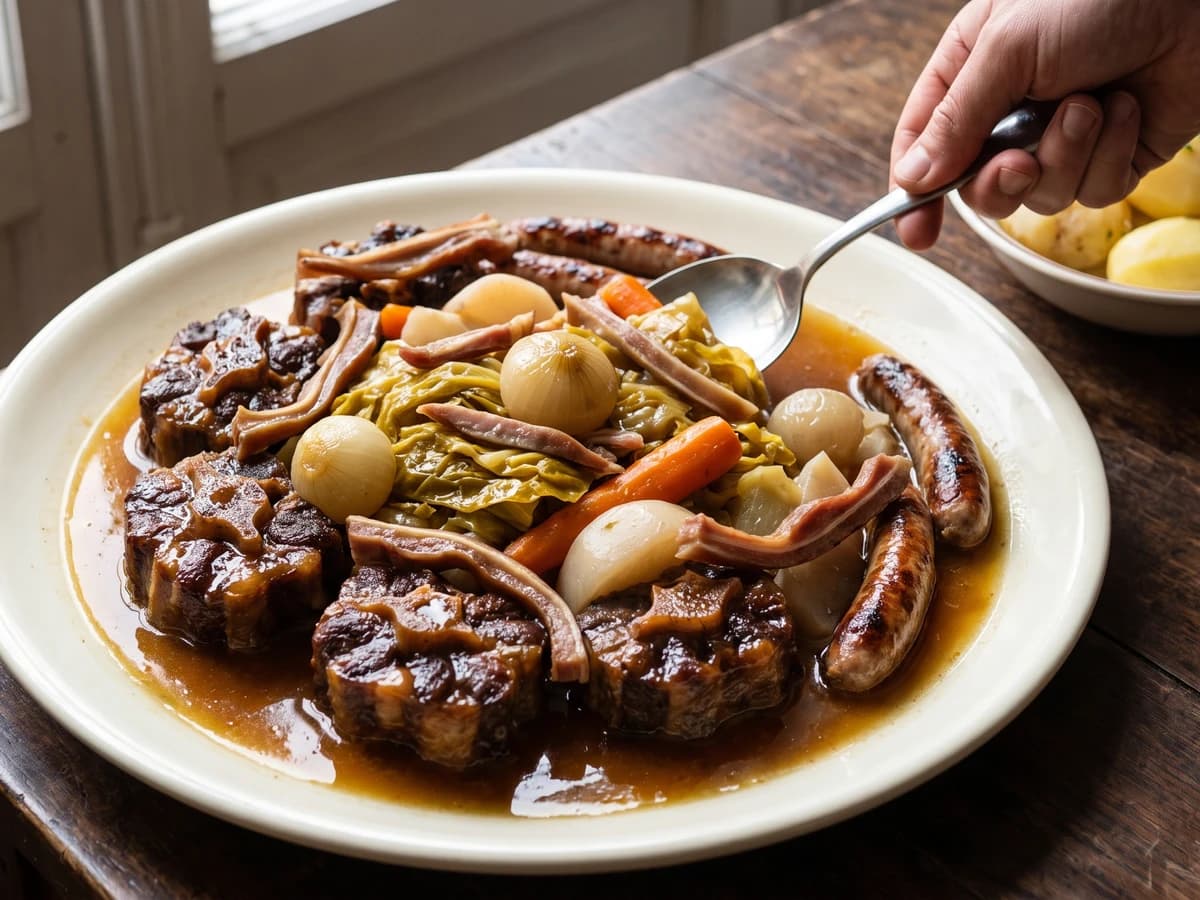
Queue de Bœuf en Hochepot gathers oxtail, pig's trotter and ear, cabbage, roots, and grilled chipolatas around a clear, gelatin-rich broth whose quiet simmer keeps every piece tender and distinct.
Chef Juliette
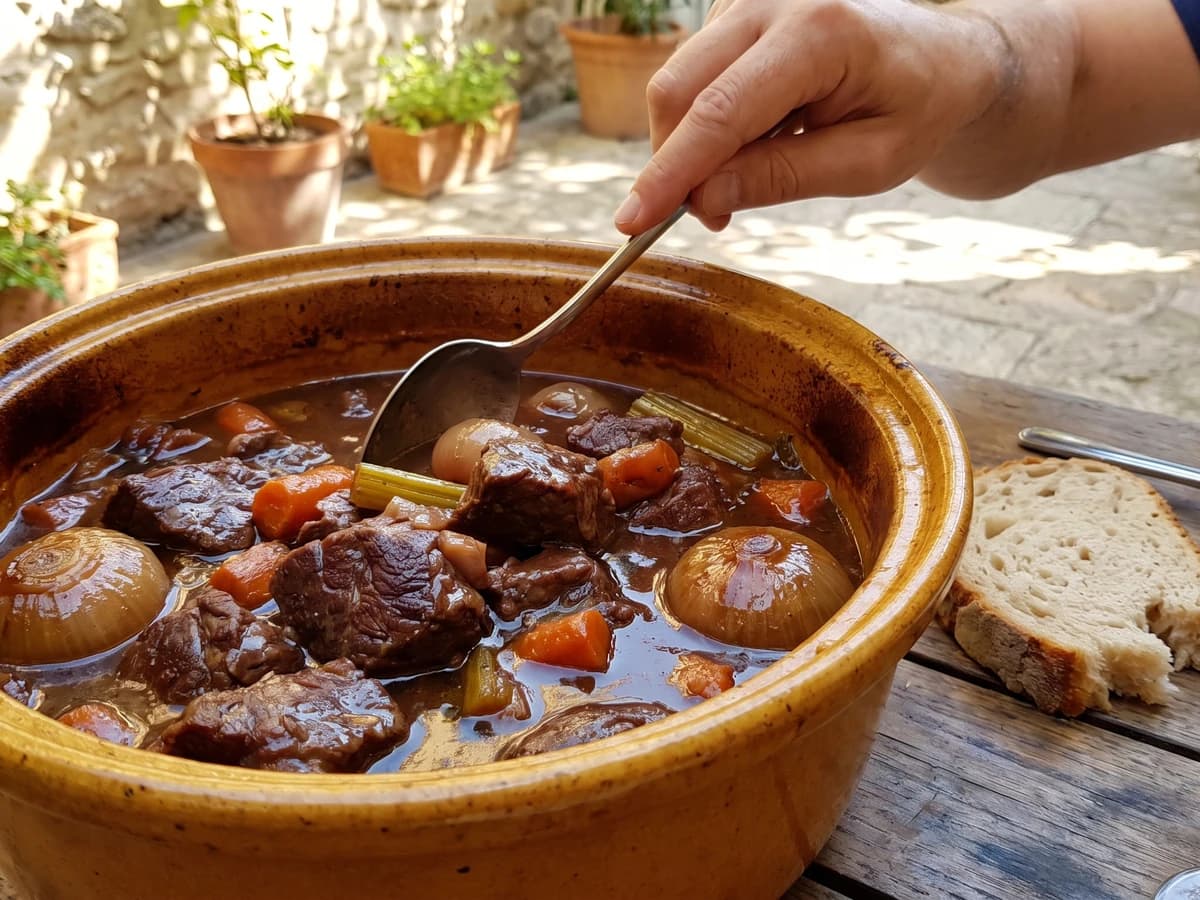
Beef shoulder larded with bacon, sharpened by red wine and vinegar, then sealed with garlic, vegetables, and dry lemon peel until the low oven turns it yielding and the gravy darkly glossy.