Chef Juliette
Bouillabaisse à la Marseillaise
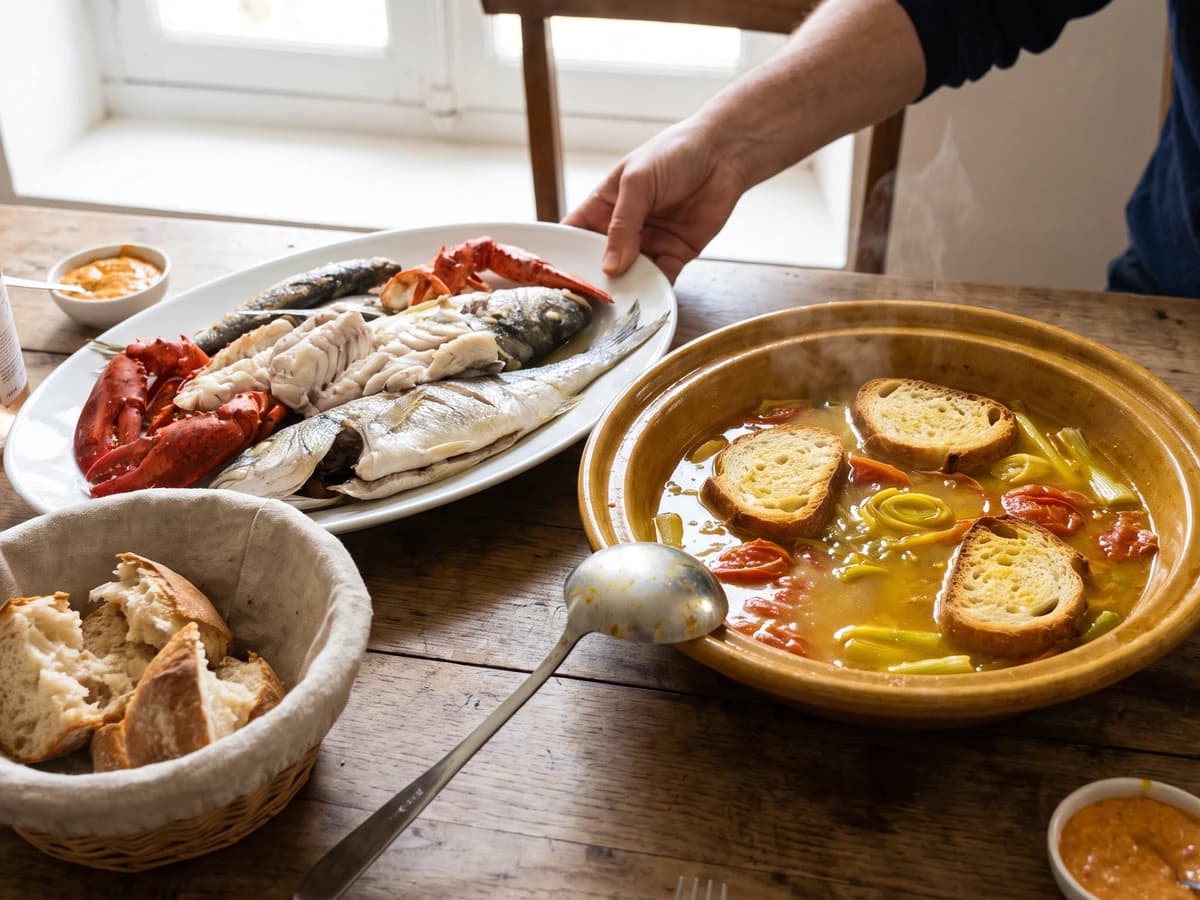
Marseille's great fish stew, saffron-gold and garlic-scented, proves that a hard boil can be the careful choice: it binds olive oil into broth before the whole pot meets bread.
A cooking platform built around craft, culture, and the stories behind what we eat.
Created by Chef Juliette
Based on No. 569, Consommé George Sand, from Le Guide Culinaire (1907) by Auguste Escoffier
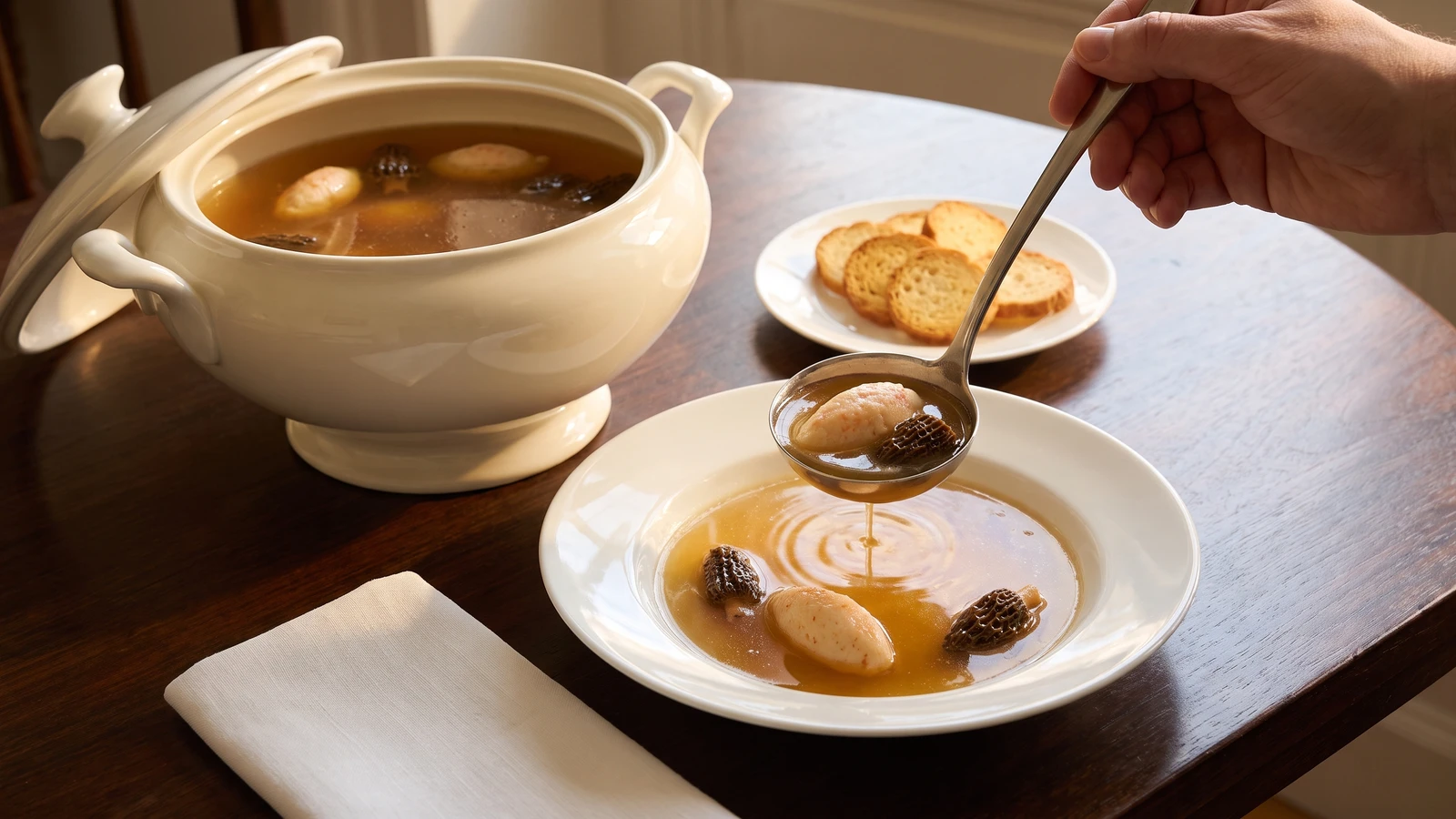
A limpid, fish-scented consommé with crayfish-tinted whiting quenelles and morels, while carp milt on crisp flute rounds is passed apart: clarity, contrast, and formal service made workable at home.
Consommé George Sand (clear fish-scented broth with whiting quenelles, morels, and carp milt) teaches that clarity is built before it is admired. The one true thing to know before touching a pan is this: every garnish must be cooked separately and drained clean, because a beautiful quenelle or morel is still a fault if it muddies the consommé. The fumet, the concentrated fish essence, must taste full while remaining limpid.
The source recipe assumed a saucier at the stove, stock never off the fire, crayfish butter waiting in the larder, and a salamander ready to crisp the flute rounds. At home, a food processor replaces the mortar and tamis, damp cloth gives the clarification its final polish, and the broiler stands in for the salamander. This version keeps the book's quart and its exact table arithmetic: twelve quenelles, twelve morels, twelve slices of poached carp milt, and twelve flute rounds, enough for four bowls with three of each. Only the equipment and workflow change. One cook, one stove, one evening.
The brigade's simultaneous holding is scaffolding, so it goes. What stays is the dish: a very clear consommé, whiting forcemeat finished with crayfish butter, morels stewed until tender, and carp milt set on crisp flute rounds and passed apart. Keep the clarification below a boil once its raft forms. If the raft tears, don't panic. Ça se rattrape, and the method catches it before the tureen does.
Consommé George Sand belongs to the classical Parisian repertoire of named clear soups, where each consommé was distinguished by an exact garnish and manner of service. Its title honors the novelist George Sand, but this is not a household soup from Berry: whiting, crayfish butter, morels, carp milt, and flute rounds speak to formal Parisian service, especially the passing of the milt toasts apart so the broth remains limpid and the bread crisp.
Quantity
6 cups loosely packed (1.4 L / 700 g)
gills and bloodlines removed
Quantity
1 (about 3½ oz / 100 g)
white and pale green parts thinly sliced
Quantity
1 (about 3½ oz / 100 g)
thinly sliced
Quantity
1 (about 1¾ oz / 50 g)
thinly sliced
Quantity
6 tbsp (90 ml / 84 g)
divided
Quantity
¾ cup (180 ml / 180 g)
divided
Quantity
14 cups (3.3 L / 3.3 kg)
divided, plus more for washing morels
Quantity
1
Quantity
¾ cup loosely packed (180 ml / 170 g)
very finely minced and cold
Quantity
3
divided
Quantity
1 cup (240 ml / 225 g)
Quantity
2 tbsp (30 ml / 36 g)
divided, plus more to taste
Quantity
6 (about 6 oz / 170 g)
meat removed and shells coarsely crushed
Quantity
1½ cups loosely packed (360 ml / 225 g)
diced and very cold
Quantity
⅓ cup (80 ml / 80 g)
divided
Quantity
⅛ tsp (0.6 ml / 0.3 g)
Quantity
12 fresh (about 3 oz / 85 g), or 12 dried (about ½ oz / 15 g)
dried morels rehydrated; medium morels halved
Quantity
2 intact sacs (about 5 oz / 150 g)
rinsed
Quantity
1 (about 8 oz / 225 g)
cut crosswise into twelve ¼-inch (6 mm) rounds
| Ingredient | Quantity |
|---|---|
| non-oily white fish bones and headsgills and bloodlines removed | 6 cups loosely packed (1.4 L / 700 g) |
| small leekwhite and pale green parts thinly sliced | 1 (about 3½ oz / 100 g) |
| small yellow onionthinly sliced | 1 (about 3½ oz / 100 g) |
| celery ribthinly sliced | 1 (about 1¾ oz / 50 g) |
| unsalted butterdivided | 6 tbsp (90 ml / 84 g) |
| dry white winedivided | ¾ cup (180 ml / 180 g) |
| cold waterdivided, plus more for washing morels | 14 cups (3.3 L / 3.3 kg) |
| bouquet garni of parsley stems, thyme, and bay leaf | 1 |
| skinless whiting trimmingsvery finely minced and cold | ¾ cup loosely packed (180 ml / 170 g) |
| large egg whitesdivided | 3 |
| crushed ice | 1 cup (240 ml / 225 g) |
| fine sea saltdivided, plus more to taste | 2 tbsp (30 ml / 36 g) |
| whole cooked crayfishmeat removed and shells coarsely crushed | 6 (about 6 oz / 170 g) |
| skinless whiting filletdiced and very cold | 1½ cups loosely packed (360 ml / 225 g) |
| cold heavy creamdivided | ⅓ cup (80 ml / 80 g) |
| ground white pepper | ⅛ tsp (0.6 ml / 0.3 g) |
| small fresh morels, or dried morelsdried morels rehydrated; medium morels halved | 12 fresh (about 3 oz / 85 g), or 12 dried (about ½ oz / 15 g) |
| carp milt sacsrinsed | 2 intact sacs (about 5 oz / 150 g) |
| thin French soup flute, a long crisp rollcut crosswise into twelve ¼-inch (6 mm) rounds | 1 (about 8 oz / 225 g) |
Keep the crayfish meat cold for another meal and crush the shells until every piece is smaller than a walnut. Melt 4 tbsp (60 ml / 56 g) of the butter over medium-low heat, add the shells, and cook for 10 minutes, pressing them firmly with a wooden spoon. The butter should turn coral and smell distinctly of crayfish without browning. Cover, infuse off the heat for 10 minutes, then strain through a fine sieve lined with damp cheesecloth. Press gently, chill until soft rather than hard, and measure 2 tbsp (30 ml / 28 g) for the quenelles. If the shells retain more butter than expected, make up the measure with plain butter; their flavor has already been captured.
Melt 1 tbsp (15 ml / 14 g) butter in a 4-quart pot over medium-low heat. Add the fish bones, leek, onion, and celery, then sweat them for 5 minutes without letting them color. Pour in ½ cup (120 ml / 120 g) wine and reduce it by half. Add 7 cups (1.65 L / 1.65 kg) cold water, the bouquet garni, and 1 tsp (5 ml / 6 g) salt. Bring the fumet slowly to a bare tremble, skim the surface, and cook uncovered for 25 minutes. Longer cooking draws bitterness and chalkiness from fish bones, so stop while the aroma is still clean and sweet. Strain without pressing, then cool the fumet quickly in a metal bowl set in cold water.
Whisk 2 egg whites just enough to loosen them, then combine them in a clean pot with the cold minced whiting, crushed ice, and cold fumet. Set the pot over medium heat and stir steadily along the bottom until the mixture grows warm and the clarification raft begins rising. Once the raft knits across the surface, stop stirring. Open a small chimney in its center and hold the liquid at the faintest simmer for 25 minutes, ladling a little broth through the chimney several times. Never let it boil hard. Ladle the consommé through a damp, cloth-lined fine sieve without disturbing or squeezing the raft. You should have about 5 cups (1.2 L). If the raft tears and the consommé clouds, pull the pot from the heat, let everything settle for 10 minutes, then pass the liquid through fresh damp cloth or an unbleached coffee filter. Ça se rattrape.
Chill the food processor bowl and blade for 10 minutes. Pulse the diced whiting with ¾ tsp (3.75 ml / 4.5 g) salt and the white pepper until it becomes tacky and clings to the blade. Add the remaining egg white, reserving 1 tsp for a possible correction, and process until smooth. Pulse in the 2 tbsp crayfish butter, then add ¼ cup (60 ml / 60 g) cream in a thin stream. Press the forcemeat through a fine sieve into a cold bowl, cover directly against its surface, and chill for 20 minutes. If the mixture becomes shiny with separated butter, stop processing and chill it for 10 minutes before giving it two or three short pulses. Warm forcemeat gives grainy quenelles; cold forcemeat swells softly.
Bring 5 cups (1.2 L / 1.2 kg) water and 2 tsp (10 ml / 12 g) salt to 175 to 180°F (80 to 82°C) in a wide pan. Poach a teaspoonful of forcemeat first. It should hold together, puff slightly, and remain tender. If it feathers apart, chill the mixture for 15 minutes; if it still frays, pulse in the reserved teaspoon of egg white. If it is too firm, fold in the remaining cream a teaspoon at a time. Shape twelve small oval quenelles between two wet teaspoons and poach them in two batches for 5 to 6 minutes, turning once. Keep the water below a boil and cook each quenelle to at least 145°F (63°C) at its center. Lift them onto a clean towel and cover loosely.
Trim the morels and wash them through several changes of water, opening any deep cavities where grit can hide. If using dried morels, soak them until supple, then discard the gritty soaking liquid rather than risking the consommé's clarity. Leave very small morels whole and halve medium ones, exactly as the source directs. Melt the remaining 1 tbsp (15 ml / 14 g) butter in a small saucepan, add the morels and a pinch of salt, then pour in ½ cup (120 ml / 120 g) clarified consommé. Cover and hold at a bare simmer for 10 minutes, since morels must be thoroughly cooked. Uncover and reduce until only a spoonful of glossy liquid remains. Drain the morels well and keep them covered.
Combine the remaining 2 cups (480 ml / 480 g) water, ¼ cup (60 ml / 60 g) wine, and 1 tsp (5 ml / 6 g) salt in a small pan. Bring it to a bare simmer, lower in the intact carp milt sacs, and poach gently for 6 to 8 minutes, until opaque, just firm, and at least 145°F (63°C) at the center. Lift them out and rest for 5 minutes, then cut twelve small slices with a thin, dampened knife. If the milt tears under the blade, chill it for 10 minutes to firm the fat, then slice again. Keep the pieces covered while you crisp the bread.
Cut twelve roundels from the French soup flute and arrange them on a small baking sheet. Toast at 350°F (175°C) for 8 to 10 minutes, turning once, until dry and evenly golden. If they need more color, give them only a few seconds beneath the broiler, the home equivalent of the salamander, and watch without looking away. Let the rounds crisp for a minute, then set one slice of poached carp milt on each immediately before service. Passing these separately is part of the dish, not ceremony for its own sake: the flute stays crisp and the consommé stays clear.
Warm a 1½-quart soup tureen with hot water, then drain and dry it. Arrange the twelve poached quenelles and twelve stewed morels in the bottom. Bring the remaining consommé to a clean boil in a spotless saucepan, reducing it to exactly 4 cups (950 ml) if necessary, then taste for salt. Pour the boiling consommé over the garnishes and carry the tureen straight to the table. Pass the twelve carp-milt flute rounds on their own plate, three for each guest. The broth should be limpid, the quenelles tender, and the bread crisp. À table!
1 serving (about 240g)
Culinary guides, cultural storytelling, and the editorial depth that makes cooking meaningful.
Discover Culinary ExplorerChef Juliette
Marseille's great fish stew, saffron-gold and garlic-scented, proves that a hard boil can be the careful choice: it binds olive oil into broth before the whole pot meets bread.
Chef Juliette
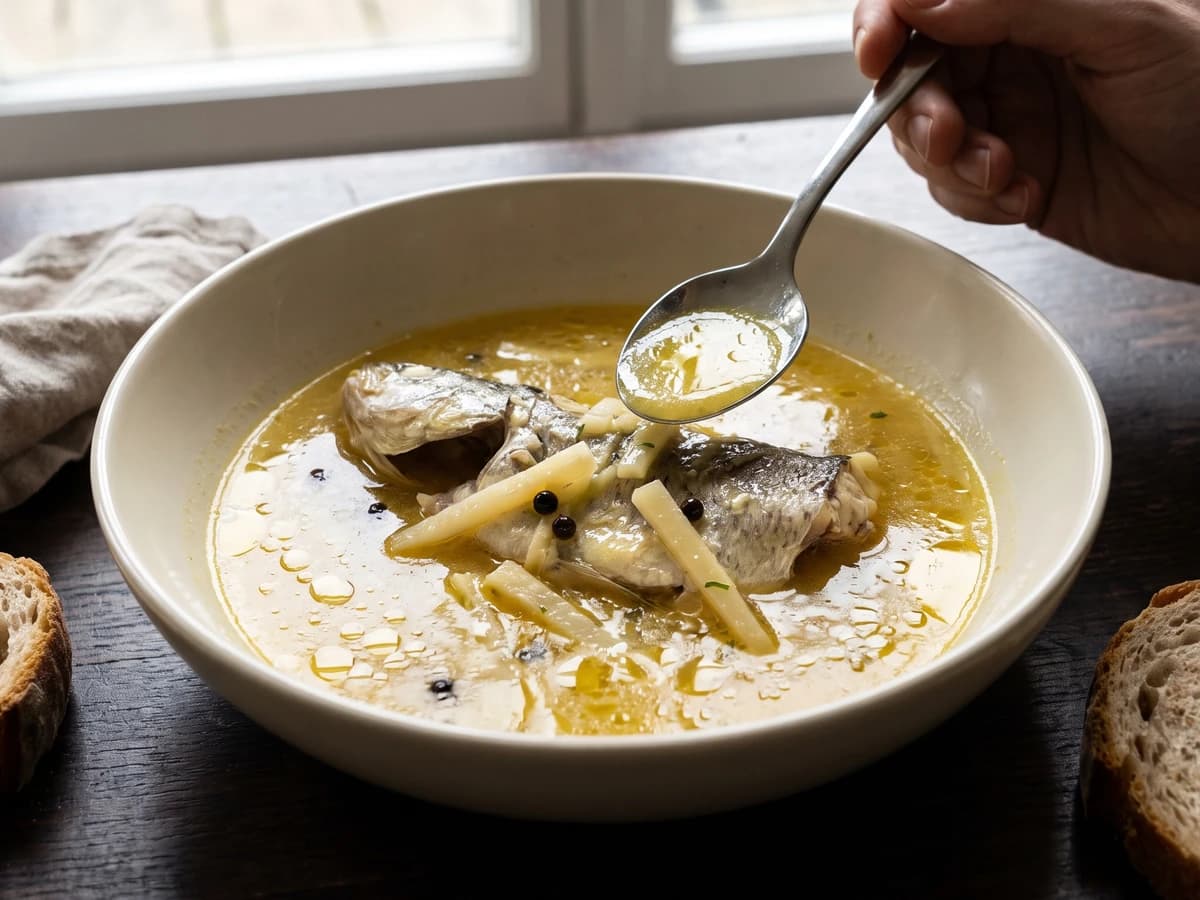
Waterzoi asks fresh, bone-in river fish to thicken its own buttery broth, with parsley root and pepper for company. No flour, no stockpot, just a brisk simmer watched closely.
Chef Juliette
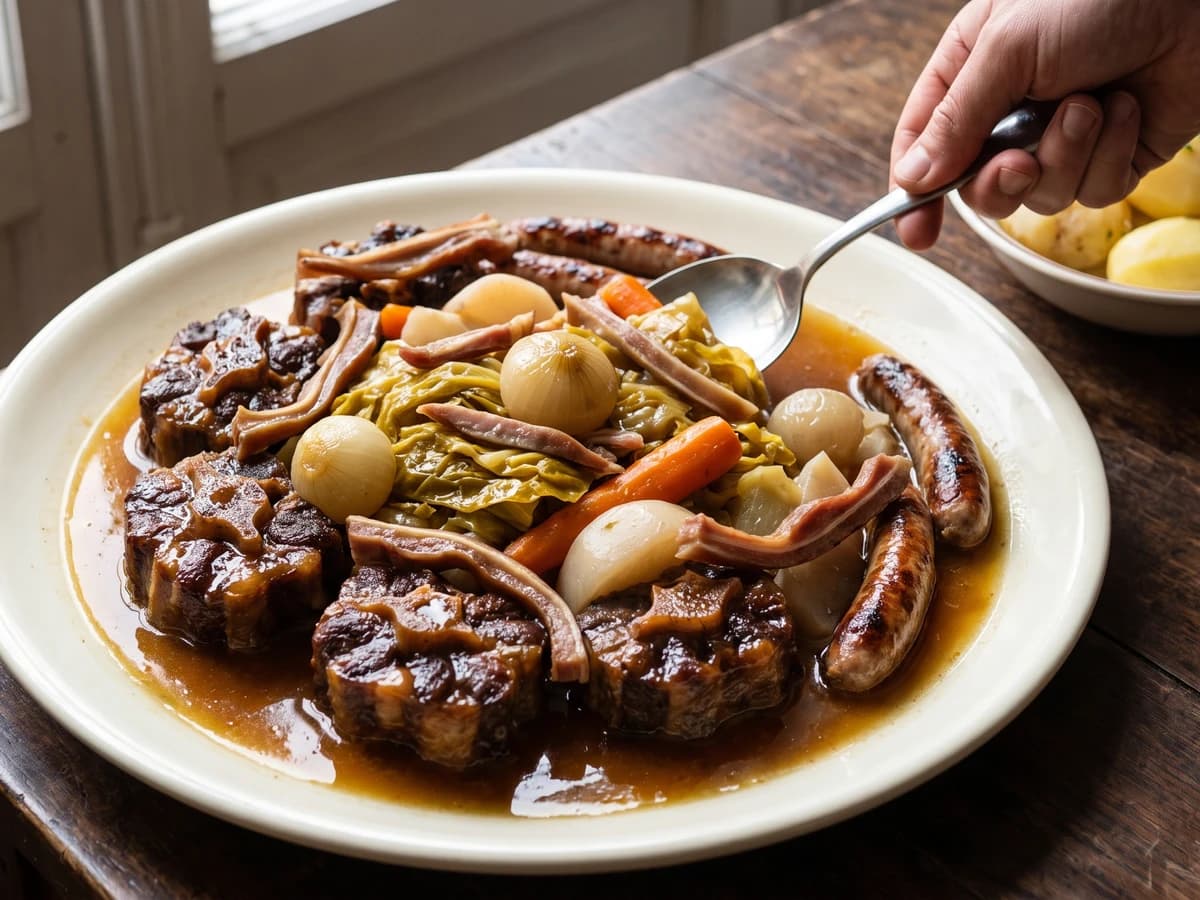
Queue de Bœuf en Hochepot gathers oxtail, pig's trotter and ear, cabbage, roots, and grilled chipolatas around a clear, gelatin-rich broth whose quiet simmer keeps every piece tender and distinct.
Chef Juliette
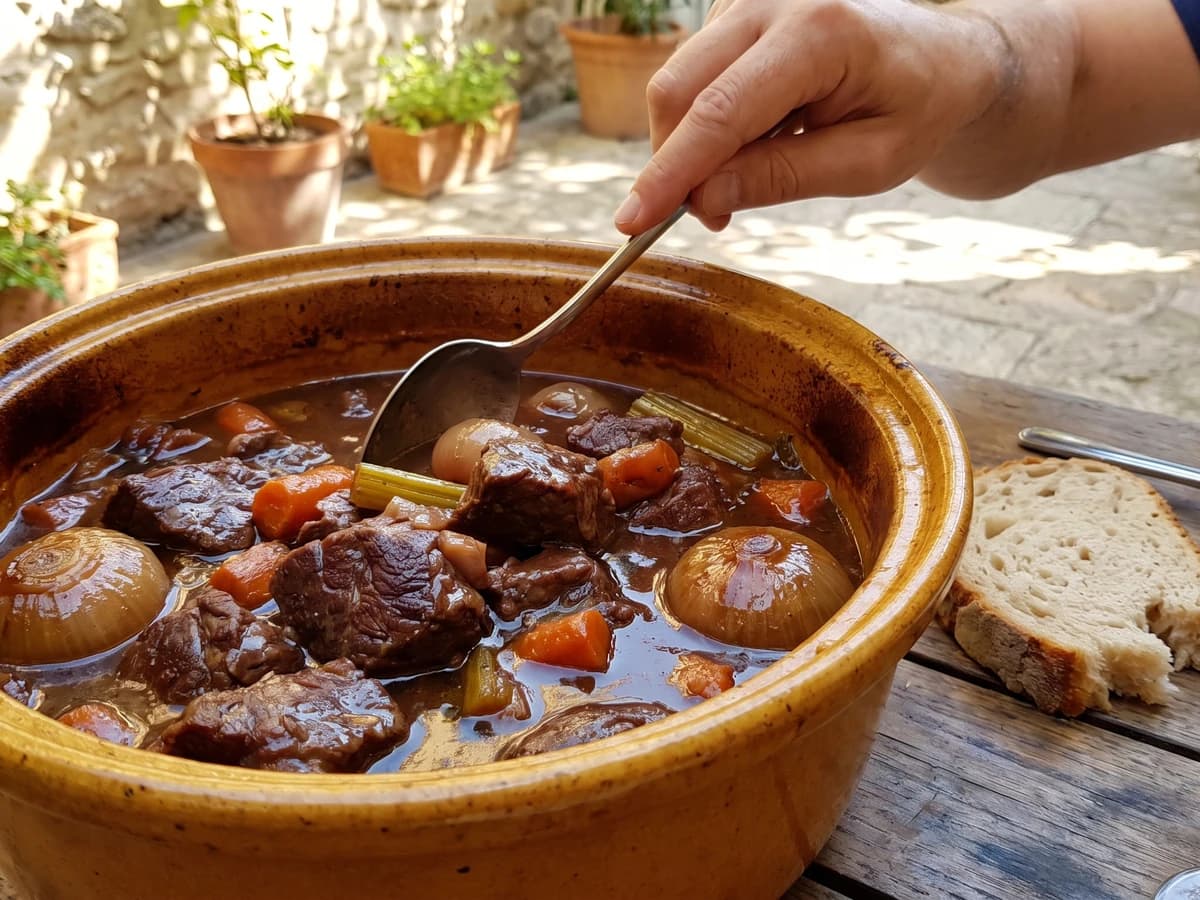
Beef shoulder larded with bacon, sharpened by red wine and vinegar, then sealed with garlic, vegetables, and dry lemon peel until the low oven turns it yielding and the gravy darkly glossy.