Chef Juliette
Bouillabaisse à la Marseillaise
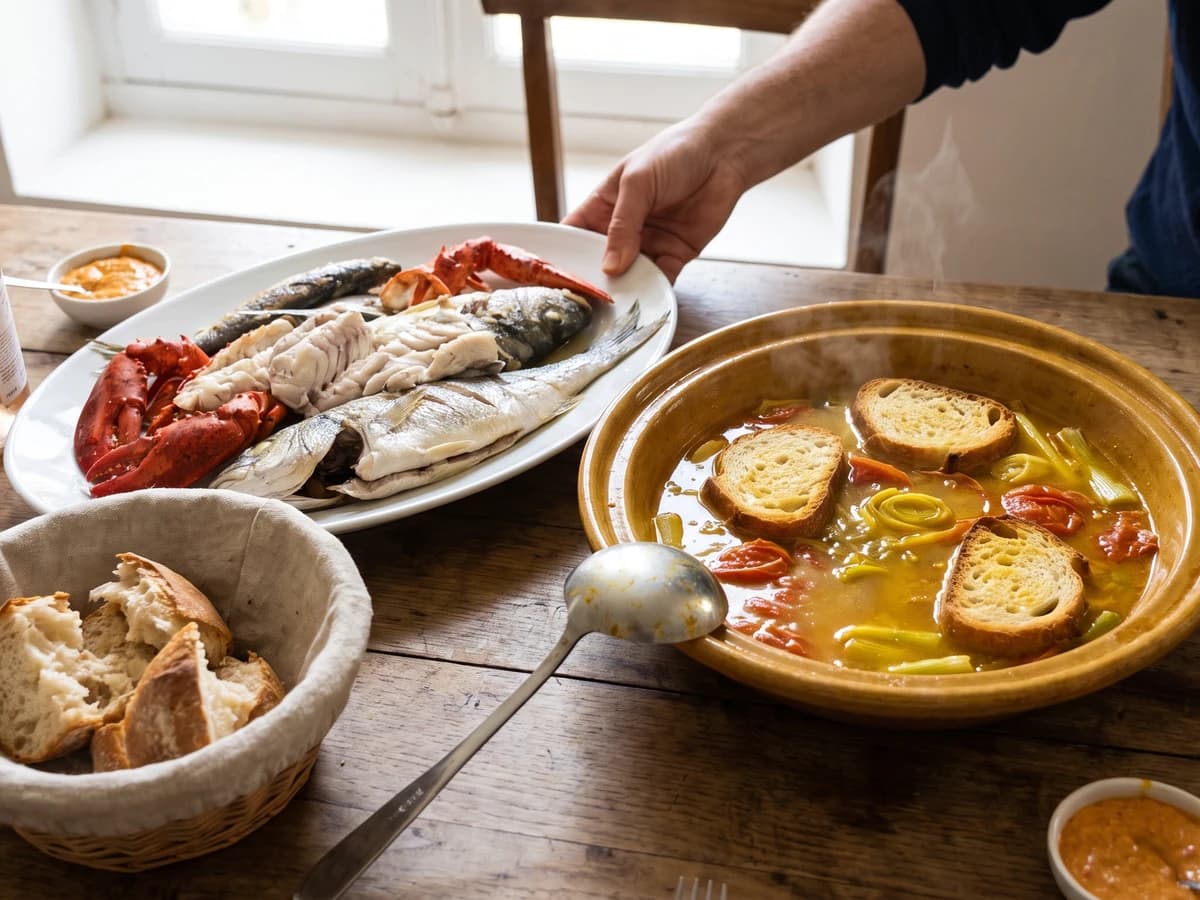
Marseille's great fish stew, saffron-gold and garlic-scented, proves that a hard boil can be the careful choice: it binds olive oil into broth before the whole pot meets bread.
A cooking platform built around craft, culture, and the stories behind what we eat.
Created by Chef Juliette
Based on No. 566a, Consommé à la Fermière, from Le Guide Culinaire (1907) by Auguste Escoffier
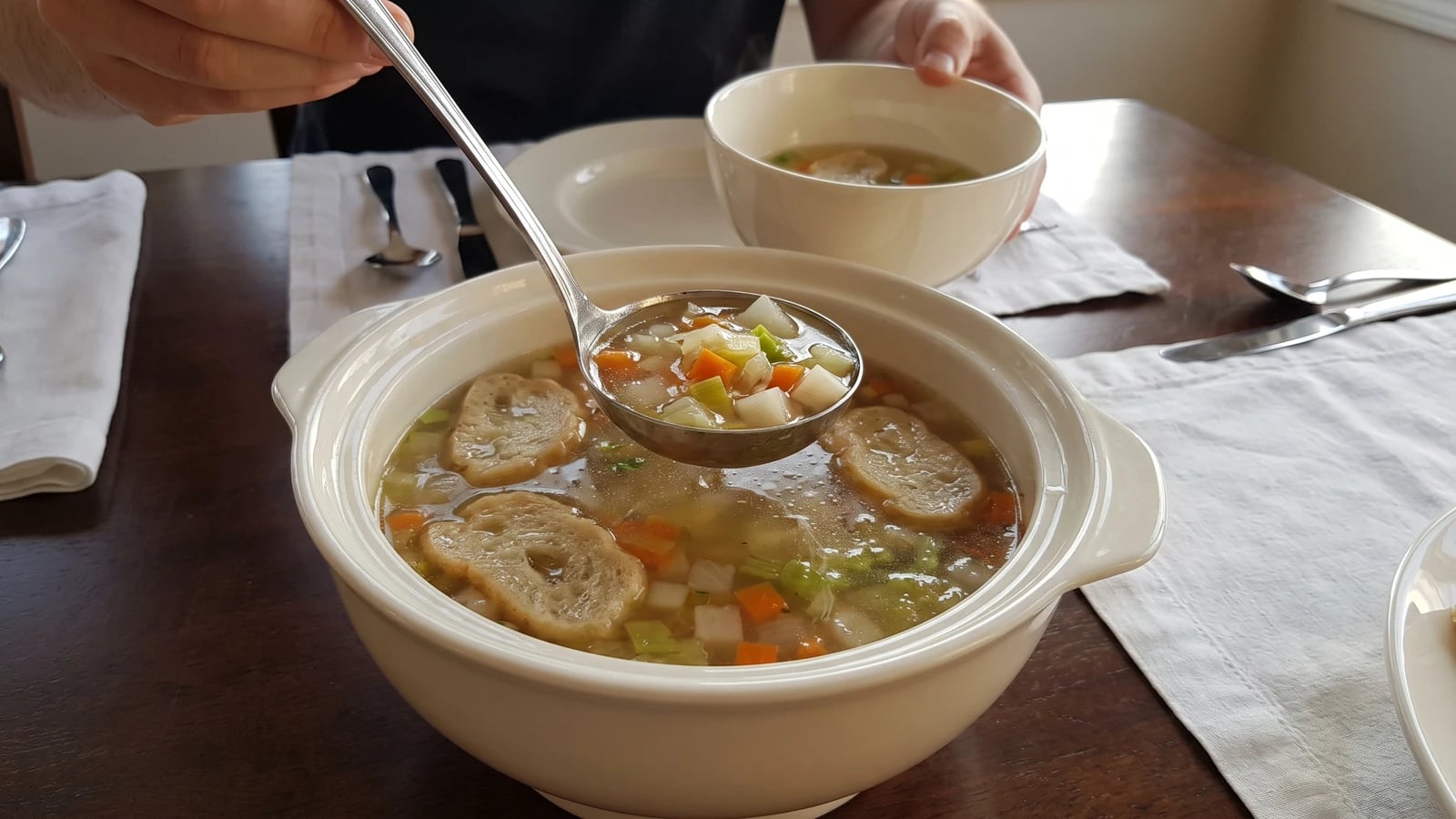
Consommé à la Fermière proves that clarity is active cooking: finely cut garden vegetables softened in butter, barely simmered in pale consommé, diligently degreased, and finished with crisp slices of flute.
Consommé à la Fermière (clear consommé with butter-stewed garden vegetables) teaches the discipline behind every clear broth: flavor may deepen, but the liquid must never lose its brilliance. The one true thing to know before touching a pan is that a hard boil turns butter into a cloudy emulsion; keep the pot at a bare tremble and the consommé stays lucid.
The original assumed a saucier on staff, a white consommé from a stockpot never off the fire, and enough hands to cut vegetables for a full service. At home, begin with 1¾ quarts of finished white consommé and work in one saucepan; the low oven dries the flute, so no salamander is needed. I have scaled the book's proportions to a home tureen of about two quarts without changing their ratio. One cook, one stove, one evening.
The finished soup should be pale gold and transparent, with carrot, turnip, leek, onion, and cabbage suspended like small pieces of stained glass, then the dry flute softens at its edges as it reaches the table. The fine, even cut and patient degreasing are the dish; brigade choreography is scaffolding and can go. Guard the gentle simmer, skim patiently, and the rest follows.
Consommé à la Fermière belongs to the French bourgeois table and the classical dining room rather than to one claimed province; fermière signals the kitchen garden carried into a refined clear soup. The dish traveled from household vegetable pots into formal service by retaining familiar carrot, turnip, leek, onion, and cabbage while applying the exacting discipline of consommé. Its rustic name is easily misunderstood: in this formula the broth remains clear and the finish is dried French soup flute, with no celery, peas, or herb chiffonade.
Quantity
2 (about 1 cup / 240 ml / 150 g)
peeled and minced somewhat finely
Quantity
2 (about 1¼ cups / 300 ml / 180 g)
peeled and minced somewhat finely
Quantity
4 (about 1¼ cups / 300 ml / 180 g)
washed and minced somewhat finely
Quantity
1 (about 1 cup / 240 ml / 150 g)
minced somewhat finely
Quantity
6 tablespoons (⅜ cup / 90 ml / 85 g)
Quantity
1¾ quarts (1.65 L / 1.65 kg)
clear and well seasoned
Quantity
2¼ loosely packed cups (530 ml / 115 g)
cored and cut roughly julienne-fashion
Quantity
1
cut into 16 thin slices
| Ingredient | Quantity |
|---|---|
| small carrotspeeled and minced somewhat finely | 2 (about 1 cup / 240 ml / 150 g) |
| small white turnipspeeled and minced somewhat finely | 2 (about 1¼ cups / 300 ml / 180 g) |
| small leeks, white and pale green parts onlywashed and minced somewhat finely | 4 (about 1¼ cups / 300 ml / 180 g) |
| medium yellow onionminced somewhat finely | 1 (about 1 cup / 240 ml / 150 g) |
| unsalted butter | 6 tablespoons (⅜ cup / 90 ml / 85 g) |
| prepared white consomméclear and well seasoned | 1¾ quarts (1.65 L / 1.65 kg) |
| green cabbagecored and cut roughly julienne-fashion | 2¼ loosely packed cups (530 ml / 115 g) |
| French soup flute or slim crisp baguettecut into 16 thin slices | 1 |
Heat the oven to 275°F (135°C). Arrange the thin slices of French soup flute on a baking sheet and dry them for 8 to 12 minutes, turning once, until crisp at the surface but still pale. Do not toast them brown; the bread should absorb the consommé without giving it a roasted flavor. Set the slices aside.
Mince the carrot, turnip, leek, and onion into even pieces about ⅛ inch (3 mm) across. Cut the cabbage separately julienne-fashion, into match-shaped rods about ⅛ inch (3 mm) wide and 1½ inches (4 cm) long. Uniform pieces cook at the same pace and remain distinct in the clear broth; large or ragged ones turn a refined consommé into an ordinary vegetable soup.
Bring a saucepan of water to a boil. Add the cabbage and parboil it for 2 minutes, just until pliant but nowhere near tender. Drain immediately, rinse briefly under cold water, and spread it on a clean towel to remove excess moisture. Parboiling softens the cabbage's raw edge and keeps its stronger flavor from overtaking the consommé.
Étuver means to stew gently in butter without browning. Dry the saucepan, melt the butter over low heat, and add the carrot, turnip, leek, and onion. Cover and cook for 8 to 10 minutes, stirring occasionally, until their edges soften and the kitchen smells sweet, but every piece remains pale. If the butter begins to color, pull the pan off the heat and add 2 tablespoons (30 ml / 30 g) of the measured consommé. If dark flecks appear, transfer the vegetables without scraping the base into a clean saucepan; the browned milk solids must stay behind.
Moisten the vegetables with the remaining white consommé and add the parboiled cabbage. Bring the liquid up slowly until only a few small bubbles break around the edge, then lower the heat and cook uncovered for 20 to 25 minutes, until the vegetables are tender but retain their shapes. Stir as little as possible. A full boil disperses the butter into a cloudy emulsion; if it happens, remove the pan from the heat, leave it untouched for 5 minutes, skim as the fat rises, and return it to the gentlest heat. Ça se rattrape.
Skim the surface repeatedly with a wide spoon as the soup finishes. Let the pan stand off the heat for 3 minutes, then fill a metal ladle with ice water and sweep its rounded underside across the surface, keeping the water safely inside the ladle. Wipe and repeat until the broth carries a fine shimmer but no visible butter eyes. Warm the soup tureen with hot water, dry it, and pour in the consommé and vegetables. Add the dried flute slices at the last moment so their centers remain crisp as they reach the table. À table!
1 serving (about 255g)
Culinary guides, cultural storytelling, and the editorial depth that makes cooking meaningful.
Discover Culinary ExplorerChef Juliette
Marseille's great fish stew, saffron-gold and garlic-scented, proves that a hard boil can be the careful choice: it binds olive oil into broth before the whole pot meets bread.
Chef Juliette
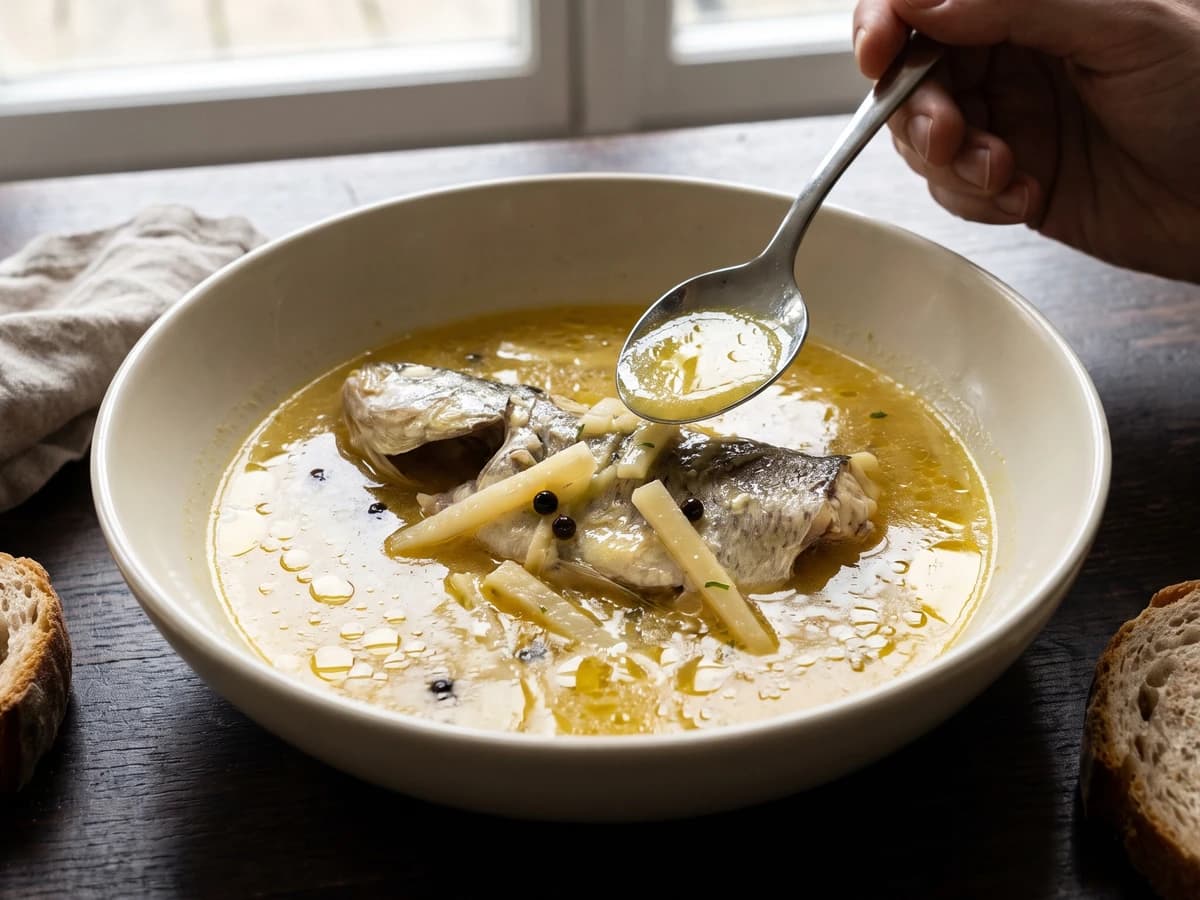
Waterzoi asks fresh, bone-in river fish to thicken its own buttery broth, with parsley root and pepper for company. No flour, no stockpot, just a brisk simmer watched closely.
Chef Juliette
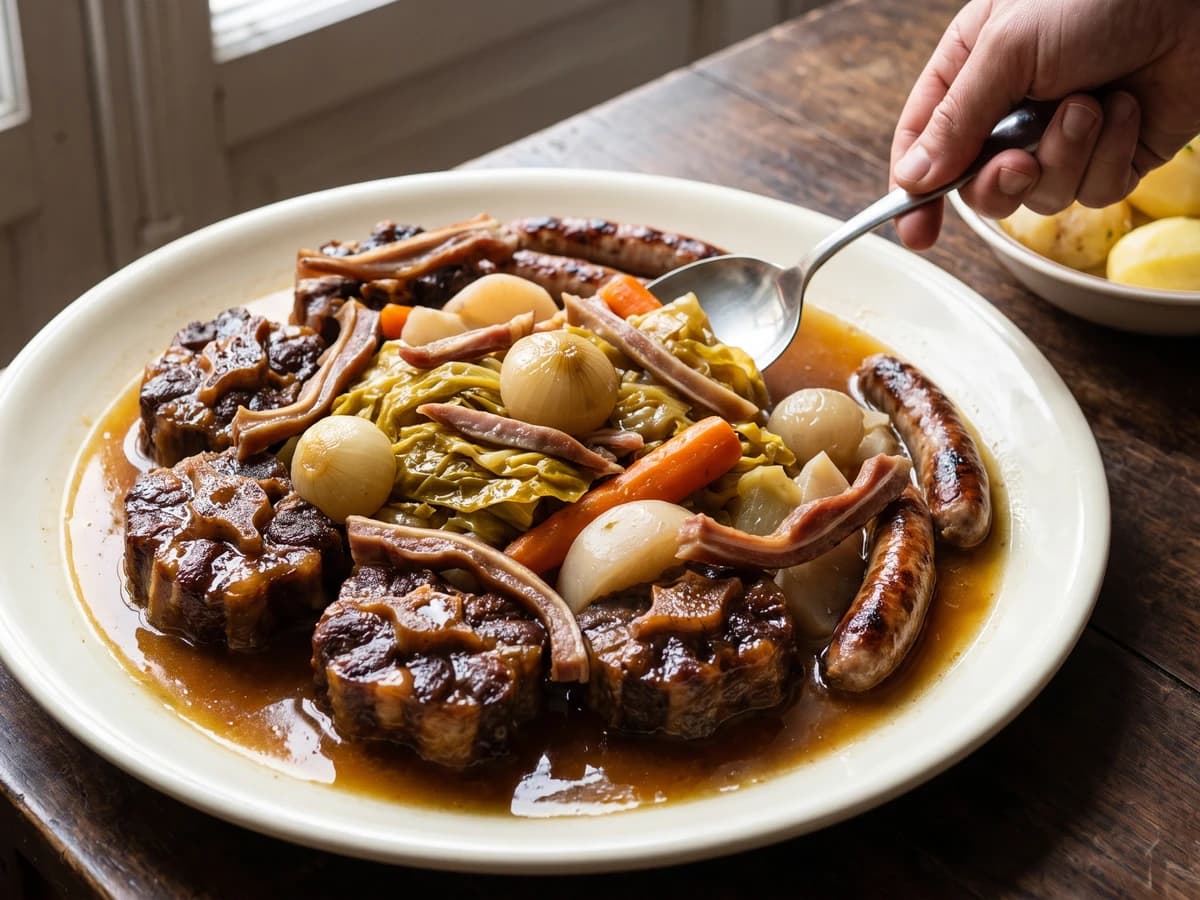
Queue de Bœuf en Hochepot gathers oxtail, pig's trotter and ear, cabbage, roots, and grilled chipolatas around a clear, gelatin-rich broth whose quiet simmer keeps every piece tender and distinct.
Chef Juliette
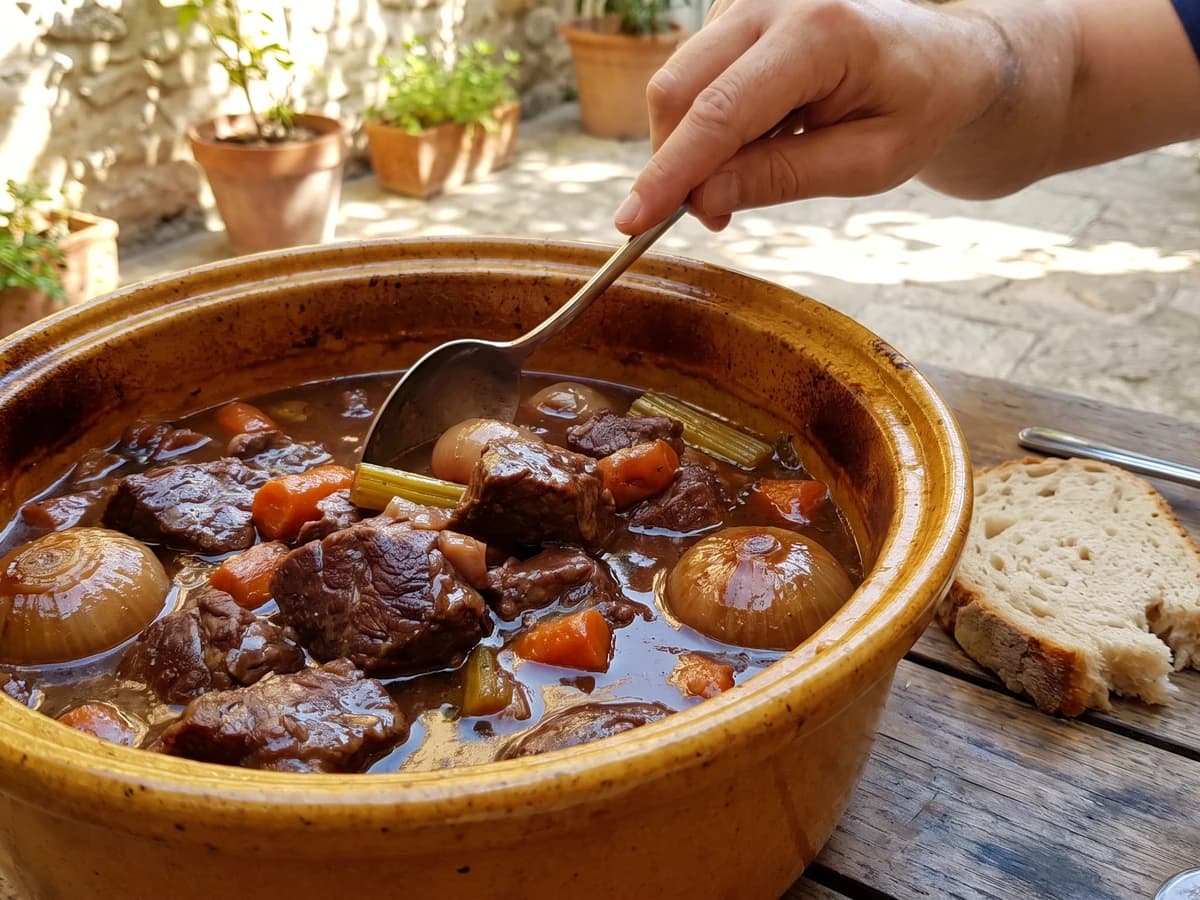
Beef shoulder larded with bacon, sharpened by red wine and vinegar, then sealed with garlic, vegetables, and dry lemon peel until the low oven turns it yielding and the gravy darkly glossy.