Chef Juliette
Bouillabaisse à la Marseillaise
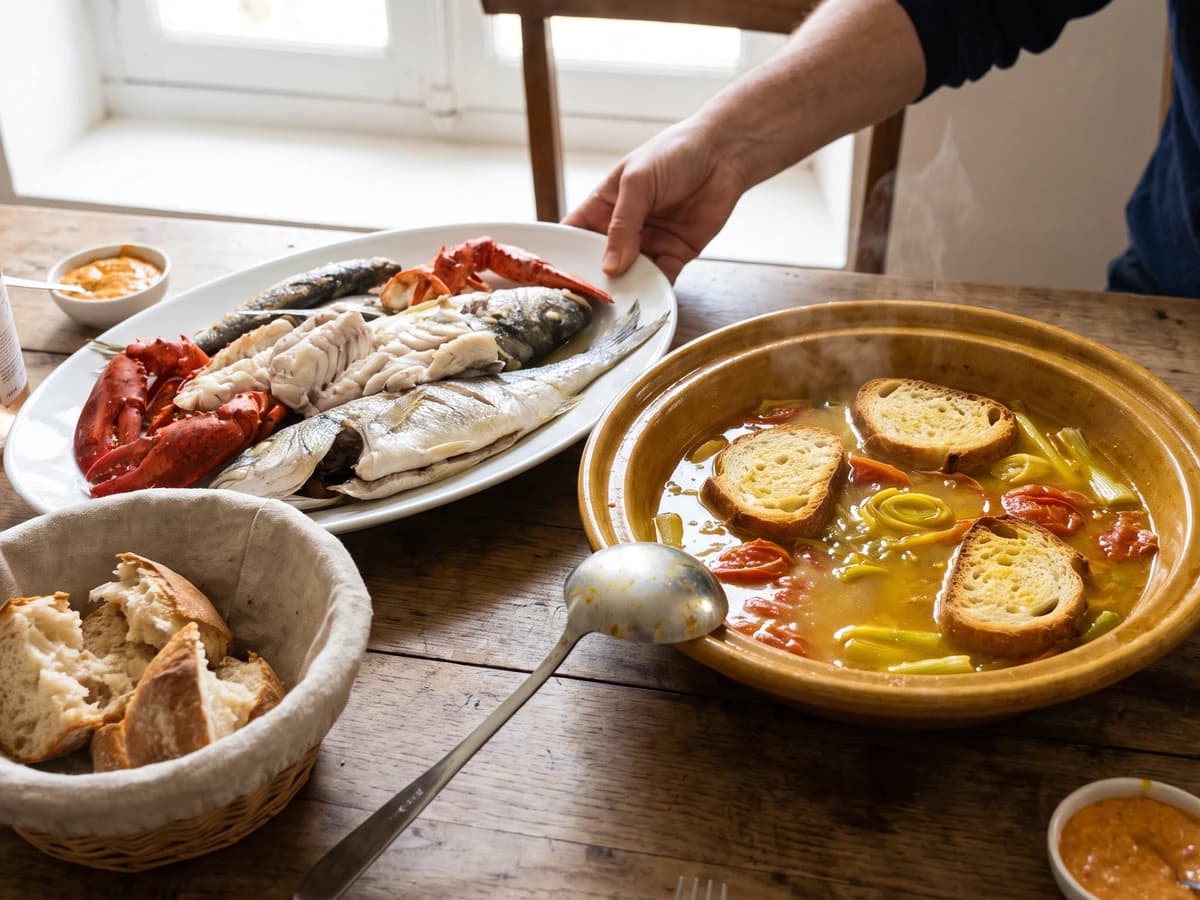
Marseille's great fish stew, saffron-gold and garlic-scented, proves that a hard boil can be the careful choice: it binds olive oil into broth before the whole pot meets bread.
A cooking platform built around craft, culture, and the stories behind what we eat.
Created by Chef Juliette
Based on No. 565, Consommé à l’Écossaise, from Le Guide Culinaire (1907) by Auguste Escoffier
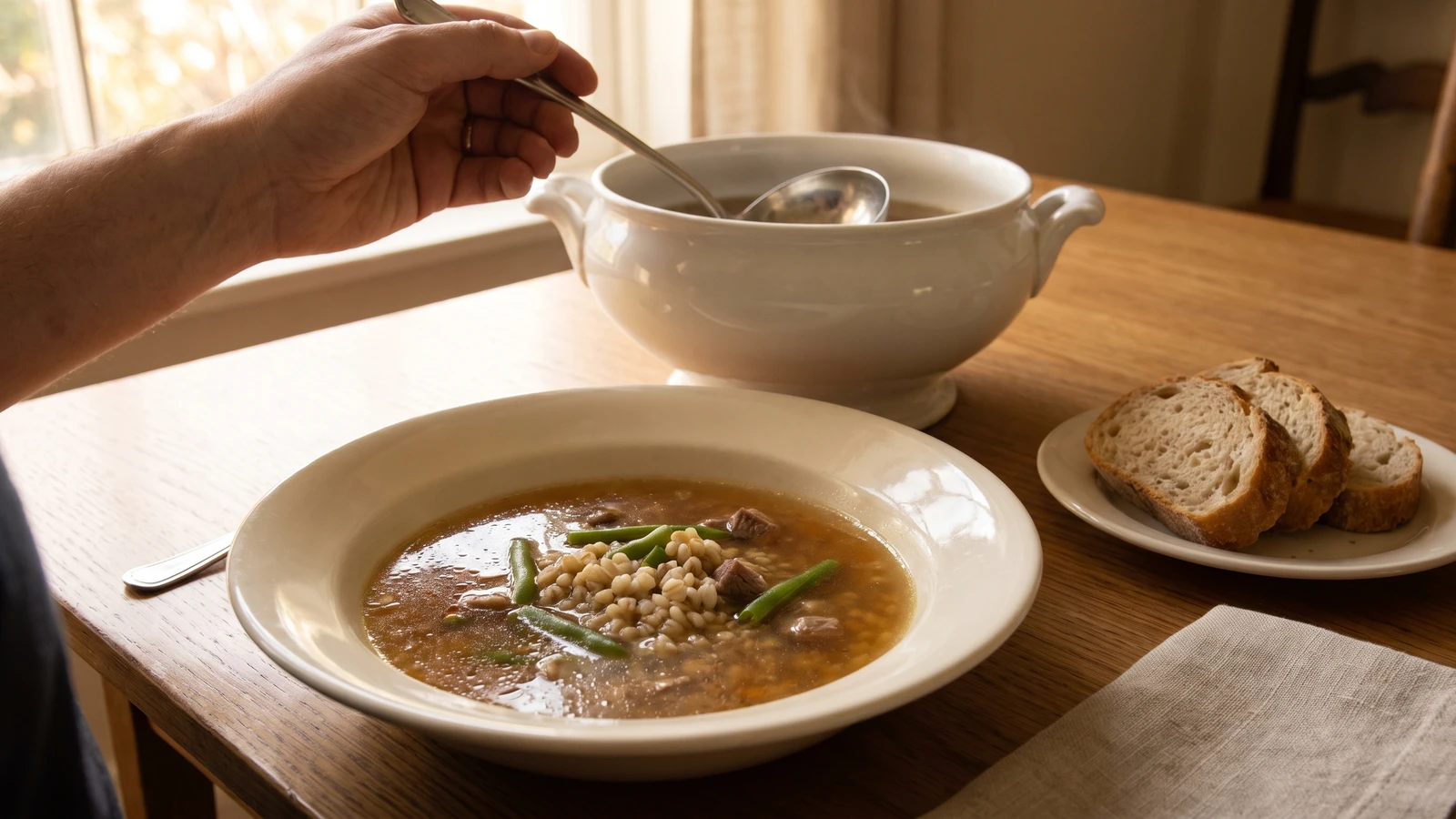
Clear mutton broth, tender barley, green-bean lozenges, and exact dice of poached breast: a quiet lesson in skimming, degreasing, and restraint, scaled from the classical soup tureen to one home stockpot.
Consommé à l’Écossaise (Scotch-style mutton broth) teaches one quiet truth: clarity begins while the broth is still cold. Heat it slowly, skim before the impurities can disperse, and never let the pot tumble at a hard boil. This particular consommé is cleared by patient cooking, thorough degreasing, and straining through cloth, not by an egg-white clarification that the source never calls for.
The original assumed a mutton stockpot never off the fire, a saucier free to tend separate pans, and linen waiting beside the pass. At home, one stockpot makes the broth and poaches the breast at the same time, one saucepan serves first for barley and then for beans, and a damp lint-free cotton cloth replaces the linen. Those separate hands and extra pans were brigade scaffolding. What stays is the dish itself: two quarts of carefully skimmed broth, four tablespoons of cooked pearl barley, two tablespoons of French beans, and one tablespoon of diced breast for each of eight bowls. One cook, one stove, one evening.
Cook the barley separately because its starch would turn the broth cloudy, then chill the broth until every trace of mutton fat lifts away cleanly. The one step that matters most is the frémissement, the bare tremble of the stockpot. Keep it there, and the broth will remain clear enough to show every pearl of barley beneath its amber surface.
Consommé à l’Écossaise belongs to the French classical repertoire of potages named for a foreign style, here drawing on Scotland’s household broth of mutton and barley rather than claiming to reproduce the whole Scottish pot. The French grand kitchen made that sustaining soup fit for the tureen by removing every trace of grease, straining the liquid through linen, cutting green beans into losanges, and reducing the meat to exact dice. Its surprise is that this formula does not rely on an egg-white clarification; patient skimming and cloth straining carry the clarity.
Quantity
2 pounds (900 g)
Quantity
1¼ pounds (570 g), yielding at least ½ cup (120 ml / 115 g) cooked dice
left in one piece
Quantity
3 quarts (2.85 liters / 2.85 kg)
Quantity
2 quarts (1.9 liters / 1.9 kg)
Quantity
1 medium (about 1 cup / 150 g)
quartered
Quantity
1 small (about 1 cup / 100 g)
split and thoroughly washed
Quantity
1 medium (about ½ cup / 75 g)
cut into large pieces
Quantity
1 large stalk (about ½ cup / 60 g)
cut into large pieces
Quantity
1
Quantity
1 teaspoon (5 ml / 2 g)
Quantity
1 tablespoon (15 ml / 18 g), divided, plus more only if needed
Quantity
1½ tablespoons dry (22 ml / 18 g), yielding 4 tablespoons cooked (60 ml / 45 g)
Quantity
6 slender beans (about ⅓ cup / 40 g whole), yielding 2 tablespoons cooked (30 ml / 25 g)
trimmed and cut into losanges
| Ingredient | Quantity |
|---|---|
| meaty mutton neck bones and lean mutton trimmings | 2 pounds (900 g) |
| bone-in mutton breastleft in one piece | 1¼ pounds (570 g), yielding at least ½ cup (120 ml / 115 g) cooked dice |
| cold water for the broth | 3 quarts (2.85 liters / 2.85 kg) |
| water for cooking the barley and French beans | 2 quarts (1.9 liters / 1.9 kg) |
| yellow onionquartered | 1 medium (about 1 cup / 150 g) |
| leek, white and pale green partssplit and thoroughly washed | 1 small (about 1 cup / 100 g) |
| carrotcut into large pieces | 1 medium (about ½ cup / 75 g) |
| celerycut into large pieces | 1 large stalk (about ½ cup / 60 g) |
| bouquet garni of parsley stems, thyme, and bay | 1 |
| whole black peppercorns | 1 teaspoon (5 ml / 2 g) |
| fine sea salt | 1 tablespoon (15 ml / 18 g), divided, plus more only if needed |
| dry pearl barley | 1½ tablespoons dry (22 ml / 18 g), yielding 4 tablespoons cooked (60 ml / 45 g) |
| haricots verts, French green beanstrimmed and cut into losanges | 6 slender beans (about ⅓ cup / 40 g whole), yielding 2 tablespoons cooked (30 ml / 25 g) |
Put the neck bones, mutton trimmings, and whole breast into an 8-quart stockpot. Add the 3 quarts of cold water and warm the pot uncovered over medium-low heat, taking 35 to 45 minutes to reach the first lazy bubbles. Skim away grey foam and loose fat as they rise, keeping the ladle nearly flat so you take scum rather than broth. Do not stir. If the pot reaches a hard boil, slide it off the heat and leave it undisturbed for 10 minutes, then skim the settled impurities and resume gently. Ça se rattrape; the later cloth straining will catch the remaining haze.
Once the foam has largely stopped rising, add the onion, leek, carrot, celery, bouquet garni, peppercorns, and 2 teaspoons of the salt. Hold the broth at a frémissement, a bare tremble around 185 to 194°F (85 to 90°C), for 3 hours from this point. Skim occasionally and add a little boiling water only if the meat becomes exposed. Begin checking the breast after 1½ hours; lift it out when a fork enters easily but the meat still holds its shape, usually within 2 hours. Cover and chill it promptly while the bones finish giving the broth their body.
Lift out the large solids without disturbing the bottom of the pot, then ladle the broth through a fine-mesh sieve into a wide clean bowl. Stop before the cloudy sediment at the bottom reaches the ladle, and never press the bones or vegetables. Set the bowl in an ice-water bath and stir the broth occasionally with a clean spoon until cool, then refrigerate until the mutton fat is completely firm, about 1½ hours. The broad bowl cools the broth quickly and gives the fat room to form one removable sheet.
While the broth finishes simmering, bring 2 cups (475 ml) of the cooking water to a gentle boil with ¼ teaspoon of the remaining salt. Add the pearl barley, lower the heat, and cook very gently until tender but still distinct, 30 to 40 minutes. Drain it and rinse briefly under hot water to remove loose starch, then measure exactly 4 tablespoons cooked. This separate cooking is not dispensable brigade fuss; barley cooked in the consommé would cloud the liquid and continue swelling in the tureen.
Cut the haricots verts on a sharp diagonal into ½-inch (1.25 cm) losanges, small diamond shapes. Bring the remaining cooking water to a boil with ¼ teaspoon salt and blanch the beans until tender but still bright, 90 seconds to 2 minutes. Cool them in cold water, drain thoroughly, and measure exactly 2 tablespoons. Remove the bones, coarse fat, and connective tissue from the cold breast, then cut the meat into regular ½-inch (1.25 cm) dice. Measure ½ cup, which provides the source formula’s one tablespoon for each of eight servings.
Lift the solid sheet of fat from the chilled broth and wipe away any fragments clinging to the surface. Dampen a clean lint-free cotton cloth or muslin with cold water, wring it thoroughly, and use it to line the fine-mesh sieve. Ladle the broth through without pouring in the sediment and without squeezing the cloth. This is passer au linge, straining through cloth, the home equivalent of the source recipe’s linen. If beads of fat remain, chill the broth again until they set and lift them away; cloth can remove sediment, but it cannot correct careless degreasing.
Measure the strained broth. If there is more than 2 quarts (1.9 liters), hold it at a gentle simmer until reduced to that amount. If there is less, add enough boiling water to restore exactly 2 quarts, then taste and adjust with the remaining salt only as needed. Bring the finished broth just to a full boil before serving. One clean rise is sufficient; boiling it for several minutes would undo the restraint that kept it clear.
Warm a 3-quart soup tureen with very hot water, then empty and dry it. Place the 4 tablespoons of cooked pearl barley, 2 tablespoons of haricots verts, and ½ cup of diced mutton breast in the tureen. Pour about 1 cup of boiling broth over the garnish and wait 30 seconds to warm it, then add the remaining broth. Ladle into eight warmed bowls, sharing the dice evenly so each person receives the promised tablespoon. Serve at once. À table!
1 serving (about 240g)
Culinary guides, cultural storytelling, and the editorial depth that makes cooking meaningful.
Discover Culinary ExplorerChef Juliette
Marseille's great fish stew, saffron-gold and garlic-scented, proves that a hard boil can be the careful choice: it binds olive oil into broth before the whole pot meets bread.
Chef Juliette
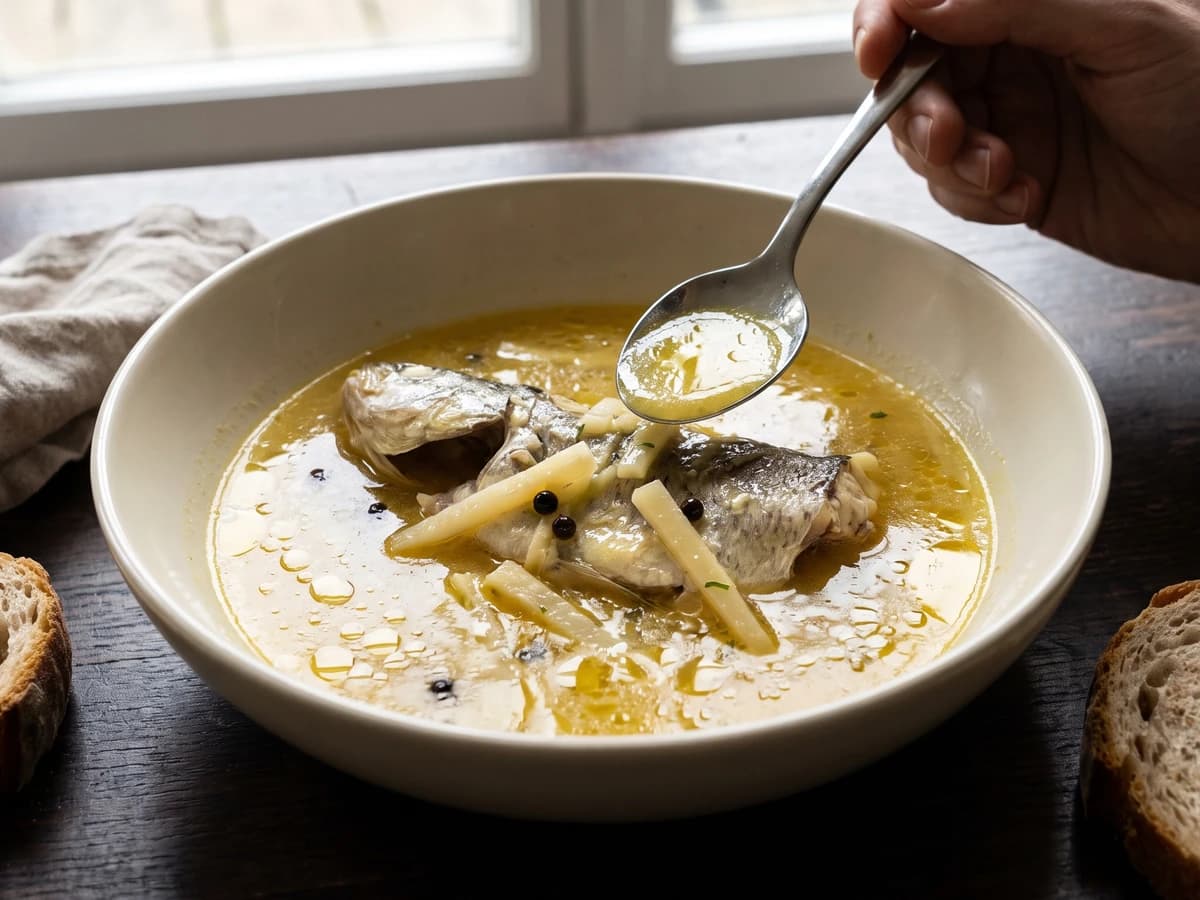
Waterzoi asks fresh, bone-in river fish to thicken its own buttery broth, with parsley root and pepper for company. No flour, no stockpot, just a brisk simmer watched closely.
Chef Juliette
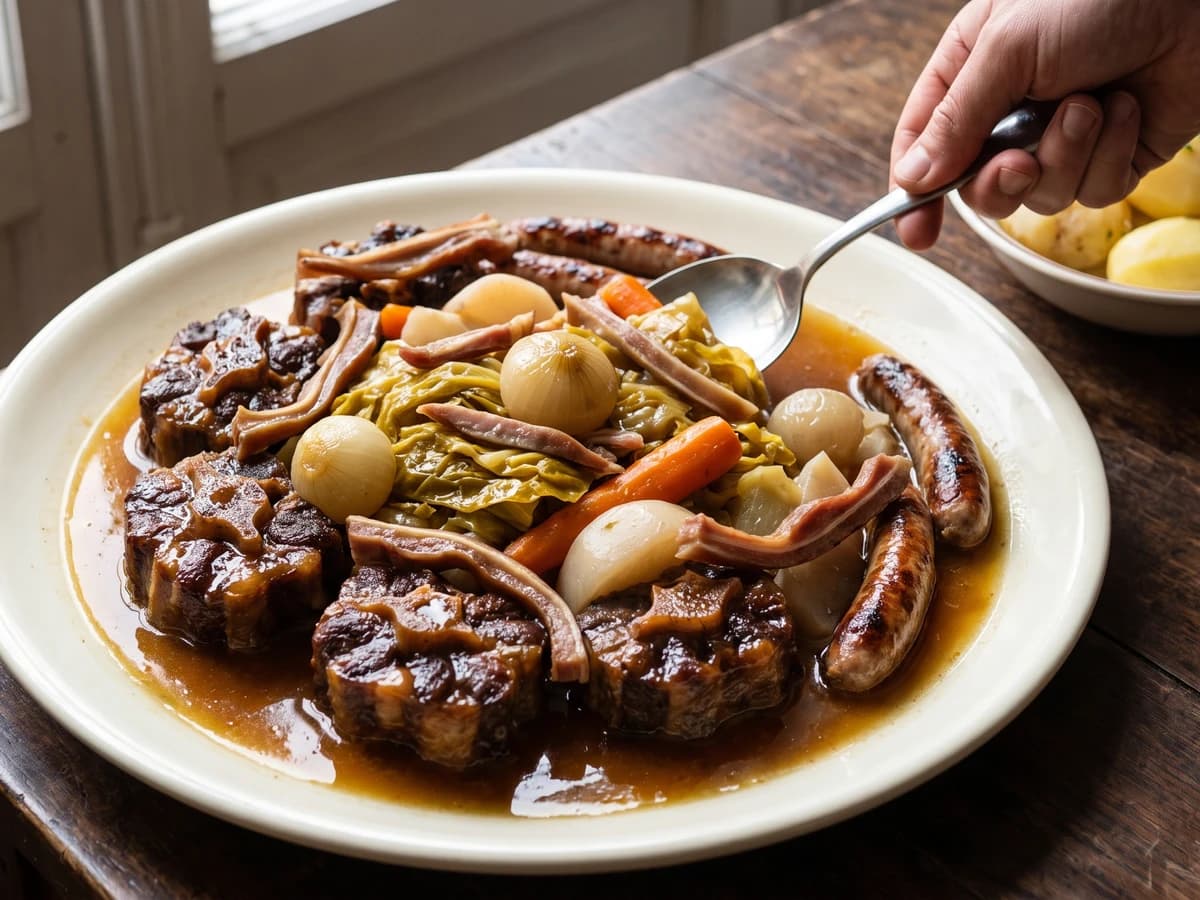
Queue de Bœuf en Hochepot gathers oxtail, pig's trotter and ear, cabbage, roots, and grilled chipolatas around a clear, gelatin-rich broth whose quiet simmer keeps every piece tender and distinct.
Chef Juliette
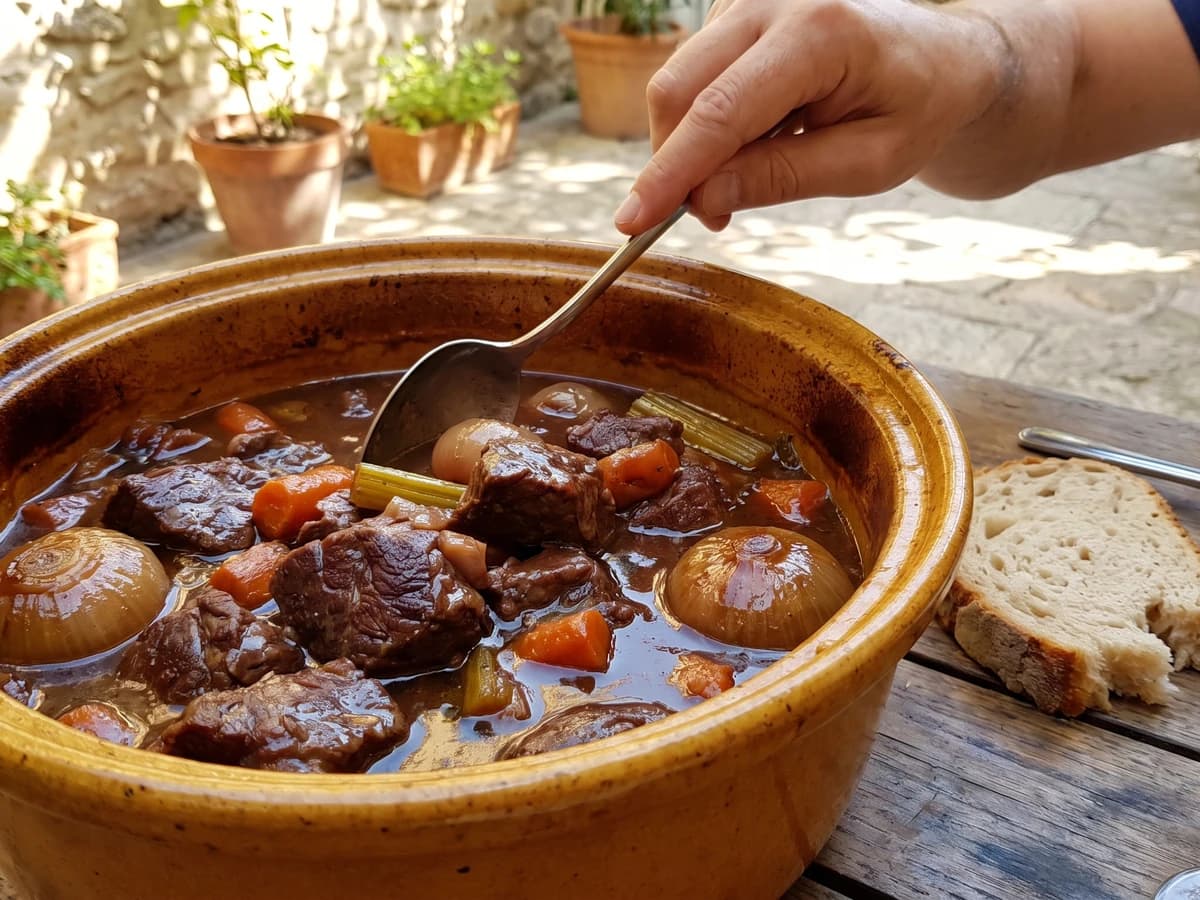
Beef shoulder larded with bacon, sharpened by red wine and vinegar, then sealed with garlic, vegetables, and dry lemon peel until the low oven turns it yielding and the gravy darkly glossy.