Chef Juliette
Bouillabaisse à la Marseillaise
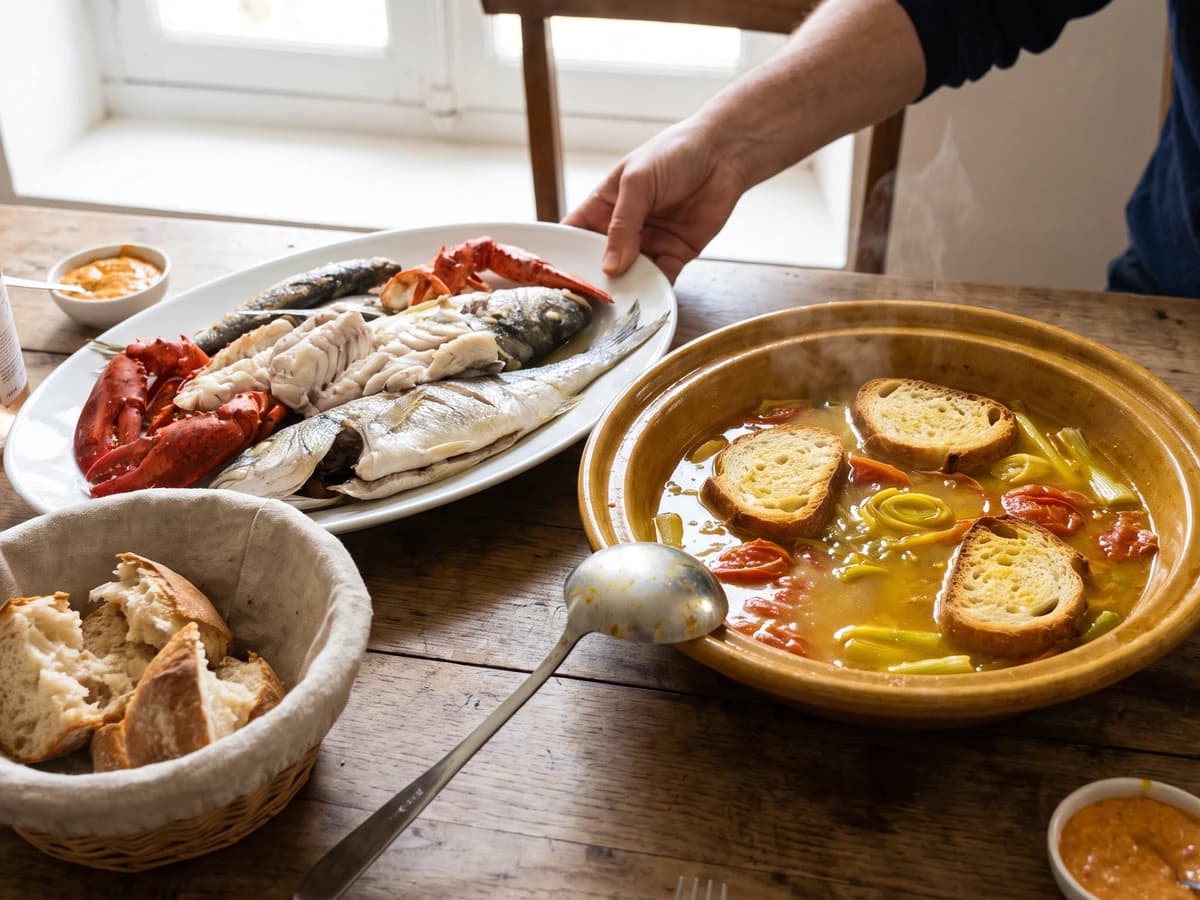
Marseille's great fish stew, saffron-gold and garlic-scented, proves that a hard boil can be the careful choice: it binds olive oil into broth before the whole pot meets bread.
A cooking platform built around craft, culture, and the stories behind what we eat.
Created by Chef Juliette
Based on No. 562, Consommé Divette, from Le Guide Culinaire (1907) by Auguste Escoffier
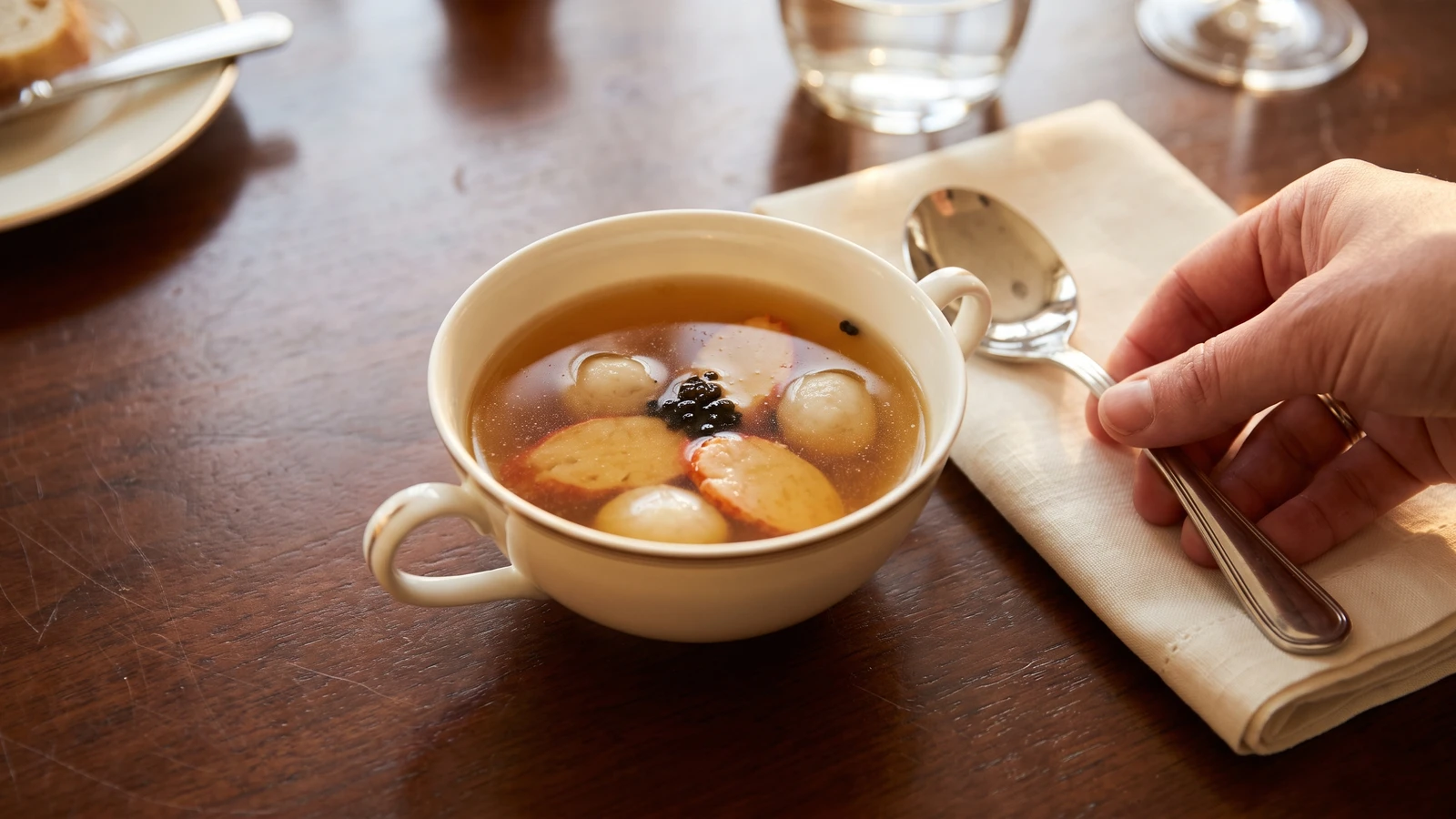
Brilliant amber consommé receives coral crayfish-velouté royale, eighteen tender smelt quenelle pearls, and jet-black truffle. The discipline is clarity, the pleasure is the contrast in every spoonful.
Consommé Divette (a clear broth garnished with crayfish custard, smelt dumpling pearls, and black truffle) teaches the sternest lesson in the clear-soup family: the broth must be brilliant before a single garnish enters it. Royale is the delicate savory custard, and quenelles are the little forcemeat dumplings. Neither can distract from a cloudy foundation. Clarify cold, let the raft form slowly, and strain without pressing.
The original assumed a stockpot never off the fire, a saucier making crayfish velouté, and another pair of hands shaping pearls. At home, begin with rich stock made earlier, clarify it in one pot, and prepare the garnishes while it settles. Two small ramekins replace the tapered baba-moulds without changing the custard. The book's one quart, two royales, eighteen quenelles, and tablespoon of truffle divide perfectly into six small courses, so those proportions remain intact. The brigade's separate vats and hands are scaffolding and can go. The clarification and all three garnishes are the dish, so they stay. One cook, one stove, one evening.
When Consommé Divette is right, amber broth reveals everything beneath it: coral-ivory ovals of royale, pale smelt pearls, and points of black truffle. It is intricate, but it isn't fussy. Once the clarification raft rises, keep the broth at a bare tremble and do not touch it. That is the step that decides the dish.
Consommé Divette belongs to the formal Parisian table, where clear soups were distinguished by precise garnishes rather than heavy seasoning. Its name uses theatrical vocabulary: a divette is a light-opera singer, fitting the grand-kitchen habit of naming brilliant, composed consommés after figures from the stage. Despite its crayfish and smelt, this is neither bisque nor regional fish soup; its identity rests on transparent consommé carrying three separate garnishes.
Quantity
7 cups (1.65 L / 1.65 kg)
preferably gelatinous; divided
Quantity
about 1½ cups (360 ml / 225 g)
very finely minced
Quantity
3
Quantity
½ small, about ⅓ cup (80 ml / 50 g)
very finely chopped
Quantity
½ small, about ¼ cup (60 ml / 35 g)
very finely chopped
Quantity
½ rib, about ¼ cup (60 ml / 25 g)
very finely chopped
Quantity
1
Quantity
8 (about 12 oz / 340 g)
raw or thawed cooked
Quantity
1 tablespoon (15 ml / 14 g)
Quantity
2 tablespoons (30 ml / 20 g)
finely chopped
Quantity
2 teaspoons (10 ml / 5 g)
Quantity
2 tablespoons (30 ml / 30 g)
Quantity
¼ cup (60 ml / 60 g)
Quantity
1
Quantity
1
Quantity
1 teaspoon (5 ml / 5 g)
Quantity
½ cup (120 ml / 75 g)
pin bones removed and thoroughly chilled
Quantity
1 tablespoon (15 ml / 15 g)
Quantity
2 tablespoons (30 ml / 30 g)
Quantity
¼ teaspoon (1.25 ml / 1.5 g)
Quantity
1 small pinch
Quantity
8 cups (2 L / 2 kg)
divided
Quantity
1 tablespoon (15 ml / 18 g)
Quantity
1 tablespoon (15 ml / 12 g)
fresh or whole preserved; cut into small pearls
Quantity
as needed
| Ingredient | Quantity |
|---|---|
| cold, rich, unsalted chicken stockpreferably gelatinous; divided | 7 cups (1.65 L / 1.65 kg) |
| lean boneless chicken breastvery finely minced | about 1½ cups (360 ml / 225 g) |
| large egg whites, for clarification | 3 |
| onionvery finely chopped | ½ small, about ⅓ cup (80 ml / 50 g) |
| carrotvery finely chopped | ½ small, about ¼ cup (60 ml / 35 g) |
| celeryvery finely chopped | ½ rib, about ¼ cup (60 ml / 25 g) |
| extra large egg white, for rescue clarification (optional) | 1 |
| small whole crayfishraw or thawed cooked | 8 (about 12 oz / 340 g) |
| unsalted butter, for the crayfish velouté | 1 tablespoon (15 ml / 14 g) |
| shallotfinely chopped | 2 tablespoons (30 ml / 20 g) |
| all-purpose flour | 2 teaspoons (10 ml / 5 g) |
| dry white wine | 2 tablespoons (30 ml / 30 g) |
| heavy cream, for the crayfish velouté | ¼ cup (60 ml / 60 g) |
| large egg, for the royale | 1 |
| large egg yolk, for the royale | 1 |
| softened unsalted butter, for the moulds | 1 teaspoon (5 ml / 5 g) |
| cleaned, skinned smelt filletspin bones removed and thoroughly chilled | ½ cup (120 ml / 75 g) |
| lightly beaten egg white, for the smelt forcemeat | 1 tablespoon (15 ml / 15 g) |
| very cold heavy cream, for the smelt forcemeat | 2 tablespoons (30 ml / 30 g) |
| fine sea salt, for the smelt forcemeat | ¼ teaspoon (1.25 ml / 1.5 g) |
| ground white pepper | 1 small pinch |
| water, for cooking and poachingdivided | 8 cups (2 L / 2 kg) |
| fine sea salt, for the cooking water | 1 tablespoon (15 ml / 18 g) |
| very black winter trufflefresh or whole preserved; cut into small pearls | 1 tablespoon (15 ml / 12 g) |
| fine sea salt, for final seasoning | as needed |
Reserve ¾ cup (180 ml) of the cold stock for the crayfish velouté. In a 4-quart saucepan, mix the remaining stock with the minced chicken, 3 egg whites, onion, carrot, and celery. Set it over medium-low heat and stir steadily across the bottom until the whites gather the meat and vegetables into a rising raft. Once that cap forms, stop stirring. Open a small chimney in its center and hold the liquid at the barest tremble for 45 minutes. A hard boil tears the raft and throws its impurities back into the broth; if that begins, lower the heat at once and ladle a little clear broth over the cap until it knits together again.
Dampen a double layer of cheesecloth and set it inside a fine sieve over a clean saucepan. Ladle the consommé through the chimney and cloth without disturbing or pressing the raft. Skim away every trace of surface fat, then simmer gently until exactly 4 cups (about 950 ml) remain. If the broth is still cloudy, ça se rattrape: cool it until merely warm, whisk the optional egg white with 2 tablespoons of cold water, stir it into the broth, and repeat a gentle 15-minute clarification before straining again. Cover and hold the finished consommé below a simmer.
If the crayfish are raw, bring 4 cups (1 L) of the water to a boil with half the salt. Add the crayfish and cook for 3 to 4 minutes, just until the shells turn red and the tail flesh becomes opaque. Drain and cool them promptly. If using thawed cooked crayfish, skip this cooking. Twist off the tails, remove the meat and dark intestinal vein, and reserve every shell, including the heads. Keep the meat cold.
Melt the tablespoon of butter in a small saucier. Add the shallot and reserved crayfish shells, crushing the shells firmly with a wooden spoon, and cook for 4 minutes until fragrant and deeply coral. Sprinkle in the flour and cook this pale roux for 2 minutes without browning it. Add the wine, scrape the pan clean, then whisk in the reserved ¾ cup of stock. Simmer gently for 15 minutes, strain through a fine sieve, and press the shells firmly here, because this is flavor extraction rather than consommé clarification. Add the crayfish meat and ¼ cup cream, blend until completely smooth, then pass the velouté through the sieve once more. If it has lumps, blend and strain again. If it is too tight, loosen it with a spoonful of clarified consommé; if thin, reduce it gently until it coats a spoon.
Heat the oven to 300°F (150°C). Measure ½ cup (120 ml) of crayfish velouté and let it cool until it no longer feels warm. Whisk in the whole egg and yolk without raising foam, then strain the mixture. Butter two 3-ounce baba-moulds, dariole moulds, or straight-sided espresso cups and divide the custard between them. Cover each loosely with foil and stand them in a small roasting pan. Add hot water to reach halfway up their sides, making a bain-marie, or water bath. Bake for 20 to 25 minutes, until the centers are just set but still quiver. The water must never boil. If bubbles appear, add a little cold water at the pan's edge and lower the oven heat immediately. Cool the moulds, then chill them for at least 30 minutes so the royale will slice cleanly.
Chill the bowl and blade of a mini food processor. Purée the smelt with the measured salt and white pepper until sticky, then add the tablespoon of egg white and process again. Push the paste through a fine sieve to catch any hidden bone or membrane. This silky texture is part of the dish, not brigade scaffolding. Return the paste to the cold processor and pulse in the cream a teaspoon at a time. Stop as soon as the forcemeat looks smooth, glossy, and firm enough to hold a rounded spoonful. Keep it over ice while the poaching water heats.
Bring the remaining 4 cups (1 L) water and salt to a bare simmer. Shape one test pearl between two damp demitasse spoons and poach it for 3 minutes. Taste it. If it breaks apart, chill the forcemeat for 15 minutes and beat in a teaspoon of the optional egg white; if rubbery, fold in a teaspoon of cold cream. Ça se rattrape. Shape exactly 18 small round quenelles and poach them in batches for 3 to 4 minutes, keeping the water below a boil. They are ready when they float, feel lightly springy, and reach 145°F (63°C) at the center. Lift them onto a clean towel. If the water starts boiling, add a little cold water at the side of the pan before the quenelles roughen and toughen.
Unmould each chilled royale and cut it diagonally into 6 neat oval slices, giving 12 slices altogether. Cut the truffle into tiny pearls with a narrow Parisienne cutter. If you do not own one, cut precise 5 mm cubes instead; the specialist cutter is brigade scaffolding, while the tablespoon of real black truffle is not. Keep the royale, quenelles, and truffle covered until the consommé is ready.
Warm 6 consommé cups with hot water, then dry them. Place 2 royale ovals, 3 smelt quenelles, and an equal share of the truffle pearls in each cup. Bring the clarified consommé just to a full boil, taste for salt, and immediately ladle about ⅔ cup (160 ml) over each garnish. Do not boil the garnishes in the broth, or the forcemeat will cloud the clarity you worked to build. Carry the cups straight to the table. À table!
1 serving (about 160g)
Culinary guides, cultural storytelling, and the editorial depth that makes cooking meaningful.
Discover Culinary ExplorerChef Juliette
Marseille's great fish stew, saffron-gold and garlic-scented, proves that a hard boil can be the careful choice: it binds olive oil into broth before the whole pot meets bread.
Chef Juliette
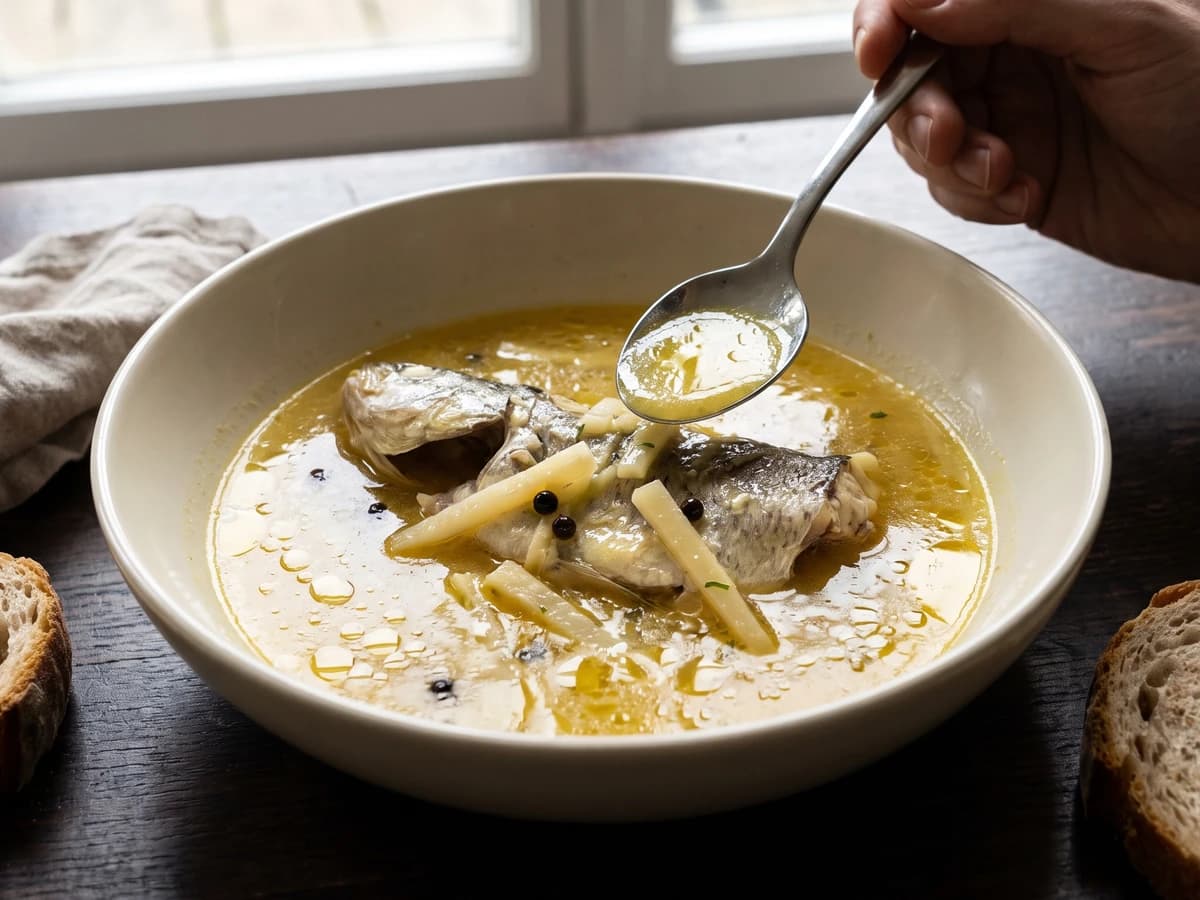
Waterzoi asks fresh, bone-in river fish to thicken its own buttery broth, with parsley root and pepper for company. No flour, no stockpot, just a brisk simmer watched closely.
Chef Juliette
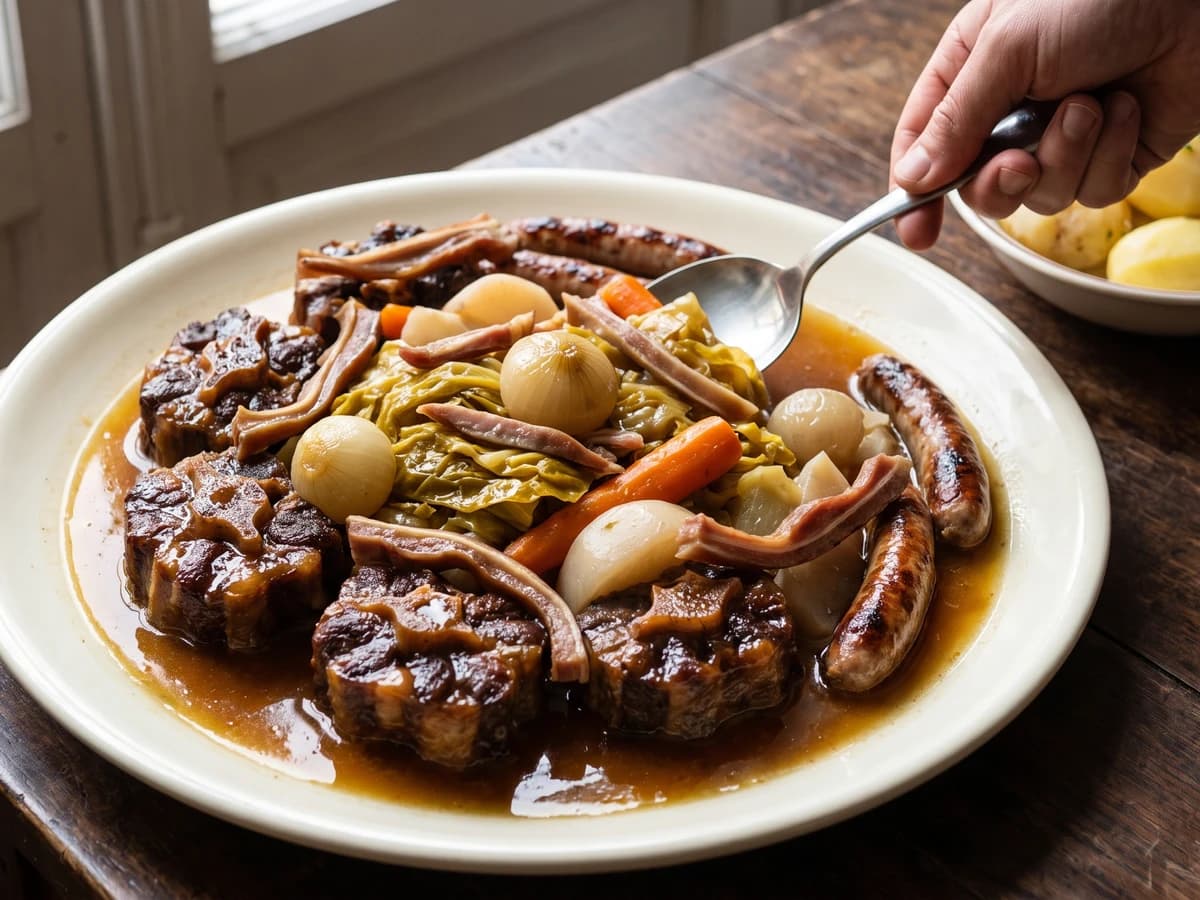
Queue de Bœuf en Hochepot gathers oxtail, pig's trotter and ear, cabbage, roots, and grilled chipolatas around a clear, gelatin-rich broth whose quiet simmer keeps every piece tender and distinct.
Chef Juliette
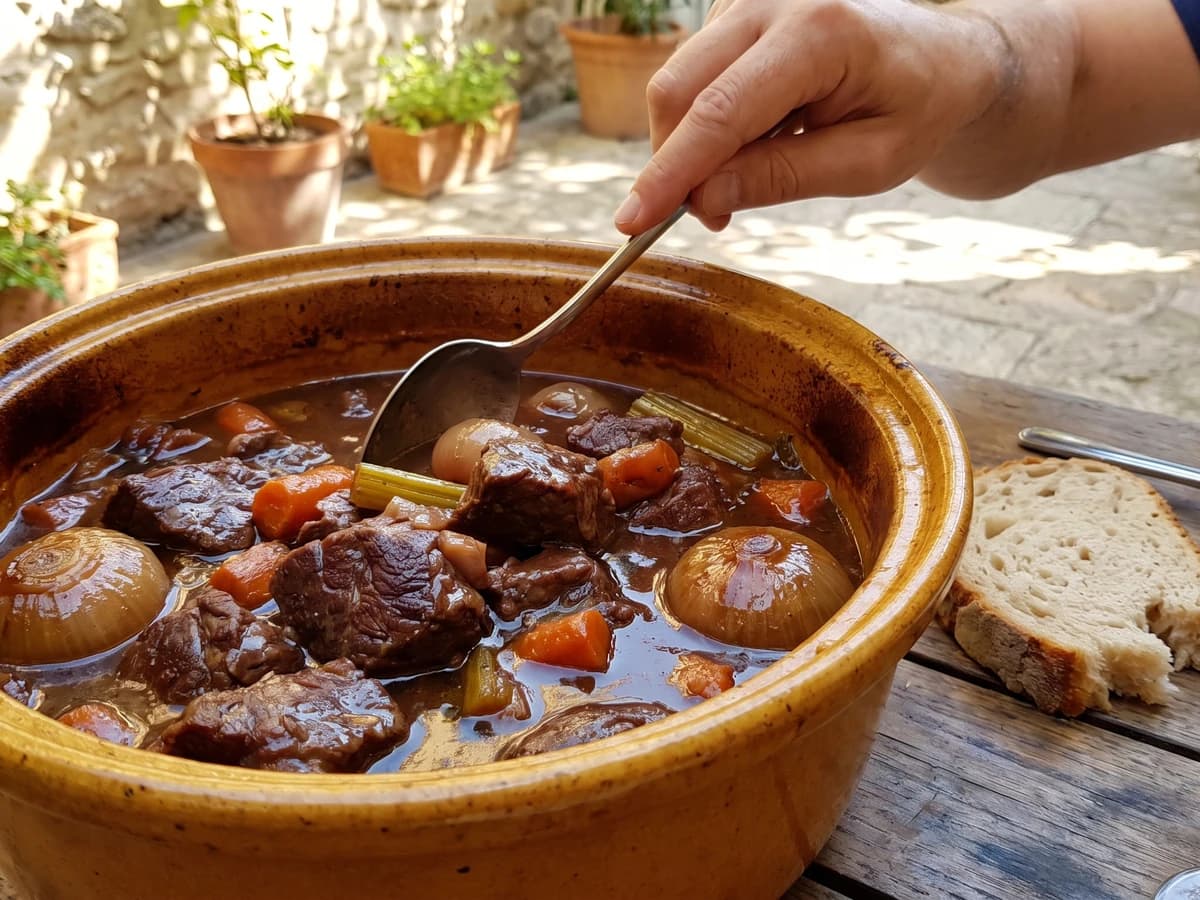
Beef shoulder larded with bacon, sharpened by red wine and vinegar, then sealed with garlic, vegetables, and dry lemon peel until the low oven turns it yielding and the gravy darkly glossy.