Chef Juliette
Ordinary or White Consommé
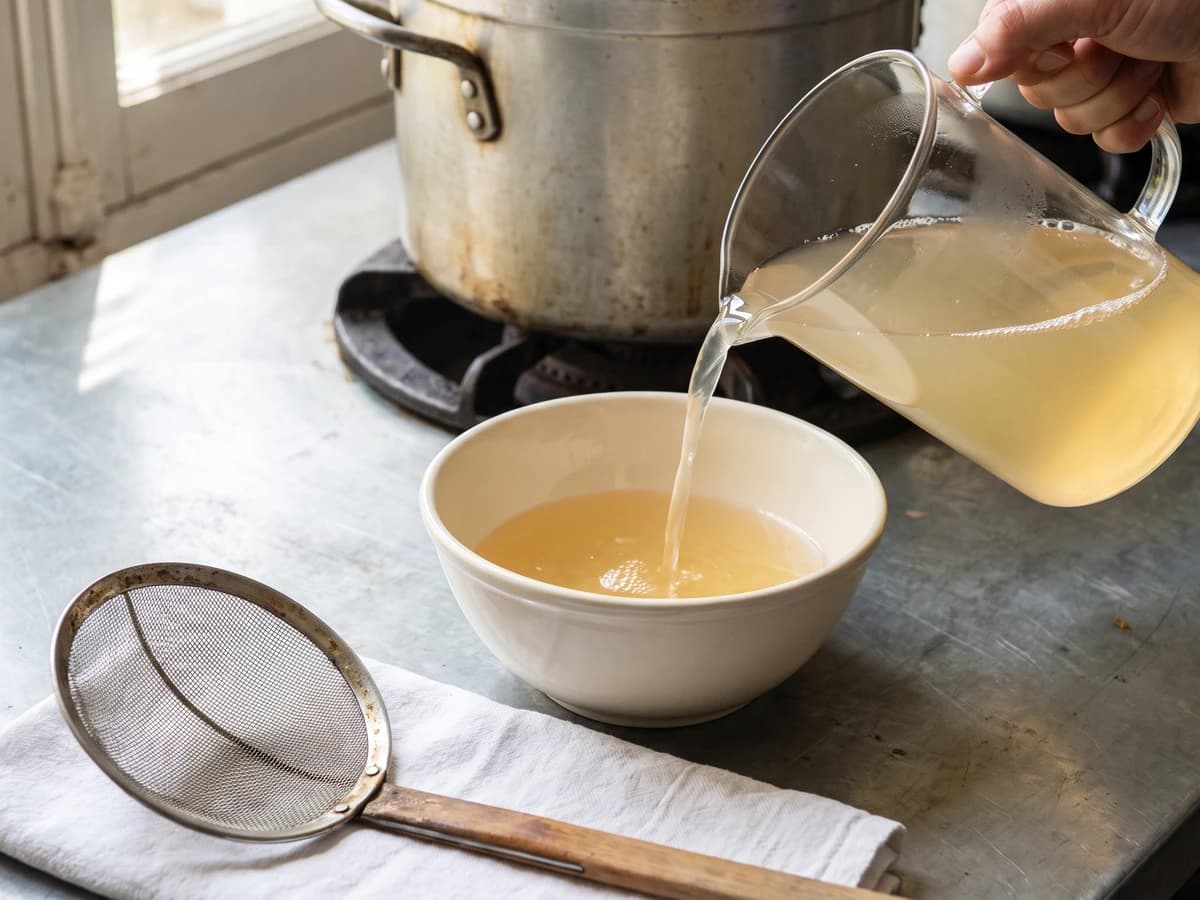
Beef shin, lean beef, and fowl begin in cold water and rise slowly toward a tremble. Skim before the boil, and you learn the quiet discipline that gives every clear French broth its backbone.
A cooking platform built around craft, culture, and the stories behind what we eat.
Created by Chef Juliette
Based on No. 56, Tortue Sauce, from Le Guide Culinaire (1907) by Auguste Escoffier
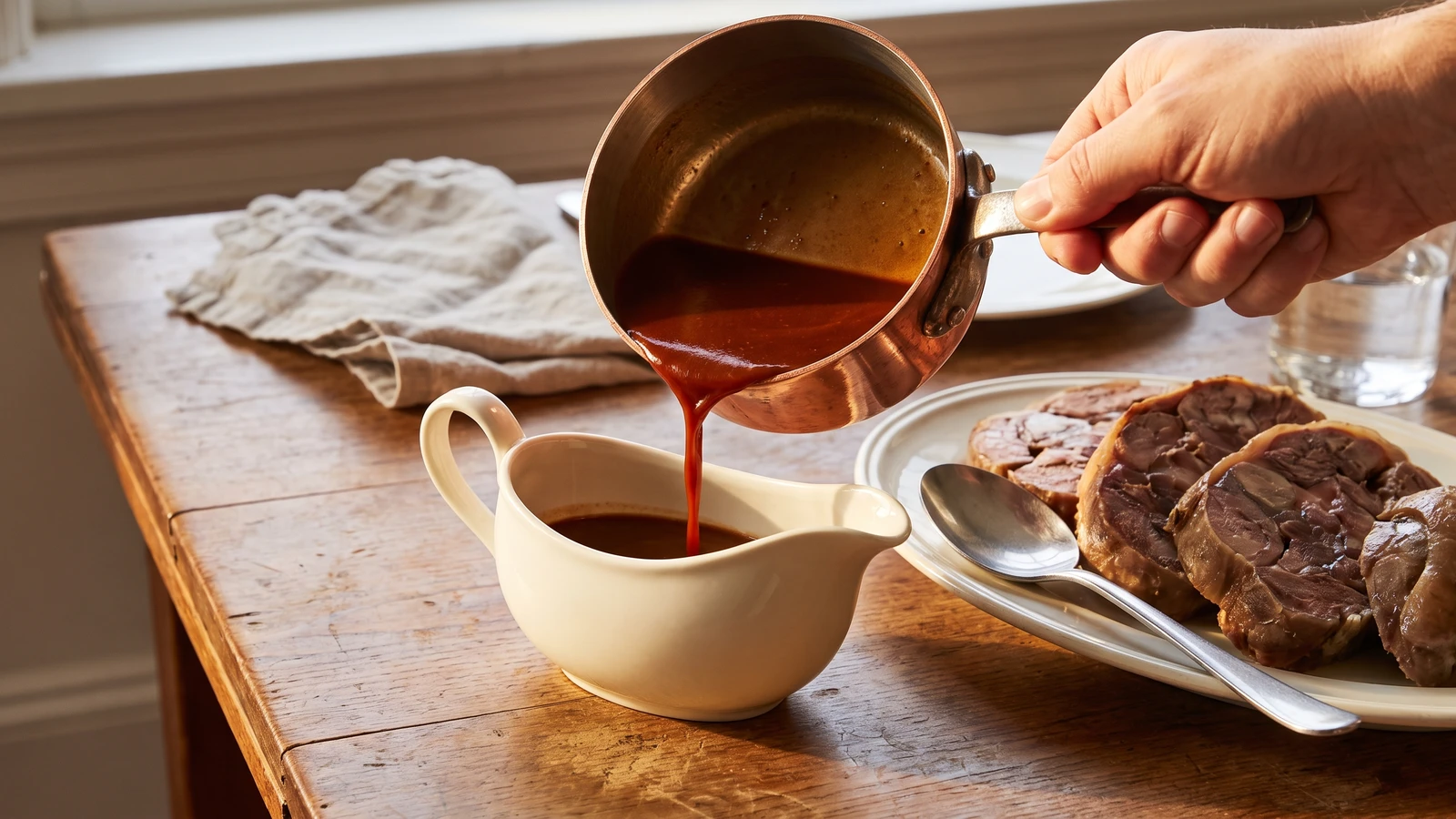
Sauce Tortue proves that spice in a classical sauce means balance, not heat: veal depth, herbal perfume, tomato, sherry, truffle, and cayenne held in one glossy line.
Sauce Tortue (turtle sauce) teaches restraint in a sauce built from strong voices. Sage, marjoram, rosemary, basil, thyme, bay, sherry, truffle, and cayenne can each take command; the one true thing is to extract them in sequence and stop before perfume becomes noise. The finished Sauce Tortue should be mahogany-red, glossy from the demi-glace, fragrant before it is hot, and plainly itself beside tête de veau.
The original entry assumed a saucier at the stove, a stockpot and demi-glace never off the fire, and fine linen waiting for the strain. Your home kitchen has one lidded saucepan, finished bases made ahead or bought well, and a fine sieve lined with damp cheesecloth. A salamander has no work here; this sauce is built by covered infusion and off-heat assembly. The book's equal proportions of stock, demi-glace, and tomato sauce remain intact, sized here as one useful home batch. One cook, one stove, one evening.
The brigade's constant holding and linen are scaffolding, so they go. The covered half-hour infusion, peppercorns added for only the final two minutes, and the off-heat sherry, truffle, and cayenne are the dish, so they stay. Watch the cayenne: you want distinct warmth behind the herbs, never a red shout. That final balance is the step that matters most.
Sauce Tortue belongs to Parisian classical service, chiefly alongside tête de veau en tortue, where calf's head took on the aromatic register associated with turtle soup at grand and bourgeois tables. Despite its name, the sauce contains no turtle: its herbs, sherry, truffle, tomato, and cayenne carry the association, a seasoning pattern that passed from turtle-soup service into the French sauce canon.
Quantity
2⅔ cups (640 ml / 640 g)
Quantity
3 small sprigs
Quantity
3 small sprigs
Quantity
3 very small sprigs
Quantity
3 small sprigs
Quantity
3 small sprigs
Quantity
2 small leaves
Quantity
2 cups (475 ml / 150 g)
roughly sliced if large
Quantity
2½ lightly packed cups (600 ml / 75 g)
stems and leaves left whole
Quantity
11
concassés
Quantity
2⅔ cups (640 ml / about 680 g)
Quantity
2⅔ cups (640 ml / about 650 g)
smooth and unsweetened
Quantity
⅔ cup (160 ml / 160 g)
Quantity
2 teaspoons (10 ml / 10 g)
Quantity
¼ teaspoon (1.25 ml / 0.5 g)
| Ingredient | Quantity |
|---|---|
| unsalted veal stock | 2⅔ cups (640 ml / 640 g) |
| fresh sage | 3 small sprigs |
| fresh sweet marjoram | 3 small sprigs |
| fresh rosemary | 3 very small sprigs |
| fresh basil | 3 small sprigs |
| fresh thyme | 3 small sprigs |
| bay leaves | 2 small leaves |
| clean mushroom paringsroughly sliced if large | 2 cups (475 ml / 150 g) |
| flat-leaf parsley sprigsstems and leaves left whole | 2½ lightly packed cups (600 ml / 75 g) |
| whole black peppercornsconcassés | 11 |
| finished demi-glace (half-glaze) | 2⅔ cups (640 ml / about 680 g) |
| finished French tomato saucesmooth and unsweetened | 2⅔ cups (640 ml / about 650 g) |
| dry sherry | ⅔ cup (160 ml / 160 g) |
| natural truffle essence or strained preserving liquor from black truffles | 2 teaspoons (10 ml / 10 g) |
| cayenne pepper | ¼ teaspoon (1.25 ml / 0.5 g) |
Clean the mushroom parings carefully, keeping every trace of grit out of the sauce, and gather the herbs without chopping them. Lightly crack the peppercorns beneath a heavy pan or in a mortar. Concassés means roughly crushed, not ground; coarse pieces release their perfume quickly without filling the infusion with pepper dust. Hold them aside because they enter only at the end.
Bring the veal stock to a full boil in a lidded saucepan. Add the sage, marjoram, rosemary, basil, thyme, bay, mushroom parings, and parsley, cover immediately, and remove the pan from the heat. Let it infuse for 28 minutes without lifting the lid. Add the concassés peppercorns, cover again, and infuse for exactly 2 minutes more. Pepper added earlier turns blunt and dominant; the short infusion keeps its fragrance bright.
Set a fine-mesh sieve lined with damp cheesecloth over a clean saucepan and pour the infusion through. Let it drain under its own weight, then discard the solids. Do not squeeze them; pressure forces bitter herb particles and mushroom sediment into the liquid. If specks pass through, rinse the cloth and strain once more.
Keep the pan completely away from the heat. Whisk the finished demi-glace into the warm infusion until it loosens and becomes smooth, then whisk in the finished tomato sauce. Stir in the sherry and truffle essence, followed by half the cayenne. This off-heat assembly protects the lifted aromas that distinguish Sauce Tortue from an ordinary brown sauce.
Return the sauce to the lowest heat only long enough to warm it through, stirring frequently and never allowing it to boil. It should flow freely while coating the back of a spoon with a glossy red-brown film. Taste, then add the remaining cayenne a pinch at a time until the sauce is distinctly spicy but still led by herbs, sherry, and veal. If the cayenne gets ahead, ça se rattrape: whisk in equal spoonfuls of veal stock, demi-glace, and tomato sauce until the heat recedes, then restore the finish with a few drops of sherry. Ladle into a warm sauceboat and serve with tête de veau. À table!
1 serving (about 60g)
Culinary guides, cultural storytelling, and the editorial depth that makes cooking meaningful.
Discover Culinary ExplorerChef Juliette
Beef shin, lean beef, and fowl begin in cold water and rise slowly toward a tremble. Skim before the boil, and you learn the quiet discipline that gives every clear French broth its backbone.
Chef Juliette
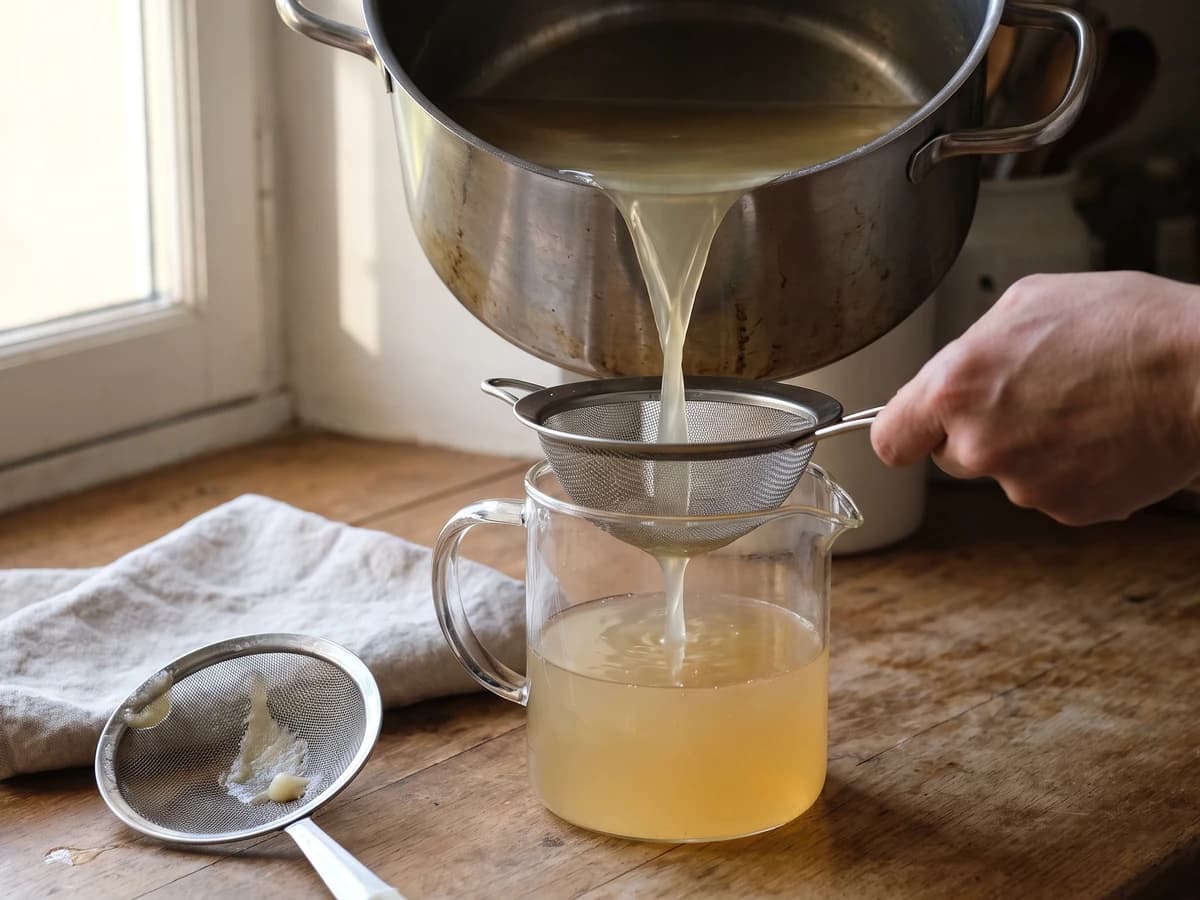
Break the veal bones small, then give them eight hours at a bare tremble. This pale, gelatinous fond becomes the quiet foundation beneath velouté, blanquette, and every sauce that must stay light.
Chef Juliette
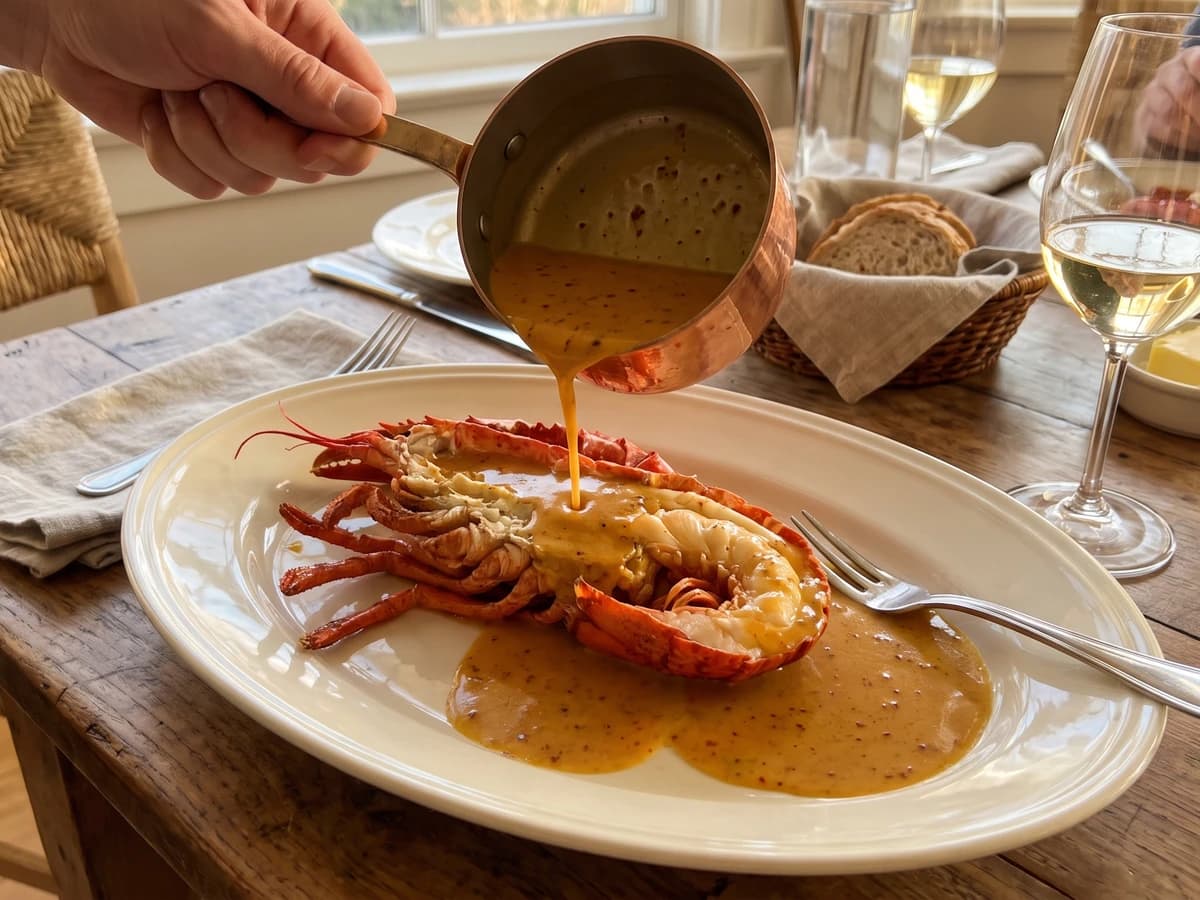
Sauce Orientale concentrates lobster-rich American Sauce with curry, then folds in cream away from the fire: a glossy, gently spiced derivative made for lobster, crayfish, and firm fish.
Chef Juliette
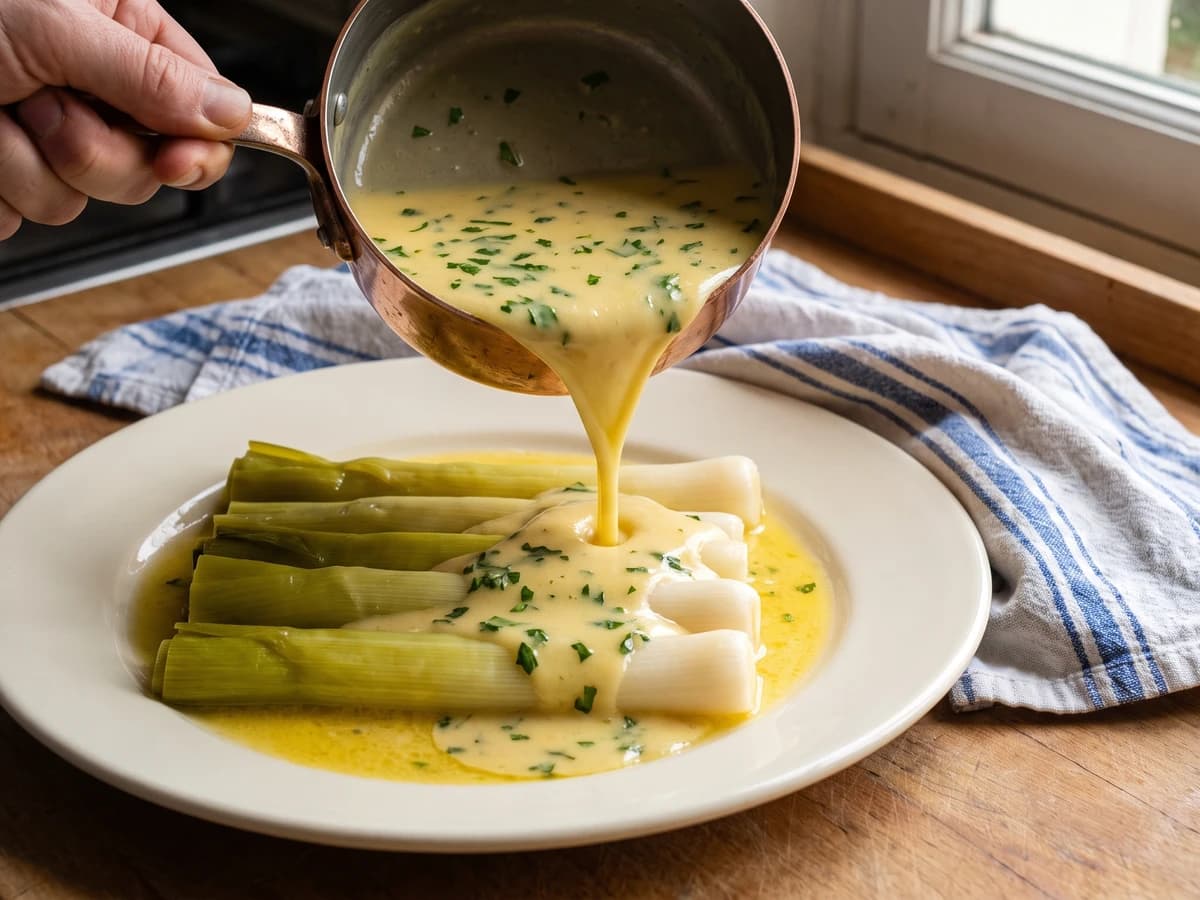
An old lesson in sauce families: Sauce Allemande takes mushroom liquor, then butter, lemon, and parsley, becoming a glossy Poulette for sheep's trotters, leeks, cauliflower, and anything needing gentle richness with a bright edge.