Chef Juliette
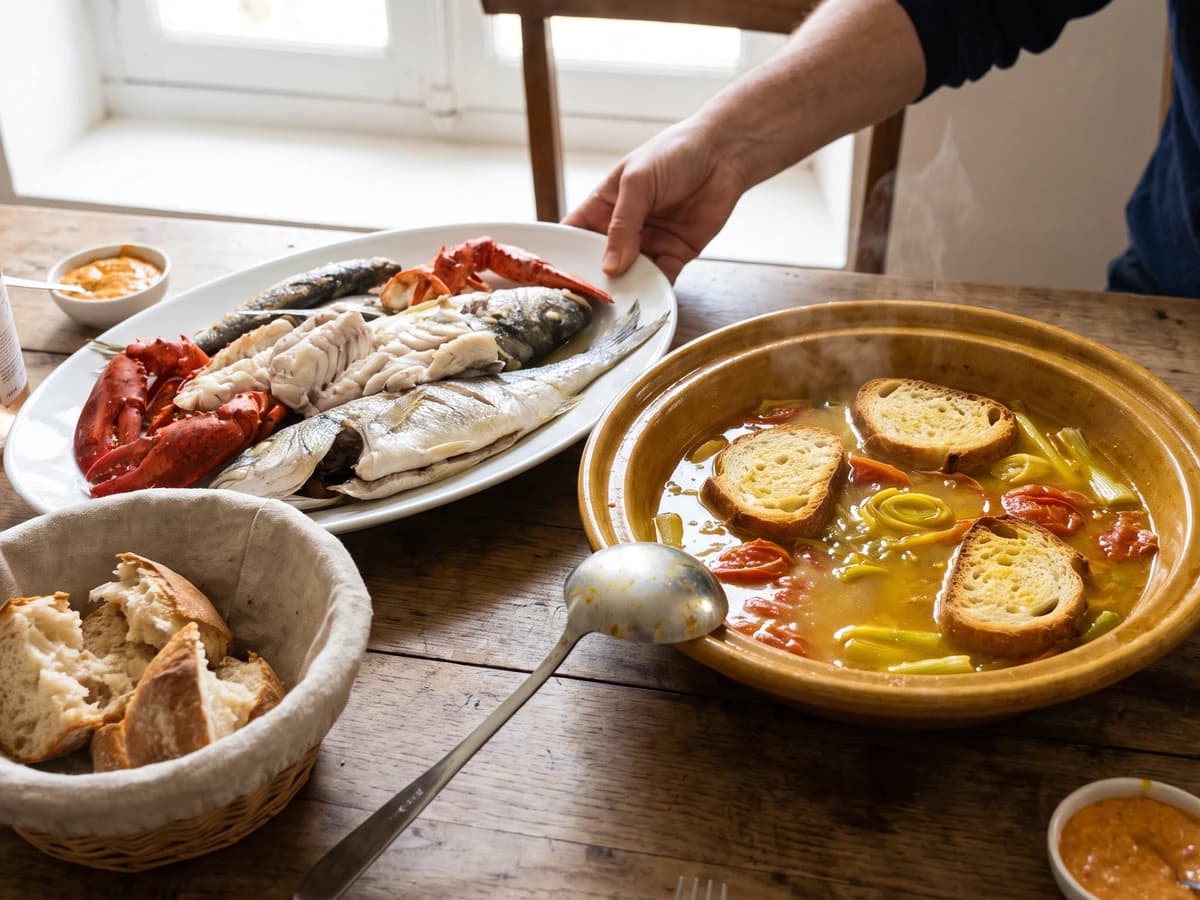
Bouillabaisse à la Marseillaise
Marseille's great fish stew, saffron-gold and garlic-scented, proves that a hard boil can be the careful choice: it binds olive oil into broth before the whole pot meets bread.
A cooking platform built around craft, culture, and the stories behind what we eat.

Created by Chef Juliette
Based on No. 558, Consommé Demidoff, from Le Guide Culinaire (1907) by Auguste Escoffier
Consommé Demidoff turns clarity into ceremony: brilliant chicken broth carrying carrot, turnip, and black-truffle pearls, tender peas, tiny herb-flecked chicken quenelles, and chervil, each element cooked gently enough to remain distinct.
Consommé Demidoff (clear chicken consommé with vegetable, truffle, and chicken-forcemeat garnish) teaches separation. The one true thing to know before touching a pan is this: a consommé stays brilliant only when every garnish is cooked, drained, and ready before it meets the broth. Cook the garnish in the serving consommé and its clarity, the whole pride of the dish, slips away.
The original assumed a saucier on staff, chicken consommé never off the fire, a commis working the small spoon-cutter, and herb forcemeat already cold. A salamander has no business here. At home, prepared consommé, a chilled food processor, and the smallest melon baller do the same honest work. For eight first courses, the source's one-quart service unit becomes two quarts, with its exact tablespoon-per-quart ratio intact: two tablespoons each of carrot, turnip, truffle, and peas. One cook, one stove, one evening.
Several pans and several hands are brigade scaffolding, so one saucepan is reused for each garnish. The separate gentle cooking, tiny quenelles, boiling broth poured only at the last instant, and chervil pluches are the dish and must stay. The step that decides it is the last one: drain every garnish perfectly, then pour the boiling consommé over it only when the table is waiting.
Consommé Demidoff belongs to the Parisian grand-kitchen repertoire, where named garnitures distinguished one crystal-clear broth from another and often honored cosmopolitan patrons. Its title points to the Demidov family, rendered Demidoff in French, whose Russian name traveled through Parisian society, but this is not a Russian soup: the clarified chicken broth, spoon-cut vegetables, truffle, peas, quenelles, and chervil all speak the French classical grammar. From formal dining rooms it moved naturally to bourgeois dinner tables, since every garnish could be prepared ahead and the tureen assembled at the last instant.
Quantity
8 cups (1.9 L / about 1.9 kg)
Quantity
1 large (8 oz / 225 g)
cubed and thoroughly chilled
Quantity
1 (2 tablespoons / 30 ml / 30 g)
chilled
Quantity
½ cup (120 ml / 120 g)
thoroughly chilled
Quantity
2 teaspoons (10 ml / 2 g)
finely chopped for the quenelles
Quantity
1 teaspoon (5 ml / 1 g)
finely chopped
Quantity
2 teaspoons (10 ml / 12 g)
divided
Quantity
⅛ teaspoon (0.6 ml / 0.3 g)
Quantity
1 large (about 5 oz / 140 g), yielding 2 tablespoons (30 ml / 25 g) pearls
peeled; scraps reserved
Quantity
1 medium (about 7 oz / 200 g), yielding 2 tablespoons (30 ml / 25 g) pearls
peeled; scraps reserved
Quantity
About 1¼ ounces (35 g), yielding 2 tablespoons (30 ml / 25 g) pearls
fresh, or preserved and drained; trimmings reserved
Quantity
2 tablespoons (30 ml / 20 g)
fresh or frozen
Quantity
2 generous pinches (about 1 tablespoon / 15 ml / 2 g)
| Ingredient | Quantity |
|---|---|
| prepared chicken consommé | 8 cups (1.9 L / about 1.9 kg) |
| boneless, skinless chicken breast halfcubed and thoroughly chilled | 1 large (8 oz / 225 g) |
| large egg whitechilled | 1 (2 tablespoons / 30 ml / 30 g) |
| heavy creamthoroughly chilled | ½ cup (120 ml / 120 g) |
| chervil leavesfinely chopped for the quenelles | 2 teaspoons (10 ml / 2 g) |
| flat-leaf parsleyfinely chopped | 1 teaspoon (5 ml / 1 g) |
| fine sea saltdivided | 2 teaspoons (10 ml / 12 g) |
| finely ground white pepper | ⅛ teaspoon (0.6 ml / 0.3 g) |
| large carrotpeeled; scraps reserved | 1 large (about 5 oz / 140 g), yielding 2 tablespoons (30 ml / 25 g) pearls |
| white turnippeeled; scraps reserved | 1 medium (about 7 oz / 200 g), yielding 2 tablespoons (30 ml / 25 g) pearls |
| whole black trufflefresh, or preserved and drained; trimmings reserved | About 1¼ ounces (35 g), yielding 2 tablespoons (30 ml / 25 g) pearls |
| shelled peasfresh or frozen | 2 tablespoons (30 ml / 20 g) |
| chervil pluches, the tender leaf shreds | 2 generous pinches (about 1 tablespoon / 15 ml / 2 g) |
Chill the food-processor bowl and blade for 10 minutes. Process the cold chicken with ½ teaspoon of the salt until it becomes a very fine, sticky paste, scraping down the bowl as needed. Add the egg white and white pepper, then process until completely incorporated. With the motor running, pour in the cream in a thin thread, holding back 1 tablespoon. The forcemeat should stay cold, smooth, and glossy. If it turns grainy or beads of cream appear at the edge, stop. Ça se rattrape: set the bowl over ice for 10 minutes, then pulse in the reserved cold cream a teaspoon at a time until the emulsion comes together. Pulse in the chopped chervil and parsley, cover, and chill for 20 minutes.
Bring 6 cups of water seasoned with ¾ teaspoon salt to 175 to 180°F (80 to 82°C), a surface that barely trembles. Dip two teaspoons in the water and use them to shape one tester quenelle of about 2 teaspoons (10 ml). Poach it for 4 to 5 minutes, turning once, until firm but springy and 165°F (74°C) at the center. Taste it and adjust the forcemeat seasoning if needed. Shape and poach the remaining mixture in batches of eight, making about 32 to 36 small quenelles. If the water begins to boil, lift the pan from the heat and add a splash of cold water before continuing; hard boiling roughens the surface and tightens the chicken. Lift each batch out with a slotted spoon and drain on a clean tray.
Use a 6 mm Parisienne scoop, the small modern melon baller that replaces the book's spoon-cutter, to cut 2 tablespoons each of carrot and turnip pearls. Work from the thickest part of each vegetable and reserve every scrap for stock. Cut 2 tablespoons of pearls from the black truffle where its shape permits. An irregular home-sized truffle will not surrender perfect spheres without absurd waste, so round the remaining 6 mm pieces neatly and reserve the trimmings; this preserves the source's quantity, scale, and dark truffle bite.
Prepare a bowl of ice water. Bring a saucepan of fresh water seasoned with ¾ teaspoon salt to a gentle simmer. Cook the turnip pearls first for 2 to 3 minutes, just until a knife enters with faint resistance, then transfer them to the ice water. Use the same pan for the carrot pearls, giving them 3 to 4 minutes, and finish with the peas, 1 to 2 minutes for fresh peas or about 45 seconds for frozen. Chill each garnish promptly, then drain them separately and blot them dry. If a pearl's edge begins to feather, cool it immediately and replace only the collapsed pieces from the reserved scraps. Several brigade pans are unnecessary; separate timing is what matters.
Pass the prepared chicken consommé through a damp, fine cloth into a clean saucepan if it carries any sediment. Taste it cold enough to judge the salt, then heat it without disturbing the bottom of the pan. When every garnish is ready and the table is set, bring the consommé to one clean boil. If fine particles or fat flecks rise, remove the pan from the heat, let it settle for 2 minutes, skim carefully, and strain again without pressing the cloth. Never simmer the garnish in this broth; clarity is the dish.
Warm a 3-quart soup tureen with hot water, then empty and dry it. If the quenelles were prepared ahead, lower them into barely simmering salted water for 1 minute and drain them thoroughly. Put the carrot pearls, turnip pearls, black-truffle pearls, peas, and quenelles into the warm tureen. Pour the boiling chicken consommé over the garnish, then scatter in the chervil pluches. Ladle it immediately, making certain every bowl receives a little of each garnish. À table!
1 serving (about 295g)
Culinary guides, cultural storytelling, and the editorial depth that makes cooking meaningful.
Discover Culinary ExplorerChef Juliette
Marseille's great fish stew, saffron-gold and garlic-scented, proves that a hard boil can be the careful choice: it binds olive oil into broth before the whole pot meets bread.
Chef Juliette
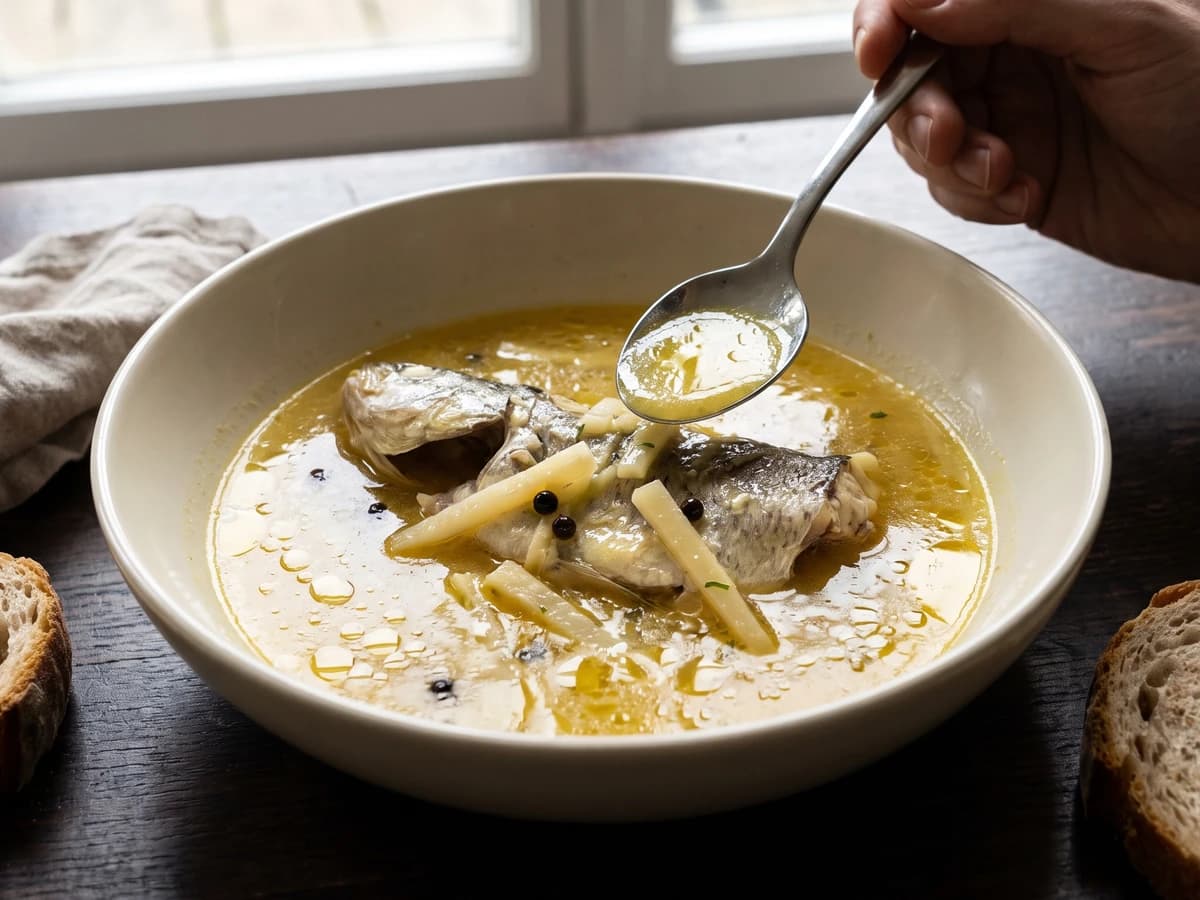
Waterzoi asks fresh, bone-in river fish to thicken its own buttery broth, with parsley root and pepper for company. No flour, no stockpot, just a brisk simmer watched closely.
Chef Juliette
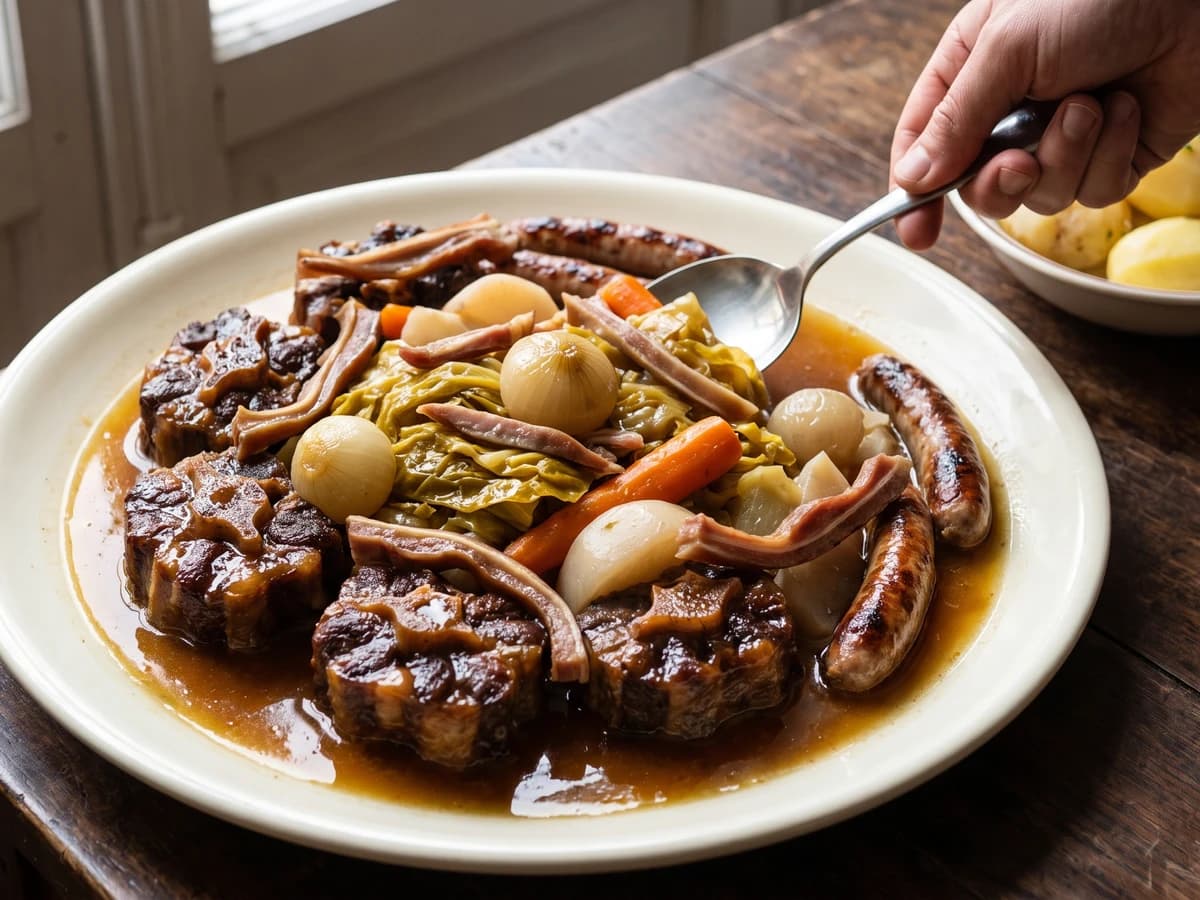
Queue de Bœuf en Hochepot gathers oxtail, pig's trotter and ear, cabbage, roots, and grilled chipolatas around a clear, gelatin-rich broth whose quiet simmer keeps every piece tender and distinct.
Chef Juliette
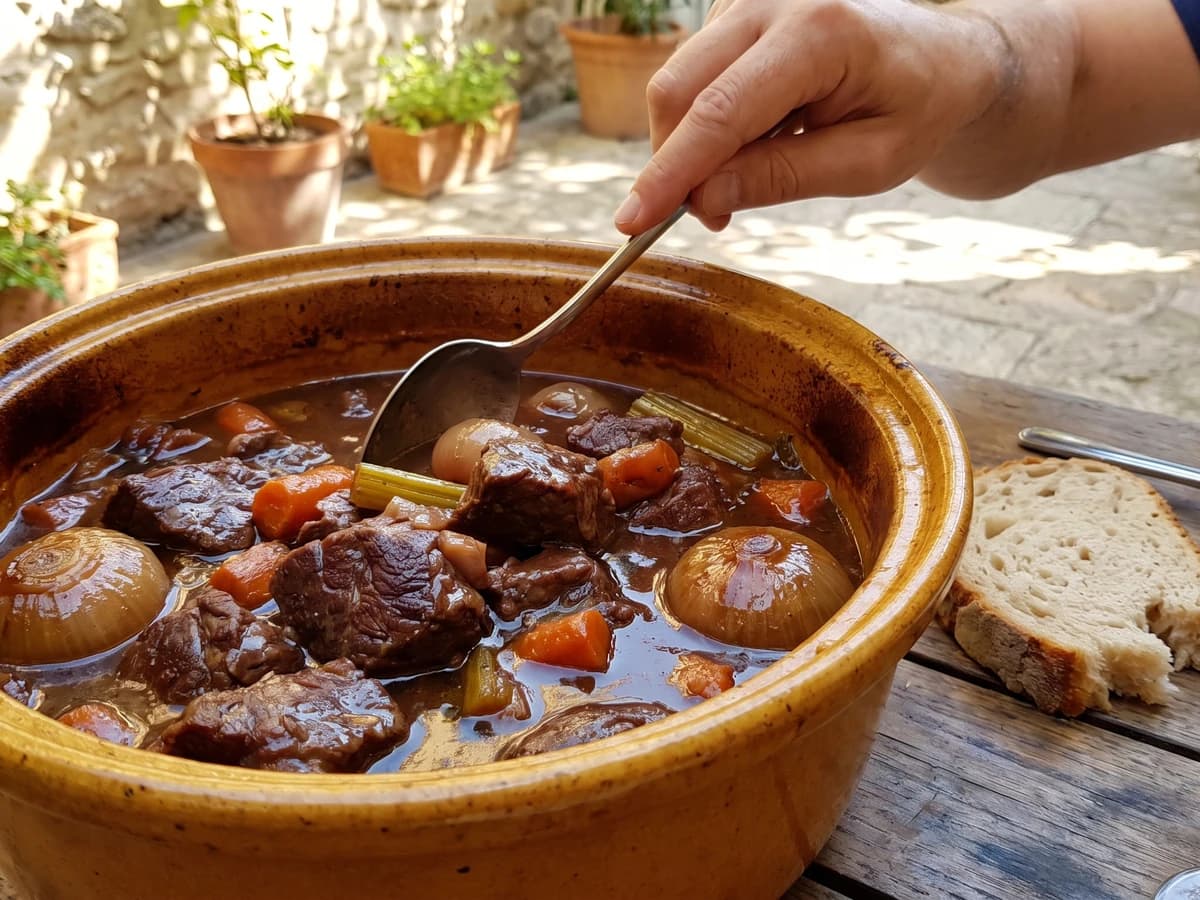
Beef shoulder larded with bacon, sharpened by red wine and vinegar, then sealed with garlic, vegetables, and dry lemon peel until the low oven turns it yielding and the gravy darkly glossy.