Chef Juliette
Bouillabaisse à la Marseillaise
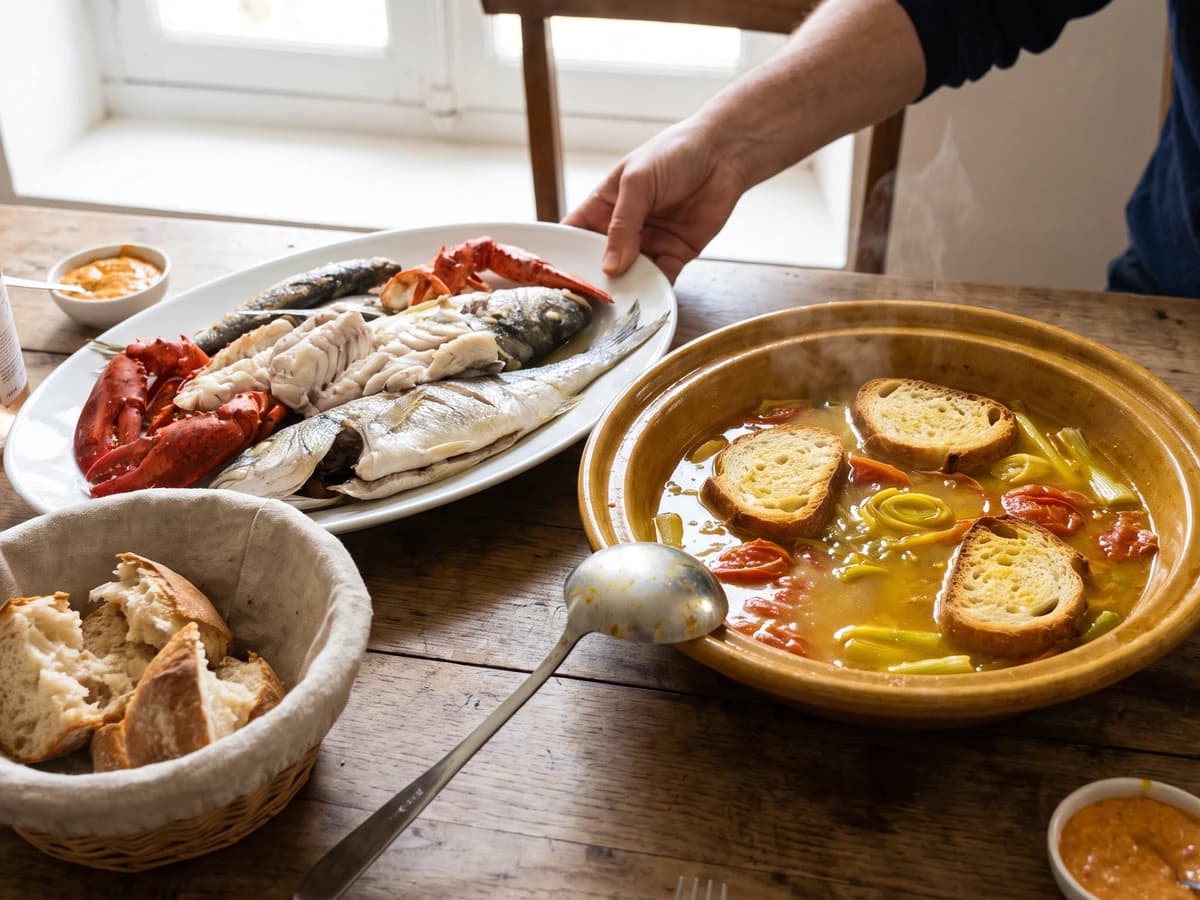
Marseille's great fish stew, saffron-gold and garlic-scented, proves that a hard boil can be the careful choice: it binds olive oil into broth before the whole pot meets bread.
A cooking platform built around craft, culture, and the stories behind what we eat.
Created by Chef Juliette
Based on No. 557, Consommé Cyrano, from Le Guide Culinaire (1907) by Auguste Escoffier
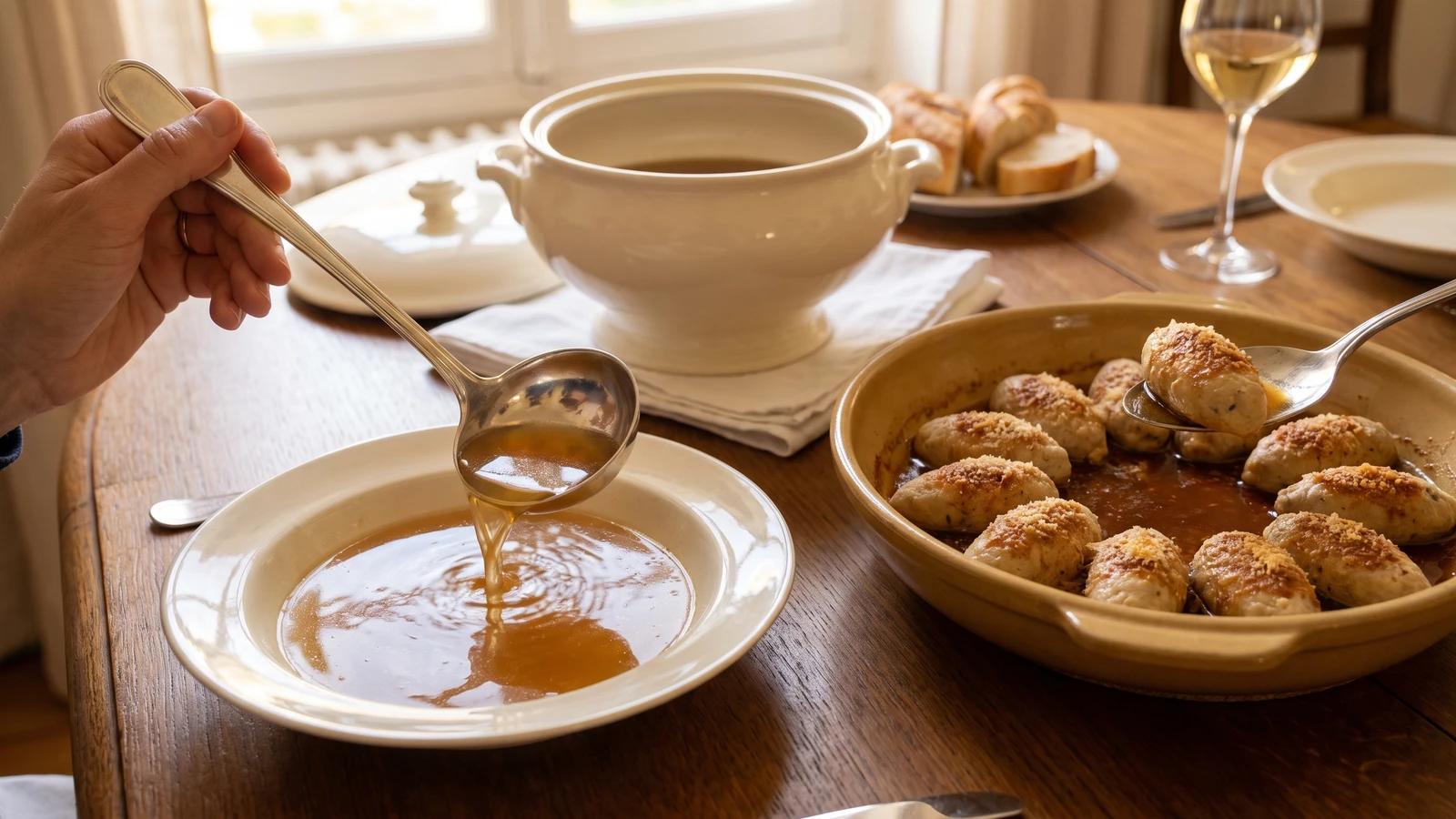
Consommé Cyrano teaches the discipline of clarity: duck-deepened broth poured bright and limpid, with twelve tender quenelles bronzed under Parmesan and chicken glaze, properly served apart in their little earthen pan.
Consommé Cyrano (clear duck-fumet broth with glazed duck quenelles) teaches the discipline of separation. The consommé must remain limpid, while the tender quenelles need enough fierce oven heat to bronze their Parmesan and set the chicken glaze. Serve them apart and each keeps its character.
The original kitchen assumed a saucier on staff, clear stock never off the fire, chicken glaze already reduced, duck forcemeat ready, and a salamander waiting to color the garnish. At home, good unsalted chicken stock supplies the foundation, a small saucepan draws the fumet, the concentrated essence, from duck bones, a food processor replaces mortar and tamis, and the broiler does the salamander's work. The entry's one quart and twelve quenelles already make four graceful starter servings, so that ratio stays. Separate stockpots were brigade scaffolding; clear broth, cold forcemeat, and service in two vessels are the dish itself.
When it is right, the broth is amber-gold and transparent enough to catch the bowl beneath it. The quenelles are pale and delicate within, their flat tops freckled gold with Parmesan and shining with mahogany glaze. Before you touch a pan, know the step that decides everything: once the clarification raft rises, stop stirring and never let the consommé boil.
Consommé Cyrano belongs to the named-garnish tradition of Parisian classical soup service, where a title signaled an exact broth and accompaniment rather than a regional household pot. Cyrano gives the dish a literary name, but the method is not a Gascon soup tradition: duck fumet perfumes a clarified consommé, while flat duck quenelles receive Parmesan and chicken glaze. Sending those quenelles apart in their little earthen pan is functional, not theatrical, because it preserves both the broth's clarity and the gratin's browned surface.
Quantity
1 pound (454 g)
chopped into 2-inch (5 cm) pieces
Quantity
1 tablespoon (15 ml / 14 g)
Quantity
1 (about 1 cup / 240 ml / 140 g)
coarsely chopped
Quantity
1 (about 2/3 cup / 160 ml / 85 g)
coarsely chopped
Quantity
1 (about 1/2 cup / 120 ml / 50 g)
coarsely chopped
Quantity
4 cups (960 ml / 960 g)
Quantity
2
Quantity
1
Quantity
6 cups (1.44 liters / 1.44 kg)
cold; reserve 3/4 cup for the chicken glaze and use 5 1/4 cups for clarification
Quantity
8 ounces (225 g)
very cold
Quantity
1 (about 3/4 cup / 180 ml / 100 g)
finely chopped
Quantity
1 (about 1/2 cup / 120 ml / 65 g)
finely chopped
Quantity
1 (about 1/2 cup / 120 ml / 50 g)
finely chopped
Quantity
3 (about 6 tablespoons / 90 ml / 90 g)
Quantity
2 (about 1/4 cup / 60 ml / 60 g)
for reclarifying if necessary
Quantity
1 teaspoon (5 ml / 6 g), plus more to taste
Quantity
8 ounces (225 g)
sinew removed and diced
Quantity
1 (about 2 tablespoons / 30 ml / 30 g)
Quantity
1/2 cup (120 ml / 120 g)
very cold and divided
Quantity
3/4 teaspoon (3.75 ml / 4.5 g)
Quantity
1/8 teaspoon (0.6 ml / 0.3 g)
Quantity
1 pinch
Quantity
6 cups (1.44 liters / 1.44 kg)
Quantity
2 teaspoons (10 ml / 12 g)
Quantity
2 tablespoons (30 ml / 12 g)
| Ingredient | Quantity |
|---|---|
| duck necks and/or wingschopped into 2-inch (5 cm) pieces | 1 pound (454 g) |
| unsalted butter | 1 tablespoon (15 ml / 14 g) |
| medium yellow onioncoarsely chopped | 1 (about 1 cup / 240 ml / 140 g) |
| medium carrotcoarsely chopped | 1 (about 2/3 cup / 160 ml / 85 g) |
| celery stalkcoarsely chopped | 1 (about 1/2 cup / 120 ml / 50 g) |
| cold water | 4 cups (960 ml / 960 g) |
| thyme sprigs | 2 |
| bay leaf | 1 |
| unsalted chicken stockcold; reserve 3/4 cup for the chicken glaze and use 5 1/4 cups for clarification | 6 cups (1.44 liters / 1.44 kg) |
| lean ground chicken breastvery cold | 8 ounces (225 g) |
| small yellow onionfinely chopped | 1 (about 3/4 cup / 180 ml / 100 g) |
| small carrotfinely chopped | 1 (about 1/2 cup / 120 ml / 65 g) |
| celery stalkfinely chopped | 1 (about 1/2 cup / 120 ml / 50 g) |
| large egg whites | 3 (about 6 tablespoons / 90 ml / 90 g) |
| additional large egg whites (optional)for reclarifying if necessary | 2 (about 1/4 cup / 60 ml / 60 g) |
| fine sea salt | 1 teaspoon (5 ml / 6 g), plus more to taste |
| skinless, boneless duck breastsinew removed and diced | 8 ounces (225 g) |
| large egg white | 1 (about 2 tablespoons / 30 ml / 30 g) |
| heavy creamvery cold and divided | 1/2 cup (120 ml / 120 g) |
| fine sea salt for the forcemeat | 3/4 teaspoon (3.75 ml / 4.5 g) |
| ground white pepper | 1/8 teaspoon (0.6 ml / 0.3 g) |
| freshly grated nutmeg | 1 pinch |
| water for poaching | 6 cups (1.44 liters / 1.44 kg) |
| fine sea salt for poaching | 2 teaspoons (10 ml / 12 g) |
| finely grated Parmesan | 2 tablespoons (30 ml / 12 g) |
Melt the butter in a heavy saucepan over medium heat. Add the duck pieces and brown them patiently on every side until the bones and clinging meat are deep bronze, adjusting the heat if the butter threatens to scorch. Add the coarsely chopped onion, carrot, and celery, then cook for 5 minutes until glossy and lightly colored. Pour in the cold water, scraping every bit of fond from the pan, and add the thyme and bay. Bring only to a bare simmer, skim the surface, and cook uncovered for 45 minutes. Strain without pressing, discard the solids, and reduce the fumet to 2 cups (480 ml / 480 g).
While the fumet simmers, put the reserved 3/4 cup (180 ml / 180 g) chicken stock in the smallest saucepan you own. Reduce it gently until only 1 tablespoon (15 ml / about 20 g) remains and it coats a spoon with a mahogany gloss. Watch closely once it turns syrupy, because the final spoonful moves quickly. If it sets too firmly as it waits, loosen it with a few drops of water; the chicken glaze should brush, not bounce.
Cool the duck fumet completely, using a bowl set over ice water if needed. In a clean heavy pot, combine the ground chicken, finely chopped onion, carrot, celery, and 3 egg whites. Stir in 2 cups (480 ml / 480 g) cold duck fumet and the remaining 5 1/4 cups (1.26 liters / 1.26 kg) cold chicken stock until the mixture is evenly dispersed. Everything must begin cold, because the proteins need time to gather the fine particles before they set.
Set the pot over medium-low heat and stir slowly across the bottom until the mixture approaches a simmer and the solids begin rising into a raft. Stop stirring as soon as that raft forms. Open a small chimney in its center with a spoon, then hold the consommé between 180°F and 190°F (82°C and 88°C) for 40 minutes, ladling a little broth through the chimney now and then. Never boil it. Ladle the clear liquid through a damp cheesecloth-lined sieve without breaking or pressing the raft. If a boil clouds the broth, cool it, skim away the fat, whisk the 2 optional egg whites with 1 tablespoon (15 ml / 15 g) cold water, stir them into the cold broth, and repeat the gentle heating and straining. Ça se rattrape.
Return the strained consommé to a spotless saucepan. Lift any remaining beads of fat from the surface with the edge of a clean paper towel, then simmer gently until exactly 4 cups (960 ml / 960 g) remain. Season with up to 1 teaspoon salt, tasting after each addition. The finished consommé should be full-flavored, amber-gold, and perfectly limpid. Keep it covered below a simmer while you finish the quenelles.
Chill the food processor bowl and blade. Process the diced duck breast with the 3/4 teaspoon salt, white pepper, and nutmeg until very fine, scraping down the bowl as needed. Add the egg white and process until the paste turns sticky and cohesive. With the motor running, drizzle in all but 1 tablespoon of the cold cream, stopping as soon as the forcemeat becomes smooth and glossy. Press it through a fine sieve into a bowl set over ice, cover, and chill for 20 minutes. If the mixture starts looking oily or separated, stop processing and chill it thoroughly before pulsing again. Warm forcemeat breaks; cold brings the emulsion back together.
Bring the poaching water and its 2 teaspoons salt to a quiet 180°F to 185°F (82°C to 85°C). Poach a teaspoon of forcemeat first. It should hold cleanly and remain tender; if it feathers at the edges, chill the mixture another 15 minutes, and if it feels firm, beat in the reserved tablespoon of cream. Using two wet dessert spoons, form 12 small flat ovals about 2 1/2 inches long, 1 1/4 inches wide, and 1/2 inch thick (6 cm by 3 cm by 1.25 cm). Lower them into the water in two batches and poach without boiling, turning once, until they feel lightly springy and reach 165°F (74°C) at the center, about 7 to 9 minutes. Drain them carefully on a clean towel.
Heat the broiler with a rack about 6 inches (15 cm) from the element. Arrange the drained quenelles in one layer in a small, shallow, broiler-safe earthen pan or ceramic gratin dish. Sprinkle them evenly with the Parmesan, then dot their tops with a few drops of chicken glaze, about 1 teaspoon (5 ml / 7 g) altogether. Broil for 2 to 4 minutes, rotating the pan if necessary, until the Parmesan has bronzed in small patches and the glaze shines at the edges. This brief glazing is the salamander's honest home equivalent; stay beside it.
Warm a soup tureen and four bowls with hot water, then dry them. Pour the consommé into the tureen and bring it to the table beside the earthen pan of glazed quenelles. Ladle 1 cup of consommé into each bowl and pass the pan so each diner takes three quenelles alongside. Do not tip the gratin into the tureen: the separation protects both the clear broth and the browned Parmesan surface. One broth, one little pan, and no unnecessary theater. À table!
1 serving (about 330g)
Culinary guides, cultural storytelling, and the editorial depth that makes cooking meaningful.
Discover Culinary ExplorerChef Juliette
Marseille's great fish stew, saffron-gold and garlic-scented, proves that a hard boil can be the careful choice: it binds olive oil into broth before the whole pot meets bread.
Chef Juliette
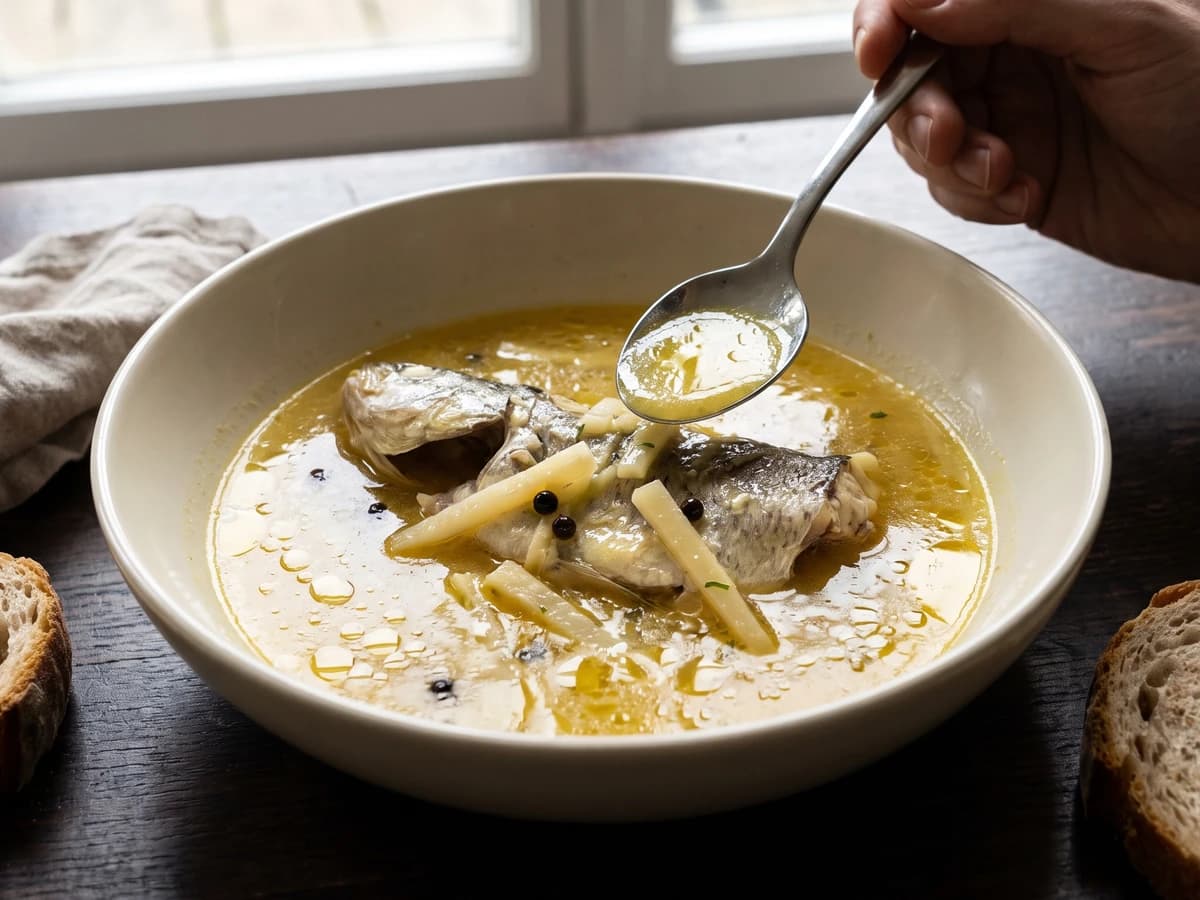
Waterzoi asks fresh, bone-in river fish to thicken its own buttery broth, with parsley root and pepper for company. No flour, no stockpot, just a brisk simmer watched closely.
Chef Juliette
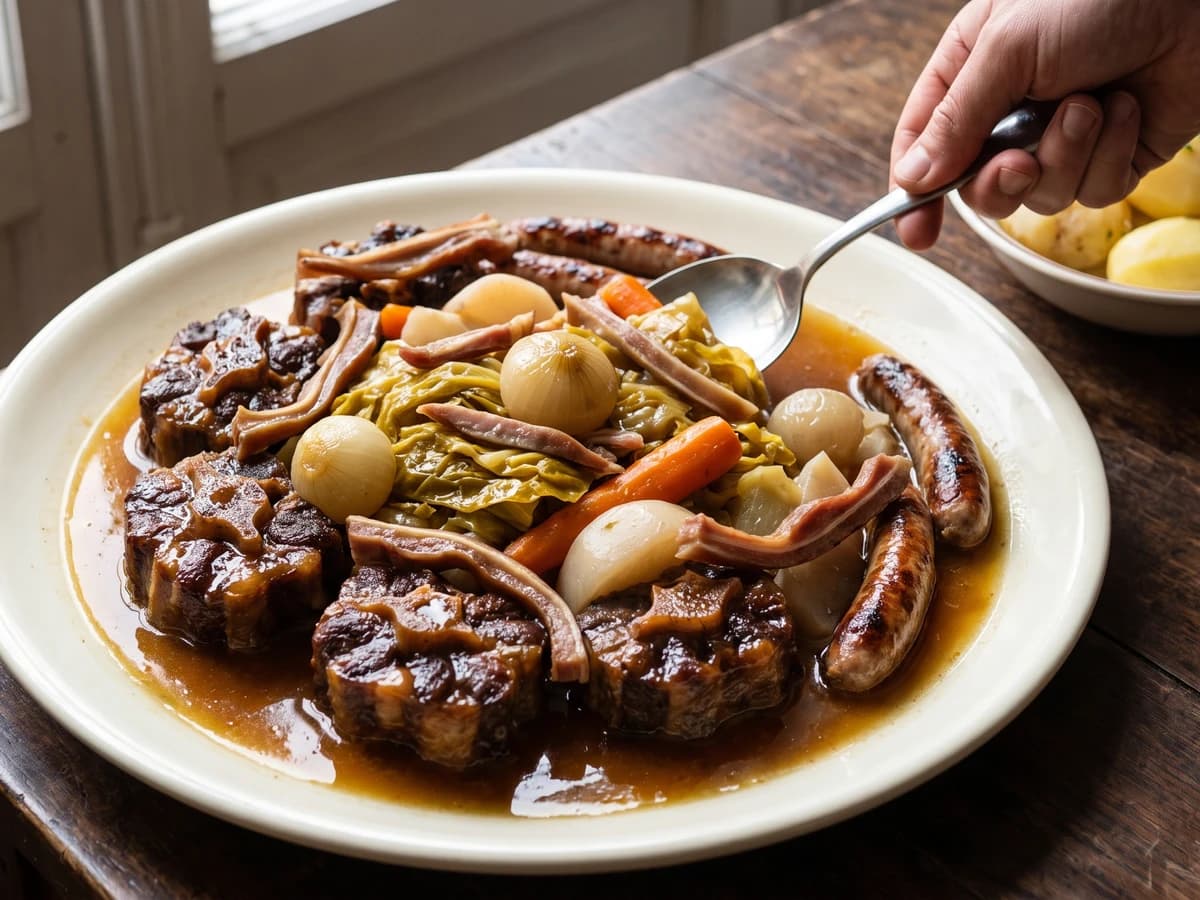
Queue de Bœuf en Hochepot gathers oxtail, pig's trotter and ear, cabbage, roots, and grilled chipolatas around a clear, gelatin-rich broth whose quiet simmer keeps every piece tender and distinct.
Chef Juliette
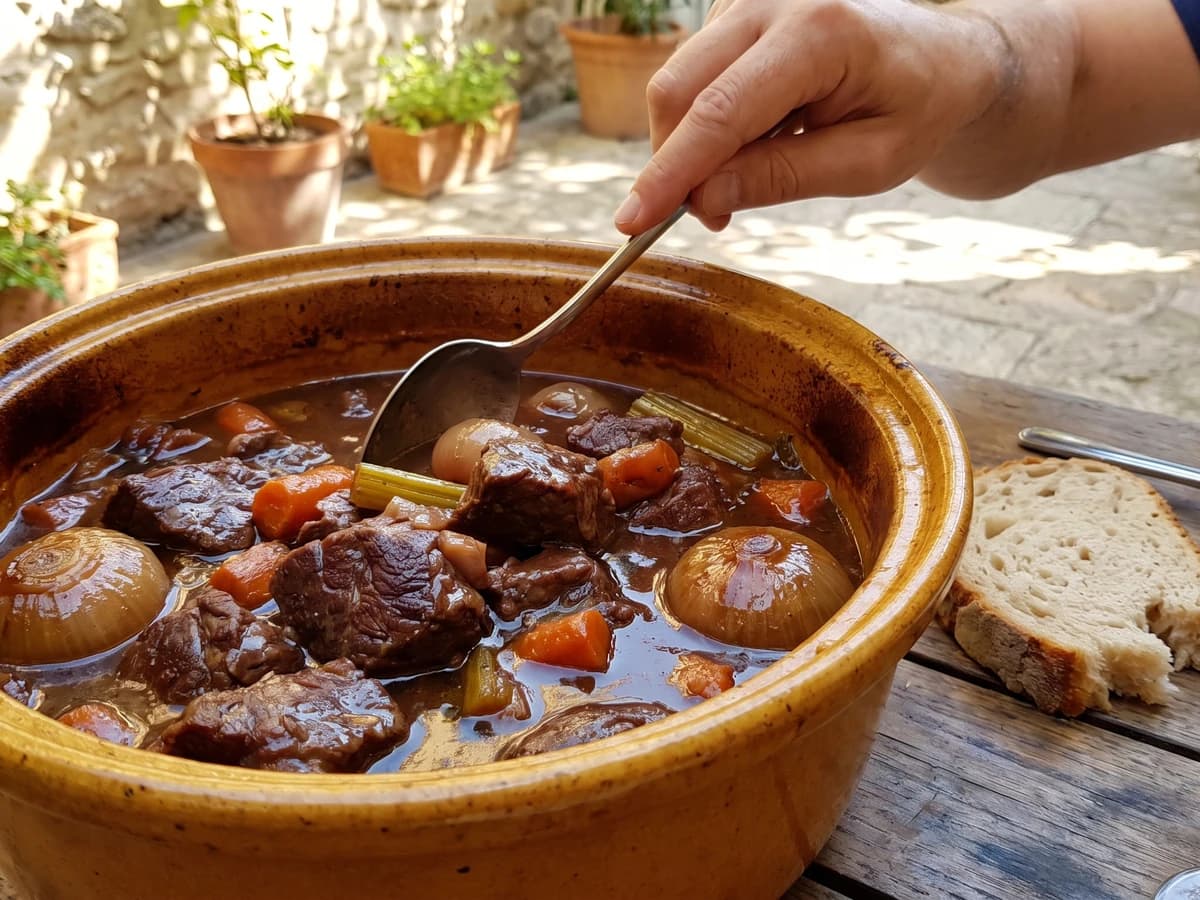
Beef shoulder larded with bacon, sharpened by red wine and vinegar, then sealed with garlic, vegetables, and dry lemon peel until the low oven turns it yielding and the gravy darkly glossy.