Chef Juliette
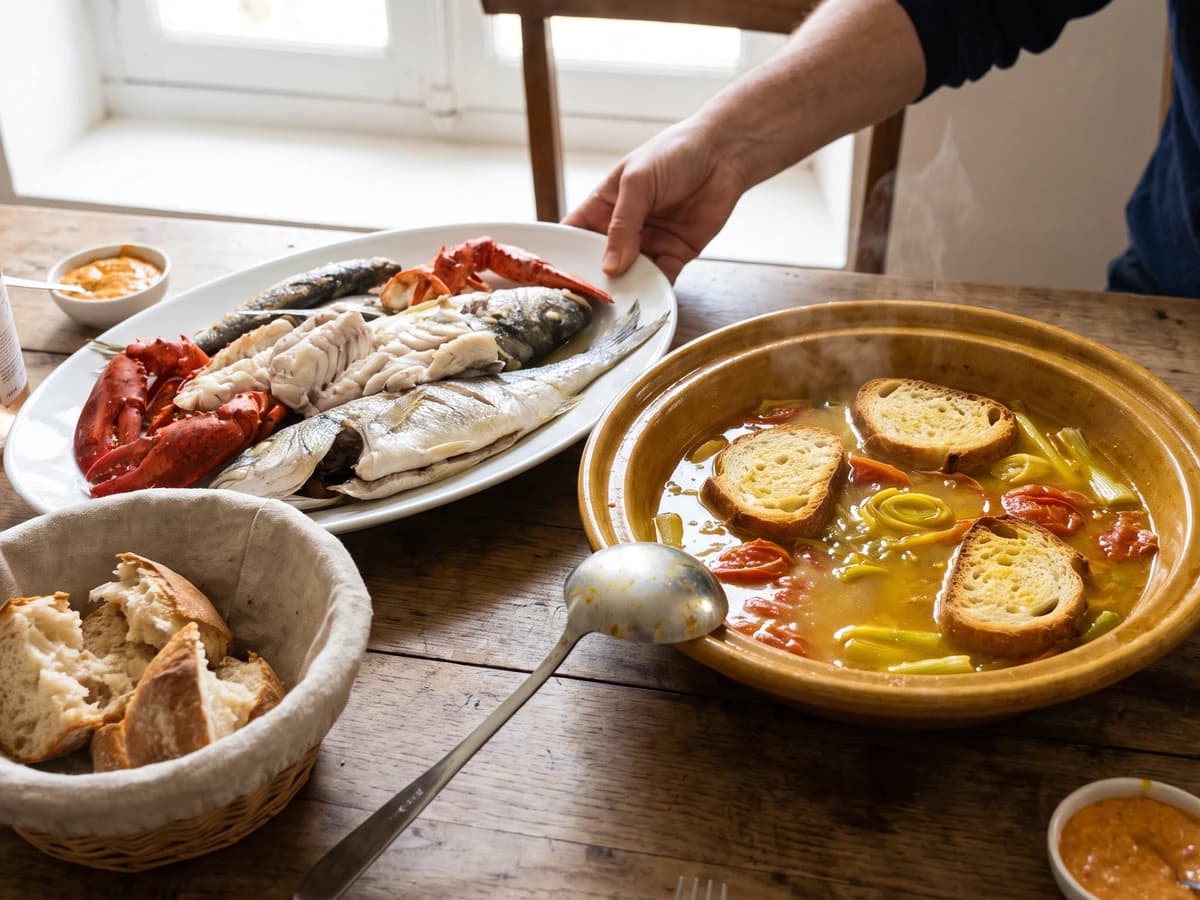
Bouillabaisse à la Marseillaise
Marseille's great fish stew, saffron-gold and garlic-scented, proves that a hard boil can be the careful choice: it binds olive oil into broth before the whole pot meets bread.
A cooking platform built around craft, culture, and the stories behind what we eat.
Created by Chef Juliette
Based on No. 555, Consommé Colombine, from Le Guide Culinaire (1907) by Auguste Escoffier
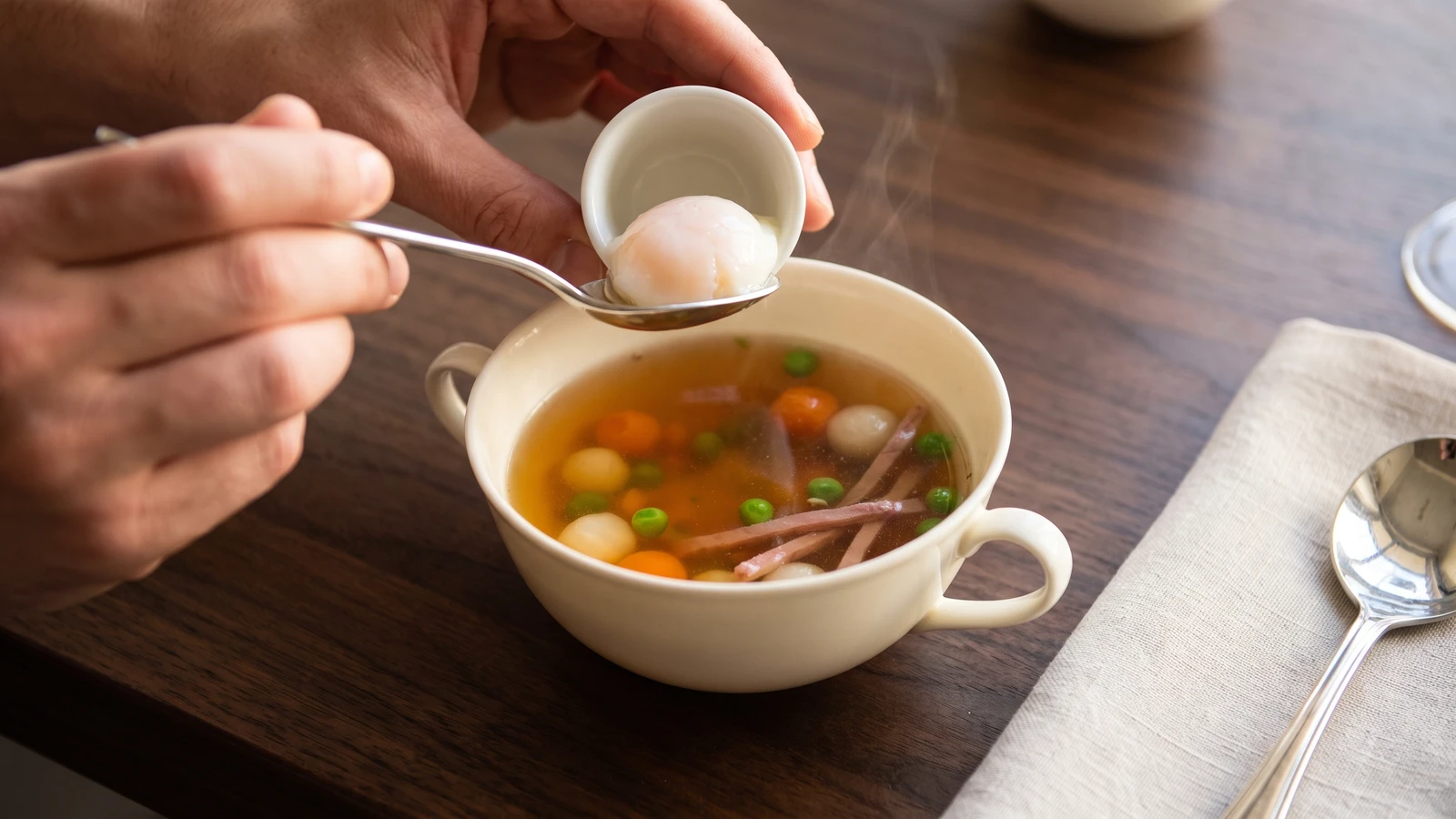
Crystal clarity is the lesson in Consommé Colombine, where carrot and turnip pearls, peas, roast pigeon, and tiny poached eggs make a precise spring or summer first course.
Consommé Colombine (clear chicken consommé with pigeon and spring garnishes) teaches the discipline of clarity. Before you touch a pan, know the one true thing: no garnish, however exquisite, can improve a cloudy or greasy consommé. The broth must arrive brilliant, deeply flavored, and hot enough to warm its tiny garnishes without cooking them further.
The grand kitchen assumed a saucier on staff, chicken consommé never off the fire, roast pigeon ready from another station, and a cook shaping vegetables for service. It needed no salamander, and your kitchen needs none either. The source formula is already compact at one quart, so this requested two-quart batch doubles every quantity exactly: two spoonfuls of each garnish and twelve pigeons' eggs, with its proportions and sequence unchanged. The separate station hands are scaffolding and can go. Crystal consommé, individually cooked garnishes, roast-pigeon julienne, and seasonal pigeons' eggs served in their own timbale are the dish and must stay. One cook, one stove, one evening.
When it is right, the broth is amber and lucid, the carrot pearls glow orange, the turnips remain ivory, and the peas shine green beside slender pieces of roast pigeon. The step that decides everything is the final heating: bring the consommé to a clean boil only after every garnish is ready, then pour and serve at once.
Consommé Colombine belongs to the Parisian grand-kitchen family of named consommés, in which a perfectly clarified broth was distinguished by an exact, often intricate garnish. Colombine carries a deliberate association with the dove or pigeon, made literal by roast-pigeon fillet and pigeons' eggs, while carrot and turnip pearls and green peas place it firmly on spring and summer menus. Its season is part of its identity: without fresh pigeons' eggs, the composition should yield to another consommé rather than conceal the absence with an unrelated substitute.
Quantity
8 cups (1.9 L / about 1.9 kg)
Quantity
1 large carrot (about 5 oz / 150 g), yielding 2 tablespoons (30 ml / 20 g) pearls
peeled
Quantity
1 medium turnip (about 5 oz / 150 g), yielding 2 tablespoons (30 ml / 20 g) pearls
peeled deeply
Quantity
2 tablespoons (30 ml / 20 g)
Quantity
2 tablespoons (30 ml / 22 g)
chilled and cut julienne-fashion
Quantity
12
Quantity
2 teaspoons (10 ml / 12 g)
divided, for the cooking water
Quantity
1 tablespoon (15 ml / 15 g)
for the poaching water
| Ingredient | Quantity |
|---|---|
| very clear, fully seasoned chicken consommé | 8 cups (1.9 L / about 1.9 kg) |
| large carrotpeeled | 1 large carrot (about 5 oz / 150 g), yielding 2 tablespoons (30 ml / 20 g) pearls |
| round white turnippeeled deeply | 1 medium turnip (about 5 oz / 150 g), yielding 2 tablespoons (30 ml / 20 g) pearls |
| very green shelled peas | 2 tablespoons (30 ml / 20 g) |
| roast-pigeon filletchilled and cut julienne-fashion | 2 tablespoons (30 ml / 22 g) |
| fresh pigeons' eggs | 12 |
| fine sea saltdivided, for the cooking water | 2 teaspoons (10 ml / 12 g) |
| white wine vinegarfor the poaching water | 1 tablespoon (15 ml / 15 g) |
Use a 6 to 10 mm cuillère parisienne, a small melon baller, to scoop 2 tablespoons each of carrot and turnip pearls. Peel the turnip deeply enough to remove its fibrous outer layer, and hold its pearls in cold water so they remain very white. Keep the vegetables separate. The leftover carrot and turnip belong in the next stockpot.
Prepare a bowl of ice water and bring a medium saucepan of water to a lively simmer with half the salt. Cook the turnip pearls first for 3 to 4 minutes, until a knife tip enters with slight resistance, then lift them into the ice water. Cook the peas for 30 to 60 seconds, just until vivid green, and chill them at once. Finish with the carrot pearls, simmering them for 3 to 4 minutes before chilling. Drain everything separately and blot it dry. These small vegetables must hold their shape; if a batch turns soft, scoop a fresh spoonful and cook it less. The quantities are mercifully small.
Slice the chilled roast-pigeon fillet across the grain into a julienne, match-shaped rods about 1 inch (2.5 cm) long. Measure 2 tablespoons and reserve the rest for another plate. Warm a 2½-quart soup tureen, then place the carrot pearls, white turnip pearls, peas, and pigeon julienne in its base. Do not add the eggs; the source sends those separately, and so will you.
Fill a small saucepan with about 2 inches (5 cm) of water, add the vinegar and remaining salt, and bring it just below a simmer, about 180°F to 185°F (82°C to 85°C). Crack each pigeons' egg into a tiny cup, then lower six at a time into the barely trembling water. Poach for 75 to 90 seconds, until the whites are opaque and the yolks remain yielding. Lift them with a fine skimmer, trim only loose tails of white, and hold them in clean warm water. If the whites feather badly, the water is moving too hard; lower the heat, skim away the strands, and continue with the next eggs. If a yolk breaks, replace that egg rather than sending its fragments into the consommé.
Put the chicken consommé in a spotless saucepan and bring it to a clean boil over medium heat only when the tureen and eggs are ready. Skim away any beads of fat without stirring or whisking. If a few loose particles give the broth a faint haze, ça se rattrape: take it off the heat and pass it through damp double muslin into a clean pan without pressing, then return it promptly to the boil.
Drain the poached eggs carefully and arrange them in a small warmed timbale or lidded ramekin. Pour the boiling consommé in one steady stream over the carrot, turnip, peas, and pigeon julienne in the warmed tureen. Carry the tureen and the covered eggs to the table together, letting each guest add one or two eggs after the broth is ladled. Serve immediately. À table!
1 serving (about 270g)
Culinary guides, cultural storytelling, and the editorial depth that makes cooking meaningful.
Discover Culinary ExplorerChef Juliette
Marseille's great fish stew, saffron-gold and garlic-scented, proves that a hard boil can be the careful choice: it binds olive oil into broth before the whole pot meets bread.
Chef Juliette
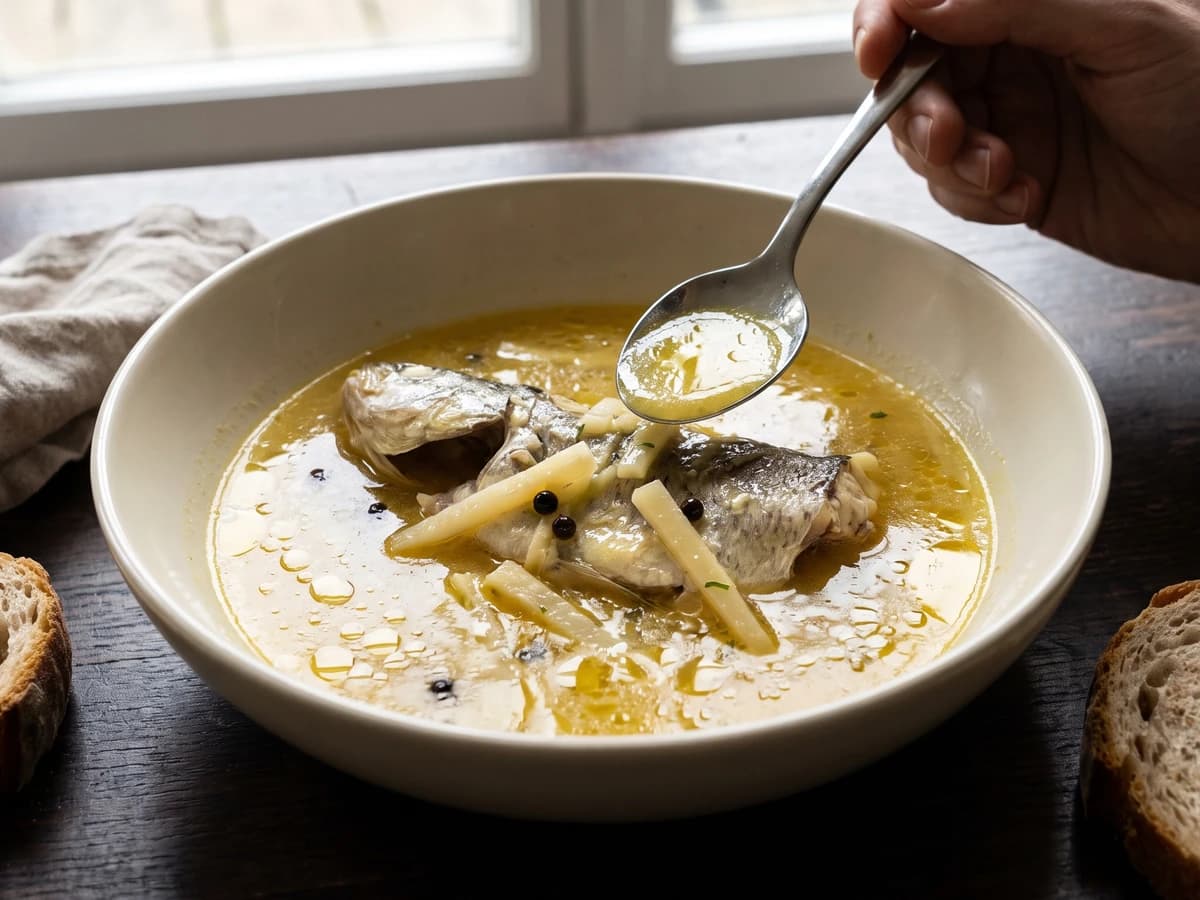
Waterzoi asks fresh, bone-in river fish to thicken its own buttery broth, with parsley root and pepper for company. No flour, no stockpot, just a brisk simmer watched closely.
Chef Juliette
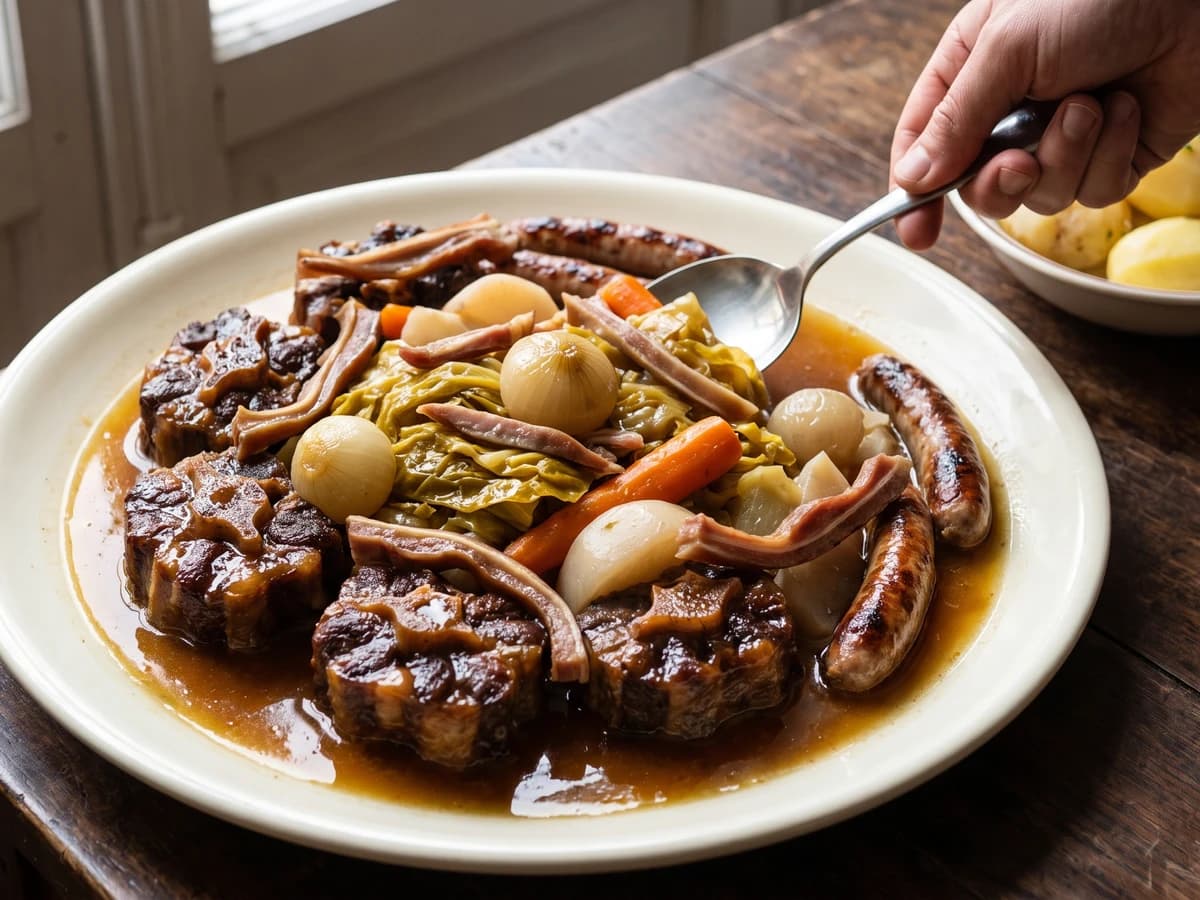
Queue de Bœuf en Hochepot gathers oxtail, pig's trotter and ear, cabbage, roots, and grilled chipolatas around a clear, gelatin-rich broth whose quiet simmer keeps every piece tender and distinct.
Chef Juliette
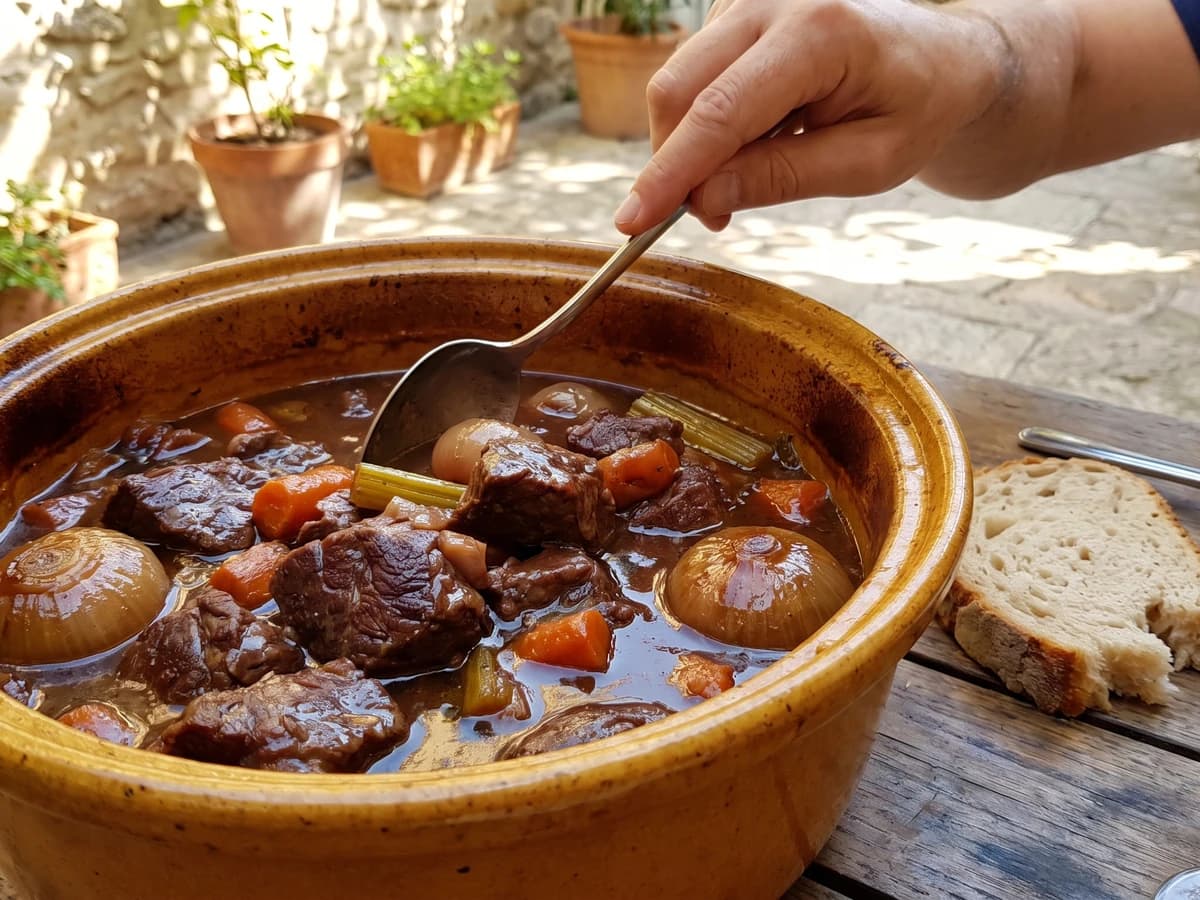
Beef shoulder larded with bacon, sharpened by red wine and vinegar, then sealed with garlic, vegetables, and dry lemon peel until the low oven turns it yielding and the gravy darkly glossy.