Chef Juliette
Bouillabaisse à la Marseillaise
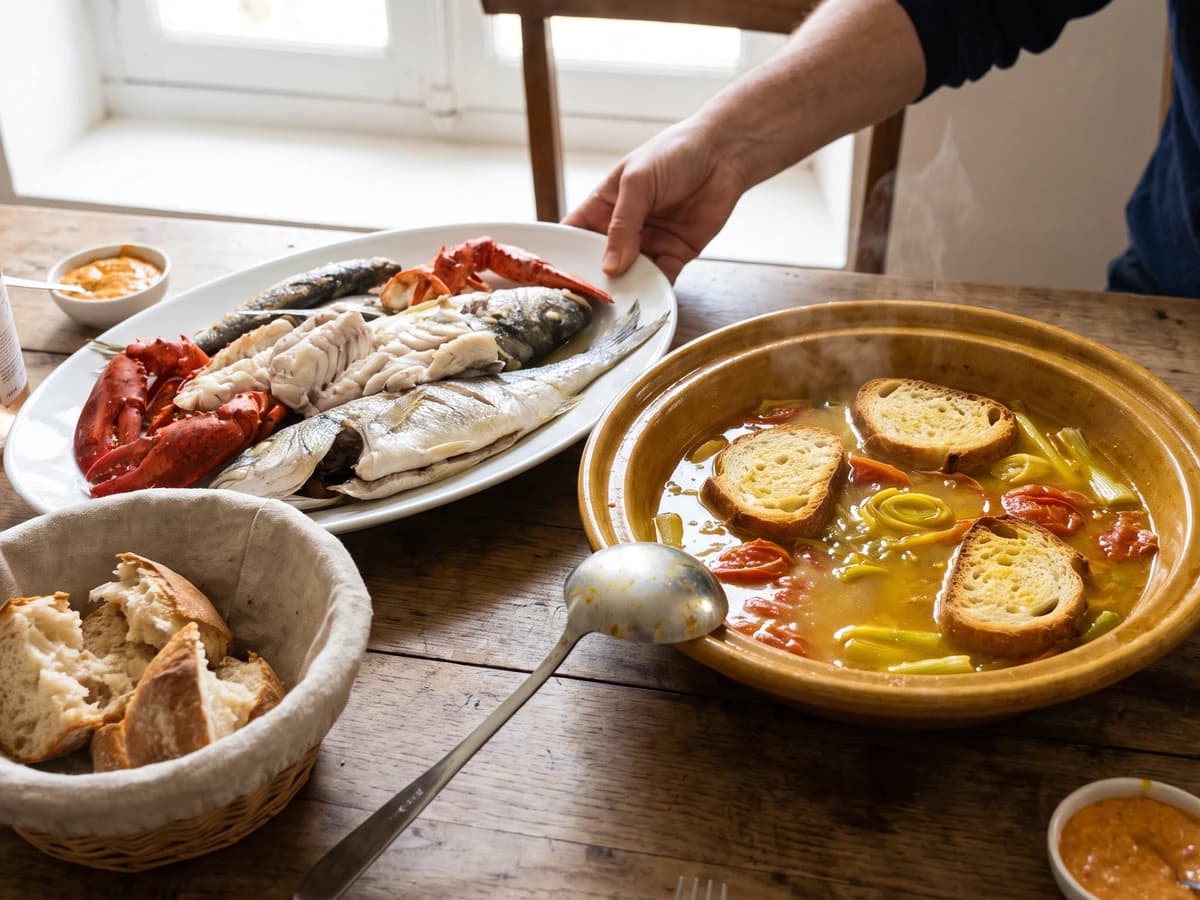
Marseille's great fish stew, saffron-gold and garlic-scented, proves that a hard boil can be the careful choice: it binds olive oil into broth before the whole pot meets bread.
A cooking platform built around craft, culture, and the stories behind what we eat.
Created by Chef Juliette
Based on No. 548, Consommé Brunoise, from Le Guide Culinaire (1907) by Auguste Escoffier
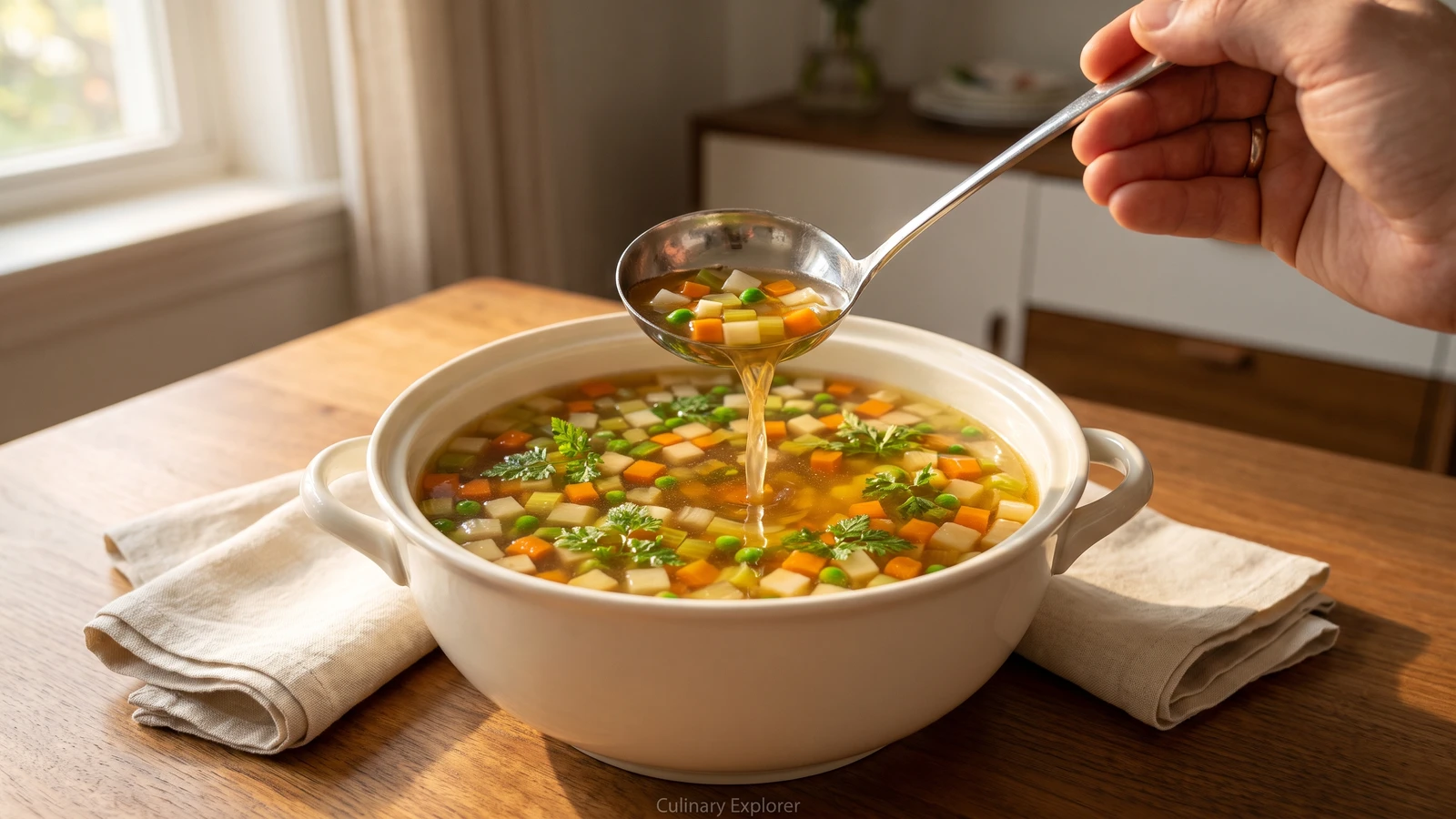
Consommé Brunoise is a lesson in clear broth and exact knife work: butter-stewed roots in amber consommé, finished with vivid peas, French beans, and chervil, each spoonful delicate but generous.
Consommé Brunoise (clarified broth with fine-diced vegetables) teaches the discipline of clarity. The one true thing to know before touching a pan is this: brown nothing. The vegetables must take butter's sweetness while keeping their clean colours, because browned pan flavours, splendid elsewhere, muddy the lucid broth this dish promises.
The source entry assumed a saucier with a stockpot of ordinary consommé never off the fire, plus another pair of hands to keep the green garnish ready. Your honest equivalent is already-finished consommé, one sharp knife, two saucepans, and a bowl of ice. Here the proportions are scaled to a generous two-quart tureen while preserving the book's one-part first moistening to four-parts final broth. Separate holding pans are brigade scaffolding and can go; the exact brunoise, the gentle butter stew, the green garnish, and the last-minute union are the dish and must stay. One cook, one stove, one evening.
When it is right, the consommé arrives amber and transparent, carrying tiny root vegetable dice, bright peas, green bean squares, and chervil pluches (fine leafy shreds) without looking crowded. Blanching the peas and beans replaces a brigade's ready garnish, not the method. Cut every vegetable to a true 3 mm brunoise before the butter warms. Even cooking begins at the board, and that is the step that matters most.
Consommé Brunoise belongs to the Parisian classical table rather than to a single provincial larder: clear consommés were distinguished by the garnish carried in each tureen. It passed from grand kitchens into cuisine bourgeoise because its stock-and-garnish system worked at home, provided the consommé was already made and the vegetables were cut with care. In this name, brunoise means more than any fine dice; it is the butter-stewed mixture of carrot, turnip, leek, celery, and onion, completed with very green peas, French beans, and chervil pluches.
Quantity
6⅔ cups (1.6 L / 1.6 kg)
divided
Quantity
3 (about 1 cup / 120 g trimmed)
peeled, outer orange-red flesh only, cut into 3 mm brunoise
Quantity
1 (about ⅔ cup / 90 g trimmed)
peeled and cut into 3 mm brunoise
Quantity
3 (about ⅔ cup / 80 g trimmed)
rinsed, dried, and cut into 3 mm brunoise
Quantity
1 (about ⅓ cup / 40 g trimmed)
cut into 3 mm brunoise
Quantity
½ (about ⅓ cup / 60 g)
cut into 3 mm brunoise
Quantity
2½ tablespoons (37 ml / 35 g)
Quantity
1¼ teaspoons (6 ml / 7.5 g)
divided
Quantity
1 pinch (about 1/16 teaspoon / 0.3 ml / 0.25 g)
Quantity
4 cups (950 ml / 950 g)
for blanching
Quantity
2 cups (475 ml / 300 g)
for chilling
Quantity
1 tablespoon plus 1 teaspoon (20 ml / 14 g)
Quantity
1 tablespoon plus 1 teaspoon (20 ml / 18 g)
cut into 3 mm dice
Quantity
2 loosely packed teaspoons (10 ml / 0.7 g)
| Ingredient | Quantity |
|---|---|
| prepared ordinary consommédivided | 6⅔ cups (1.6 L / 1.6 kg) |
| small carrotspeeled, outer orange-red flesh only, cut into 3 mm brunoise | 3 (about 1 cup / 120 g trimmed) |
| medium white turnippeeled and cut into 3 mm brunoise | 1 (about ⅔ cup / 90 g trimmed) |
| small leek heads, white and palest green parts onlyrinsed, dried, and cut into 3 mm brunoise | 3 (about ⅔ cup / 80 g trimmed) |
| large inner celery stalkcut into 3 mm brunoise | 1 (about ⅓ cup / 40 g trimmed) |
| medium onioncut into 3 mm brunoise | ½ (about ⅓ cup / 60 g) |
| unsalted butter | 2½ tablespoons (37 ml / 35 g) |
| fine sea saltdivided | 1¼ teaspoons (6 ml / 7.5 g) |
| superfine sugar | 1 pinch (about 1/16 teaspoon / 0.3 ml / 0.25 g) |
| waterfor blanching | 4 cups (950 ml / 950 g) |
| ice cubesfor chilling | 2 cups (475 ml / 300 g) |
| shelled fresh or frozen peas | 1 tablespoon plus 1 teaspoon (20 ml / 14 g) |
| French beanscut into 3 mm dice | 1 tablespoon plus 1 teaspoon (20 ml / 18 g) |
| fresh chervil pluches | 2 loosely packed teaspoons (10 ml / 0.7 g) |
Trim the carrots into lengthwise slabs, using only the outer orange-red flesh and reserving the pale cores for another pot. Cut the carrot, turnip, prepared leek, celery, and onion into even 3 mm planks, then matchsticks, then cubes. Aim for disciplined uniformity, not ornament. If some pieces run large, stop and recut them now. Ça se rattrape on the board; once the pan starts, large turnip cubes and tiny leek pieces will never finish together.
Fill a bowl with the ice and enough cold water to move the cubes freely. Bring the measured blanching water to a brisk boil with 1 teaspoon of the salt. Add the diced French beans for 45 seconds, then add fresh peas for the final 20 seconds. Lift both immediately into the ice bath. If using frozen peas, don't blanch them; rinse them briefly in cold water instead. Drain the greens thoroughly and hold them cold. This separate blanching is how a home cook fulfills the book's instruction that they be kept very green.
Melt the butter in a heavy saucepan over low heat. Add the carrot, turnip, leek, celery, and onion with the remaining ¼ teaspoon salt and the pinch of sugar. Cover and stew gently for 10 to 12 minutes, stirring twice, until the vegetables begin to soften and smell sweet. They must not fry or brown. If the butter starts taking colour, lift the pan from the heat, add a tablespoonful from the first measure of consommé, cover, and lower the flame before continuing. The butter's sweetness belongs here; browned flavour does not.
Add 1⅓ cups (320 ml / 320 g) of the ordinary consommé to the butter-stewed brunoise. Bring it only to a bare tremble and cook uncovered for 10 to 15 minutes, until the carrot and turnip are tender at the centre but their square edges remain distinct. Never let the liquid roll. If it boils and turns hazy, remove the pan from the heat for 2 minutes and skim away the butter that rises. If necessary, lift out the vegetables with a slotted spoon, pass the broth once through a dampened fine sieve, and reunite them gently.
Five minutes before serving, bring the remaining 5⅓ cups (1.28 L / 1.28 kg) ordinary consommé to a full boil in a second saucepan. Pour it into the cooked brunoise, add the drained peas and French beans, and return the soup only to a quiet simmer. Hold it there for 5 minutes. Stir once with a light hand so the vegetables remain intact and the consommé stays lucid.
Warm the soup tureen with hot water, then drain and dry it. Taste the consommé before adding anything; it should be clearly seasoned but never aggressively salty. If a commercial consommé has tightened too far, loosen it with hot water a tablespoon at a time. Pour the soup into the warm tureen and add the chervil pluches at the final moment so their delicate fragrance remains. Serve at once. À table!
1 serving (about 315g)
Culinary guides, cultural storytelling, and the editorial depth that makes cooking meaningful.
Discover Culinary ExplorerChef Juliette
Marseille's great fish stew, saffron-gold and garlic-scented, proves that a hard boil can be the careful choice: it binds olive oil into broth before the whole pot meets bread.
Chef Juliette
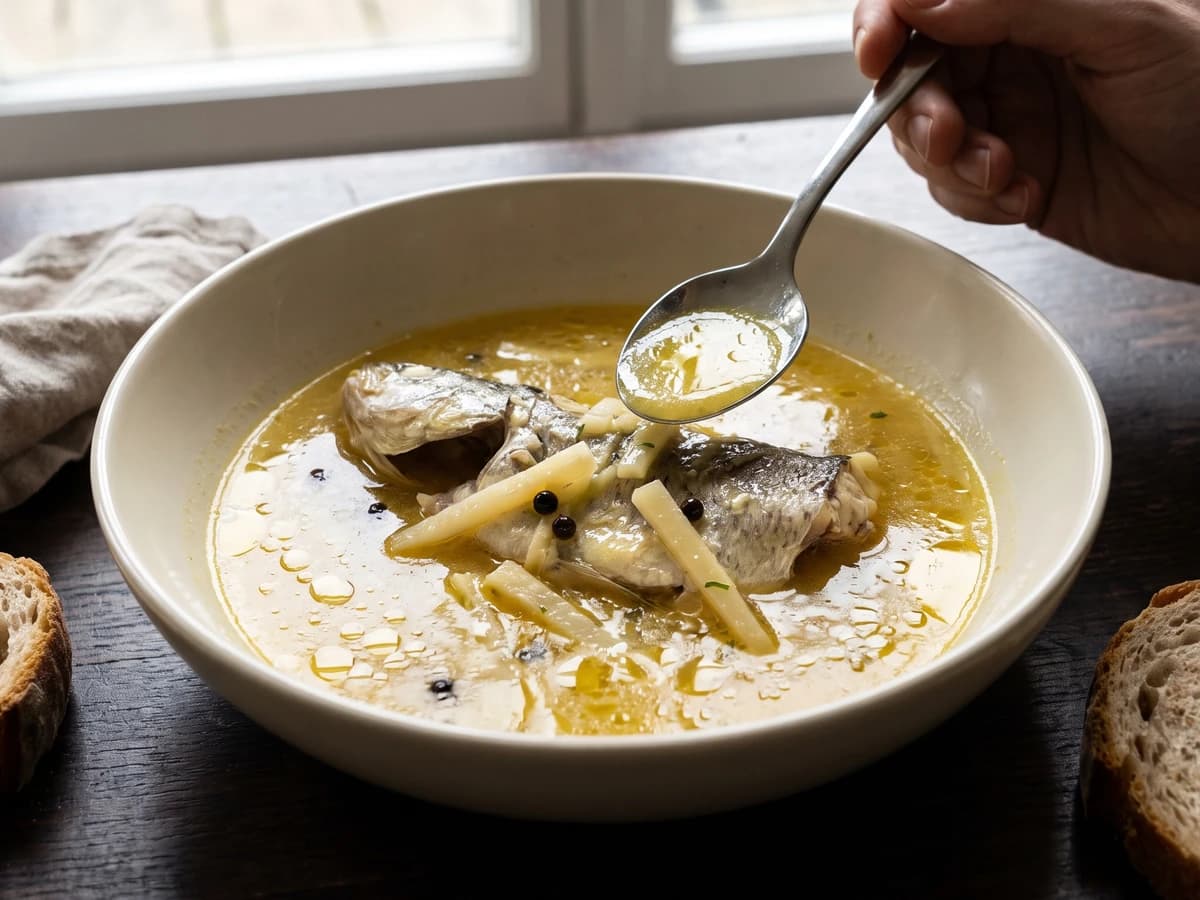
Waterzoi asks fresh, bone-in river fish to thicken its own buttery broth, with parsley root and pepper for company. No flour, no stockpot, just a brisk simmer watched closely.
Chef Juliette
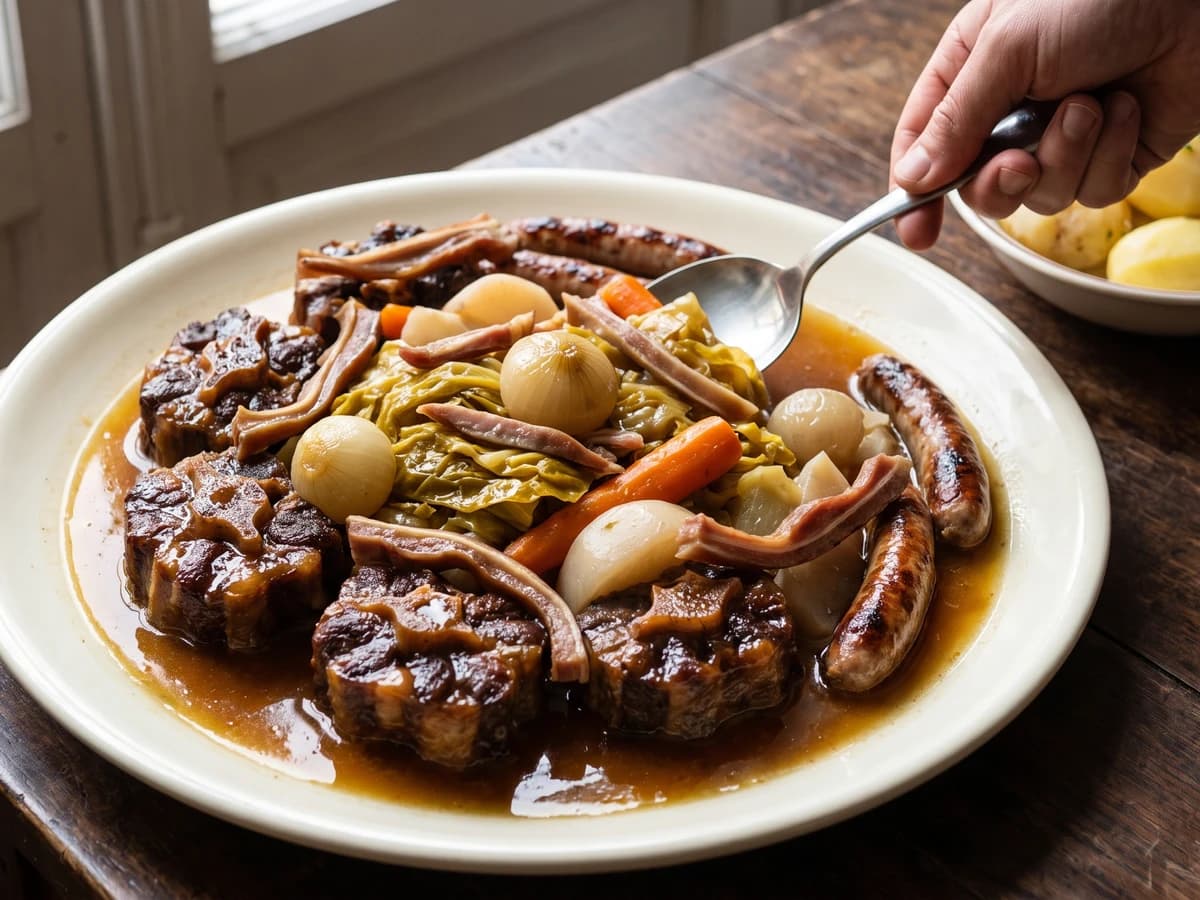
Queue de Bœuf en Hochepot gathers oxtail, pig's trotter and ear, cabbage, roots, and grilled chipolatas around a clear, gelatin-rich broth whose quiet simmer keeps every piece tender and distinct.
Chef Juliette
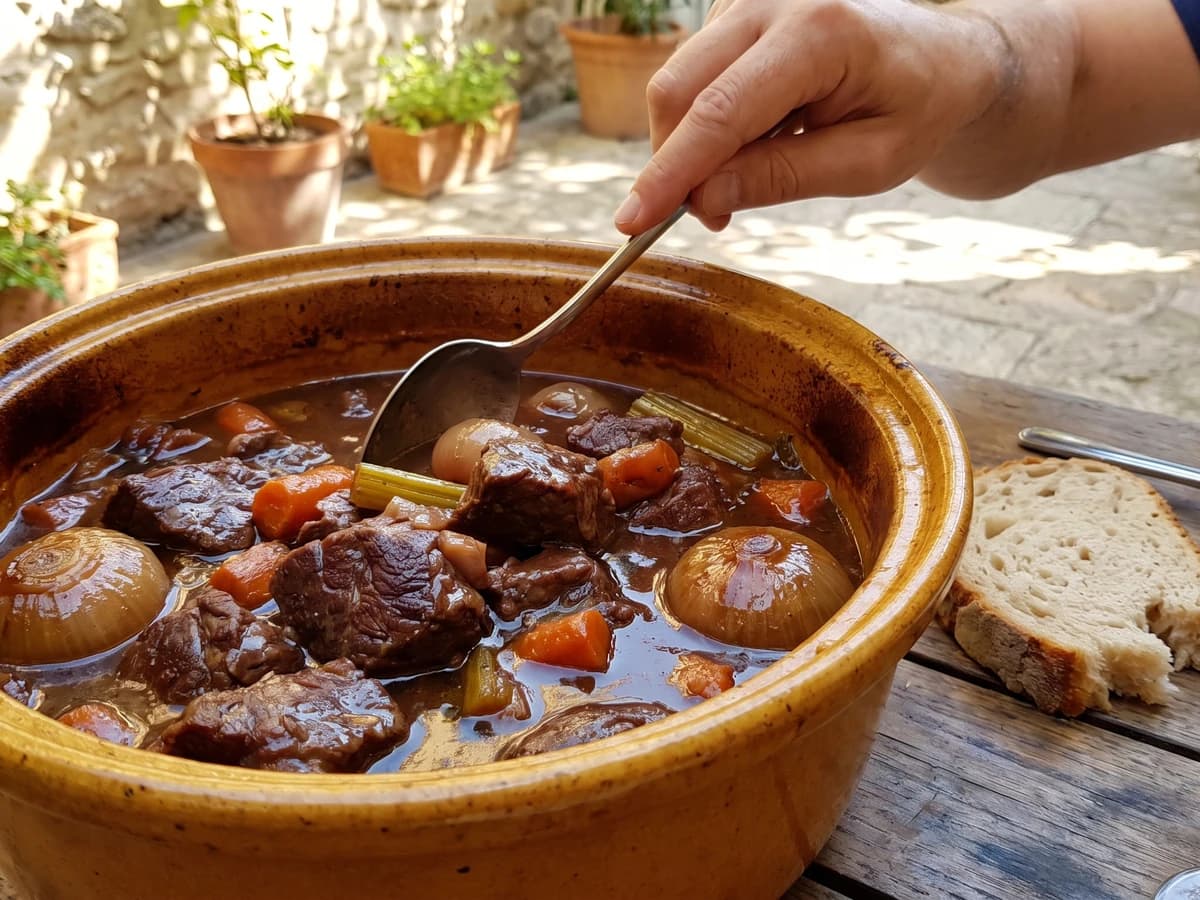
Beef shoulder larded with bacon, sharpened by red wine and vinegar, then sealed with garlic, vegetables, and dry lemon peel until the low oven turns it yielding and the gravy darkly glossy.