Chef Juliette
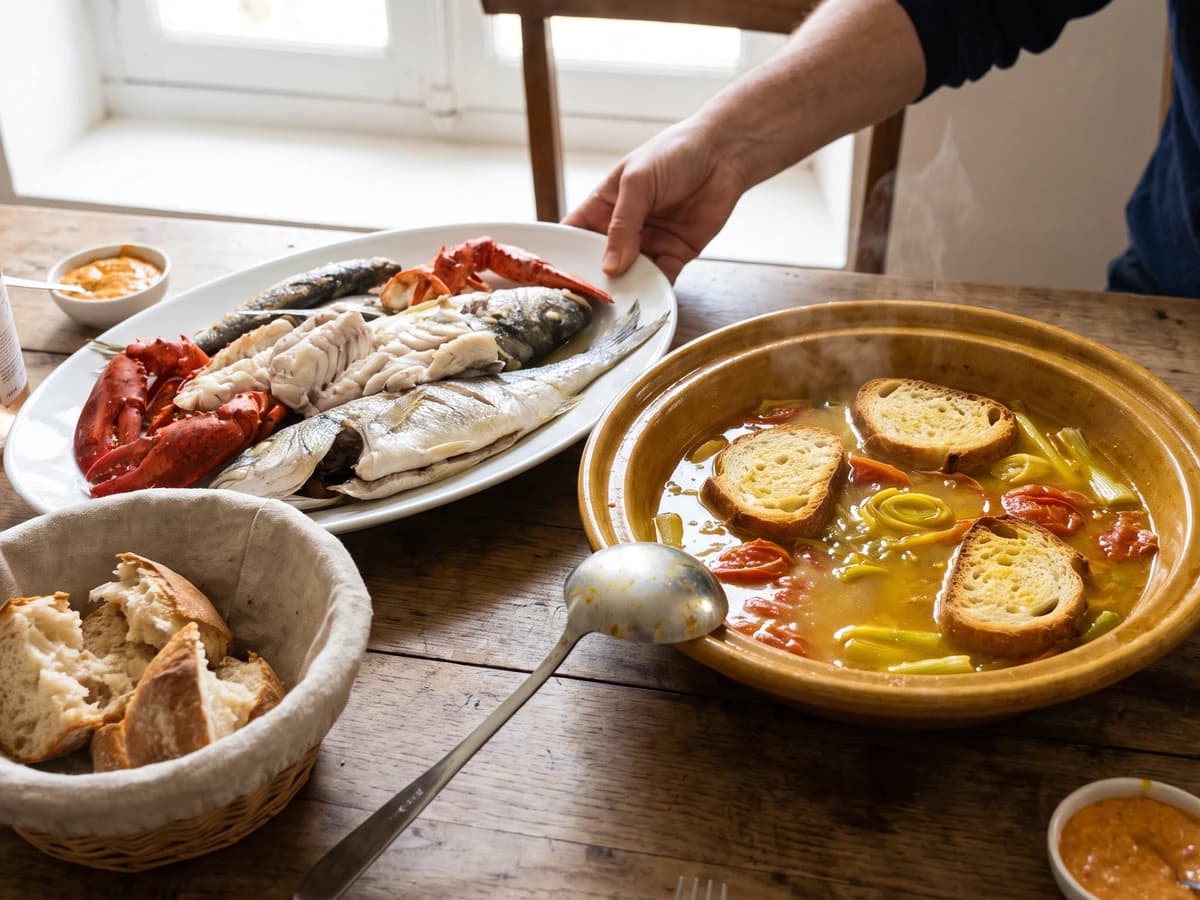
Bouillabaisse à la Marseillaise
Marseille's great fish stew, saffron-gold and garlic-scented, proves that a hard boil can be the careful choice: it binds olive oil into broth before the whole pot meets bread.
A cooking platform built around craft, culture, and the stories behind what we eat.
Created by Chef Juliette
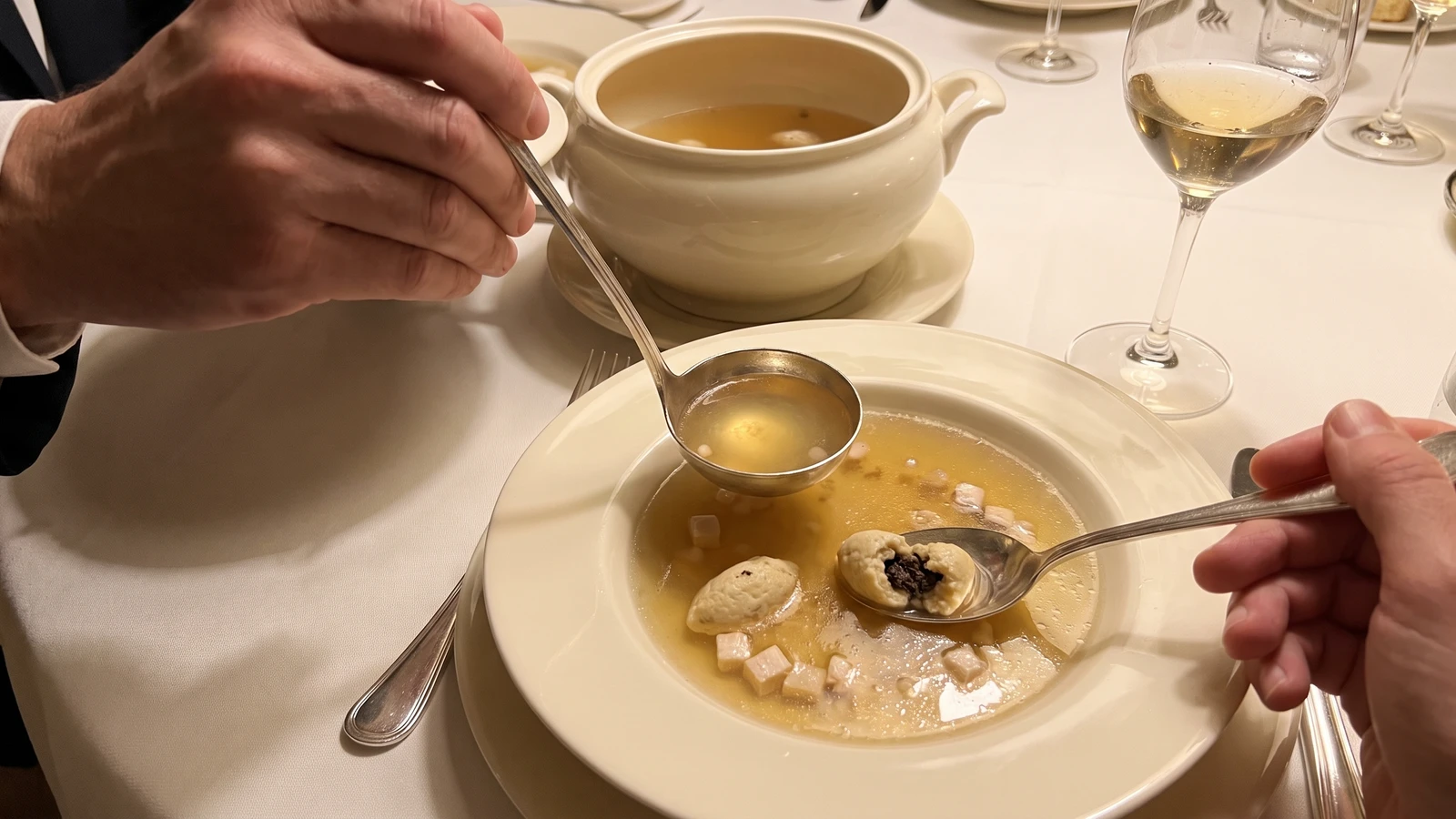
Based on No. 544, Consommé Boïeldieu, from Le Guide Culinaire (1907) by Auguste Escoffier
Consommé Boïeldieu teaches restraint at full dress: clear chicken broth, feather-light quenelles hiding foie gras, chicken, and truffle, poached at a bare tremble so every filling stays distinct.
Consommé Boïeldieu (clear chicken broth with three filled quenelles) teaches one true thing: delicacy depends on control. The broth must remain lucid, the three fillings must taste distinctly of themselves, and the farce mousseline de volaille, a light chicken forcemeat, must be poached at a bare tremble. Let that liquid boil and the quenelles tighten before their centres warm.
The original kitchen assumed a stock never off the fire, a saucier holding velouté, and extra hands to pound, sieve, fill, and poach eighteen quenelles for every quart. Your honest equivalents are finished consommé prepared ahead, a chilled food processor, and one tiny pale velouté made in minutes. Hand-pounding and repeated sieving are brigade scaffolding and can go. Keeping the forcemeat cold, dividing the fillings equally, and poaching gently are the dish itself, so they stay. One cook, one stove, one evening.
The source gives one quart with eighteen quenelles. This dinner-party version makes about two quarts and preserves that exact proportion: thirty-six teaspoon quenelles, twelve each filled with foie gras, chicken, or truffle. Before you touch the pan, remember the step that decides everything: the poaching liquid must barely move.
Consommé Boïeldieu belongs to the Parisian grand-kitchen repertoire of named clear soups, not to Normandy's regional larder, although its namesake, François-Adrien Boieldieu, was born in Rouen. Its structure is distinctly Parisian: a lucid consommé carrying an intricate but precisely rationed garnish of three filled chicken quenelles and a little diced white meat. From formal service it passed naturally to the bourgeois dinner party, where the components could wait separately and the final pour brought the whole dish together at the table.
Quantity
9 cups (2.1 L / 2.1 kg)
preferably unsalted, divided
Quantity
3 tablespoons (45 ml / 30 g)
Quantity
about 2 cups cubed (475 ml / 285 g)
kept very cold
Quantity
1 (2 tablespoons / 30 ml / 30 g)
Quantity
1 cup (240 ml / 240 g)
very cold, divided
Quantity
1 teaspoon (5 ml / 6 g)
Quantity
1/8 teaspoon (0.6 ml / 0.3 g)
Quantity
1/4 cup packed (60 ml / 60 g)
Quantity
1/3 cup chopped (80 ml / 55 g)
for the chicken purée
Quantity
1/4 cup finely chopped (60 ml / 35 g)
drained
Quantity
1 teaspoon (5 ml / 5 g)
for the velouté
Quantity
1 teaspoon (5 ml / 3 g)
Quantity
2 tablespoons (30 ml / 28 g)
for the sauté pan
Quantity
4 cups (950 ml / 950 g)
for poaching
Quantity
2 teaspoons (10 ml / 12 g)
for the poaching water
Quantity
2 tablespoons finely diced (30 ml / 25 g)
for the tureen
| Ingredient | Quantity |
|---|---|
| finished clear chicken consommépreferably unsalted, divided | 9 cups (2.1 L / 2.1 kg) |
| quick-cooking tapioca | 3 tablespoons (45 ml / 30 g) |
| boneless, skinless chicken breastkept very cold | about 2 cups cubed (475 ml / 285 g) |
| large egg white | 1 (2 tablespoons / 30 ml / 30 g) |
| heavy creamvery cold, divided | 1 cup (240 ml / 240 g) |
| fine salt | 1 teaspoon (5 ml / 6 g) |
| ground white pepper | 1/8 teaspoon (0.6 ml / 0.3 g) |
| cooked foie gras terrine | 1/4 cup packed (60 ml / 60 g) |
| cooked white chicken meatfor the chicken purée | 1/3 cup chopped (80 ml / 55 g) |
| preserved black truffledrained | 1/4 cup finely chopped (60 ml / 35 g) |
| unsalted butterfor the velouté | 1 teaspoon (5 ml / 5 g) |
| all-purpose flour | 1 teaspoon (5 ml / 3 g) |
| softened unsalted butterfor the sauté pan | 2 tablespoons (30 ml / 28 g) |
| waterfor poaching | 4 cups (950 ml / 950 g) |
| fine saltfor the poaching water | 2 teaspoons (10 ml / 12 g) |
| cooked white chicken meatfor the tureen | 2 tablespoons finely diced (30 ml / 25 g) |
Melt the teaspoon of butter in a very small saucepan over gentle heat. Stir in the flour and cook this roux for about ninety seconds without letting it colour. Whisk in 1/4 cup (60 ml) of the chicken consommé, then simmer gently for 3 to 4 minutes, until the velouté is smooth and lightly naps the back of a spoon. If it has lumps, pass it through a fine sieve while hot. Ça se rattrape. Cool it completely over ice before it touches the foie gras.
Mash the foie gras with 2 teaspoons of the cold velouté until supple but not loose. Purée the cooked chicken with 1 tablespoon of consommé until it forms a smooth, firm paste. Crush the finely chopped truffle with the flat of a knife, or pulse it briefly, until it becomes a moist coarse purée rather than scattered pieces. Put the three fillings into separate small piping bags or folded parchment cones, label them, and chill for at least 20 minutes.
Chill the food-processor bowl and blade for 15 minutes. Process the cold raw chicken with the fine salt and white pepper until completely smooth and tacky, scraping the bowl once. Add the egg white and process only until absorbed. With the motor running, add 3/4 cup (180 ml) of the cold cream in three additions, stopping as soon as the farce mousseline is smooth. Transfer it to a bowl nested over ice. Poach a teaspoonful in barely trembling water until its centre reaches 165°F (74°C), then taste it. If it is firm or rubbery, fold in the reserved cream one tablespoon at a time and test again. If the farce slumps instead of holding an oval, chill it for 15 minutes before retesting. If it looks grainy from warmth, set it firmly over ice and work in a spoonful of cold cream. Ça se rattrape, but only while the mixture remains cold.
Butter the bottom of a wide sauté pan. Dip two small teaspoons in cold water. Spread a scant teaspoon of farce in one spoon, press a shallow hollow in its centre, pipe in a scant 1/4 teaspoon of filling, and cover it completely with a little more farce. Pass the mixture between the spoons once or twice to form a neat oval, then place it gently in the buttered pan. If filling shows through, patch the spot with a dab of farce before poaching. Make twelve quenelles at a time, four of each filling, and keep the remaining farce over ice. Repeat for three batches, giving you twelve foie gras, twelve chicken, and twelve truffle quenelles.
Heat the water with the poaching salt until it barely trembles. Pour enough down the side of the sauté pan to come halfway up the first batch of quenelles, cover with a round of parchment and the lid, and poach over the gentlest heat for 7 to 9 minutes. Turn one quenelle over midway if its top remains exposed. They are ready when resilient to a light touch and at least 165°F (74°C) at the centre. The liquid must never boil. If bubbles begin breaking across the surface, lift the pan from the heat and add a small splash of cold water around the quenelles. Ça se rattrape. Drain them carefully with a slotted spoon, keeping the fillings identified, then repeat with the remaining batches.
Bring 8 cups (1.9 L) of the remaining chicken consommé to a bare simmer in a clean saucepan. Rain in the tapioca while stirring gently, then cook for 10 to 15 minutes, until its granules are translucent and the consommé has gained the slightest body. It should still pour freely and remain clear around the tapioca. If it tightens too far, loosen it with reserved hot consommé; if it is thin, give it another few minutes at the gentlest simmer. Taste and correct the seasoning only after the tapioca is cooked.
Fill the soup tureen with hot water, leave it for 2 minutes, then empty and dry it. If the quenelles have cooled completely, warm them for 3 to 4 minutes in the reserved consommé held just below a simmer. Arrange all thirty-six quenelles in the warm tureen, keeping the three fillings evenly distributed, and scatter over the finely diced white chicken meat.
Pour the tapioca-bound consommé over the garnish only when everyone is ready to eat. Let it stand for 1 minute so the quenelles heat through, then serve six quenelles to each guest, two of every filling, with enough clear broth to surround them generously. À table!
1 serving (about 350g)
Culinary guides, cultural storytelling, and the editorial depth that makes cooking meaningful.
Discover Culinary ExplorerChef Juliette
Marseille's great fish stew, saffron-gold and garlic-scented, proves that a hard boil can be the careful choice: it binds olive oil into broth before the whole pot meets bread.
Chef Juliette
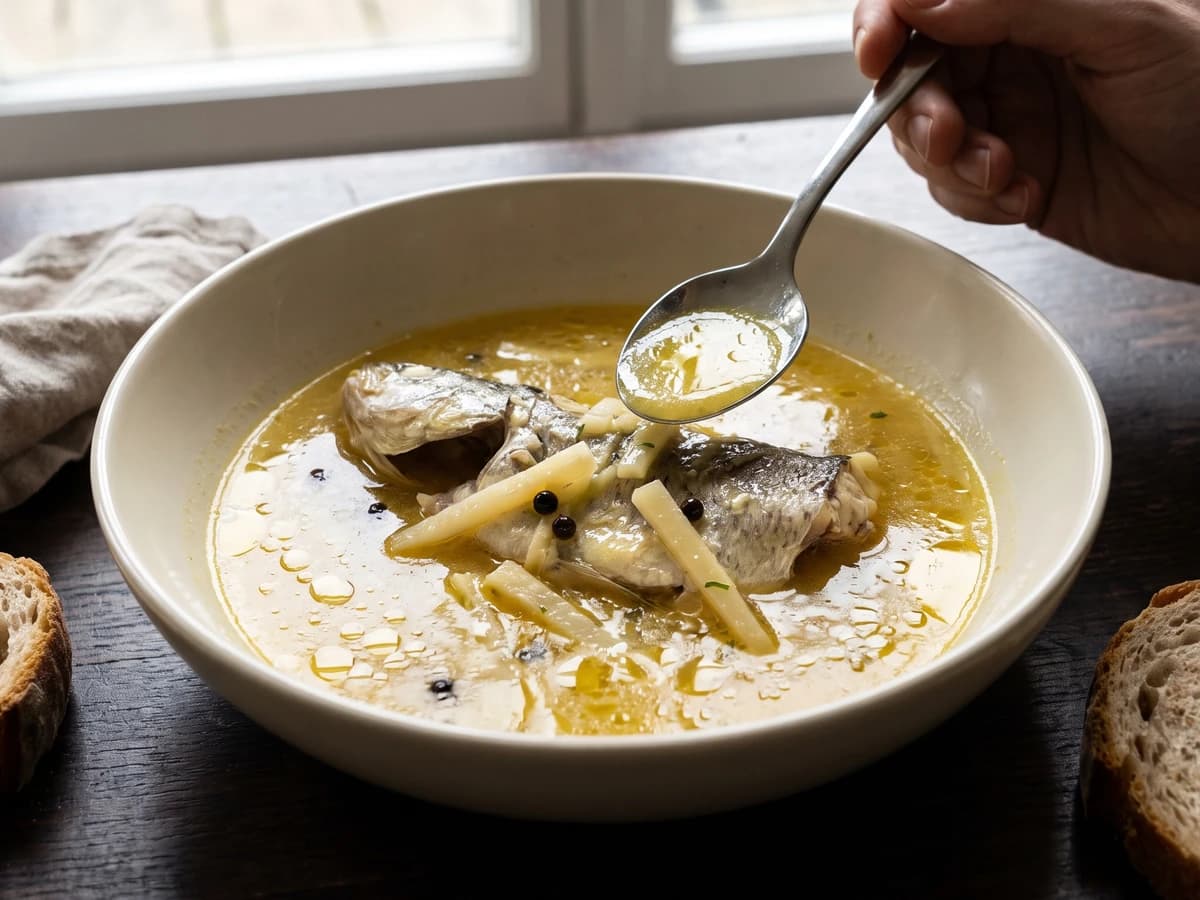
Waterzoi asks fresh, bone-in river fish to thicken its own buttery broth, with parsley root and pepper for company. No flour, no stockpot, just a brisk simmer watched closely.
Chef Juliette
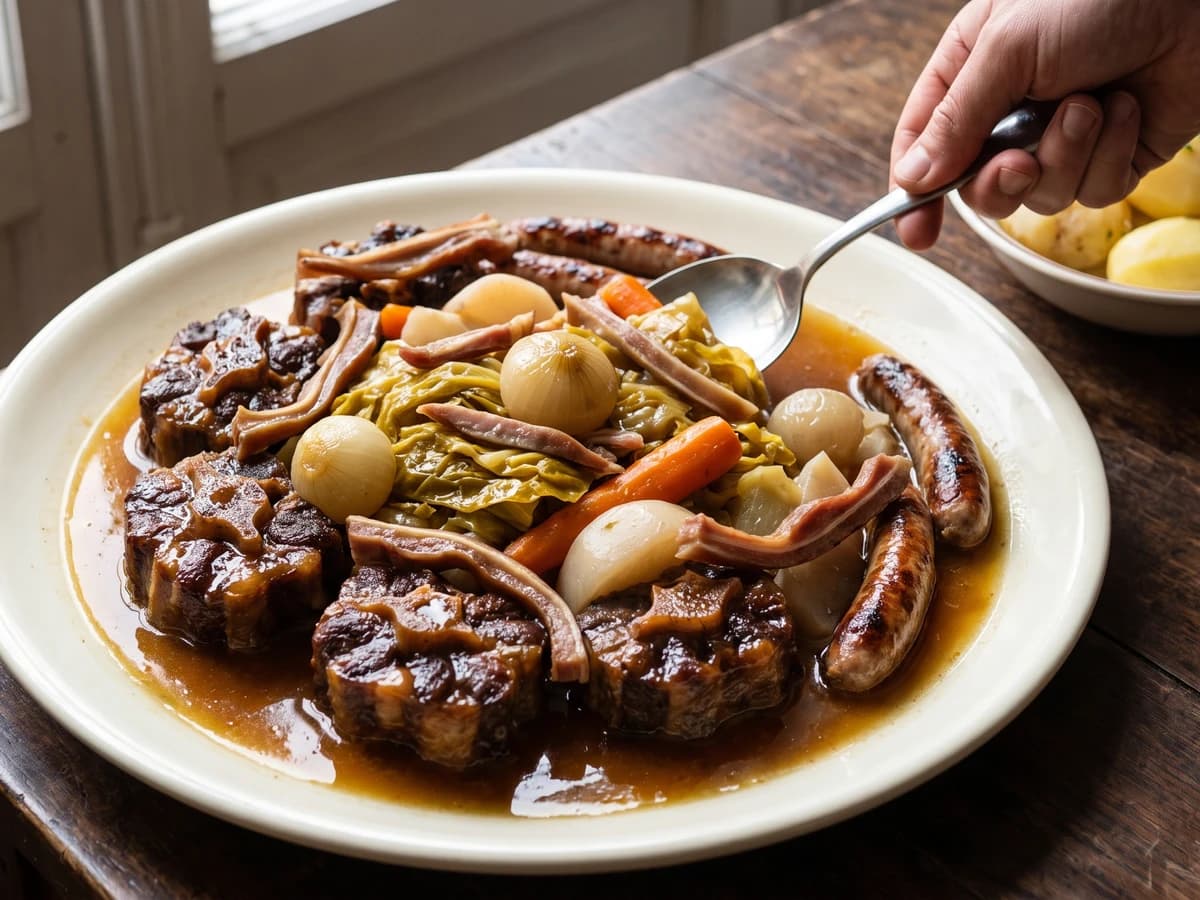
Queue de Bœuf en Hochepot gathers oxtail, pig's trotter and ear, cabbage, roots, and grilled chipolatas around a clear, gelatin-rich broth whose quiet simmer keeps every piece tender and distinct.
Chef Juliette
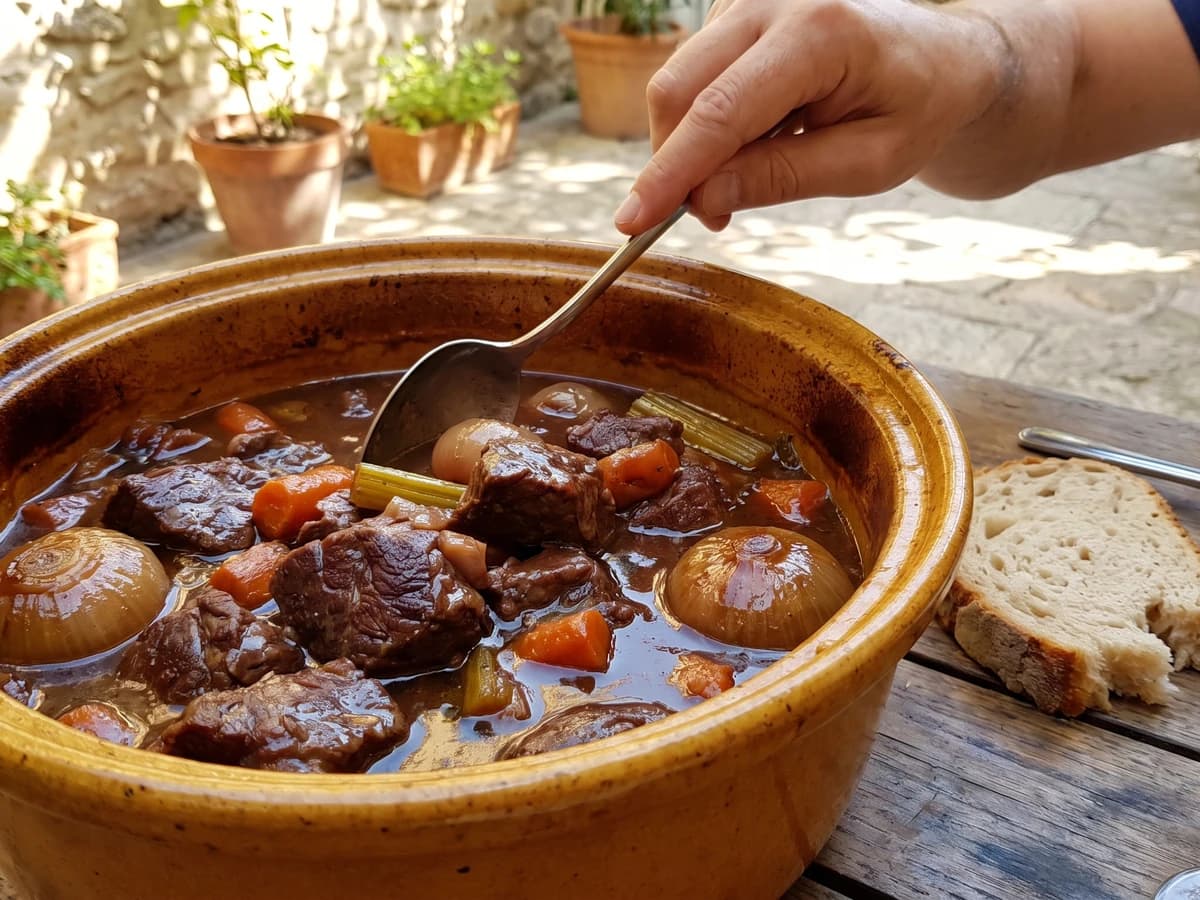
Beef shoulder larded with bacon, sharpened by red wine and vinegar, then sealed with garlic, vegetables, and dry lemon peel until the low oven turns it yielding and the gravy darkly glossy.