Chef Juliette
Ordinary or White Consommé
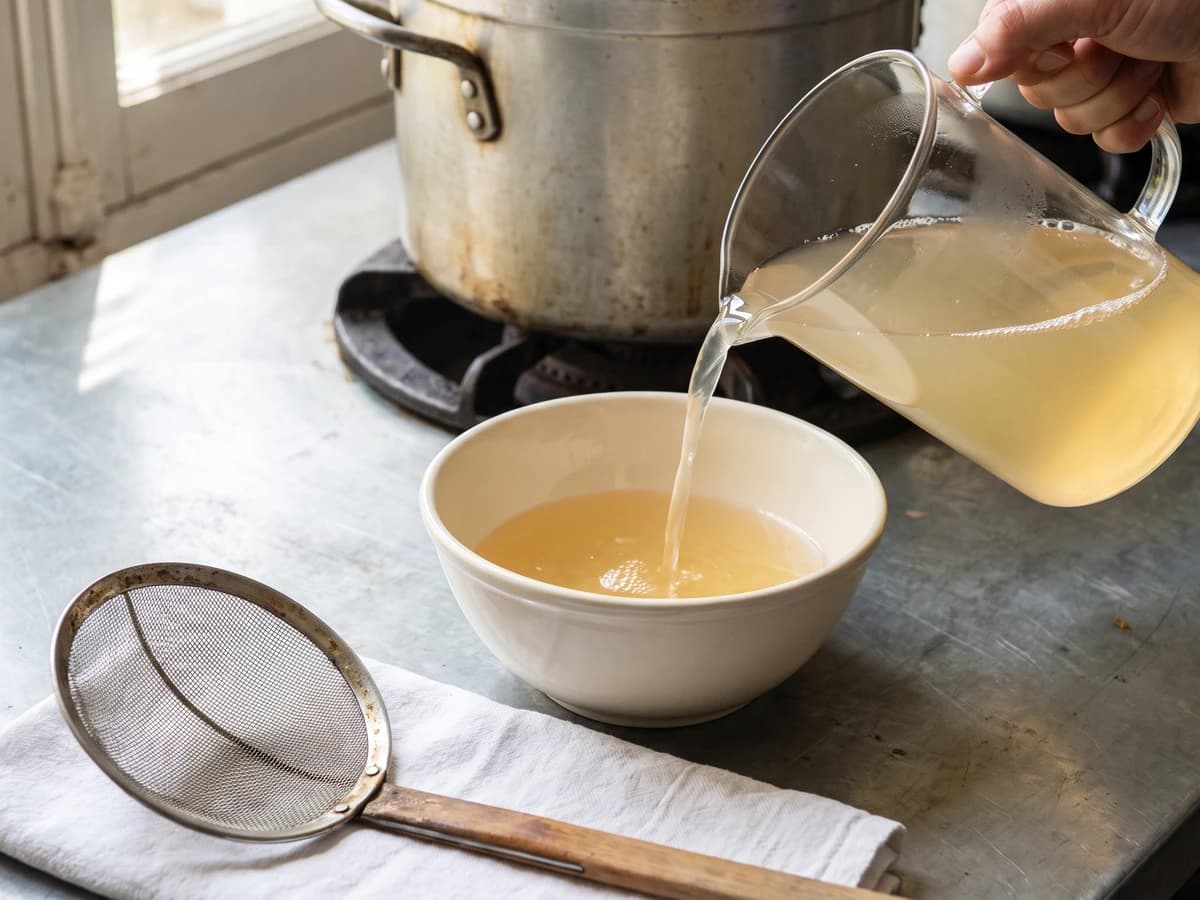
Beef shin, lean beef, and fowl begin in cold water and rise slowly toward a tremble. Skim before the boil, and you learn the quiet discipline that gives every clear French broth its backbone.
A cooking platform built around craft, culture, and the stories behind what we eat.
Created by Chef Juliette
Based on No. 54, Rouennaise Sauce, from Le Guide Culinaire (1907) by Auguste Escoffier
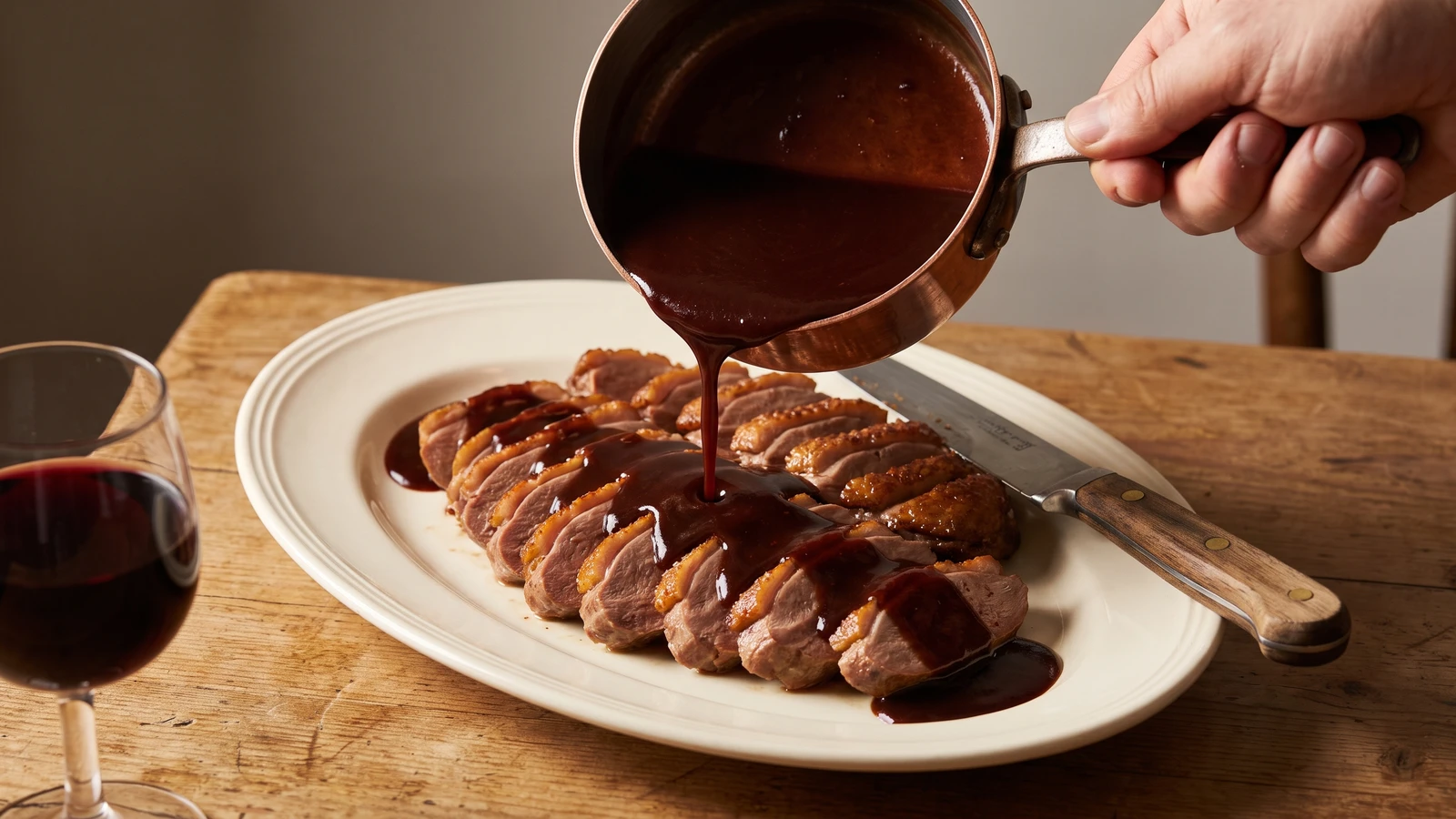
Rouennaise turns a red-wine Bordelaise into Rouen’s duck sauce with sieved raw livers, gently poached until it gleams and coats the spoon. Keep it below a simmer, because boiling makes it grain.
Sauce Rouennaise (Rouen duck-liver sauce) teaches the most delicate act of sauce-making: the liaison, a thickening finish added at the last moment. Here, raw duck liver is the liaison, and the one true thing is this: it must poach into the sauce without ever seeing a simmer. Gentle heat gives you velvet. Boiling gives you grains.
The original assumed a saucier on staff and a finished Sauce Bordelaise (No. 32) waiting beside a stockpot that never went cold. Your honest home equivalent is to prepare that referenced sauce ahead and begin here with it fully finished. A small processor replaces the brigade hand that pounded the livers, while the fine sieve stays because smoothness is part of the dish. The book’s ratio remains exact, four livers to each pint of sauce; keeping a saucier beside the pan through service was scaffolding, but the sieve and last-minute liaison must stay.
Finished correctly, Rouennaise is wine-dark and glossy, with the deep mineral savor of liver but no visible trace of it. Watch the final heating more closely than the clock. That narrow passage between safely poached and overheated decides the sauce, and it happens quickly.
Sauce Rouennaise belongs to Rouen in Normandy and to the city’s celebrated preparations of duckling à la Rouennaise. Rouen’s duck tradition includes sauces enriched with liver, blood, or juices pressed from the carcass, depending on the preparation and the kitchen. This classical entry represents the liver-bound branch: finished Bordelaise strengthened with sieved raw duck liver, not every pressed-duck sauce that carries Rouen’s name.
Quantity
8 cups (1.9 L / about 2 kg) Sauce Bordelaise (No. 32)
Quantity
16 (about 1½ pounds / 680 g)
thoroughly chilled and trimmed
| Ingredient | Quantity |
|---|---|
| Sauce Bordelaise | 8 cups (1.9 L / about 2 kg) Sauce Bordelaise (No. 32) |
| raw duck liversthoroughly chilled and trimmed | 16 (about 1½ pounds / 680 g) |
Pour the fully finished Sauce Bordelaise (No. 32) into a wide, heavy saucepan and warm it slowly to about 150°F (66°C). Keep the surface still, with no bubbling. The Bordelaise is a completed referenced preparation, so do not rebuild or alter it here; Rouennaise begins where that sauce ends.
Examine the chilled livers carefully, removing connective tissue, dark clots, and every green-stained trace of bile. Pulse them briefly in a small processor until fluid, stopping before the machine warms them. Press the purée through a fine-mesh sieve with a flexible scraper, working patiently until only fibers remain. The processor is home-kitchen scaffolding; the sieve is the dish.
Take the warm Bordelaise off the heat. Add the sieved liver purée a few spoonfuls at a time, whisking each addition completely smooth before adding more. Scrape the pan well as you work. The sauce will turn slightly fuller in color and body, but it should remain fluid and glossy.
Return the pan to the lowest heat and stir continuously, reaching along the bottom and into the corners. Warm the sauce gradually to 165°F (74°C), then remove it from the heat at once. It should lightly nap the back of a spoon without looking set. If fine grains appear, stop immediately. Ça se rattrape: blend the sauce for several seconds, pass it through a clean fine sieve, and return it to the gentlest heat only if it has not yet reached 165°F (74°C). Never let it simmer.
Pass the finished sauce through a clean fine sieve into warmed sauceboats or a warm serving bowl. Serve it at once with carved duckling, especially duckling à la Rouennaise. If it must wait, hold it between 140°F and 150°F (60°C and 66°C) in a warm water bath for no more than twenty minutes, stirring occasionally. Do not return it to direct heat. À table!
1 serving (about 60g)
Culinary guides, cultural storytelling, and the editorial depth that makes cooking meaningful.
Discover Culinary ExplorerChef Juliette
Beef shin, lean beef, and fowl begin in cold water and rise slowly toward a tremble. Skim before the boil, and you learn the quiet discipline that gives every clear French broth its backbone.
Chef Juliette
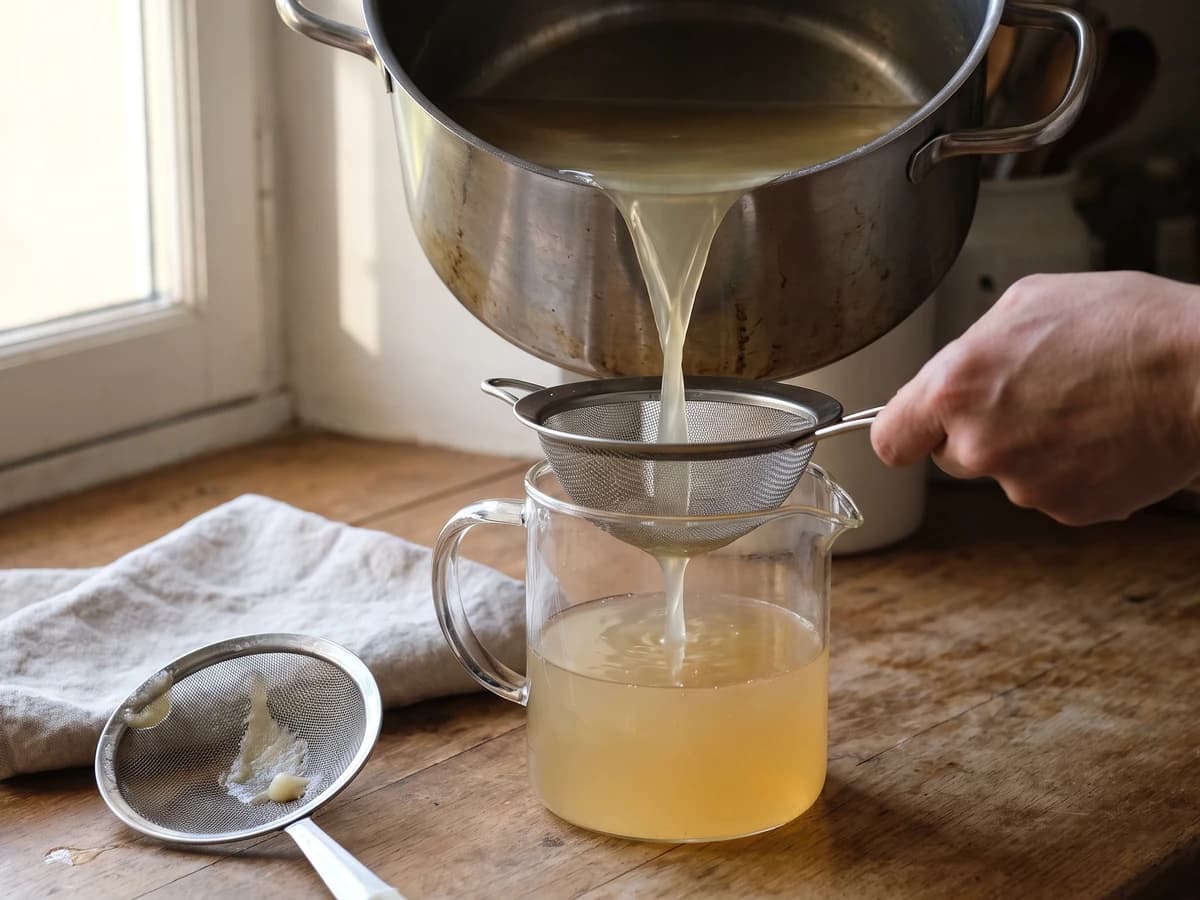
Break the veal bones small, then give them eight hours at a bare tremble. This pale, gelatinous fond becomes the quiet foundation beneath velouté, blanquette, and every sauce that must stay light.
Chef Juliette
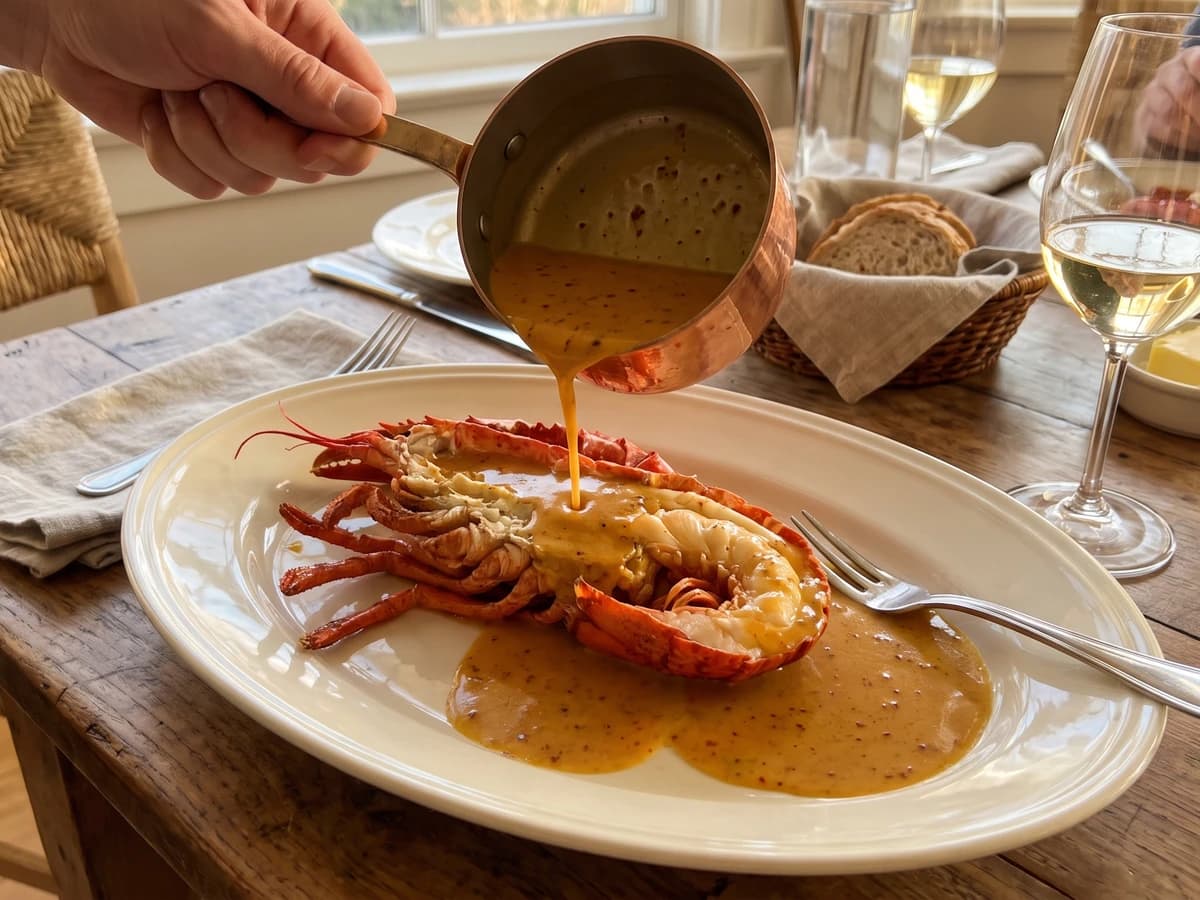
Sauce Orientale concentrates lobster-rich American Sauce with curry, then folds in cream away from the fire: a glossy, gently spiced derivative made for lobster, crayfish, and firm fish.
Chef Juliette
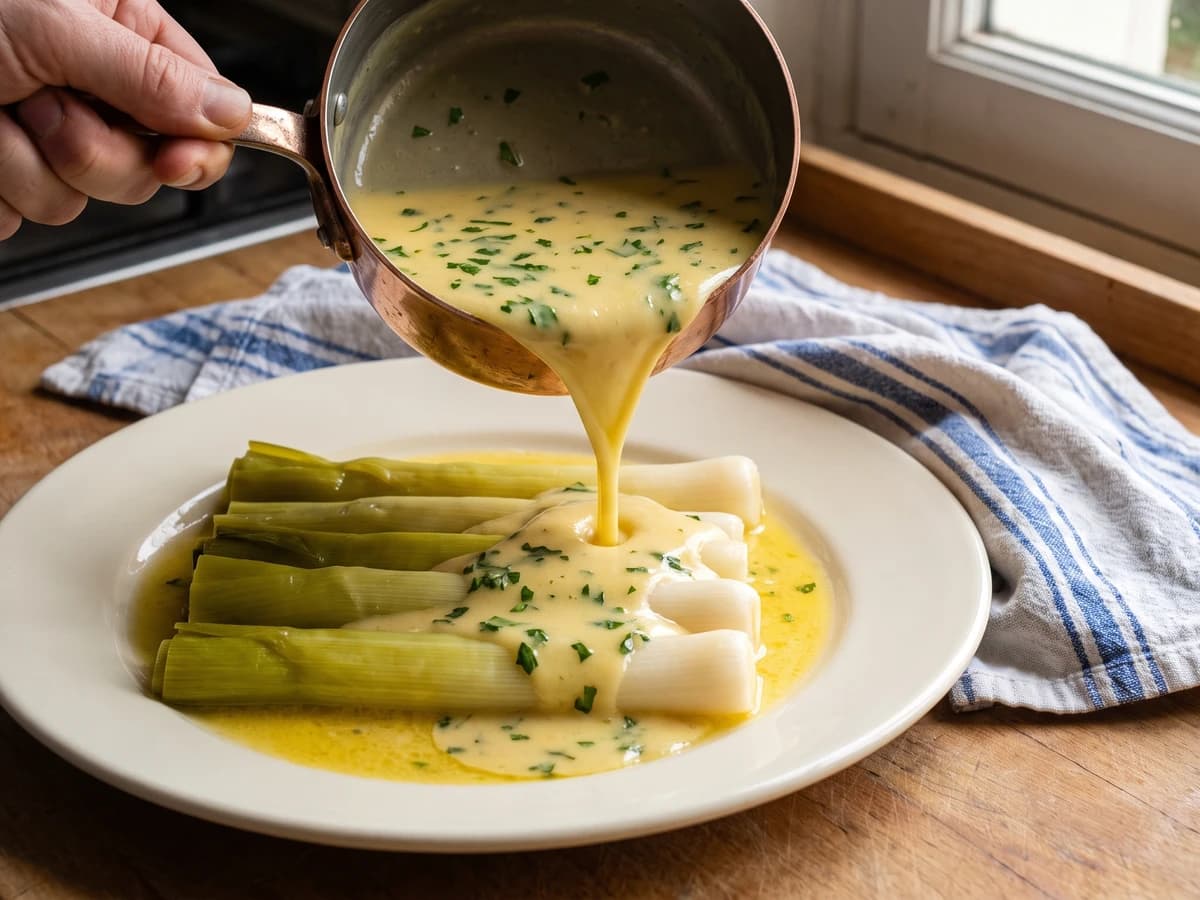
An old lesson in sauce families: Sauce Allemande takes mushroom liquor, then butter, lemon, and parsley, becoming a glossy Poulette for sheep's trotters, leeks, cauliflower, and anything needing gentle richness with a bright edge.