Chef Juliette
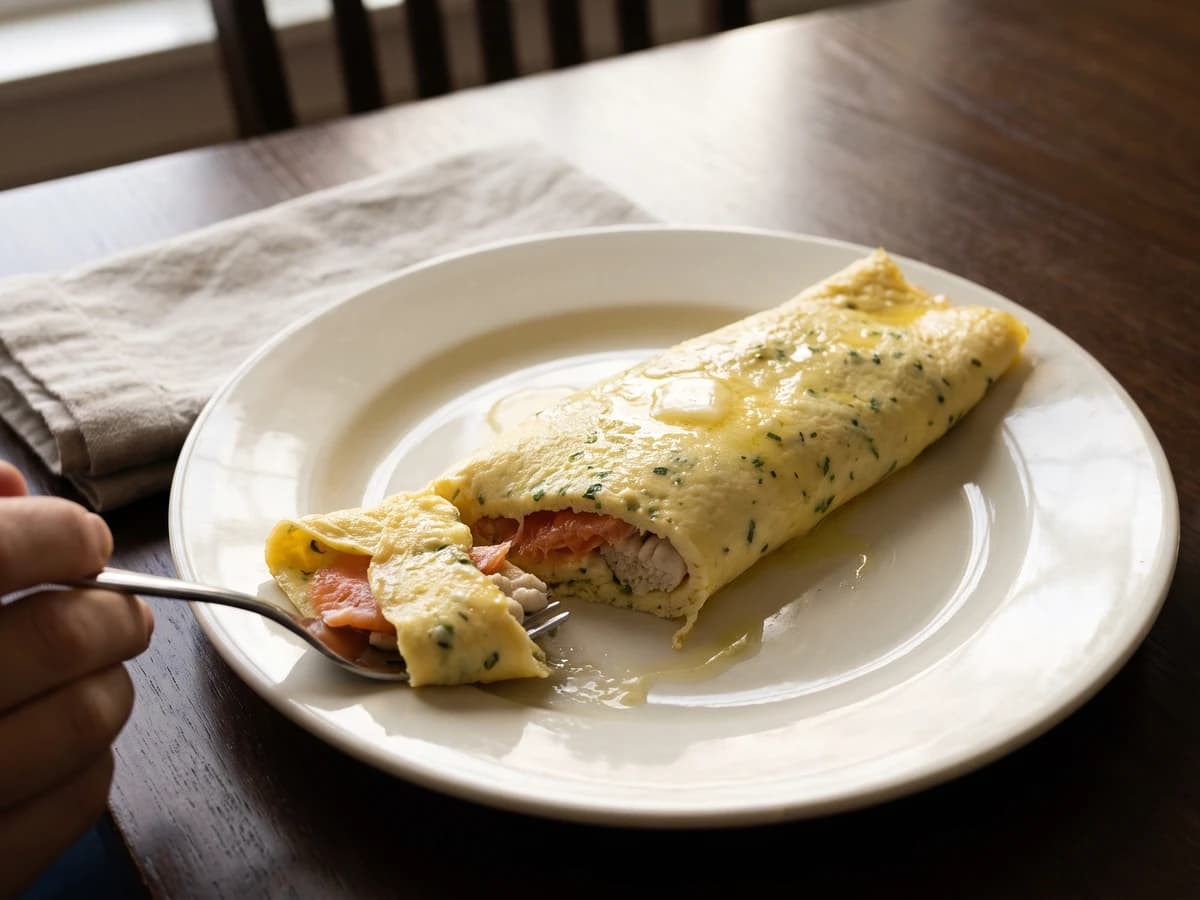
Omelette à l’Écossaise
A creamy omelette aux fines herbes closes around smoked-salmon-wrapped herring milts, gently poached in butter. Have the filling ready, then roll the eggs while they still shine.
A cooking platform built around craft, culture, and the stories behind what we eat.
Created by Chef Juliette
Based on No. 531, Cold Eggs Colinette, from Le Guide Culinaire (1907) by Auguste Escoffier
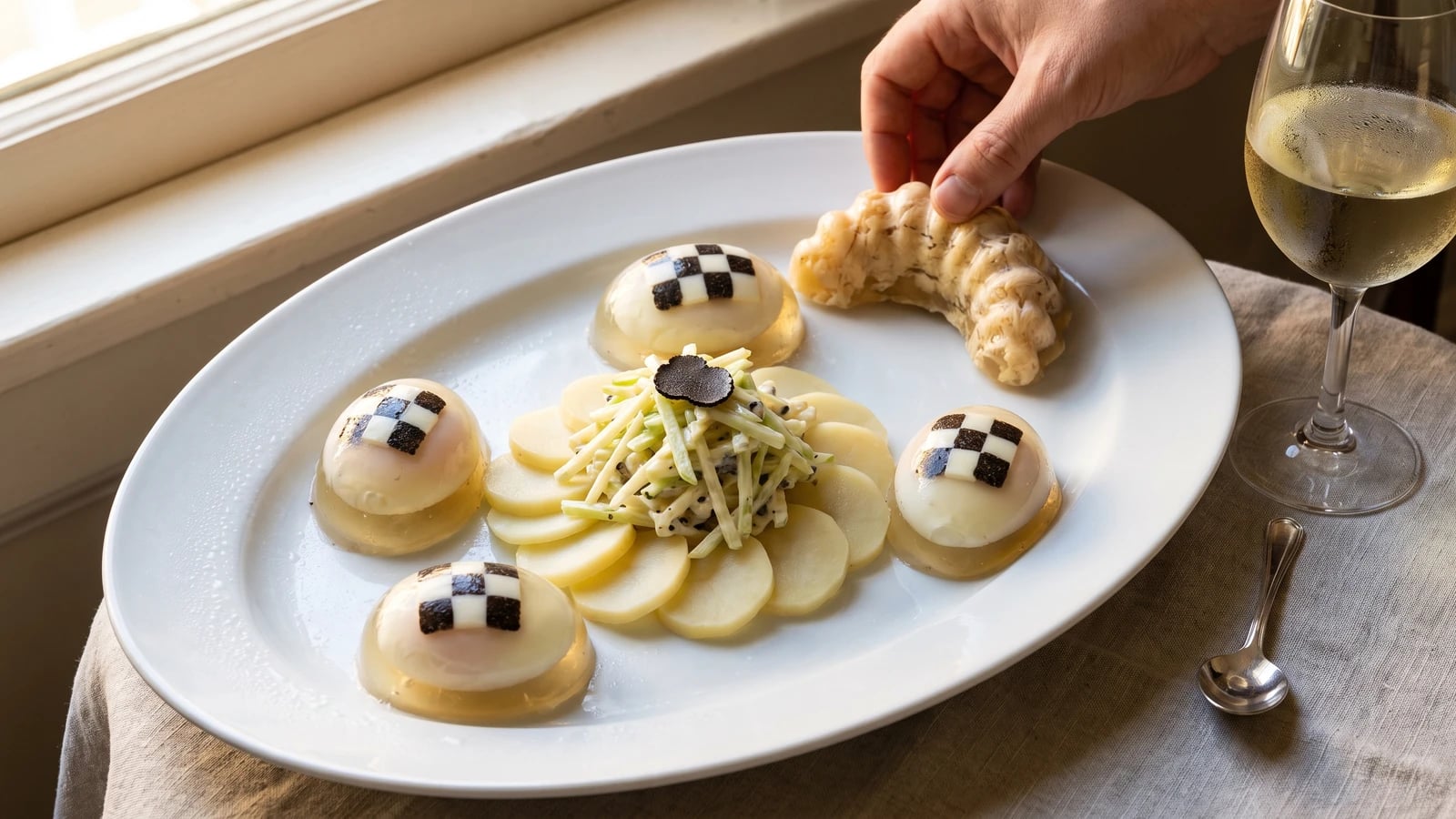
Cold poached eggs gleam inside pale aspic, patterned with egg white and truffle, then circle crisp salade Rachel and tender potato slices in a precise, generous centerpiece.
Œufs froids Colinette (cold poached eggs moulded in aspic) teach the cold kitchen's first law: each layer must set before the next arrives. Rush the gelée blanche (pale chicken aspic), and the little draughtboard of egg white and truffle floats away; work patiently, and four modest eggs turn out glossy, patterned, and ready to command the table.
The original assumed a saucier supplying pale stock from a pot never off the fire, then a garde-manger, the cold station, with finished aspic waiting, ranks of oval moulds, and hands to cut decorative jelly by the tray. At home, reduce good clear chicken stock for flavor, reinforce it with measured gelatin, use four small moulds, and cut the border from one shallow pan. That removes brigade scaffolding, not the dish. The poached egg, the checkerboard lining, the salade Rachel (celery and truffle bound with mustard mayonnaise), the ring of cold potato, and the fluted aspic crescents all stay. One cook, one stove, one evening.
Nothing here is difficult in isolation; the discipline is temperature. Let the lining turn firm and tacky before placing the draughtboard, and let the remaining aspic cool to a thick pouring consistency before it meets the mould. That is the one step that decides whether Colinette emerges neat or cloudy, and it is entirely within your hands.
Œufs froids Colinette belong to the Parisian cold-kitchen canon, where individual poached eggs were moulded in aspic for formal entrées and buffet service. Despite the egg, this was not breakfast food: it traveled from grand dining rooms to bourgeois celebration tables as a cold first course whose preparation could be completed before guests arrived. The salade Rachel center, a mustard-mayonnaise julienne of celery and truffle, and the draughtboard decoration place it firmly within the same Parisian repertory of named composed dishes.
Quantity
2½ cups (600 ml / 600 g)
Quantity
⅓ cup (80 ml / 80 g)
Quantity
1 tablespoon plus 2 teaspoons (25 ml / 15 g)
Quantity
1 tablespoon (15 ml / 18 g)
divided
Quantity
¼ teaspoon (1.25 ml / 0.5 g)
divided
Quantity
4
Quantity
2
Quantity
3 tablespoons (45 ml / 45 g)
divided
Quantity
2 small truffles (60 g total)
drained, with 20 g finely diced and 40 g julienned
Quantity
½ cup loosely packed (120 ml / 40 g)
cut into fine julienne
Quantity
1
Quantity
1 teaspoon (5 ml / 5 g)
Quantity
¼ cup (60 ml / 55 g)
Quantity
4 (about 1 lb / 450 g)
| Ingredient | Quantity |
|---|---|
| clear, unsalted pale chicken stock | 2½ cups (600 ml / 600 g) |
| cold water | ⅓ cup (80 ml / 80 g) |
| powdered gelatin | 1 tablespoon plus 2 teaspoons (25 ml / 15 g) |
| fine sea saltdivided | 1 tablespoon (15 ml / 18 g) |
| finely ground white pepperdivided | ¼ teaspoon (1.25 ml / 0.5 g) |
| small pasteurized eggs | 4 |
| hard-cooked large egg whites | 2 |
| white wine vinegardivided | 3 tablespoons (45 ml / 45 g) |
| preserved black trufflesdrained, with 20 g finely diced and 40 g julienned | 2 small truffles (60 g total) |
| tender inner celery ribscut into fine julienne | ½ cup loosely packed (120 ml / 40 g) |
| pasteurized large egg yolk | 1 |
| Dijon mustard | 1 teaspoon (5 ml / 5 g) |
| neutral oil, such as grapeseed or sunflower | ¼ cup (60 ml / 55 g) |
| small waxy potatoes | 4 (about 1 lb / 450 g) |
Sprinkle the gelatin evenly over the cold water and leave it to bloom for 10 minutes. Meanwhile, simmer the chicken stock uncovered until reduced to 2 cups plus 1 tablespoon (500 ml); keep the heat measured so the stock concentrates without darkening. Strain it through a dampened fine sieve without pressing any sediment, then season with ½ teaspoon of the measured salt and half the white pepper. Remove it from the heat and stir in the bloomed gelatin until completely dissolved. Do not boil it once the gelatin enters. Taste a teaspoon after chilling it briefly on a saucer; gelée blanche must taste slightly more seasoned while warm because the cold will soften everything.
Bring an 8 cm depth of water to a bare tremble in a wide saucepan, then add 2 tablespoons of the vinegar and 1 teaspoon of the measured salt. Crack each small egg into a cup and slip it into the water, poaching one or two at a time for about 3 minutes, until the white is set and the yolk remains yielding. Lift each egg into ice water immediately. Trim away any feathery white with a small knife to make a tidy oval. If an egg spreads badly, ça se rattrape: gather the white gently around the yolk with a spoon during its first 20 seconds, then trim it once cold. Keep the eggs in fresh cold water until the moulds are ready.
Chill four small oval moulds for 10 minutes. Cool the gelée blanche over a bowl of ice until it begins to feel lightly syrupy, then spoon about 2 tablespoons into each mould. Rotate each mould slowly over the ice so a thin, even coat sets across the base and sides. Chill for 8 to 10 minutes, until firm but still slightly tacky. Keep the coat thin; a heavy shell turns rubbery and hides the decoration.
Cut the hard-cooked egg whites and the reserved 20 g truffle into neat 3 mm dice. Dip each piece in fluid gelée blanche, then arrange alternating ivory and black squares across the base of every mould, extending a narrow band partway up the sides. Use the tip of a small knife to place them. Brush the pattern with a spoonful of gelée blanche and chill until fixed. If the dice begin sliding, stop and chill the mould for 3 minutes before continuing. Ça se rattrape. Setting the pattern is the dish; rushing it is not a shortcut.
Drain the poached eggs and pat every surface thoroughly dry; water prevents the aspic from gripping. Brush each egg with gelée blanche and center one inside each patterned mould. Spoon cool, syrupy gelée blanche down the side until the egg is completely covered, taking care not to pour directly onto the draughtboard. If the gelée sets in the jug, stand it briefly in barely warm water; if it feels warm against your finger, cool it again before pouring or it will melt the lining. Cover the moulds and chill for at least 4 hours.
Pour about ¾ cup (180 ml) of the remaining gelée blanche into a shallow 15 cm pan, making a layer about 6 mm thick. Chill until completely firm. Cut small fluted rounds, then overlap the cutter across each round to form indented crescents. Keep them cold on a lightly moistened plate; the thin film of water prevents sticking without dulling their gloss.
Place the unpeeled potatoes in a saucepan, cover with cold water, and season generously with most of the remaining salt. Bring them slowly to a simmer and cook for 18 to 22 minutes, until a small knife enters cleanly but the potatoes still hold their shape. Drain, peel while warm, and let them cool completely before cutting into 5 mm slices. A floury or overcooked potato breaks into rubble here, so keep the simmer gentle.
Whisk the egg yolk with the Dijon mustard, the remaining 1 tablespoon vinegar, a pinch of salt, and the remaining white pepper. Add the oil drop by drop at first, then in a thin thread once the mayonnaise takes hold, whisking until glossy and firm. If the emulsion splits, put a teaspoon of cold water in a clean bowl and whisk in the broken mayonnaise one spoonful at a time. Ça se rattrape. Fold the celery and the remaining 40 g julienned truffle with just enough mustard mayonnaise to bind them. Salade Rachel is a fine, crisp julienne, not a heavy mound drowned in sauce.
Mound the salade Rachel in the center of a chilled oval platter. Arrange the cold potato slices around it in a close overlapping ring. Dip each mould in warm water for 2 seconds, loosen the rim with a fingertip, and invert it between the potatoes and the edge of the platter. If an egg refuses to release, warm the mould for one second more; patience, not hotter water. Should a small patch of aspic remain behind, replace it on the egg, brush with fluid gelée blanche, and chill for 5 minutes. Border the platter with the fluted aspic crescents and serve cold. À table!
1 serving (about 320g)
Culinary guides, cultural storytelling, and the editorial depth that makes cooking meaningful.
Discover Culinary ExplorerChef Juliette
A creamy omelette aux fines herbes closes around smoked-salmon-wrapped herring milts, gently poached in butter. Have the filling ready, then roll the eggs while they still shine.
Chef Juliette
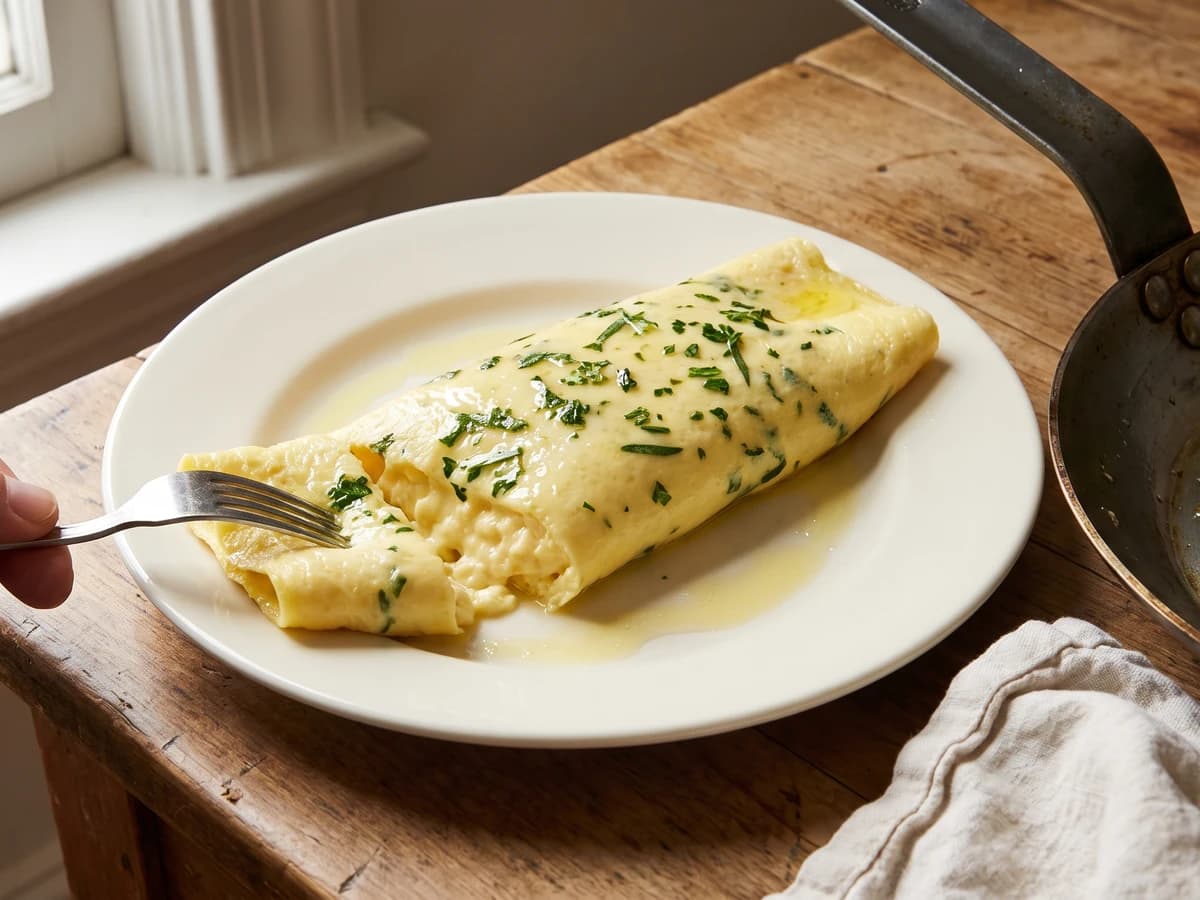
Four tender herbs, hot butter, and two eggs per pan: this rolled omelette teaches the quick hand and good judgment that keep the outside pale and the center creamy.
Chef Juliette
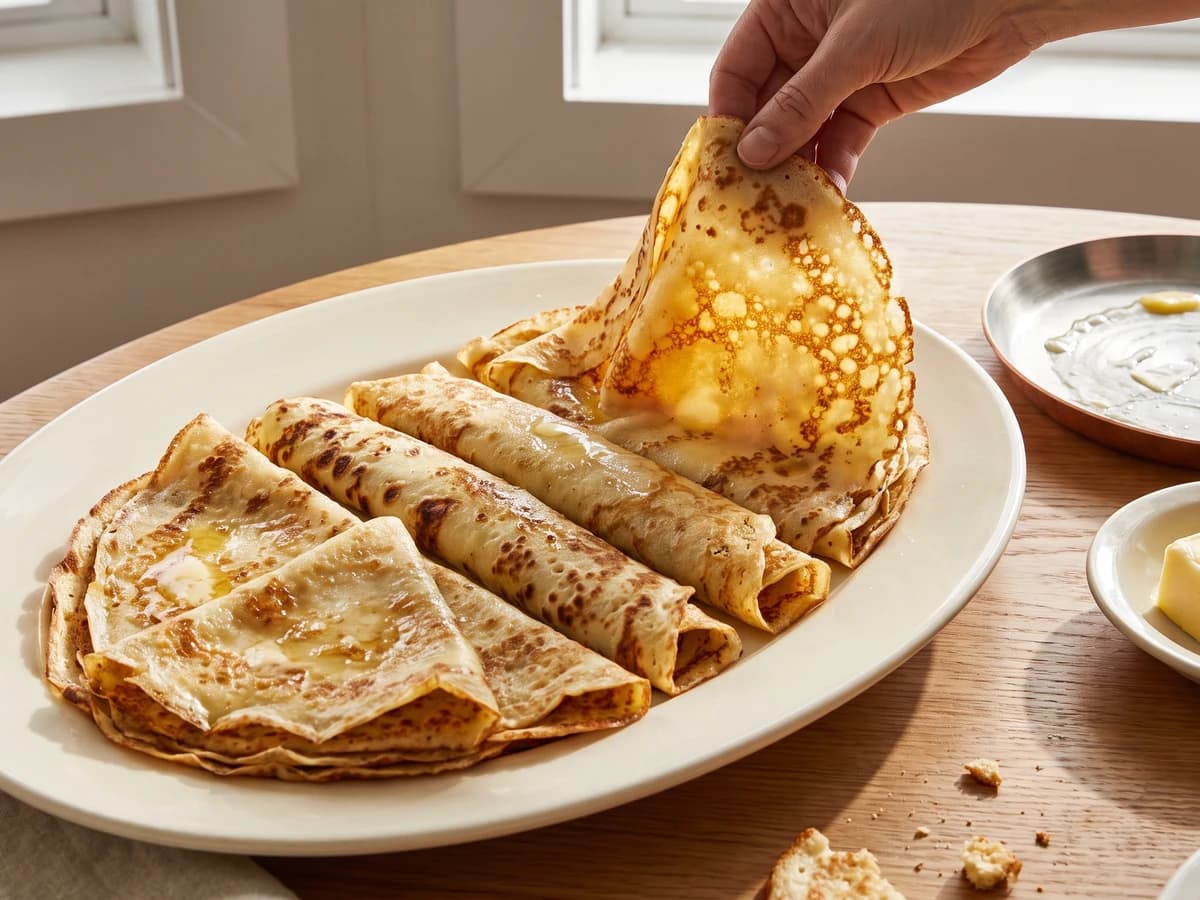
Four batters, one lesson: let the flour drink deeply before cooking, then spread the batter thinly in butter for crêpes and pannequets that bend without becoming tough.
Chef Juliette
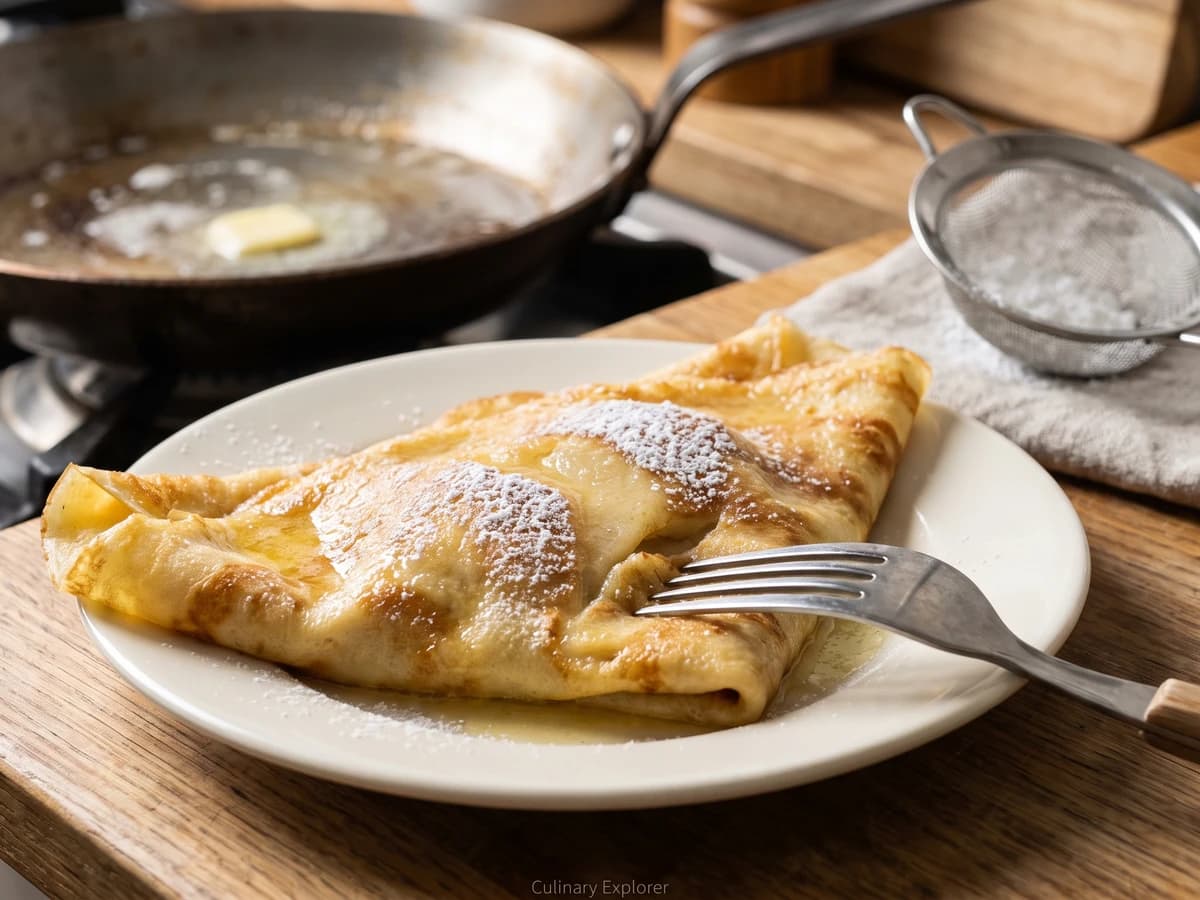
Crêpes au Couvent trap ripe Williams pear dice between two thin pours of sweet batter, then turn in one clean toss and reach the table butter-gold, powdered, and burning hot.