Chef Juliette
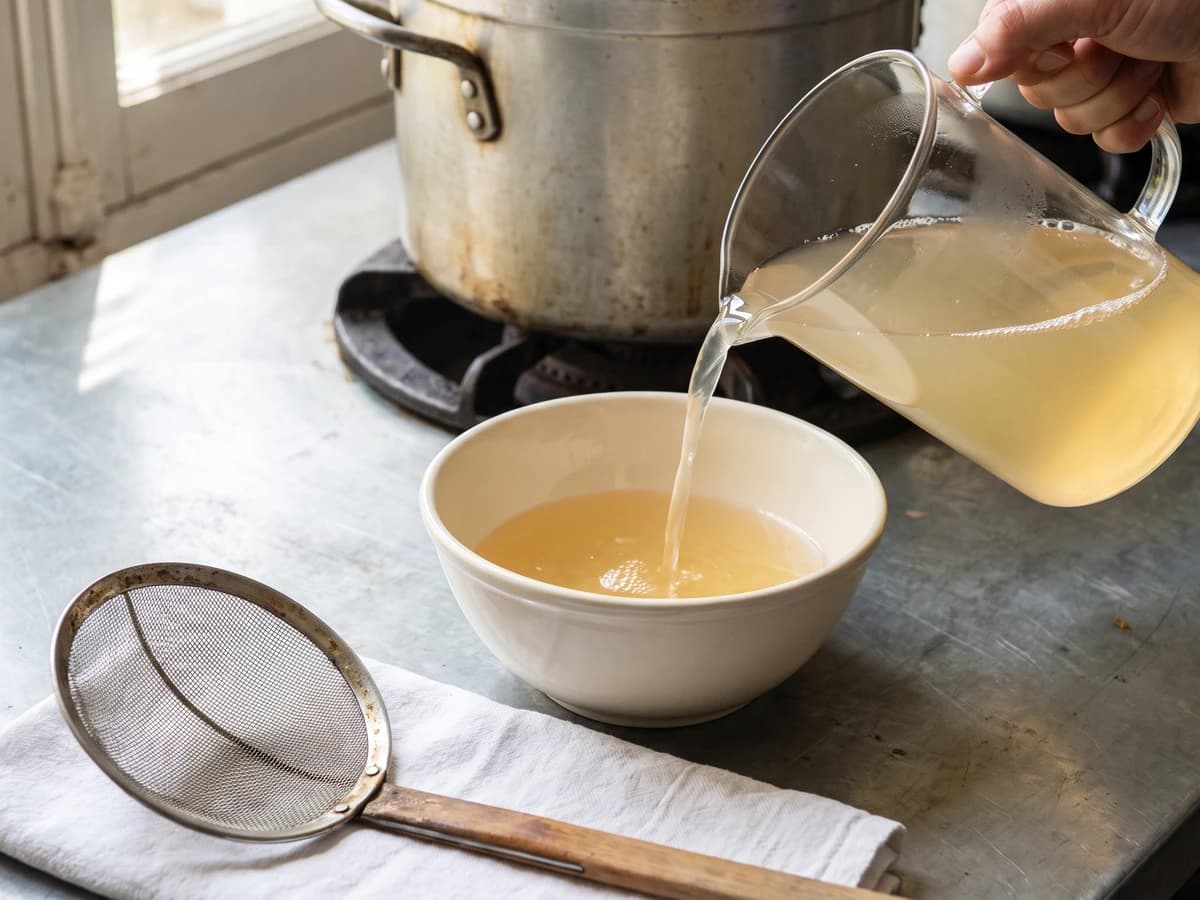
Ordinary or White Consommé
Beef shin, lean beef, and fowl begin in cold water and rise slowly toward a tremble. Skim before the boil, and you learn the quiet discipline that gives every clear French broth its backbone.
A cooking platform built around craft, culture, and the stories behind what we eat.
Created by Chef Juliette
Based on No. 53, Escoffier Roberts Sauce, from Le Guide Culinaire (1907) by Auguste Escoffier
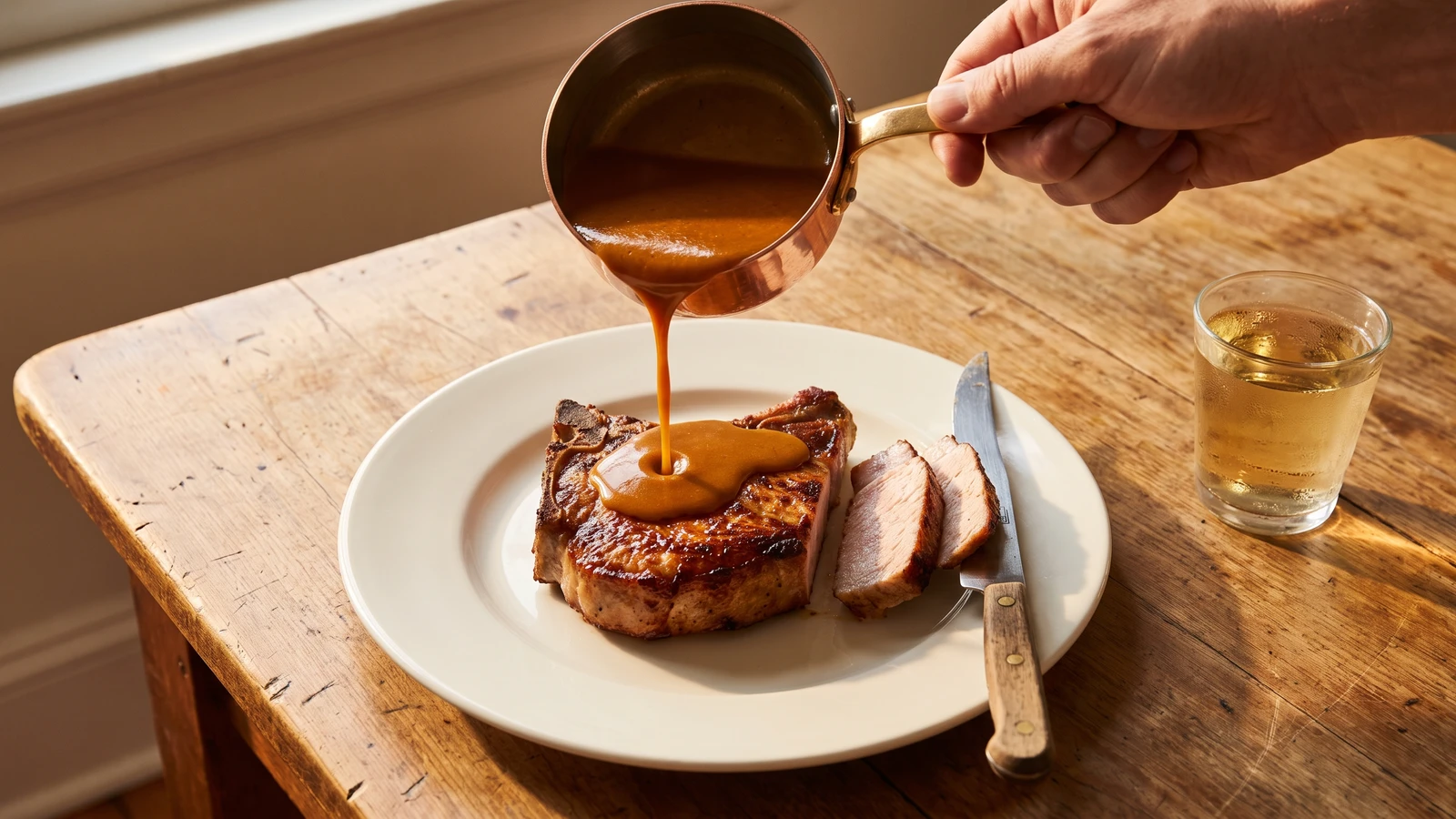
Sauce Roberts proves that finishing is a technique: equal volumes of bottled sauce and excellent brown stock, warmed gently to a gloss for grills, with the original condiment served cold beside sliced meat.
Sauce Roberts d'Escoffier (prepared sauce for grills and cold meats) teaches a small but exact lesson: finishing a prepared sauce is still cooking. Equal volume means equal volume, and excellent brown stock does not merely thin the bottle; it opens the sauce, brings it to serving consistency, and carries its seasoning over grilled meat. Know that ratio before touching the pan.
The source assumes a saucier on staff, brown stock never off the fire, and a salamander tending the grill while each order is sauced. Your home equivalent is a heavy saucepan, a whisk, a well-made stock, and the grill or broiler you already own. The brigade quantity becomes a freezer-friendly quart of each, and the long holding can go because holding was scaffolding; the equal-volume finish and gentle heat are the dish. One cook, one stove, one evening.
Warm it, never boil it. Finished Sauce Roberts should pour in a glossy ribbon and be nappant, lightly coating the back of a spoon. If it separates or grows greasy, take it off the heat and whisk until it comes home; ça se rattrape. The step that matters is adding the hot stock gradually while the bottled sauce stays below a boil.
The bottled Sauce Roberts in Escoffier's entry belongs to the Parisian grand-kitchen pantry, where prepared condiments stood beside brown stocks and were finished differently for grill service and the cold-meat table. It is often mistaken for a complete pan-made sauce Robert, but this particular entry records a service formula: equal-volume brown stock for hot use, no dilution for cold meats. Its range from pork and veal to poultry and even fish shows that the canon treated a balanced piquant sauce as a working condiment, not the property of one meat alone.
Quantity
4 cups (950 ml / approximately 1 kg, depending on brand)
Quantity
4 cups (950 ml / 950 g)
for hot service
| Ingredient | Quantity |
|---|---|
| good bottled Sauce Roberts | 4 cups (950 ml / approximately 1 kg, depending on brand) |
| excellent brown stockfor hot service | 4 cups (950 ml / 950 g) |
For hot service, use all the bottled Sauce Roberts and brown stock in exact equal volume. For cold service with cold meat, leave the bottled sauce undiluted and keep the stock for another purpose. The cold sauce is not the hot mixture chilled down; the source gives two distinct uses of the same prepared condiment.
Pour the 4 cups (950 ml / 950 g) excellent brown stock into a heavy saucepan and bring it just to a bare simmer. It should tremble at the edge without boiling hard. Pour it into a heatproof jug and cover it so it stays hot.
Return the saucepan to low heat and add the 4 cups (950 ml / approximately 1 kg) bottled Sauce Roberts. Stir slowly until it loosens and flows readily from the spoon, but do not let it boil. Strong heat can dull its piquancy and draw the fat out of the sauce before the stock has a chance to join it.
Add the hot brown stock in three portions, whisking each one completely into the Sauce Roberts before adding the next. Once all the stock is incorporated, hold the sauce at the barest simmer for 2 to 3 minutes, just until it is smooth, glossy, and nappant, leaving a light film on the back of a spoon. Do not reduce it aggressively; the source specifies dilution, not reconstruction. If oily beads appear, remove the pan from the heat and whisk firmly from the center. If it still refuses to join, whisk a few spoonfuls in a clean warm bowl until smooth, then incorporate the rest gradually. Ça se rattrape.
For hot service, ladle the Sauce Roberts into a warmed sauceboat or spoon it directly over grilled pork, veal, poultry, or fish. For cold service, stir the undiluted bottled sauce until smooth and serve it cool beside sliced cold meat. À table!
1 serving (about 60g)
Culinary guides, cultural storytelling, and the editorial depth that makes cooking meaningful.
Discover Culinary ExplorerChef Juliette
Beef shin, lean beef, and fowl begin in cold water and rise slowly toward a tremble. Skim before the boil, and you learn the quiet discipline that gives every clear French broth its backbone.
Chef Juliette
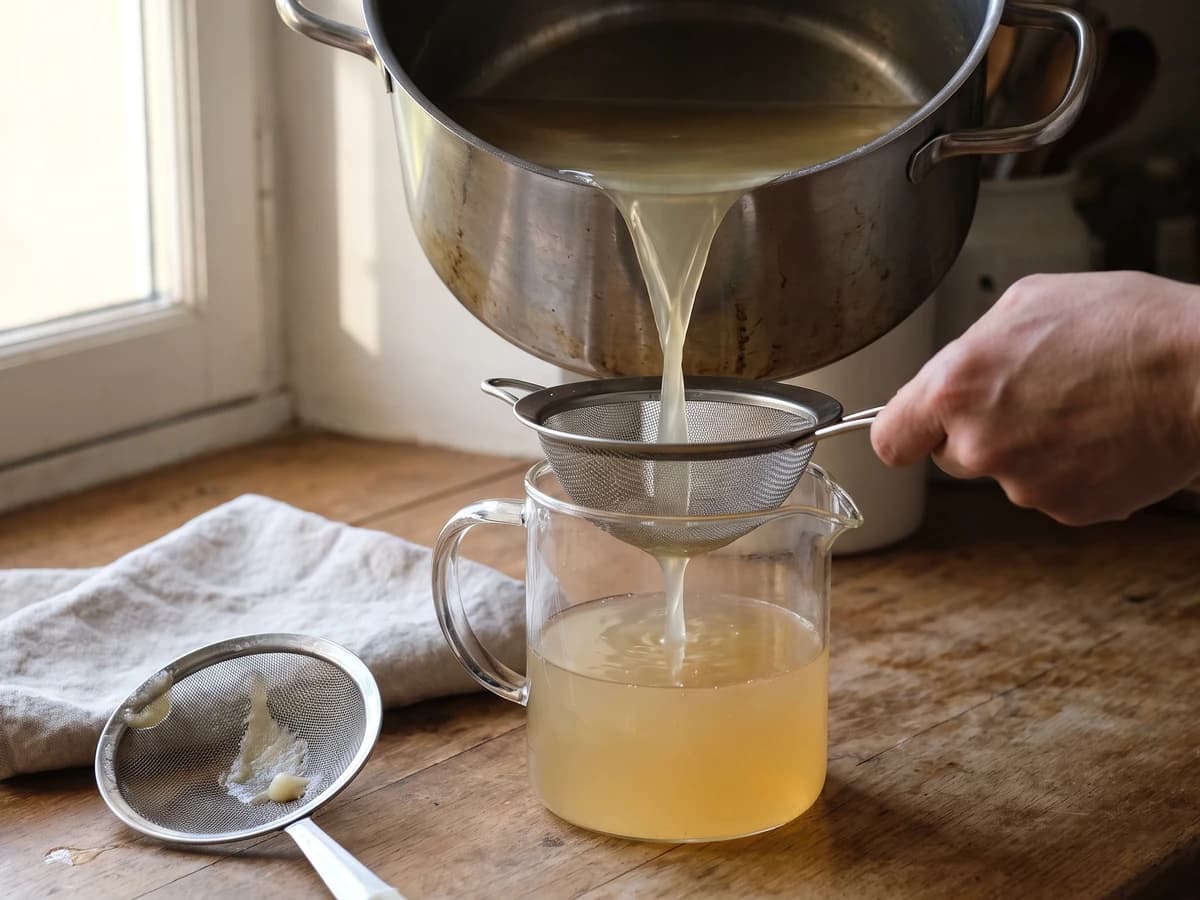
Break the veal bones small, then give them eight hours at a bare tremble. This pale, gelatinous fond becomes the quiet foundation beneath velouté, blanquette, and every sauce that must stay light.
Chef Juliette
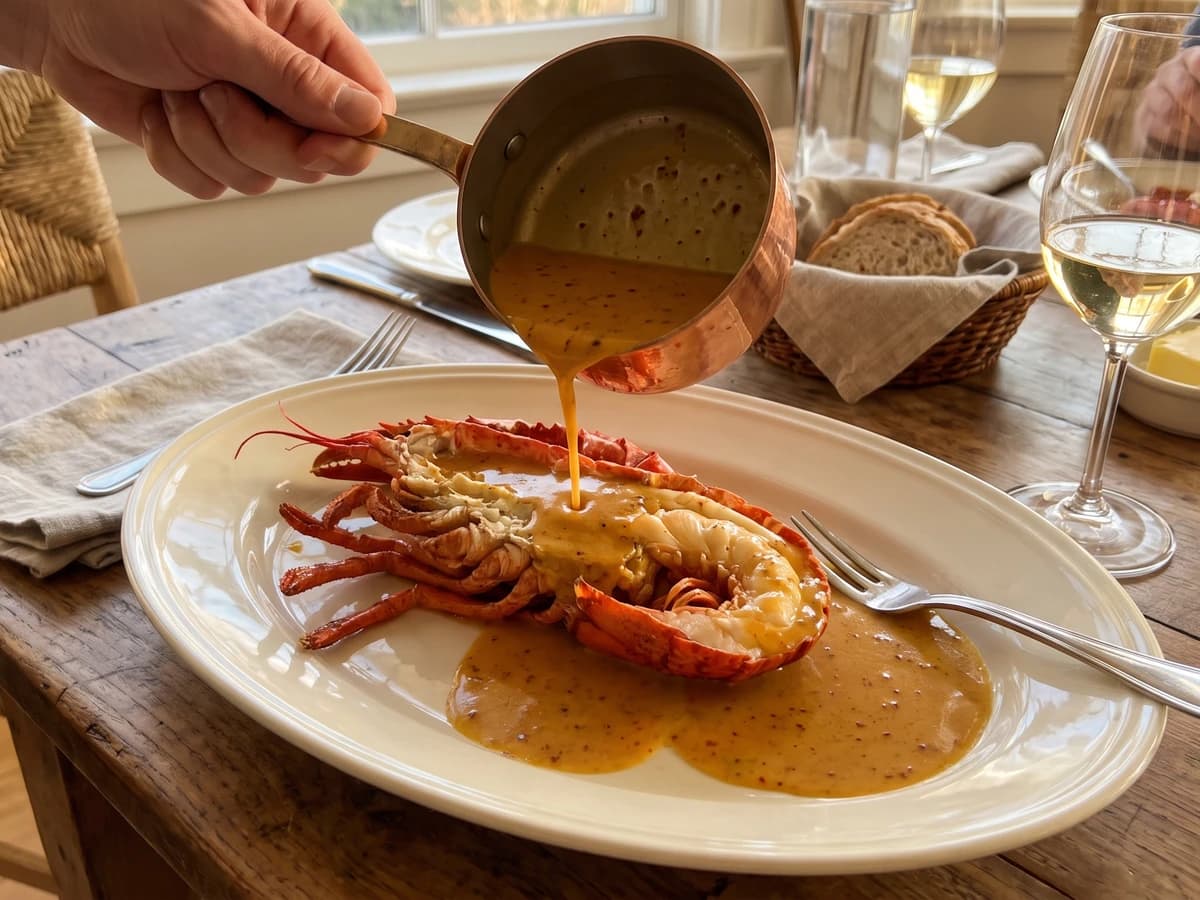
Sauce Orientale concentrates lobster-rich American Sauce with curry, then folds in cream away from the fire: a glossy, gently spiced derivative made for lobster, crayfish, and firm fish.
Chef Juliette
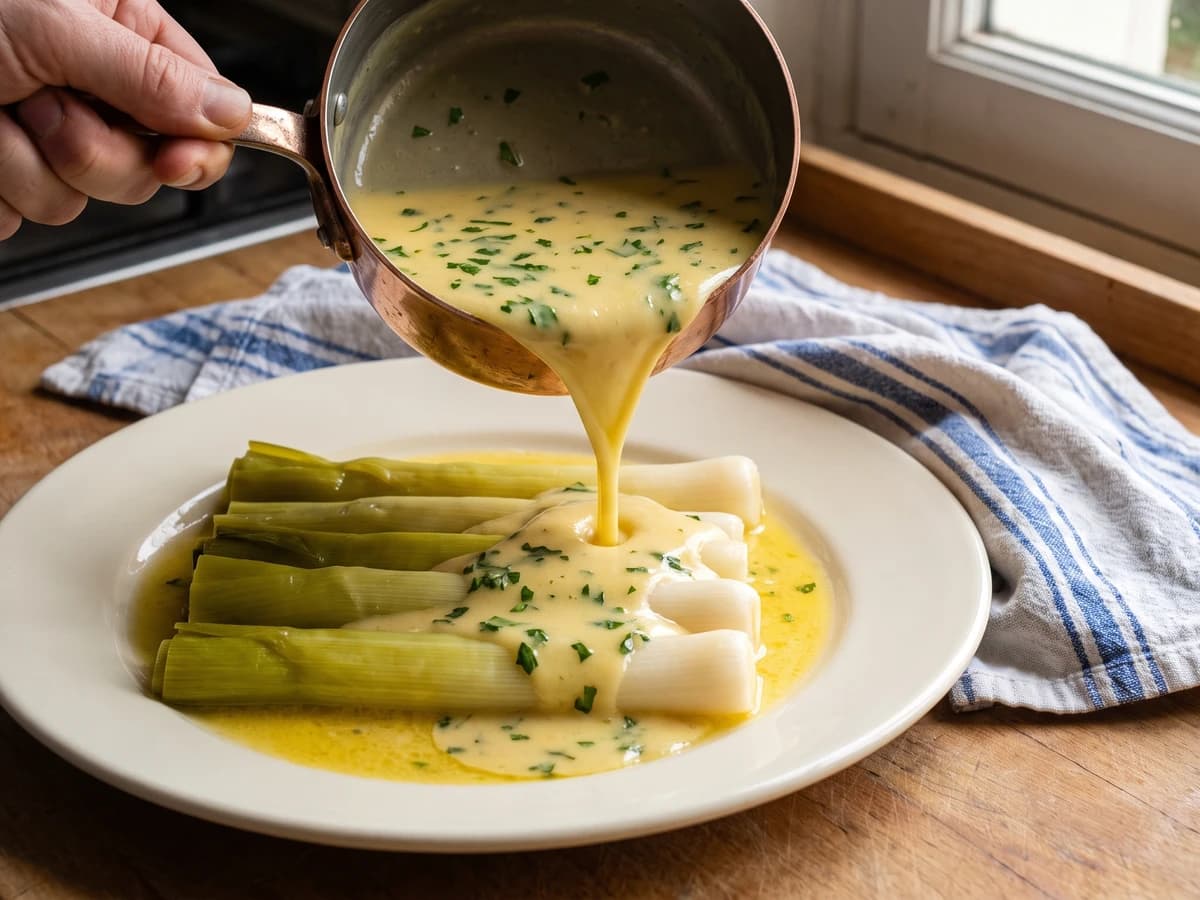
An old lesson in sauce families: Sauce Allemande takes mushroom liquor, then butter, lemon, and parsley, becoming a glossy Poulette for sheep's trotters, leeks, cauliflower, and anything needing gentle richness with a bright edge.