Chef Juliette
Omelette à l’Écossaise
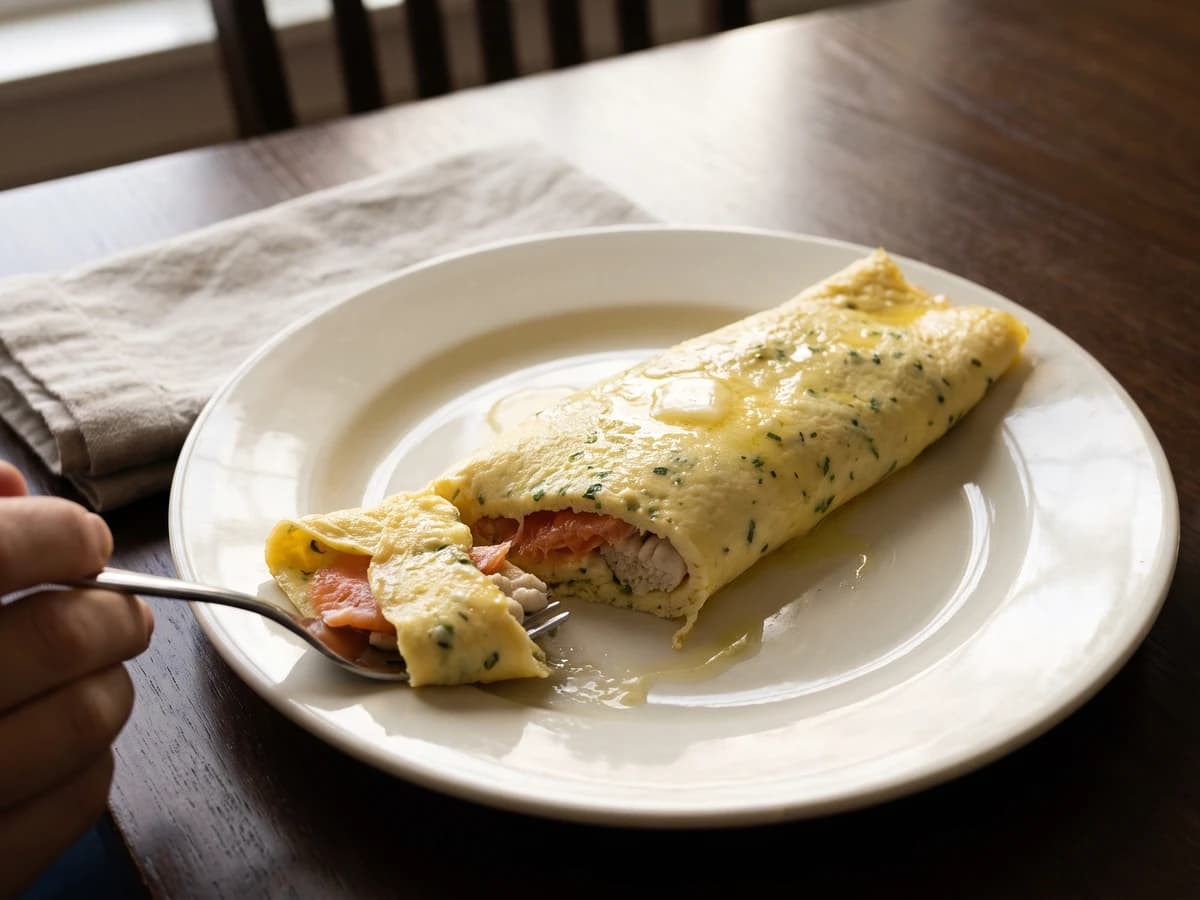
A creamy omelette aux fines herbes closes around smoked-salmon-wrapped herring milts, gently poached in butter. Have the filling ready, then roll the eggs while they still shine.
A cooking platform built around craft, culture, and the stories behind what we eat.
Created by Chef Juliette
Based on No. 529, Cold Eggs Carême, from Le Guide Culinaire (1907) by Auguste Escoffier
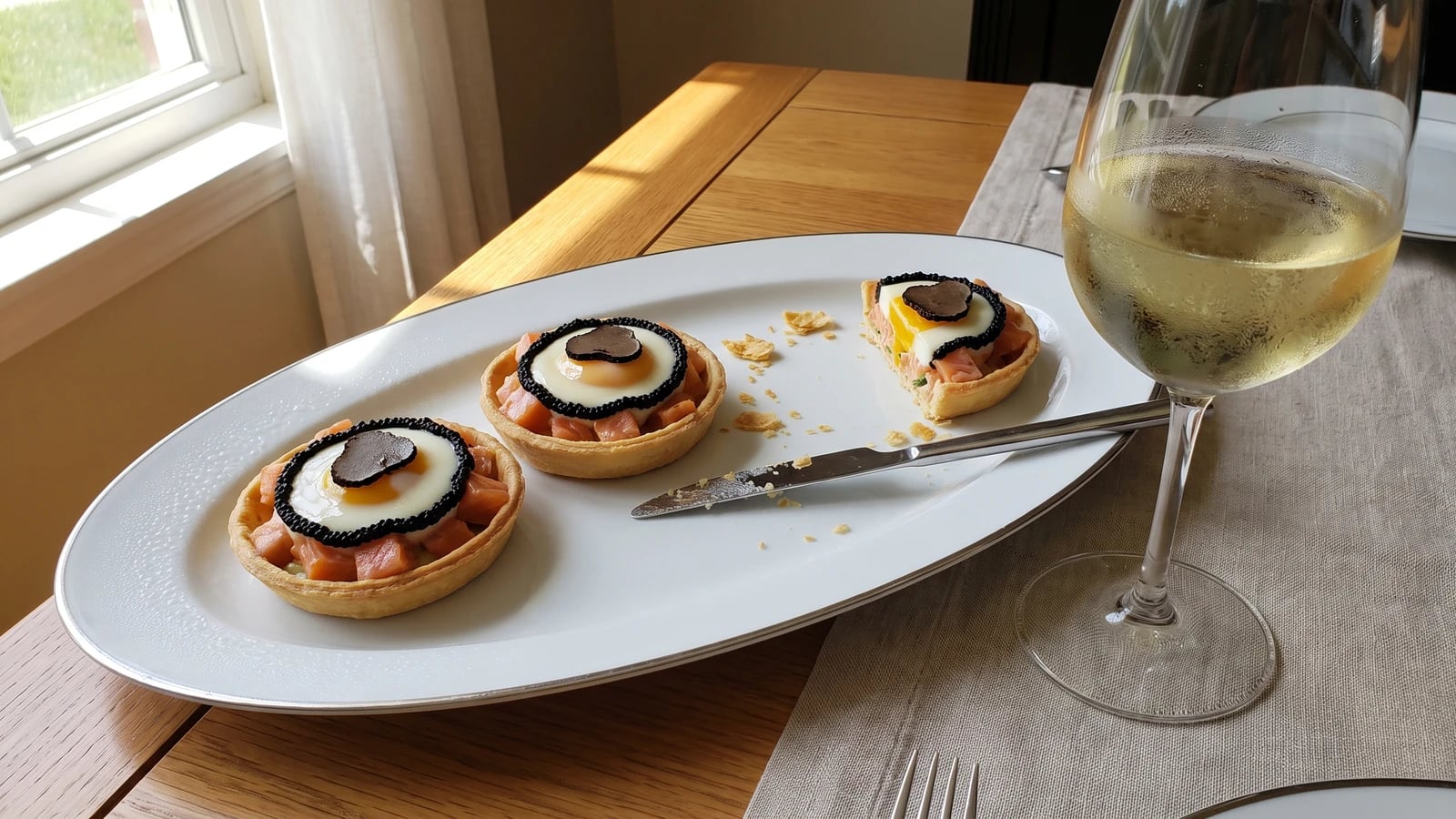
Chilled eggs cut to neat ovals sit over crisp tartlets of diced salmon and mayonnaise, with a dark ring of caviar and black truffle: a lesson in cold composition, not ornament for ornament's sake.
Œufs froids Carême (Cold Eggs Carême) teaches the discipline of cold composition. Every element must be properly cooked, fully chilled, and dry before assembly. A warm egg loosens the mayonnaise, damp salmon softens the pastry, and one careless component undoes the others.
The original assumed a cold-larder station stocked with baked tartlet crusts, cooked salmon, mayonnaise, caviar, and truffle, plus matching oval dishes and a fancy-cutter. At home, make four cases, cook one salmon fillet, and trim the eggs with an oval cutter or a parchment template and sharp knife. A low oven supplies the gentle heat once given by a salamander. There is no stockpot or saucier to reproduce here because the mayonnaise enters as a finished emulsion; good full-fat prepared mayonnaise is the honest small-batch equivalent. That station work is scaffolding and can go. The œuf sur le plat (egg cooked in its own buttered dish), salmon dice merely cohered with mayonnaise, caviar thread, and black truffle slice are the dish and must stay. One cook, one stove, one evening.
When it is right, the pastry breaks cleanly under the fork, the cool salmon remains distinct beneath the tender egg, and caviar and truffle arrive as seasoning rather than decoration. Cooling, then blotting every component dry, is the step that decides it. Do that before you assemble a single tartlet.
Œufs froids Carême belong to the Parisian grand cold-table repertoire, where composed eggs appeared as individual entrées rather than breakfast. The Carême title is honorific, not regional, and signals the formal garnish of salmon, caviar, and black truffle rather than the larder of Lyon, Normandy, or Provence. As these arrangements moved from staffed dining rooms to bourgeois tables, their structure endured because every component could be prepared ahead and assembled shortly before service.
Quantity
1 cup (240 ml / 125 g), plus 1 tablespoon (15 ml / 8 g) for rolling
Quantity
5 tablespoons (75 ml / 71 g)
cut into 1 cm cubes
Quantity
¼ teaspoon (1.25 ml / 1.5 g)
Quantity
2 to 3 tablespoons (30 to 45 ml / 30 to 45 g)
Quantity
2 tablespoons (30 ml / 28 g)
for the tins, salmon dish, and egg dishes
Quantity
1 small fillet, about 5 oz (¾ cup cooked dice / 140 g raw, about 120 g cooked)
Quantity
4
Quantity
½ teaspoon (2.5 ml / 3 g)
divided
Quantity
⅛ teaspoon (0.6 ml / 0.3 g)
Quantity
⅓ cup (80 ml / 75 g)
chilled and divided
Quantity
8 teaspoons (40 ml / 40 g)
well chilled
Quantity
1 small truffle (about 0.5 oz / 15 g)
fresh or whole preserved, drained and cut into 4 thin slices
| Ingredient | Quantity |
|---|---|
| all-purpose flour | 1 cup (240 ml / 125 g), plus 1 tablespoon (15 ml / 8 g) for rolling |
| cold unsalted buttercut into 1 cm cubes | 5 tablespoons (75 ml / 71 g) |
| fine sea salt for the pastry | ¼ teaspoon (1.25 ml / 1.5 g) |
| ice water | 2 to 3 tablespoons (30 to 45 ml / 30 to 45 g) |
| softened unsalted butterfor the tins, salmon dish, and egg dishes | 2 tablespoons (30 ml / 28 g) |
| skinless salmon fillet | 1 small fillet, about 5 oz (¾ cup cooked dice / 140 g raw, about 120 g cooked) |
| large eggs | 4 |
| fine sea saltdivided | ½ teaspoon (2.5 ml / 3 g) |
| finely ground white pepper | ⅛ teaspoon (0.6 ml / 0.3 g) |
| full-fat mayonnaisechilled and divided | ⅓ cup (80 ml / 75 g) |
| black caviarwell chilled | 8 teaspoons (40 ml / 40 g) |
| black trufflefresh or whole preserved, drained and cut into 4 thin slices | 1 small truffle (about 0.5 oz / 15 g) |
Combine the flour and pastry salt, then rub in the cold butter until the mixture holds flat flakes and small crumbs. This is pâte brisée, short pastry, and tenderness depends on leaving the butter cold rather than working it into a paste. Add 2 tablespoons of ice water and toss with a fork; add the remaining water a teaspoon at a time only until a squeezed handful holds together. Gather without kneading, flatten into a disc, wrap, and chill for 30 minutes.
Heat the oven to 375°F (190°C). Butter four oval tartlet tins measuring about 4 by 3 inches (10 by 7 cm). Roll the pâte brisée about ⅛ inch (3 mm) thick, cut four generous ovals, and ease them into the tins without stretching. Trim the rims, prick the bases, and chill for 20 minutes. Line each case with parchment and baking weights, then bake for 12 to 14 minutes, until the rims are pale gold. Remove the weights and parchment and bake for another 6 to 8 minutes, until the bases feel dry and look evenly golden. Cool completely before unmolding.
Reduce the oven to 325°F (165°C). Butter a small baking dish, set in the salmon, and season with about one-quarter of the remaining salt and a little white pepper. Cover loosely with buttered parchment and bake for 10 to 12 minutes, until the flesh is just opaque, separates into moist flakes, and reaches 145°F (63°C) at its thickest point. Cool the fillet whole, then refrigerate until thoroughly cold. Blot away surface moisture and any white albumin before cutting it into neat ¼-inch (5 mm) dice.
Butter four shallow ovenproof egg dishes. Break each egg into a cup first, then slide it into its dish so the yolk remains whole and centered. Season the whites lightly with the remaining salt and pepper. Bake at 325°F (165°C) for 8 to 11 minutes, until the whites are completely opaque and the yolks are softly set enough to hold their shape when chilled. If a yolk drifts while the white is still fluid, nudge it gently back toward the center with a spoon.
Let the eggs stand in their dishes for 10 minutes. Loosen each one with a thin offset spatula and slide it onto a parchment-lined tray. Chill uncovered for about 30 minutes, until no warmth remains, then cover. Center an oval cutter measuring about 3 by 2¼ inches (8 by 6 cm) around each yolk and press straight through the white, or cut around a parchment template with a sharp paring knife. Blot both sides dry. If an edge splits, tuck it together when the egg meets the salmon; the caviar thread will conceal the seam.
Fold ¼ cup (60 ml / 55 g) of the cold mayonnaise through the diced salmon. Add only enough of the remaining mayonnaise to make the dice cohere when lifted on a spoon; the salmon should remain distinct, not swim in sauce. If the mixture becomes loose, drain it in a fine sieve for 5 minutes and fold in a spoonful of the reserved cold mayonnaise. Keep it chilled.
Check that the shells, salmon, and eggs are all cold and dry. This is the decisive checkpoint. If a shell has softened, bake it for 4 minutes at 325°F (165°C), then let it cool completely before continuing. Divide the salmon mixture among the tartlet cases and level it just below the rims. Set one trimmed egg over each filling, yolk centered, and press only enough to seat it without crushing the pastry.
Use a small spoon to lay 2 teaspoons of caviar in a narrow, continuous thread around each egg where it meets the salmon. Set one thin slice of black truffle on each egg, centered over the yolk. Arrange the tartlets on a chilled platter and serve at once, or refrigerate for no more than 30 minutes so the pastry keeps its crisp bite. À table!
1 serving (about 175g)
Culinary guides, cultural storytelling, and the editorial depth that makes cooking meaningful.
Discover Culinary ExplorerChef Juliette
A creamy omelette aux fines herbes closes around smoked-salmon-wrapped herring milts, gently poached in butter. Have the filling ready, then roll the eggs while they still shine.
Chef Juliette
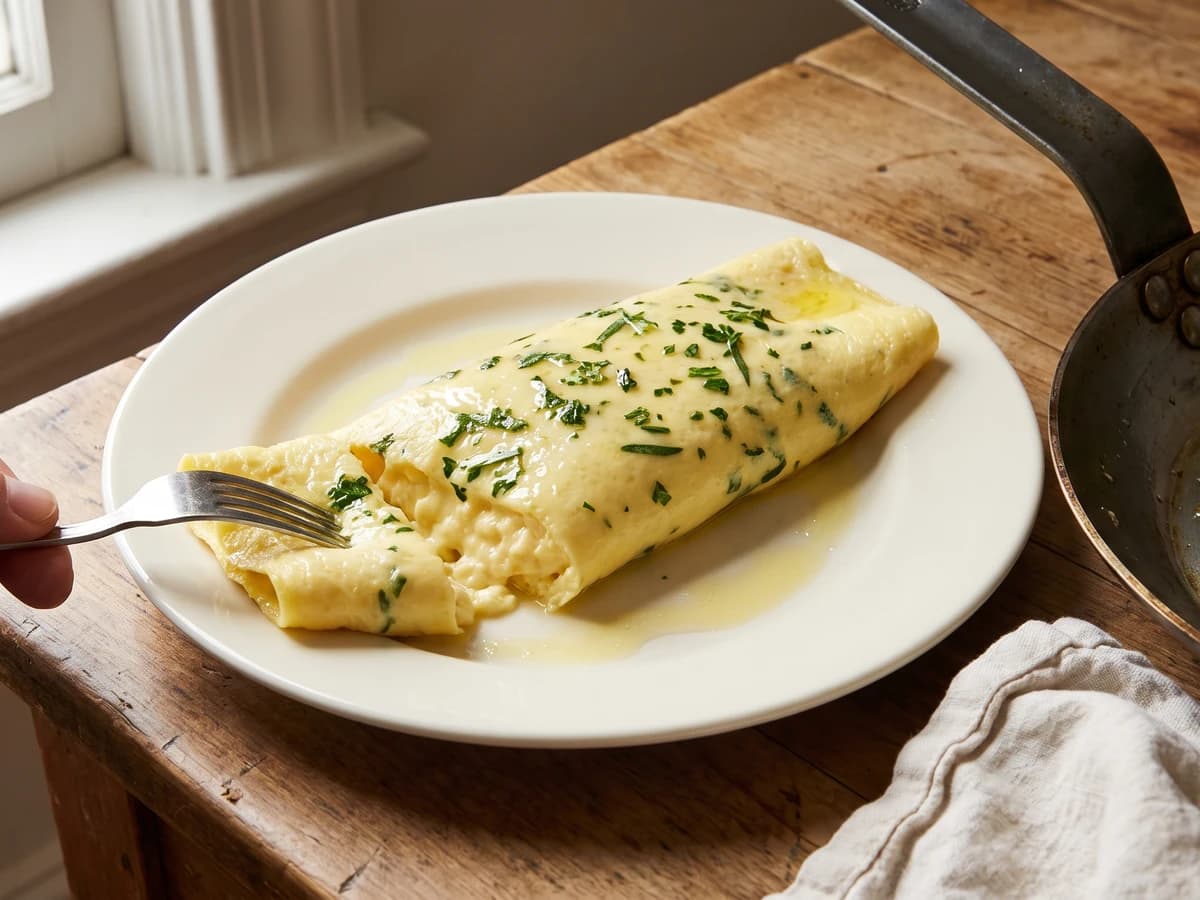
Four tender herbs, hot butter, and two eggs per pan: this rolled omelette teaches the quick hand and good judgment that keep the outside pale and the center creamy.
Chef Juliette
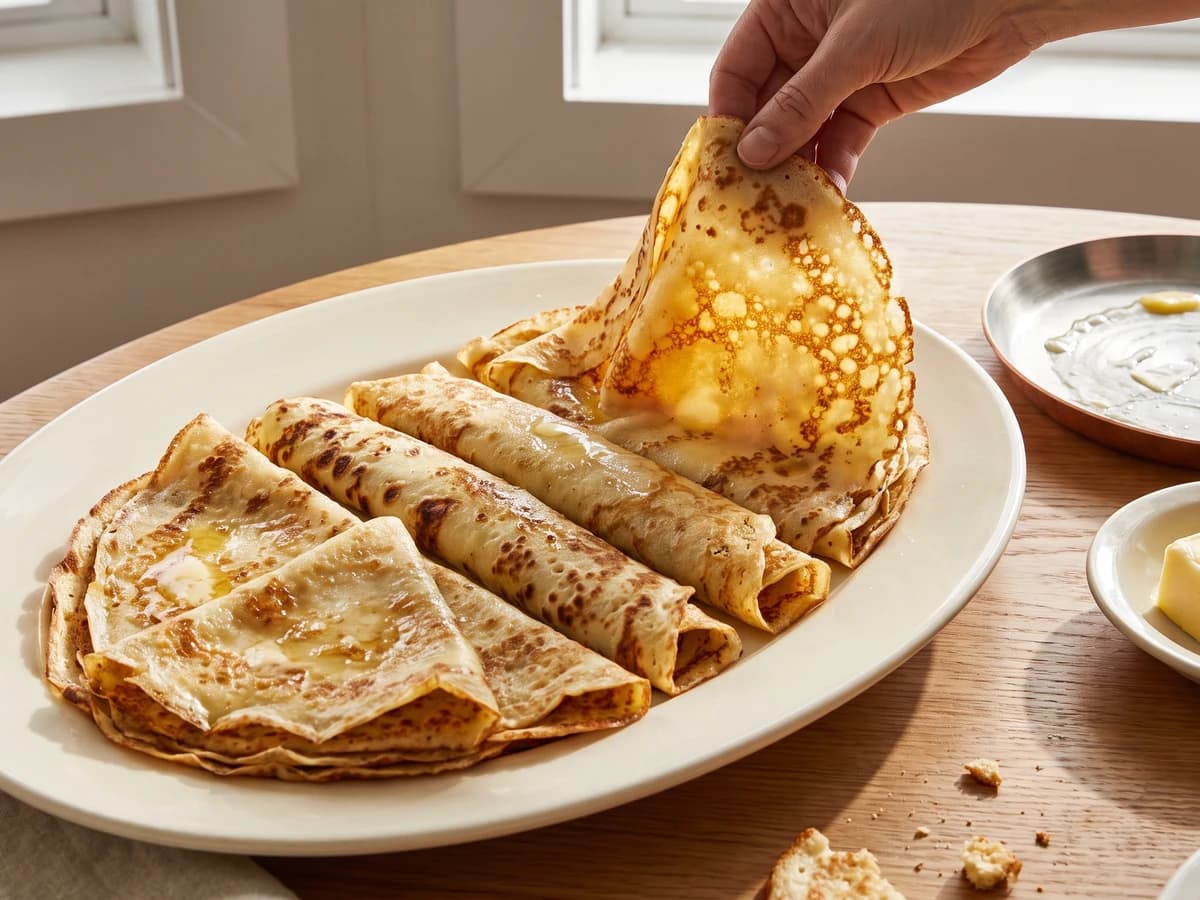
Four batters, one lesson: let the flour drink deeply before cooking, then spread the batter thinly in butter for crêpes and pannequets that bend without becoming tough.
Chef Juliette
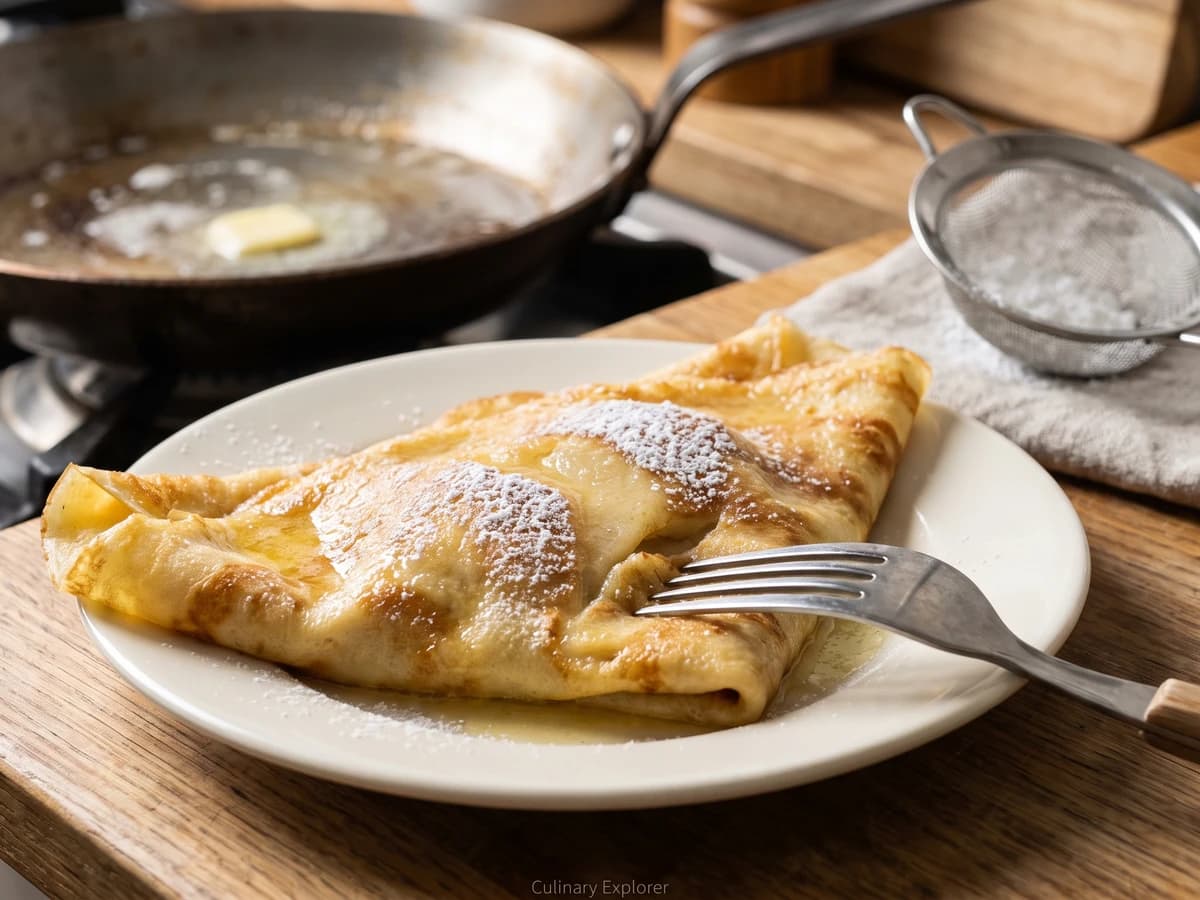
Crêpes au Couvent trap ripe Williams pear dice between two thin pours of sweet batter, then turn in one clean toss and reach the table butter-gold, powdered, and burning hot.