Chef Juliette
Omelette à l’Écossaise
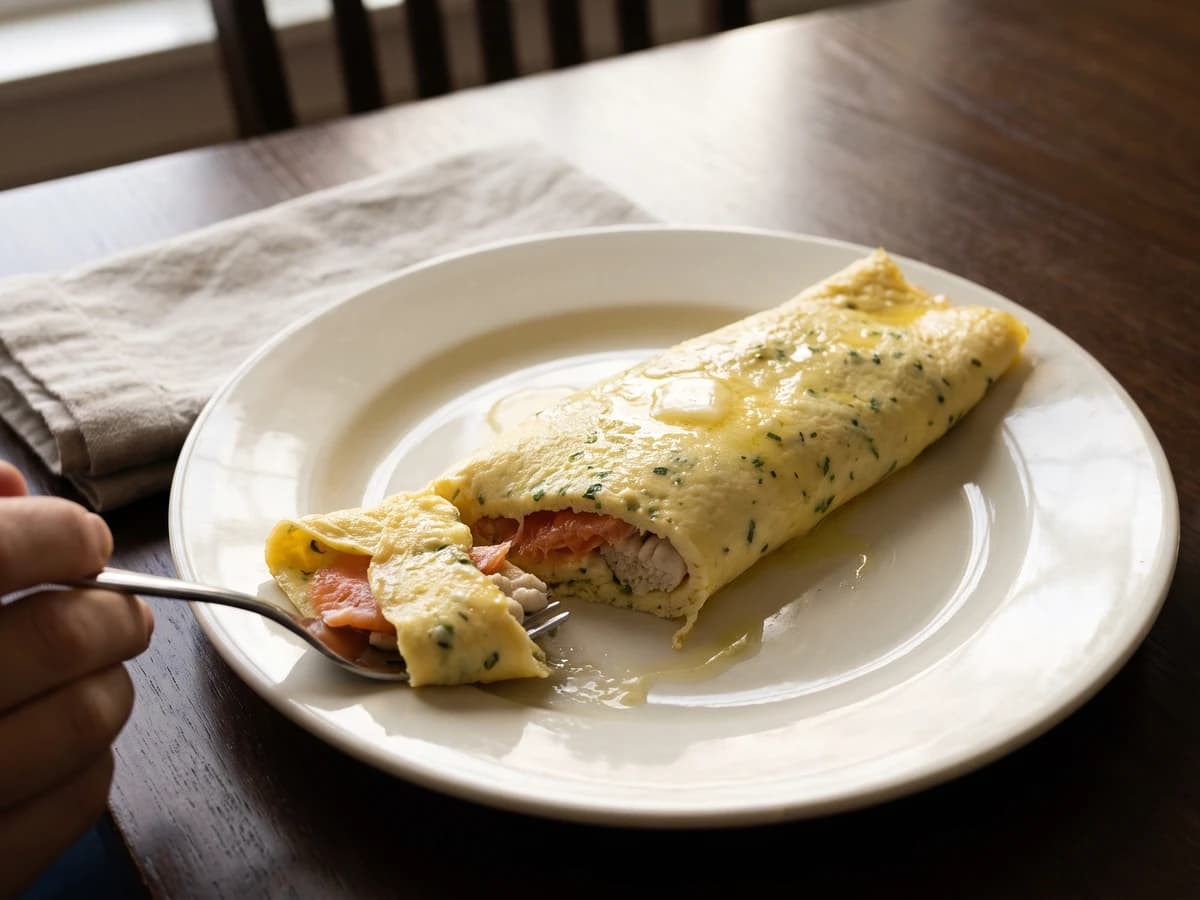
A creamy omelette aux fines herbes closes around smoked-salmon-wrapped herring milts, gently poached in butter. Have the filling ready, then roll the eggs while they still shine.
A cooking platform built around craft, culture, and the stories behind what we eat.
Created by Chef Juliette
Based on No. 527, Cold Eggs Argenteuil, from Le Guide Culinaire (1907) by Auguste Escoffier
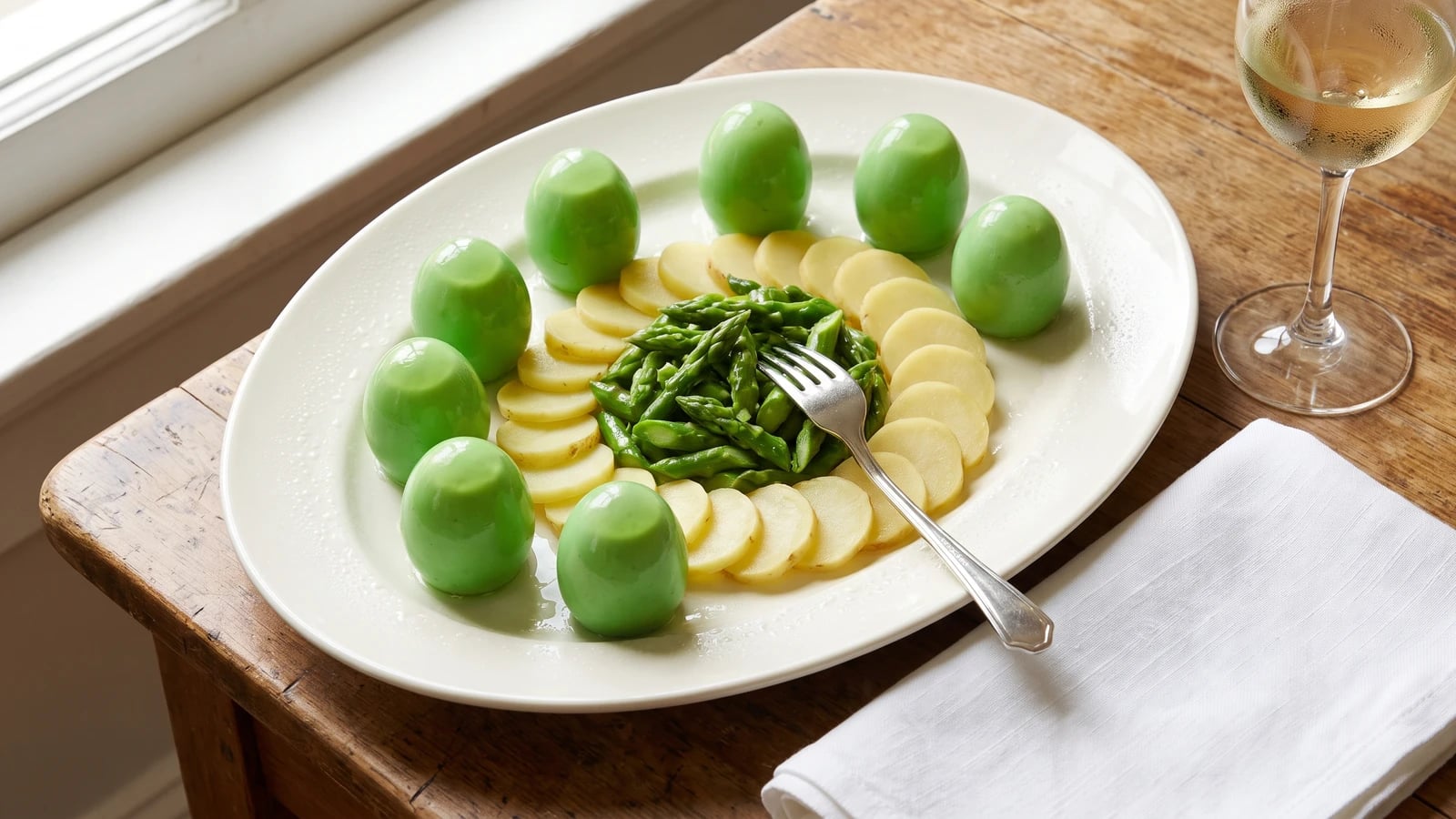
Soft-boiled eggs stand under a pale green asparagus chaud-froid and clear aspic gloss, circling a bright salad of asparagus tips and precise potato rounds, a grand cold entrée brought calmly to the home table.
Œufs froids Argenteuil (cold eggs with asparagus) teach the discipline of cold glazing. Their pale green chaud-froid, a velouté set softly with aspic, must cling in one smooth veil before the clear jelly goes over it. One true thing decides everything: the eggs must be thoroughly cold and absolutely dry before they meet the sauce.
The original preparation assumed a saucier, a stock never off the fire, pans of white jelly ready in the cold room, a decorative cutter, and enough hands to glaze brigade quantities repeatedly. Here, eight eggs serve four, powdered gelatin gives a dependable set to pale home stock, and a plain 1-inch cutter replaces the fancy one without changing the arrangement. Those are scaffolding. The real butter and cream, the one-third measure of asparagus purée, the trimmed egg bases, and the repeated aspic coats must stay. One cook, one stove, one evening.
When it is right, each egg stands under a cool celadon glaze, glossy enough to catch the light, around crisp asparagus tips and neat coins of potato. The platter looks ceremonious, but the work is simply temperature, patience, and several thin coats rather than one heavy one. Before touching the chaud-froid, run a clean fingertip over an egg: if you feel even a trace of moisture, blot it again.
Argenteuil, on the Seine northwest of Paris, became celebrated across the Paris markets for pale asparagus raised beneath carefully mounded earth, and classical cooks turned the town's name into a culinary signal for asparagus purée or tips. Œufs froids Argenteuil belong less to local farmhouse cooking than to the Parisian cold-kitchen repertoire, where soft eggs were masked with chaud-froid, glazed with aspic, and arranged for a buffet or formal hors-d'œuvre. The name does not claim the egg dish was born in Argenteuil; it tells the diner that asparagus governs the garnish.
Quantity
8
Quantity
About 32 spears, 2 pounds (900 g)
woody ends removed and upper 4 inches (10 cm) kept as tops
Quantity
3 medium, about 1 pound (450 g)
scrubbed
Quantity
2½ cups (600 ml / 600 g)
divided
Quantity
¼ cup (60 ml / 60 g)
Quantity
1 tablespoon (15 ml / 9 g)
Quantity
2 tablespoons (30 ml / 28 g)
Quantity
2 tablespoons (30 ml / 16 g)
Quantity
½ cup (120 ml / 120 g)
Quantity
1 tablespoon (15 ml / 15 g)
Quantity
3 tablespoons (45 ml / 41 g)
Quantity
2 teaspoons (10 ml / 12 g), divided, plus more for the cooking water
Quantity
¼ teaspoon (1.25 ml / 0.5 g)
divided
| Ingredient | Quantity |
|---|---|
| large eggs | 8 |
| medium asparaguswoody ends removed and upper 4 inches (10 cm) kept as tops | About 32 spears, 2 pounds (900 g) |
| waxy potatoesscrubbed | 3 medium, about 1 pound (450 g) |
| pale unsalted chicken stockdivided | 2½ cups (600 ml / 600 g) |
| cold water | ¼ cup (60 ml / 60 g) |
| powdered unflavored gelatin | 1 tablespoon (15 ml / 9 g) |
| unsalted butter | 2 tablespoons (30 ml / 28 g) |
| plain flour | 2 tablespoons (30 ml / 16 g) |
| heavy cream | ½ cup (120 ml / 120 g) |
| white wine vinegar | 1 tablespoon (15 ml / 15 g) |
| neutral oil | 3 tablespoons (45 ml / 41 g) |
| fine sea salt | 2 teaspoons (10 ml / 12 g), divided, plus more for the cooking water |
| finely ground white pepperdivided | ¼ teaspoon (1.25 ml / 0.5 g) |
Sprinkle the gelatin evenly over the cold water and leave it for 5 minutes to swell. Warm 1½ cups (360 ml) of the chicken stock until it barely quivers, then take it off the heat and stir in the bloomed gelatin until every grain disappears. Do not boil it, which clouds the gelée blanche, the pale aspic that gives the finished eggs their clear gloss. Strain it through a fine sieve, reserve ½ cup (120 ml) for the chaud-froid, and pour the remainder into a shallow container. Refrigerate until firmly set, about 2 hours.
Bring a saucepan of water to a full boil and lower in the eggs carefully. Cook for 7 minutes, keeping the water at a steady but civilized boil, then transfer them directly to ice water for 10 minutes. Peel from the broad end under cool water, working beneath the membrane so the whites remain smooth. Cut the thinnest possible slice from each base, only enough to let the egg stand without exposing the yolk. Blot thoroughly and refrigerate uncovered on a towel-lined tray for at least 30 minutes. A wet egg rejects its coating, so dry means dry.
Bring a wide pan of well-salted water to a boil. Blanch the asparagus tops until vividly green and just tender, 2 to 4 minutes depending on thickness, then move them into ice water. Drain and dry them well. Select enough of the tenderest tops to make ½ cup (120 ml / about 120 g) of purée, process them until fine, and press the purée through a sieve. If the blades refuse to catch, add a teaspoon of the remaining stock, no more. Keep the other tops whole for the salad. In fresh simmering water, cook the potatoes in their skins until a fine skewer enters with slight resistance, 18 to 25 minutes. Drain, cool, and refrigerate them whole.
Melt the butter over gentle heat, stir in the flour, and cook this roux blanc, or white roux, for 90 seconds without allowing it to color. Whisk in the remaining 1 cup (240 ml) chicken stock a little at a time, then simmer for 5 minutes, whisking into the corners. Add the cream and simmer gently until the sauce is smooth and reduced to 1 cup (240 ml). Whisk in the reserved ½ cup (120 ml) liquid gelée blanche, warming it first if it has set. You now have 1½ cups (360 ml) of white chaud-froid. Whisk in the measured ½ cup (120 ml) asparagus purée, a good third of the sauce's volume, exactly preserving the source ratio. Season with salt and white pepper, then cool over ice, stirring, until it falls from the spoon in a broad ribbon at about 70°F (21°C). If it sets too firmly, warm the bowl briefly over barely warm water; if it runs like cream, chill it a little longer. Ça se rattrape.
Peel the chilled potatoes and cut them across into slices about ⅛ inch (3 mm) thick. Stamp each slice with a plain 1-inch (2.5 cm) round cutter, the honest home equivalent of the original fancy-cutter. Keep the rounds covered and cold. Season them lightly with salt, but leave them otherwise plain; their clean, cool starch is the quiet border between the asparagus salad and the glazed eggs.
Set the eggs upright on their trimmed bases on a wire rack over a rimmed tray. Spoon the thickened asparagus chaud-froid over each crown in one decisive pass, letting it flow down every side without touching the surface. Chill for 12 minutes, patch any bare spots with another spoonful, and chill again until fully set, about 20 minutes. If the sauce slides off and puddles below, either the egg is damp or the chaud-froid is too warm. Collect the sauce, chill it to ribbon consistency, blot and rechill the egg, then coat again. Never apologize at your own table; correct the temperature and carry on.
Scoop the set gelée blanche into a small saucepan and melt it over the lowest heat. Cool it over ice until it remains liquid but feels distinctly cool, about 65°F (18°C). Spoon a very thin coat over each chilled egg and return the tray to the refrigerator for 5 minutes. Repeat 3 or 4 times, keeping every layer fine, until the eggs shine under a clear, even gloss. If a warm coat begins melting the green chaud-froid, stop at once, chill the eggs, and cool the gelée further. If the gelée sets in the pan, warm it just until fluid. The repeated glazing is not brigade scaffolding; it is the dish.
Whisk the vinegar with a pinch each of salt and white pepper, then whisk in the oil. Toss the reserved asparagus tops lightly in this vinaigrette and mound them in the center of a chilled oval platter. Surround the salad with overlapping potato rounds, then arrange the upright glazed eggs evenly around the outside. Chill the finished platter for 20 minutes so every element settles, then serve it cool and gleaming. À table!
1 serving (about 600g)
Culinary guides, cultural storytelling, and the editorial depth that makes cooking meaningful.
Discover Culinary ExplorerChef Juliette
A creamy omelette aux fines herbes closes around smoked-salmon-wrapped herring milts, gently poached in butter. Have the filling ready, then roll the eggs while they still shine.
Chef Juliette
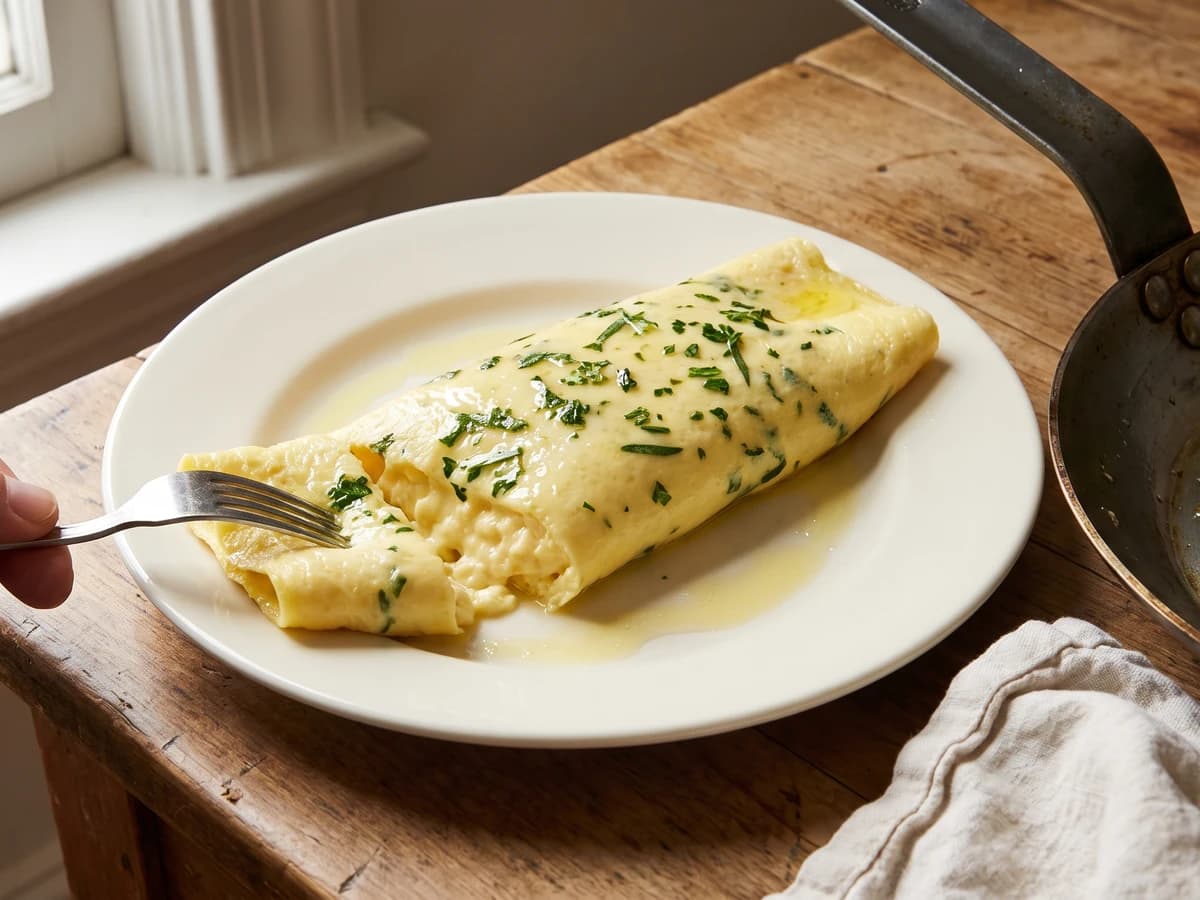
Four tender herbs, hot butter, and two eggs per pan: this rolled omelette teaches the quick hand and good judgment that keep the outside pale and the center creamy.
Chef Juliette
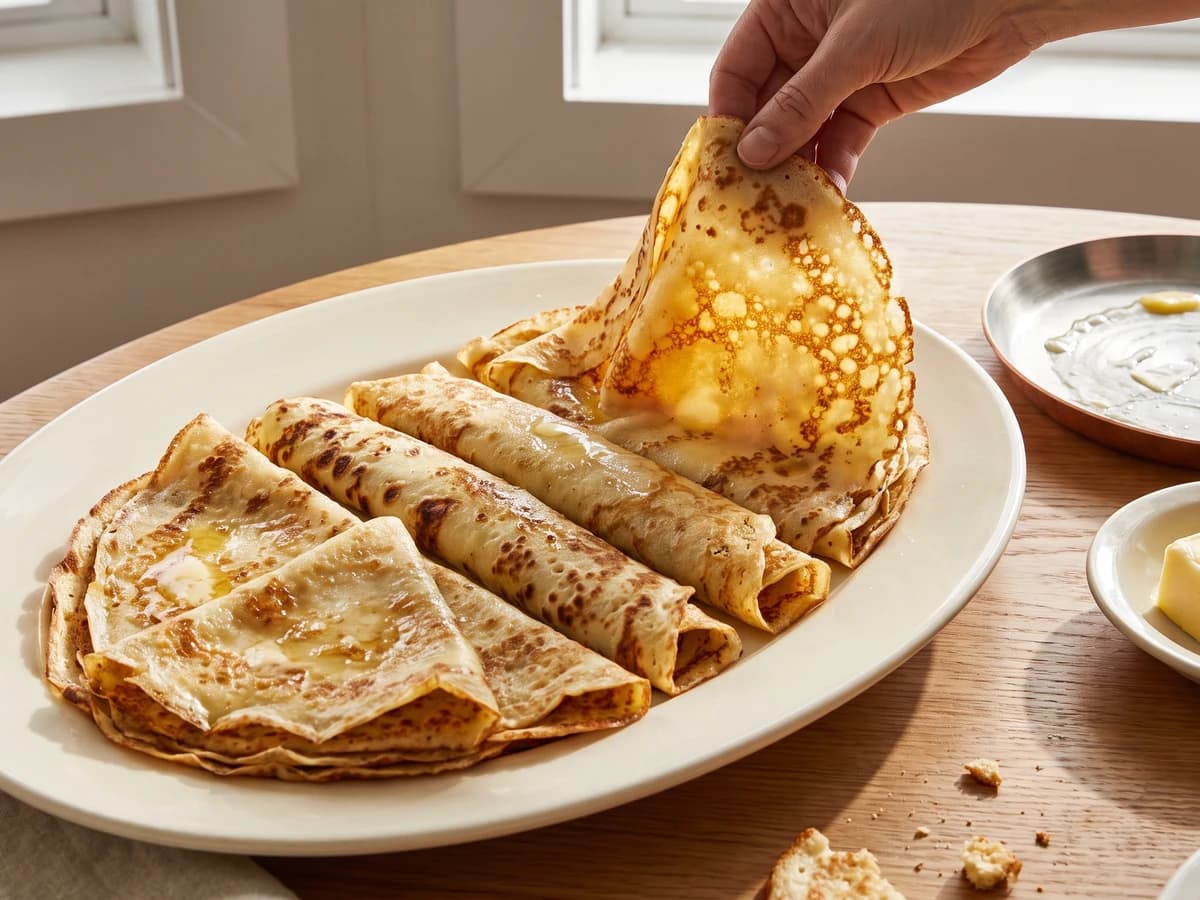
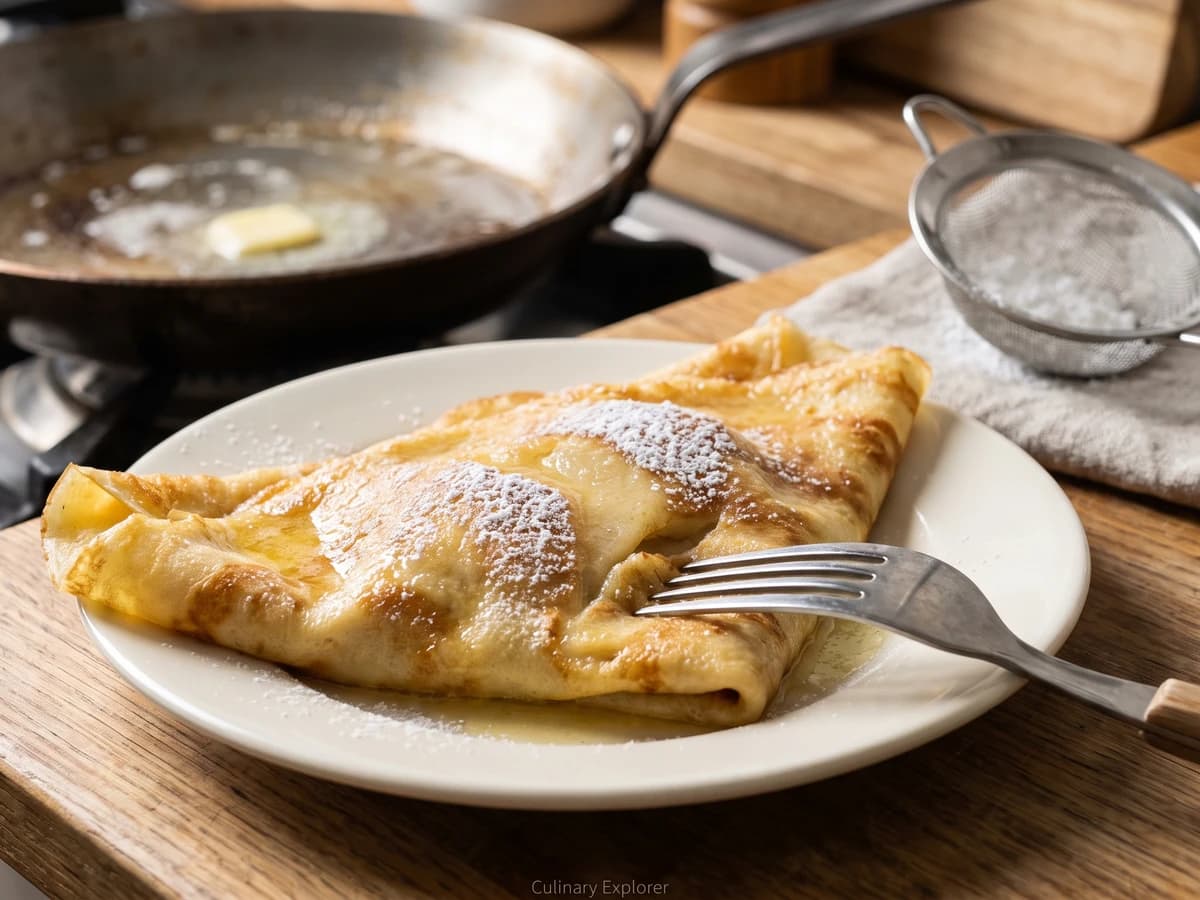
Four batters, one lesson: let the flour drink deeply before cooking, then spread the batter thinly in butter for crêpes and pannequets that bend without becoming tough.
Chef Juliette
Crêpes au Couvent trap ripe Williams pear dice between two thin pours of sweet batter, then turn in one clean toss and reach the table butter-gold, powdered, and burning hot.