Chef Juliette
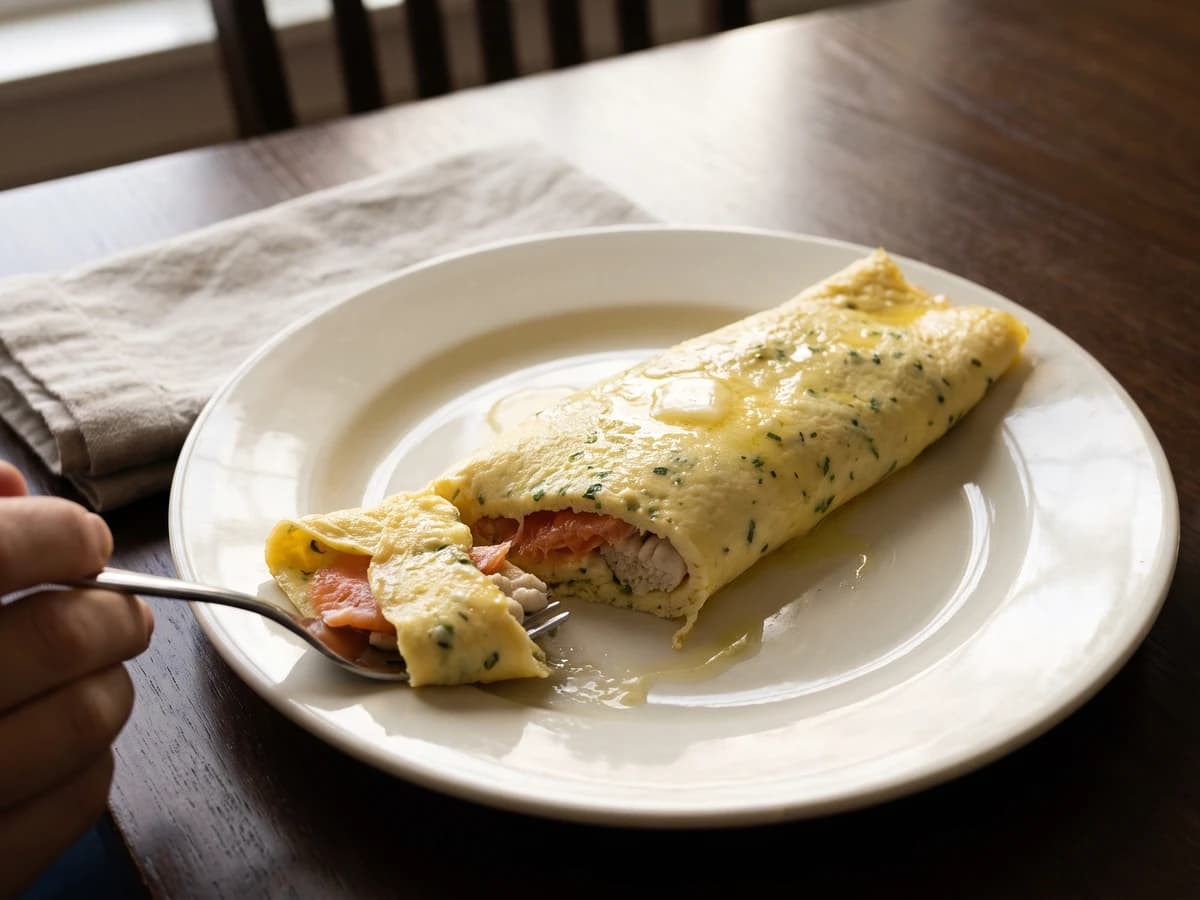
Omelette à l’Écossaise
A creamy omelette aux fines herbes closes around smoked-salmon-wrapped herring milts, gently poached in butter. Have the filling ready, then roll the eggs while they still shine.
A cooking platform built around craft, culture, and the stories behind what we eat.
Created by Chef Juliette
Based on No. 525, Cold Eggs Alexandra, from Le Guide Culinaire (1907) by Auguste Escoffier
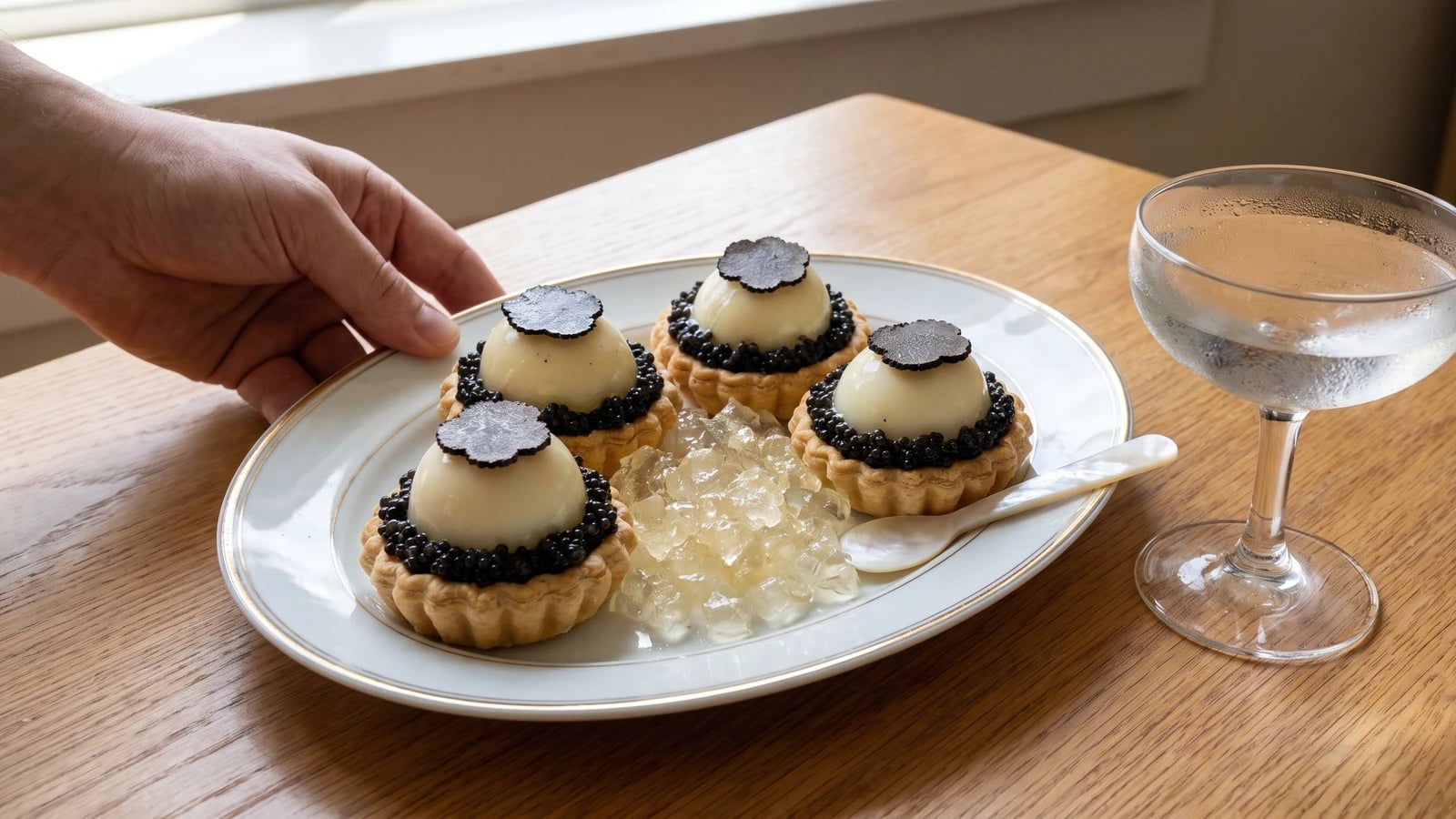
Cold poached eggs under ivory chaud-froid and clear aspic, crowned with truffle, set on pale tartlets, and circled with caviar: a lesson in patient layers for the generous party table.
Œufs froids Alexandra (Cold Eggs Alexandra) teaches patience in layers. Every surface must be cold and dry, and every coat must set before the next one touches it. If you remember one thing before touching a pan, remember that temperature is an ingredient here. Rush the chaud-froid, a sauce cooked warm and served cold, or pour warm aspic over it, and the ivory mask slides away.
The original entry assumed a saucier on staff, clear stock never off the fire, a cold room, pastry trimmings from the pâtissier, and enough hands to coat eggs between other jobs. A salamander has no role, because the tartlets must remain pale and the whole composition is served cold. At home, one small saucepan, prepared pale stock, a refrigerator, and a sheet of all-butter puff pastry do the same work for four. What changed is the scaffolding: a bought sheet replaces brigade trimmings, and two small measured batches replace standing sauce and aspic. What stays is the dish itself: trimmed poached eggs, white chaud-froid, truffle, a thin clear glaze, pale oval tartlets, caviar, and the crown on the platter.
Done properly, each egg gleams beneath clear aspic, its truffle rosette black against the white sauce and its caviar border dark against the pale pastry. Dry the eggs completely, then let every coat set before adding the next. That is the step that decides the dish.
Œufs froids Alexandra belongs to the Parisian garde-manger, the cold-kitchen repertoire in which poached eggs were masked, glazed, and arranged as formal hors-d'œuvre rather than served directly from the pan. Alexandra is a dedication name, not a regional egg tradition; in this composition, truffle, caviar, white chaud-froid, and clear aspic provide the richness and the striking black-and-ivory contrast. The method passed from grand dining rooms to formal home tables because nearly every element can wait cold, leaving only the final assembly before guests sit down.
Quantity
8 cups (1.9 L / 1.9 kg)
divided
Quantity
2 tablespoons (30 ml / 30 g)
Quantity
4
as fresh as possible
Quantity
1 sheet (10½ oz / 300 g)
chilled
Quantity
2¼ teaspoons (11 ml / 7 g)
for the aspic
Quantity
1½ cups (360 ml / 360 g)
for the aspic
Quantity
1½ teaspoons (7.5 ml / 4.5 g)
for the chaud-froid
Quantity
2 tablespoons (30 ml / 28 g)
Quantity
2 tablespoons (30 ml / 16 g)
Quantity
1 cup (240 ml / 240 g)
for the chaud-froid
Quantity
½ cup (120 ml / 120 g)
Quantity
¾ teaspoon (3.75 ml / 4.5 g)
divided
Quantity
⅛ teaspoon (0.6 ml / 0.3 g)
Quantity
1 small (about ¾ oz / 20 g)
fresh or preserved and well drained
Quantity
3 tablespoons (45 ml / 50 g)
well chilled
| Ingredient | Quantity |
|---|---|
| cold waterdivided | 8 cups (1.9 L / 1.9 kg) |
| white wine vinegar | 2 tablespoons (30 ml / 30 g) |
| large eggsas fresh as possible | 4 |
| all-butter puff pastrychilled | 1 sheet (10½ oz / 300 g) |
| unflavored powdered gelatinfor the aspic | 2¼ teaspoons (11 ml / 7 g) |
| clear, well-strained pale chicken stock or consomméfor the aspic | 1½ cups (360 ml / 360 g) |
| unflavored powdered gelatinfor the chaud-froid | 1½ teaspoons (7.5 ml / 4.5 g) |
| unsalted butter | 2 tablespoons (30 ml / 28 g) |
| all-purpose flour | 2 tablespoons (30 ml / 16 g) |
| pale unsalted chicken stockfor the chaud-froid | 1 cup (240 ml / 240 g) |
| heavy cream | ½ cup (120 ml / 120 g) |
| fine sea saltdivided | ¾ teaspoon (3.75 ml / 4.5 g) |
| ground white pepper | ⅛ teaspoon (0.6 ml / 0.3 g) |
| black trufflefresh or preserved and well drained | 1 small (about ¾ oz / 20 g) |
| caviarwell chilled | 3 tablespoons (45 ml / 50 g) |
Pour ¼ cup (60 ml) of the clear stock into a small bowl, sprinkle the 2¼ teaspoons gelatin evenly over it, and leave it for 5 minutes to bloom. Bring the remaining stock just to a simmer, then remove it from the heat and stir in the bloomed gelatin until completely dissolved. Taste it cold from a spoon and add up to ¼ teaspoon of the salt if needed; caviar will bring more salt later. Strain the aspic through a fine sieve. Pour half into a shallow dish for the chopped jelly and half into a small covered container for glazing. Refrigerate both until firm, about 3 hours.
Heat the oven to 375°F (190°C). Cut eight matching ovals from the chilled puff pastry, each about 4½ by 3 inches (11.5 by 7.5 cm). Cut a smaller oval from the center of four pieces to make rings. Brush the four solid bases very lightly with cold water, set the rings on top, and prick only the exposed centers with a fork. Chill for 20 minutes, then bake on parchment for 10 minutes. Reduce the oven to 325°F (165°C), shield the pastry loosely with foil, and bake for another 8 to 12 minutes, until the layers are cooked but only pale straw in color. If the centers rise, press them down gently while warm. Cool completely.
Fill a wide saucepan with 6 cups (1.4 L) of the water and add the vinegar. Bring it to a bare simmer, with small bubbles at the bottom but no rolling boil. Crack each egg into a cup, slide it gently into the water, and poach for 3½ to 4 minutes, until the white is fully set and the yolk remains tender. Work two at a time so the pan stays calm. Lift the eggs into the remaining cold water, adding ice if available, and chill for 5 minutes. Trim every ragged edge with a small knife to make a neat oval, then drain the eggs on a clean towel, turning once, until completely dry. Chill them uncovered for 20 minutes.
Sprinkle the 1½ teaspoons gelatin over 2 tablespoons (30 ml) of cold water and leave it to bloom for 5 minutes. Melt the butter over medium-low heat, stir in the flour, and cook this roux blanc, a white roux, for 2 minutes without letting it color. Whisk in the pale stock gradually, then simmer gently for 5 minutes, stirring along the bottom. Add the cream and simmer for another 5 to 7 minutes, until the sauce coats the back of a spoon. Remove it from the heat, stir in the bloomed gelatin, and season with the white pepper and enough of the remaining salt to taste distinct but not salty. Strain into a bowl and stir over ice until it has the body of thick pouring cream. If it sets too firmly, warm the bowl over barely warm water; if it runs like milk, cool it longer. Ça se rattrape.
Set the cold, dry eggs on a chilled parchment-lined tray. Spoon the thickened chaud-froid over each egg from the crown downward, letting it cloak the white in one even layer. Refrigerate for 15 minutes, until the coating is set and dry to a light touch. If the sauce slides away, either the egg is damp or the sauce is too warm. Stop, blot the exposed place carefully, chill both egg and sauce, and cover the bare patch once the sauce thickens again. Do not keep pouring warm sauce over the failure.
Cut four very thin rounds from the truffle. Make tiny inward notches around each edge with the point of a knife, forming the fine indented slices described in the original entry, and place one in the center of every coated egg. Stand the reserved glazing aspic in a bowl of barely warm water until it melts, then cool it over ice until fluid but beginning to thicken. Spoon a very thin coat over each egg and refrigerate for 10 minutes. Add a second thin coat only where the first has missed. Warm aspic will soften the chaud-froid; if the white surface begins to run, chill the eggs at once and let the aspic cool further before repairing the bare place.
Run the point of a small knife around the foot of each glazed egg, exactly as the original directs, then lift it with a narrow offset spatula and settle it into a cold oval tartlet. Spoon a neat border of caviar around each egg, filling the space between the white mask and the pastry rim. Chop the aspic from the shallow dish into bright, irregular crystals. Arrange the four tartlets in a crown on a chilled platter and mound the chopped jelly in the center. Serve within 30 minutes, while the pastry remains crisp and the caviar properly cold. À table!
1 serving (about 315g)
Culinary guides, cultural storytelling, and the editorial depth that makes cooking meaningful.
Discover Culinary ExplorerChef Juliette
A creamy omelette aux fines herbes closes around smoked-salmon-wrapped herring milts, gently poached in butter. Have the filling ready, then roll the eggs while they still shine.
Chef Juliette
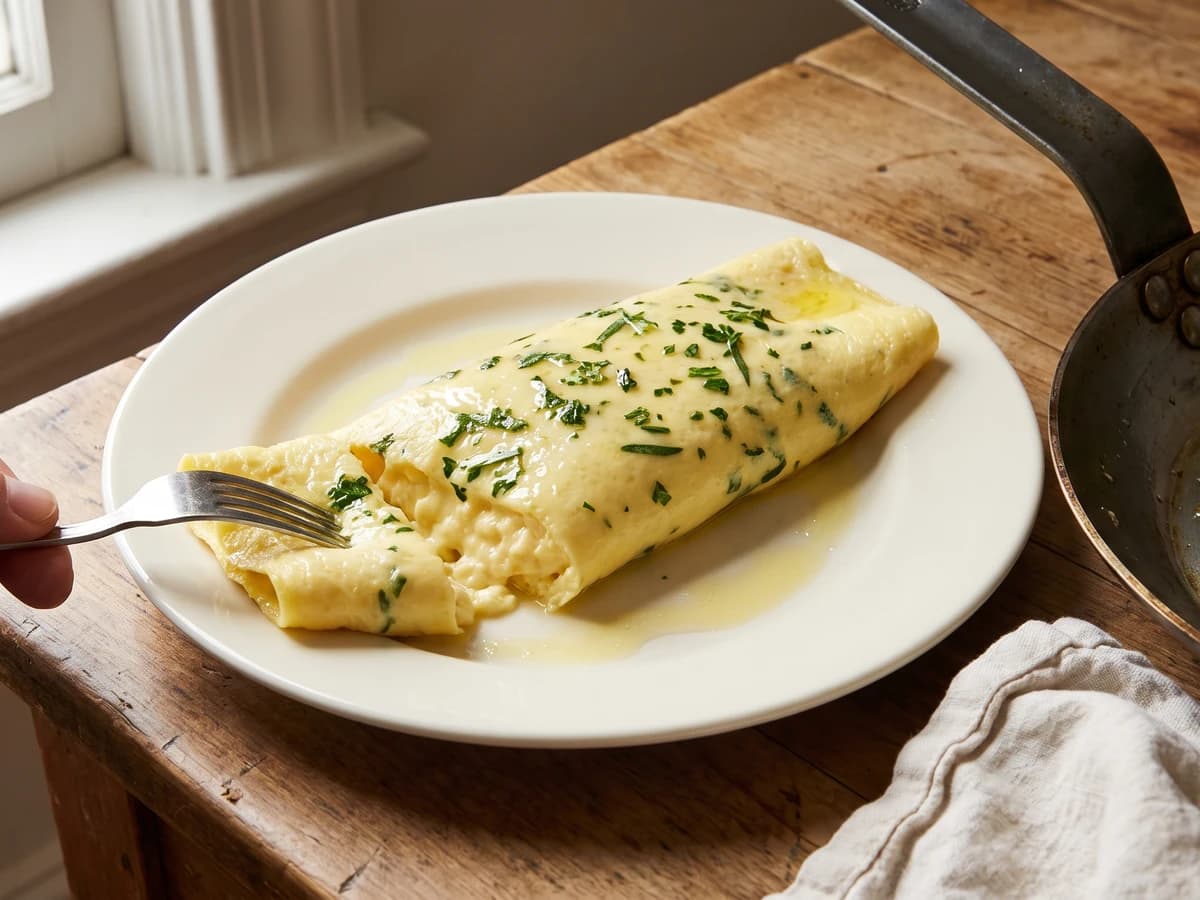
Four tender herbs, hot butter, and two eggs per pan: this rolled omelette teaches the quick hand and good judgment that keep the outside pale and the center creamy.
Chef Juliette
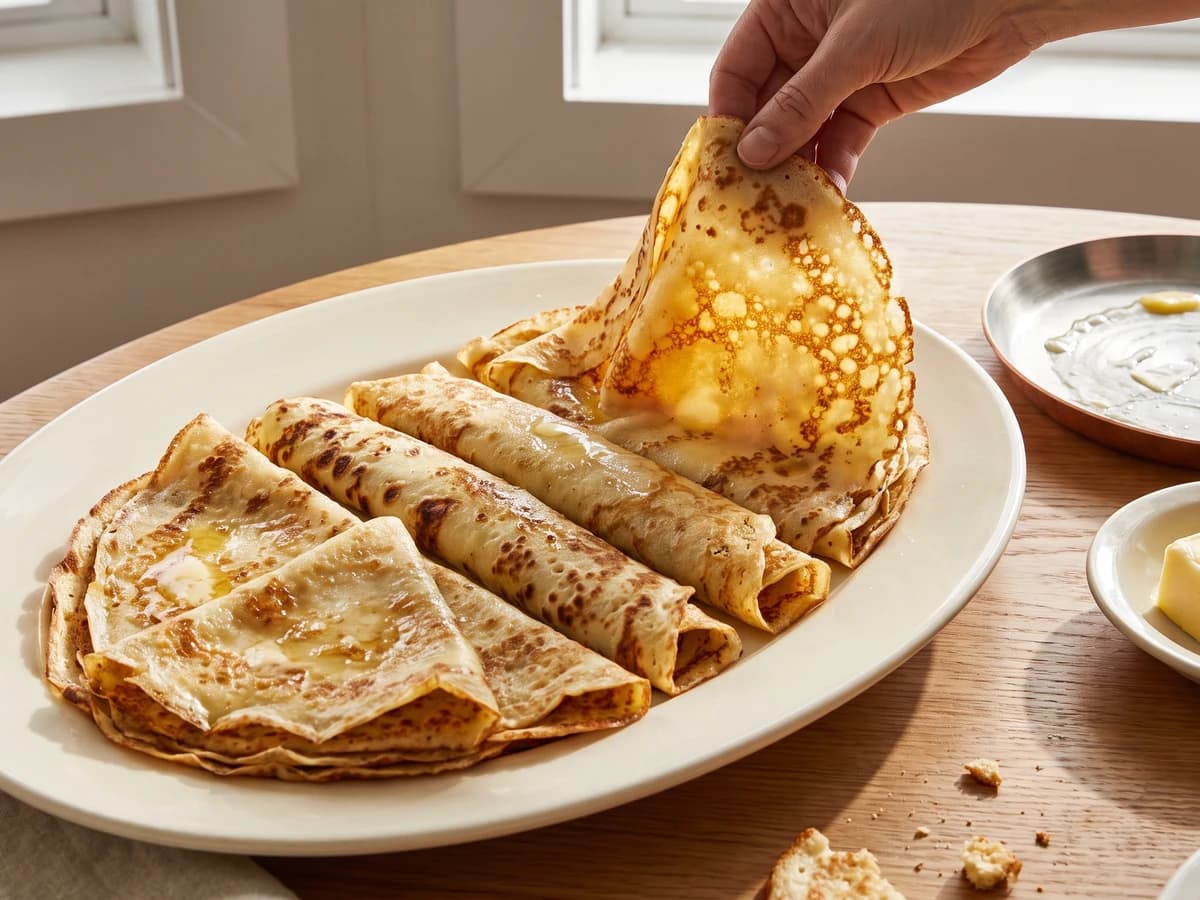
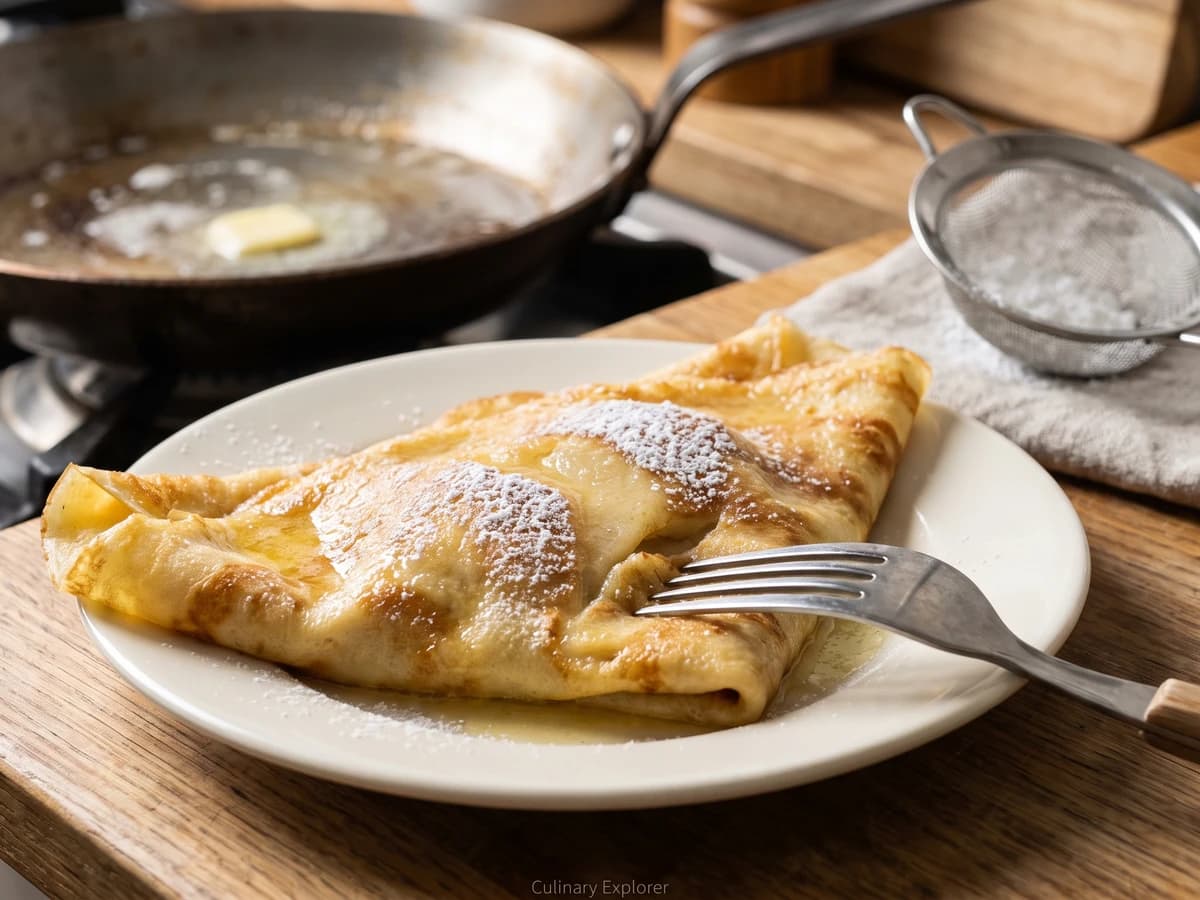
Four batters, one lesson: let the flour drink deeply before cooking, then spread the batter thinly in butter for crêpes and pannequets that bend without becoming tough.
Chef Juliette
Crêpes au Couvent trap ripe Williams pear dice between two thin pours of sweet batter, then turn in one clean toss and reach the table butter-gold, powdered, and burning hot.