Chef Juliette
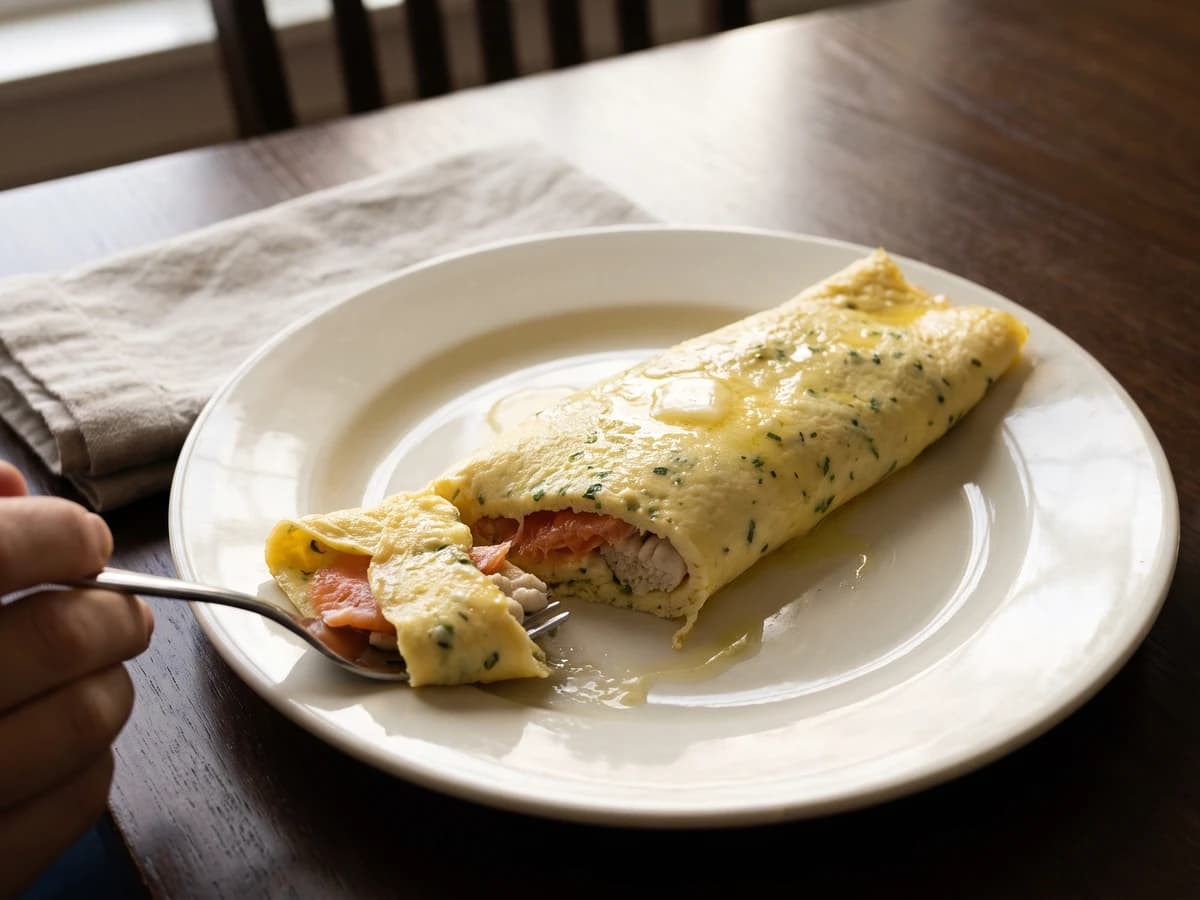
Omelette à l’Écossaise
A creamy omelette aux fines herbes closes around smoked-salmon-wrapped herring milts, gently poached in butter. Have the filling ready, then roll the eggs while they still shine.
A cooking platform built around craft, culture, and the stories behind what we eat.
Created by Chef Juliette
Based on No. 524, Lapwings’ Eggs au Troubadour, from Le Guide Culinaire (1907) by Auguste Escoffier
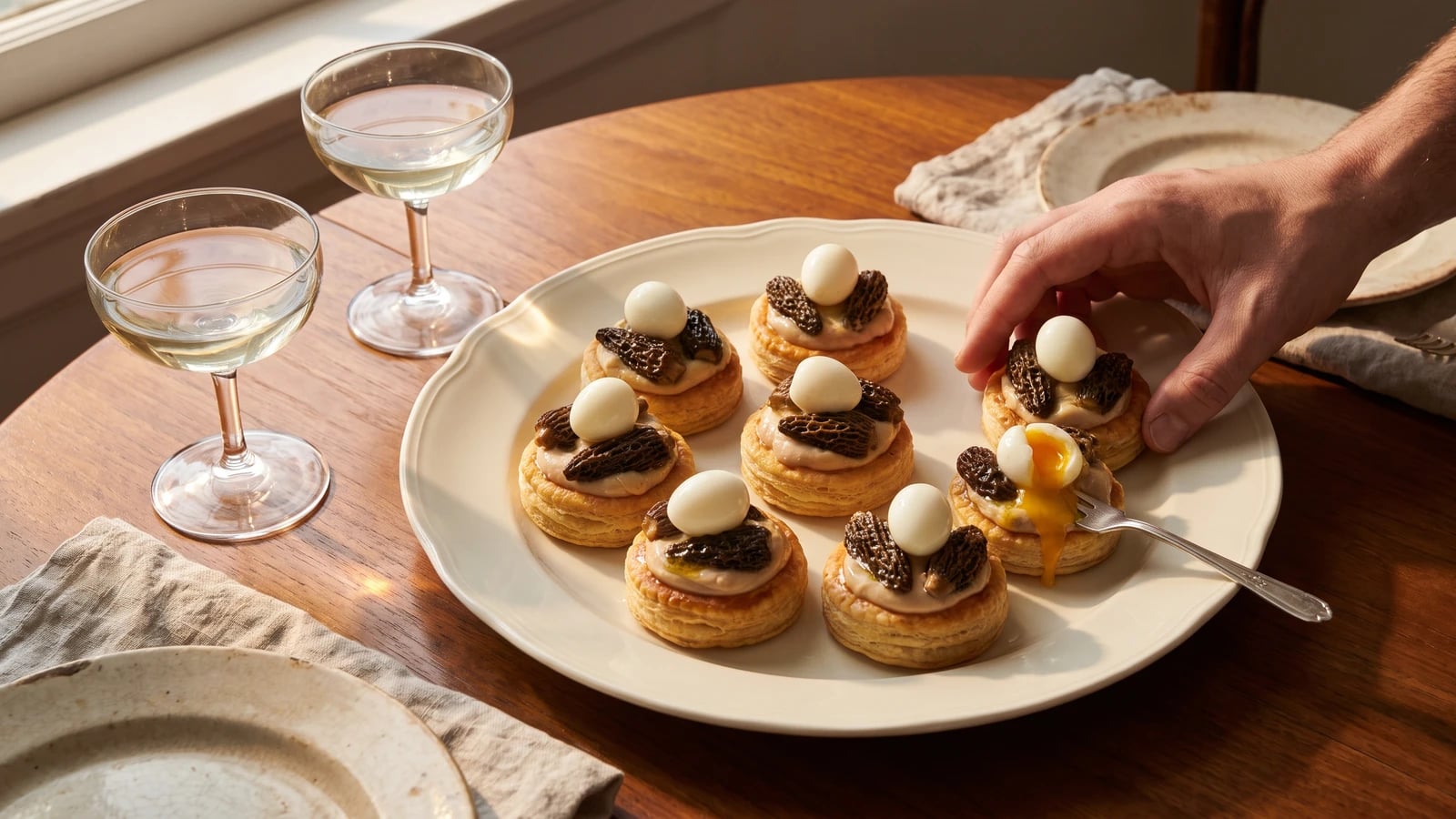
Butter-stewed morels cradle soft quail eggs over crisp tartlets and pale foie gras purée, a spring composition whose success depends on fully cooking the mushrooms while keeping every yolk fluid.
Œufs de vanneau au troubadour (lapwing eggs in the Troubadour style) teaches orchestration. Crisp pastry, supple foie gras purée, fully cooked morels, and soft eggs must arrive together, each at its proper texture. The one true thing to know before touching a pan is this: the egg waits for nothing, so everything else must be ready first.
The original entry assumed a game dealer supplying wild lapwing eggs, a pastry station with tartlet crusts waiting, a cold larder holding foie gras purée, and several hands to stew morels while the eggs boiled. It needed neither a stockpot nor a salamander; its luxury was timing. For one cook, one stove, one evening, eight small pastry cases replace the brigade tray, cooked foie gras parfait lightened with cream becomes the purée, and farmed quail eggs replace lapwing eggs, which should never be taken from wild nests. The substitution is visible and honest: quail eggs preserve the small scale, delicate white, and flowing yolk.
The ready crusts and larder purée were brigade scaffolding, so we make them in home quantities. The heart of the dish stays untouched: widen the morels, stew them thoroughly in real butter, tuck a soft egg into each hollow cap, and set the finished tartlets in a circle. Have the shells filled and the morels cooked before boiling the eggs. Those two minutes and forty-five seconds decide the plate.
Œufs de vanneau au troubadour belongs to the named repertoire of formal Parisian cuisine rather than to a regional farmhouse table. Lapwing eggs were prized as a fleeting spring luxury, while morels and foie gras made the composition a deliberate display of rarity; the romantic title au troubadour is a fanciful culinary name, not evidence of Provençal or Occitan origin. Wild lapwings are now protected across much of Europe, so farmed quail eggs provide the responsible home translation without disguising what changed.
Quantity
1 cup (240 ml / 125 g)
Quantity
5 tablespoons (75 ml / 70 g)
diced
Quantity
1
Quantity
1 to 2 tablespoons (15 to 30 ml / 15 to 30 g)
Quantity
1/2 teaspoon (2.5 ml / 3 g)
divided
Quantity
1/2 cup (120 ml / 120 g)
cool but pliable
Quantity
2 tablespoons (30 ml / 30 g)
Quantity
8 (about 4 ounces / 120 g)
stems trimmed and openings carefully widened
Quantity
2 tablespoons (30 ml / 28 g)
Quantity
1/8 teaspoon (0.6 ml / 0.3 g)
Quantity
10
8 for serving and 2 as insurance
| Ingredient | Quantity |
|---|---|
| all-purpose flour | 1 cup (240 ml / 125 g) |
| cold unsalted butterdiced | 5 tablespoons (75 ml / 70 g) |
| large egg yolk | 1 |
| ice water | 1 to 2 tablespoons (15 to 30 ml / 15 to 30 g) |
| fine sea saltdivided | 1/2 teaspoon (2.5 ml / 3 g) |
| cooked foie gras parfaitcool but pliable | 1/2 cup (120 ml / 120 g) |
| heavy cream | 2 tablespoons (30 ml / 30 g) |
| very large fresh morelsstems trimmed and openings carefully widened | 8 (about 4 ounces / 120 g) |
| unsalted butter | 2 tablespoons (30 ml / 28 g) |
| finely ground white pepper | 1/8 teaspoon (0.6 ml / 0.3 g) |
| farmed quail eggs8 for serving and 2 as insurance | 10 |
Mix the flour with half the salt. Rub in the cold diced butter until the mixture resembles coarse meal with a few small flakes of butter remaining, then add the egg yolk and just enough ice water to bring the dough together when pressed. Do not knead it. Flatten the dough into a disc and chill it for 20 minutes; this rest relaxes the dough and keeps the tartlets tender.
Heat the oven to 375°F (190°C). Roll the dough about 1/8 inch (3 mm) thick and cut eight rounds about 3 inches (7.5 cm) across. Line eight 2-inch (5 cm) tartlet tins, press the dough into the corners, prick the bases, and chill for 10 minutes. Line with small pieces of parchment and baking weights, bake for 10 minutes, then remove the weights and bake for another 5 to 7 minutes, until dry and evenly golden. Cool in the tins for 5 minutes before turning out.
Beat the foie gras parfait with 1 tablespoon of the cream until smooth, then press it through a fine sieve. Add only enough remaining cream to make a pale, supple purée that holds a soft mound rather than running. Taste before adding any salt. Cover and keep cool, but not refrigerator-hard, while the morels cook.
Trim the stalks flush with the caps. With the tip of a small knife, widen each base opening just enough to accept a peeled quail egg without splitting the cap. Brush away grit, rinse the morels briefly only if necessary, and dry them well. Melt the butter in a lidded skillet over medium-low heat, add the morels, and season with the remaining salt and the white pepper. Cover and cook for 5 minutes, turning once, then uncover and cook for another 4 to 6 minutes. They must be tender, dark, and glossy, with no raw firmness; morels are never served undercooked.
While the cooked morels rest in their butter, bring a small saucepan of water to a full boil and prepare a bowl of iced water. Lower in the cold quail eggs and boil for exactly 2 minutes and 45 seconds. Transfer them immediately to the iced water for 2 minutes, then crack and peel them under water, beginning at the broad end. The whites should be set and the yolks fluid.
Spread each tartlet with a generous spoonful of foie gras purée. Hold a buttered morel point-down with its widened opening facing upward, gently nestle a peeled egg inside, and set the filled morel onto a tartlet, using the purée to hold it upright. Repeat with the remaining tartlets, spoon a little of the warm morel butter over the caps, and arrange all eight in a circle on a platter. Serve at once, two tartlets per person. À table!
1 serving (about 130g)
Culinary guides, cultural storytelling, and the editorial depth that makes cooking meaningful.
Discover Culinary ExplorerChef Juliette
A creamy omelette aux fines herbes closes around smoked-salmon-wrapped herring milts, gently poached in butter. Have the filling ready, then roll the eggs while they still shine.
Chef Juliette
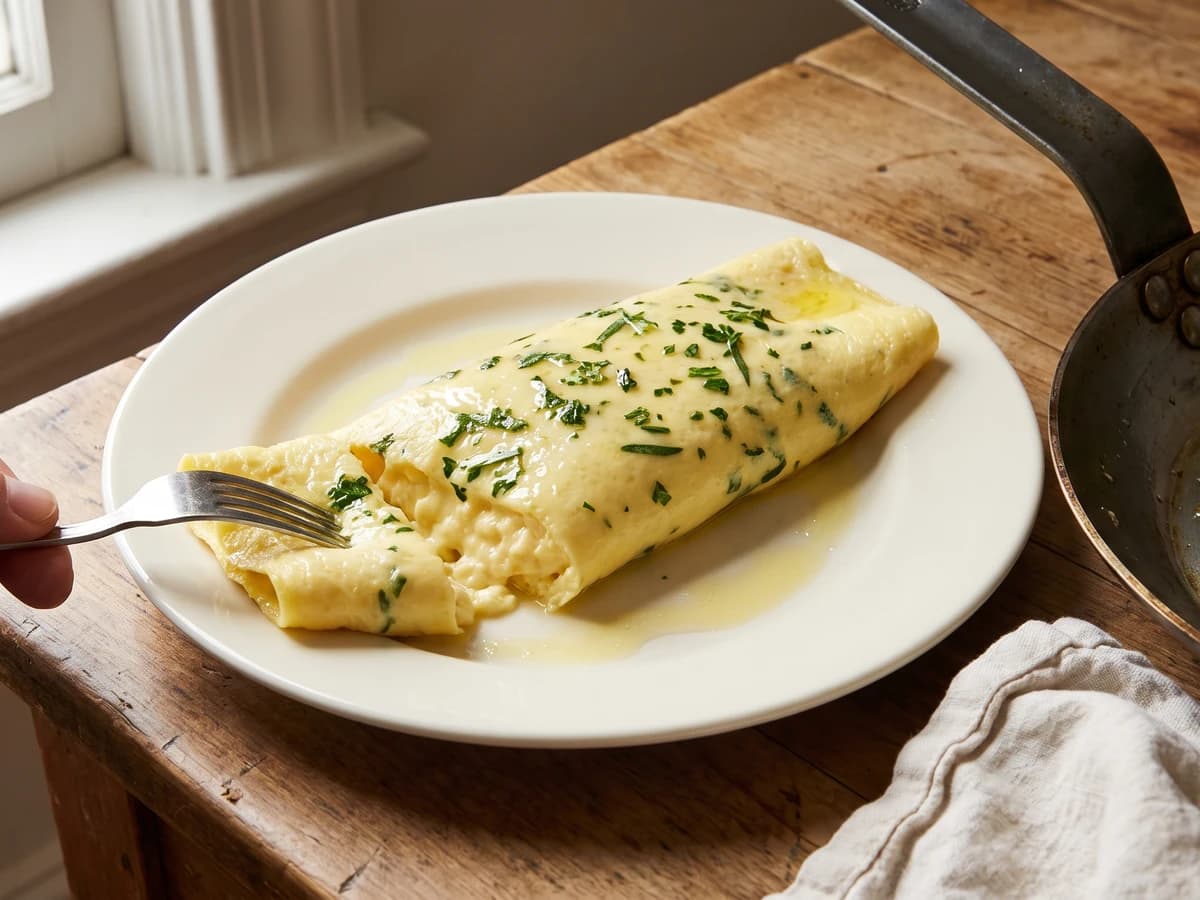
Four tender herbs, hot butter, and two eggs per pan: this rolled omelette teaches the quick hand and good judgment that keep the outside pale and the center creamy.
Chef Juliette
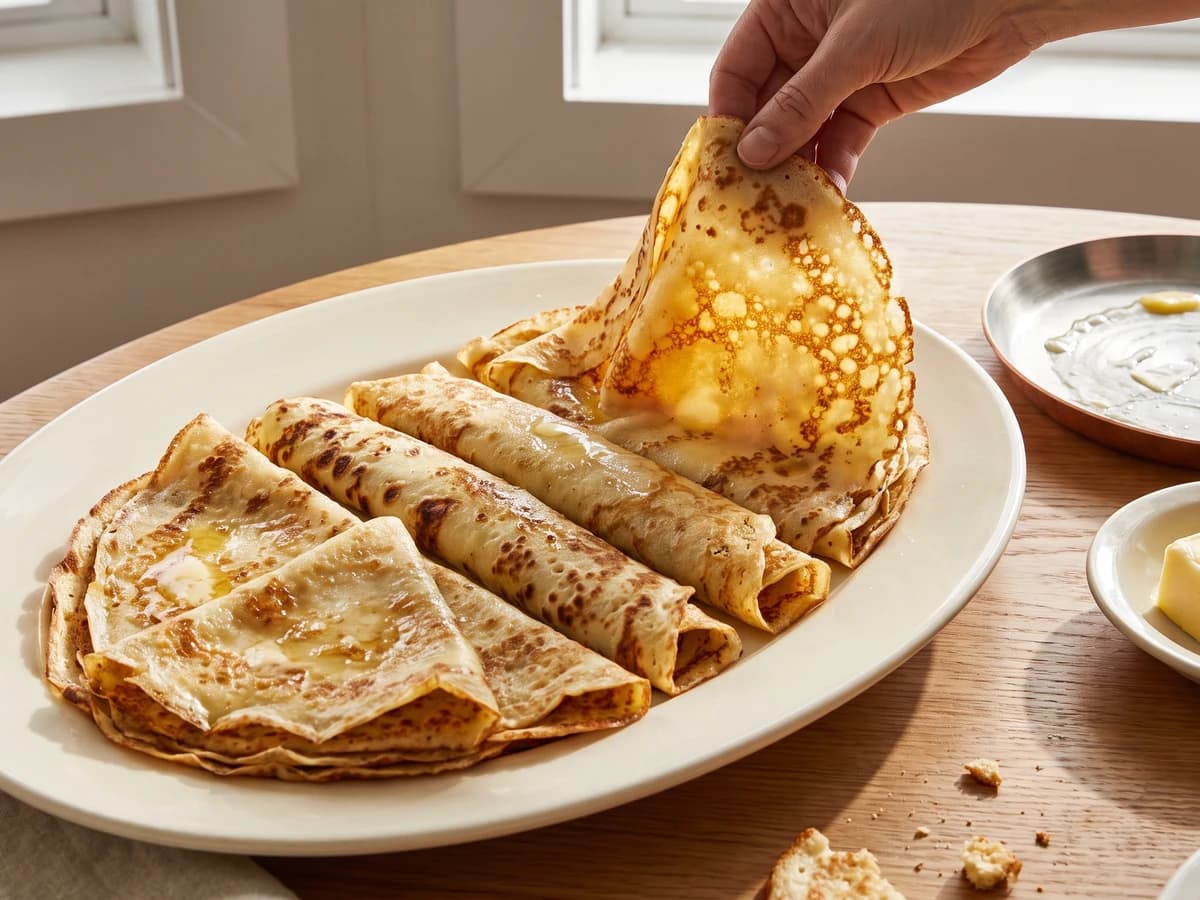
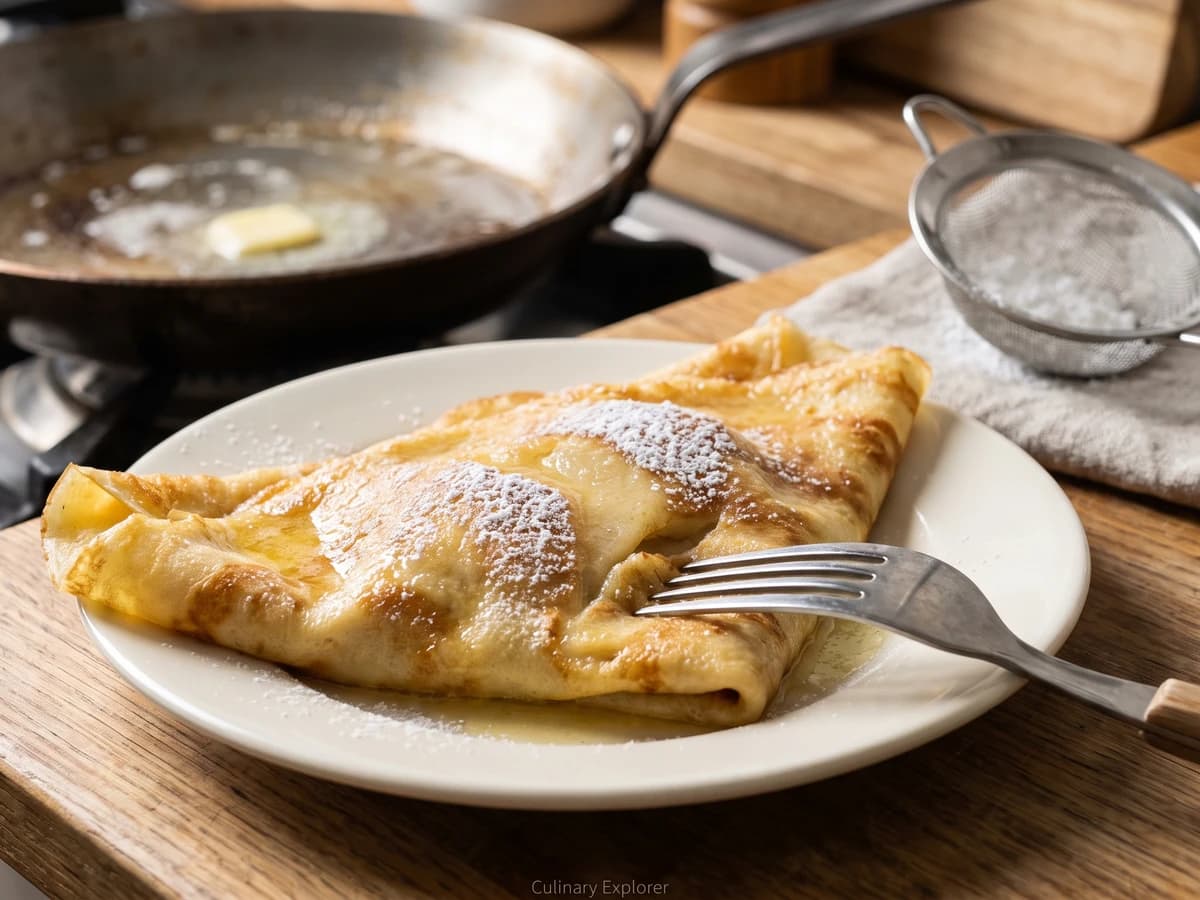
Four batters, one lesson: let the flour drink deeply before cooking, then spread the batter thinly in butter for crêpes and pannequets that bend without becoming tough.
Chef Juliette
Crêpes au Couvent trap ripe Williams pear dice between two thin pours of sweet batter, then turn in one clean toss and reach the table butter-gold, powdered, and burning hot.