Chef Juliette
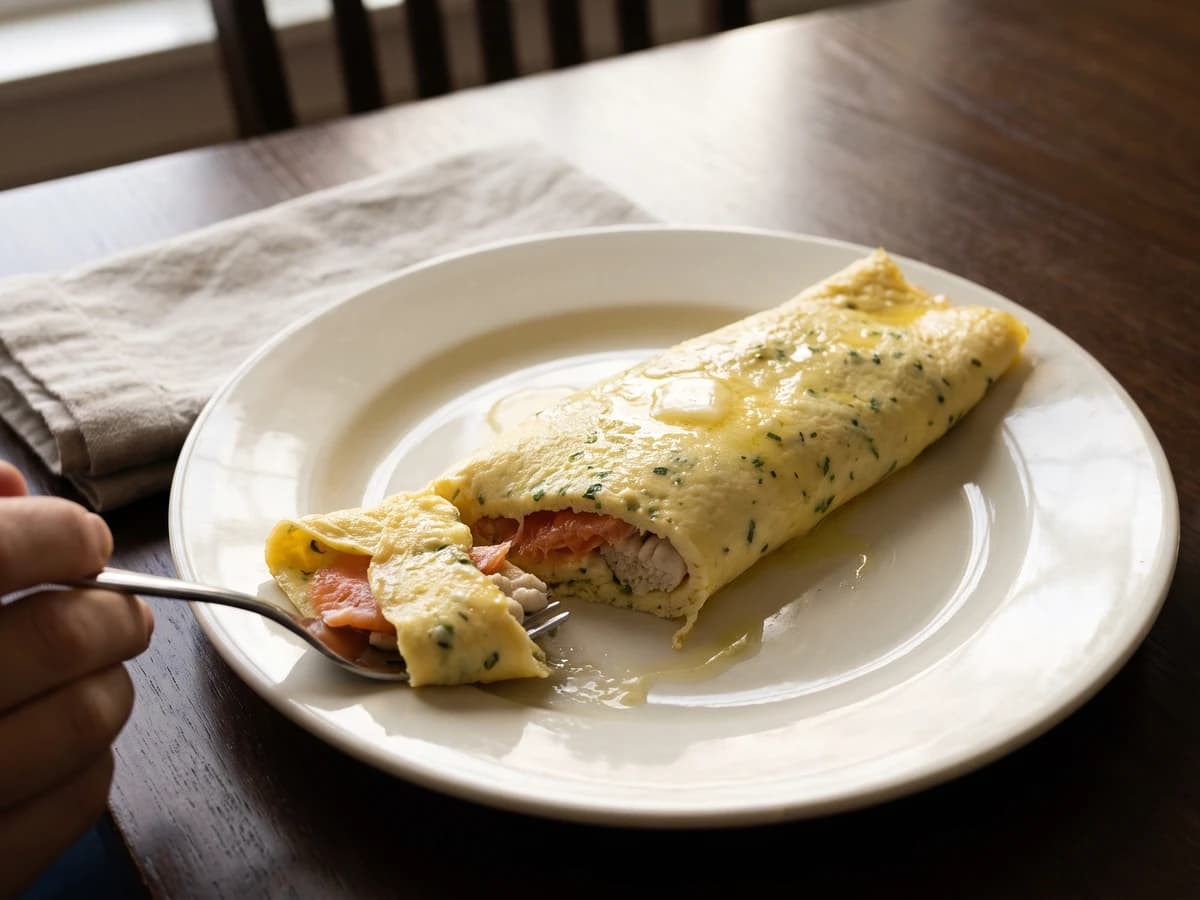
Omelette à l’Écossaise
A creamy omelette aux fines herbes closes around smoked-salmon-wrapped herring milts, gently poached in butter. Have the filling ready, then roll the eggs while they still shine.
A cooking platform built around craft, culture, and the stories behind what we eat.
Created by Chef Juliette
Based on No. 523, Lapwings’ Eggs à la Royale, from Le Guide Culinaire (1907) by Auguste Escoffier
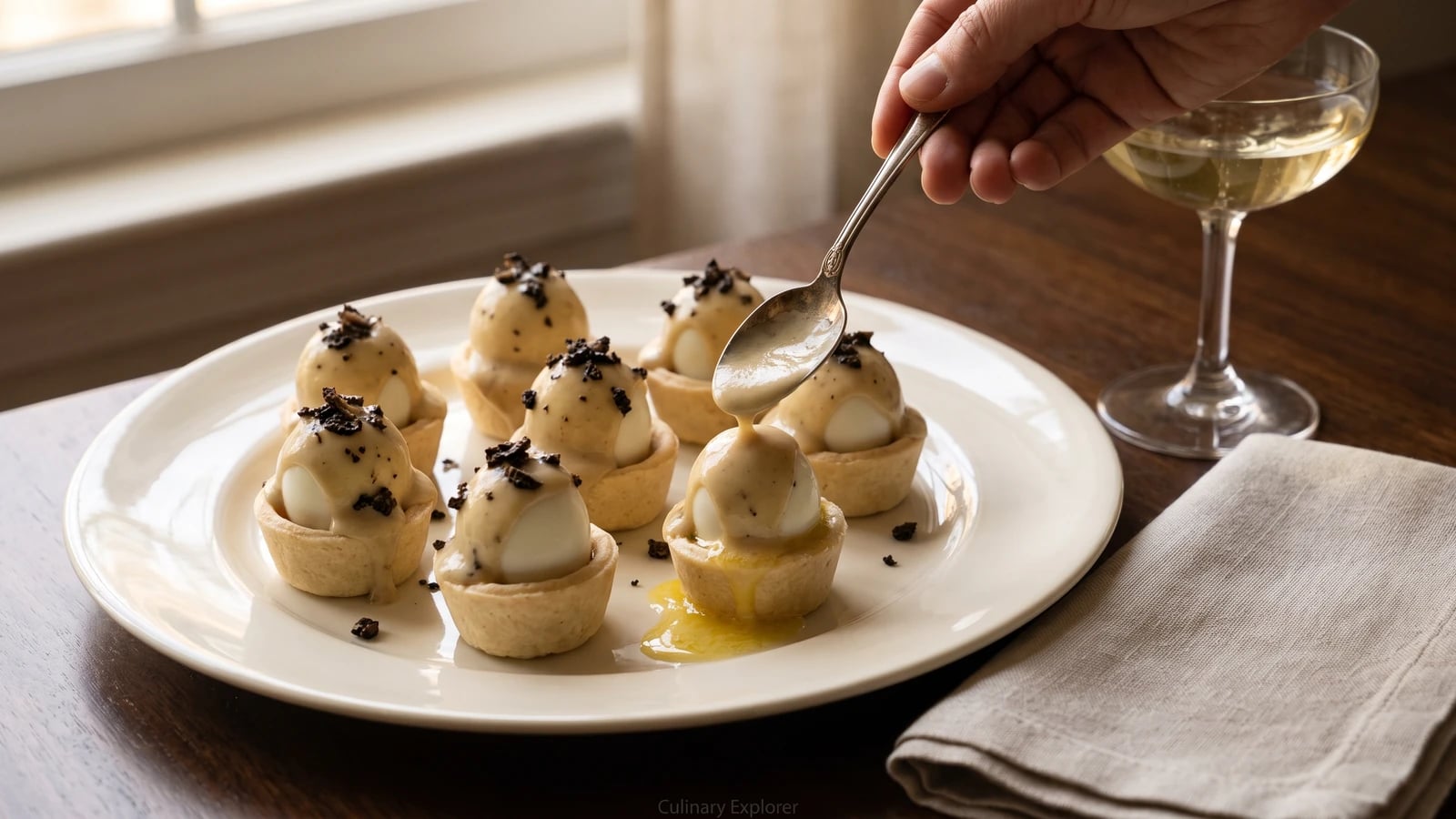
A cold-built mousseline, gentle poaching, and a careful mushroom cloak turn eight small eggs into a composed French entrée whose luxury comes from precision, not spectacle.
Œufs de vanneau à la royale (lapwing eggs in the royal manner) teaches the discipline of a composed entrée: three soft textures must remain distinct. The egg should stand cleanly, the farce mousseline de volaille (silken chicken forcemeat) should be tender rather than springy, and the purée de champignons (light mushroom purée) should cloak without burying either one. The one true thing to know before touching a pan is that the forcemeat lives or dies by cold.
The source entry assumed forcemeat waiting in the garde-manger, a saucier tending the mushroom purée, stock never off the fire, and rows of little tartlet moulds. At home, a processor, reliable unsalted stock reduced in a saucepan, eight small moulds, and an oven bain-marie do the work. A salamander was common brigade equipment, but this dish never needs one; its finish is cloaked, not browned. The division of labor and the brigade quantity are scaffolding, so both can go. The cold emulsion, gentle poach, hollowed tartlet, upright egg, mushroom cloak, and chopped truffle are the dish, so all remain.
Wild lapwing eggs are protected across much of the bird's range and do not belong on a modern shopping list. Quail eggs are substituted openly because they preserve the small scale and rich yolk, though their flavor is not identical. Fresh truffle is splendid when the season permits; a whole preserved truffle is the classical pantry's honest answer when it does not.
Keep the chicken, bowl, blade, egg white, and cream thoroughly cold while making the farce mousseline. That single step decides whether the tartlets emerge tender and silken or tight and rubbery.
Œufs de vanneau à la royale belongs to the Parisian grand-kitchen repertoire, where small wild birds' eggs became composed hot entrées rather than breakfast food. Lapwing eggs reached those kitchens through seasonal collecting in the marshes and coastal fields of northern Europe, a practice no responsible modern cook should continue because the birds, nests, and eggs are widely protected. The phrase à la royale is not one fixed garnish throughout the canon; in this entry it means precisely a chicken-forcemeat base, mushroom purée, and truffle.
Quantity
10
8 for serving and 2 spare
Quantity
9 oz (255 g)
trimmed, diced, and very cold
Quantity
1 large (2 tablespoons / 30 ml / 30 g)
very cold
Quantity
1 cup (240 ml / 240 g)
very cold and divided
Quantity
3 tablespoons (45 ml / 42 g)
softened and divided
Quantity
1½ teaspoons (7.5 ml / 9 g)
divided
Quantity
⅛ teaspoon (0.6 ml / 0.3 g)
divided
Quantity
8 oz (225 g)
wiped clean and thinly sliced
Quantity
1 cup (240 ml / 240 g)
divided
Quantity
½ oz (15 g)
well drained if preserved and finely chopped
| Ingredient | Quantity |
|---|---|
| quail eggs, the lawful home equivalent for lapwing eggs8 for serving and 2 spare | 10 |
| boneless, skinless chicken breasttrimmed, diced, and very cold | 9 oz (255 g) |
| large egg whitevery cold | 1 large (2 tablespoons / 30 ml / 30 g) |
| heavy creamvery cold and divided | 1 cup (240 ml / 240 g) |
| unsalted buttersoftened and divided | 3 tablespoons (45 ml / 42 g) |
| fine sea saltdivided | 1½ teaspoons (7.5 ml / 9 g) |
| ground white pepperdivided | ⅛ teaspoon (0.6 ml / 0.3 g) |
| white button mushroomswiped clean and thinly sliced | 8 oz (225 g) |
| unsalted chicken stockdivided | 1 cup (240 ml / 240 g) |
| fresh black truffle or whole preserved black trufflewell drained if preserved and finely chopped | ½ oz (15 g) |
Put the diced chicken, processor bowl, blade, egg white, and cream in the freezer for 15 minutes, just until thoroughly cold but not frozen. Heat the oven to 300°F (150°C). Brush eight 2-ounce (60 ml) tartlet or dariole moulds generously with 1 tablespoon (15 ml / 14 g) of the butter, reaching every corner so the poached forcemeat will release cleanly.
Pulse the cold chicken with 1 teaspoon (5 ml / 6 g) of the salt and half the white pepper until it becomes smooth and tacky. Add the egg white and process only until absorbed. Reserve 1 tablespoon (15 ml / 15 g) from ½ cup (120 ml / 120 g) of the cream, then drizzle the rest through the feed tube while pulsing. Add the reserved spoonful once the mixture is smooth and glossy. If it turns greasy or grainy, stop immediately, nest the processor bowl over ice, and pulse in that reserved cold cream a teaspoon at a time. Ça se rattrape. Poach a teaspoonful in barely simmering water for 2 minutes and taste it before filling the moulds.
Divide the farce mousseline among the prepared moulds, about ¼ cup (60 ml / 50 g) in each, tapping them lightly against the counter to dislodge air pockets. Set the moulds in a roasting pan lined with a folded kitchen towel. Pour in hot water to reach halfway up their sides, cover the pan tightly with foil, and poach in the oven for 16 to 20 minutes. They are ready when the tops spring back gently, show no browning, and the centers reach 165°F (74°C). Let them stand for 3 minutes, then turn them out. If one clings, wait another minute and loosen its rim with a thin knife rather than pulling. Scoop a neat hollow from each center with a small melon baller, deep enough to hold an egg upright without cutting through the base.
Melt the remaining 2 tablespoons (30 ml / 28 g) butter over medium-low heat. Add the mushrooms, the remaining ½ teaspoon (2.5 ml / 3 g) salt, and the remaining white pepper. Cover and let the mushrooms release their liquid for 5 minutes, then uncover and cook until that liquid has nearly disappeared without allowing the mushrooms to brown. Add ¾ cup (180 ml / 180 g) of the chicken stock and reduce by half. Reserve 1 tablespoon (15 ml / 15 g) from the remaining ½ cup (120 ml / 120 g) cream, add the rest, and simmer gently for 4 minutes. Blend until completely smooth and pass through a fine sieve. The purée should nap the spoon lightly. If it is too thick, loosen it with the reserved stock; if too thin, reduce it gently. If beads of butter appear, take it off the heat and blend in the reserved cold cream. Ça se rattrape.
Bring a small saucepan of water to a steady boil. Lower in the quail eggs and cook for 2 minutes 45 seconds for set whites and soft yolks, or 4 minutes for fully set eggs, as the source permits. Transfer them immediately to ice water for 3 minutes. Crack the shells all over and peel under cold water, beginning at the wide end where the air pocket lies. Choose the best eight and shave the thinnest possible slice from the wide end of each white so it can stand. If one tears, use a spare; forcing a damaged soft egg into the tartlet only finishes the break.
Cover the hollowed forcemeat tartlets loosely with foil and warm them in the 300°F (150°C) oven for 5 to 7 minutes. Warm the mushroom purée over low heat without boiling. Set one egg upright in each tartlet, deepening the hollow carefully if needed rather than pressing the egg down. Spoon the purée over each egg so it forms a pale, light cloak and barely reaches the forcemeat base. Sprinkle every egg with chopped truffle, then arrange the eight tartlets in a circle on a warmed round platter. Serve at once. À table!
1 serving (about 205g)
Culinary guides, cultural storytelling, and the editorial depth that makes cooking meaningful.
Discover Culinary ExplorerChef Juliette
A creamy omelette aux fines herbes closes around smoked-salmon-wrapped herring milts, gently poached in butter. Have the filling ready, then roll the eggs while they still shine.
Chef Juliette
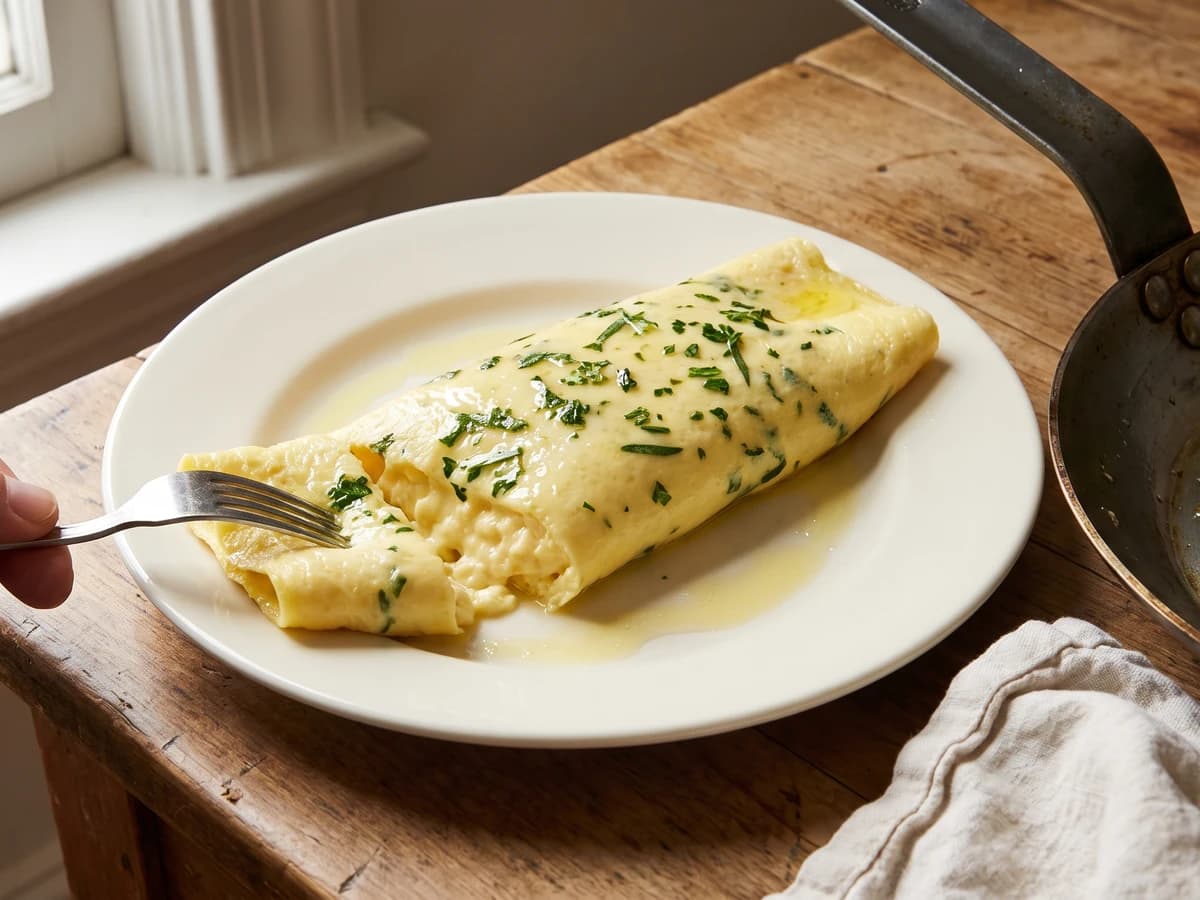
Four tender herbs, hot butter, and two eggs per pan: this rolled omelette teaches the quick hand and good judgment that keep the outside pale and the center creamy.
Chef Juliette
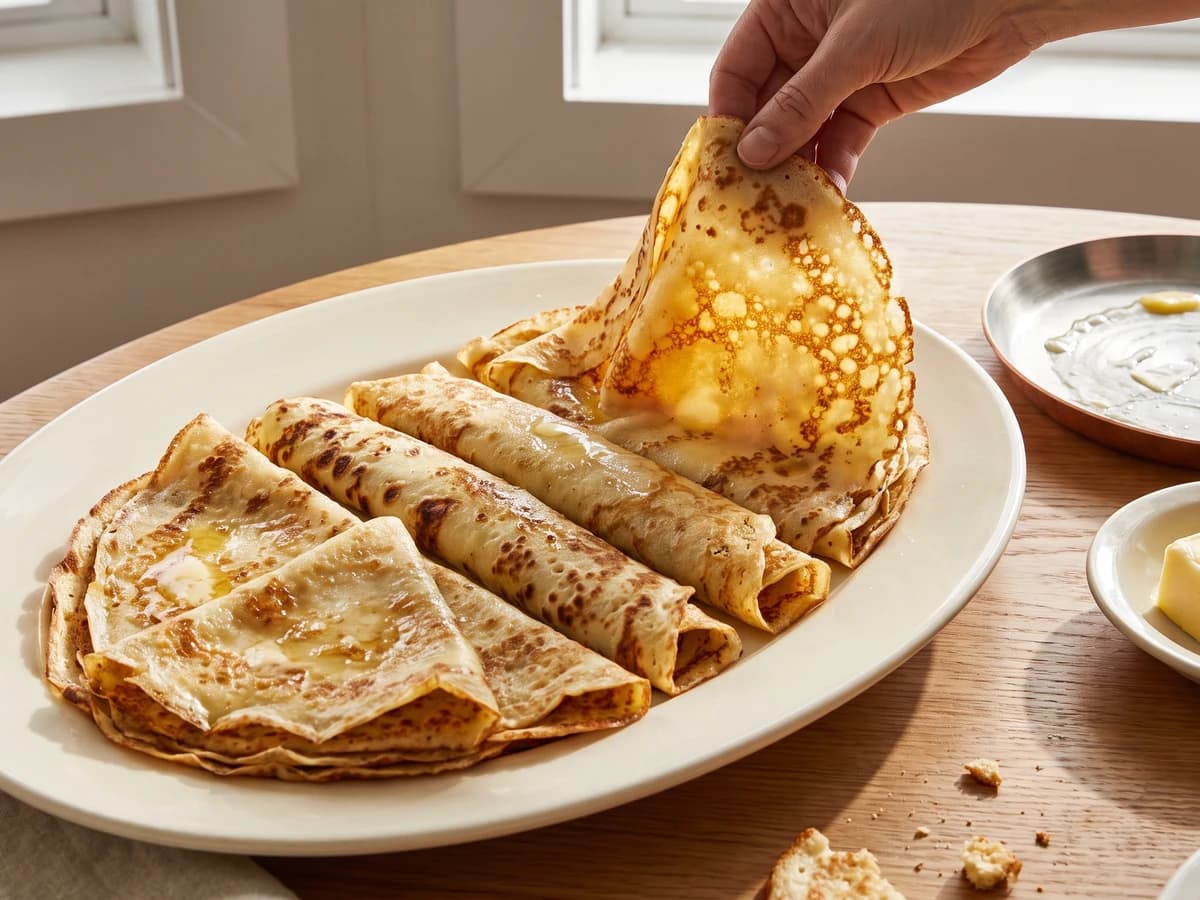
Four batters, one lesson: let the flour drink deeply before cooking, then spread the batter thinly in butter for crêpes and pannequets that bend without becoming tough.
Chef Juliette
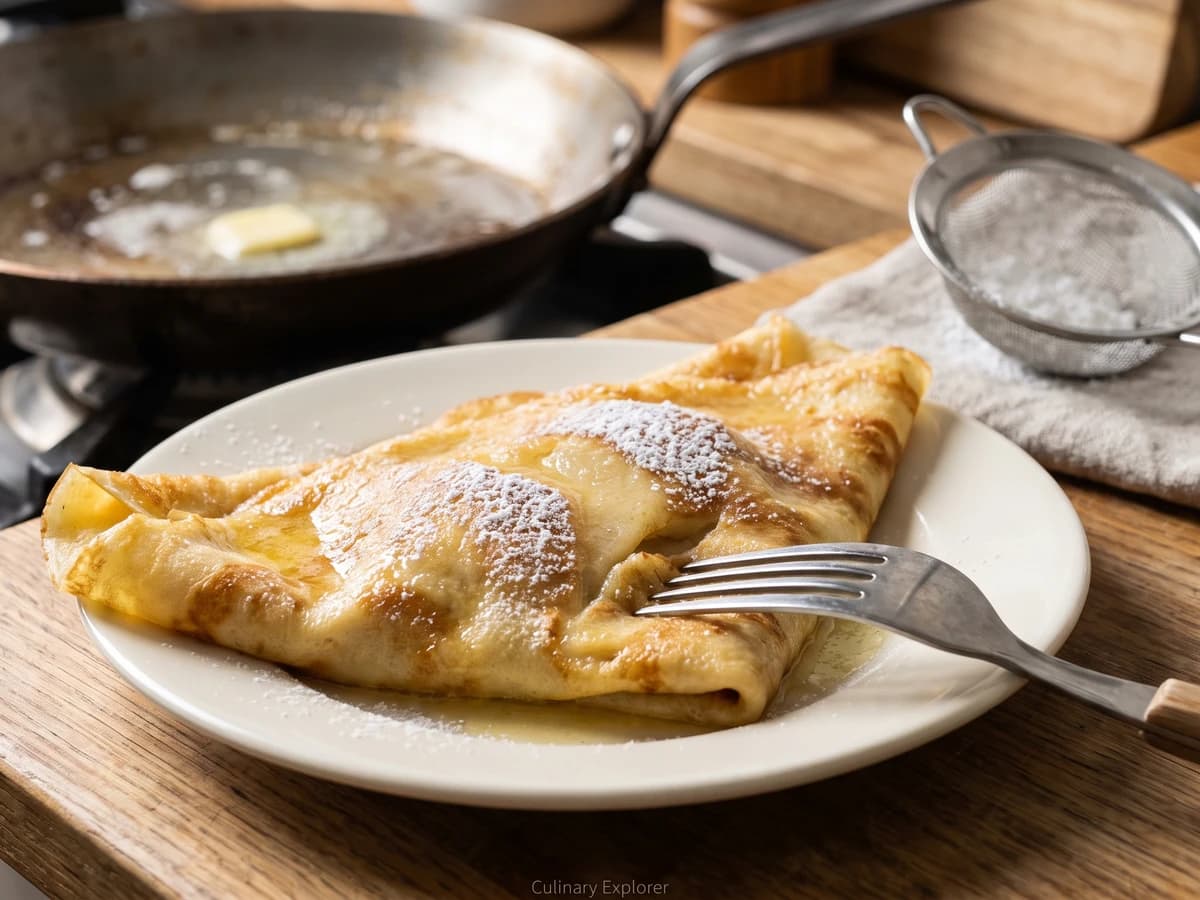
Crêpes au Couvent trap ripe Williams pear dice between two thin pours of sweet batter, then turn in one clean toss and reach the table butter-gold, powdered, and burning hot.