Chef Juliette
Omelette à l’Écossaise
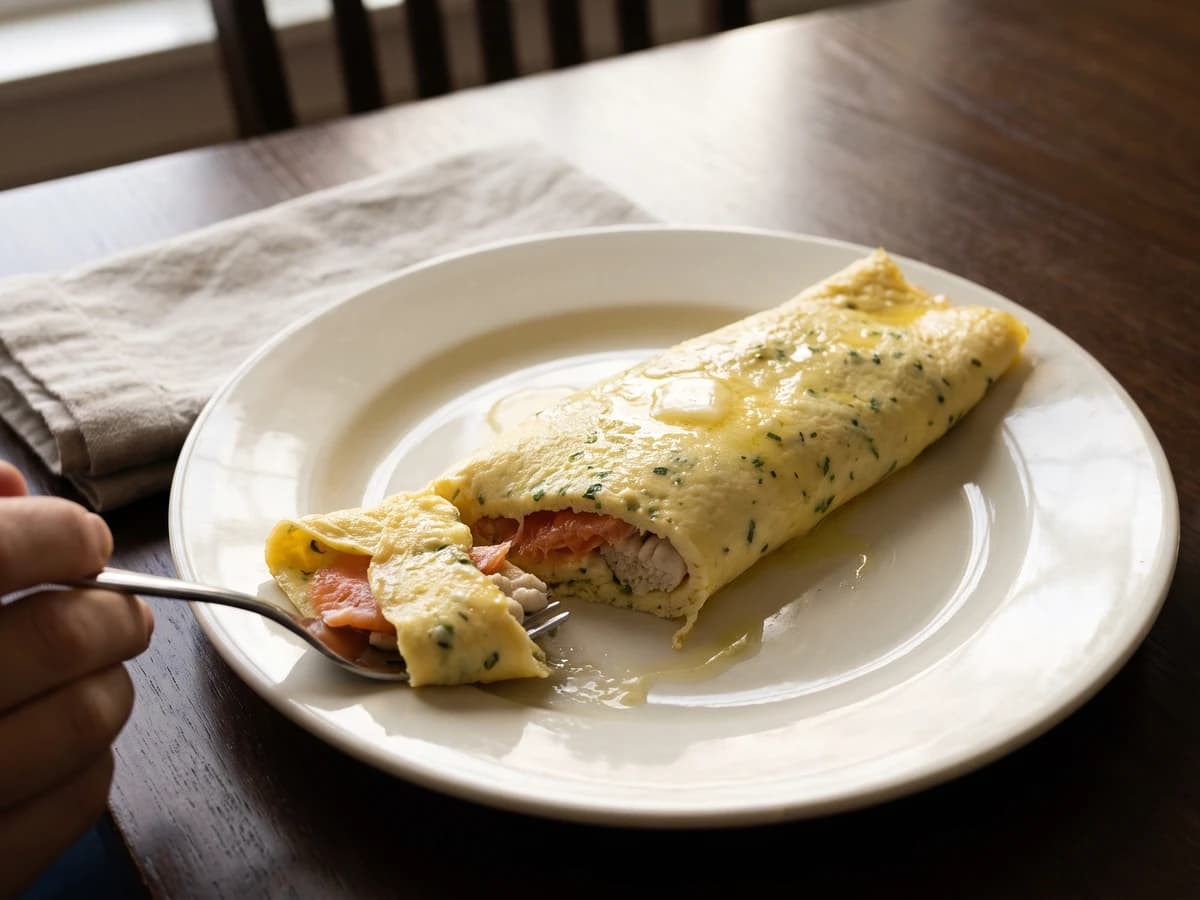
A creamy omelette aux fines herbes closes around smoked-salmon-wrapped herring milts, gently poached in butter. Have the filling ready, then roll the eggs while they still shine.
A cooking platform built around craft, culture, and the stories behind what we eat.
Created by Chef Juliette
Based on No. 522, Omelet of Lapwings’ Eggs, from Le Guide Culinaire (1907) by Auguste Escoffier
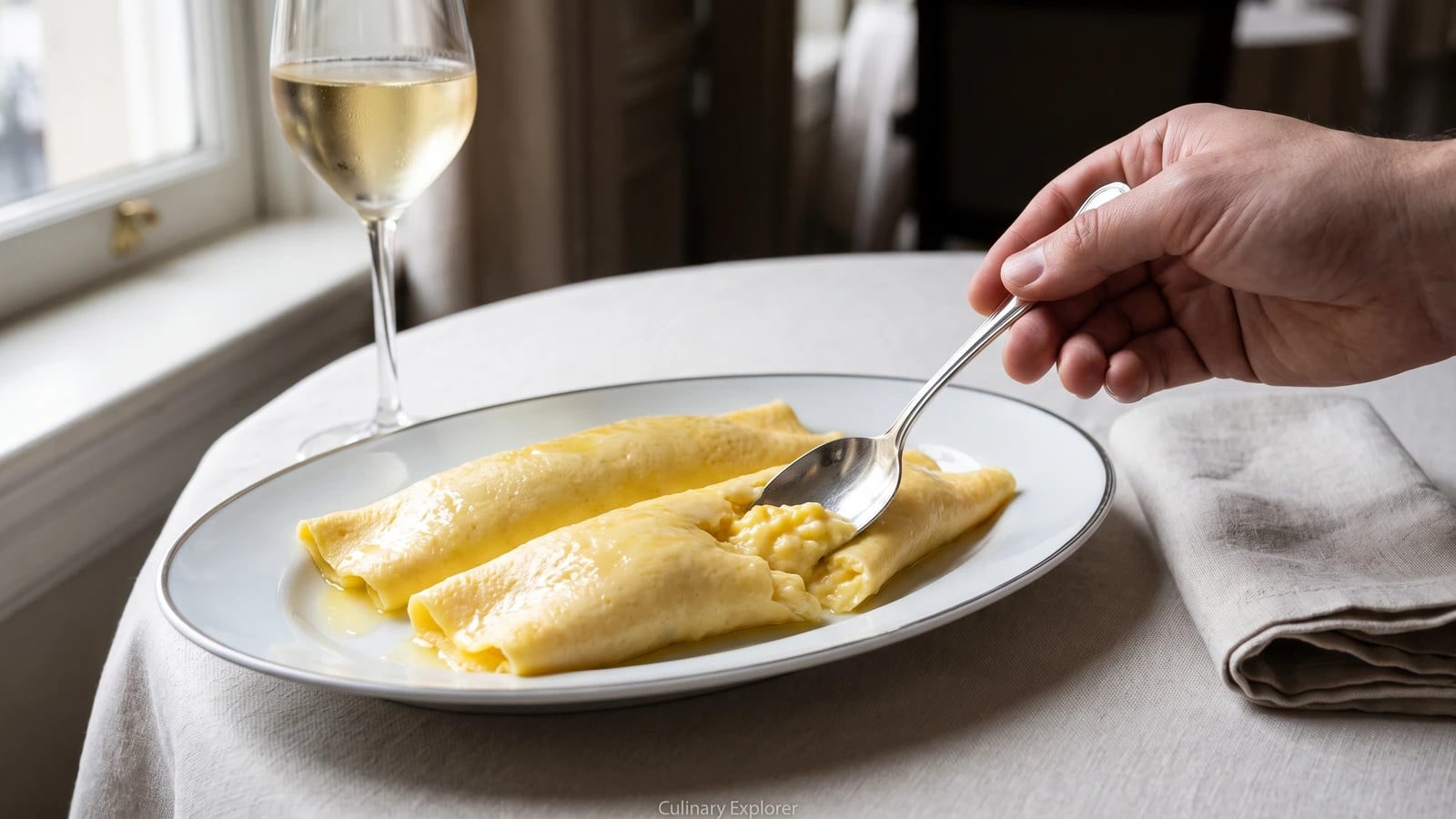
The rare omelette that teaches proportion: six lapwing eggs need one hen egg for structure, then quick buttered heat keeps their fine flavor and tender curd intact.
Omelette d’œufs de vanneau (lapwing-egg omelet) teaches proportion before heat. Six small lapwing eggs receive one ordinary hen egg, not as filler but as the little piece of structure that lets a tender curd hold its fold. That six-to-one ratio is the dish. Before you crack anything, establish that the lapwing eggs were lawfully supplied for food; never take them from a wild nest.
The original entry could simply say proceed as for other omelets because it assumed a brigade cook with the whole omelette repertoire already in hand. It calls for no saucier, standing stock, or salamander, so none belongs here. For four people, twelve lapwing eggs and two hen eggs keep the prescribed ratio intact, while two small omelettes are easier to control than one unwieldy mass. Dividing the mixture is home-kitchen scaffolding. The ratio and swift butter cooking must stay. One cook, one stove, one evening.
Done correctly, each omelette arrives pale butter-gold, softly set within and glossy at the fold. The step that matters most is stopping while the surface still looks faintly moist. Wait for dryness in the pan and dryness is what reaches the plate.
Omelette d’œufs de vanneau belongs to the Parisian grand table, supplied through northern French market networks from the wet meadows and coastal grazing grounds where lapwings nested. The classical repertoire treated these eggs as a seasonal luxury but with deliberate restraint; in this formula, the hen egg supplies body rather than flavor. Conservation law in many countries forbids taking or selling wild-bird eggs, so the dish enters a living kitchen only through clear, lawful provenance.
Quantity
12
legally sourced, checked individually before mixing
Quantity
2
Quantity
4 tablespoons (60 ml / 57 g)
divided
Quantity
1/2 teaspoon (2.5 ml / 3 g)
divided
Quantity
1/8 teaspoon (0.6 ml / 0.3 g)
divided
| Ingredient | Quantity |
|---|---|
| fresh lapwing eggslegally sourced, checked individually before mixing | 12 |
| large hen eggs | 2 |
| unsalted butterdivided | 4 tablespoons (60 ml / 57 g) |
| fine sea saltdivided | 1/2 teaspoon (2.5 ml / 3 g) |
| finely ground white pepperdivided | 1/8 teaspoon (0.6 ml / 0.3 g) |
Take the eggs from the refrigerator about fifteen minutes before cooking. Crack each lapwing egg separately into a small cup, inspect it, then transfer it to a mixing bowl; one damaged egg must never spoil the other eleven. Reject any egg with a cracked shell, unusual discoloration, or an off odor. Check the hen eggs in the same way.
Place six lapwing eggs and one hen egg in each of two bowls. Season each batch with half the salt and white pepper, then beat briskly with a fork until the whites and yolks are completely joined but not foamy, about thirty seconds. The hen egg gives cohesion without taking command of the flavor. Keep the batches separate so every omelette preserves the source ratio exactly.
Warm an oval serving platter with hot water, dry it thoroughly, and have four plates waiting. The omelettes will not improve while someone searches for forks. The brigade had a runner to carry each one from pan to table; a warm platter and seated guests are the honest home equivalent.
Heat a 25 cm omelette pan over medium-high heat for about one minute. Add 1 1/2 tablespoons of the butter and swirl until it foams vigorously and begins to quiet, keeping it yellow rather than brown. Pour in the first egg mixture. Shake the pan rapidly while stirring small circles with a heatproof spatula, drawing the setting egg from the bottom into the softer mixture above. Stop stirring when fine, tender curds have formed but the surface remains loose and glossy, about thirty to forty-five seconds. If the eggs seize into firm slabs or threaten to color, lift the pan from the heat and keep them moving until the pace slows. Ça se rattrape.
Level the curds into an even layer, then tilt the pan away from you. Fold the far third toward the center and roll the near edge over it, forming a plump oval while the interior is still softly set. Turn the omelette seam-side down onto the warm platter and brush it with 1/2 tablespoon of butter. If the fold tears, tuck the loose edge underneath and glaze the surface. Tenderness matters more than symmetry.
Wipe the pan clean and repeat with the second batch and the remaining 2 tablespoons of butter. Set the omelettes slightly apart on the platter, cut each into two portions, and serve immediately. The centers should be moist and softly set, never liquid, with no filling or garnish to cover the fine flavor of the eggs. À table!
1 serving (about 100g)
Culinary guides, cultural storytelling, and the editorial depth that makes cooking meaningful.
Discover Culinary ExplorerChef Juliette
A creamy omelette aux fines herbes closes around smoked-salmon-wrapped herring milts, gently poached in butter. Have the filling ready, then roll the eggs while they still shine.
Chef Juliette
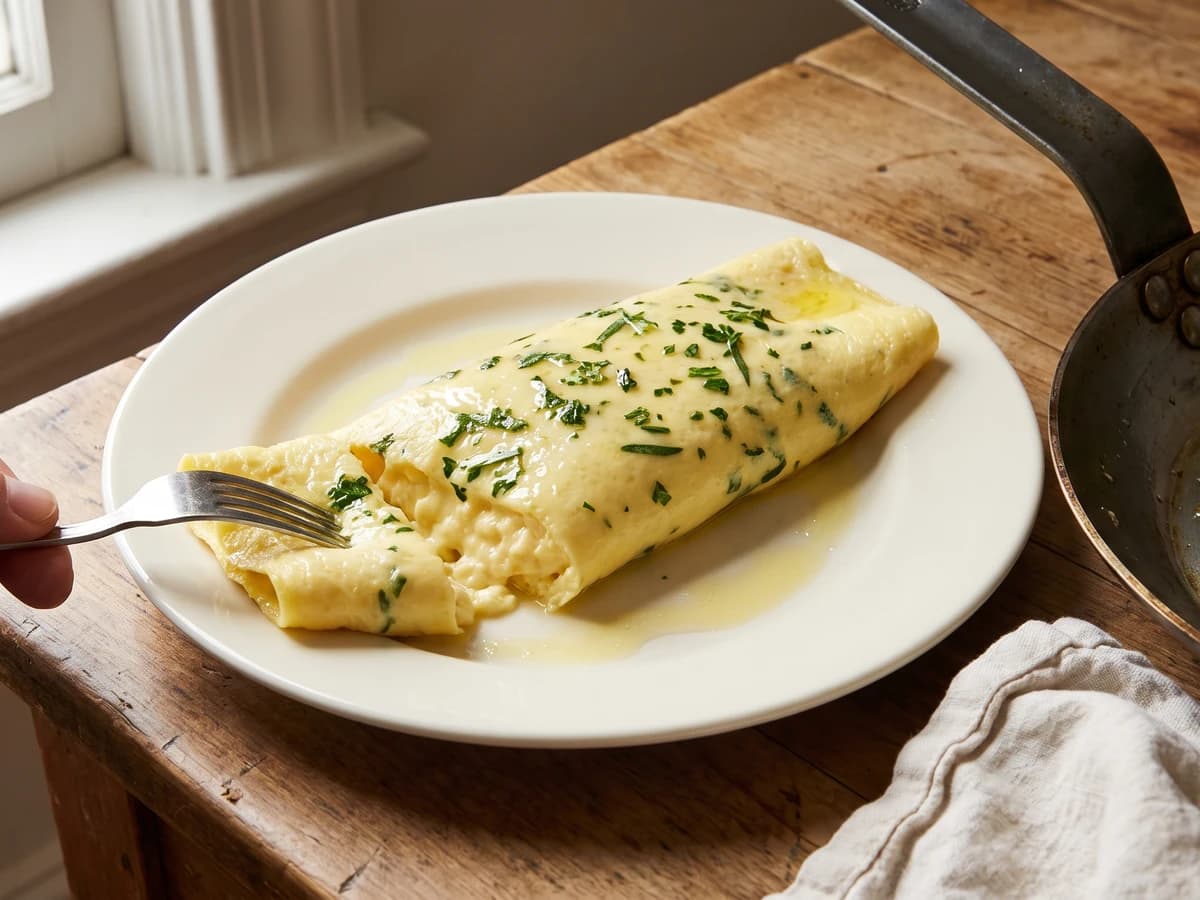
Four tender herbs, hot butter, and two eggs per pan: this rolled omelette teaches the quick hand and good judgment that keep the outside pale and the center creamy.
Chef Juliette
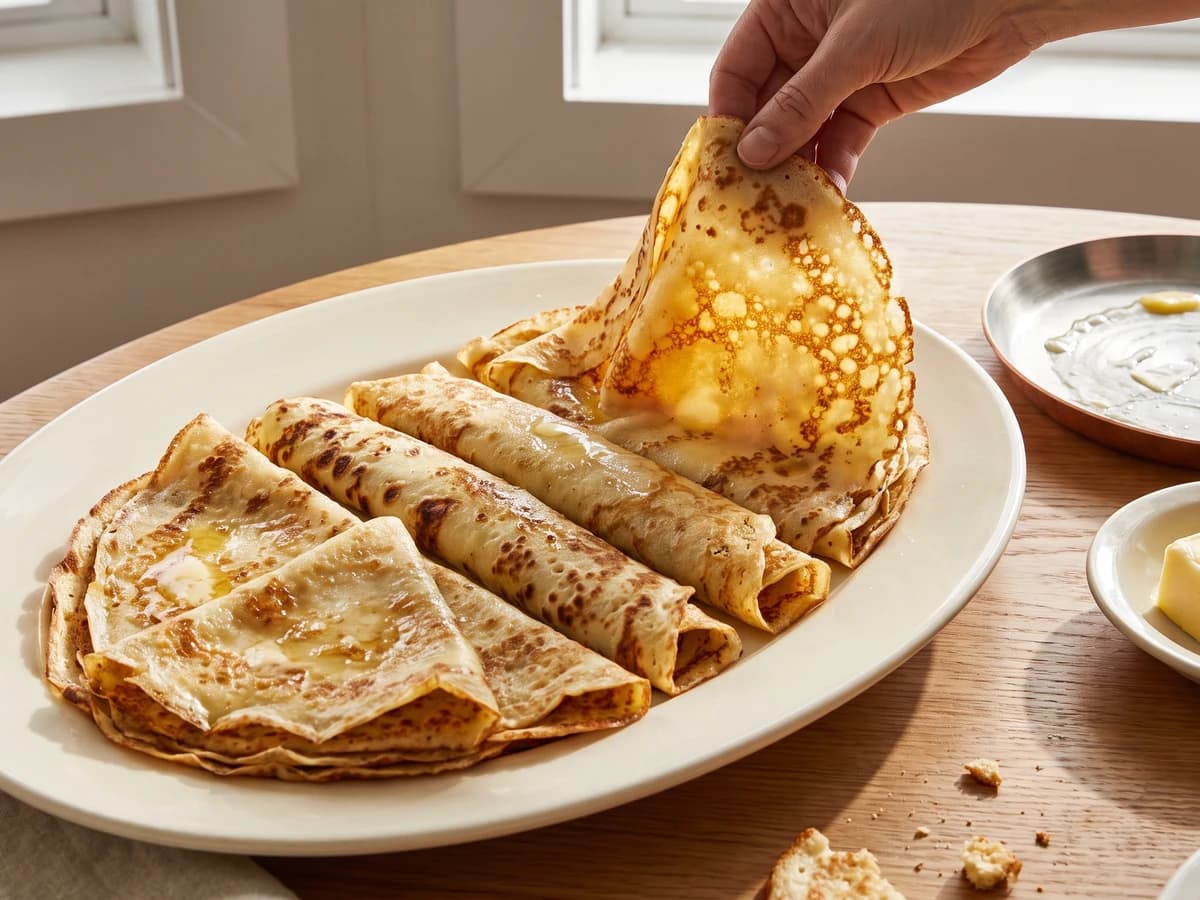
Four batters, one lesson: let the flour drink deeply before cooking, then spread the batter thinly in butter for crêpes and pannequets that bend without becoming tough.
Chef Juliette
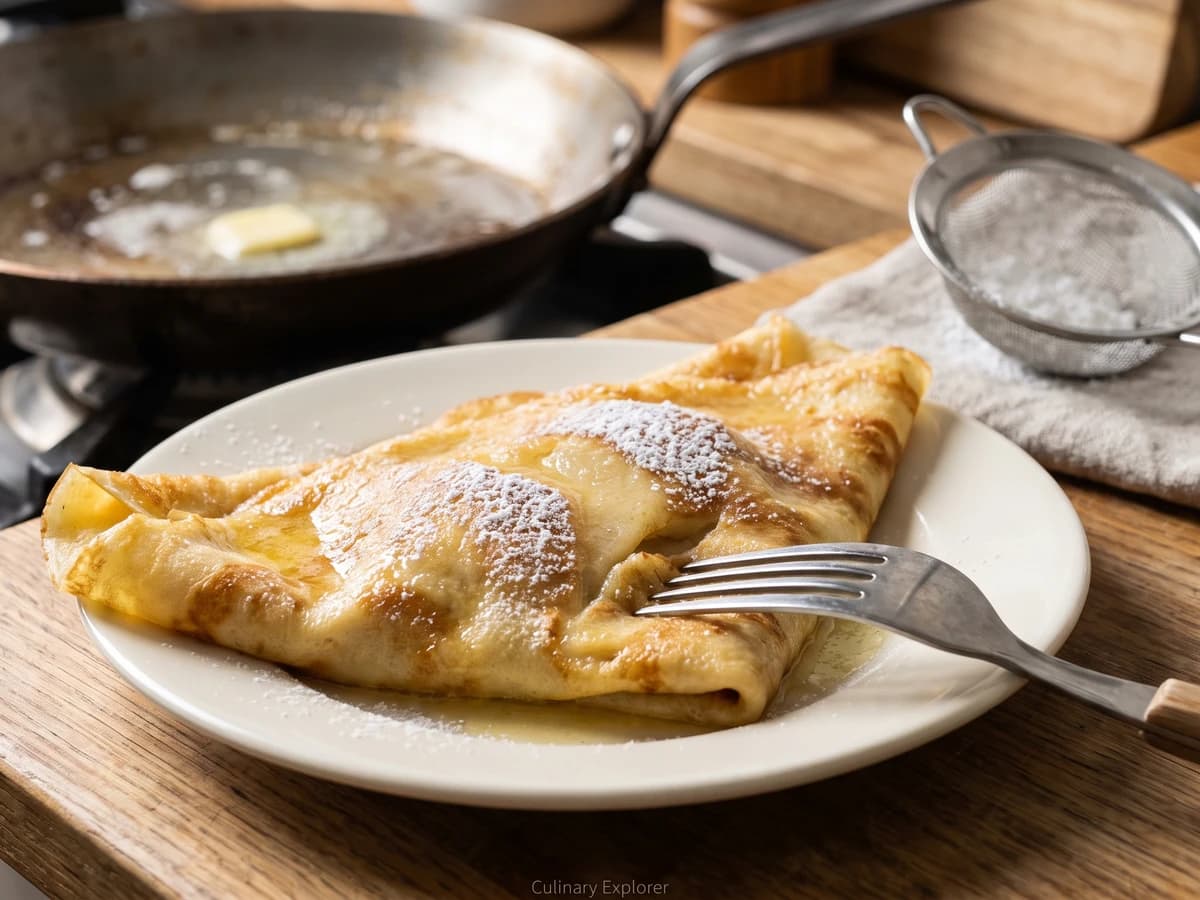
Crêpes au Couvent trap ripe Williams pear dice between two thin pours of sweet batter, then turn in one clean toss and reach the table butter-gold, powdered, and burning hot.