Chef Juliette
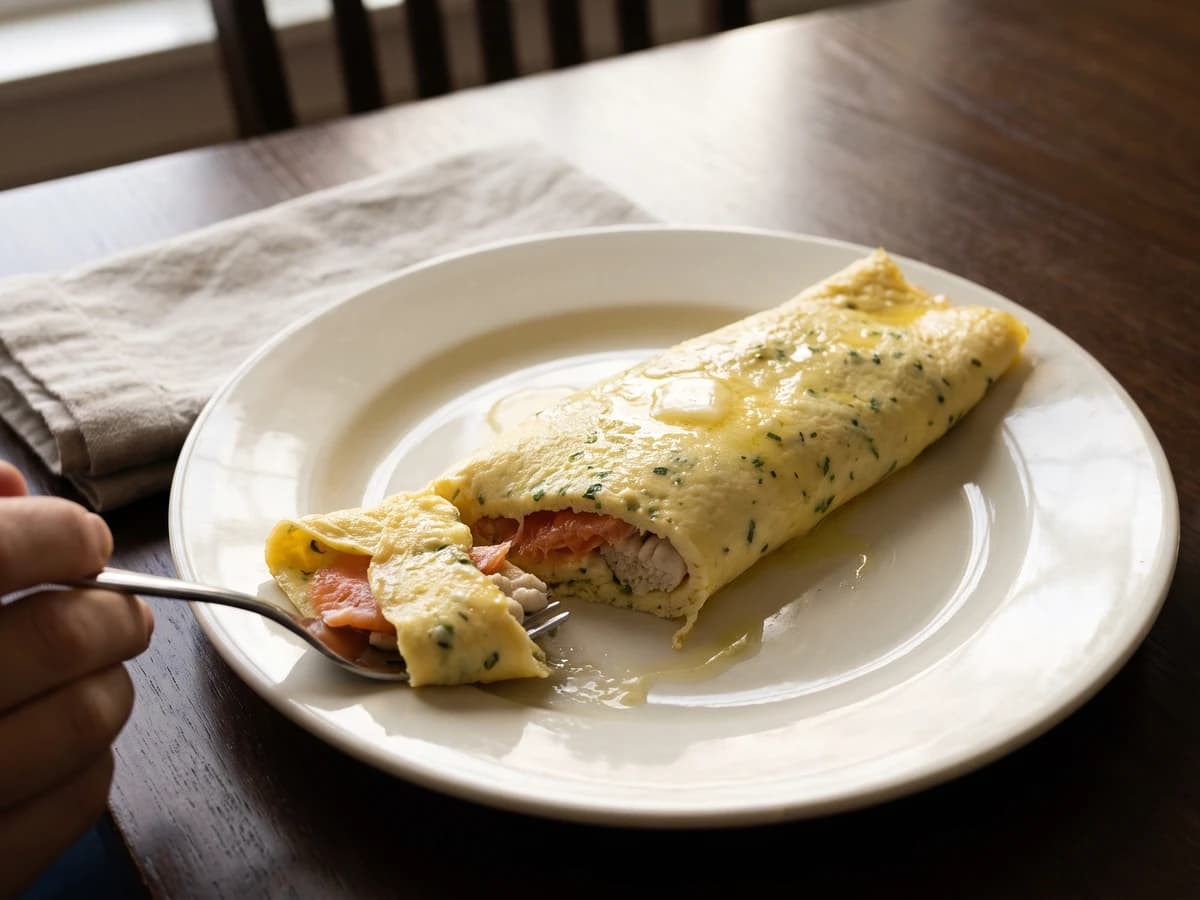
Omelette à l’Écossaise
A creamy omelette aux fines herbes closes around smoked-salmon-wrapped herring milts, gently poached in butter. Have the filling ready, then roll the eggs while they still shine.
A cooking platform built around craft, culture, and the stories behind what we eat.
Created by Chef Juliette
Based on No. 520, Scrambled Lapwings’ Eggs, from Le Guide Culinaire (1907) by Auguste Escoffier
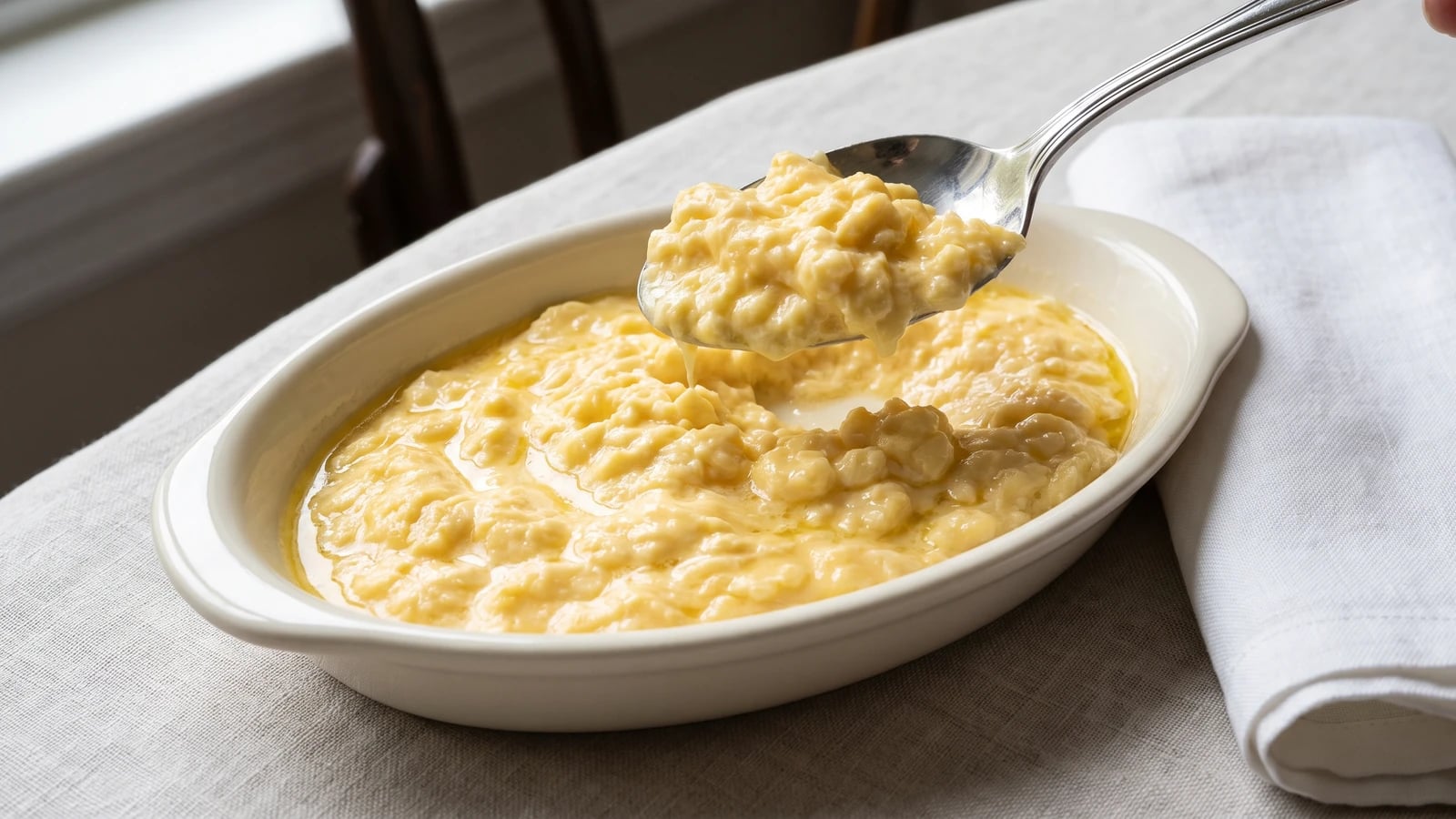
Three lapwings’ eggs equal one hen’s egg, but their delicacy demands slower heat: a small French scramble finished with cold butter and cream, softly curded and served the moment it turns glossy.
Œufs de vanneau brouillés (scrambled lapwings’ eggs) teach the finest lesson in egg cookery: a smaller, rarer egg does not require a grander technique, only gentler heat. Before you touch the pan, know the one thing that decides the dish. The eggs must thicken slowly into a flowing cream of tender curds, never seize into dry pieces.
The source assumes the ordinary method for œufs brouillés is already in the cook’s hands, with a warmed serving dish and immediate service waiting beyond the stove. The honest home translation uses one heavy saucepan and follows the book’s equation exactly, three lapwing eggs for one hen’s egg, scaled to 24 small eggs for four people. What disappears is the brigade shorthand. What stays is the dish itself: low heat, uninterrupted stirring, real butter, and no waiting once it is cooked. One cook, one stove, one evening.
When the œufs brouillés are right, they settle softly from the spoon, pale butter-gold and glossy, with curds so fine they nearly become a sauce. Keep the pan moving on and off the heat as needed. That control matters more than the clock.
In the French classical repertoire, œufs de vanneau belonged to Parisian dining rooms supplied by specialist market dealers, rather than to one regional household tradition. Their entry in the canon deliberately gives them no separate technique: ordinary scrambled-egg preparations apply, but three small lapwing eggs are counted in place of one hen’s egg and handled with particular care. Northern lapwings are now protected across much of Europe and wild-egg collecting is generally prohibited, so the dish must be made only with eggs from a lawful, regulated source.
Quantity
24 eggs (equivalent to 8 hen eggs; about 1⅔ cups / 400 ml / 400 g out of shell)
Quantity
¼ cup (60 ml / 57 g)
divided, with half kept cold
Quantity
3 tablespoons (45 ml / 45 g)
very cold
Quantity
¾ teaspoon (3.75 ml / 4.5 g)
Quantity
⅛ teaspoon (0.6 ml / 0.3 g)
| Ingredient | Quantity |
|---|---|
| lawfully sourced lapwings’ eggs | 24 eggs (equivalent to 8 hen eggs; about 1⅔ cups / 400 ml / 400 g out of shell) |
| unsalted butterdivided, with half kept cold | ¼ cup (60 ml / 57 g) |
| heavy creamvery cold | 3 tablespoons (45 ml / 45 g) |
| fine salt | ¾ teaspoon (3.75 ml / 4.5 g) |
| ground white pepper | ⅛ teaspoon (0.6 ml / 0.3 g) |
Fill the serving dish with very hot water and set it aside to warm. Measure the cream, keep it cold, and divide the butter into two equal portions. Have everyone ready before you begin. Œufs brouillés wait for no guest, and holding them over heat destroys the softness you worked to build.
Crack each lapwing egg into a small cup before adding it to the mixing bowl. Twenty-four little shells invite fragments, and cracking separately prevents one damaged egg from spoiling the whole bowl. Whisk in the salt and white pepper only until the whites and yolks disappear into one even colour; do not beat in a froth.
Melt half the butter in a 1½-quart heavy saucepan over the lowest heat. It should melt quietly and remain pale. Add the eggs and begin stirring at once with a flexible spatula, sweeping the pan floor and sides so no film is allowed to set. At first nothing seems to happen. Keep going.
Continue stirring for 7 to 10 minutes, moving the saucepan off the burner whenever the edges thicken faster than the centre. The eggs are ready when very small curds form throughout, the mixture still flows like a thick sauce, and the centre reaches 71°C / 160°F. If firm curds suddenly race across the pan, take it off the heat and beat in 1 tablespoon of the cold cream with a small piece of the reserved butter. Ça se rattrape. If the bottom has browned, transfer the unmarked eggs to a clean pan without scraping up the browned layer.
Take the saucepan off the heat and fold in the remaining cold cream and butter. This enriches the eggs and arrests the cooking before the curds tighten. Empty and dry the warmed serving dish, spoon in the œufs brouillés, and bring them straight to the table while they still settle softly from the spoon. À table!
1 serving (about 115g)
Culinary guides, cultural storytelling, and the editorial depth that makes cooking meaningful.
Discover Culinary ExplorerChef Juliette
A creamy omelette aux fines herbes closes around smoked-salmon-wrapped herring milts, gently poached in butter. Have the filling ready, then roll the eggs while they still shine.
Chef Juliette
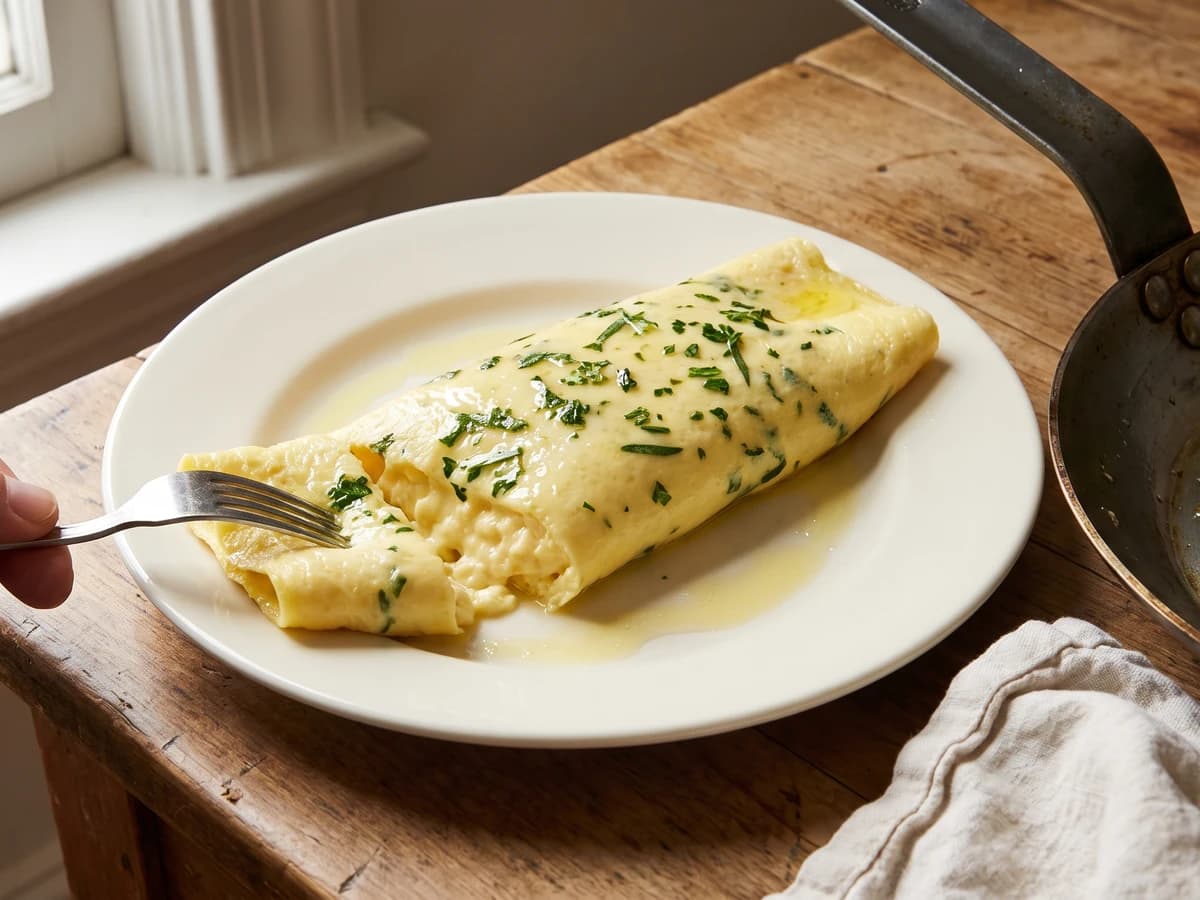
Four tender herbs, hot butter, and two eggs per pan: this rolled omelette teaches the quick hand and good judgment that keep the outside pale and the center creamy.
Chef Juliette
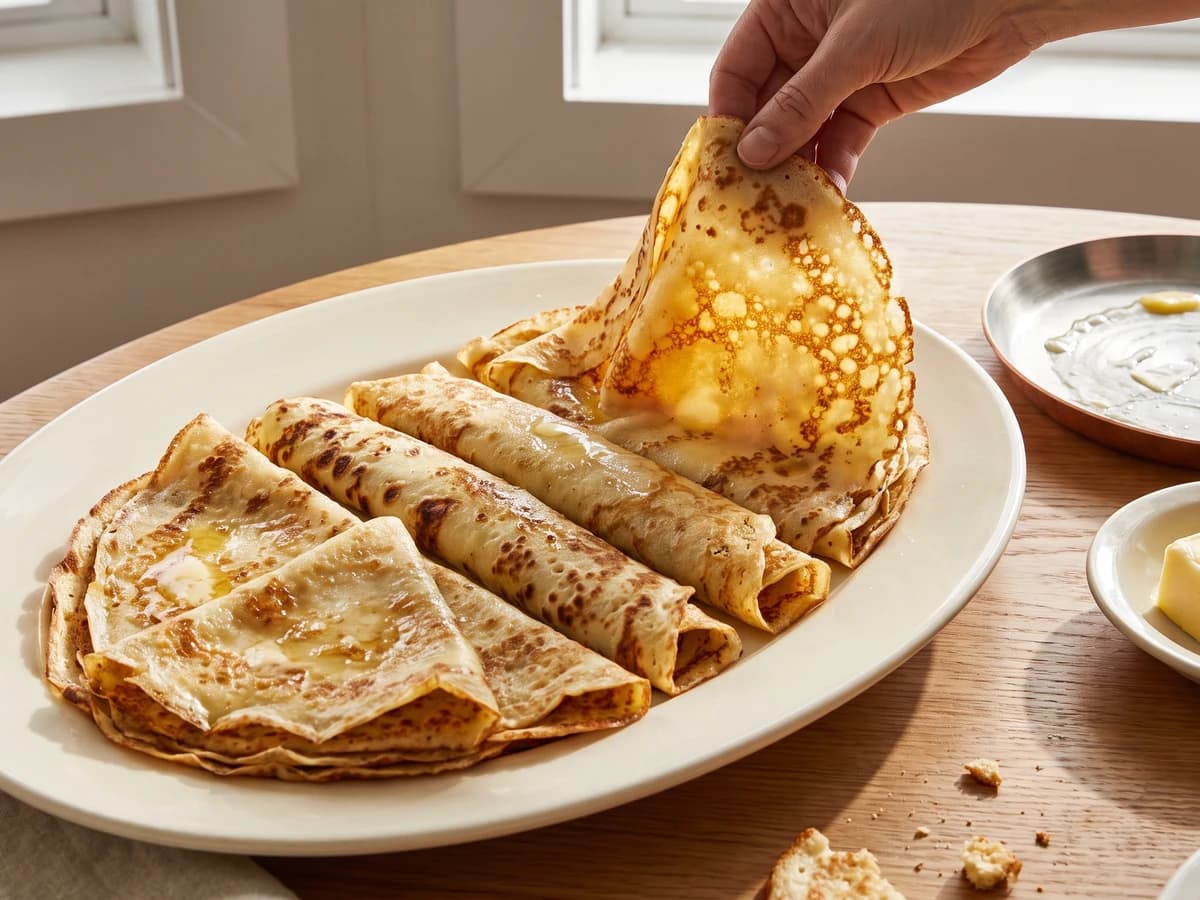
Four batters, one lesson: let the flour drink deeply before cooking, then spread the batter thinly in butter for crêpes and pannequets that bend without becoming tough.
Chef Juliette
Crêpes au Couvent trap ripe Williams pear dice between two thin pours of sweet batter, then turn in one clean toss and reach the table butter-gold, powdered, and burning hot.