Chef Juliette
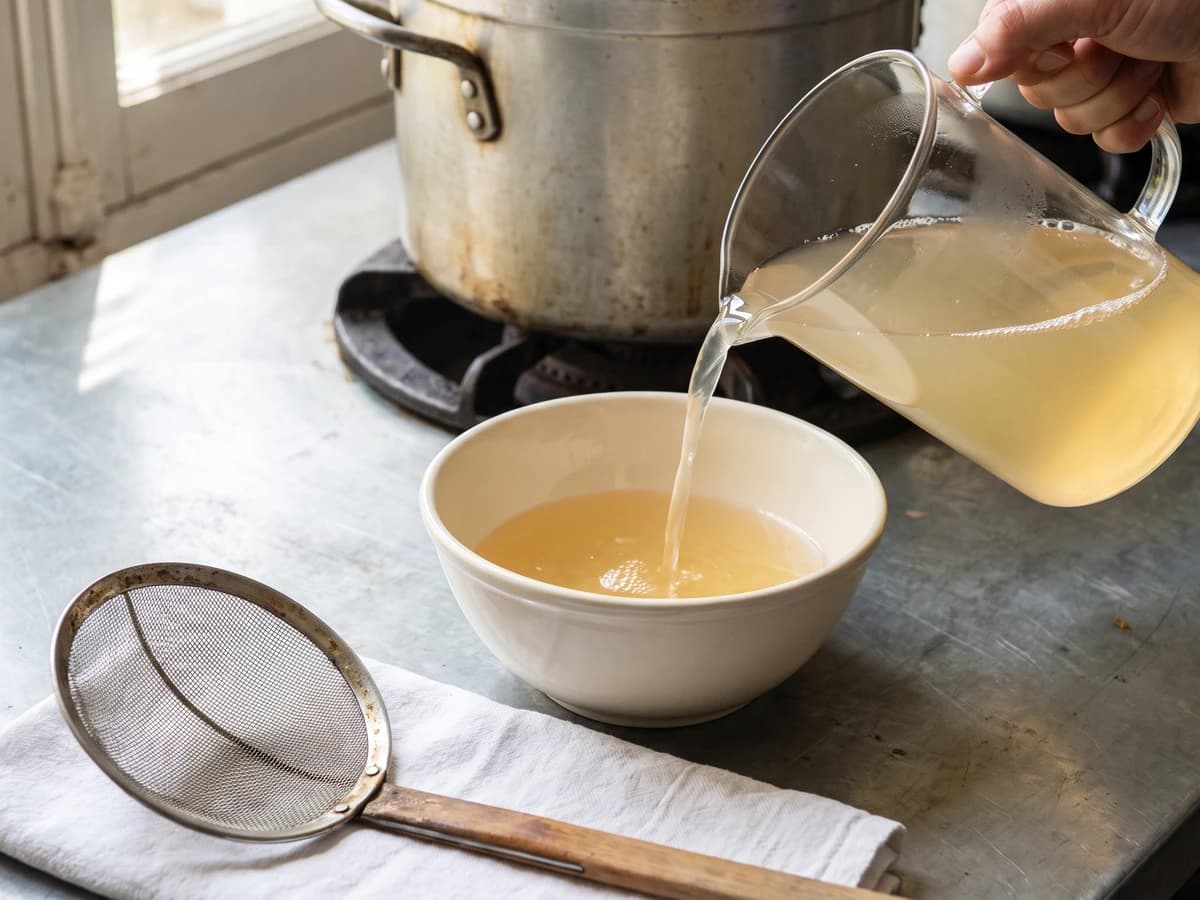
Ordinary or White Consommé
Beef shin, lean beef, and fowl begin in cold water and rise slowly toward a tremble. Skim before the boil, and you learn the quiet discipline that gives every clear French broth its backbone.
A cooking platform built around craft, culture, and the stories behind what we eat.
Created by Chef Juliette
Based on No. 52, Robert Sauce, from Le Guide Culinaire (1907) by Auguste Escoffier
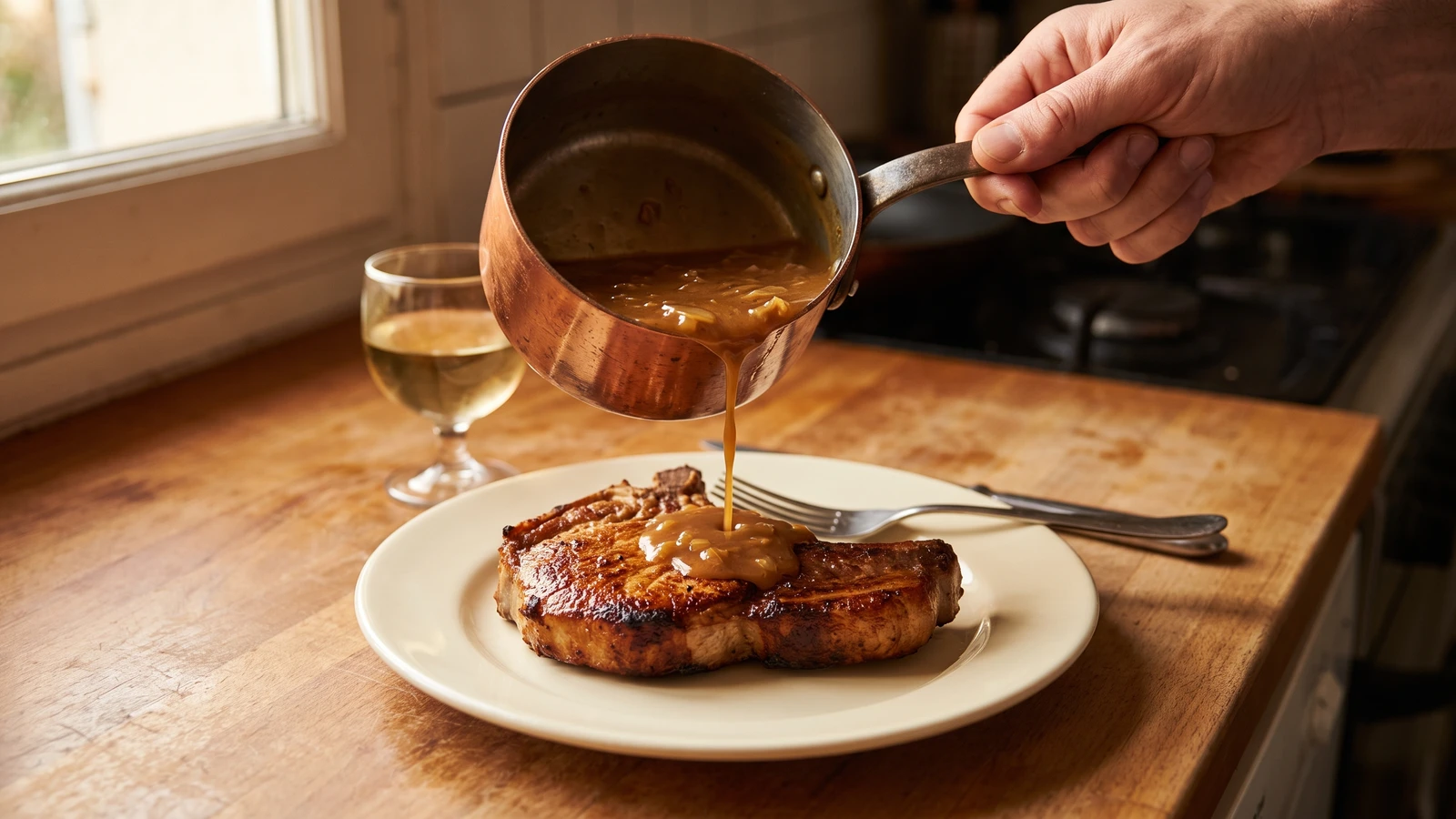
Sauce Robert is the mustard-bright lesson in finishing off heat: onion, white wine, and demi-glace simmer to a gloss, then mustard and sugar sharpen pork without returning to the boil.
Sauce Robert (a mustard-sharpened onion sauce for pork) teaches the discipline of finishing: mustard goes in only after the pan leaves the heat, and once it does, the sauce must never boil again. Before you touch the pan, know that this final restraint is the whole sauce. Get it right and the demi-glace is glossy and savoury, the onion sweet but pale, and the mustard bright enough to wake a pork chop without shouting over it.
The written formula assumed a saucier on staff, demi-glace and glace de viande drawn from a stockpot never off the fire, and a bain-marie, a hot-water bath, already waiting beside the range. At home, use good prepared demi-glace and meat glaze at ready-to-use strength, then nest the saucepan in hot water if the sauce must wait. The formula here is halved, but its one-part wine to three-parts demi-glace ratio and every finishing proportion stay intact: one cook, one stove, one evening.
The brigade's stockmaking and service choreography are scaffolding; they can go. The colourless onion sweat, the one-third wine reduction, the full twenty-minute simmer, and the off-heat mustard finish are the dish, so they stay. Watch the onion first, but guard the final heat most closely; that is the step that decides Sauce Robert.
Sauce Robert belongs to the Parisian classical sauce repertoire and is counted among the canon's oldest recorded compound sauces, always closely allied with pork. Generations of grand-kitchen practice folded an onion-and-mustard preparation into the demi-glace family, adding white-wine reduction and meat glaze while keeping mustard as a last-minute finish. Calling it merely a mustard sauce misses its structure: pale softened onion and reduced wine are as essential as the mustard itself.
Quantity
½ large (about ½ cup / 75 g)
very finely minced
Quantity
1 tablespoon (15 ml / 14 g)
Quantity
⅓ cup (80 ml / 80 g)
Quantity
1 cup (240 ml / 240 g)
ready to use, not undiluted concentrate
Quantity
1½ teaspoons (7.5 ml / 10 g)
Quantity
½ teaspoon (2.5 ml / 3 g)
Quantity
1 small pinch (about ⅛ ml / 0.1 g)
| Ingredient | Quantity |
|---|---|
| yellow onionvery finely minced | ½ large (about ½ cup / 75 g) |
| unsalted butter | 1 tablespoon (15 ml / 14 g) |
| dry white wine | ⅓ cup (80 ml / 80 g) |
| prepared demi-glace (half-glaze)ready to use, not undiluted concentrate | 1 cup (240 ml / 240 g) |
| glace de viande (meat glaze) | 1½ teaspoons (7.5 ml / 10 g) |
| Dijon mustard | ½ teaspoon (2.5 ml / 3 g) |
| superfine sugar | 1 small pinch (about ⅛ ml / 0.1 g) |
Measure every finishing ingredient before the butter meets the pan, and have the pork nearly ready to serve. Sauce Robert cannot be left boiling while you search for the mustard. If it may need to wait, set a second, wider saucepan of hot water nearby for the bain-marie, but keep that water below a simmer.
Melt the butter in a small heavy saucepan over low heat. Add the minced onion and cook gently for 8 to 10 minutes, stirring often, until completely soft and translucent but not golden. The onion should sigh in the butter rather than fry. If its first edges begin to colour, pull the pan from the heat, add a few drops of water, and stir until the sizzling settles, then continue over lower heat.
Pour in the white wine and scrape the pan floor with a wooden spoon. Bring it to a lively simmer and reduce the wine by one-third, from ⅓ cup to a scant ¼ cup, about 3 to 5 minutes. Keep enough liquid around the onion to carry its flavour into the demi-glace; if the pan runs nearly dry, restore it with a small splash of wine and reduce briefly to the proper mark.
Stir in the prepared demi-glace and bring the sauce slowly to a bare simmer. Cook uncovered for the full 20 minutes, stirring occasionally and keeping the surface at a quiet tremble. The finished base should be glossy and fluid enough to coat the back of a spoon without sitting on it like paste. If it tightens too far, loosen it a teaspoon at a time with hot water.
Remove the pan from the heat and wait for all bubbling to stop. Stir in the glace de viande until dissolved, then whisk in the Dijon mustard and the pinch of sugar. Taste for balance: the mustard should sharpen the meat-rich sauce while the sugar rounds its edge without making the sauce sweet. Do not return it to the boil. If it bubbles accidentally, lift it off at once, cool the base of the pan briefly in cold water, and whisk; if the mustard has dulled, restore it with a knife-tip of fresh mustard off heat. Ça se rattrape.
Serve immediately, or place the saucepan in the prepared bain-marie with hot water coming partway up its sides. Hold the sauce warm for no more than 30 minutes, stirring now and then, and never let the water or sauce simmer. Spoon it generously over grilled or gently boiled pork, or fold it through a mince of cooked pork. À table!
1 serving (about 50g)
Culinary guides, cultural storytelling, and the editorial depth that makes cooking meaningful.
Discover Culinary ExplorerChef Juliette
Beef shin, lean beef, and fowl begin in cold water and rise slowly toward a tremble. Skim before the boil, and you learn the quiet discipline that gives every clear French broth its backbone.
Chef Juliette
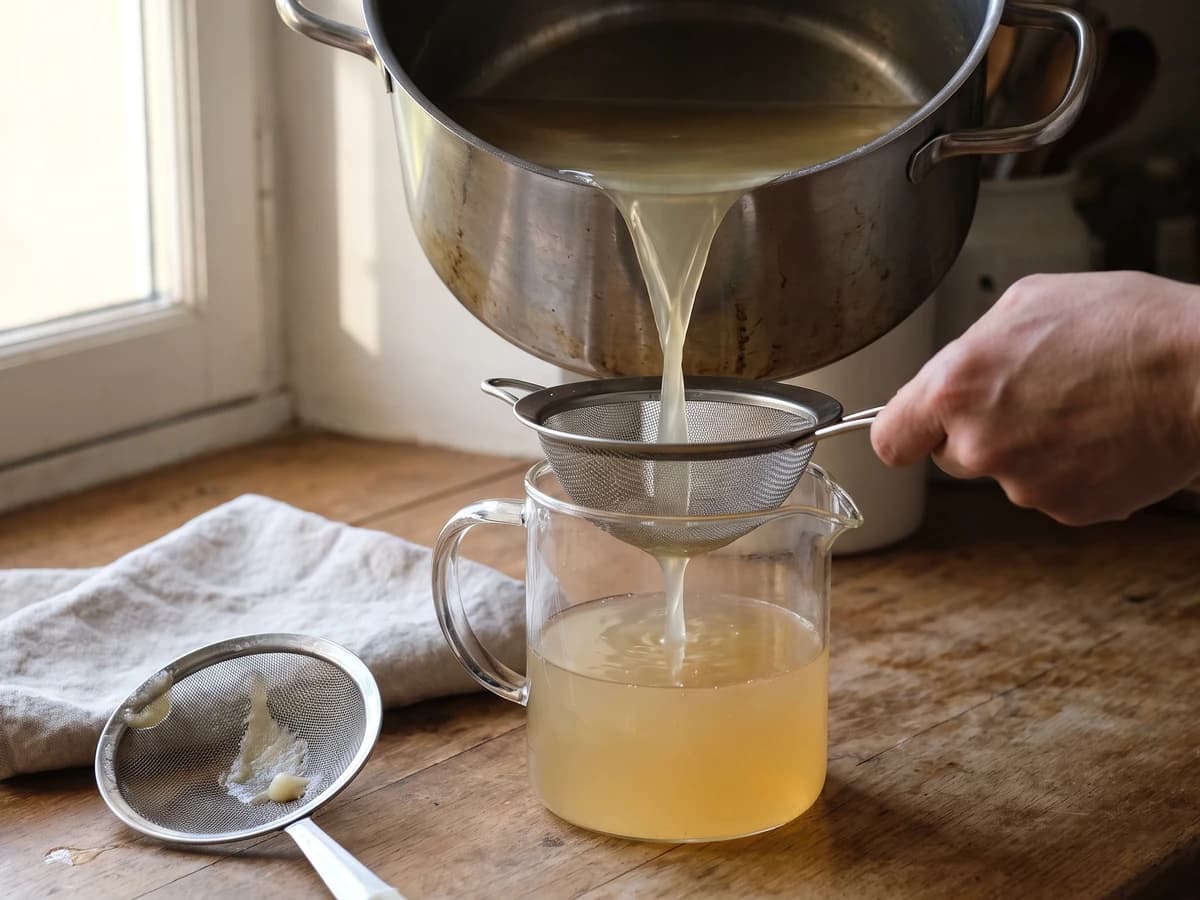
Break the veal bones small, then give them eight hours at a bare tremble. This pale, gelatinous fond becomes the quiet foundation beneath velouté, blanquette, and every sauce that must stay light.
Chef Juliette
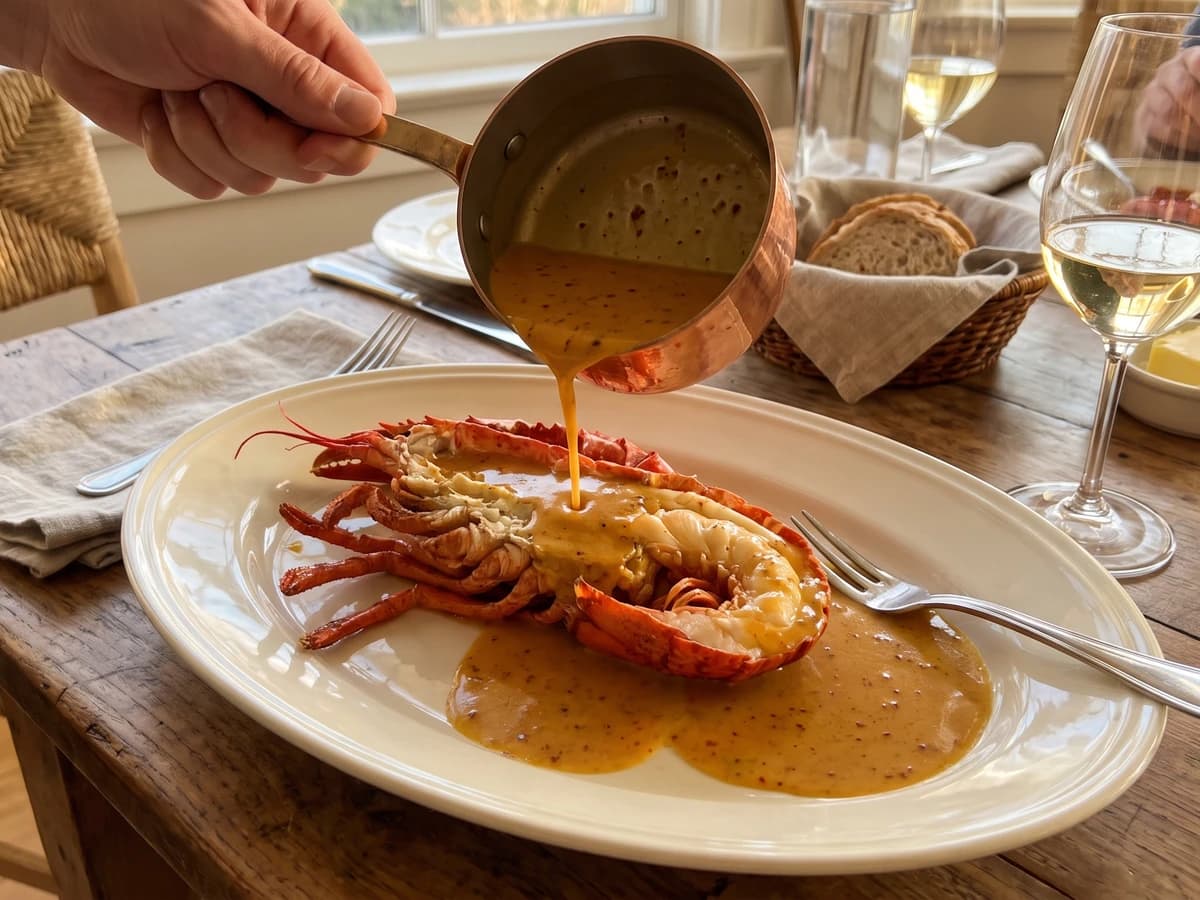
Sauce Orientale concentrates lobster-rich American Sauce with curry, then folds in cream away from the fire: a glossy, gently spiced derivative made for lobster, crayfish, and firm fish.
Chef Juliette
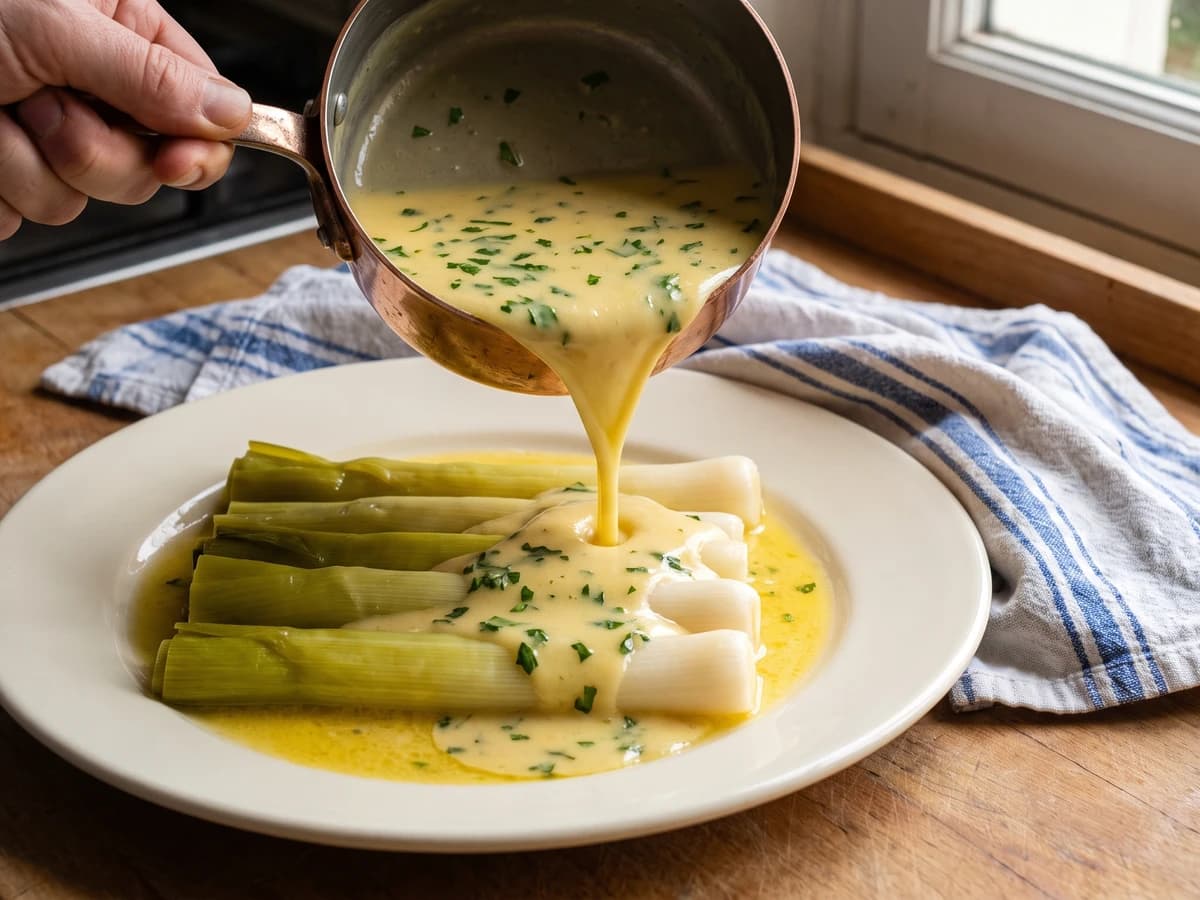
An old lesson in sauce families: Sauce Allemande takes mushroom liquor, then butter, lemon, and parsley, becoming a glossy Poulette for sheep's trotters, leeks, cauliflower, and anything needing gentle richness with a bright edge.