Chef Juliette
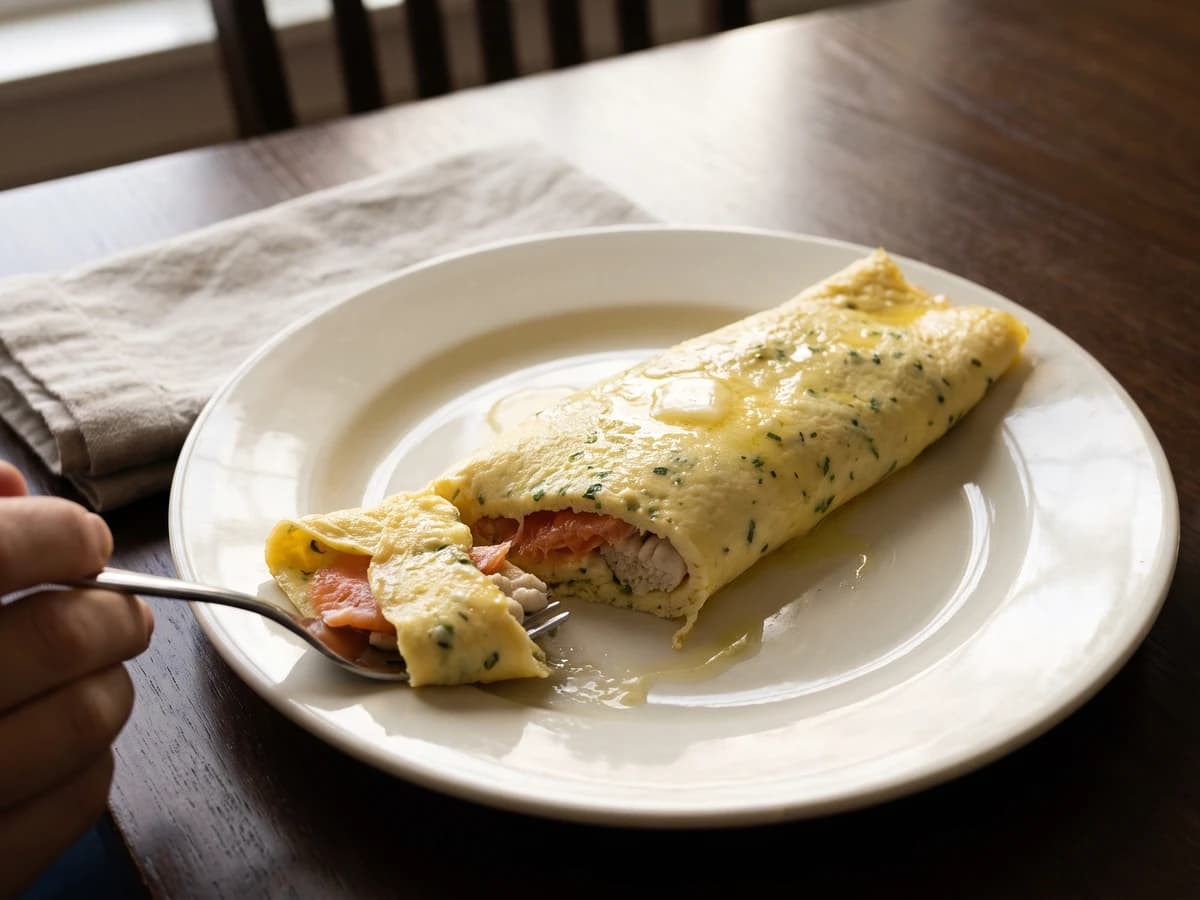
Omelette à l’Écossaise
A creamy omelette aux fines herbes closes around smoked-salmon-wrapped herring milts, gently poached in butter. Have the filling ready, then roll the eggs while they still shine.
A cooking platform built around craft, culture, and the stories behind what we eat.
Created by Chef Juliette
Based on No. 519, Hot Lapwings’ and Plovers’ Eggs, from Le Guide Culinaire (1907) by Auguste Escoffier
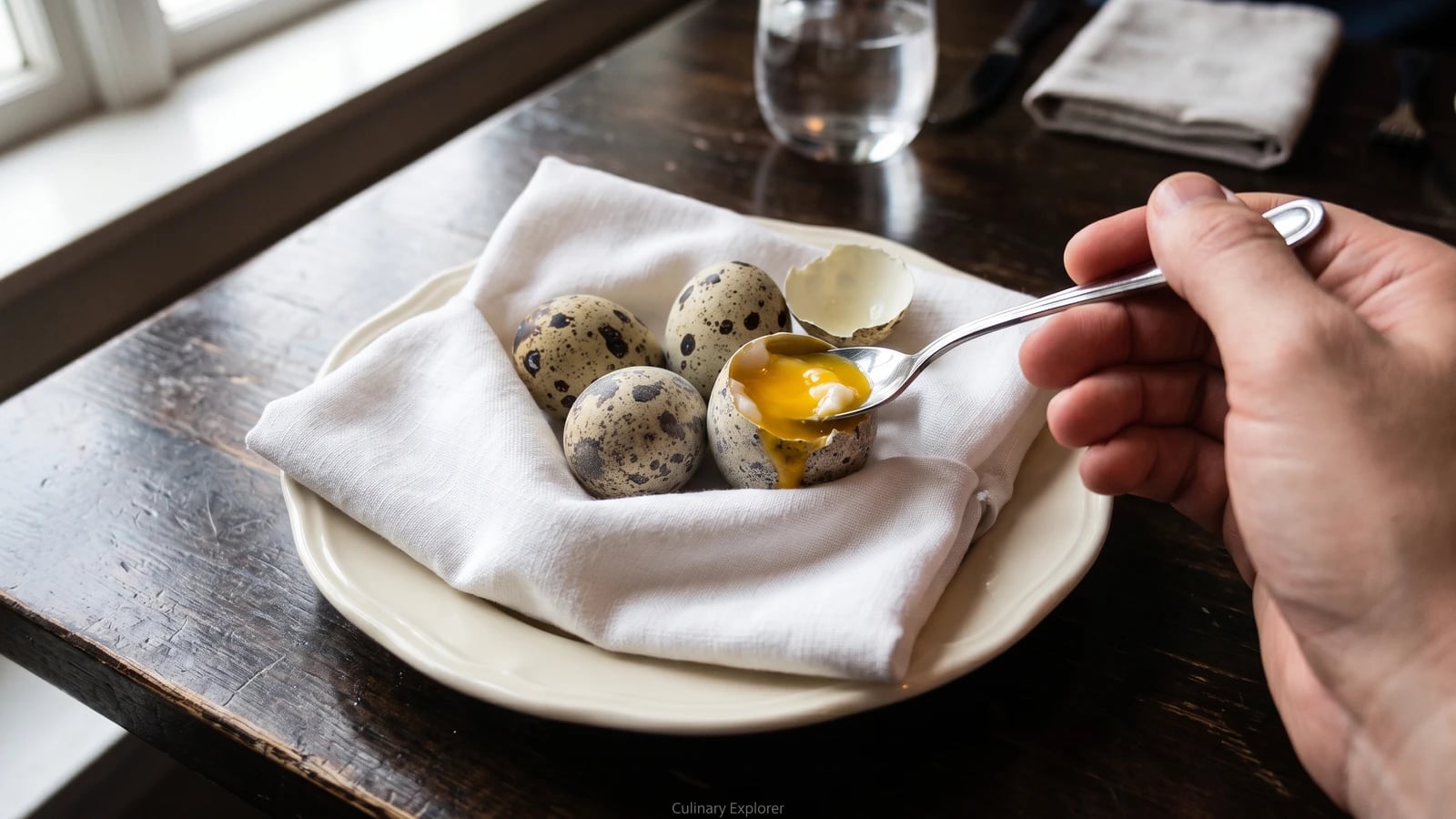
A delicate lesson in exact boiling: farmed guinea-fowl eggs stand in for protected lapwing and plover eggs, arriving warm with yolks softly set or firm and every fragile shell intact.
Œufs de vanneau et de pluvier chauds teach exact boiling. There is nowhere for careless timing to hide, no sauce and no garnish to distract from the egg itself. The one true thing to know before touching the pan is this: use very fresh eggs, lower them gently, and start the timer the moment the last shell enters the water.
The original entry assumed access to freshly gathered wild eggs and enough service hands to cook separate batches and carry them straight to the dining room. No saucier, stockpot, or salamander belonged to this preparation. Your home equivalent is a saucepan, a reliable timer, and legally farmed guinea-fowl eggs, similar in size, delicacy, and mottled beauty. Wild lapwing and plover eggs are protected or tightly regulated in many places, so the ingredient changes while the method stays. Guinea-fowl shells are thicker, which is why their cooking time runs slightly longer. Twelve eggs give four first-course servings. One cook, one stove, one evening.
Cooking separate soft and hard batches was service scaffolding; choose one finish for the whole table. The gentle boiling and immediate service are the dish and must stay. Keep the water lively but never violent, and have the cups or linen-lined serving bowl ready before the eggs go in.
Lapwing and plover eggs entered the French classical repertoire through formal Parisian and hotel dining rooms, carried by the wider northern European trade in prized spring eggs rather than by one French regional tradition. The European lapwing is itself a member of the plover family, which explains why culinary texts often paired the two market names. Because gathering their wild eggs now threatens protected birds and is commonly prohibited, farmed guinea-fowl eggs provide the honest equivalent for a living home preparation.
Quantity
12 (about 17 oz / 480 g total)
legally sourced and checked for cracks
Quantity
8 cups (1.9 liters / 1.9 kg)
or enough to cover the eggs by 1 inch
Quantity
4 cups (950 ml / about 950 g)
for the firm-cooked option only
| Ingredient | Quantity |
|---|---|
| very fresh farmed guinea-fowl eggslegally sourced and checked for cracks | 12 (about 17 oz / 480 g total) |
| wateror enough to cover the eggs by 1 inch | 8 cups (1.9 liters / 1.9 kg) |
| ice water (optional)for the firm-cooked option only | 4 cups (950 ml / about 950 g) |
Take the eggs from the refrigerator 20 minutes before cooking so the shells meet the hot water without a severe temperature shock. Inspect each one under good light and reject anything cracked, leaking, or stale-smelling. Freshness is the foundation here, because boiling cannot improve an old egg.
Bring the water to a full boil in a saucepan broad enough to hold the eggs in one layer. While it heats, arrange egg cups or line a shallow serving bowl with a folded napkin. If cooking the eggs firm, set the ice water beside the stove. Hot eggs wait for nobody, so the table must be ready first.
Lower the eggs gently with a slotted spoon, three or four at a time, keeping the shells from striking the pan or one another. Start the timer as soon as the last egg enters. Adjust the heat to maintain a quiet, steady boil: cook for 4 minutes 30 seconds for a set white and flowing yolk, or 9 minutes for a firm white and fully set but tender yolk. Do not wait for the water to return to a hard boil before timing, or the eggs will go too far.
Keep the water lively without letting it pound the eggs against the pan. If a shell develops a hairline crack and a little white escapes, lower the heat at once and leave the egg undisturbed; the escaping white will coagulate and seal the opening. Ça se rattrape. Discard the egg only if the shell opens widely or its contents smell wrong.
For soft eggs, lift them out at once and run each under cool water for 10 to 15 seconds, only long enough to make the shell comfortable to handle. For firm eggs, transfer them to the ice water for exactly 1 minute to halt carryover cooking without chilling the centres. Drain and dry them carefully.
Nest the eggs in the prepared bowl or set them upright in egg cups and take them straight to the table. For the soft version, tap away the narrow top and eat from the shell with a small spoon. Firm eggs may be cracked and peeled at the table while still warm. No garnish is needed; the mottled shell and properly judged yolk are the whole pleasure. À table!
1 serving (about 105g)
Culinary guides, cultural storytelling, and the editorial depth that makes cooking meaningful.
Discover Culinary ExplorerChef Juliette
A creamy omelette aux fines herbes closes around smoked-salmon-wrapped herring milts, gently poached in butter. Have the filling ready, then roll the eggs while they still shine.
Chef Juliette
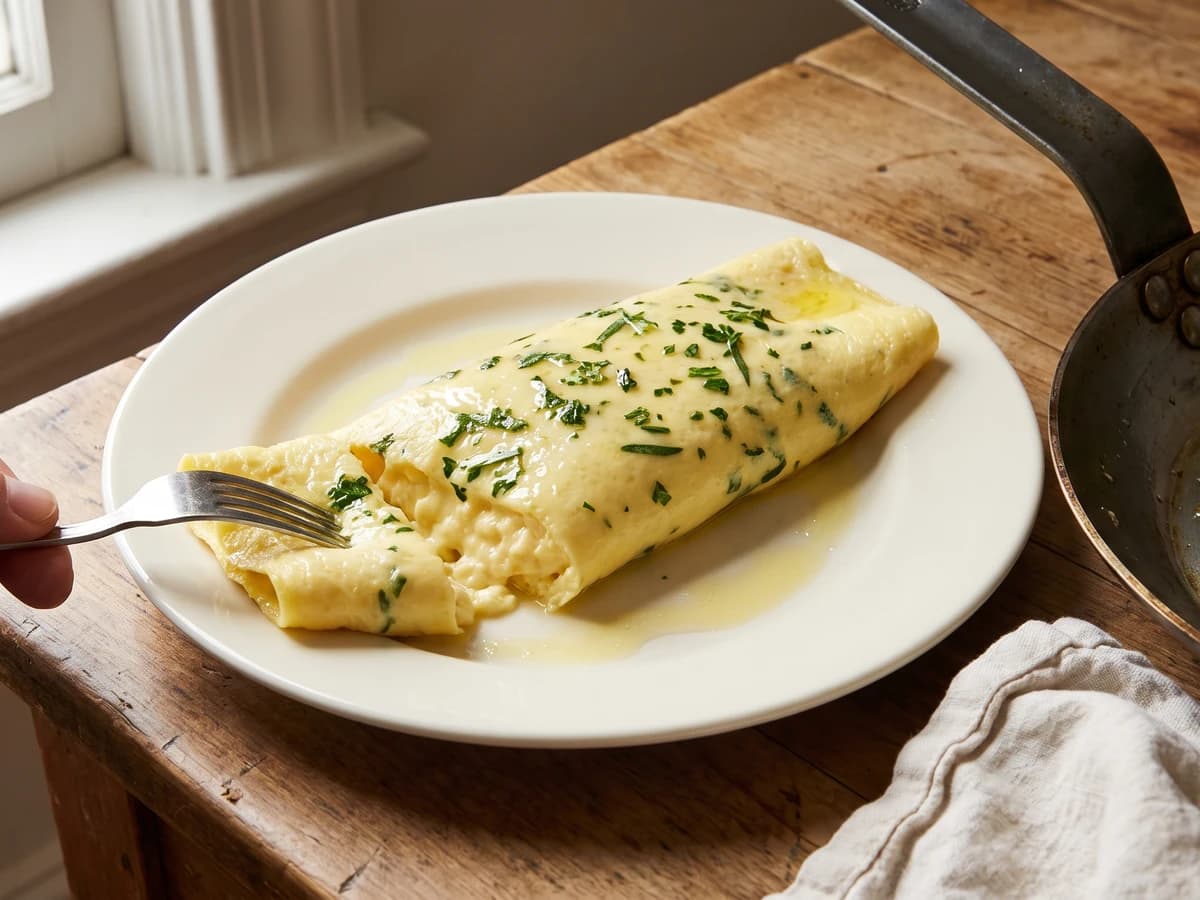
Four tender herbs, hot butter, and two eggs per pan: this rolled omelette teaches the quick hand and good judgment that keep the outside pale and the center creamy.
Chef Juliette
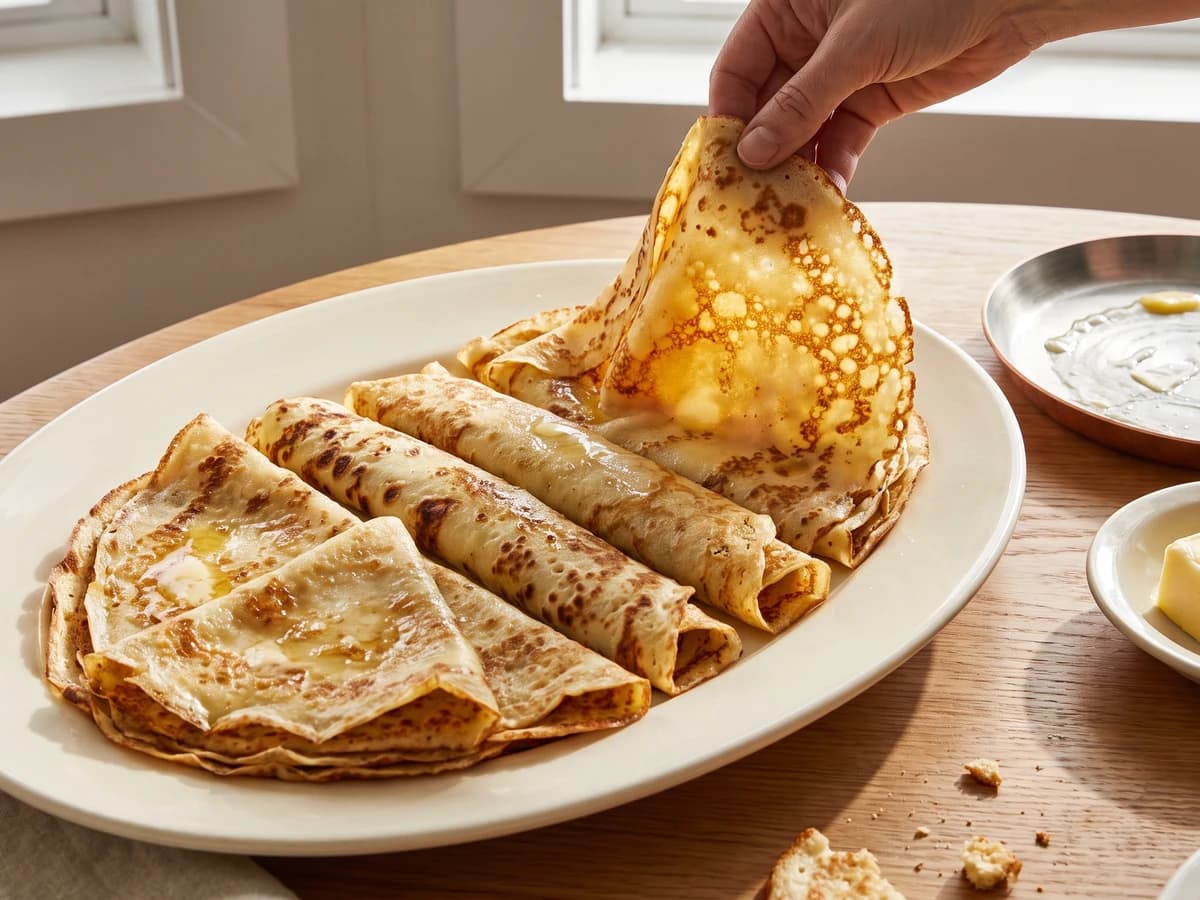
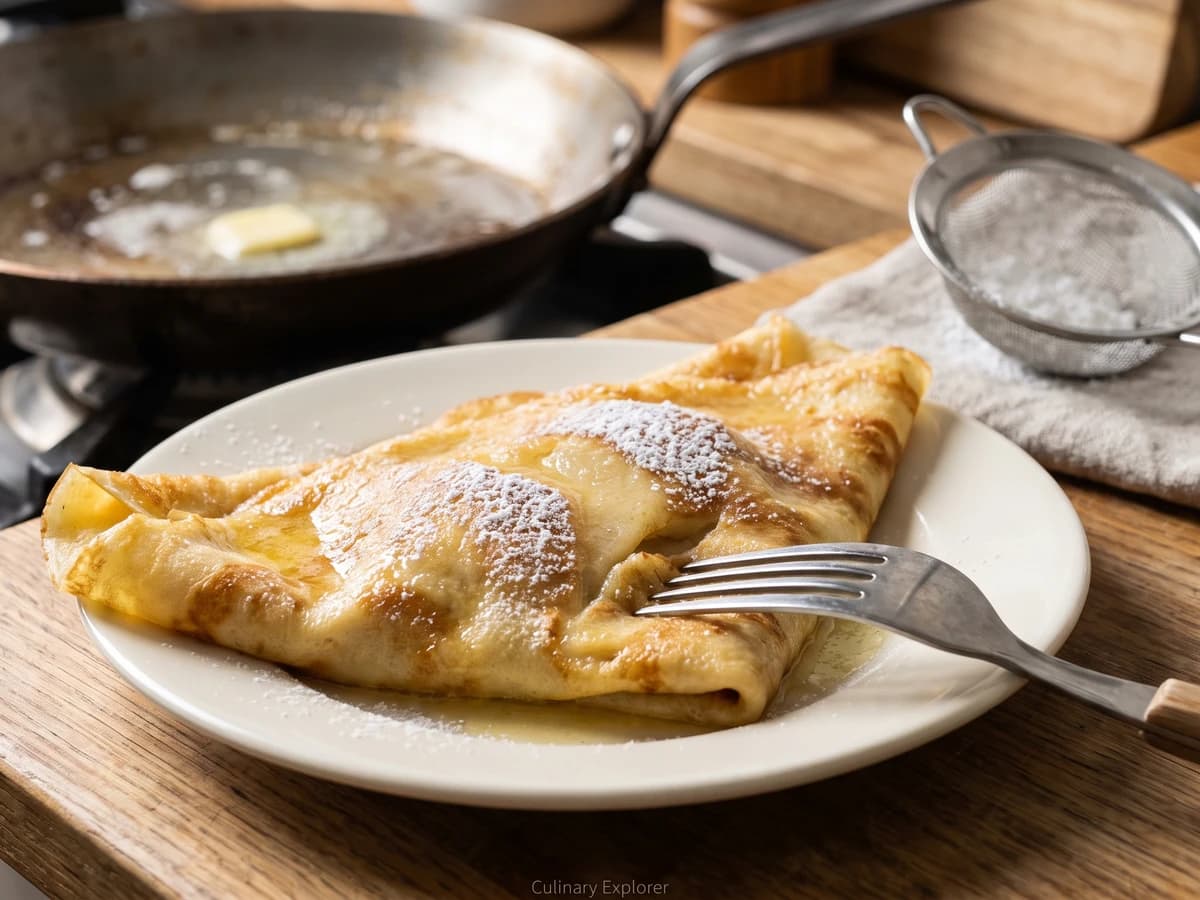
Four batters, one lesson: let the flour drink deeply before cooking, then spread the batter thinly in butter for crêpes and pannequets that bend without becoming tough.
Chef Juliette
Crêpes au Couvent trap ripe Williams pear dice between two thin pours of sweet batter, then turn in one clean toss and reach the table butter-gold, powdered, and burning hot.