Chef Juliette
Omelette à l’Écossaise
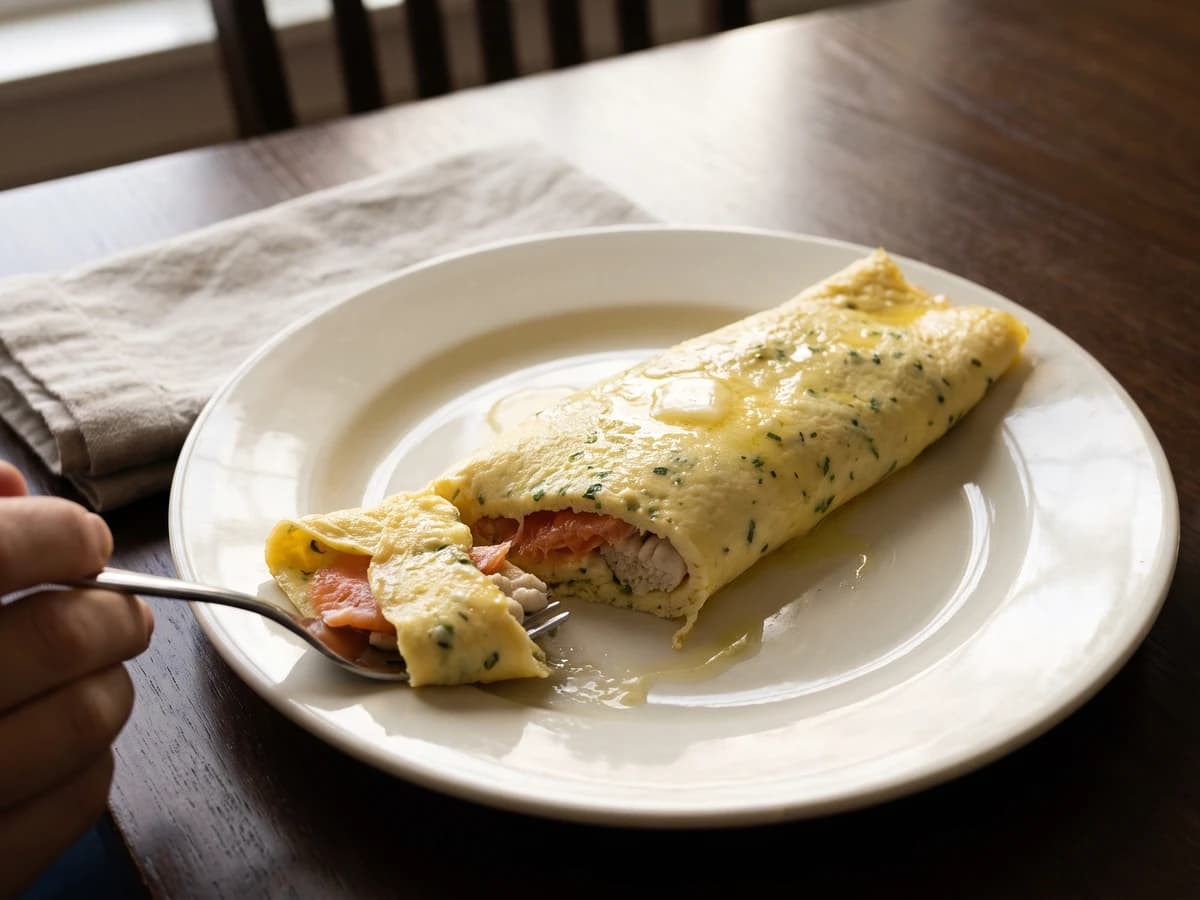
A creamy omelette aux fines herbes closes around smoked-salmon-wrapped herring milts, gently poached in butter. Have the filling ready, then roll the eggs while they still shine.
A cooking platform built around craft, culture, and the stories behind what we eat.
Created by Chef Juliette
Based on No. 518, Omelet with Truffles, from Le Guide Culinaire (1907) by Auguste Escoffier
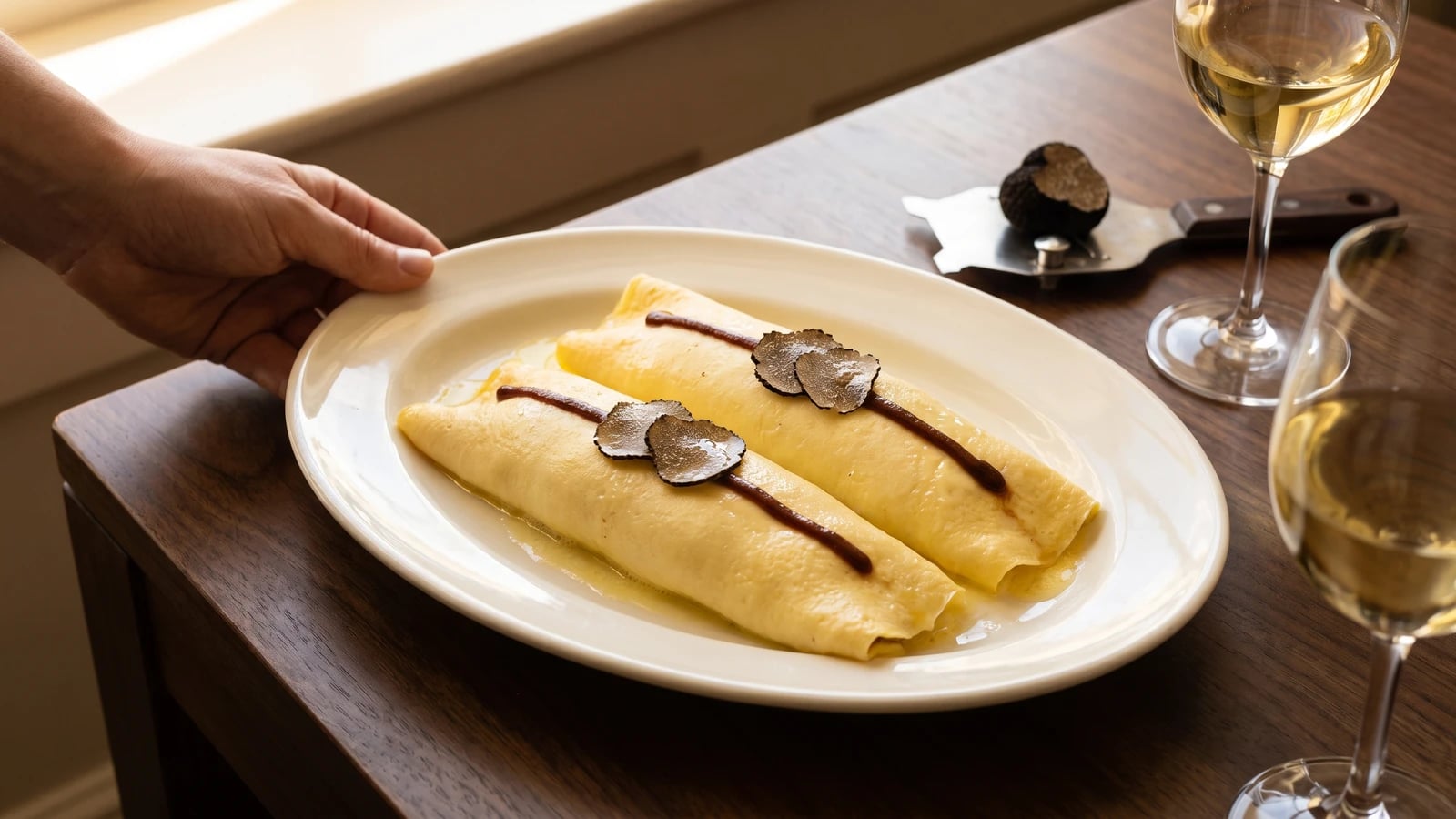
Diced black truffle perfumes softly set eggs, fine slices crown the rolled omelette, and a narrow ring of meat glaze supplies the deep savory note that makes this spare dish feel complete.
Omelette aux truffes teaches restraint. The eggs are a warm, tender carrier for the truffle, not the main event. Let them brown or set hard and the perfume turns blunt; roll them while the surface is still softly moist, and the fine slices laid on top release their scent against the buttered eggs.
The original formula assumed a cook stationed at the omelet range and a saucier with glace de viande, meat glaze, always ready. At home, a small measure of unsalted veal demi-glace reduced to a glossy thread is the honest equivalent, and two four-egg omelettes replace one unwieldy eight-egg roll. That division is what changed, because a home pan cannot keep eight eggs equally supple. The permanent saucepot was brigade scaffolding; the diced truffle inside, the sliced truffle above, and the ring of glaze are the dish. One cook, one stove, one evening.
Have the truffle cut, the glaze fluid, and the platter warm before the butter reaches the pan. An omelette waits for no garnish. The step that matters is stopping the cooking while the eggs remain baveuse, softly set and moist, because the pan and the fold will finish them.
Omelette aux truffes belongs above all to the truffle tables of Périgord in the Dordogne, where black truffles are traditionally enclosed with eggs so their perfume passes through the shells before cooking. Provence, especially the markets around Carpentras, has its own deep claim to the same black truffle, but the garnish of dice within, slices above, and glace de viande around speaks in the formal language of the national canon. It carried a country marriage of eggs and truffles into bourgeois dining rooms and grand kitchens without changing its central truth: the eggs are there to hold the truffle's perfume.
Quantity
8
Quantity
1 tablespoon (15 ml / 10 g)
cut into fine dice
Quantity
12 paper-thin slices (about 10 g)
reserved for finishing
Quantity
2 tablespoons (30 ml / 28 g)
divided
Quantity
1/2 cup (120 ml / 120 g), reduced to 2 tablespoons (30 ml / 30 g), or 2 tablespoons (30 ml / 30 g) prepared
warmed until fluid
Quantity
1/4 teaspoon (1.25 ml / 1.5 g)
divided
| Ingredient | Quantity |
|---|---|
| large eggs | 8 |
| fresh black trufflecut into fine dice | 1 tablespoon (15 ml / 10 g) |
| fresh black trufflereserved for finishing | 12 paper-thin slices (about 10 g) |
| unsalted butterdivided | 2 tablespoons (30 ml / 28 g) |
| unsalted veal demi-glace or prepared glace de viandewarmed until fluid | 1/2 cup (120 ml / 120 g), reduced to 2 tablespoons (30 ml / 30 g), or 2 tablespoons (30 ml / 30 g) prepared |
| fine sea saltdivided | 1/4 teaspoon (1.25 ml / 1.5 g) |
Warm a long oval platter with hot water, then dry it thoroughly. Divide the butter, salt, diced truffle, and sliced truffle into two equal portions, one for each omelette. Set everything beside the stove before you begin. The cooking lasts only minutes, and stopping to slice a truffle while the eggs wait would sacrifice the tender centre.
If using demi-glace, place it in the smallest saucepan and reduce it over medium heat to 2 tablespoons (30 ml / 30 g). It should look dark and glossy and fall from the spoon in a narrow, unbroken thread. If using prepared glace de viande, warm it over the gentlest heat until fluid. Hold the glaze barely warm. If it tightens or forms a skin, whisk in hot water a few drops at a time until it flows again. Ça se rattrape.
Crack four eggs into a bowl, add half the salt, and beat with a fork just until the whites and yolks are completely joined. Do not whip in a head of foam; air gives the omelette a coarse, puffed surface. Stir in half the diced truffle, keeping the remaining eggs and truffle untouched until the first omelette is on the platter.
Heat a 10-inch (25 cm) omelet pan over medium-high heat. Add half the butter and swirl it across the base as soon as the foam subsides, before any brown specks appear. Pour in the eggs and immediately stir them in small, brisk circles with a heatproof spatula while shaking the pan back and forth. Stop stirring when fine curds have formed, the base holds together, and the surface remains glossy and softly moist. If the eggs begin setting too quickly, lift the pan completely off the heat and keep shaking; the retained heat will finish them without browning.
Take the pan off the heat. Smooth the eggs into an even oval, fold the far third toward the centre, then tilt the pan and bring the near edge up over the fold. Turn the omelette seam-side down onto the warm platter. A small tear is no calamity: tuck it underneath as you turn the roll. Wipe the pan clean, then repeat with the remaining four eggs, salt, diced truffle, and butter.
Lay six fine truffle slices in a neat row along the crown of each omelette while the eggs are still warm. Spoon the fluid glace de viande in a narrow thread around each roll, never over it; the glaze is a deep bass note, not a blanket. Cut each omelette crosswise into two portions at the table and serve at once. À table!
1 serving (about 110g)
Culinary guides, cultural storytelling, and the editorial depth that makes cooking meaningful.
Discover Culinary ExplorerChef Juliette
A creamy omelette aux fines herbes closes around smoked-salmon-wrapped herring milts, gently poached in butter. Have the filling ready, then roll the eggs while they still shine.
Chef Juliette
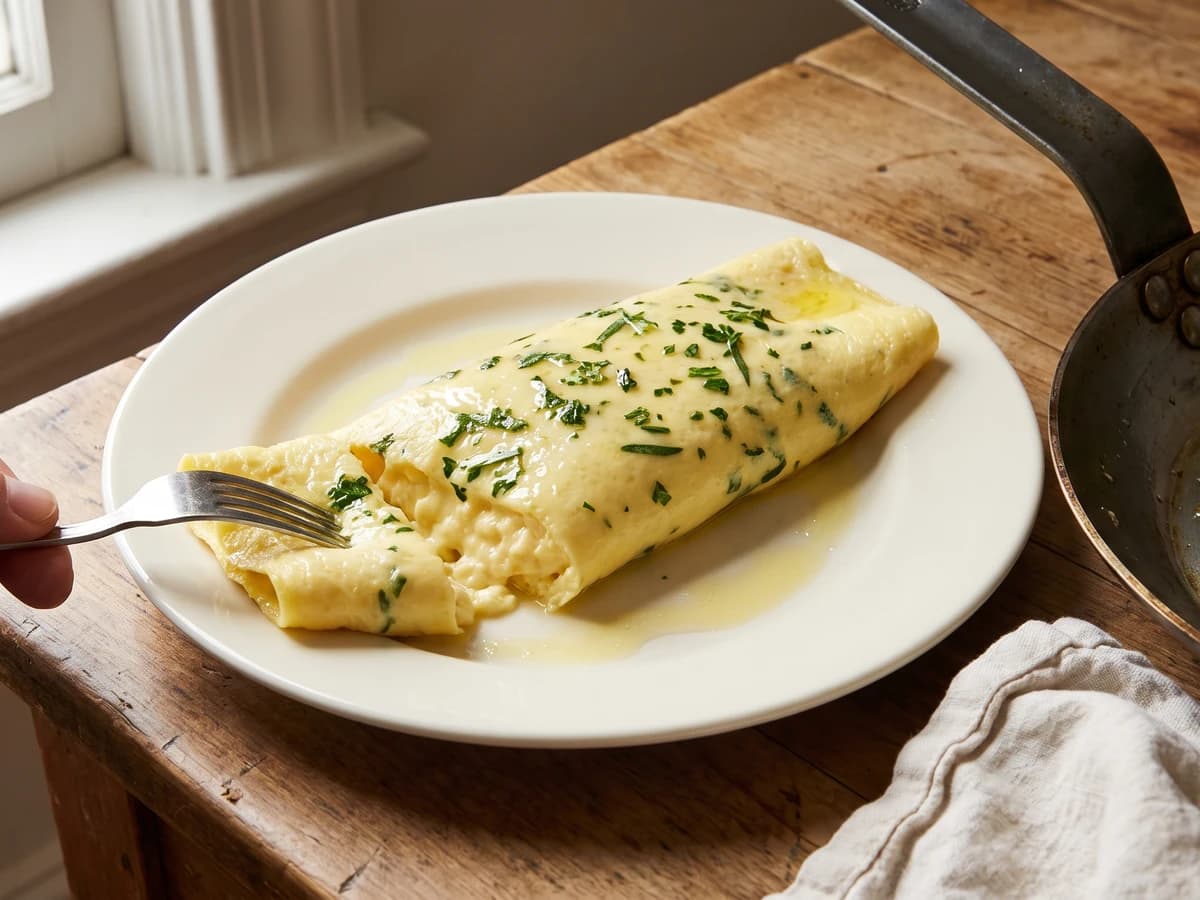
Four tender herbs, hot butter, and two eggs per pan: this rolled omelette teaches the quick hand and good judgment that keep the outside pale and the center creamy.
Chef Juliette
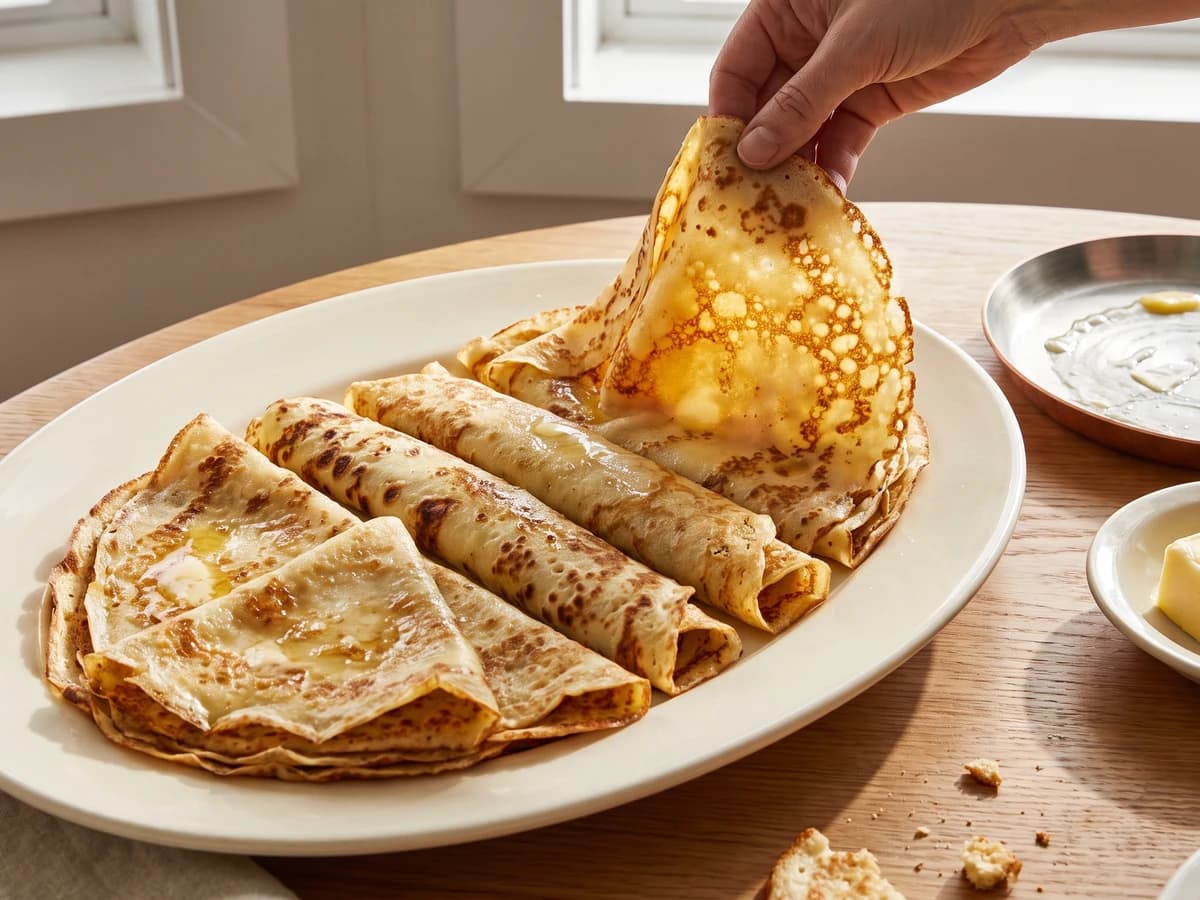
Four batters, one lesson: let the flour drink deeply before cooking, then spread the batter thinly in butter for crêpes and pannequets that bend without becoming tough.
Chef Juliette
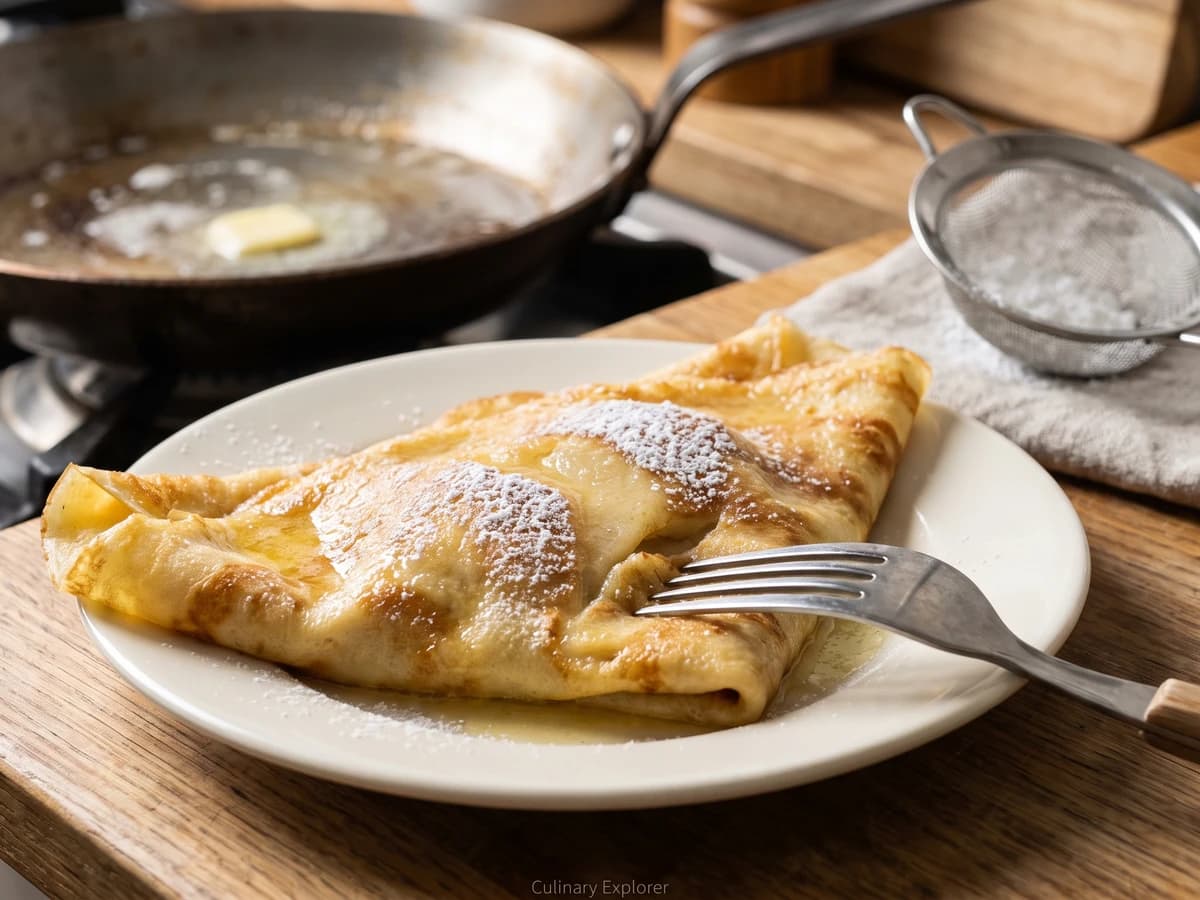
Crêpes au Couvent trap ripe Williams pear dice between two thin pours of sweet batter, then turn in one clean toss and reach the table butter-gold, powdered, and burning hot.