Chef Juliette
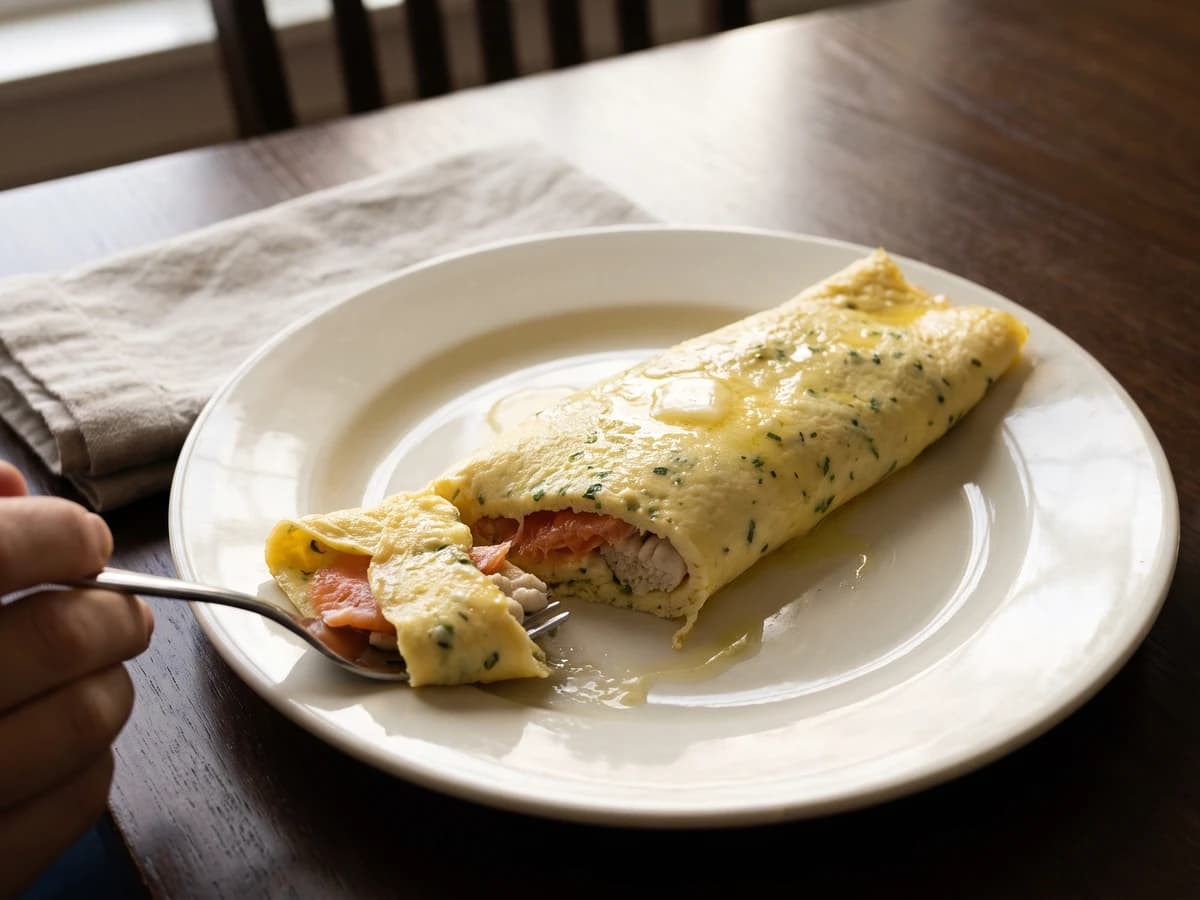
Omelette à l’Écossaise
A creamy omelette aux fines herbes closes around smoked-salmon-wrapped herring milts, gently poached in butter. Have the filling ready, then roll the eggs while they still shine.
A cooking platform built around craft, culture, and the stories behind what we eat.
Created by Chef Juliette
Based on No. 517, Omelet à la Rossini, from Le Guide Culinaire (1907) by Auguste Escoffier
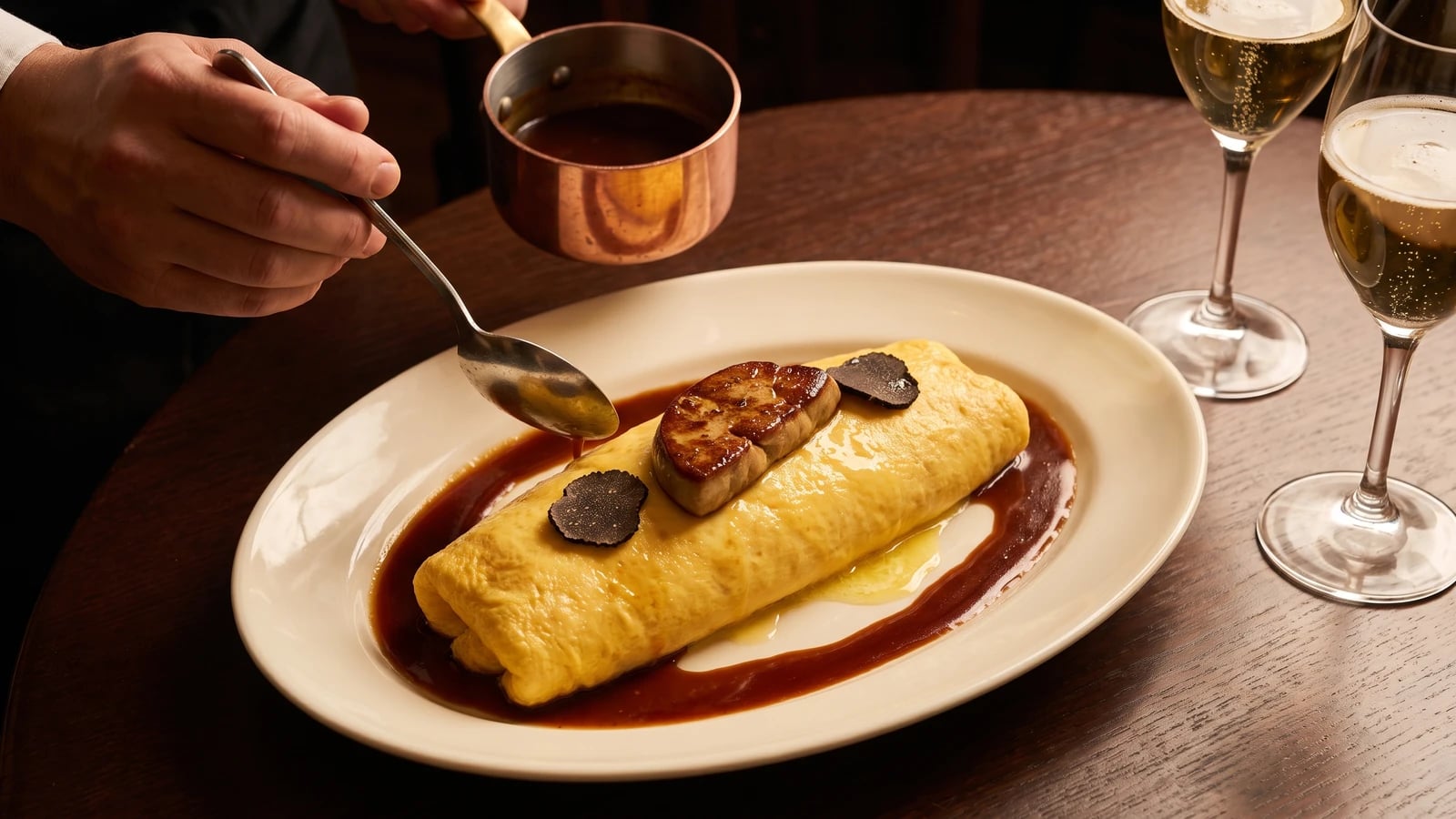
Omelette à la Rossini makes luxury submit to discipline: tender eggs carrying foie gras and black truffle, crowned with warm foie gras and ringed by glossy truffled demi-glace. The pan must be ready before the eggs.
Omelette à la Rossini (soft French omelette with foie gras, black truffle, and demi-glace) teaches a severe little truth: luxury cannot rescue badly cooked eggs. Before you touch the pan, the sauce must be hot, the garnish must be cut, the platter must be warm, and the guests must be seated. The omelette takes barely a minute; everything else waits for it.
The source assumes a saucier on staff, a stock never off the fire, and a salamander ready to warm the foie gras at service. At home, a properly made or well-chosen finished veal demi-glace (half-glaze) and a low oven do those jobs honestly, while one 12-inch pan gives four people a single generous omelette. The stockpot and salamander are brigade scaffolding; equal dessertspoonfuls of diced foie gras and truffle, the warmed foie crown, two truffle slices, and the truffled sauce ring are the dish, so they stay. One cook, one stove, one evening.
When it lands, the omelette should be smooth and butter-gold outside, tender and faintly loose within, with the dark demi-glace drawn around it rather than poured over it. Keep the pan lively, then pull it sooner than your nerves suggest. The one step that decides the dish is stopping while the eggs still shine.
À la Rossini belongs to the grand tables of Paris and honors Gioachino Rossini, the Italian composer and celebrated gourmand whose name became shorthand in the French canon for the union of foie gras and black truffle. It is not a regional omelette from the truffle country of southwestern France, but a Parisian named garnish that traveled across tournedos, eggs, and other service dishes. In this version, truffle-scented demi-glace binds the rich garnish to the tender eggs, proving that the formula rests on sauce and proportion, not expense alone.
Quantity
8
Quantity
1 dessertspoon (10 ml / 10 g)
cut into ⅛-inch (3 mm) dice
Quantity
1 dessertspoon (10 ml / 8 g)
cut into ⅛-inch (3 mm) dice
Quantity
1 rectangular slice (about 1 oz / 30 g)
cut about ⅜ inch (1 cm) thick
Quantity
2 thin slices (about ¼ oz / 6 g)
Quantity
¼ cup (60 ml / 60 g)
Quantity
½ teaspoon (2.5 ml / 2.5 g)
Quantity
2 tablespoons (30 ml / 28 g)
divided
Quantity
½ teaspoon (2.5 ml / 3 g)
Quantity
⅛ teaspoon (0.6 ml / 0.3 g)
| Ingredient | Quantity |
|---|---|
| large eggs | 8 |
| cooked foie gras terrinecut into ⅛-inch (3 mm) dice | 1 dessertspoon (10 ml / 10 g) |
| black trufflecut into ⅛-inch (3 mm) dice | 1 dessertspoon (10 ml / 8 g) |
| cooked foie gras terrine for the crowncut about ⅜ inch (1 cm) thick | 1 rectangular slice (about 1 oz / 30 g) |
| black truffle for the crown | 2 thin slices (about ¼ oz / 6 g) |
| finished veal demi-glace | ¼ cup (60 ml / 60 g) |
| natural truffle essence or liquor from preserved black truffles | ½ teaspoon (2.5 ml / 2.5 g) |
| unsalted butterdivided | 2 tablespoons (30 ml / 28 g) |
| fine sea salt | ½ teaspoon (2.5 ml / 3 g) |
| finely ground white pepper | ⅛ teaspoon (0.6 ml / 0.3 g) |
Heat the oven to 200°F (95°C). Warm an oval serving platter in it, divide the diced foie gras from the sliced crown, and keep the two truffle preparations separate. Set the rectangular foie gras slice on a small heatproof plate and cover it loosely. Have the sauce ingredients, butter, spatula, and guests ready before beating the eggs. Once the pan begins, there is no useful pause.
Put the finished veal demi-glace in a small saucepan and bring it to the barest tremble. Stir in the natural truffle essence, then hold the sauce over very low heat until glossy and fluid enough to fall from a spoon in a narrow thread. If it tightens too far, loosen it with a teaspoon of water; if it runs like broth, reduce it briefly. Do not boil it hard, which dulls the truffle and turns a fine sauce sticky.
Slide the covered foie gras crown into the low oven for 2 minutes; it should soften at the edges while keeping its rectangular shape. Beat the eggs with the salt and white pepper just until the whites and yolks are joined, not frothy. Fold in the equal dessertspoonfuls of diced foie gras and black truffle exactly as the source directs, distributing them without crushing the foie gras.
Melt 1½ tablespoons (22 ml / 21 g) of the butter in the omelette pan over medium-high heat, keeping the remaining butter cold. When the foam subsides but before the butter browns, pour in the eggs. Shake the pan briskly while stirring with the spatula, drawing the setting egg from the floor into soft curds, then stop stirring and smooth the surface while it remains glossy. If the eggs race and tighten, pull the pan completely off the heat and work in the reserved cold butter. Ça se rattrape if you catch it now: the butter lowers the temperature and loosens the curds. The underside should be pale butter-gold, never brown, and the top should still look slightly loose.
With the pan off the heat, fold the far third of the omelette toward the center, tilt the pan over the warm platter, and roll the omelette out seam-side down into a plump oval. Set the warmed rectangular foie gras precisely in its middle and place one truffle slice on either side. Spoon the truffled demi-glace in a fine ring around the omelette, not over it, so the eggs remain visible and tender. Divide at the table and serve immediately. À table!
1 serving (about 125g)
Culinary guides, cultural storytelling, and the editorial depth that makes cooking meaningful.
Discover Culinary ExplorerChef Juliette
A creamy omelette aux fines herbes closes around smoked-salmon-wrapped herring milts, gently poached in butter. Have the filling ready, then roll the eggs while they still shine.
Chef Juliette
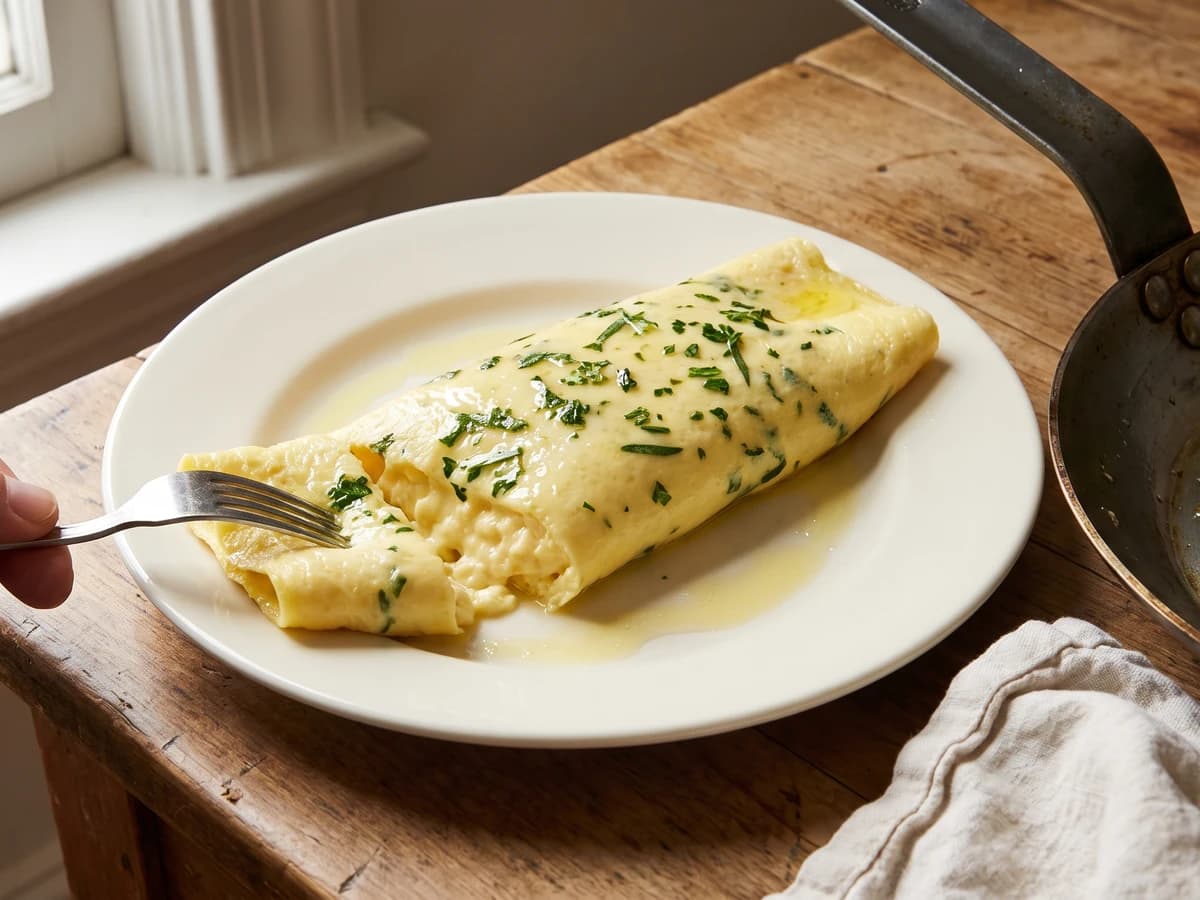
Four tender herbs, hot butter, and two eggs per pan: this rolled omelette teaches the quick hand and good judgment that keep the outside pale and the center creamy.
Chef Juliette
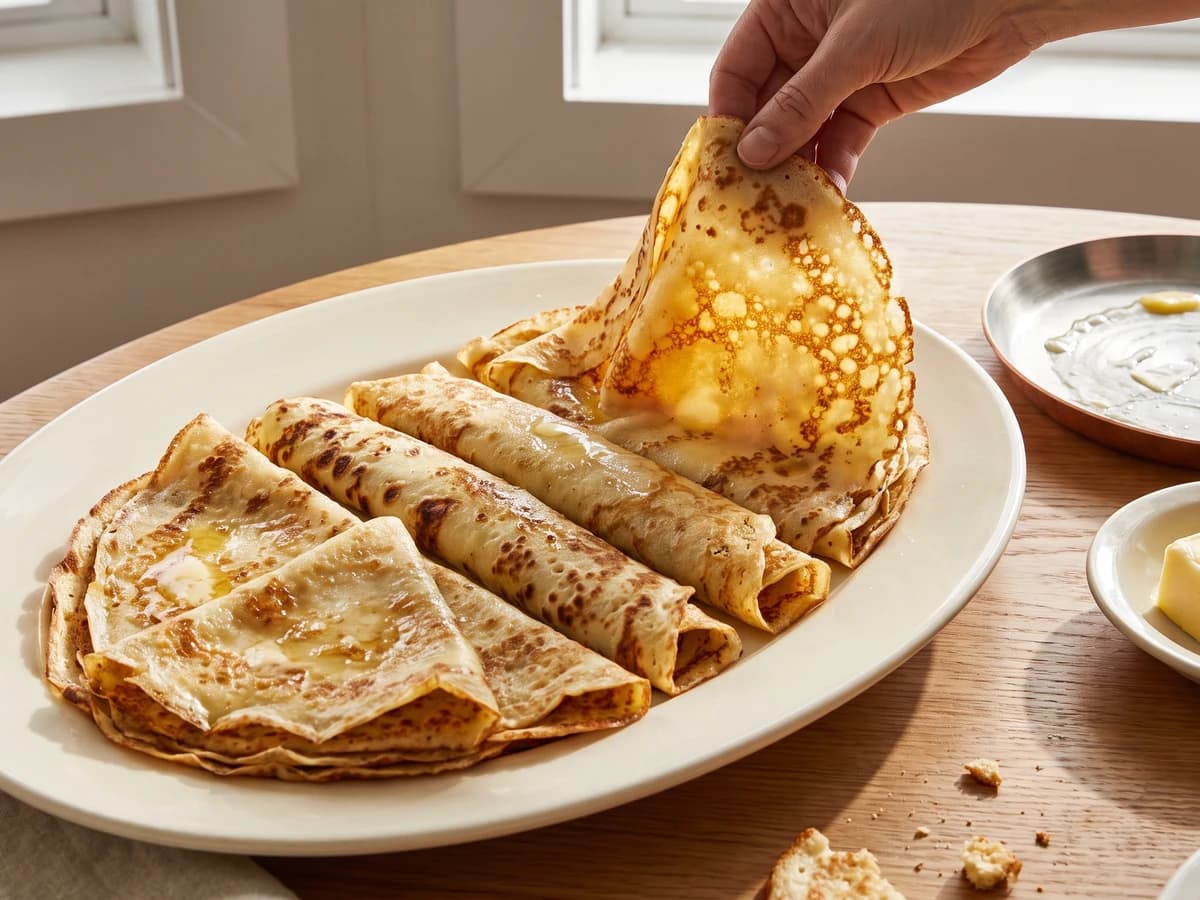
Four batters, one lesson: let the flour drink deeply before cooking, then spread the batter thinly in butter for crêpes and pannequets that bend without becoming tough.
Chef Juliette
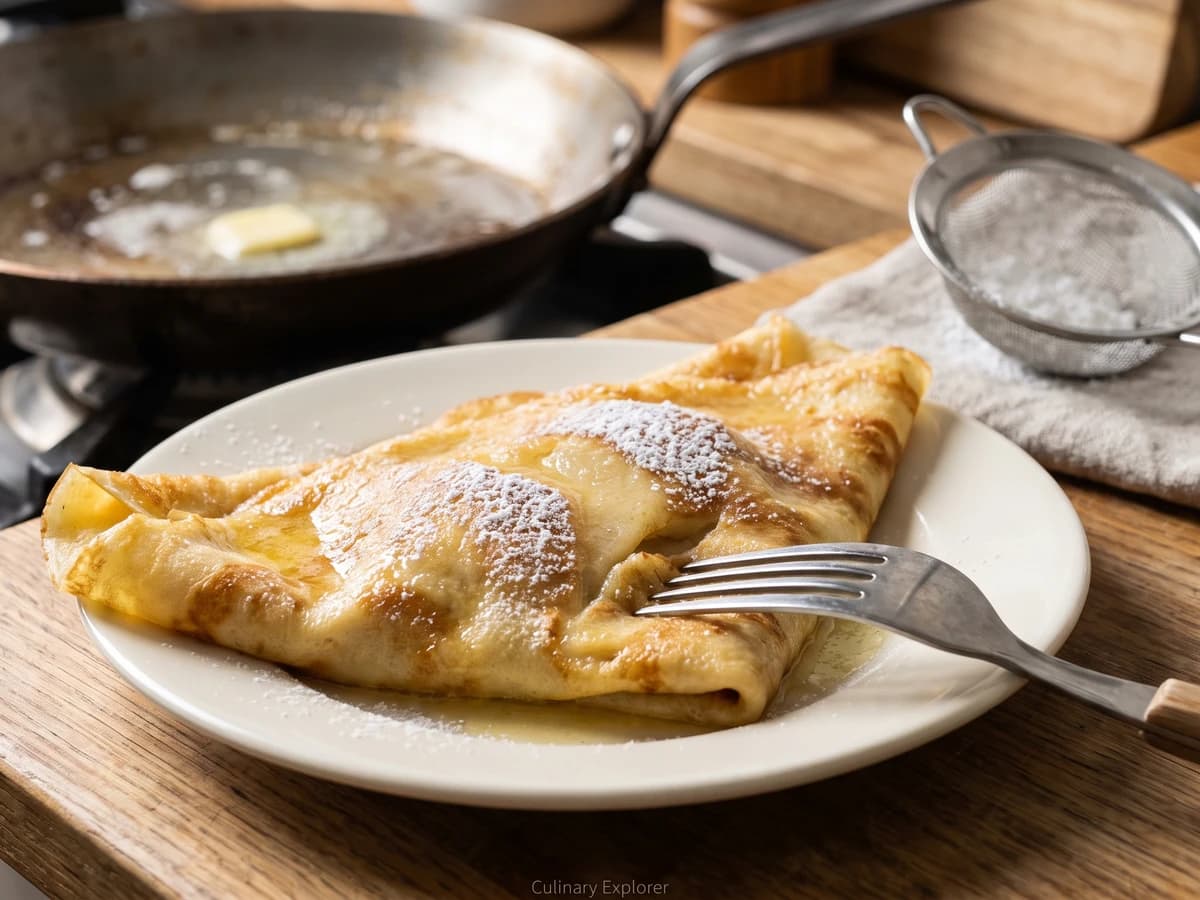
Crêpes au Couvent trap ripe Williams pear dice between two thin pours of sweet batter, then turn in one clean toss and reach the table butter-gold, powdered, and burning hot.