Chef Juliette
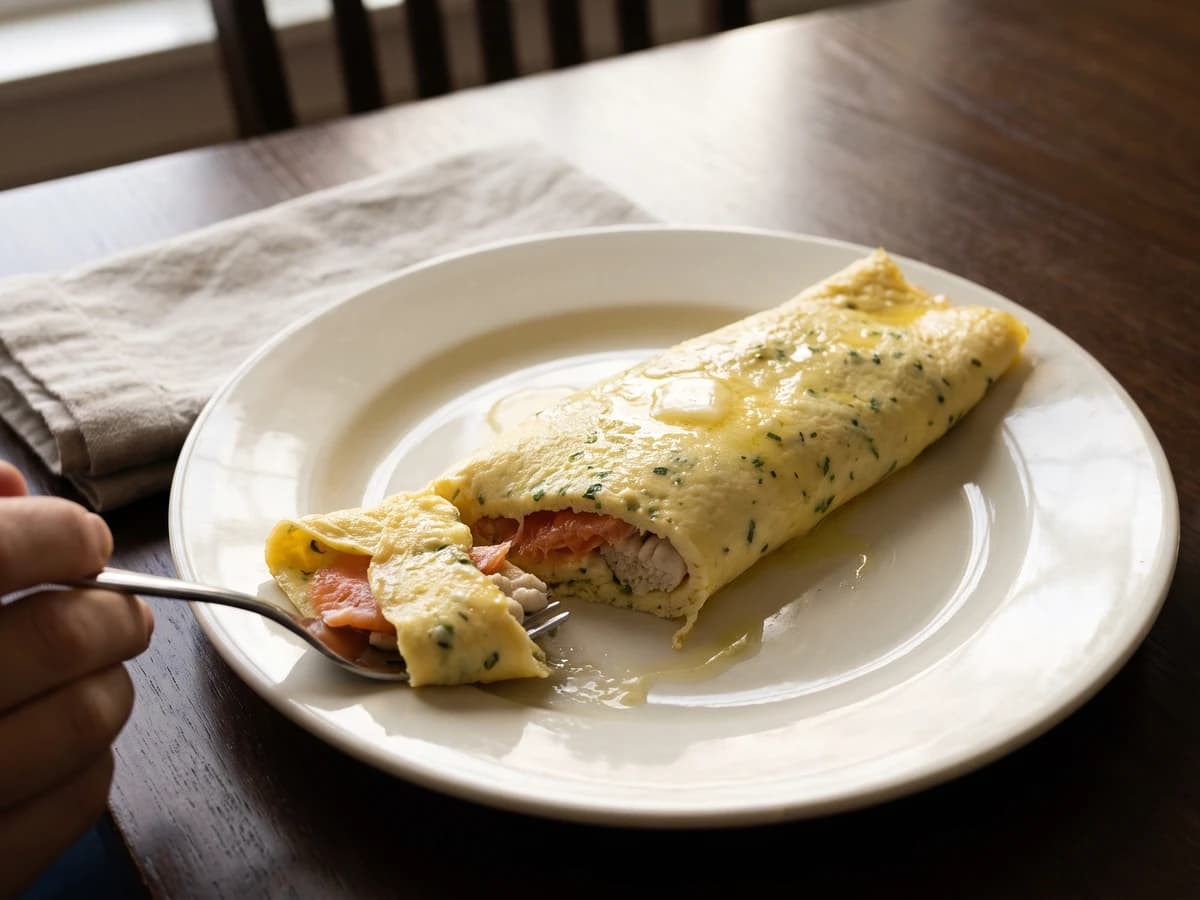
Omelette à l’Écossaise
A creamy omelette aux fines herbes closes around smoked-salmon-wrapped herring milts, gently poached in butter. Have the filling ready, then roll the eggs while they still shine.
A cooking platform built around craft, culture, and the stories behind what we eat.
Created by Chef Juliette
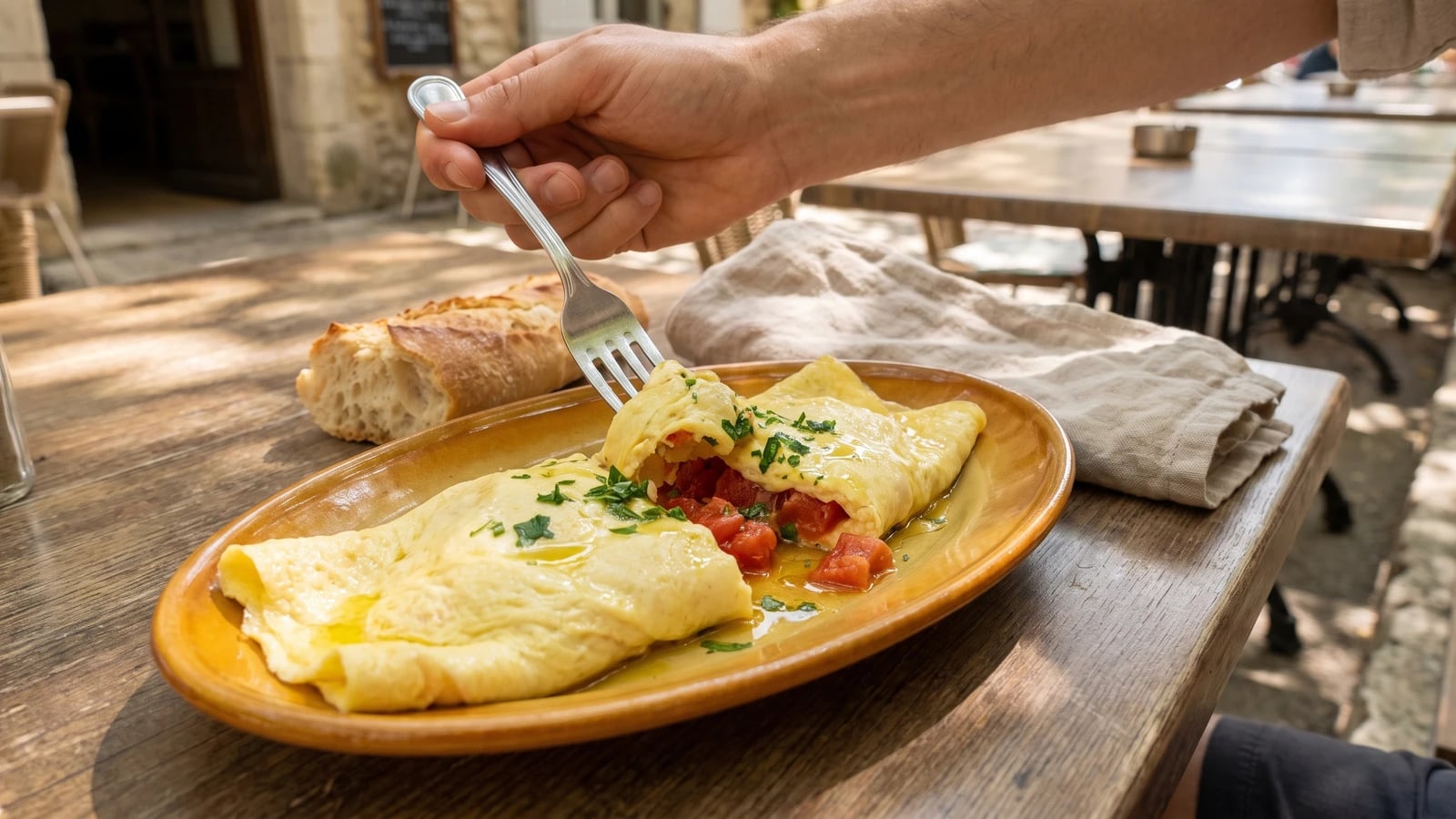
Based on No. 515, Omelet à la Provençale, from Le Guide Culinaire (1907) by Auguste Escoffier
Omelette à la Provençale turns ripe tomato, parsley, garlic, and olive oil into a tender fold of eggs, teaching the quick pan control that keeps both tomato and omelette vivid.
Omelette à la Provençale (Provençal tomato omelet) teaches the cleanest rule in egg cookery: a wet garnish makes wet curds. The tomato must surrender its seeds and loose juice before it meets the pan, then cook quickly enough to keep its shape and brightness. Its olive oil should gleam through the eggs, not collect as a watery puddle beneath them.
The original entry assumed a dedicated, well-seasoned omelet pan and a hand practiced enough to judge the oil by its first wisp of smoke. It needed no saucier, stockpot, or salamander, and neither do you. For four, a broad 12-inch nonstick skillet is the honest home equivalent, and eight eggs turn the original garnish into one generous family omelette. The vessel and serving size have changed; the garlic rub, two tablespoons of oil, tomato concassé, parsley, and quick cooking sequence remain. The pan is scaffolding. Those steps are the dish.
Concassé (roughly chopped tomato) means more than careless chopping here: peel it, seed it, press it gently dry, and cut it into small dice. If the tomato floods the hot oil, keep tossing until the loose liquid disappears. Ça se rattrape. This is the one step that decides the omelette, so dry the tomato before you touch the pan.
À la Provençale belongs to the cooking vocabulary of Provence, where tomato, garlic, parsley, and olive oil form a recognizable southern combination rather than a vague mixture of so-called French herbs. Household preparations such as this traveled into the classical repertoire as named garnitures that cooks could understand at a glance. In this entry, olive oil is not a modern substitution but the proper regional fat; clarified butter is acknowledged only as the fallback.
Quantity
8
Quantity
1 large (about 6½ oz / 180 g)
peeled, seeded, gently pressed dry, and cut into ¼-inch dice
Quantity
2 tablespoons (30 ml / 27 g)
Quantity
2 teaspoons (10 ml / 2 g)
concassée
Quantity
1 small clove
peeled and halved
Quantity
¾ teaspoon (3.75 ml / 4.5 g)
Quantity
¼ teaspoon (1.25 ml / 0.6 g)
| Ingredient | Quantity |
|---|---|
| large eggs | 8 |
| ripe tomatopeeled, seeded, gently pressed dry, and cut into ¼-inch dice | 1 large (about 6½ oz / 180 g) |
| extra-virgin olive oil | 2 tablespoons (30 ml / 27 g) |
| flat-leaf parsleyconcassée | 2 teaspoons (10 ml / 2 g) |
| garlicpeeled and halved | 1 small clove |
| fine sea salt | ¾ teaspoon (3.75 ml / 4.5 g) |
| freshly ground black pepper | ¼ teaspoon (1.25 ml / 0.6 g) |
Score a shallow cross in the base of the tomato. Lower it into boiling water for 20 to 30 seconds, just until the skin loosens, then cool it immediately in cold water. Peel it, halve it across the middle, and squeeze out the seeds and loose jelly. Cut the flesh into ¼-inch dice, spread it on a clean towel, and press gently. Concassé means roughly chopped; here the source also requires the tomato to be peeled, seeded, and pressed so its water cannot loosen the eggs.
Break the eggs into a wide bowl and add the salt and pepper. Beat with a fork until the whites and yolks disappear into one another, but stop before the mixture becomes foamy. Airy eggs swell and then collapse into a spongy omelette; the texture wanted here is tender, close, and moist.
Rub the cut garlic lightly over the bottom of a 12-inch skillet, then discard it. Add the olive oil and set the pan over medium-high heat until the oil flows freely and gives its first fine wisp of smoke. Add the tomato concassé and parsley at once. Toss constantly for 60 to 90 seconds, until the dice are glossy and slightly softened but still distinct. If the tomato releases a puddle, keep it over lively heat until the liquid evaporates; ça se rattrape. Scrape the tomato and every drop of its garlic-scented oil into the beaten eggs, then stir once.
Return the skillet to medium-high heat and pour in the egg mixture. Wait five seconds, then shake the pan while stirring broad circles through the eggs with a flexible spatula. As small, moist curds form, draw the runny egg from the center toward the edges. Stop stirring while the mixture can still settle into a level layer, lower the heat, and cook for another 30 to 60 seconds. The underside should be set without browning, while the surface remains softly glossy. If the eggs race and begin coloring, lift the pan off the burner and keep them moving until the heat settles.
Shake the skillet gently to confirm that the omelette is loose, running the spatula around any stubborn edge. Fold the far third toward the center, then tilt the pan over a warm oval platter so the remaining third turns underneath and the seam lands down. If the fold tears, nudge it together on the platter while the eggs are still supple. Never apologize at your own table. Rest it for 30 seconds, cut into four generous portions, and serve at once. À table!
1 serving (about 125g)
Culinary guides, cultural storytelling, and the editorial depth that makes cooking meaningful.
Discover Culinary ExplorerChef Juliette
A creamy omelette aux fines herbes closes around smoked-salmon-wrapped herring milts, gently poached in butter. Have the filling ready, then roll the eggs while they still shine.
Chef Juliette
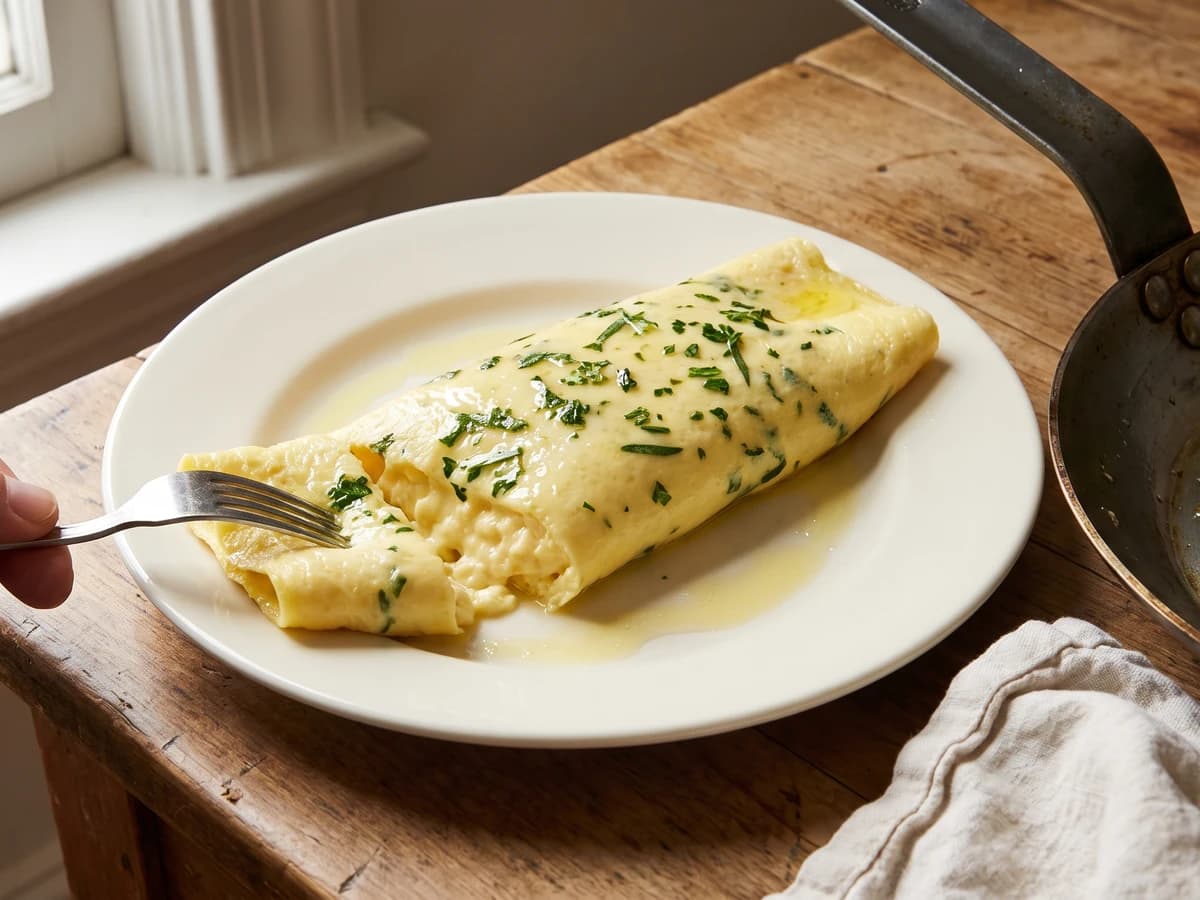
Four tender herbs, hot butter, and two eggs per pan: this rolled omelette teaches the quick hand and good judgment that keep the outside pale and the center creamy.
Chef Juliette
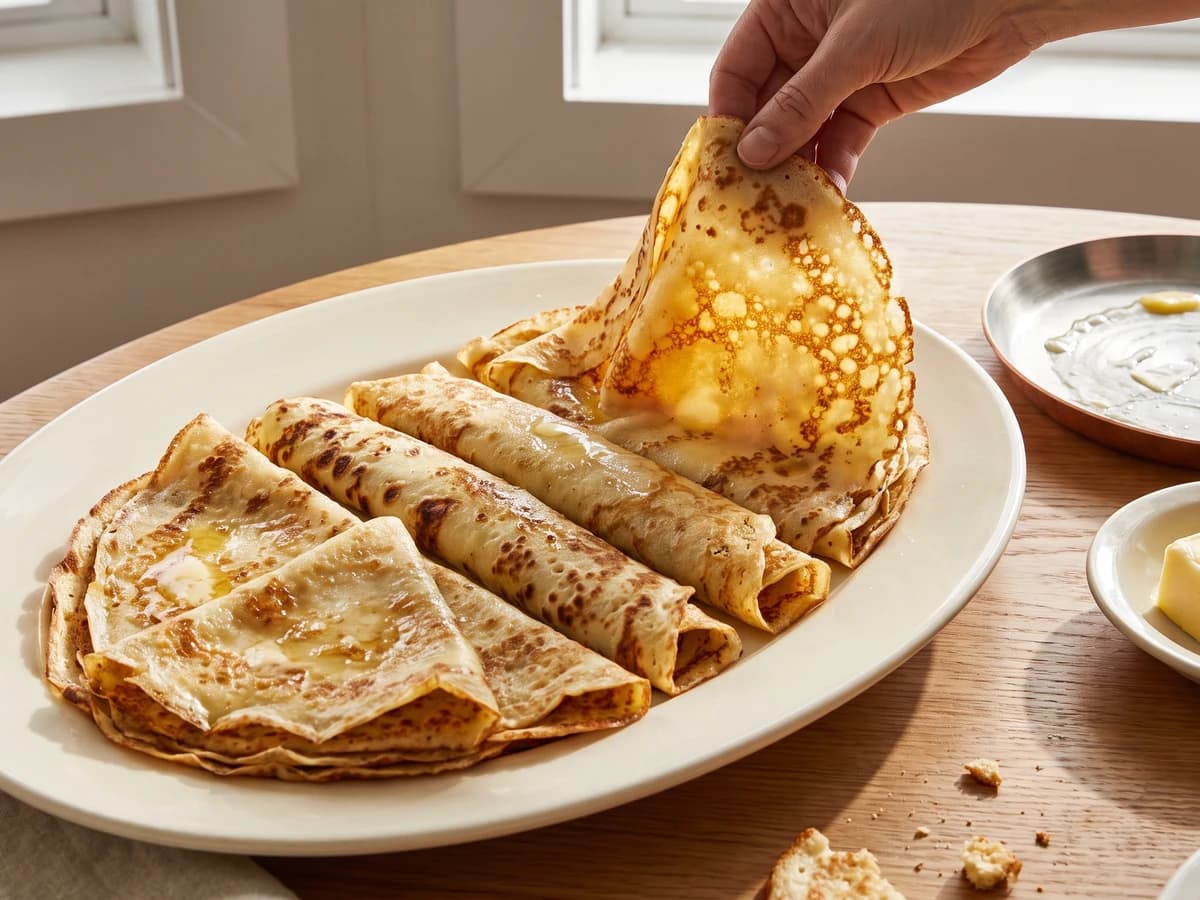
Four batters, one lesson: let the flour drink deeply before cooking, then spread the batter thinly in butter for crêpes and pannequets that bend without becoming tough.
Chef Juliette
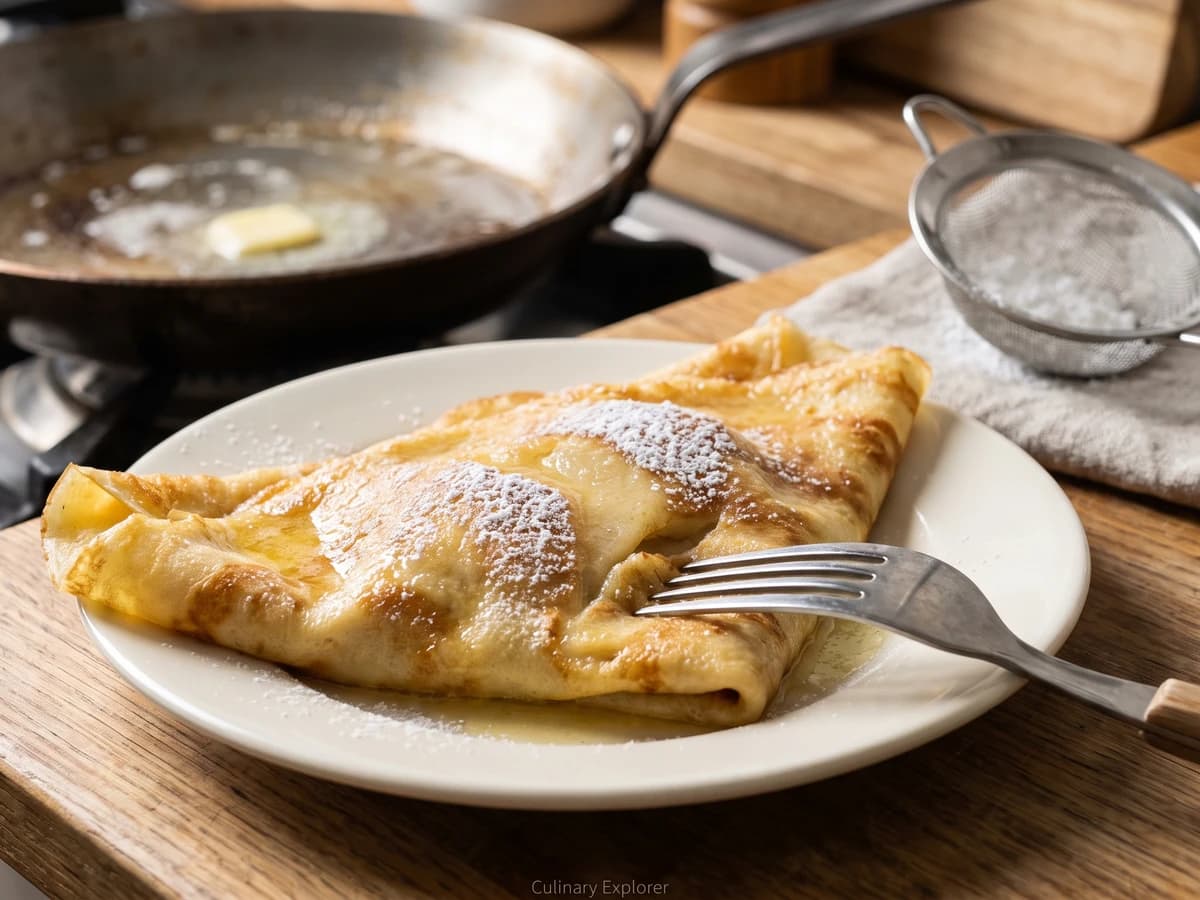
Crêpes au Couvent trap ripe Williams pear dice between two thin pours of sweet batter, then turn in one clean toss and reach the table butter-gold, powdered, and burning hot.