Chef Juliette
Omelette à l’Écossaise
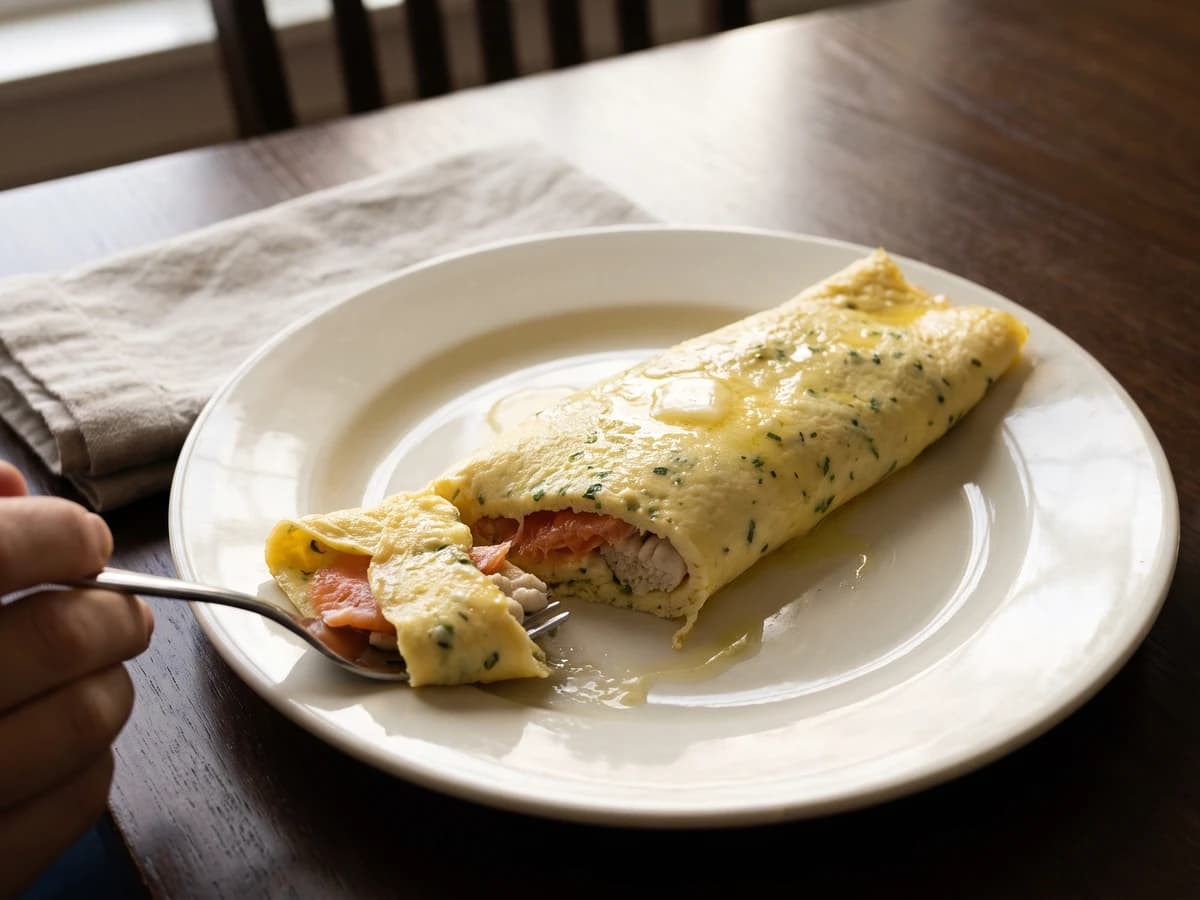
A creamy omelette aux fines herbes closes around smoked-salmon-wrapped herring milts, gently poached in butter. Have the filling ready, then roll the eggs while they still shine.
A cooking platform built around craft, culture, and the stories behind what we eat.
Created by Chef Juliette
Based on No. 509, Omelet with Morels, from Le Guide Culinaire (1907) by Auguste Escoffier
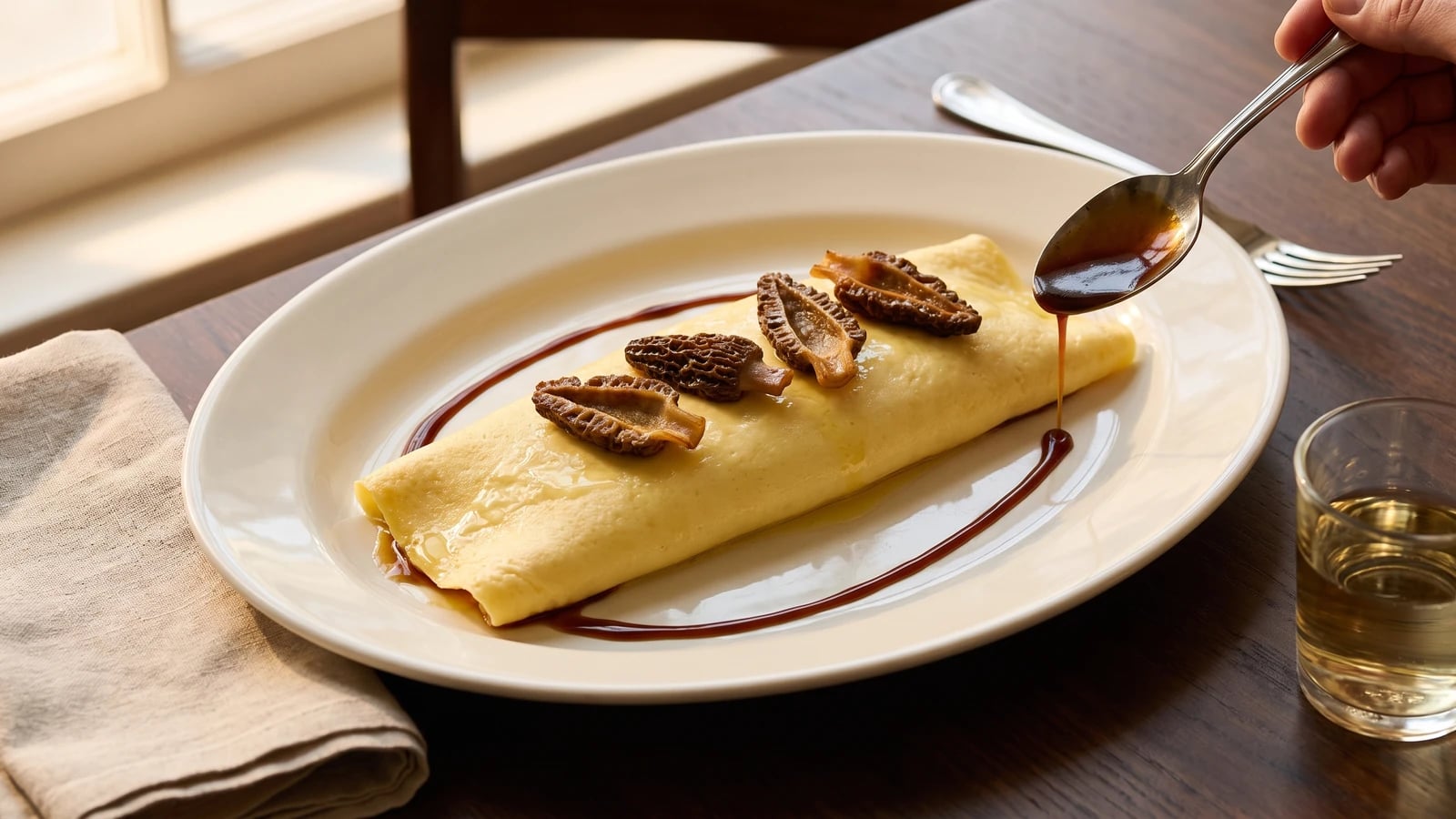
Butter-sautéed morels folded through a tender French omelette, four bronzed halves on top, and a restrained thread of half-glaze: a dinner-party first course won by timing, not ornament.
Omelette aux morilles (omelet with morels) teaches the central truth of a French omelette: the filling may be luxurious, but the eggs still rule. They must leave the pan while the surface glistens and the center is barely set, because carryover heat finishes what the fire began. Wait for certainty and you've already made it dry.
The source gives two ounces of very firm morels, with two reserved, halved, sautéed, and placed over the finished omelette, then a thread of half-glaze around it. It assumes the base omelette is second nature and a saucier keeps demi-glace warm from a brown-stock pot. At home, six eggs make one generous omelette for four first-course servings, and good prepared veal demi-glace replaces the separate sauce production. No salamander is needed. That production is brigade scaffolding; the butter sauté, four morel halves, tender fold, and restrained ring of glaze are the dish, so they stay.
One cook, one stove, one evening. Clean and cut the morels, warm the glaze, and set out the platter before beating the eggs. Once the eggs meet the butter, the decisive minute has begun.
Omelette aux morilles belongs most naturally to the wooded table of the Jura in Franche-Comté, where spring morels have long been gathered for eggs, poultry, and sauces. From forest and bourgeois kitchens, the pairing entered the classical national repertoire, where cooks minced the main garnish, reserved the finest pieces for display, and finished the plate with demi-glace. Regional versions often marry morels to cream or vin jaune, but this fine ring of half-glaze marks a distinct grand-kitchen preparation, not a cream sauce left unfinished.
Quantity
2 ounces (57 g / about 2 loosely packed cups / 475 ml)
Quantity
6
Quantity
4 tablespoons (60 ml / 57 g)
divided
Quantity
1/2 teaspoon (2.5 ml / 3 g)
divided
Quantity
1/8 teaspoon (0.6 ml / 0.3 g)
Quantity
2 tablespoons (30 ml / about 35 g)
warmed
Quantity
up to 1 tablespoon (15 ml / 15 g)
only if needed to loosen the demi-glace
| Ingredient | Quantity |
|---|---|
| fresh, very firm morels | 2 ounces (57 g / about 2 loosely packed cups / 475 ml) |
| large eggs | 6 |
| unsalted butterdivided | 4 tablespoons (60 ml / 57 g) |
| fine saltdivided | 1/2 teaspoon (2.5 ml / 3 g) |
| ground white pepper | 1/8 teaspoon (0.6 ml / 0.3 g) |
| prepared veal demi-glace (half-glaze)warmed | 2 tablespoons (30 ml / about 35 g) |
| hot water (optional)only if needed to loosen the demi-glace | up to 1 tablespoon (15 ml / 15 g) |
Trim the dry ends from the morels and inspect their hollow centers for grit. Swish them briefly in several changes of cold water, lifting the mushrooms out so the sand remains behind, then dry them thoroughly. Choose the two firmest morels, cut them in half lengthwise to make four handsome pieces, and mince the remaining morels.
Melt 2 tablespoons of the butter in the skillet over medium heat. Sauté the morels, meaning cook them briskly in butter while tossing, adding the minced mushrooms and four halves together with a pinch of the salt. Cook for 7 to 9 minutes, until their released liquid has evaporated, the minced morels are tender, and the cut faces of the halves show a little bronze. Morels must be thoroughly cooked. Transfer the four halves to a warm plate and the minced morels to a separate bowl, then wipe the skillet clean.
Warm the demi-glace in a small saucepan over the lowest heat. It should fall from a spoon in a narrow, continuous thread. If it sits like jelly, loosen it drop by drop with hot water; if it runs like broth, simmer it briefly until it coats the spoon. Ça se rattrape. Keep it warm while you cook the eggs.
Warm an oval serving platter, then beat the eggs with the remaining salt and the white pepper just until the whites and yolks are completely joined. Don't whip in a cap of bubbles. A French omelette wants a close, tender curd, not an airy one, and the eggs should be beaten only when the pan and filling are ready.
Set the clean skillet over medium-high heat and add the remaining 2 tablespoons of butter. When it foams vigorously but remains pale, pour in the eggs. Shake the pan while stirring continuously with a heatproof spatula, drawing the setting egg from the bottom into small, soft curds. After 45 to 60 seconds, stop stirring when the underside can support the omelette but the top remains glossy and loose. Scatter the minced morels in a line just off center.
Fold the near third of the omelette over the morels, then tilt the skillet and roll the far third over to form a long parcel. Invert it onto the warm platter with the seam underneath. The exterior should be pale butter-gold, never crusted, and the center should remain soft. If the fold tears, turn that side down and shape the omelette gently with the spatula. Never apologize at your own table.
Arrange the four reserved morel halves along the top of the omelette, cut sides visible. Spoon the warm demi-glace around it in one fine thread, keeping the glaze on the platter rather than smothering the eggs. Serve immediately while the omelette still yields softly beneath the spoon. À table!
1 serving (about 100g)
Culinary guides, cultural storytelling, and the editorial depth that makes cooking meaningful.
Discover Culinary ExplorerChef Juliette
A creamy omelette aux fines herbes closes around smoked-salmon-wrapped herring milts, gently poached in butter. Have the filling ready, then roll the eggs while they still shine.
Chef Juliette
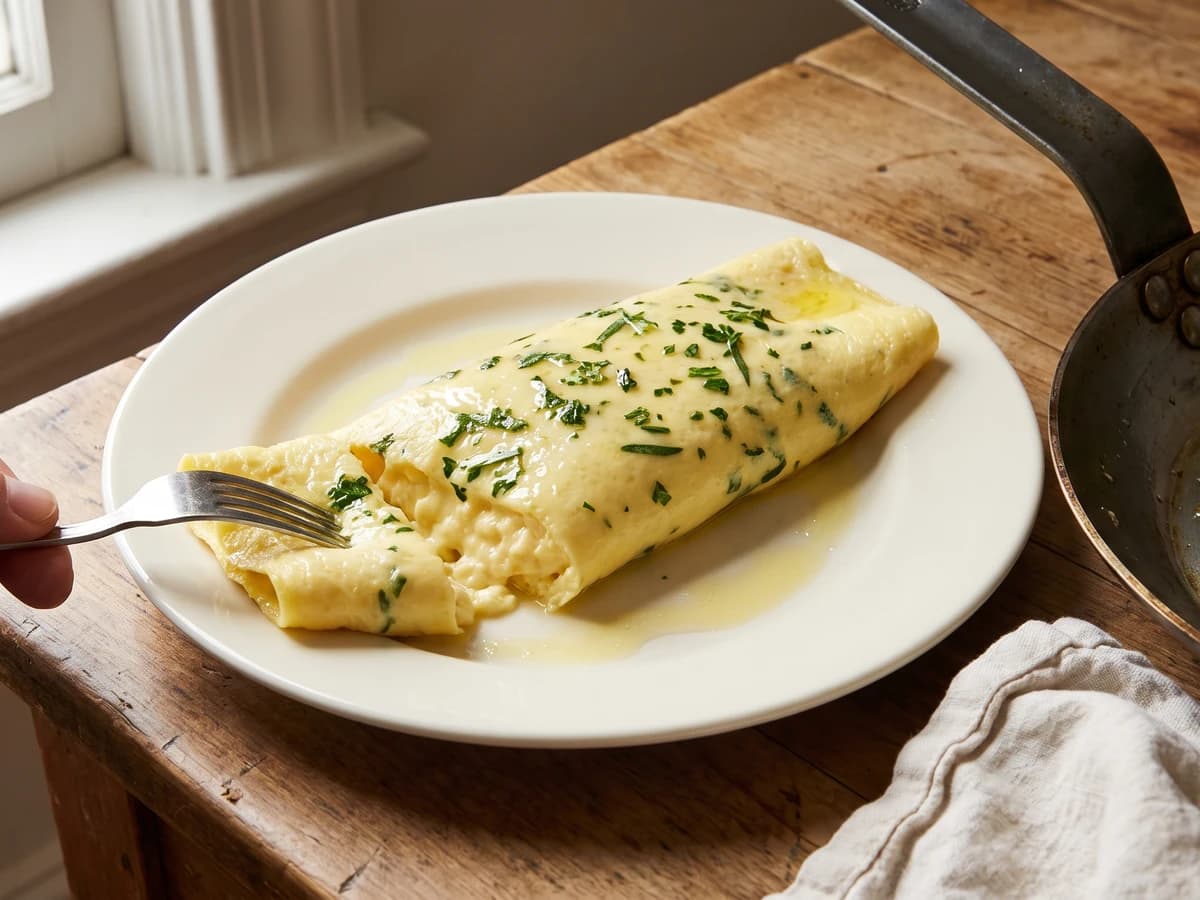
Four tender herbs, hot butter, and two eggs per pan: this rolled omelette teaches the quick hand and good judgment that keep the outside pale and the center creamy.
Chef Juliette
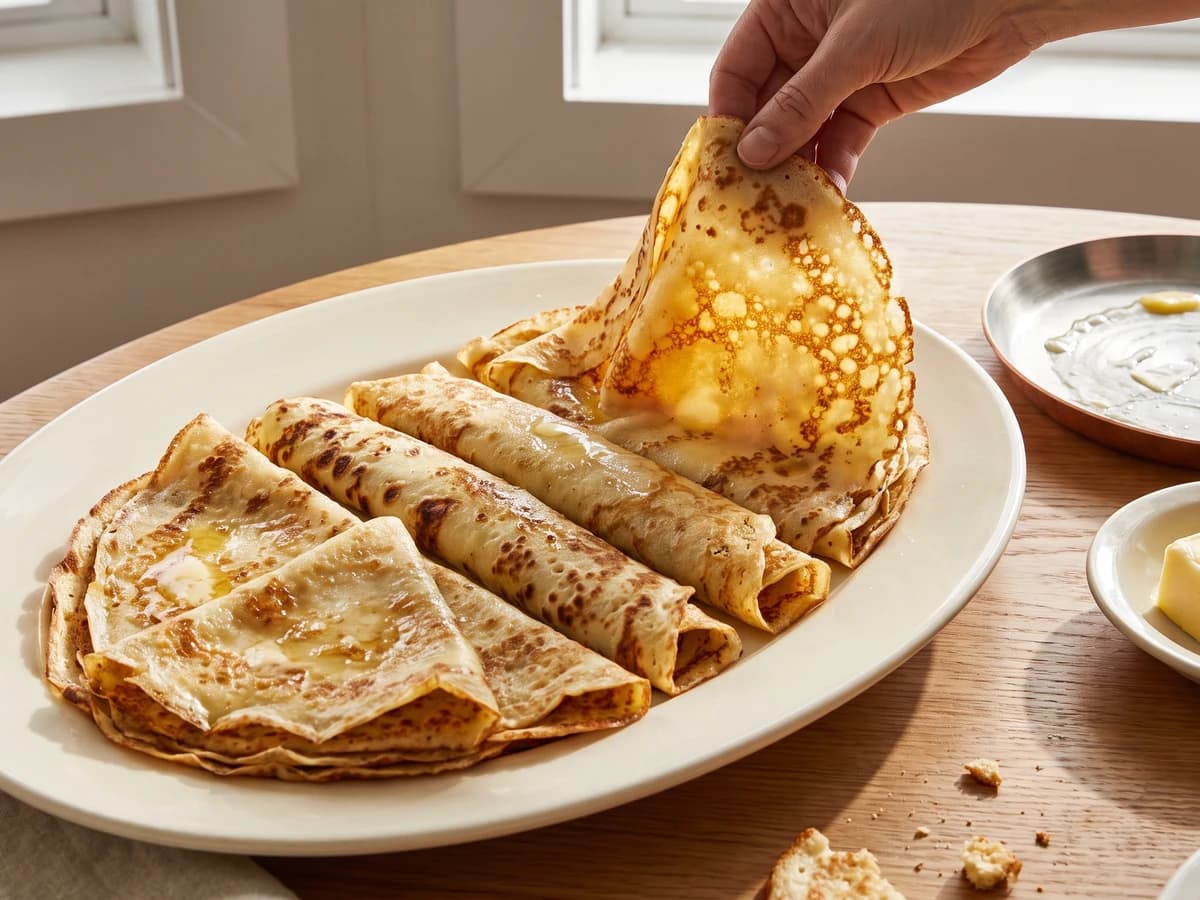
Four batters, one lesson: let the flour drink deeply before cooking, then spread the batter thinly in butter for crêpes and pannequets that bend without becoming tough.
Chef Juliette
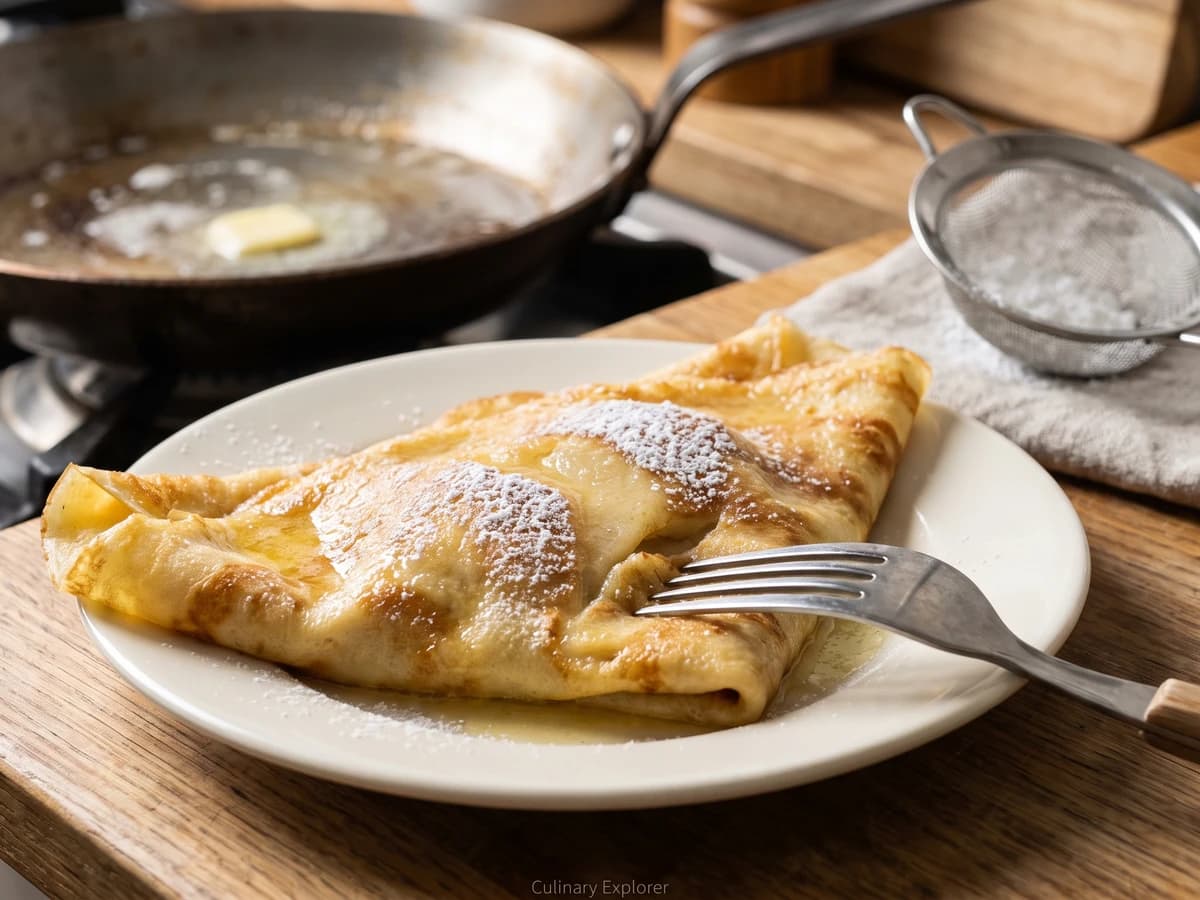
Crêpes au Couvent trap ripe Williams pear dice between two thin pours of sweet batter, then turn in one clean toss and reach the table butter-gold, powdered, and burning hot.