Chef Juliette
Omelette à l’Écossaise
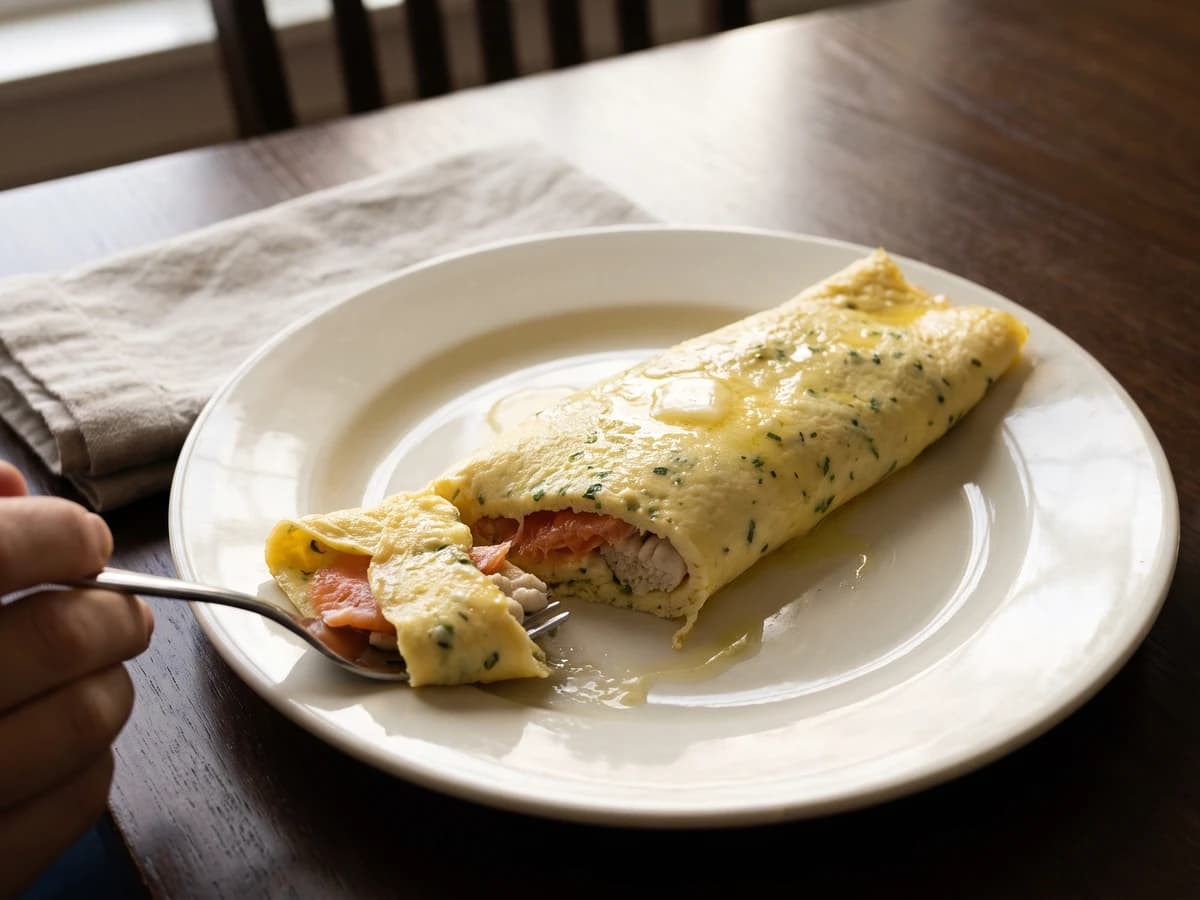
A creamy omelette aux fines herbes closes around smoked-salmon-wrapped herring milts, gently poached in butter. Have the filling ready, then roll the eggs while they still shine.
A cooking platform built around craft, culture, and the stories behind what we eat.
Created by Chef Juliette
Based on No. 505, Omelet with Artichoke-bottoms, from Le Guide Culinaire (1907) by Auguste Escoffier
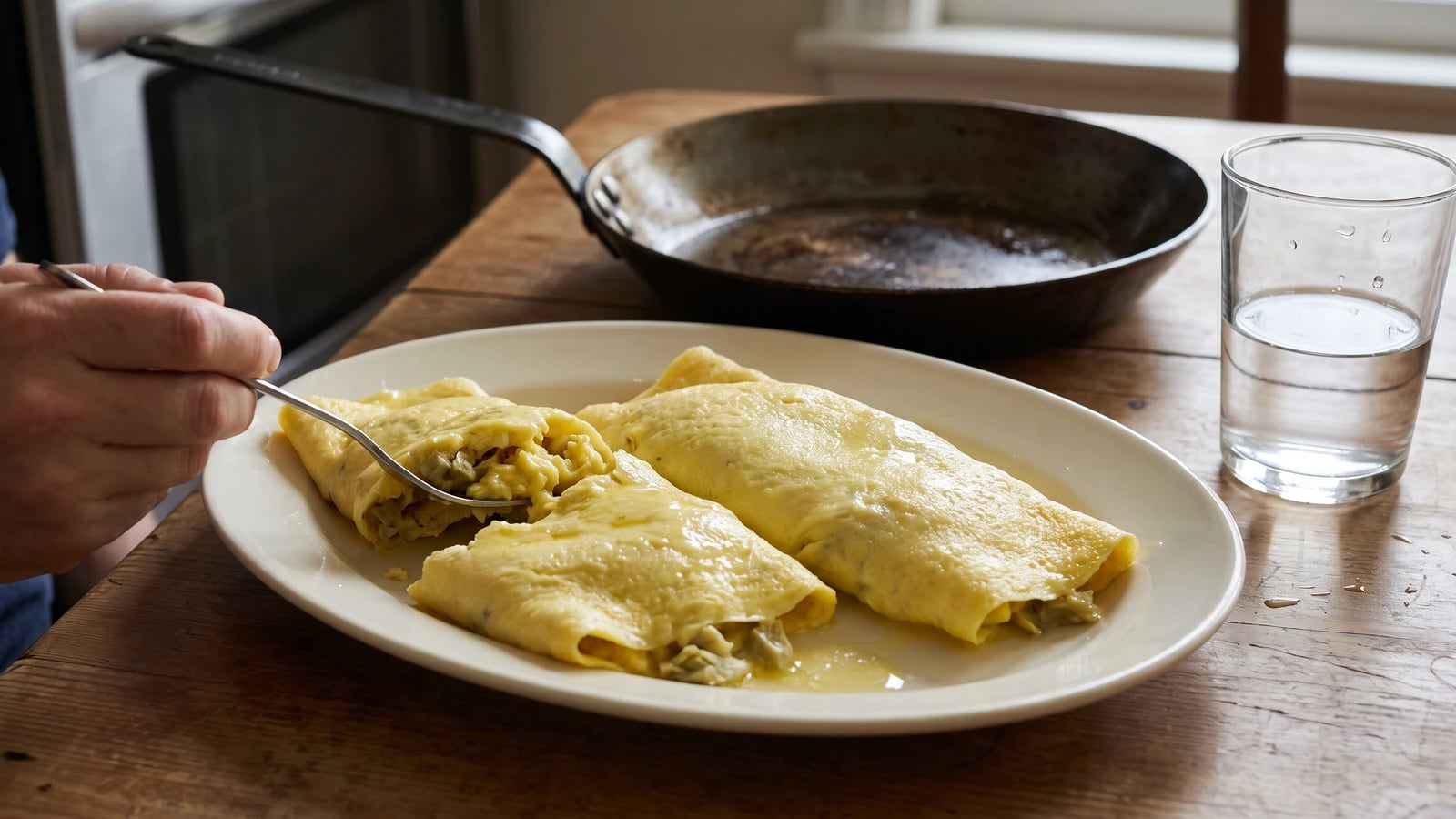
Omelette aux fonds d'artichaut teaches restraint: finely minced artichoke bottoms lightly coloured in butter, then gathered through tender, softly folded eggs for a generous supper from one honest pan.
Omelette aux fonds d'artichaut (French omelet with artichoke bottoms) teaches one severe and useful lesson: the garnish must finish cooking before the eggs begin. Minced very fine and lightly coloured in butter, the artichoke becomes tender, faintly nutty, and present in every bite. Leave the pieces coarse or half-cooked and the eggs have no time to rescue them.
The source entry assumed two small raw bottoms already trimmed by a prep cook, a dedicated omelette pan kept seasoned between orders, and a cook who needed no explanation of "the usual way." For four at home, this version keeps two bottoms to each omelette and makes two four-egg omelettes, each cut in half. The dedicated prep station is brigade scaffolding and goes; the sequence of butter, seasoned artichoke, then beaten egg is the dish and stays exactly where the source put it. One cook, one stove, one evening.
No saucier on staff, stock never off the fire, or salamander is hiding behind this preparation, and none belongs there. A 25 cm pan, a flexible spatula, and a warmed platter are the honest home equivalents. Keep the eggs pale, move them while loose, and fold while the surface still gleams softly. The step that matters most is taking the artichoke mince to complete tenderness and faint colour before the eggs meet the pan.
Omelette aux fonds d'artichaut belongs to the codified French omelette repertory of Parisian professional kitchens and the bourgeois supper table, rather than to one regional larder. Artichoke bottoms traveled into the omelette from the classical garnish tray, where the tender basal discs were carefully pared and cooked before accompanying eggs, poultry, or veal. A fond d'artichaut is the solid, fleshy base beneath the choke, not a vinegared quarter from a jar, a distinction that explains the dish's mild, concentrated artichoke flavor.
Quantity
4 small (about 1 cup / 240 ml / 140 g)
finely minced and dried well
Quantity
8
Quantity
3 tablespoons (45 ml / 42 g)
divided
Quantity
¾ teaspoon (3.75 ml / 4.5 g)
divided
Quantity
¼ teaspoon (1.25 ml / 0.5 g)
divided
| Ingredient | Quantity |
|---|---|
| raw artichoke bottoms from small globe artichokes, or thawed frozen artichoke bottomsfinely minced and dried well | 4 small (about 1 cup / 240 ml / 140 g) |
| large eggs | 8 |
| unsalted butterdivided | 3 tablespoons (45 ml / 42 g) |
| fine sea saltdivided | ¾ teaspoon (3.75 ml / 4.5 g) |
| freshly ground white pepperdivided | ¼ teaspoon (1.25 ml / 0.5 g) |
If starting with whole artichokes, pull away the leaves, cut the stem flush, and pare off every tough green leaf base until only the pale fleshy bottom remains. Scoop out the fibrous choke with a sturdy teaspoon without gouging the flesh. Mince the bottoms into pieces no larger than 3 mm and divide them into two equal portions. Work promptly because raw artichoke darkens once cut; a little discoloration is harmless and disappears beneath the butter's colour.
Crack four eggs into each of two bowls. Add ¼ teaspoon salt and a small pinch of white pepper to each, reserving the remaining seasoning for the artichokes. Beat with a fork just until yolks and whites are completely united, with no clear streaks but very little foam. Airy eggs make a rough, pocked surface; this omelette wants a close, tender curd.
Melt 1 tablespoon butter in a 25 cm pan over medium-low heat. When it foams, add half the minced artichoke, ⅛ teaspoon salt, and a pinch of white pepper. Cook, stirring often, until raw artichoke is tender at the centre and pale gold at a few edges, about 8 to 10 minutes; thawed frozen bottoms need only 3 to 5 minutes. Slight colour is enough. If the butter darkens before a raw piece is tender, lower the heat, cover for 1 minute so the artichoke softens in its own moisture, then uncover and cook the pan dry. The artichoke must be ready now because the eggs cook too quickly to finish it.
Add another ½ tablespoon butter and raise the heat to medium. As soon as the fresh butter foams, pour one bowl of eggs directly over the artichokes, preserving the source's sequence. Stir briskly with a flexible spatula while shaking the pan, drawing the setting egg from the floor into small, moist curds. If a firm skin forms before the upper egg thickens, lift the pan off the heat and stir firmly until the pan cools, then return it over a gentler flame. Ça se rattrape. Stop stirring when the eggs no longer run but still look softly glossy on top.
Smooth the curds into an even layer and let the underside settle for 10 to 15 seconds. Tilt the pan, fold the far third toward the centre, then bring the near third over it to make a loose roll. If the fold tears, tuck it together with the spatula; a tender omelette with an imperfect seam is better than a handsome dry one. Slide it seam-side down onto a warmed platter. Repeat the artichoke, butter, egg, and folding sequence with the remaining ingredients. Cut each omelette in half and serve immediately, while the centres remain tender and the artichokes carry their warm butter sheen. À table!
1 serving (about 130g)
Culinary guides, cultural storytelling, and the editorial depth that makes cooking meaningful.
Discover Culinary ExplorerChef Juliette
A creamy omelette aux fines herbes closes around smoked-salmon-wrapped herring milts, gently poached in butter. Have the filling ready, then roll the eggs while they still shine.
Chef Juliette
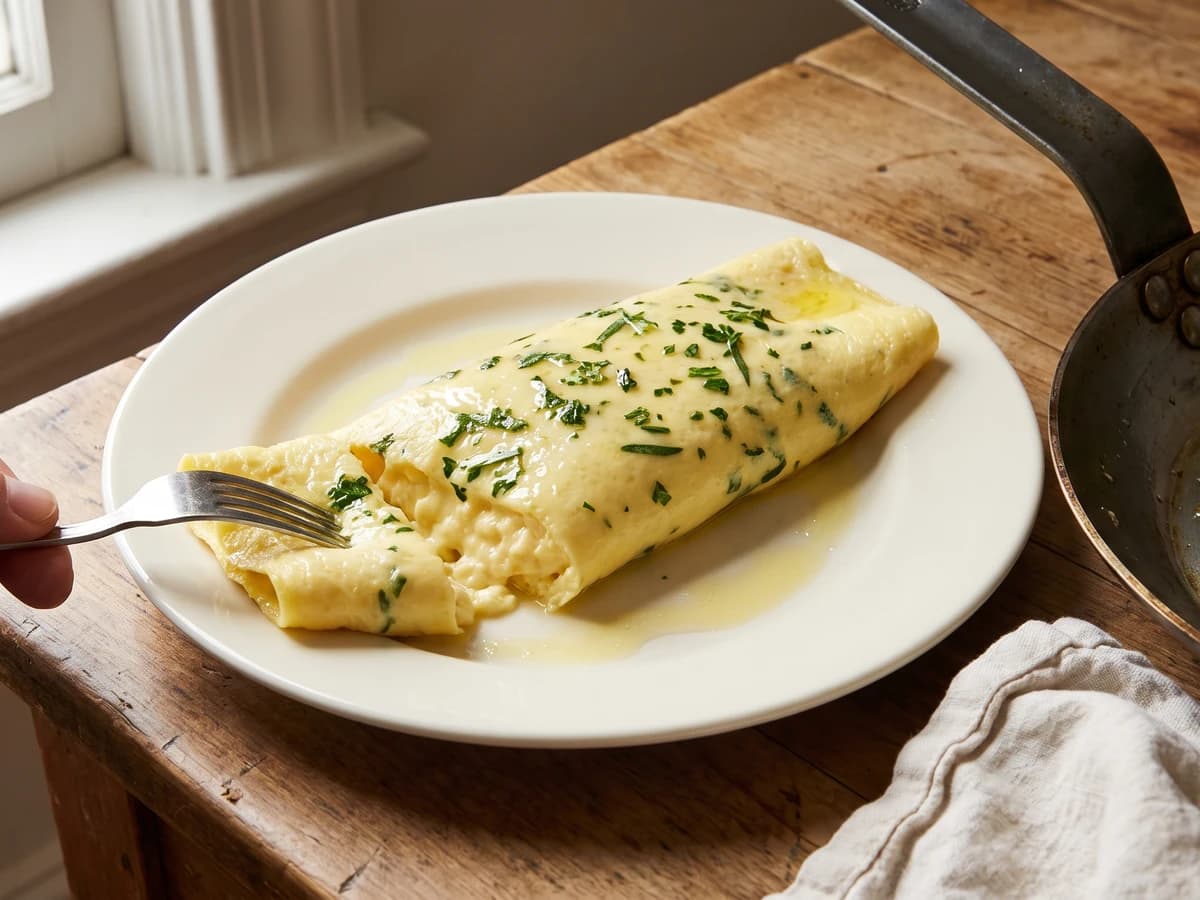
Four tender herbs, hot butter, and two eggs per pan: this rolled omelette teaches the quick hand and good judgment that keep the outside pale and the center creamy.
Chef Juliette
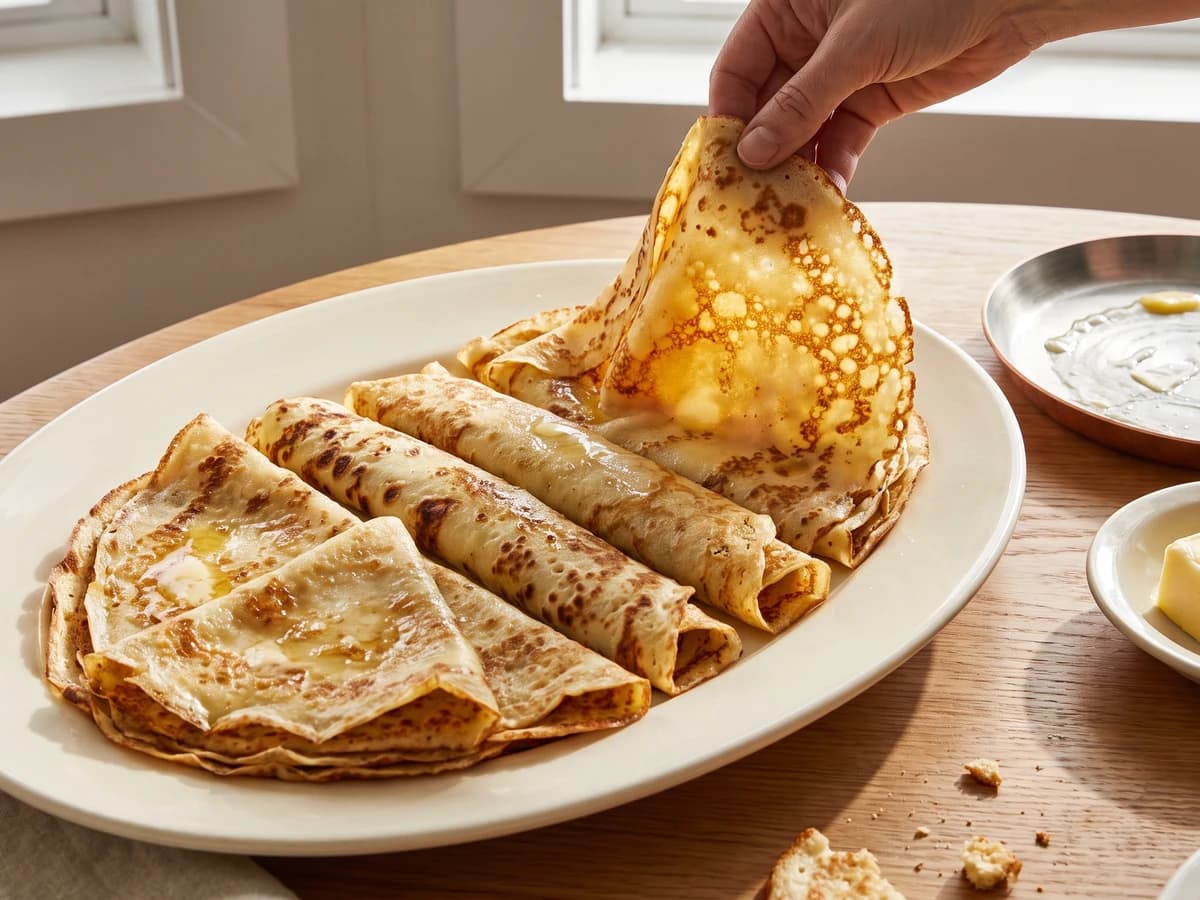
Four batters, one lesson: let the flour drink deeply before cooking, then spread the batter thinly in butter for crêpes and pannequets that bend without becoming tough.
Chef Juliette
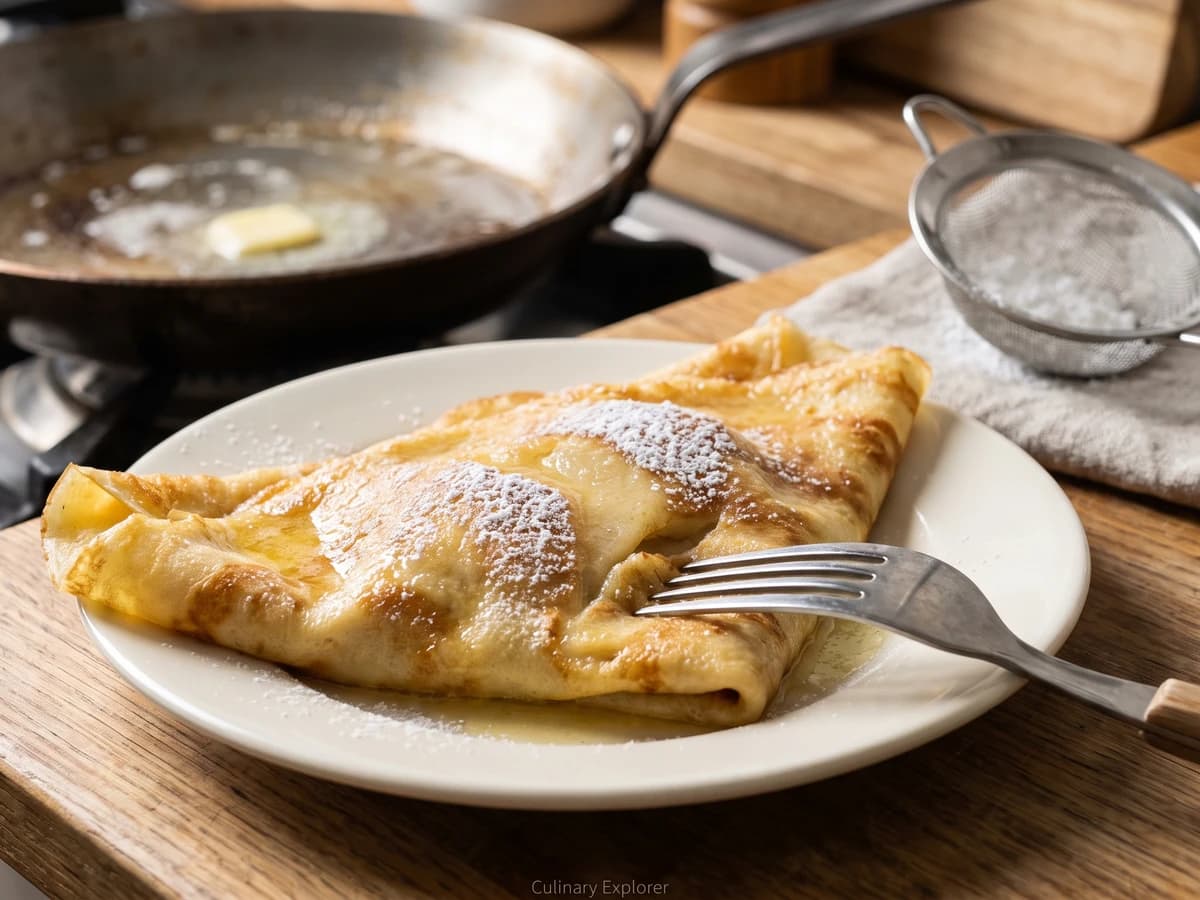
Crêpes au Couvent trap ripe Williams pear dice between two thin pours of sweet batter, then turn in one clean toss and reach the table butter-gold, powdered, and burning hot.