Chef Juliette
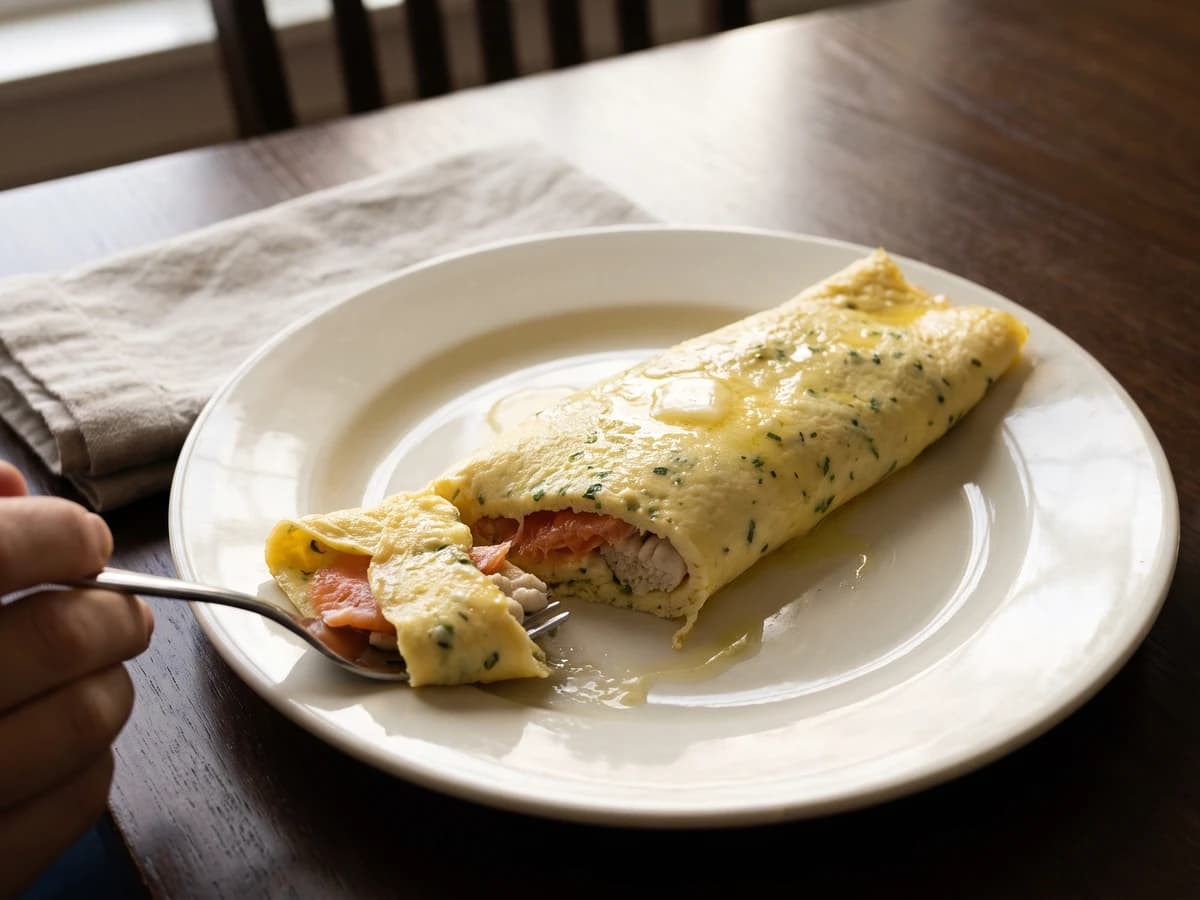
Omelette à l’Écossaise
A creamy omelette aux fines herbes closes around smoked-salmon-wrapped herring milts, gently poached in butter. Have the filling ready, then roll the eggs while they still shine.
A cooking platform built around craft, culture, and the stories behind what we eat.
Created by Chef Juliette
Based on No. 502, Omelet aux Fines Herbes, from Le Guide Culinaire (1907) by Auguste Escoffier
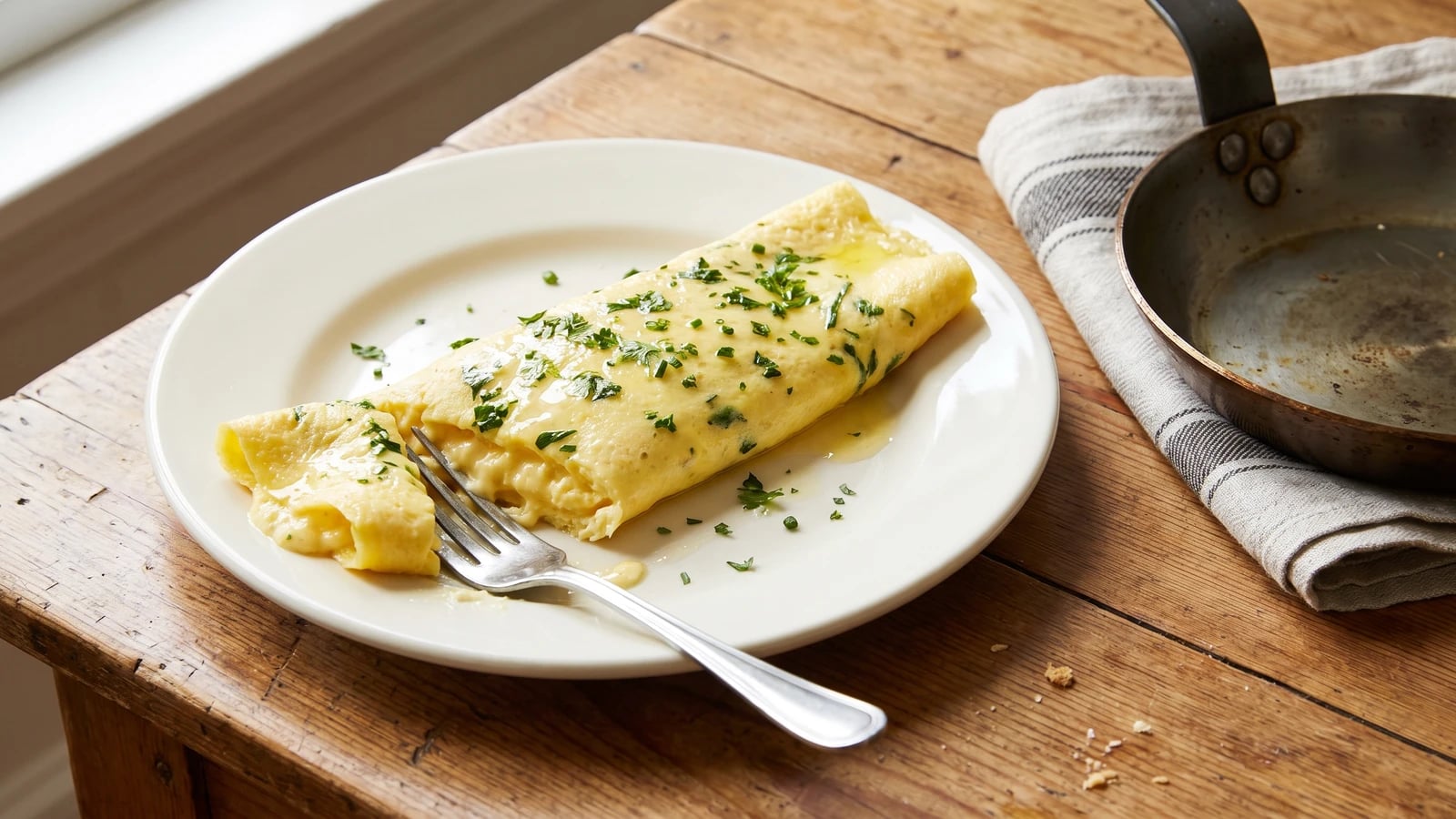
Omelette aux fines herbes proves that speed is not haste: four fresh herbs, tender eggs, and butter, stirred to small curds and rolled while the centre remains softly, proudly moist.
Omelette aux fines herbes (soft-rolled omelette with parsley, chervil, chives, and tarragon) teaches the first law of egg cookery: take the eggs from the pan while they still look a touch too soft. Residual heat finishes the centre, giving you tender curds beneath a pale, butter-glossed surface. Wait until the eggs look fully cooked and you've already gone too far.
There is no saucier, stockpot, or salamander hiding behind this entry. Its brigade shorthand was the phrase "in the usual way," which assumed a dedicated seasoned omelette pan, herbs already picked, and a cook who could stir and roll by reflex. For a home table of four, I take the usual individual omelette as three eggs, retain the source's tablespoon of mixed herbs, and repeat it four times in a 20-centimeter pan. One twelve-egg roll would cook unevenly and lose the delicacy that makes the dish itself.
The shorthand is scaffolding and can go. Fresh herbs beaten through the eggs, quick stirring, and the early roll must stay. The moment that matters is when small moist curds cover the pan but the surface still glistens; stop stirring, shape quickly, and trust the heat already in the eggs.
Omelette aux fines herbes belongs to the cuisine bourgeoise of Paris and the French café table, where an omelette served as both a quick meal and a quiet test of the cook's hand. Grand kitchens codified what households already knew: fresh herbs perfume eggs best when chopped at the last moment and exposed only briefly to heat. Here fines herbes is not a vague green mixture or dried seasoning; it means parsley, chervil, chives, and tarragon in nearly equal measure.
Quantity
12
Quantity
1 tablespoon (15 ml / about 4 g)
finely chopped
Quantity
1 tablespoon (15 ml / about 2 g)
finely chopped
Quantity
1 tablespoon (15 ml / about 3 g)
finely chopped
Quantity
1 tablespoon (15 ml / about 2 g)
finely chopped
Quantity
5 tablespoons (75 ml / 71 g)
divided, with 1 tablespoon held in reserve
Quantity
1 teaspoon (5 ml / 6 g)
divided
Quantity
1/4 teaspoon (1.25 ml / about 0.5 g)
divided
| Ingredient | Quantity |
|---|---|
| large eggs | 12 |
| fresh flat-leaf parsley leavesfinely chopped | 1 tablespoon (15 ml / about 4 g) |
| fresh chervil leavesfinely chopped | 1 tablespoon (15 ml / about 2 g) |
| fresh chivesfinely chopped | 1 tablespoon (15 ml / about 3 g) |
| fresh tarragon leavesfinely chopped | 1 tablespoon (15 ml / about 2 g) |
| unsalted butterdivided, with 1 tablespoon held in reserve | 5 tablespoons (75 ml / 71 g) |
| fine saltdivided | 1 teaspoon (5 ml / 6 g) |
| finely ground white pepperdivided | 1/4 teaspoon (1.25 ml / about 0.5 g) |
Pick the parsley, chervil, and tarragon leaves from their coarse stems, keeping the tender chive stalks. Dry everything thoroughly, then chop each herb finely with a sharp knife and combine them. You should have 4 tablespoons of fines herbes, nearly equally apportioned as the source directs. Chop cleanly rather than rocking the knife until the herbs become a wet green paste.
Have a plate ready before the eggs meet the pan. Break 3 eggs into a small bowl and add 1 tablespoon of the fines herbes, 1/4 teaspoon of the salt, and a small pinch of white pepper. Beat briskly with a fork just until the whites and yolks are completely united and the herbs remain suspended, about 20 seconds. Don't whip in a cap of foam, and don't mix the next batch yet; beaten, salted eggs should go promptly to the pan.
Warm a 20-centimeter nonstick or well-seasoned carbon-steel pan over medium heat for about a minute. Add 1 tablespoon of the butter and swirl it over the base. It should foam eagerly without turning brown. If it begins to colour before the eggs are ready, pull the pan from the heat, wipe it clean, lower the heat slightly, and begin again with some of the reserved butter. A pale omelette begins with pale butter.
Pour in the egg mixture. Immediately stir in tight circles with a flexible spatula while shaking the pan gently back and forth, scraping set egg from the base so liquid egg can take its place. After 20 to 30 seconds, the pan should hold small, moist curds with a little creamy egg between them. If the eggs seize faster than you can stir, lift the pan entirely off the heat and beat in a teaspoon of the reserved butter. Ça se rattrape, provided the curds are still moist. Once they are dry and browned, no technique can make them tender again.
Stop stirring and spread the curds into an even layer. Return the pan to the heat for only 5 to 10 seconds if the base is still too loose to lift; the surface should remain glossy and softly set. Shake the pan to confirm the omelette slides, loosening any clinging edge with the spatula. Fold the far third toward the centre, tilt the pan toward the waiting plate, and guide the omelette over itself so it lands seam-side down in a soft roll. If the roll tears, tuck the loose flap underneath with the spatula. Never apologize at your own table.
Wipe the pan clean, bring it back to the same heat, and mix the next 3 eggs with another tablespoon of fines herbes and the same proportion of seasoning. Repeat until you have made four omelettes. Send each one to the table as it leaves the pan; holding or reheating continues to cook the centre. The finished omelette should be pale butter-gold outside, tender within, and bright with the four herbs. À table!
1 serving (about 155g)
Culinary guides, cultural storytelling, and the editorial depth that makes cooking meaningful.
Discover Culinary ExplorerChef Juliette
A creamy omelette aux fines herbes closes around smoked-salmon-wrapped herring milts, gently poached in butter. Have the filling ready, then roll the eggs while they still shine.
Chef Juliette
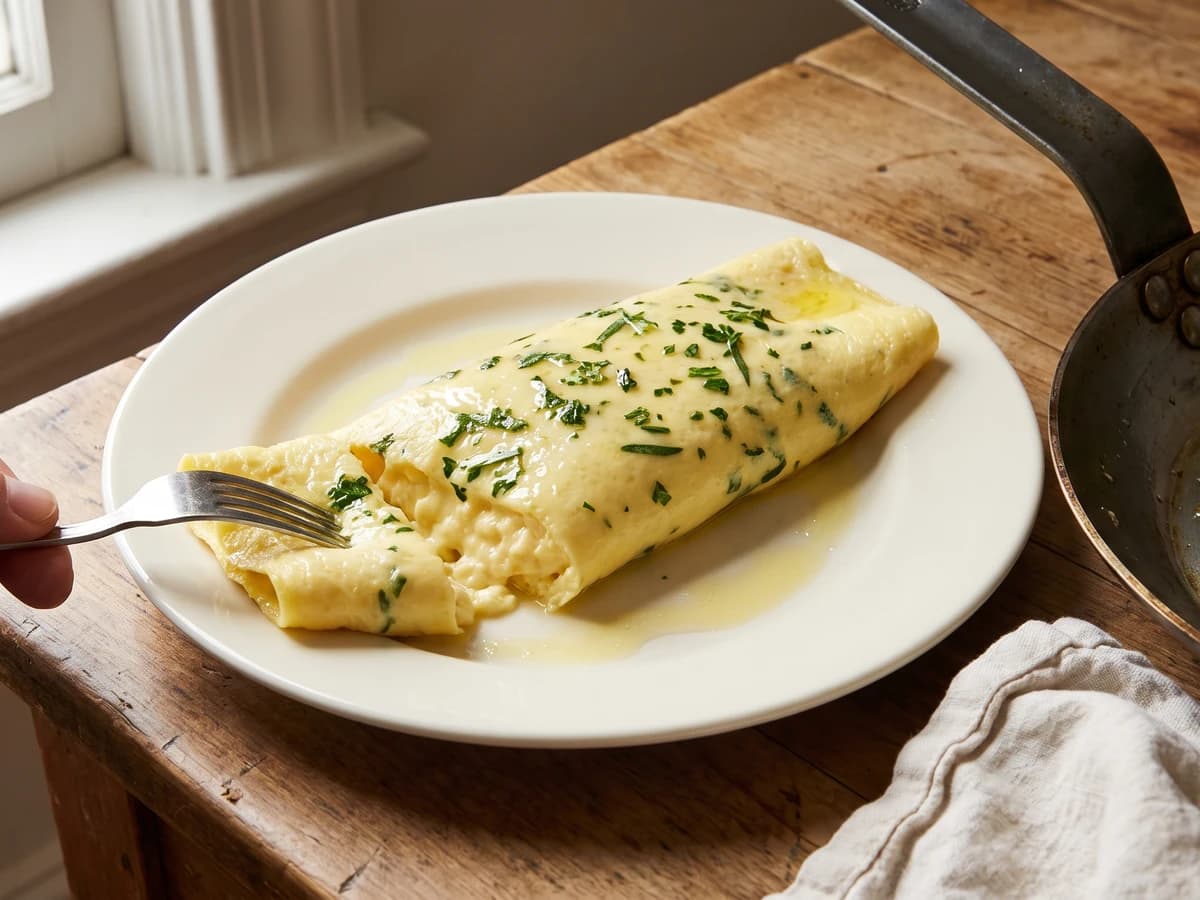
Four tender herbs, hot butter, and two eggs per pan: this rolled omelette teaches the quick hand and good judgment that keep the outside pale and the center creamy.
Chef Juliette
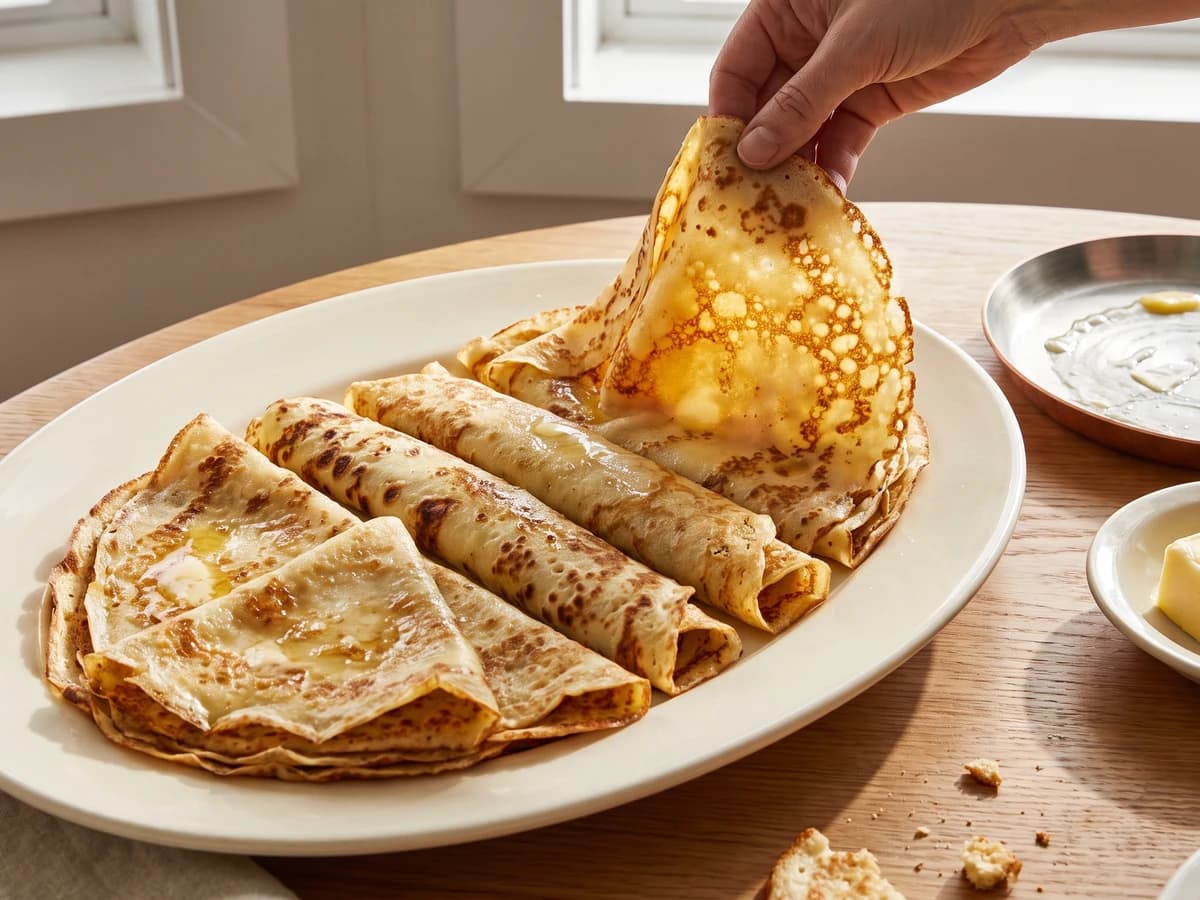
Four batters, one lesson: let the flour drink deeply before cooking, then spread the batter thinly in butter for crêpes and pannequets that bend without becoming tough.
Chef Juliette
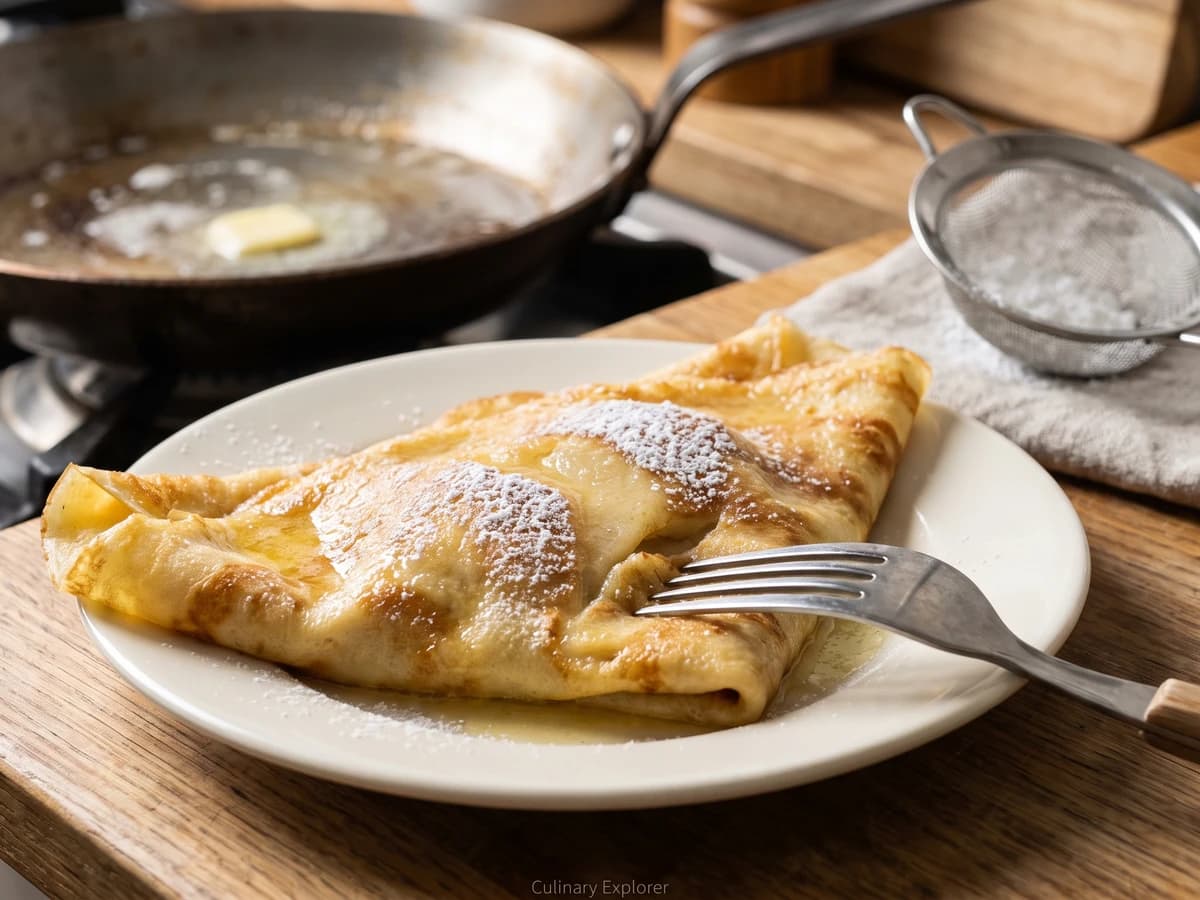
Crêpes au Couvent trap ripe Williams pear dice between two thin pours of sweet batter, then turn in one clean toss and reach the table butter-gold, powdered, and burning hot.