Chef Juliette
Omelette à l’Écossaise
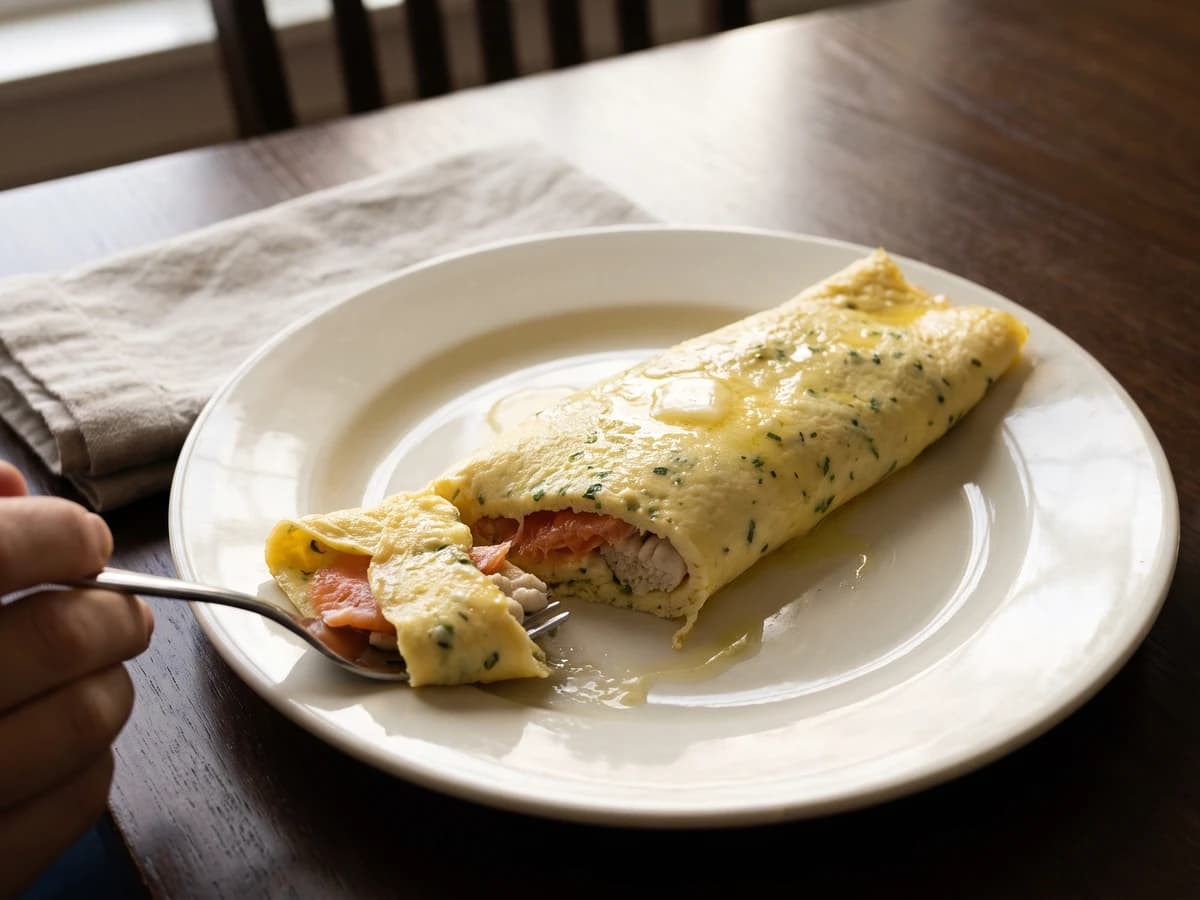
A creamy omelette aux fines herbes closes around smoked-salmon-wrapped herring milts, gently poached in butter. Have the filling ready, then roll the eggs while they still shine.
A cooking platform built around craft, culture, and the stories behind what we eat.
Created by Chef Juliette
Based on No. 501, Omelet à la Fermière, from Le Guide Culinaire (1907) by Auguste Escoffier
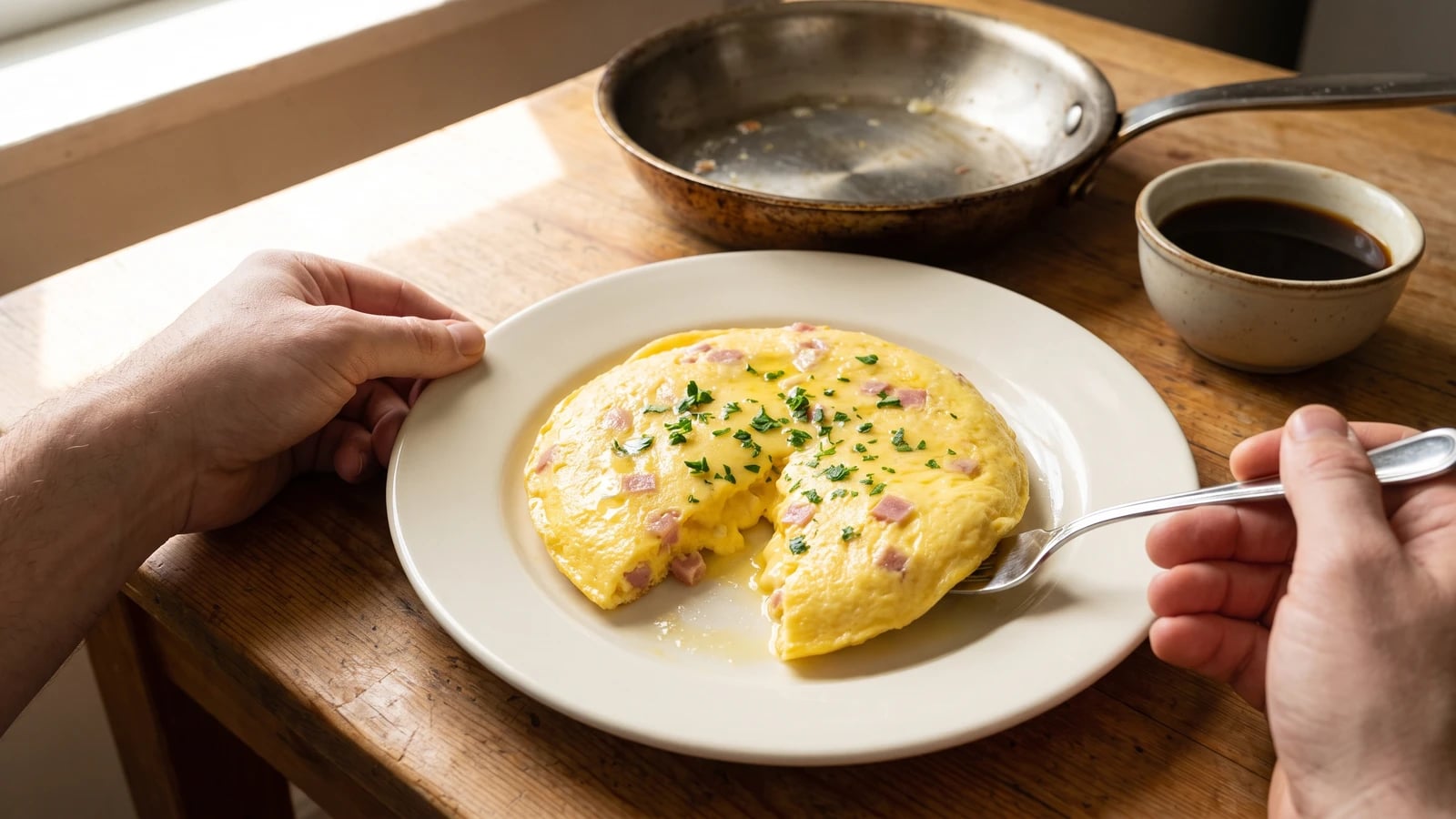
A pale, tender Omelet à la Fermière, diced ham held through soft eggs and tipped flat from the pan, proves that speed, heat, and restraint make a generous supper in minutes.
Omelet à la Fermière (the farmwife’s flat omelet) teaches one true thing before you touch the pan: softness comes from speed, not timid heat. The pan must be hot, the eggs must keep moving, and the cooking must stop while their surface is still glossy. Its diced ham isn't a separate filling. It is beaten through the eggs, which are tipped out whole and flat like a pancake.
The original entry assumed a dedicated omelet pan, already seasoned and hot, with a cook preparing one portion to order. It calls for no stockpot, sauce station, or salamander, so none should be invented. At home, an 8-inch (20 cm) nonstick skillet is the honest equivalent, and scaling the recipe for four means cooking four two-egg omelets with one tablespoon of ham in each, not making one heavy eight-egg slab. The dedicated station is brigade scaffolding and may go. The ham through the eggs, the rapid cooking, and the flat tip from pan to plate are the dish itself and must stay.
When it is right, the Omelet à la Fermière is pale butter-gold, softly set within, and freckled with little pink dice of ham beneath a dusting of parsley. Have the pan hot and every plate waiting before you beat the first pair of eggs. That preparation buys you the few seconds on which the whole omelet turns.
Omelet à la fermière belongs to the French farmhouse and bourgeois home table rather than to one region: à la fermière signals farm-style practicality, here a little cooked ham carried directly through the eggs. Classical recipe collections brought such household omelets into the professional canon, but kept them individual and quick-cooked rather than enlarging them into banquet slabs. The defining detail is often lost when the name travels: the ham is beaten into the eggs and the omelet is tipped out flat like a pancake, never folded around a separate filling.
Quantity
8
Quantity
4 tablespoons (60 ml / 40 g)
cut into ¼-inch (5 mm) dice
Quantity
½ teaspoon (2.5 ml / 3 g)
Quantity
⅛ teaspoon (0.6 ml / 0.3 g)
Quantity
2 tablespoons (30 ml / 28 g)
divided
Quantity
1 teaspoon (5 ml / 1 g)
finely chopped
| Ingredient | Quantity |
|---|---|
| large eggs | 8 |
| very lean cooked hamcut into ¼-inch (5 mm) dice | 4 tablespoons (60 ml / 40 g) |
| fine salt | ½ teaspoon (2.5 ml / 3 g) |
| freshly ground white pepper | ⅛ teaspoon (0.6 ml / 0.3 g) |
| unsalted butterdivided | 2 tablespoons (30 ml / 28 g) |
| flat-leaf parsleyfinely chopped | 1 teaspoon (5 ml / 1 g) |
Set four plates where they will stay gently warm. Divide the diced ham into four 1-tablespoon portions, the butter into four ½-tablespoon portions, and the parsley into four pinches. Put the skillet, spatula, and serving plates within reach. Once the eggs enter the pan, there is no useful pause, so this preparation is part of the cooking.
Work on one omelet at a time. Crack 2 eggs into a small bowl, add ⅛ teaspoon of the salt and a small pinch of white pepper, then beat with a fork just until the whites and yolks unite and fall in one loose ribbon. Do not whip in a crown of bubbles. Stir in 1 tablespoon of the diced ham, keeping the pieces suspended through the eggs rather than saving them as a filling.
Heat the empty 8-inch (20 cm) skillet over medium-high heat for 60 to 90 seconds. Add one portion of butter and roll the pan so the entire floor is coated. Pour in the eggs as soon as the butter foams briskly and the foam begins to thin, while the butter is still blond. If it turns brown, pour it away, wipe the pan carefully, and begin with fresh butter. Ça se rattrape. The Omelet à la Fermière should taste of fresh butter and keep its pale skin.
Pour in the egg and ham mixture. Shake the pan back and forth while stirring small, quick circles with the spatula so unset egg continually runs beneath the tender curds. After 20 to 30 seconds, level everything into a flat round and leave it just long enough for the underside to form a delicate skin. Stop while the top remains glossy and softly set, with no loose clear egg. If the curds begin to seize before you can level them, lift the pan completely off the heat and keep stirring for a few seconds. Ça se rattrape. If liquid egg still puddles, return the pan to the heat for five seconds and check again.
Run the spatula around the rim, then hold a warm plate close to the pan and tilt until the omelet slides out whole and flat, after the manner of a pancake. Do not fold or roll it. If one point clings, lift only that spot with the spatula and tilt again rather than pulling against the tender centre. Dust the surface with one pinch of chopped parsley and serve immediately.
Remove any egg fragments from the skillet, restore the heat, and make the remaining three omelets in the same way. Pass each plate as it comes from the pan. A soft omelet is generous but impatient, and it should never be stacked or left waiting beneath a cover. À table!
1 serving (about 105g)
Culinary guides, cultural storytelling, and the editorial depth that makes cooking meaningful.
Discover Culinary ExplorerChef Juliette
A creamy omelette aux fines herbes closes around smoked-salmon-wrapped herring milts, gently poached in butter. Have the filling ready, then roll the eggs while they still shine.
Chef Juliette
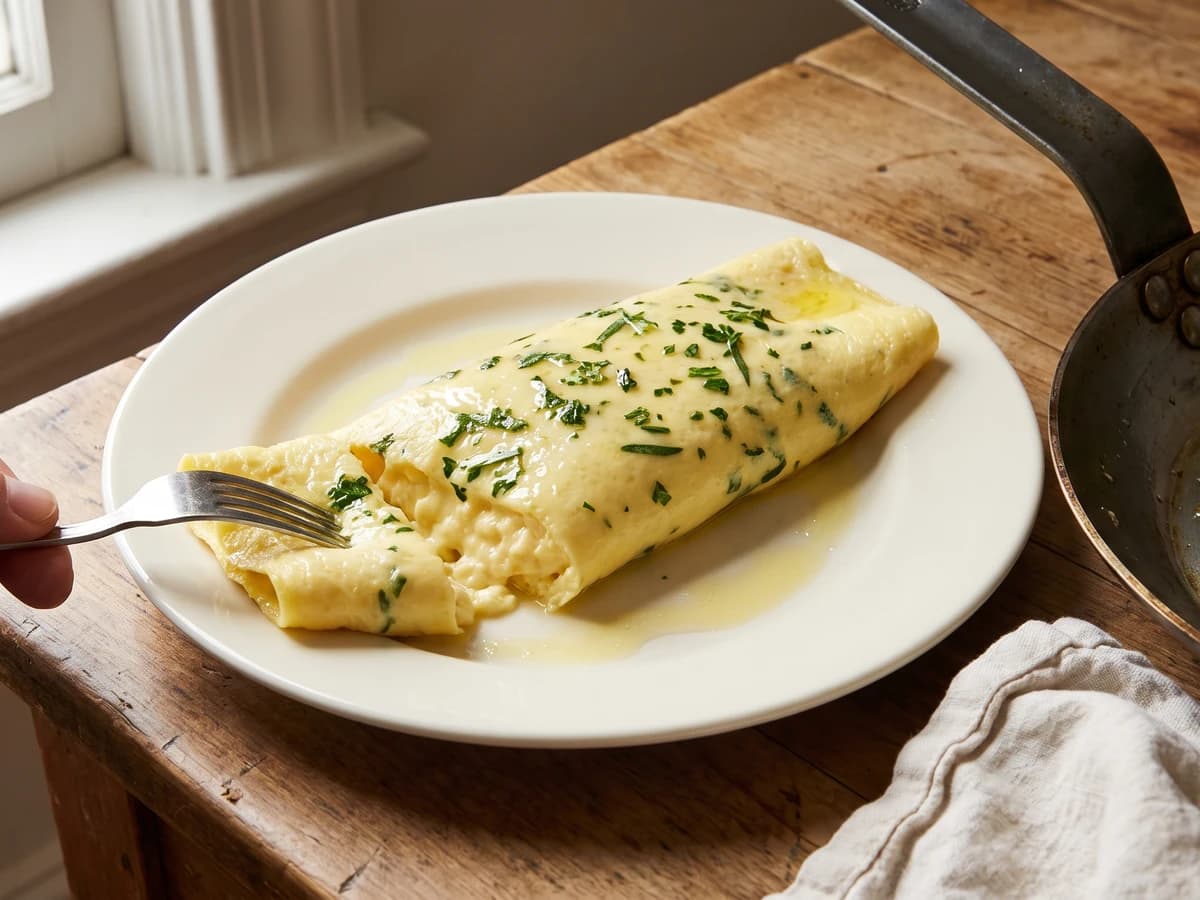
Four tender herbs, hot butter, and two eggs per pan: this rolled omelette teaches the quick hand and good judgment that keep the outside pale and the center creamy.
Chef Juliette
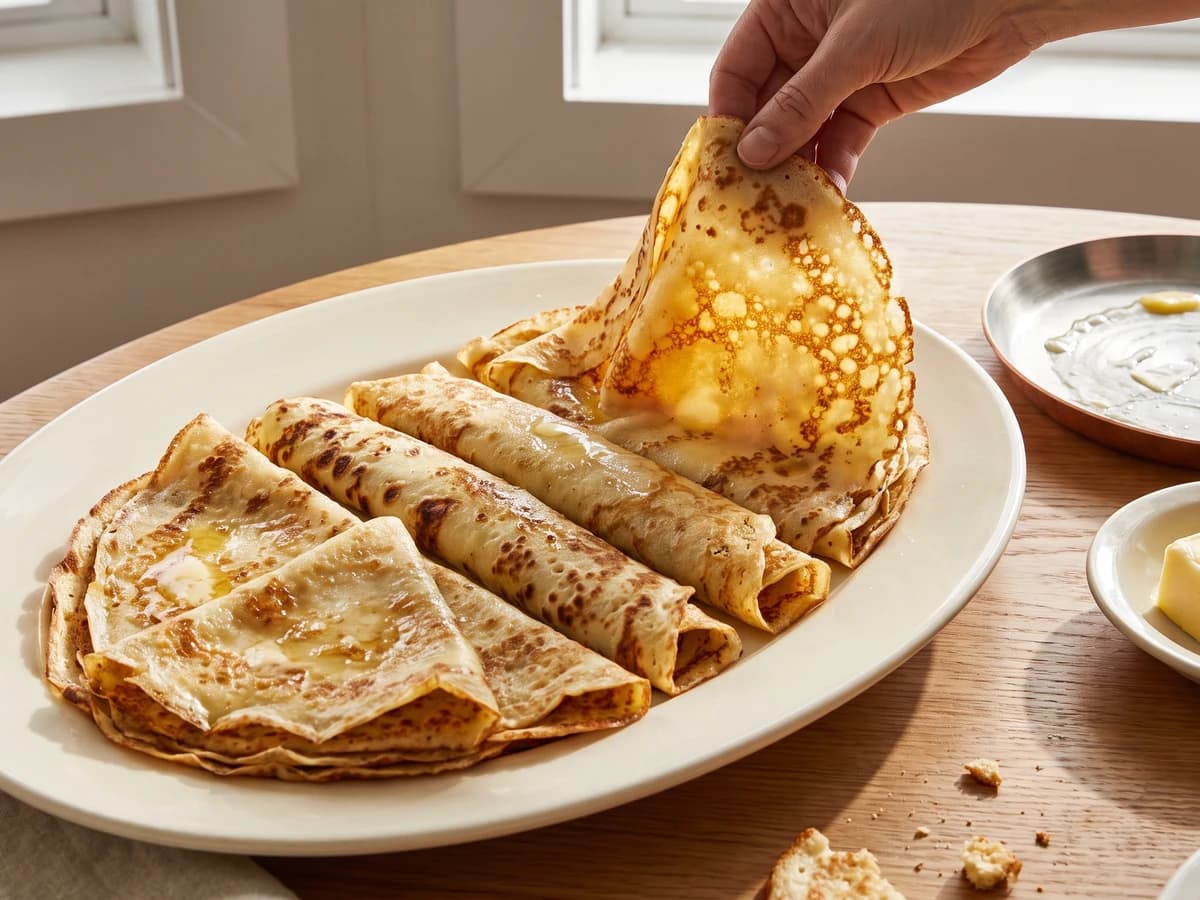
Four batters, one lesson: let the flour drink deeply before cooking, then spread the batter thinly in butter for crêpes and pannequets that bend without becoming tough.
Chef Juliette
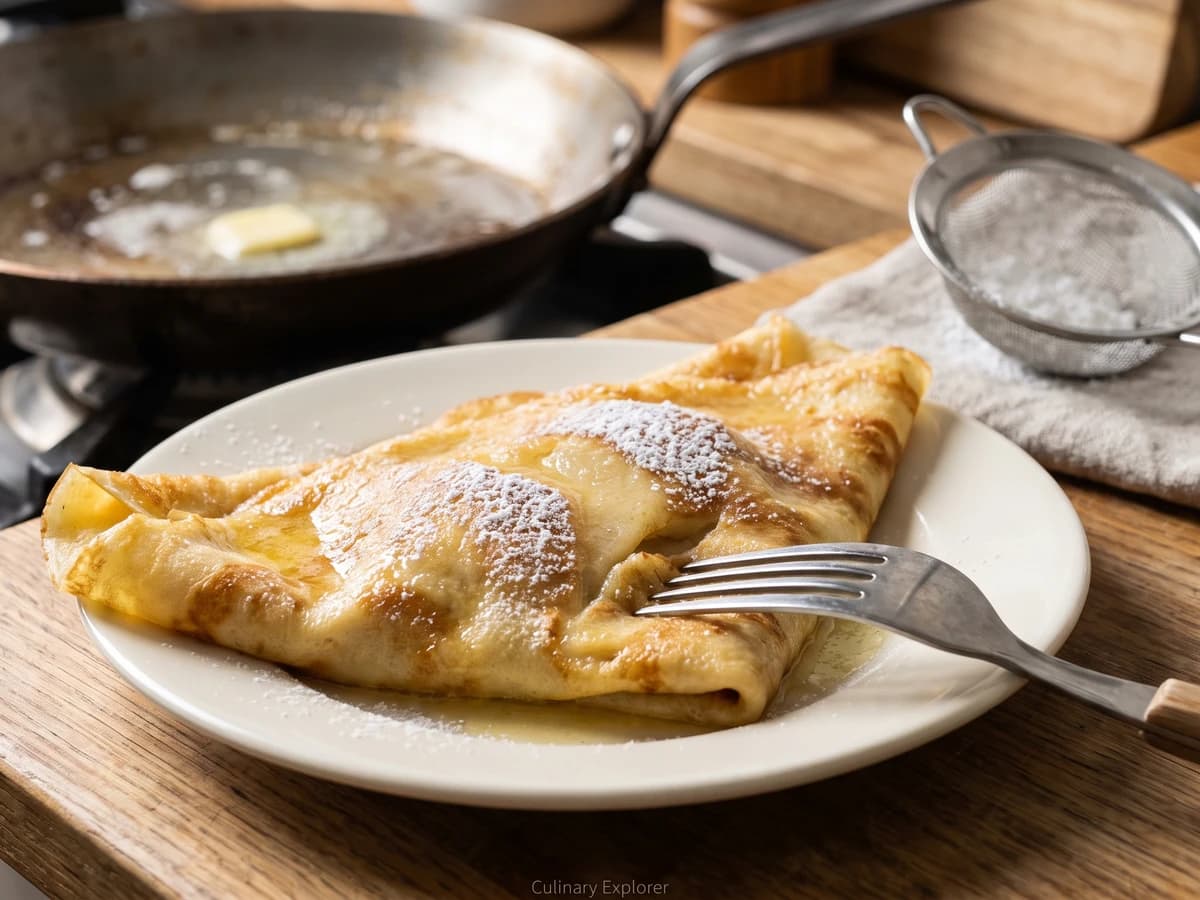
Crêpes au Couvent trap ripe Williams pear dice between two thin pours of sweet batter, then turn in one clean toss and reach the table butter-gold, powdered, and burning hot.