Chef Juliette
Omelette à l’Écossaise
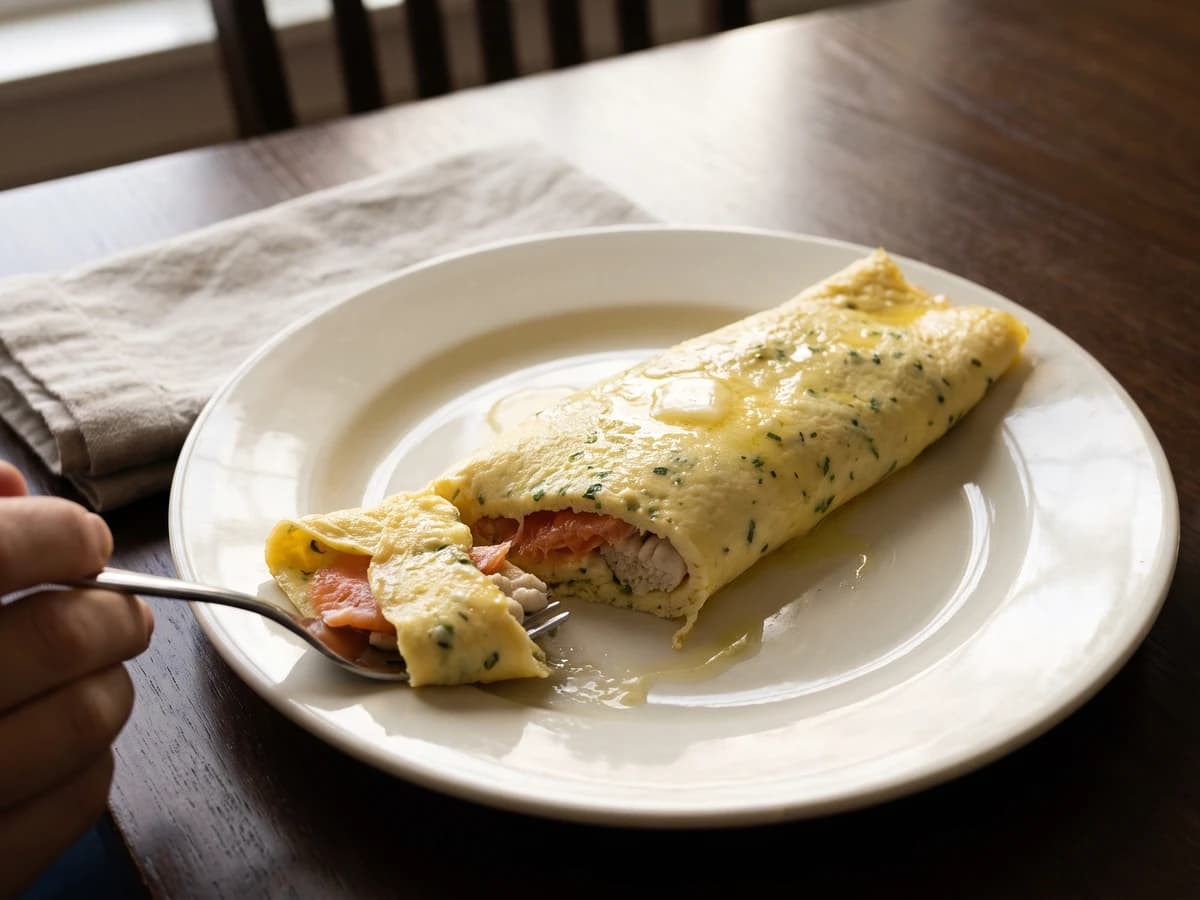
A creamy omelette aux fines herbes closes around smoked-salmon-wrapped herring milts, gently poached in butter. Have the filling ready, then roll the eggs while they still shine.
A cooking platform built around craft, culture, and the stories behind what we eat.
Created by Chef Juliette
Based on No. 499, Omelet with Crusts, from Le Guide Culinaire (1907) by Auguste Escoffier
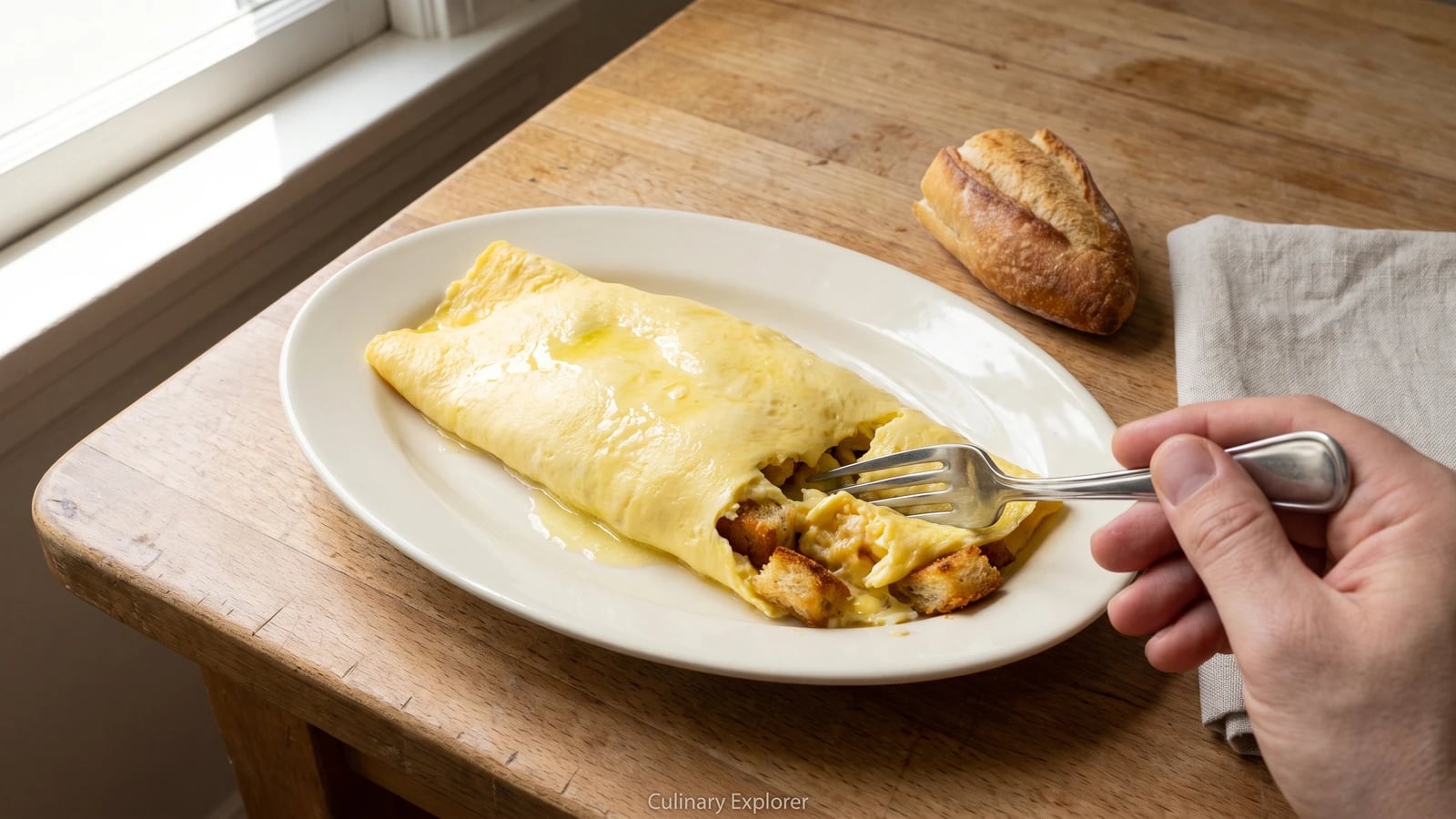
Hot dice of bread fried gold in clarified butter, folded through softly set eggs and rushed from pan to plate: a modest omelet whose whole luxury is timing.
Omelette aux Croûtons teaches the quickest lesson in the egg canon: the garnish must meet the eggs hot, and the eggs must leave the pan before those butter-gold crusts surrender their crispness. That is the one true thing to know before you touch the skillet. The bread is not an accompaniment; it is folded through the omelet, so every bite gives tender egg and a little crisp edge.
The entry is spare because its kitchen assumed clarified butter stood ready and an omelet cook fired each order at once. It needs no saucier, stock never off the fire, or salamander. At home, clarify one small knob of butter, then make two four-egg omelets rather than one unwieldy eight-egg one. I changed the batch size only, keeping the book's two tablespoonfuls of hot diced crusts in each omelet. The standing butter is brigade scaffolding. Frying the crusts in it and moving fast are the dish.
Have the eggs seasoned and the plates waiting before the bread meets the butter. Once the croûtons are gold, there is no pause: combine, cook, fold, serve. One cook, one stove, one evening.
Omelettes aux garnitures belong to the French bourgeois and café table, where a basic beaten-egg preparation changed character through one carefully handled addition. Omelette aux croûtons draws on the frugal French habit of returning day-old bread to usefulness, but the name does not mean an omelet served beside toast: the croûtons are the garnish itself, fried in clarified butter and folded hot through the eggs. Classical kitchens prized the same contrast home cooks do, tender egg against crisp bread, achieved by speed rather than extra ingredients.
Quantity
1/4 cup (60 ml / 20 g)
cut into 1/4-inch (6 mm) dice
Quantity
3 tablespoons (45 ml / 42 g)
Quantity
2 tablespoons (30 ml / 28 g)
divided
Quantity
8
Quantity
1/2 teaspoon (2.5 ml / 3 g)
Quantity
1/8 teaspoon (0.6 ml / 0.3 g)
| Ingredient | Quantity |
|---|---|
| day-old baguette or firm white-bread crustcut into 1/4-inch (6 mm) dice | 1/4 cup (60 ml / 20 g) |
| unsalted butter for clarifying | 3 tablespoons (45 ml / 42 g) |
| unsalted butter for cooking the omeletsdivided | 2 tablespoons (30 ml / 28 g) |
| large eggs | 8 |
| fine salt | 1/2 teaspoon (2.5 ml / 3 g) |
| finely ground white pepper | 1/8 teaspoon (0.6 ml / 0.3 g) |
Melt the 3 tablespoons of butter in a small saucepan over very low heat without stirring. Let the white foam rise and the milky solids settle, then skim the surface and pour the clear golden fat into a small cup, leaving the pale sediment behind. You should have about 2 tablespoons of clarified butter. If a few white flecks escape, strain it once through a fine sieve. Ça se rattrape.
Crack 4 eggs into each of two bowls. Divide the salt and white pepper evenly between them, then beat each batch with a fork just until no distinct streaks of white remain. Don't whip in a cap of foam; the omelet should be tender and close-textured. Set two warm serving plates beside the stove, but keep the bread separate from the eggs.
Heat a 9 1/2-inch (24 cm) skillet over medium-high heat. Add half the clarified butter and half the bread dice, exactly 2 tablespoons, then toss for 1 to 2 minutes until the little crusts are crisp, deep butter-gold, and hot through. If they darken before becoming crisp, lift the skillet from the heat and keep tossing. If they cool while the eggs are waiting, reheat them for 20 seconds before combining. The croûtons must enter the eggs hot.
Tip the hot croûtons into the first bowl of eggs. Immediately add 1 tablespoon of the cooking butter to the empty skillet; when it foams but has not browned, fold the croûtons through the eggs with two strokes and pour everything into the pan. Shake the skillet while stirring briskly with a flexible spatula, drawing the setting egg inward so the liquid runs underneath. After 20 to 30 seconds, stop stirring while the surface is still glossy and softly wet. Fold the near third into the center, then roll the far third over it and slide the omelet onto a warm plate, seam underneath. If the edges seize before the omelet rolls, take the skillet off the heat and use the spatula to fold it in thirds while the center is still moist. It may be less tidy, but it will remain tender. Never apologize at your own table.
Wipe away any loose crumbs, then repeat with the remaining clarified butter, bread dice, cooking butter, and second bowl of eggs. Divide each omelet crosswise into two portions and serve as soon as it leaves the skillet. Don't cover the first one while the second cooks, since trapped moisture softens the croûtons. Ninety seconds between servings is honest home cooking, not a crisis. À table!
1 serving (about 110g)
Culinary guides, cultural storytelling, and the editorial depth that makes cooking meaningful.
Discover Culinary ExplorerChef Juliette
A creamy omelette aux fines herbes closes around smoked-salmon-wrapped herring milts, gently poached in butter. Have the filling ready, then roll the eggs while they still shine.
Chef Juliette
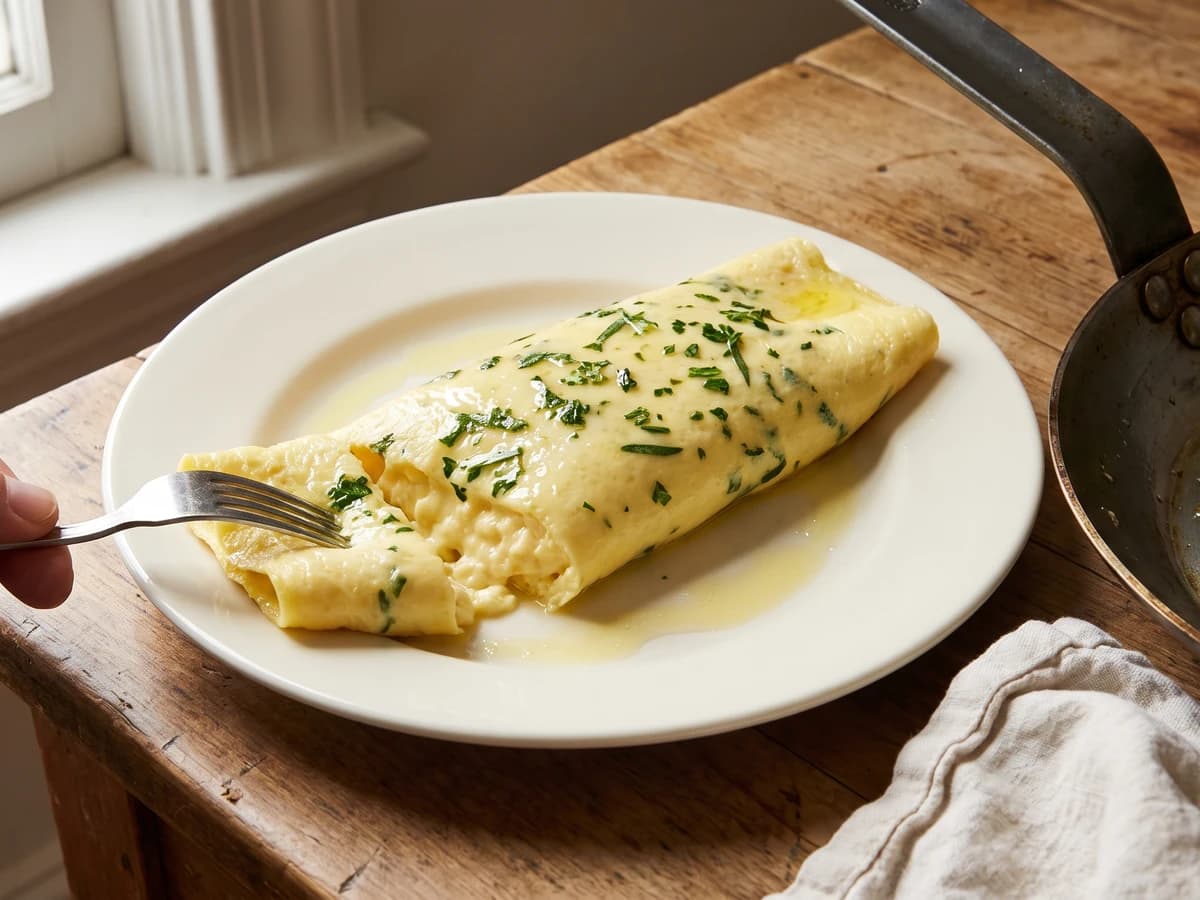
Four tender herbs, hot butter, and two eggs per pan: this rolled omelette teaches the quick hand and good judgment that keep the outside pale and the center creamy.
Chef Juliette
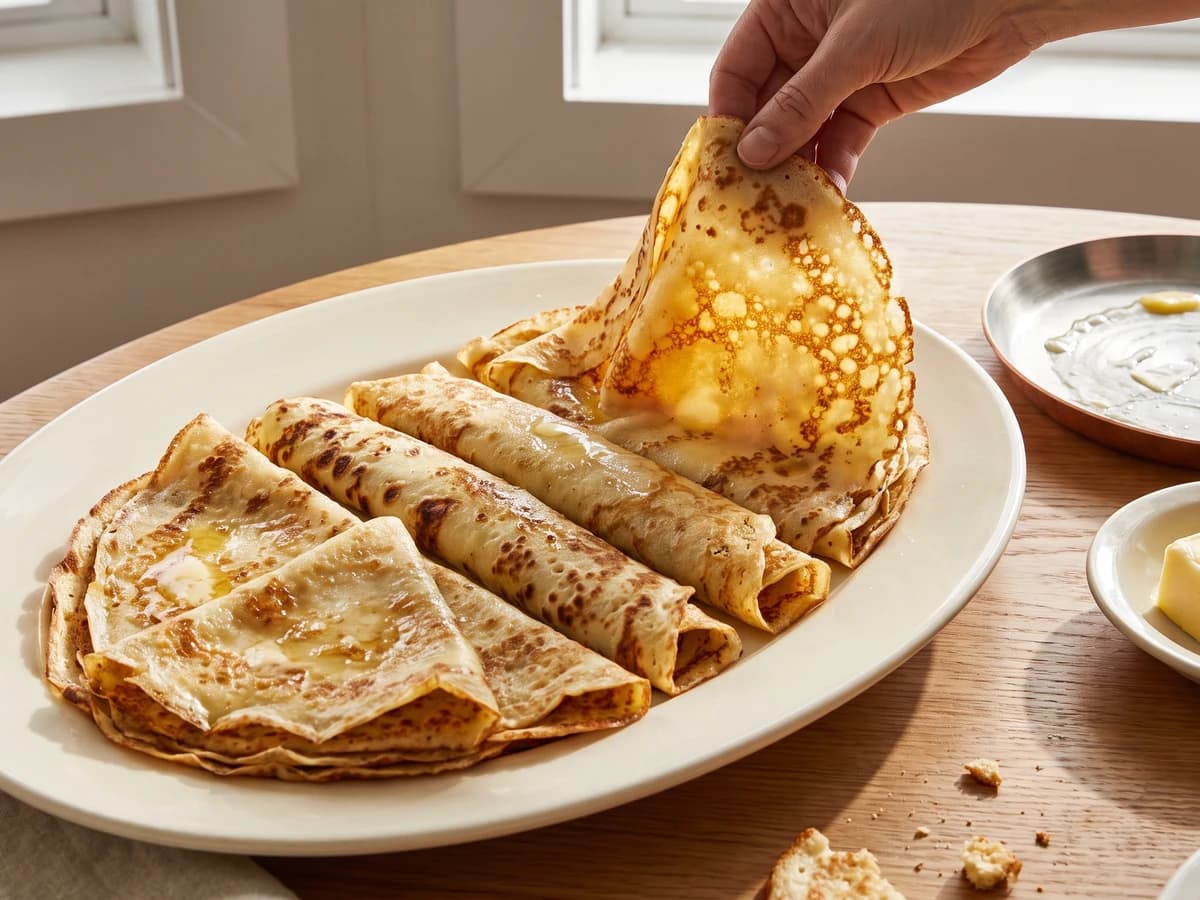
Four batters, one lesson: let the flour drink deeply before cooking, then spread the batter thinly in butter for crêpes and pannequets that bend without becoming tough.
Chef Juliette
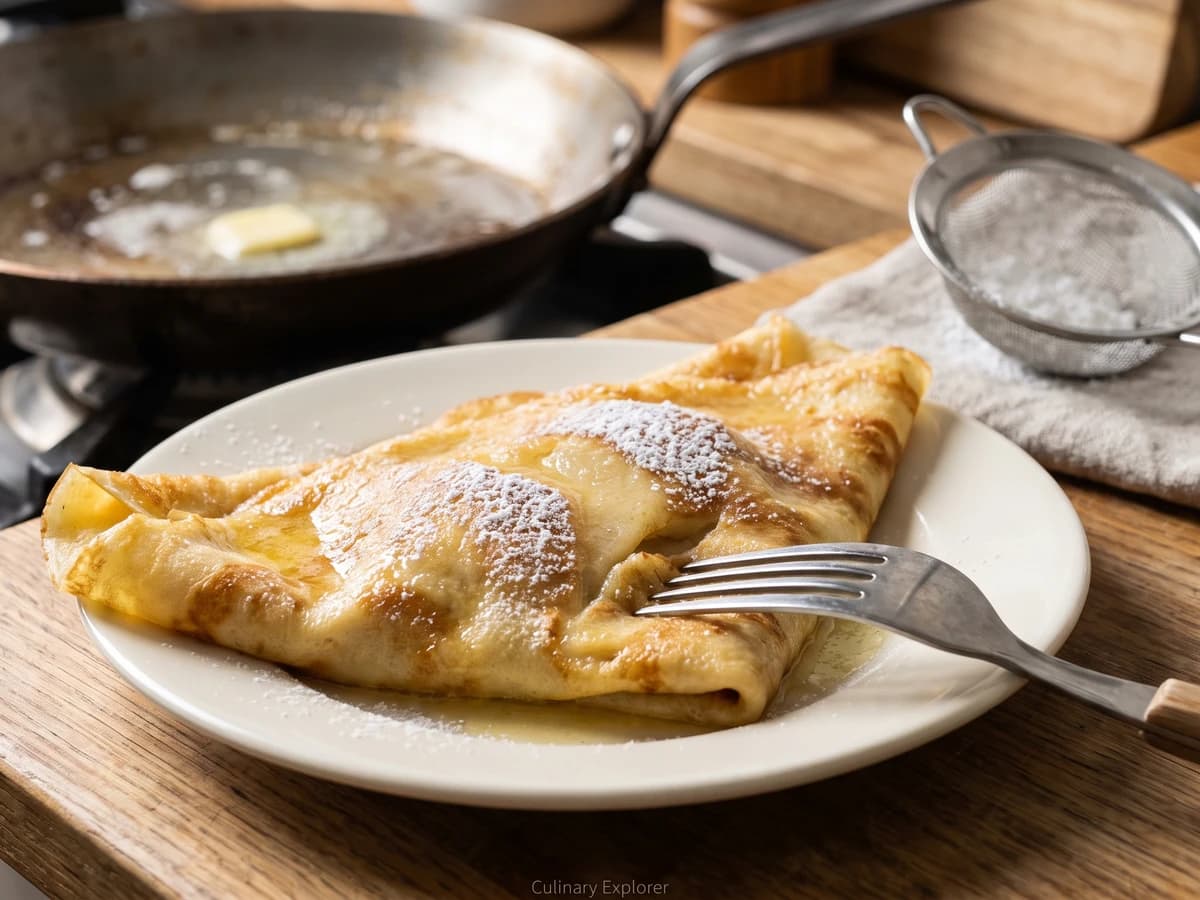
Crêpes au Couvent trap ripe Williams pear dice between two thin pours of sweet batter, then turn in one clean toss and reach the table butter-gold, powdered, and burning hot.