Chef Juliette
Omelette à l’Écossaise
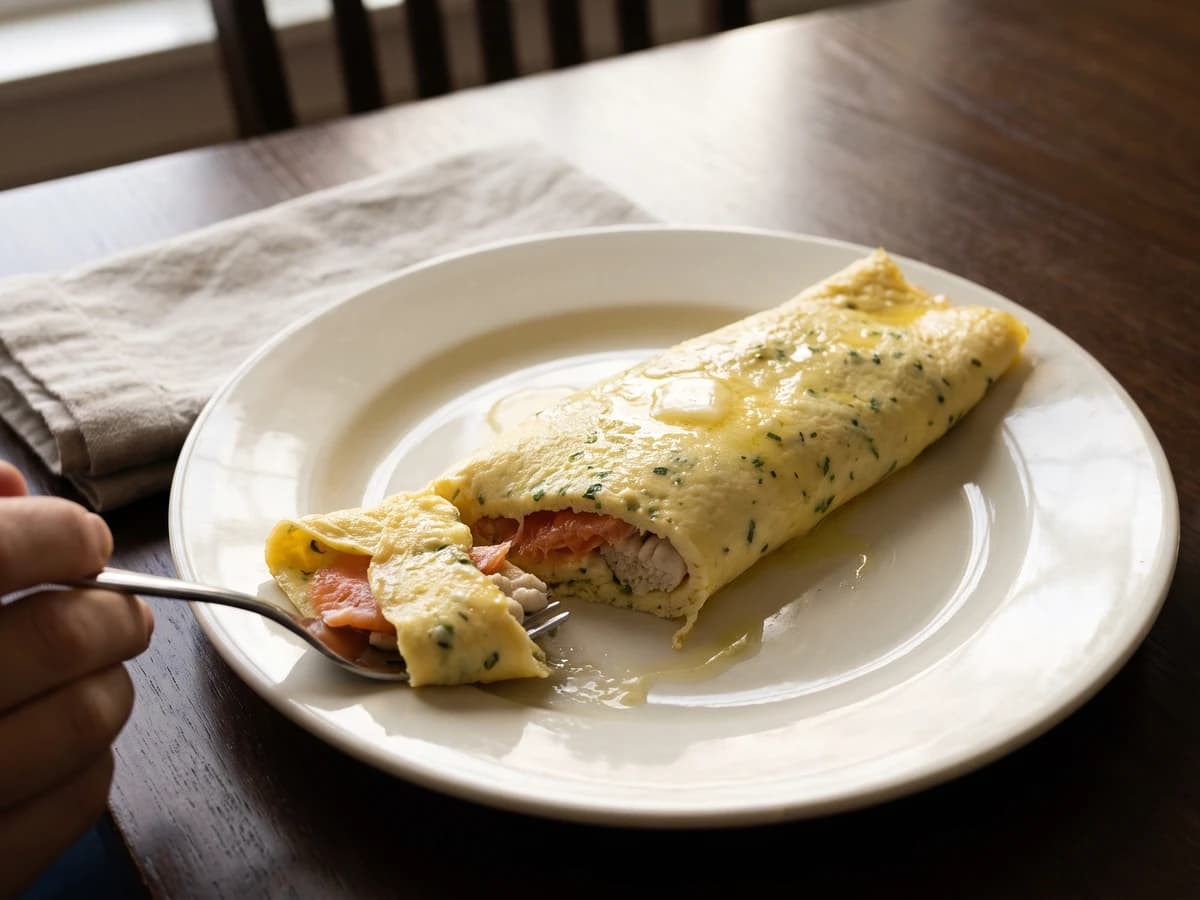
A creamy omelette aux fines herbes closes around smoked-salmon-wrapped herring milts, gently poached in butter. Have the filling ready, then roll the eggs while they still shine.
A cooking platform built around craft, culture, and the stories behind what we eat.
Created by Chef Juliette
Based on No. 498, Omelet à la Clamart, from Le Guide Culinaire (1907) by Auguste Escoffier
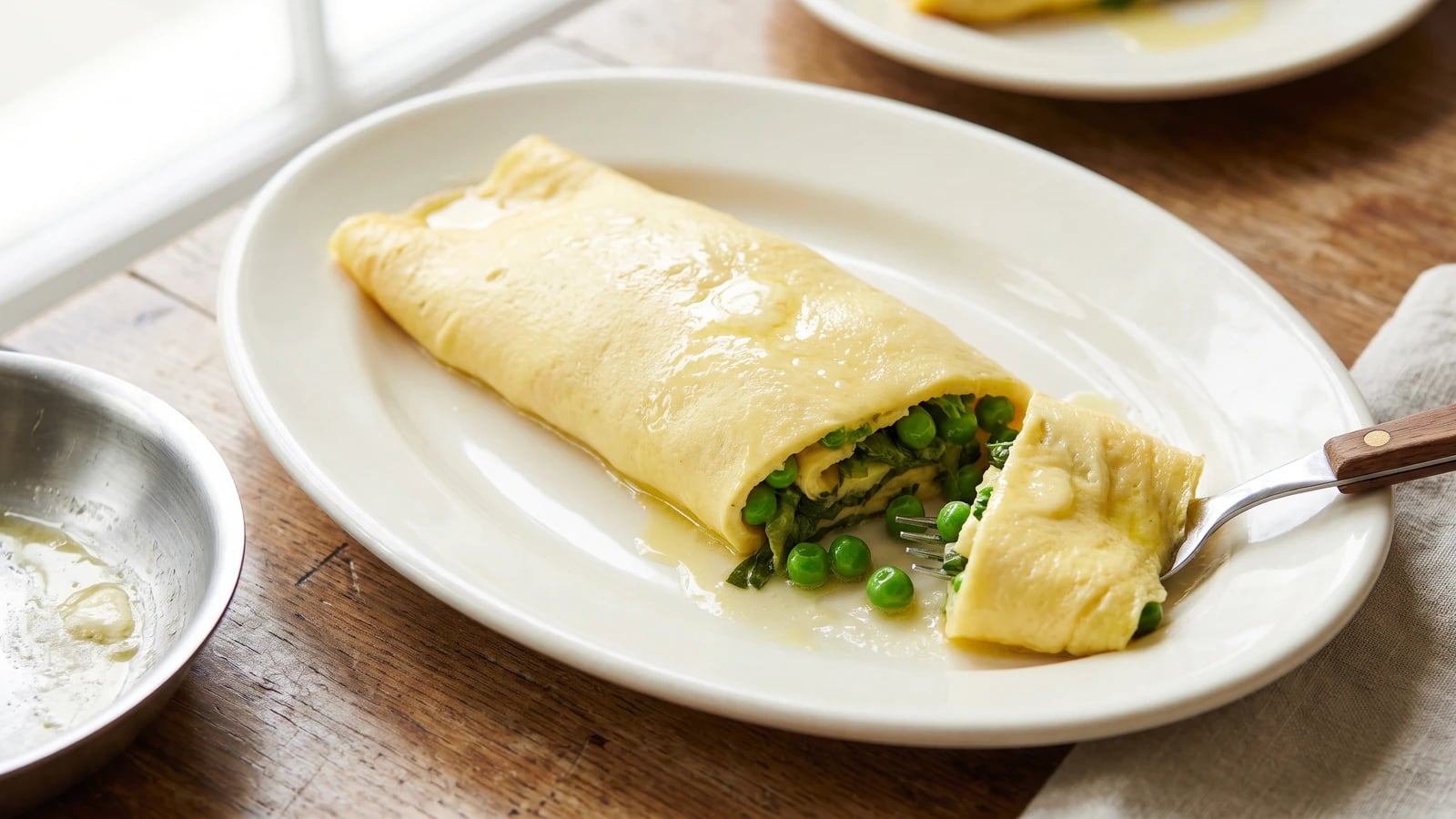
A soft rolled omelet filled with butter-bound peas and ciseled lettuce, opened along its golden top and crowned with more peas: a precise Parisian lesson in readiness, tenderness, and a very quick pan.
Omelet à la Clamart (a soft French omelet filled and crowned with peas) teaches readiness. The eggs spend barely a minute in the pan, so the one true thing to know before touching it is this: the peas must already be tender, butter-bound, divided, and warm. Once the eggs start, there is no useful errand left to run.
The original entry is brief because a brigade kitchen assumed cooked peas waiting with their lettuce and an omelet cook beside a fast pan. There is no saucier's sauce, permanent stockpot, or salamander to reproduce here. The brigade scaffolding was hot holding and many hands. I scale the singular formula to four individual omelets, because one twelve-egg roll would set unevenly on a home burner, while keeping the book's exact service proportion: two tablespoons of pea-and-lettuce filling inside each, then one tablespoon of peas in the opening above. We keep the cisel, the fine crosswise slicing of the cooked lettuce, because that cut and those proportions are the dish. One cook, one stove, one evening.
The finished omelet should be pale gold and supple, glossy with real butter, with green peas swelling through the opening on top. Work one at a time and stop the heat while the surface is still moist. That is the step that matters most; if the eggs race ahead, lift the pan and keep them moving. Ça se rattrape.
Clamart, just southwest of Paris, was celebrated by market gardeners for the petits pois they supplied to the capital, and the classical repertoire turned the place name into shorthand for a garnish of green peas. À la Clamart is not a sauce: with eggs, the canonical form fills a rolled omelet with butter-bound peas and their cooking lettuce, then repeats the peas in a slit along the top.
Quantity
¾ cup (180 ml / 120 g)
Quantity
2
left whole for cooking, then ciseled
Quantity
3 tablespoons (45 ml / 45 g), plus more if needed
Quantity
5 tablespoons (75 ml / 70 g)
divided
Quantity
12
Quantity
to taste
| Ingredient | Quantity |
|---|---|
| shelled fresh peas | ¾ cup (180 ml / 120 g) |
| tender inner butter lettuce leavesleft whole for cooking, then ciseled | 2 |
| water | 3 tablespoons (45 ml / 45 g), plus more if needed |
| unsalted butterdivided | 5 tablespoons (75 ml / 70 g) |
| large eggs | 12 |
| fine sea salt | to taste |
Put the peas, whole lettuce leaves, water, and a light seasoning of salt in a small lidded saucepan. Cover and cook over medium-low heat until the peas are tender but still give a delicate pop under the teeth, 4 to 6 minutes. If the water disappears before they soften, add another tablespoon and cover again; tired peas want patience, not harsher heat. Drain only if liquid remains, then lift out the lettuce. Off the heat, fold 1 tablespoon (15 ml / 14 g) butter through the peas until the residual moisture and butter cling as a glossy coating. If the fat beads and pools, return the pan to low heat and toss with a teaspoon of water until it binds.
Measure ¼ cup (60 ml / 40 g), exactly 4 tablespoons, of the buttered peas into a small warm bowl for the crowns. Stack the cooked lettuce leaves and cisel them crosswise into very fine, even ribbons, then fold them through the remaining ½ cup (120 ml / 80 g), exactly 8 tablespoons, of peas. This is the filling. Keep both portions warm beside the stove, never directly over the burner.
Warm four plates with hot tap water and dry each one just before it receives an omelet. Crack 3 eggs into a bowl, season with salt, and beat with a fork only until the whites and yolks lose their separate streaks. Don't whip in foam, and leave the other eggs in their shells until their turn; each batch should meet the pan as soon as it is beaten.
Heat a 20 cm (8-inch) omelet pan over medium heat, then add 1 tablespoon (15 ml / 14 g) butter and swirl until it is fluid and foaming but still blond. Pour in the eggs. Stir rapidly in small circles with a heatproof spatula while shaking the pan, gathering tiny soft curds for 20 to 30 seconds. Stop stirring, level the eggs, and pull the pan from the heat while the surface still carries a moist sheen but no loose liquid. If the curds tighten before the base is covered, lift the pan at once and keep moving the still-wet egg. Ça se rattrape while moisture remains. Lower the burner before the next omelet.
With the pan off the heat, spoon exactly 2 tablespoons (30 ml / about 20 g) of the warm pea-and-lettuce filling in a line just off center. Run the spatula under the far edge and fold it over the filling, then tilt the pan toward a warm plate and coax the remaining third over as the omelet rolls out seam-side down. If the skin catches, loosen it completely before tipping; if a small tear appears, bring the edges together and place that side underneath.
Use a small sharp knife to make a shallow lengthwise opening along the center of the omelet, stopping short of both ends and never cutting through the base. Ease the opening apart and fill it with exactly 1 tablespoon (15 ml / about 10 g) of the reserved buttered peas. Repeat with the remaining eggs, using 1 tablespoon butter, 2 tablespoons filling, and 1 tablespoon topping for each omelet. Send each one to the table as it is crowned when you can; warmed plates will hold the first briefly if all four must arrive together. À table!
1 serving (about 190g)
Culinary guides, cultural storytelling, and the editorial depth that makes cooking meaningful.
Discover Culinary ExplorerChef Juliette
A creamy omelette aux fines herbes closes around smoked-salmon-wrapped herring milts, gently poached in butter. Have the filling ready, then roll the eggs while they still shine.
Chef Juliette
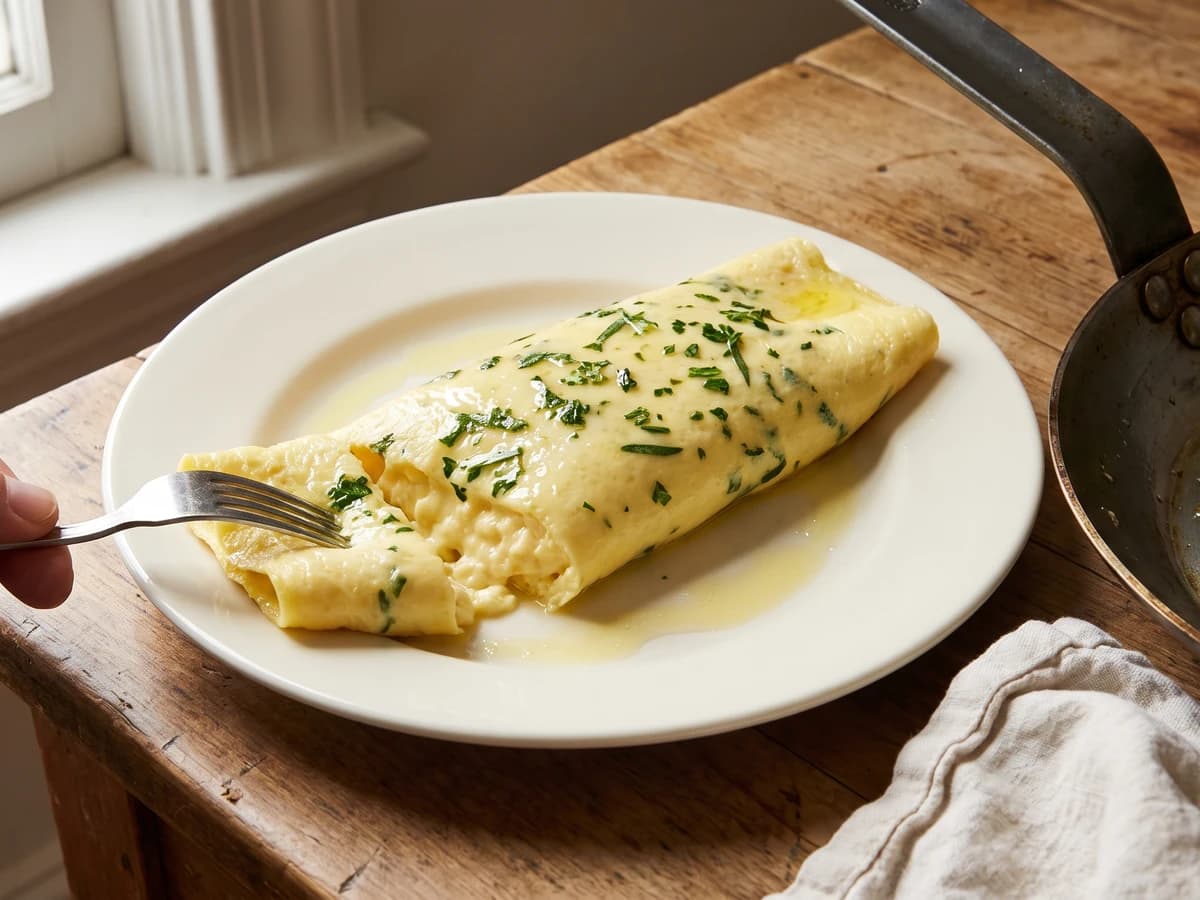
Four tender herbs, hot butter, and two eggs per pan: this rolled omelette teaches the quick hand and good judgment that keep the outside pale and the center creamy.
Chef Juliette
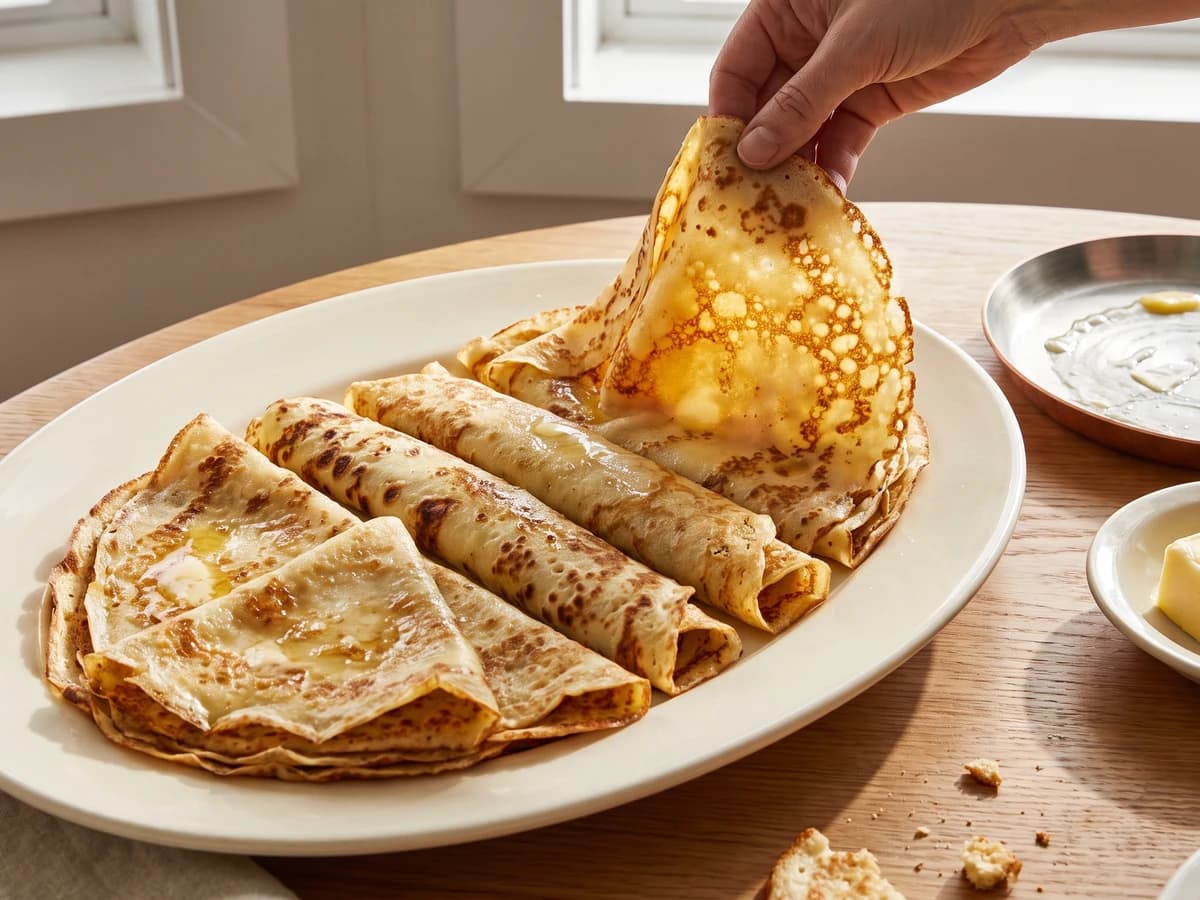
Four batters, one lesson: let the flour drink deeply before cooking, then spread the batter thinly in butter for crêpes and pannequets that bend without becoming tough.
Chef Juliette
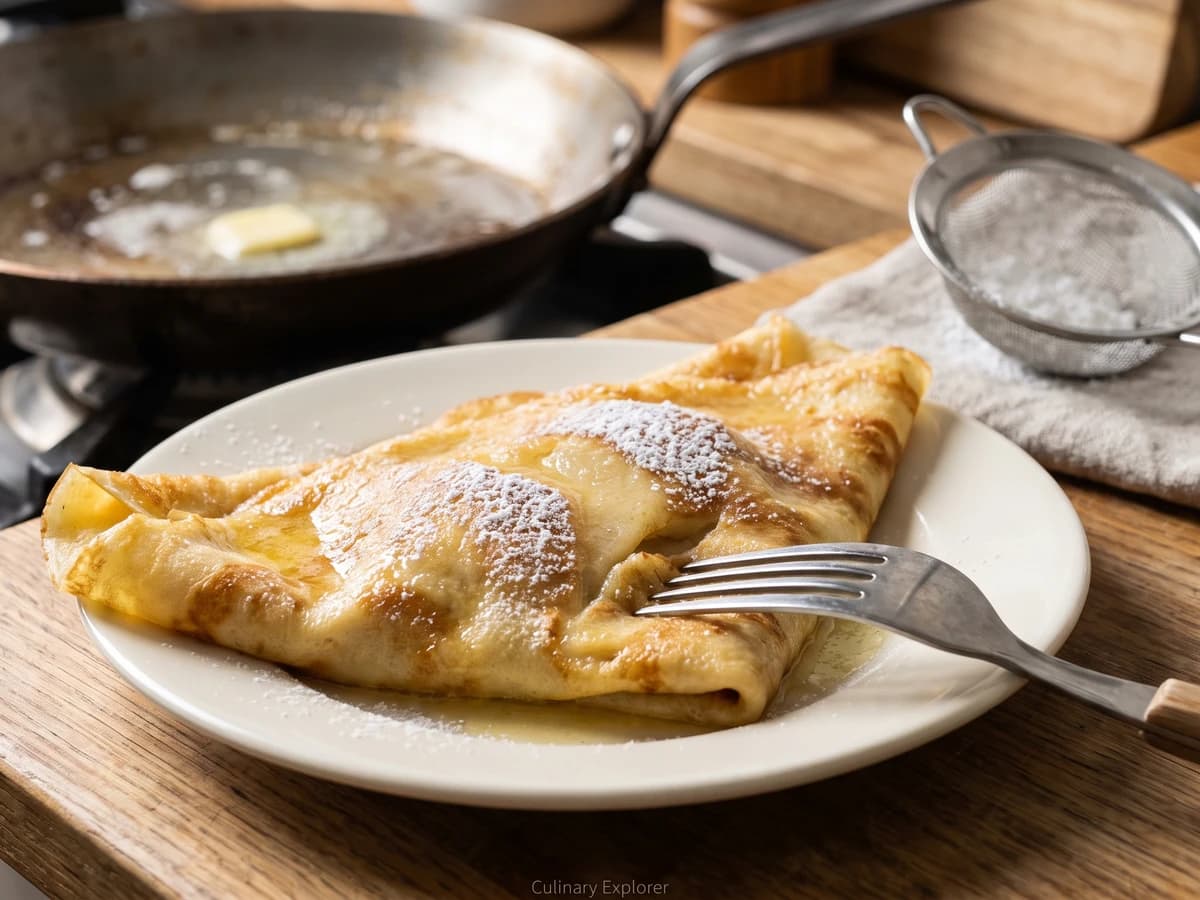
Crêpes au Couvent trap ripe Williams pear dice between two thin pours of sweet batter, then turn in one clean toss and reach the table butter-gold, powdered, and burning hot.